
Lake Wylie: Waterfront Premium vs Off-Water Reality
A practical selling guide for Lake Wylie homeowners: pricing strategy, process control, and path selection.

1. Data Hook: One ZIP, Two Completely Different Lake Wylie Markets
Start with the number most sellers see first: Lake Wylie’s median sale price has recently sat around the high-$400,000s on major housing dashboards, while average days on market have stretched into roughly the 100-day range and sale-to-list ratios have hovered below 100%. On paper, those are normal suburban-market signals. In practice, they are not enough to price your home correctly in Lake Wylie.
Why? Because Lake Wylie is not one market. It behaves like two overlapping markets that share a map but not a value logic. Waterfront or dock-capable homes can trade on scarcity, view premium, shoreline rules, and lifestyle demand from Charlotte-area move-up buyers. Off-water homes, including homes only a mile away, often compete in a much larger pool where buyer choice is broader and negotiation pressure is higher.
That split is exactly where sellers make expensive mistakes. A homeowner with a non-waterfront house might anchor to nearby lakefront headlines and overprice. A waterfront seller might underprice by benchmarking against off-water comps that do not include dock potential, cove characteristics, or shoreline constraints. Both errors create avoidable days on market and weaker final outcomes.
If you are comparing nearby submarkets while deciding where to list or how to frame your value, keep these companion guides open: Rock Hill, Belmont, and our regional cash offer guide.
2. The Market Snapshot: What the Numbers Mean for Sellers Right Now
Recent market snapshots have shown Lake Wylie as somewhat competitive, with median pricing in the upper-$400Ks, average market time around three months-plus, and typical closings below original list price. That combination points to selective demand rather than panic demand: good homes still move, but buyers negotiate and compare options carefully.
For sellers, this means two things can be true at once. First, demand is not gone. Second, pricing discipline and buyer-fit positioning matter much more than broad “people are moving here” narratives. In a cross-shopped market tied to Charlotte migration patterns, buyers can pivot quickly between Lake Wylie, parts of Fort Mill/Rock Hill, southwest Charlotte access points, and other lake-adjacent or tax-advantaged alternatives.
| Market Signal | Recent Read | Practical Seller Meaning |
|---|---|---|
| Median sale price | High-$400Ks range | Demand still supports value, but category mix (waterfront/off-water) can distort median interpretation. |
| Days on market | Roughly 100+ days average | Speed is conditional; strategy errors are punished with extended market time. |
| Sale-to-list ratio | Mid-to-high 90s% | Buyers retain leverage and often negotiate concessions or price reductions. |
| Competition score | Somewhat competitive | Homes can sell well, but only with strong pricing and risk-reducing presentation. |
Remember that dashboard numbers aggregate different product types. A waterfront home with dock rights and open-channel views is not truly comparable to a non-water home in a nearby subdivision, even when square footage is close. For Lake Wylie sellers, comp quality matters more than comp volume.
3. Lakefront Premium vs Off-Water Reality: The Core Decision Framework
Think of Lake Wylie valuation as two tracks. Track A is waterfront/lake-access premium, where scarcity, shoreline usability, view quality, dock status, and water proximity are central value drivers. Track B is off-water neighborhood value, where school assignments, commute patterns, lot usability, HOA context, and condition dominate.
A useful way to classify your home before setting price is asking: “Would a buyer include this in a shortlist specifically because of the lake?” If yes, you are likely on Track A. If no, and buyers are choosing mostly on suburban comfort/value criteria, you are probably on Track B.
| Value Driver | Track A: Waterfront / Dockable | Track B: Off-Water / Near-Lake |
|---|---|---|
| Primary emotional trigger | Lifestyle and scarcity | Practical living value |
| Buyer comparison set | Other lakefront and dock-right homes | Broader York County and border-market alternatives |
| Negotiation pressure | Varies by true feature uniqueness | Usually stronger buyer leverage |
| Biggest pricing mistake | Ignoring quality differences among waterfront lots | Anchoring to lakefront headlines without equivalent features |
| Marketing emphasis | Water useability, dock, orientation, shoreline facts | Condition, cost certainty, school/commute practicality |
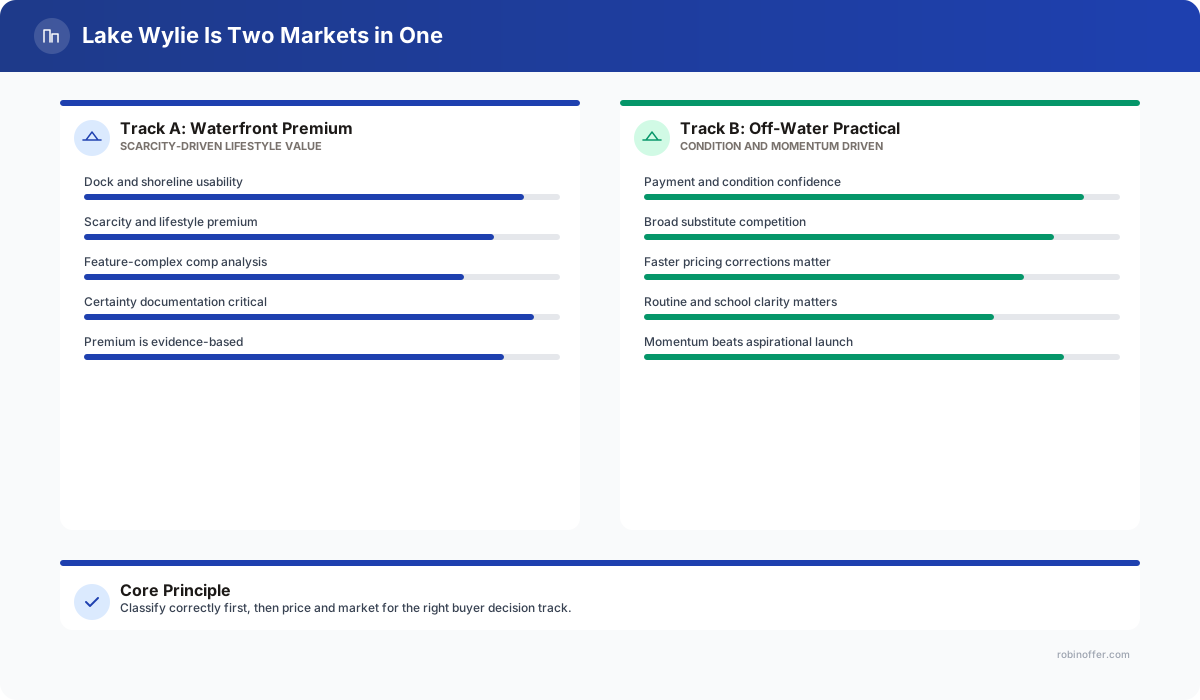
This framework does not mean off-water homes are weak. Many sell very well when priced and presented correctly. It means your pricing logic should match buyer intent instead of relying on broad area narratives.
4. Dock Rights, Shoreline Rules, and Why Waterfront “Comping” Is Tricky
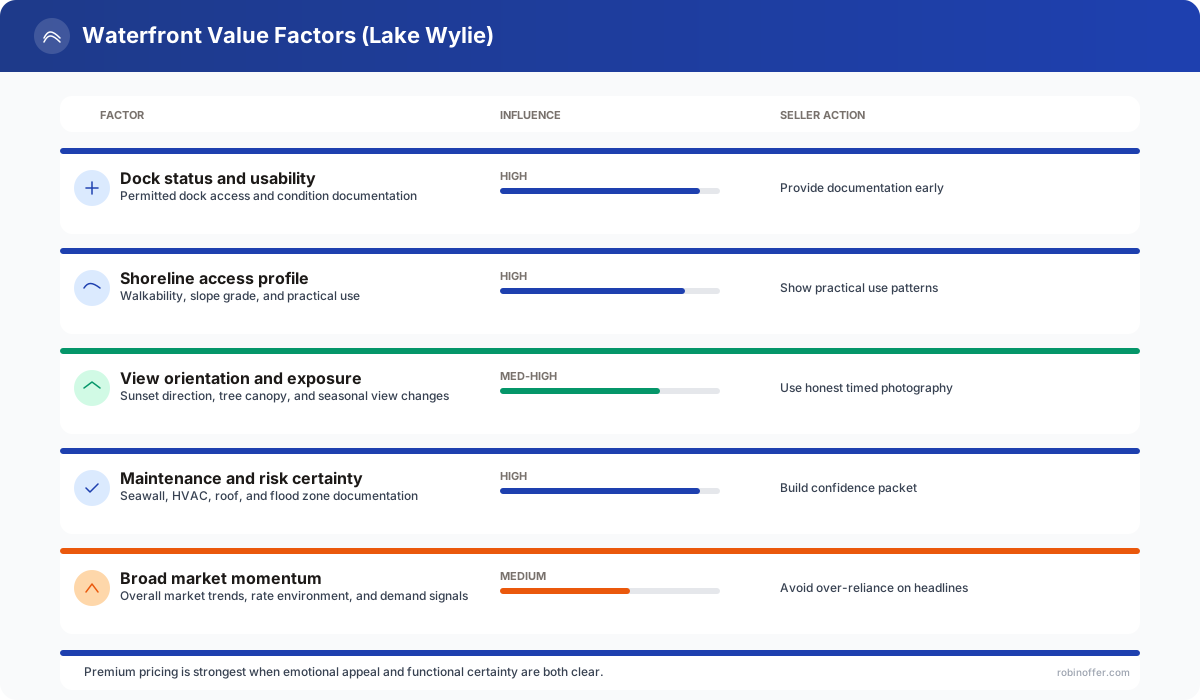
Lake Wylie waterfront value is not a simple “has water view = premium” equation. Buyers care about practical shoreline usability: dock status, permit pathway, cove depth, slope to water, shoreline condition, and maintenance expectations. Two homes both labeled “waterfront” can perform very differently if one has straightforward dock functionality and the other has use constraints.
That is why serious waterfront pricing should include a feature matrix beyond bedroom/bath counts and square footage. For example, is there an existing permitted dock? If not, what are the realistic constraints and timeline for approvals? How does lot orientation affect afternoon sun, wind, and everyday enjoyment? These factors can materially change demand depth and offer quality.
Sellers should avoid casual claims in marketing copy. Use accurate, documented descriptions and encourage buyer due diligence on shoreline and dock matters. Precision builds trust; overstatement creates contract risk later.
| Waterfront Attribute | Buyer Impact | Seller Action |
|---|---|---|
| Existing dock status | High influence on perceived value/certainty | Provide documentation and condition notes early. |
| Shoreline slope/access | Affects actual day-to-day use | Show practical access, not just aerial photos. |
| Cove depth and navigability | Matters to boating buyers | Frame use-case honestly and avoid overclaims. |
| Orientation/view corridor | Drives lifestyle premium perception | Use photography timing that reflects real experience. |
| Maintenance burden | Influences long-term ownership cost confidence | Disclose known upkeep and stabilization history. |
See what your Lake Wylie home is worth
Get a real, data-driven estimate based on your specific neighborhood and recent comps, waterfront or off-water.
5. Off-Water Homes: How to Win Without Pretending You’re Waterfront
If your home is off-water, the best strategy is not to imitate waterfront positioning. It is to dominate your true buyer decision criteria. In Lake Wylie’s off-water segments, buyers usually prioritize payment, condition certainty, school logistics, commute patterns, lot usability, and neighborhood rhythm over proximity mythology.
Successful off-water listings answer practical questions quickly: What will my monthly ownership feel like? What repairs are likely in year one? What is the realistic commute rhythm? How much flexibility does this lot and floor plan offer for family life? Homes that answer these questions clearly often outperform homes with better raw specs but weaker clarity.
| Off-Water Buyer Priority | What They Need to See | How Sellers Should Present |
|---|---|---|
| Affordability confidence | Transparent value relative to alternatives | Price for current active competition, not old peaks. |
| Move-in certainty | Reduced near-term repair surprises | Provide maintenance records and focused prep work. |
| School and routine logistics | Clarity, not vague claims | Link to official district resources and verify details. |
| Neighborhood fit | Realistic lifestyle expectations | Describe practical day-to-day benefits concretely. |
Positioning your home honestly is a strength, not a concession. Buyers reward transparency in a high-choice market.
6. Neighborhood Segments Around Lake Wylie: Why Micro-Market Matters
Lake Wylie-area buyers often evaluate neighborhoods with very different value stories: established gated or golf-marina communities, mixed-age subdivisions with varied lot sizes, and off-water neighborhoods priced for access and schools rather than lake frontage. That means “Lake Wylie comp” without neighborhood segmentation is usually insufficient.
Sellers should benchmark within product type and neighborhood experience, then stress-test against nearby substitutes. If a buyer can choose between your listing and another home with a stronger lot position or lower maintenance profile at similar payment, your pricing strategy must account for that immediately.
| Segment Type | Typical Buyer Lens | Positioning Focus |
|---|---|---|
| Waterfront / dock-focused | Lifestyle and water usability | Shoreline facts, dock certainty, practical access. |
| Amenity-driven established neighborhoods | Community quality and routine stability | Known neighborhood rhythm, lower uncertainty. |
| Off-water value neighborhoods | Payment and daily functionality | Condition, layout utility, school/commute clarity. |
| Higher-price custom product | Uniqueness and lot premium | Proof-based differentiation and high-end presentation. |
7. School Growth Pressure and Reassignment Context: Why It Shows Up in Offers
Clover School District has remained a major decision factor for many Lake Wylie households, and district growth plus upcoming school capacity changes have become part of buyer risk analysis. Public references to new school openings and boundary/reassignment planning mean buyers increasingly ask “what is confirmed now?” before writing.
Sellers should avoid casual school assignment promises and point buyers to official district verification channels. This protects both parties and reduces late-stage conflict. In pricing terms, school confidence can support demand, but uncertainty or confusion can slow decisions and increase negotiation pressure.
| School-Related Buyer Question | Seller Best Practice | Risk if Ignored |
|---|---|---|
| Which school will apply to this address? | Direct buyers to district verification tools/contact. | Misaligned expectations and contract friction. |
| Are boundaries changing? | Acknowledge growth context and advise direct confirmation. | Perceived information withholding. |
| How does this affect value? | Use market evidence, not guarantees. | Overpricing based on assumptions. |
8. Development, Overlay Standards, and the Long-Term Supply Story
York County planning and zoning resources, including Lake Wylie small-area and overlay-related actions, reflect a continued focus on managing growth, design expectations, and land-use impacts. For sellers, the practical takeaway is simple: supply and standards are not static. Buyer perceptions of future character and congestion can influence present-day offer behavior.
Sellers should include current, verified planning context in their understanding of competition. That does not mean becoming a planner. It means recognizing that buyers and agents often reference growth trajectory when evaluating price tolerance, especially in high-attention corridors.
| Planning Signal | What Buyers Infer | Seller Implication |
|---|---|---|
| Overlay/design-standard activity | Area character and development controls evolving | Support claims with up-to-date official sources. |
| Small-area planning process | Long-term growth not slowing dramatically | Compete on present certainty, not future hype. |
| Permitting/zoning process visibility | Future inventory can change local balance | Price for current alternatives and near-term risk. |
Curious what your Lake Wylie home would sell for?
Get a real, data-driven value estimate based on your specific neighborhood and recent comps.
9. South Carolina Closing Process: What Lake Wylie Sellers Must Plan For
South Carolina residential closings are attorney-led, and this is a major operational difference for sellers relocating from states with different closing structures. Build attorney coordination into your plan early, not at the finish line. Late legal coordination is one of the easiest ways to create avoidable timing stress.
York County record systems and register-of-deeds resources can also be useful early in the process, especially for confirming record details, preparing for title work, and reducing document surprises under contract deadlines.
| Process Checkpoint | Why It Matters | Preparation Step |
|---|---|---|
| Attorney engagement | Core requirement in SC closing flow | Select counsel early and align timeline expectations. |
| Record verification | Reduces title/description surprises | Use county record tools in pre-listing stage. |
| Disclosure discipline | Supports cleaner negotiations | Document known conditions and updates clearly. |
10. What It Costs to Sell in Lake Wylie (and What Sellers Underestimate)
Most homeowners estimate commission and stop there. In reality, your net outcome depends on the full stack: commission structure, concessions, repair exposure, attorney/closing charges, carrying costs, and timeline variance. In a market where average listing time can be extended, carry costs become a major line item.
| Cost Category | Typical Impact Zone | Common Seller Mistake |
|---|---|---|
| Commissions and marketing | Largest visible expense | Comparing fee without comparing service quality/output. |
| Buyer concessions | Material in negotiated markets | Ignoring likely credit pressure while pricing. |
| Repair and inspection outcomes | Wide variance risk | Deferring obvious fixes that later weaken negotiation. |
| Attorney/closing charges | Predictable but often overlooked | Not requesting early settlement estimate. |
| Carry costs | High if DOM extends | Holding out too long for unrealistic pricing target. |
For Lake Wylie sellers especially, time risk can erase “high list” optimism. A home that starts too high may later sell below where it could have closed with a stronger launch and shorter timeline.
11. Three Practical Paths: Traditional Listing, Lean-Prep Listing, Direct Offer
Lake Wylie sellers generally choose among three core paths. Traditional listing targets maximum market exposure and potentially higher gross price, but usually requires more prep, showing, and timeline tolerance. Lean-prep listing aims for balanced outcomes with selective updates and disciplined pricing. Direct sale/cash path prioritizes speed and certainty, typically at a lower gross number.
| Path | Best Fit | Main Tradeoff |
|---|---|---|
| Traditional listing | Strong-condition homes, flexible timeline | Longer process and higher renegotiation exposure. |
| Lean-prep listing | Sellers needing balance of speed and value | May leave some top-end upside on the table. |
| Direct/cash offer | Tight deadlines, repair burden, complexity events | Lower gross in exchange for speed/certainty. |
If you need a deeper framework on institutional/local cash buyer differences and net math, use the cash offer guide. If you already want a written cash offer on your house as-is, you can sell your house fast in Lake Wylie and compare it against a listing.
Get a cash offer on your Lake Wylie house
Waterfront or inland, if condition or a dock question keeps stalling a financed buyer, a no-obligation cash offer closes as-is on the date you pick.
12. Net Scenario Math: Why Headline Price Alone Is a Trap
Here is simplified planning math for an illustrative Lake Wylie property. These are examples, not settlement statements. Actuals vary by contract terms and property specifics.
| Scenario | Illustrative Price | Concessions + Prep | Timeline | Primary Risk |
|---|---|---|---|---|
| Traditional listing | $575,000 | $22,000 | 70–110 days | Inspection/appraisal retrade |
| Lean-prep listing | $555,000 | $11,000 | 45–80 days | Missed top-end buyer if under-positioned |
| Direct as-is offer | $505,000 | $0–$2,000 | 10–30 days | Lower gross acceptance |
In some cases, lower gross can still compete on stress-adjusted outcome when heavy repairs or schedule pressure are real. The key is comparing complete outcomes, not isolated numbers.
13. Pricing Strategy by Property Type (Waterfront vs Off-Water)
Waterfront strategy should be precision-first: price based on true comparability and feature quality, not just broad “lake premium.” Off-water strategy should be momentum-first: position to attract serious traffic quickly in a market with many substitutes.
| First 10-Day Signal | Waterfront Response | Off-Water Response |
|---|---|---|
| High-quality showing activity | Hold discipline; protect terms. | Maintain pricing; sharpen offer handling. |
| Traffic but weak offers | Reassess value story and feature proof. | Tighten price or targeted concessions. |
| Low traffic | Check comp set and feature framing. | Make meaningful price correction quickly. |
| Concession-heavy offers | Evaluate against carry-cost risk. | Run net equivalence: credit vs price cut. |
Small token reductions often fail. Repositioning must be meaningful enough to alter buyer search behavior and perceived value.
14. Preparation Plan: High-ROI Work Before Listing in Lake Wylie
Do not over-renovate blindly. Spend where buyer confidence improves most. In Lake Wylie, confidence usually comes from condition certainty, documentation, and practical livability, not dramatic custom projects that buyers may value inconsistently.
| Prep Priority | Why It Matters | ROI Tendency |
|---|---|---|
| Safety/function repairs | Eliminates major objection risk | High |
| Paint/cleanliness/lighting | Improves immediate perception | High |
| Mechanical service records | Counters uncertainty in negotiations | High |
| Major elective remodels | Often buyer-style dependent | Variable/low |
For waterfront homes, include shoreline and dock-related documentation where possible. For off-water homes, emphasize total cost predictability and readiness.
See what your Lake Wylie home is worth before you list
Get a real, data-driven estimate based on your specific neighborhood and recent comps.
15. Offer Review Framework: Choose Certainty, Not Just the Highest Number
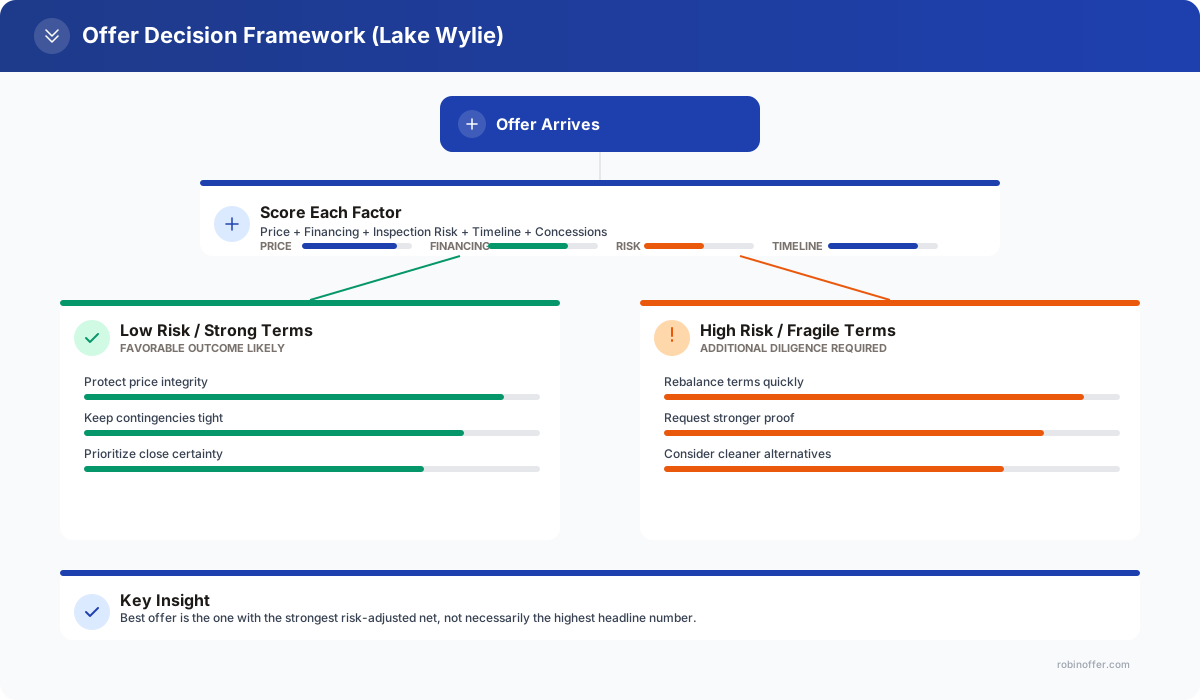
Offer comparison should include at least five dimensions: price, financing strength, contingency structure, concession probability, and close timeline confidence. A slightly lower clean offer can outperform a fragile high offer that collapses after inspection or appraisal.
| Offer Factor | Low Risk Indicator | High Risk Indicator |
|---|---|---|
| Financing quality | Strong pre-approval and reserves clarity | Weak documentation and uncertain program fit |
| Inspection posture | Reasonable scope/timeline | Open-ended renegotiation signals |
| Concession asks | Targeted and justified | Broad credits without support |
| Timeline reliability | Aligned with your move constraints | Aggressive dates without execution clarity |
16. Hard Situation Playbooks: Inheritance, Divorce, Relocation, Payment Stress
Not every Lake Wylie sale is elective. Some are driven by life events where certainty matters more than top-dollar ambition. In these cases, planning sequence matters more than price ambition.
Inheritance: confirm authority to sell, verify records, and map condition spend versus as-is alternatives. See selling an inherited house in York County, SC.
Divorce: align sale timeline with legal process and use objective pricing governance. See selling a house during divorce in York County, SC.
Relocation: reverse-plan from non-negotiable move date; avoid late-stage price panic. See selling a house for a job relocation in York County, SC.
Payment stress: act early; use counseling/legal resources before options narrow. If foreclosure is a risk, see selling a house facing foreclosure in York County, SC.
| Situation | First Critical Step | Biggest Mistake |
|---|---|---|
| Inheritance | Authority/title readiness | Listing before legal/record cleanup |
| Divorce | Decision protocol and timeline | Using price as conflict proxy |
| Relocation | Timeline-first strategy | Overpricing despite fixed deadline |
| Payment stress | Immediate options review | Waiting until legal pressure escalates |
Support channels include South Carolina Housing counseling resources, SC Bar lawyer referral pathways, South Carolina Legal Services, and LawHelpSC intake resources.
17. Legal and Counseling Resources for Lake Wylie Sellers
Lake Wylie sellers under legal or financial strain should not go through the process alone. South Carolina has multiple pathways for attorney referral, legal-aid intake, and foreclosure-prevention counseling.
| Resource Type | Provider | Use Case |
|---|---|---|
| Lawyer referral | SC Bar LRS | Find issue-specific private counsel quickly |
| Civil legal aid intake | SCLS / LawHelpSC | Eligibility-based assistance on civil issues |
| Mortgage distress counseling | SC Housing + HUD-linked counselors | Early intervention and option mapping |
| General foreclosure hotline support | NeighborWorks HOPE | 24/7 counseling entry point |
These resources are educational references, not legal advice. For transaction-specific legal decisions, consult qualified South Carolina counsel.
18. 90-Day Execution Plan: Decision to Closing
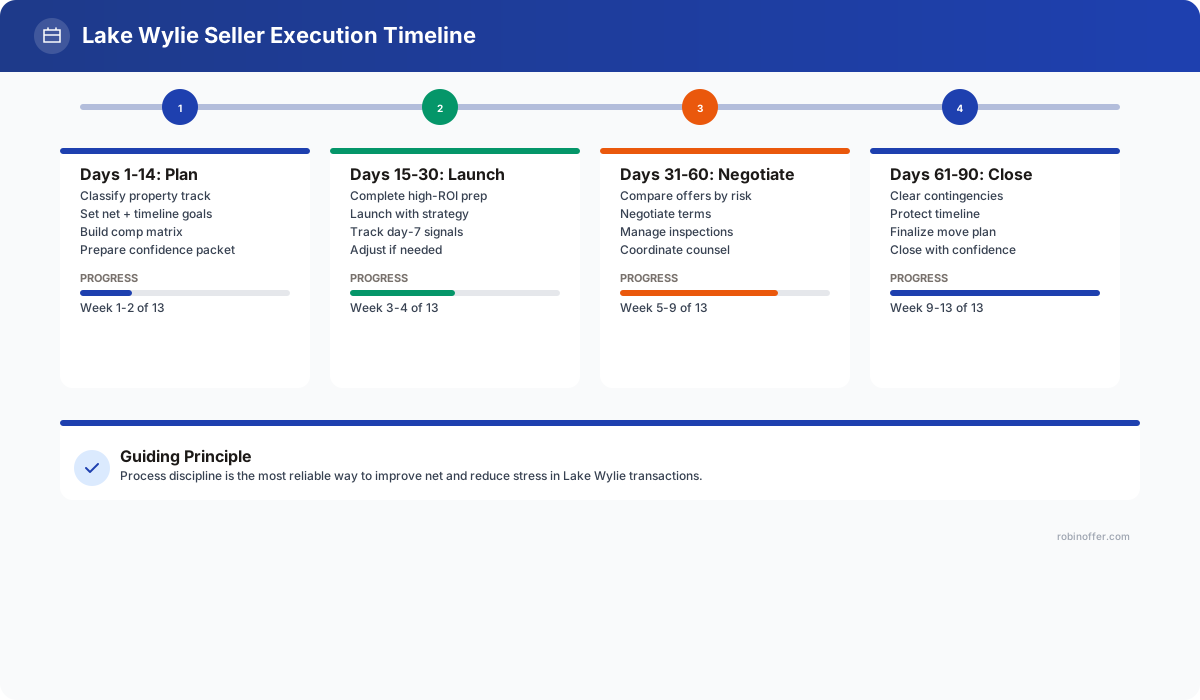
A practical Lake Wylie sale usually requires disciplined execution across 60–90 days. Use this baseline and adapt to your constraints.
Days 1–14: Plan and prepare
Define net target, timeline constraints, path selection, and comp framework (waterfront vs off-water correctly segmented).
Days 15–30: Launch positioning
Complete high-impact prep, publish with precise pricing, and pre-commit to day-7 and day-14 response thresholds.
Days 31–60: Contract selection and risk control
Evaluate offers using risk-adjusted net, not price alone; coordinate legal/timeline milestones tightly.
Days 61–90: Close and transition
Manage contingencies, maintain backup strategy, and execute close with minimal drift.
| Stage | Primary Objective | Output |
|---|---|---|
| Weeks 1–2 | Clarity | Path choice + validated pricing frame |
| Weeks 3–4 | Momentum | Strong launch and measured buyer feedback loop |
| Weeks 5–8 | Quality contract | Offer with acceptable risk-adjusted net |
| Weeks 9–12 | Completion | Clean close and controlled moveout |
Before you launch, run this final checklist:
- Have I classified my home correctly (waterfront premium vs off-water practicality)?
- Is my pricing based on true comparables, not headline medians?
- Do I have documentation ready (condition, records, legal process steps)?
- Have I pre-committed response triggers for day 7 and day 14?
- Am I evaluating offers by certainty-adjusted net, not just top number?
If yes, you are in a strong position. If not, fix those gaps before going live. In Lake Wylie's two-track market, precision beats optimism, and process beats guesswork.
Want a cash offer on your Lake Wylie home?
Tell us your address and timeline and we will get you a no-obligation cash offer.
19. Frequently Asked Questions from Lake Wylie Homeowners
Should I wait for spring to list?
Sometimes, but not automatically. If your carry costs are high or your timeline is fixed, waiting can reduce flexibility more than it improves pricing power.
Is waterfront always worth a huge premium?
Not automatically. Premiums depend on useable shoreline characteristics and buyer confidence in what is truly included.
Can I market my home as “lake lifestyle” if it’s off-water?
Yes, but be precise. Emphasize practical access and neighborhood value without implying features you do not have.
Do I need a pre-inspection?
Not always, but it can reduce renegotiation risk, especially on older or waterfront-exposed properties.
How do I compare a cash offer to listing?
Use full net math including repairs, concessions, and timeline risk. Do not compare headline numbers alone.
| FAQ Theme | Short Answer | Action |
|---|---|---|
| Timing | Context-dependent | Run carry-cost and timeline scenarios first. |
| Waterfront value | Feature-quality dependent | Build a shoreline/dock fact matrix. |
| Offer selection | Risk-adjusted net wins | Score all offers across certainty factors. |
20. Detailed Playbooks: Waterfront, Off-Water, and Execution
20.1 Waterfront Seller Playbook: How to Build a Defensible Premium
Waterfront pricing in Lake Wylie often fails for one reason: sellers describe their property as “premium” without proving why it is premium versus other waterfront options. A defensible premium is evidence-based. That means a buyer should be able to compare your listing against alternatives and understand exactly where your value is stronger, where it is similar, and where it is weaker.
Start by inventorying your waterfront feature stack in plain language. Document shoreline usability, dock status, lot slope, channel exposure, orientation, and maintenance history. Avoid vague language like “incredible water access” unless you can tie it to concrete use patterns. Buyers with lake experience do not respond well to soft claims. They respond to practical certainty.
Next, separate emotional premium from functional premium. Emotional premium comes from view, atmosphere, and identity. Functional premium comes from what owners can actually do consistently and comfortably. In Lake Wylie, functional premium often drives offer confidence because buyers know lake ownership carries responsibility. They will pay for features that reduce friction and uncertainty over time.
If you are in a cove, explain what that means in lived terms rather than market slogans. Is the water generally calmer? Is access pattern practical for your likely buyer profile? Is the shoreline easier to manage for family use? Translate features into ownership outcomes.
If your lot has constraints, do not hide them. Smart pricing and transparent framing usually outperform optimistic omission. A clear explanation with balanced pricing attracts serious buyers faster than a high list followed by reactive cuts.
| Waterfront Premium Type | What It Looks Like | How to Prove It in Listing Materials |
|---|---|---|
| View premium | Consistent visual openness, attractive sightline | Timed photography, honest angle choices, location context map. |
| Useability premium | Practical access and regular enjoyment | Feature sheet with access details and maintenance notes. |
| Certainty premium | Lower perceived risk to buyer | Document package: records, updates, known constraints. |
| Scarcity premium | Feature combination hard to replicate nearby | Comparable matrix showing true alternatives and differences. |
Pricing should then reflect where your home sits on each premium type. Homes strong in all four categories can defend more assertive pricing. Homes strong in one or two categories but weak in others often need sharper launch positioning to preserve momentum.
Finally, remember that Lake Wylie waterfront buyers are often high-comparison buyers. They may tour properties across both SC and NC sides, then revisit top options with contractors or advisors. Give them a reason to keep your home in their final set by making your value easy to verify.
20.2 Off-Water Seller Playbook: Winning the Payment-and-Certainty Decision
Off-water sellers can win decisively in Lake Wylie without pretending to be a lakefront property. The key is aligning with what off-water buyers actually optimize for: monthly payment comfort, move-in certainty, and daily routine quality.
Many off-water listings underperform because the marketing voice stays generic. If a buyer reads your listing and cannot tell how your home reduces post-close friction, they move on. In a choice-rich environment, unclear value is the same as weak value.
Build your positioning around “known ownership.” Show what has been updated, what has been serviced, and what is likely stable over the next few years. A documented maintenance timeline can carry more weight than expensive design details in this segment.
Price to attract commitment, not just clicks. Online interest without qualified offers usually indicates either pricing friction or risk friction. Your launch goal should be creating a short list of serious buyers who can close, not maximizing vanity metrics in week one.
| Off-Water Conversion Lever | Buyer Benefit | Seller Execution Tactic |
|---|---|---|
| Transparent condition | Lower surprise anxiety | Provide records and clear disclosure summary. |
| Payment-aware pricing | Immediate affordability clarity | Position in active search brackets with intent. |
| Routine-quality framing | Faster emotional commitment | Describe practical day-to-day convenience, not fluff. |
| Offer-term flexibility | Increases qualified buyer pool | Pre-define concession and timeline options. |
Do not confuse lower list price with lower strategy quality. In many off-water outcomes, smart initial pricing protects final net by reducing carrying cost and limiting stale-listing stigma.
20.3 The Lake Wylie Marketing Packet: What to Prepare Before You Go Live
Think of your listing as a mini due-diligence package. Buyers and buyer agents are more likely to make strong offers when information is organized early. In Lake Wylie this matters because properties are often compared across different product types and risk levels.
Your packet should include condition summaries, system ages, recent service receipts, HOA details (if applicable), practical utility notes, and any waterfront-specific materials where relevant. Add a concise one-page “what changed in the last five years” sheet to improve confidence quickly.
For waterfront sellers, include all relevant dock/shoreline documents you can provide responsibly, plus clear notes on what buyers should independently verify. For off-water sellers, emphasize predictability and low-friction occupancy.
| Packet Component | Waterfront Priority | Off-Water Priority |
|---|---|---|
| System and maintenance timeline | High | High |
| HOA + neighborhood notes | Medium | High |
| Shoreline/dock materials | High | Low |
| Recent improvement receipts | High | High |
| Known constraints disclosure summary | High | Medium |
This packet does not replace required legal disclosures. It improves buyer understanding and reduces late-stage surprises.
20.4 Advanced Pricing Tactics: Day-7 and Day-14 Trigger Architecture
Most seller stress comes from making decisions under pressure after launch. The fix is simple: design your response architecture before launch. In Lake Wylie, where listing duration can stretch, delayed decisions cost money.
At day 7, evaluate qualified showing count, buyer-agent feedback quality, online save/share indicators, and inquiry seriousness. At day 14, reassess with stronger emphasis on offer signal quality and competitor movement.
Define in advance what “weak” means. For example, weak might be low qualified traffic plus repeated feedback about price mismatch. If that threshold appears, execute a meaningful repositioning move quickly.
| Trigger Window | Primary Metrics | Recommended Action if Weak |
|---|---|---|
| Day 7 | Traffic quality and objection pattern | Adjust messaging + prepare material pricing move. |
| Day 14 | Offer quality and competitor pressure | Execute meaningful price/terms repositioning. |
| Day 21+ | Staleness risk | Reset strategy; avoid incremental ineffective edits. |
“Meaningful” matters. Tiny reductions that do not change search visibility or perceived value often fail and only signal uncertainty.
20.5 Waterfront and Off-Water Photo Strategy
Photography in Lake Wylie should match buyer decision criteria by track. For waterfront homes, photo timing and angle selection should communicate real usable lifestyle value without distortion. For off-water homes, visual sequence should emphasize functional flow and move-in confidence.
| Listing Type | Photo Priority Sequence | Conversion Goal |
|---|---|---|
| Waterfront | Approach + key interior + shoreline usability + context | Prove premium is real and usable. |
| Off-Water | Curb + main flow + systems confidence + yard utility | Reduce friction and increase trust. |
20.6 Lake Wylie Seller Decision Matrix (Scorecard You Can Use)
If you are stuck choosing a path, use a weighted scorecard. Rank each path (traditional, lean-prep, direct) across net potential, certainty, timeline fit, and effort burden. Apply weights based on your real constraints.
| Decision Dimension | Suggested Weight Range | Notes for Lake Wylie Sellers |
|---|---|---|
| Expected net | 25–45% | Use realistic comp and concession assumptions. |
| Close certainty | 20–35% | Higher if life transition risk is elevated. |
| Timeline fit | 20–35% | Critical for relocation, school, legal deadlines. |
| Effort/stress burden | 10–20% | Include showing disruption and repair management. |
Then score each path from 1 to 10 per dimension. Multiply by weights. The highest weighted score is usually your best-fit strategy, even if it is not the highest gross-price path.
20.7 Resource Index for Fast Execution
Use these source categories as your quick-start index when preparing to sell in Lake Wylie:
- Market data dashboards for current demand speed and pricing context
- York County planning, zoning, and area-plan resources
- York County Register of Deeds and records search tools
- Clover School District official channels for assignment verification
- SC Bar legal-help referral resources
- South Carolina Legal Services and LawHelpSC intake pathways
- SC Housing and HUD-linked counseling resources for payment stress
- Cross-market guide comparisons with Belmont and Rock Hill
Put this index into one folder before listing. That small prep step improves decision speed and reduces errors under pressure.
Lake Wylie can reward prepared sellers very well. The pattern is consistent: homeowners who classify their property correctly, price against true alternatives, and run a disciplined process usually achieve better outcomes than homeowners relying on broad market narratives.
If you remember one line from this guide, make it this: in Lake Wylie, local precision is not optional. It is the strategy.
20.8 Waterfront Pricing Case Patterns: What Tends to Work (and Fail)
Case patterns in Lake Wylie repeat more often than sellers expect. Waterfront homes that launch with precise feature documentation and realistic comparables tend to generate cleaner early interest. Waterfront homes that launch with “aspirational” pricing and thin documentation often collect curiosity tours without conversion, then face sharper negotiation pressure later.
One frequent failure pattern is the “all-waterfront-is-equal” assumption. Sellers anchor to a high nearby close and ignore feature deltas that buyers care about. These deltas can include lot usability differences, dock certainty, shoreline maintenance profile, or orientation factors affecting real daily enjoyment. Even when these differences are subtle, serious buyers assign value to them.
Another failure pattern is over-correcting after weak early activity with cosmetic listing edits but no meaningful pricing or terms change. In a selective market, surface-level repositioning rarely resets buyer perception. Buyers notice when a listing is trying to look “new” without becoming more compelling on value.
The best-performing pattern is balanced confidence: launch with complete information, clear comparability logic, and pre-planned adjustment thresholds. This protects both price integrity and timeline control.
| Waterfront Case Pattern | Typical Outcome | Key Lesson |
|---|---|---|
| Evidence-first launch | Higher-quality buyer pool and steadier negotiation | Proof of value beats broad premium claims. |
| Aspirational launch, delayed correction | Longer DOM, steeper concessions later | Time often costs more than one early adjustment. |
| Token reductions only | Low momentum improvement | Repositioning must be meaningful to matter. |
| Early realistic pricing with terms flexibility | Faster commitment and cleaner close odds | Balance price with certainty to improve net outcome. |
20.9 Off-Water Case Patterns: Momentum Wins More Often Than Perfection
Off-water sellers often assume they need a “perfectly updated” home to win. In reality, off-water outcomes in Lake Wylie are usually driven by momentum quality: how quickly serious buyers can understand value, trust condition, and imagine low-friction move-in.
Homes with practical prep and transparent pricing often outperform homes with expensive, style-heavy upgrades that fail to reduce risk perception. If buyers still worry about unknown systems or timeline reliability, premium finishes alone will not produce premium outcomes.
A common winning pattern is lean-prep execution: resolve high-friction defects, refresh presentation, document maintenance clearly, and launch with payment-aware pricing. This approach tends to compress decision cycles and reduce concession volatility.
| Off-Water Pattern | Likely Result | Execution Note |
|---|---|---|
| Lean prep + transparent docs | Stronger qualified traffic | Focus on certainty before aesthetics. |
| High spend, weak pricing discipline | Slow activity despite upgrades | Renovation does not override affordability math. |
| Underpricing without strategy | May leave value on table | Use structured pricing range, not panic discounting. |
| Overpricing to “test market” | Aging listing and reduced leverage | Testing is expensive when carrying costs are real. |
20.10 Appraisal Risk in a Two-Track Market
Appraisal challenges can occur when comparable data does not fully capture unique waterfront characteristics or when mixed product types distort value interpretation. Sellers can reduce risk by preparing a concise appraisal support package that highlights relevant comparables and feature differences responsibly.
This package should avoid advocacy overreach. Its purpose is clarity. Include factual summaries, update lists, and structured comp rationale. In off-water scenarios, appraisal risk typically reflects pricing above active substitute alternatives. In waterfront scenarios, risk often comes from comparability complexity rather than pure overpricing.
| Appraisal Risk Source | Most Exposed Property Type | Mitigation Step |
|---|---|---|
| Mixed comp quality | Waterfront | Provide feature-difference matrix. |
| Active competition mismatch | Off-water | Re-check launch position vs live alternatives. |
| Rapidly shifting sentiment | Both | Use current pending/active intelligence. |
If appraisal pressure appears, move quickly with facts and practical fallback terms. Delay increases collapse risk.
20.11 Seasonal Demand in Lake Wylie
Seasonal demand can matter in Lake Wylie, but it should not replace execution quality. Sellers sometimes wait for a “better season” and then launch unprepared, losing the advantage they were waiting for. If you need broader timing logic across regional markets, review best time to sell in the Carolinas.
20.12 Lake Wylie Listing Copy Templates (Adapt, Don’t Copy)
Below are practical framework templates for clearer listing language. Adapt these to your property facts:
Waterfront template: “Lake Wylie waterfront home with documented [feature set], practical shoreline access, and [specific certainty elements]. Priced against comparable waterfront alternatives with transparent condition information available for review.”
Off-water template: “Lake Wylie area home positioned for move-in confidence with documented updates, practical layout flow, and pricing aligned with current active alternatives for payment-focused buyers.”
Timeline template: “Seller can support [close window] with clear process coordination and responsive milestone planning to help reduce transaction friction.”
Clear copy filters for better-fit buyers and improves negotiation starting position.
20.13 Final Operating Principles for Lake Wylie Sellers
As you move from planning to execution, keep these principles visible:
- Classify correctly first: waterfront premium logic is different from off-water value logic.
- Price for current alternatives, not historical memories.
- Documentation is a competitive advantage, not paperwork overhead.
- Pre-commit adjustment triggers to avoid emotional delay.
- Select offers by risk-adjusted net and close certainty.
- Manage contract milestones aggressively and transparently.
These principles are simple, but they are not easy. They require discipline. The reward for that discipline is better control over net outcome, timeline, and stress.
Lake Wylie remains a desirable place to live, and good sellers still succeed here. The difference between average and excellent results is usually not luck or timing alone. It is the quality of decisions made before and during the process, especially around pricing discipline, documentation quality, and adjustment speed.
Run the process with intent, and your odds of a strong outcome improve substantially over time and across market cycles.
20.14 Extended FAQ: Questions Sellers Ask in the Last Two Weeks Before Listing
Q: We’re not directly on the water, but we are close. Should we price halfway between waterfront and non-water comps?
A: Usually no. “Halfway” pricing is often arbitrary and difficult to defend. Price based on your true buyer comparison set: homes buyers would realistically choose instead of yours. If your home is not selected for direct water utility, the comp set should lean heavily toward non-water alternatives, with adjustments for neighborhood and quality differences.
Q: Should we do a full kitchen renovation before listing?
A: In most Lake Wylie resale situations, full pre-sale kitchen renovations are high-risk for return unless existing condition is functionally limiting. Cosmetic modernization can help, but certainty-oriented improvements and pricing discipline usually outperform large pre-list remodels in net terms.
Q: How aggressive should we be with concessions up front?
A: Concessions are a tool, not a default. In payment-sensitive periods, selective concession flexibility can attract strong buyers without changing headline price. But if showings are weak, pricing alignment typically matters more than concession signaling.
Q: Is it better to wait for one “perfect offer”?
A: Usually no. In selective markets, waiting for perfection can increase carry-cost drag and reduce negotiating leverage. Evaluate offers against your risk-adjusted target framework rather than a single idealized number.
Q: What if we receive two offers with similar price?
A: Break ties by certainty factors: financing reliability, inspection posture, concession risk, and close-date realism. A cleaner path can outperform a nominally higher but fragile path.
Q: Can we skip documenting repairs and just disclose generally?
A: You can do the legal minimum, but you should not if you want stronger execution. Documentation improves buyer confidence and lowers unnecessary renegotiation.
Q: How should we treat low initial feedback?
A: Pattern beats anecdote. If multiple showings surface the same objection, that is signal. Address it quickly with real changes, not only wording updates.
Q: What if we have a hard move date and no flexibility?
A: Shift to certainty-first planning immediately. Build your path backward from deadline, include fallback options, and avoid high-variance strategies that could leave you exposed late.
| Last-Minute Seller Question | Best Default Answer | Action in 48 Hours |
|---|---|---|
| Renovate heavily or not? | Usually prioritize certainty over large remodels. | Get targeted prep list with ROI lens. |
| Concession plan unclear | Use buyer-signal-driven framework. | Set concession guardrails now. |
| Timeline anxiety | Certainty-first path often best. | Finalize backward timeline and fallback. |
| Comp confusion | Use true buyer alternative set. | Rebuild comp matrix by property track. |
20.15 Pre-Listing Command Checklist (72-Hour Version)
If you need a fast execution sprint before launch, use this 72-hour checklist. It is intentionally practical and designed for Lake Wylie’s two-track market dynamics.
Hour 0–12: Confirm property classification (waterfront vs off-water), lock target timeline, and define minimum acceptable net. If these three are fuzzy, pause and clarify them before spending effort elsewhere.
Hour 12–24: Build your comparison set. Pull relevant recent closeds, active competition, and realistic substitute options buyers are touring now. Segment by property track. Create one sheet summarizing where your home is stronger, similar, or weaker.
Hour 24–36: Prepare your documentation bundle. Include condition timeline, service records, improvement receipts, and neighborhood/HOA practical details. Waterfront sellers add shoreline/dock support materials where applicable.
Hour 36–48: Finalize prep priorities and complete highest-friction fixes. Focus on function and confidence first, aesthetics second. Ensure your photo plan reflects actual buyer decision priorities.
Hour 48–60: Set launch strategy: price range, concession guardrails, and day-7/day-14 trigger plan. Decide in writing what constitutes weak vs strong signal so you can act fast without debate later.
Hour 60–72: Publish with complete value narrative and operational readiness. Confirm communication cadence for showing feedback and contract milestones. Make sure legal/closing coordination pathways are established early.
| 72-Hour Block | Priority Outcome | Minimum Deliverable |
|---|---|---|
| 0–24 hours | Strategic clarity | Property track, net target, timeline constraints. |
| 24–48 hours | Confidence package | Comp matrix + documentation bundle. |
| 48–72 hours | Launch readiness | Price/terms trigger plan + communication cadence. |
This is not exhaustive, but it is enough to prevent the most costly launch mistakes.
20.16 Closing Summary for Decision-Makers
If you are making a high-stakes selling decision in Lake Wylie, simplify your thinking to four questions:
- Is my home being valued on the correct track (waterfront premium logic or off-water practical logic)?
- Is my price defensible against the alternatives buyers are comparing today?
- Have I reduced uncertainty enough to invite serious offers quickly?
- Can I execute from contract to close with low avoidable risk?
When these four are handled well, outcomes improve. When one is weak, the market usually exposes it quickly. That is not a reason for stress; it is a reason for structure. Sellers who use structure are more resilient when feedback is mixed and negotiations are noisy.
Lake Wylie has complexity, but it is manageable complexity. The local market rewards honest positioning, practical preparation, and timely decisions. If you follow that model, you can sell effectively whether you are maximizing value on a unique waterfront asset or optimizing certainty on a well-positioned off-water home.
Make your decisions with clarity, execute with discipline, and let the process do the heavy lifting. In Lake Wylie's two-track market, local precision sets your direction and process discipline gets you to closing.