
How Probate Works in South Carolina
A practical inherited-home guide to SC probate courts, fiduciary duties, title transfer, and sale timing.
1. Start Here: What South Carolina Probate Actually Controls (and What It Doesn’t)
If you searched “how probate works in South Carolina,” you are probably in one of three situations: someone in your family just passed away, you are the person expected to handle the paperwork, or you are an heir trying to understand when an inherited house can be sold. In all three cases, the first job is to separate myth from process.
Probate is not just “filing a will.” In South Carolina, probate is the court-supervised process for appointing a personal representative, notifying creditors, collecting and valuing estate assets, paying valid debts, and distributing what remains to heirs or beneficiaries. If the estate includes a house, probate and title transfer are often the gating step before a standard market sale can close.
The second misconception is that probate means you are instantly in a courtroom battle. Most estates are not contested. South Carolina offers an informal path for straightforward estates and a formal path when judicial supervision or dispute resolution is needed. The path matters because it affects pace, legal cost, and stress level.
There is also confusion about what property bypasses probate. Assets with beneficiary designations (for example, many life insurance policies), joint tenancy survivorship situations, and some trust-owned assets may transfer outside the probate estate. But assets titled solely in the decedent’s name often require probate administration to transfer cleanly. If real property title is unclear, buyers, title companies, and lenders will not ignore that problem.
South Carolina is often called a “probate court state” for a reason: each county has a probate judge and dedicated probate functions. That is a major operational difference from states where this work is handled through another court office. For homeowners and heirs, that means county-level process details matter. The statute is statewide; day-to-day filing habits and scheduling details can still vary by county.
This guide is written as practical education for South Carolina families, not legal advice and not investor marketing. You will get the legal framework in plain English, what deadlines tend to drive timelines, where money gets lost during delays, and how to make decisions about an inherited home without creating title or tax mistakes.
If your property is in North Carolina instead, use our North Carolina inherited property guide. The two states share a border, but they do not share identical probate mechanics.
If the estate includes a house in York County, see our York County inherited-home guide for local probate court details, carrying costs, and selling options with real York County numbers.
Quick orientation: what this guide covers
- How South Carolina probate courts are structured and where to file
- How a personal representative is chosen and what authority they do (and do not) have
- The creditor-notice window and why it affects sale timing
- Bond, inventory, accounting, and deed transfer mechanics
- How to sell an inherited house while probate is pending or after distribution
- Expected costs, timeline scenarios, and delay triggers
- Where to get attorney, legal-aid, and housing-counseling help in South Carolina
2. The South Carolina Probate Court System: County-Based, Structured, and Deadline-Driven
South Carolina’s Judicial Branch identifies probate court as a county-level court with elected probate judges serving four-year terms. In practical terms, this means your estate process starts where the decedent was domiciled, and local probate offices become your operational hub for filing, issuance of letters, and procedural guidance.
Probate court jurisdiction is wider than many people assume. It includes estates of deceased persons, guardianships and conservatorships, certain mental health commitments, marriage licenses, and trust matters. For families administering a decedent’s estate, the court’s estate jurisdiction is the center of gravity.
From a workflow perspective, think in layers:
- Statutory layer: South Carolina Probate Code (Title 62), especially Article 3 for wills and administration.
- Court-form layer: mandatory state forms (for example, inventory/accounting/deed forms) and county packet instructions.
- Local-practice layer: county scheduling cadence, publication handling, clerk intake mechanics, and appointment timing.
Families often miss that third layer. The law may be statewide, but how fast you get from filing to letters can still depend on county volume and whether your packet is complete on first submission.
Where to verify court and form information
Use official sources first:
- South Carolina Judicial Branch probate court overview and county judge listings
- South Carolina Code of Laws for statute text
- South Carolina judicial form repository for current estate forms
- Your county probate court website for fees, checklists, and intake specifics
Do not rely only on generic blog summaries, social video clips, or form-fill websites. They can be useful for plain-language orientation, but they are not controlling authority and they go stale quickly.
How filing venue usually works
Venue is generally tied to the decedent’s domicile at death. If real property is in another county (or another state), additional recording or ancillary process can become necessary depending on facts. If there is any uncertainty, confirm venue with counsel before filing a half-complete packet in the wrong location and losing weeks.
| Question | Practical Rule of Thumb | Why It Matters |
|---|---|---|
| Where do we open probate? | County of decedent’s domicile | Wrong venue can delay appointment |
| Can county process details differ? | Yes, intake and scheduling details often differ | Call ahead before filing |
| Are forms standardized statewide? | Core forms are statewide, but county packets vary | Avoid rejected submissions |
| Does probate control real property transfer? | Often yes when property was solely titled in decedent’s name | Title transfer sequence controls sale timing |
For families planning a sale, the court system is not background noise. It is the clock that determines when title can transfer and when risk drops enough for a normal buyer to close.
3. Opening an Estate: Will, Appointment, Letters, and Who Has Authority
South Carolina code requires a valid probate order for a will to function as a transfer instrument in the estate context, and a personal representative must be appointed and issued letters before acting with full estate authority. That sequence is where many mistakes begin: relatives assume “named in the will” equals immediate legal authority. It does not.
The named executor has priority if the will is valid and they are qualified, but the court still must appoint and issue letters. Without letters, signing listing documents, contracts, and title affidavits can create downstream defects.
Common opening-document checklist
- Original will (if one exists)
- Certified death certificate
- Petition/application for appointment
- Preliminary heir/beneficiary information
- Estimated estate asset information
- Any required renunciations or consents
- Filing fees per county schedule
If there is no will, the estate proceeds as intestate administration, and the court follows statutory priority for appointment and distribution. That does not mean chaos; it means different rules for who inherits and who can serve.
Personal representative authority in plain English
A personal representative is a fiduciary. They are not “the new owner” of estate property. They are a court-recognized manager who owes duties to the estate and interested persons. Their responsibility is to preserve value, pay valid obligations in proper order, and distribute correctly. Shortcuts that favor one heir over another can trigger objections, surcharge exposure, or removal efforts.
For real estate specifically, authority questions often look like this:
- Can the personal representative maintain and insure the property? Yes.
- Can they sign repair contracts needed to preserve value? Usually yes.
- Can they sell immediately because heirs verbally agree? Not automatically. It depends on will authority, court posture, and title readiness.
- Can an heir sign sale docs before distribution just because they are “next of kin”? No.
| Role | Has Decision Input? | Can Bind the Estate Alone? |
|---|---|---|
| Personal Representative with letters | Yes | Often yes within fiduciary authority |
| Heir/beneficiary (no appointment) | Yes | No |
| Agent without POA/letters | Maybe consultative | No |
| Buyer/investor approaching heirs | No estate authority | No |
If you are reading contracts and seeing language you do not understand, pause. Fixing a premature signature is usually harder than waiting an extra week for proper authority paperwork.
4. Personal Representative Duties: Bond, Inventory, Recordkeeping, and Decision Hygiene
Once appointed, the personal representative moves from family role to fiduciary role. South Carolina’s code and forms framework push this role toward documentation discipline: inventory, accounting trail, debt handling, and distribution records. Estates that stay organized tend to close on time; estates that run informally in text threads tend to explode late.
Bond requirements and why they matter
South Carolina law includes bond provisions for personal representatives, with exceptions and demand mechanisms. In some estates, bond can be waived; in others, it is required or later demanded. Families should not assume no-bond status based on hearsay from another county’s experience. Bond status changes risk allocation and can affect appointment timing.
When bond applies, treat it as a fiduciary safeguard, not an insult. It exists to protect estate stakeholders if fiduciary duties are breached.
Inventory deadline discipline
South Carolina estate inventory forms and instructions emphasize a 90-day filing expectation after fiduciary appointment (subject to extension where permitted). Even when extension is available, late inventory without communication can raise avoidable court friction and heir mistrust.
For inherited homes, inventory quality should include:
- Property address and legal description reference
- Known lien/mortgage status
- Estimated date-of-death value approach
- Occupancy/vacancy status
- Insurance status and policy transition notes
Accounting and transaction hygiene
Use an estate account. Do not run estate expenses through personal Venmo and later reconstruct from screenshots. Keep invoices, receipts, and memo notes for every repair, utility payment, lawn invoice, and tax payment tied to estate property.
If heirs disagree later, your records are your defense. If you cannot explain where money went, disputes become likely even in families that started cooperative.
| Duty Area | Minimum Good Practice | Failure Risk |
|---|---|---|
| Cash handling | Dedicated estate account | Commingling allegations |
| Inventory | File complete inventory on time | Court delay, objections |
| Property maintenance | Document preservation spending | Value loss, conflict over reimbursements |
| Communications | Periodic update emails to heirs | Mistrust and formal objections |
| Accounting | Ledger + support docs retained | Closing delays and fee disputes |
Decision hygiene for real-estate choices
Before listing, renting, repairing, or taking a direct cash offer, create a one-page option memo with expected timeline, costs, and risk for each option. Share it with heirs. You are not required to run a democracy where law grants authority, but transparency reduces litigation probability and keeps everyone aligned on tradeoffs.
5. The Creditor Window and the Real Timeline: Why Eight Months Changes Everything
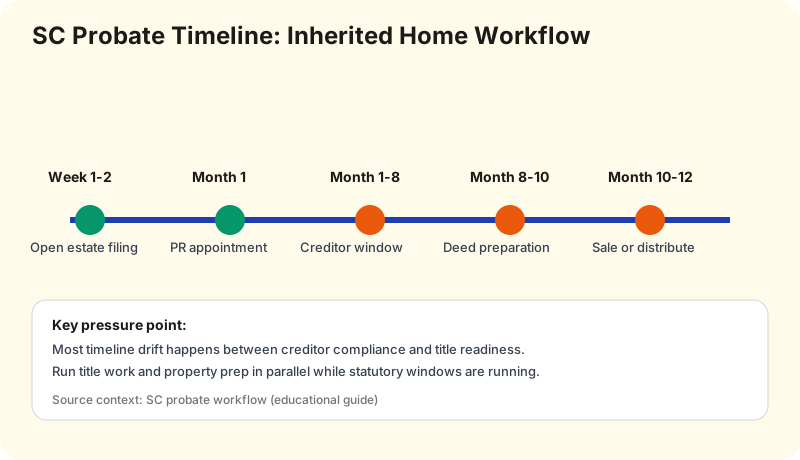
South Carolina’s creditor-notice structure is one of the biggest practical differences families feel. Estate timelines are not just “how long until the court signs something.” They are constrained by statutory windows, publication requirements, and claim resolution workflow. That is why many families underestimate duration at the start and overpay carrying costs during month five through month nine.
In plain language: even efficient estates often cannot skip the creditor process. You can still prepare and sometimes even market strategically, but closing mechanics must align with risk tolerance and title requirements.
Typical timeline bands (not guarantees)
| Estate Profile | Approximate Duration | Main Drivers |
|---|---|---|
| Simple, cooperative, clear records | 8–10 months | On-time filings, no disputes, straightforward claims |
| Moderate complexity | 10–14 months | Repair decisions, lien cleanup, heir coordination |
| Contested or messy title/debt | 14+ months | Hearings, objections, documentation gaps |
Why families still prep property early
Because waiting to start all property work until late-stage probate can produce a second avoidable delay. Smart sequencing usually means: secure and preserve immediately, gather title/lien facts early, and decide your sale strategy while the creditor window runs. That way the property is not just starting prep when the estate becomes ready to distribute or close.
Delay multipliers to watch
- Missing original will or uncertain testamentary documents
- Unclear heir addresses or notice defects
- Lapsed insurance on a vacant house
- Unpaid taxes or surprise municipal liens
- Out-of-state heirs with no shared communication rhythm
- One heir occupying property while others bear costs
- Informal side-deals with investors before authority is settled
None of these guarantee disaster. But each one can turn a clean 9-month process into a 15-month process if ignored.
Want a simple exit once the estate can sell?
Get a free, no-obligation cash offer on the inherited home — any condition, no repairs or showings — so you have a clean sale option ready when the timing is right.
6. Deed of Distribution, Title Transfer, and Selling an Inherited House Without Creating New Problems
For South Carolina inherited real estate, title transfer mechanics are often where families get lost. The Deed of Distribution concept sounds simple: move title from estate context to heirs per will/intestacy result. In execution, it requires clean sequencing with estate status, forms, signatures, and county recording workflow.
The deed instrument itself is not a magic cure for prior defects. If there are old unreleased liens, missing prior deeds, or legal-description inconsistencies, those may still need separate title work before a fully financed buyer can close.
Two common sale pathways
- Estate-level sale path: personal representative sells under authority (will/court posture permitting), proceeds flow through estate, net later distributed.
- Post-distribution heir sale path: Deed of Distribution records title to heirs, heirs then sell as owners (single or multiple owners depending on distribution).
Neither path is universally better. The right path depends on urgency, debt context, heir alignment, and buyer type.
| Factor | Estate-Level Sale | Post-Distribution Heir Sale |
|---|---|---|
| Control | Centered on personal representative authority | Shared among heirs after transfer |
| Contracting complexity | Fewer seller signatures in many cases | Can require all heirs to coordinate |
| Title sequencing | May require additional title underwriting review | Cleaner once distribution and recording complete |
| Best fit | Debt pressure, property-risk urgency | Cooperative heirs, no extreme time pressure |
Recording and fee context
County recording and deed-related fees in South Carolina are governed by statute and DOR guidance frameworks, with exemptions and category distinctions. Do not assume every deed instrument incurs identical fee treatment. Confirm treatment for your specific instrument and transaction posture with closing counsel or title professionals.
Selling strategy choices once title is clear enough
- As-is direct sale: speed priority, lower prep burden, typically lower gross price.
- Light-prep retail listing: moderate cleanup/repairs, broader buyer pool, longer timeline.
- Full renovation before sale: highest variance strategy; can outperform or underperform depending on execution.
If multiple heirs are involved, decide strategy by net-proceeds reality, not by emotional attachment to “what the house should be worth.” The correct question is: what strategy produces the best risk-adjusted net within your timeline constraints?
For broader sale-method comparisons, see our Carolina cash offer guide and timing guide for selling in the Carolinas.
7. Cost Map: Court Costs, Carrying Costs, and the Price of Delay
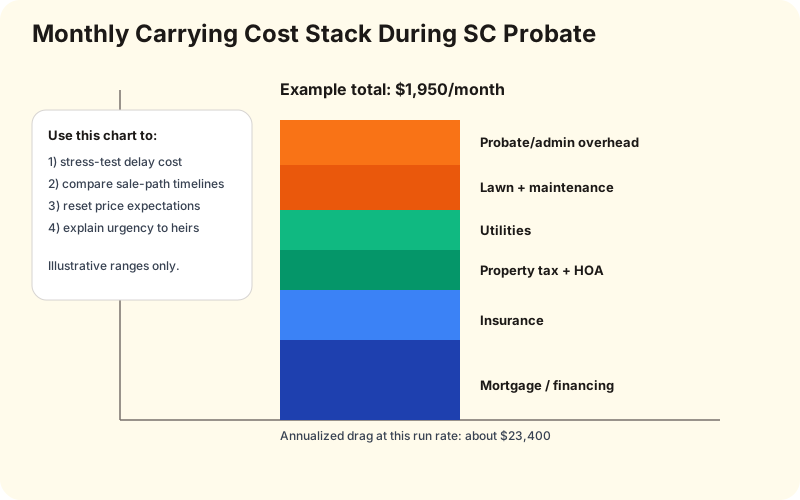
Families usually budget for court filing and attorney invoices. They forget the slow bleed: mortgage, insurance, utilities, lawn, HOA dues, and vacancy-related maintenance while probate runs. The estate can absorb these costs, but they reduce distributable value dollar for dollar.
Cost categories that commonly hit inherited homes
| Cost Category | Typical Pattern | Comment |
|---|---|---|
| Probate filing / administration fees | Front-loaded and milestone-based | County and estate-size dependent |
| Attorney fees | Flat, hourly, or hybrid | Complexity and dispute level drive spread |
| Insurance transition | May increase for vacancy risk | Do not let policy lapse during transfer period |
| Mortgage / taxes / HOA | Monthly carrying | Largest cumulative drag in long timelines |
| Deferred maintenance catch-up | Burst expense cluster | Roof/HVAC/plumbing issues compound with delay |
| Yard / basic security | Monthly or biweekly | Prevents citation risk and vandalism attraction |
Simple delay math example
Assume carrying costs of $1,650 per month across mortgage, insurance, utilities, taxes, lawn, and incidentals. A four-month avoidable delay burns $6,600. If heirs are splitting four ways, that is $1,650 each in lost net, before legal friction or repair surprises. Delay costs are invisible until final accounting, then suddenly very visible.
These are illustrative numbers. Run your own mortgage, insurance, utilities, taxes and lawn care through our cost-of-waiting calculator to see your real total.
Delay also raises risk of “distress discounts.” As carrying pressure rises, families become more likely to accept the first offer that promises certainty, even if it is materially below what a better-planned strategy could have netted.
Insurance and vacancy are not optional details
Vacant homes can trigger different underwriting terms and loss limitations. A break-in, leak, or weather event during lapse can instantly erase months of careful administration. Confirm occupancy clauses, vacancy windows, and required mitigation steps in writing with the insurer.
Property preservation checklist while probate runs
- Rekey and secure access points
- Inspect for active leaks and HVAC function
- Maintain minimum utilities as required by policy and season
- Maintain lawn/exterior to avoid code citations
- Photograph condition at intervals for records
- Track every cost in estate ledger with receipts
8. Tax and Filing Reality for Heirs: What Usually Applies, What Usually Doesn’t
Tax anxiety causes families to freeze, and freeze causes delay. The right approach is to distinguish estate-level taxes, beneficiary-level taxes, and transaction-level transfer costs. Most heirs in South Carolina are not writing a check just because they inherited a house, but that does not mean tax planning is irrelevant.
Key tax concepts heirs should understand early
- No blanket “inheritance tax bill” event for most SC heirs: common confusion, often based on out-of-state rules.
- Basis step-up concept: date-of-death valuation matters for future capital-gain calculations if/when property is sold.
- Estate income vs. individual income: rental income or estate-generated income can trigger filing obligations.
- Property tax/escrow continuity: taxes still accrue while estate administration proceeds.
For deed and recording cost context, South Carolina DOR publishes deed recording fee guidance and statutory references. These are transaction mechanics, not a substitute for individualized tax advice.
Where families make avoidable tax mistakes
- Skipping credible date-of-death valuation evidence
- Treating sale proceeds as if no basis rules apply
- Ignoring 1099 or estate income reporting duties
- Assuming online calculator outputs are legal advice
| Tax/Fee Topic | Why It Matters in Probate Sales | Who Should Confirm |
|---|---|---|
| Date-of-death value evidence | Supports gain/loss calculations at sale | CPA/tax advisor + closing file |
| Estate income reporting | Applies if estate receives income during administration | CPA or qualified preparer |
| Deed/recording fees | Affects closing-cost expectations | Closing attorney/title office |
| State/federal threshold changes | Rules can change year to year | Current-year professional guidance |
Educationally, the best move is simple: keep clean records, capture valuation evidence early, and involve a tax professional before distribution if the estate includes meaningful real estate value or mixed asset classes.
9. Family Dynamics and Dispute Prevention: The Soft Skills That Save Hard Dollars
Most probate delays are not statutory; they are human. One sibling lives nearby and does all the work. Another sibling questions every invoice. A third wants the highest list price even if carrying costs are crushing everyone. None of this is unusual. The fix is structure, not optimism.
Minimum communication protocol for multi-heir estates
- Monthly written update from personal representative
- Shared document folder for key records (letters, invoices, taxes, offers)
- Decision deadlines (for repair approvals, listing strategy, offer response)
- Single point of contact with attorney/agent to avoid conflicting instructions
When heirs see the same data at the same time, accusations drop. When data flows through private side channels, suspicion grows fast.
Occupancy conflicts
A common flashpoint: one heir moves in “temporarily” during probate. If that happens without written agreement, cost-sharing and sale timing disputes usually follow. If occupancy is allowed, establish terms immediately: utilities, maintenance responsibility, duration, and move-out trigger tied to sale milestones.
Offer-management discipline
Probate-targeting investors often contact heirs before authority and title are mature. Some offers are legitimate; some are designed to exploit uncertainty. Require written proof of funds, clear assignment terms, and enough time for legal review. “Today only” pressure is a red flag in estate settings.
| Conflict Trigger | Preventive Step | If Already Happening |
|---|---|---|
| No one trusts expense reimbursements | Shared ledger + receipts | Reconstruct quickly and freeze undocumented spending |
| Heirs disagree on sale method | Compare net/timeline scenarios in writing | Use mediator or counsel-facilitated conference |
| One heir occupies home rent-free | Written occupancy terms | Set formal occupancy agreement or termination date |
| Pressure to sign quick contract | Mandatory 24–48 hour review window | Pause and review with attorney before execution |
If family communication has already deteriorated, do not force major decisions through group text. Move to structured calls with agendas and written summaries. That alone can save months.
Get Your Free, No-Obligation Cash Offer
Tell us about the inherited property and we'll send a real cash offer — any condition, no repairs or showings, and you close on your timeline.
10. Practical Playbooks: Three Realistic Paths for South Carolina Heirs
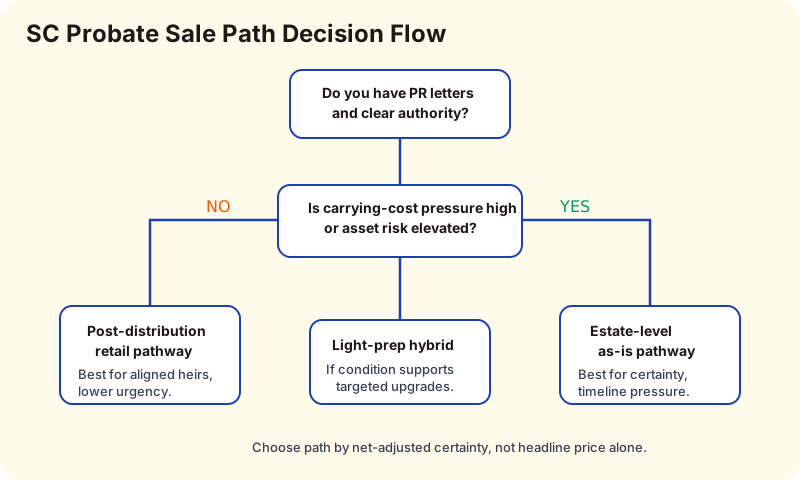
There is no universal “best” strategy. The right plan depends on property condition, debt load, timeline urgency, and family alignment. These three playbooks cover most inherited-home cases in South Carolina.
Playbook A: Preserve, Distribute, Then Retail List
Best for: cooperative heirs, no severe debt pressure, house is financeable with moderate prep.
- Open probate, secure property, keep records clean.
- Run essential repairs only (safety, water, systems).
- Complete distribution/title sequence.
- List with market-based pricing and clear disclosure package.
Tradeoff: usually stronger gross price, but longer calendar and carrying exposure.
Playbook B: Estate-Level As-Is Sale for Certainty
Best for: high carrying pressure, major deferred maintenance, unresolved family appetite for renovation risk.
- Confirm personal representative authority and title path.
- Collect multiple as-is bids (not one).
- Evaluate net certainty, closing speed, and contingencies.
- Close through estate process, then distribute net proceeds.
Tradeoff: lower top-line potential, higher speed and lower operational burden.
Playbook C: Light-Prep Hybrid Sale
Best for: property with cosmetic drag but solid core systems, heirs willing to fund/approve a short prep sprint.
- Pre-scope a 2–4 week repair/cleanup plan.
- Cap budget and avoid open-ended renovation creep.
- Launch with professional photos and clear as-is addendum boundaries where needed.
- Track days on market and price-adjust decisively if response is weak.
Tradeoff: can outperform pure as-is with controlled risk, but requires coordination discipline.
| Playbook | Timeline Profile | Operational Workload | Price Potential |
|---|---|---|---|
| A. Distribute then retail | Longer | Medium | High (when execution is strong) |
| B. Estate as-is sale | Shortest | Low | Lower top-line, high certainty |
| C. Light-prep hybrid | Moderate | Medium-high | Moderate-high |
Use a net sheet, not intuition. One clean spreadsheet with price, fees, carrying months, repair budget, and risk discount assumptions will end more family arguments than five emotional meetings.
11. South Carolina Help Directory: Legal, Court, and Housing Resources You Can Use Today
When families are overloaded, knowing where to call matters more than reading one more generic article. Start with official resource points and then narrow to county specifics.
Core legal and court resources
- South Carolina Judicial Branch Probate Court: court structure and county contacts
- South Carolina Code of Laws Title 62: probate statute text
- SC Judicial Forms: official probate forms (including 350ES, 361ES, 400ES)
- County probate websites: filing fees, local instructions, intake logistics
Attorney and legal-aid pathways
- SC Bar Lawyer Referral Service: referral by practice area and geography, with posted consultation framework
- SC Access to Justice: probate help pathways, legal resource finder, self-help links
- South Carolina Legal Services: civil legal aid screening for eligible low-income residents
Housing and financial stress support
- HUD housing counselor finder: approved counselors and hotline support
- HUD South Carolina hub: state-level program links and contact points
| Need | First Contact | Backup Contact |
|---|---|---|
| Find county probate process details | County probate court site/office | SC Judicial Branch probate pages |
| Get a probate attorney referral | SC Bar LRS | Local bar association directories |
| Need low-cost civil legal help | South Carolina Legal Services intake | SC Access to Justice resource finder |
| Foreclosure/financial distress counseling | HUD-approved counselor finder | HUD hotline and regional agencies |
If you are balancing probate and foreclosure pressure, read our South Carolina foreclosure timeline guide. If you are deciding timing vs urgency, use the best time to sell in the Carolinas guide as a companion.
12. Your 30-Day Action Plan: What to Do Next Without Getting Stuck
Probate moves better when the first month is structured. Here is a practical 30-day plan you can execute even while grieving and handling family logistics.
Days 1–7: Stabilize and protect value
- Secure property access and verify insurance status in writing.
- Collect core documents (will, death certificate, deed references, mortgage statements).
- Identify county venue and confirm intake requirements before filing.
- Start a shared records folder and estate expense ledger.
Days 8–14: Open probate correctly
- File for appointment and letters with complete packet.
- Clarify bond status and any required additional filings.
- Set heir communication cadence and decision protocol.
- Engage probate counsel if complexity, conflict, or title issues appear.
Days 15–21: Build timeline and property strategy
- Create a timeline map keyed to creditor and court milestones.
- Get baseline property condition assessment and urgent repair scope.
- Build a three-option net comparison (as-is, light prep, full retail prep).
- Document who approves what and by when.
Days 22–30: Execute with discipline
- Implement preservation repairs and maintenance workflow.
- Finalize valuation/tax documentation approach with professionals.
- Prepare title and deed-transfer checklist tied to your chosen sale path.
- Keep communications written and archived.
If you do only one thing after reading this guide, do this: create one shared, date-stamped timeline document with responsibilities and deadlines. Probate gets heavy when everyone assumes someone else is tracking the clock.
When you are ready to evaluate your home-sale path, you can request a no-pressure options breakdown: timeline, likely net ranges under multiple strategies, and what needs to happen first in South Carolina probate so you do not lose months to preventable sequencing errors.
Ready to sell the inherited home?
A cash offer lets you skip repairs, showings, and buyer financing delays and close on a date that works for the estate.
13. Detailed Scenario Walkthroughs: How Probate Decisions Change Outcomes
Abstract guidance is useful, but families make decisions in specific circumstances. The scenarios below show how the same legal framework can produce very different results depending on records, cooperation level, and property condition. These are educational models, not promises, and they do not replace legal advice for your estate.
Scenario A: Cooperative siblings, modest updates needed, no major debt surprises
A Columbia-area family inherits a 1980s three-bedroom home free and clear. The will is clear, the named personal representative is willing to serve, and all heirs agree that selling is likely best. The house needs paint, flooring refresh, and exterior cleanup, but no structural crisis.
What goes right: they open probate promptly, maintain insurance continuously, and keep a shared expense sheet from day one. During the creditor window, they complete low-risk cosmetic prep and gather contractor invoices. By the time distribution/title mechanics are ready, the house is photo-ready and listed quickly. They do not over-renovate.
Outcome pattern: better buyer pool, controlled carrying duration, reduced family conflict because all major decisions were documented. Their biggest win was not “perfect pricing”; it was avoiding dead time between probate milestones.
Scenario B: One heir occupies the home, no written agreement, expenses become disputed
A Greenville County family opens probate correctly, but one sibling moves into the inherited house immediately. At first everyone agrees informally. After three months, utility bills rise, lawn expenses continue, and other heirs question whether occupancy is delaying sale preparation.
What goes wrong: there is no occupancy agreement, no rent-credit framework, and no written timeline for move-out tied to sale milestones. Communication shifts from cooperative to accusatory. The personal representative spends energy managing arguments instead of process tasks.
Recovery move: counsel helps establish written occupancy terms, expense sharing, and a fixed path to sale. The estate loses time, but conflict is contained once expectations are written and enforceable.
Scenario C: Fast cash offer arrives before authority and title are ready
In a coastal county, heirs receive direct mail and text outreach within weeks of the obituary publication. A buyer offers a quick close and emphasizes “no probate headaches.” The number sounds attractive because the family is exhausted.
Risk: signing early without validating authority, assignability terms, and title path can lock heirs into low-flexibility contracts while key probate steps remain unresolved. Even if the buyer is legitimate, the estate may be bargaining from a position of uncertainty.
Better path: obtain letters, verify title posture, collect competing offers, and compare net certainty rather than headline price. In many estates, that process alone improves economics and lowers legal friction.
Scenario D: Deferred maintenance + storm damage during probate
A Spartanburg-area inherited house sits vacant. Insurance remained active, but routine checks were inconsistent. A storm event causes roof intrusion; mold risk follows. Repair scope increases while probate continues.
Lesson: vacancy management is not cosmetic. Scheduled inspections, humidity control, and immediate mitigation are value-protection essentials. Estates that treat preservation as optional pay for it later through lower offers and emergency spend.
Scenario E: Title irregularity discovered late
After months of probate progress, the closing attorney identifies a prior unreleased lien and legal-description mismatch tied to an older deed chain. Buyers are interested, but underwriting cannot clear quickly.
What could have prevented it: early title review during the creditor period. Families often wait to order title work until they have a contract, but that delay can force renegotiation or contract collapse.
Operational takeaway: title readiness is a parallel track, not a final-week checklist.
Scenario F: Out-of-state heirs and slow decision loops
An estate with heirs in South Carolina, Georgia, and Texas struggles with timing. Every decision takes two weeks because no one owns the process calendar. Meanwhile, carrying costs continue monthly.
Fix: one coordinator, one decision log, and standing call times with pre-read documents. Even without legal conflict, weak operational structure creates expensive drift.
Pattern summary from the scenarios
| Scenario Pattern | Early Decision That Helps | Late Decision That Hurts |
|---|---|---|
| Cooperative estate | Open probate and plan property prep in parallel | Waiting for “perfect certainty” before any prep |
| Occupancy conflict | Written occupancy terms immediately | Verbal understandings only |
| Quick-offer pressure | Validate authority + compare multiple nets | Signing under urgency narrative |
| Vacancy risk | Routine inspections + mitigation | Ignoring property until listing date |
| Title complexity | Run title review early | Waiting until under contract |
| Remote heirs | Formal communication cadence | Ad hoc text-thread governance |
These examples highlight the core thesis of this guide: probate outcomes are heavily operational. The legal framework is important, but execution discipline determines whether your family experiences probate as manageable administration or recurring crisis.
How to choose a scenario-aligned strategy for your estate
Use this three-question filter:
- Authority clarity: Do we have letters and a documented decision framework?
- Asset risk: Is the property stable, insured, and maintained enough to hold safely through timeline milestones?
- Coordination capacity: Can heirs make decisions on a predictable schedule without escalation?
If all three are “yes,” you can optimize for value. If one or more are “no,” optimize for certainty and conflict containment first. Value maximization without governance usually backfires.
The hidden variable: emotional bandwidth
Families often underestimate how grief and logistics interact. You may have legal authority and financial capacity but still be decision-fatigued. In those moments, simple systems matter: checklists, clear meeting agendas, and written next-step ownership. Complexity feels smaller when responsibilities are visible.
No estate strategy survives if everyone is overwhelmed and nobody owns sequencing. Build the operating system first. Then pick the sales path.
14. South Carolina Probate FAQ for Inherited-Home Sellers
Do we have to probate every estate in South Carolina?
Not every asset requires probate. Some assets pass outside probate by beneficiary designation, joint survivorship, or trust structure. But real property titled solely in the decedent’s name often requires probate-related administration and clean title transfer before a conventional sale can close. If you are unsure, ask a probate attorney to map each asset category instead of guessing.
Can we list the house before probate is fully complete?
Sometimes you can market while probate is in progress, but you should not sign binding terms that exceed current authority or ignore title limitations. Marketing strategy, contract timing, and closing readiness are different issues. Your legal and closing professionals should align these before launch.
What is the difference between having a will and being appointed?
A will nominates. Appointment and letters authorize. Being named is not the same as being empowered to bind the estate in transactions. Families that respect this distinction avoid many downstream contract and title problems.
How long does probate take if nobody fights?
Many uncontested South Carolina estates still run around eight months or more because of statutory process windows and administrative tasks. Contests, title defects, missing documents, or poor communication can extend timelines significantly. Treat online “30-day probate” claims with skepticism unless they clearly describe an exceptional fact pattern.
Can one heir force an immediate sale?
Not automatically. Rights and remedies depend on will terms, appointment status, fiduciary duties, and court posture. In some situations, disputes over sale decisions can lead to formal proceedings. If disagreement becomes persistent, get legal guidance before unilateral action creates liability.
Who pays the bills while probate is open?
Estate obligations are generally paid from estate assets under fiduciary administration, but cash-flow timing can be tricky if liquid funds are limited. Any out-of-pocket advances by heirs should be documented with receipts and clear reimbursement terms to avoid later disputes.
Is a Deed of Distribution the same as a warranty deed?
No. Deed instruments can serve different legal purposes and warranty scope. In inherited-home contexts, families should not assume one deed type carries the same guarantees as another. Closing professionals can explain implications for your transaction.
Do we need an appraisal?
You need credible valuation evidence for decision-making and tax/basis support. Whether that is a formal appraisal or another acceptable valuation approach depends on estate complexity, risk tolerance, and advisor guidance. In many estates, formal appraisal is money well spent.
What if the house has a mortgage?
The existence of a mortgage does not erase probate duties. The loan must be managed during administration, and payoff/assumption/sale decisions must align with authority and timeline realities. Ignoring lender communications is a fast way to convert a manageable estate into distress.
Can we rent the property during probate?
Potentially, but rental introduces landlord obligations, accounting complexity, and additional risk. If a temporary rental plan is considered, evaluate insurance, lease terms, maintenance, and fiduciary documentation requirements first. “Quick rental income” can become “quick legal complexity” if done casually.
What records should the personal representative keep?
Keep everything: bank records, invoices, receipts, correspondence, maintenance logs, tax documents, and decision memos. If a dollar moves, preserve proof. If a decision is made, preserve rationale. Strong records are the difference between smooth closing and late-stage conflict.
Should we renovate before selling?
Only if the renovation thesis is specific, budget-capped, and supported by realistic net projections. Families frequently overestimate renovation upside and underestimate execution risk. In probate estates, speed and certainty can be more valuable than theoretical top-line price.
How many offers should we collect for an as-is sale?
More than one. A single unsolicited offer is data, not market truth. Collect multiple offers with comparable terms and evaluate net, contingencies, and close probability. A lower nominal price with cleaner terms can outperform a high nominal number with execution risk.
What if we cannot afford a private attorney?
Start with South Carolina Legal Services eligibility screening and SC Access to Justice resources. The SC Bar referral system can also help locate counsel quickly, including initial consultation pathways. Delay from not asking for help often costs more than the consultation you were trying to avoid.
Can probate be reopened after closing?
Certain estate matters can require subsequent administration depending on facts, newly discovered assets, or unresolved issues. The possibility of follow-up proceedings is another reason to keep records and close carefully rather than rushing the final steps.
What if we live out of state and cannot appear often?
Out-of-state heirs are common. Use written authority frameworks, scheduled communication, and local professional support so distance does not become dysfunction. Probate delay is rarely about geography alone; it is about process ownership.
How do we avoid “investor pressure mistakes”?
Create a mandatory review protocol: no same-day signatures, proof-of-funds required, legal review before execution, and at least one comparison offer. Urgency language is a negotiation tactic; it is not a fiduciary requirement.
Do we need to notify all heirs even if they are unresponsive?
Notice requirements are legal obligations, not optional courtesy. Failure to handle notice properly can create later challenges. If heirs are hard to locate, document efforts and follow counsel guidance on service methods.
What is the best first call if we are overwhelmed?
Call the county probate court for process orientation, then schedule a probate attorney consult if complexity appears. In parallel, secure insurance and property condition immediately. This two-track start prevents the most expensive early errors.
How should we think about timing if we also face foreclosure risk?
Do not wait for perfect certainty. Build a timeline that integrates probate milestones and lender deadlines simultaneously. If needed, involve HUD-approved counseling resources and legal aid pathways early. Time pressure is survivable when tracked; it is dangerous when ignored.
If this FAQ feels long, that is intentional. Probate confusion thrives in oversimplified advice. The goal is not to make the process feel scary; the goal is to make it predictable enough that your family can move through it with fewer surprises.
When you are ready, summarize your estate in one page: county, appointment status, known debts, property condition, family alignment level, and target timeline. With that snapshot, your attorney, advisor, or sale professional can give focused next-step guidance instead of generic answers.
See What We'd Pay for Your Home
Get a free, no-obligation cash offer — any condition, no repairs or showings, and close on the timeline that fits the estate. No pressure.
15. Advanced Planning Notes: Timeline Templates, Document Checklist, and Glossary
This final section is designed as a reusable working appendix. If you are the personal representative or the family member organizing communication, copy these frameworks into your own tracker and adjust dates to your case. Probate is less intimidating when converted into dated, assigned tasks.
Template A: 12-month estate timeline planner
| Month | Primary Objective | Owner | Status Notes |
|---|---|---|---|
| Month 1 | Open probate, secure property, confirm insurance | PR + counsel | Letters requested; occupancy status documented |
| Month 2 | Asset/debt discovery and communication framework | PR | Heir contact list finalized; ledger started |
| Month 3 | Inventory completion and filing check | PR + attorney | Inventory draft reviewed for completeness |
| Month 4 | Property strategy decision (as-is, light prep, retail) | PR + heirs | Decision memo and budget cap approved |
| Month 5 | Maintenance and title review progress | PR + closing attorney | Known lien/description issues tracked |
| Month 6 | Offer-prep or listing-prep package assembled | Agent/PR | Disclosures and condition docs gathered |
| Month 7 | Creditor-window checkpoint + risk review | PR + counsel | Claims log updated |
| Month 8 | Transaction execution readiness | PR + closing team | Authority/title gate review completed |
| Month 9 | Distribution/sale sequencing | PR + counsel | Path selected based on readiness |
| Month 10 | Close transaction or finalize distribution docs | PR + closing attorney | Recording and settlement confirmations retained |
| Month 11 | Accounting cleanup and final obligations | PR + CPA | Tax and reimbursement records finalized |
| Month 12 | Estate closing workflow | PR + counsel | Final reporting package complete |
You will not use this template perfectly. That is normal. The goal is to prevent silent drift and decision paralysis, not to win a project-management award.
Template B: Offer evaluation matrix for inherited-home sales
| Criteria | Offer 1 | Offer 2 | Offer 3 |
|---|---|---|---|
| Price | |||
| Proof of funds / financing strength | |||
| Inspection contingencies | |||
| Closing timeline realism | |||
| Assignment rights clarity | |||
| Title/probate cooperation requirements | |||
| Estimated net to estate | |||
| Execution risk score (1–5) |
Families commonly overweight nominal price and underweight execution risk. In probate settings, the best contract is often the one most likely to close cleanly with the least procedural friction, not the one with the largest headline number.
Document checklist by category
Use this as a practical control list; tailor to your attorney’s requirements.
- Court/appointment documents: petitions, orders, letters, notices, hearing dates, filed forms, and stamped copies.
- Property/title documents: prior deed references, tax records, HOA statements, mortgage payoff info, title commitments, lien correspondence.
- Financial records: estate account statements, invoices, receipts, maintenance contracts, reimbursement logs.
- Tax records: valuation evidence, prior returns as available, closing statements, relevant 1099 or reporting items.
- Communication archive: heir update memos, decision logs, attorney instructions, offer summaries.
Do not wait until final accounting to organize records. Organization during administration is easier than reconstruction under deadline.
Risk triage board (red/yellow/green)
| Risk Area | Green (Stable) | Yellow (Watch) | Red (Immediate Action) |
|---|---|---|---|
| Authority status | Letters issued and current | Pending appointment | Unclear signer attempting to contract |
| Insurance | Active with vacancy compliance | Policy questions unresolved | Lapse or claim-denial risk identified |
| Title | No material defects found | Minor curative items pending | Major lien/description issue unresolved |
| Family alignment | Documented agreement process | Slow responses | Open dispute blocking decisions |
| Cash flow | Carrying costs funded | Short horizon reserve | Missed mortgage/tax risk |
Review this board every two weeks. Red items deserve same-week action; yellow items deserve owner assignments and dates.
Glossary: plain-English probate terms South Carolina families encounter
Administrator: person appointed to manage an intestate estate (no valid will controlling appointment).
Beneficiary: person named in a will or instrument to receive assets.
Bond: financial security that may be required of a fiduciary to protect estate stakeholders.
Creditor claim period: statutory window for creditors to present claims after proper notice.
Deed of Distribution: probate-related deed instrument used in estate distribution context for real property transfer mechanics.
Devisee: person receiving property under a will.
Domicile: decedent’s principal legal residence for venue purposes.
Estate account: dedicated fiduciary bank account for estate transactions.
Executor: common term for personal representative named in a will and appointed by court.
Heir: person entitled to inherit under intestacy law when no controlling will distribution exists.
Informal probate: less hearing-intensive process for eligible estates without major disputes.
Intestate: dying without a valid will controlling distribution.
Letters: court-issued authority document confirming fiduciary appointment.
Notice: legally required communication to interested persons or creditors in specified forms.
Personal Representative (PR): fiduciary appointed to administer the estate.
Probate estate: assets subject to court-supervised estate administration.
Surcharge: financial liability that may be imposed on fiduciary for breach-related loss.
Testate: dying with a valid will.
Common sequencing mistakes to avoid (final checklist)
- Starting negotiations before authority and title posture are mapped.
- Paying estate expenses from personal accounts without records.
- Delaying title review until after accepting an offer.
- Allowing occupancy arrangements without written terms.
- Treating tax and valuation steps as “later problems.”
- Ignoring court deadlines because no one owns the calendar.
- Assuming family consensus exists without written confirmation.
If you avoid these seven mistakes, your estate is already ahead of many that derail despite otherwise simple facts.
How to use this guide with professionals
Bring this framework into your attorney or advisor call and fill in the blanks live: county, appointment status, creditor timeline, title issues, property condition, and strategy preference. That turns a generic consultation into a high-yield planning session.
Professionals can work faster when your facts are organized. Organized facts reduce billable discovery, reduce misunderstandings, and increase confidence across all heirs.
Final perspective
Probate in South Carolina is serious, but it is not unknowable. Families succeed when they respect the legal sequence, protect the asset while the clock runs, and choose strategy from documented tradeoffs rather than urgency or emotion. If your estate feels messy today, that does not mean it will stay messy. Build the process, assign ownership, and move one milestone at a time.
And if you need help mapping sale options after probate milestones are clear, ask for a side-by-side net-and-timeline breakdown in plain language. Good decisions come from clear comparisons, not pressure.
16. Probate-to-Sale Execution Workbook: Weekly Cadence for the First 12 Weeks
If your family is in the first three months after loss, this workbook section is the most practical part of the guide. The goal is to convert broad legal obligations into weekly execution blocks that preserve value and lower conflict risk. You can adapt the timeline, but keeping a weekly cadence prevents the common “we were busy but nothing moved” problem.
Week 1: control the property and information flow
Secure keys, locks, and access records. Document who currently has entry rights. Confirm insurance status and ask carrier-specific vacancy questions in writing. Set up one shared folder and one shared update channel. Establish that decisions will be documented, not assumed.
At this stage, avoid strategy debates about pricing and sale method. Your mission is stabilization and evidence capture. Take dated photos of exterior and interior condition. Gather immediate utility and mortgage status. Collect known recurring obligations (HOA, lawn, alarms, taxes).
Week 2: assemble filing packet and authority map
Identify county venue, confirm filing requirements with the probate office, and prepare appointment materials with counsel as needed. Build an authority map that clearly states: who can sign now, what cannot be signed yet, and what milestones unlock later actions.
This is where many families drift. If authority map is unclear, pause contracting conversations with buyers and vendors that imply binding commitments. Early clarity saves expensive reversals.
Week 3: estate ledger, communication protocol, and risk board launch
Open or confirm estate-account workflow according to counsel guidance. Build your ledger categories: utilities, insurance, maintenance, legal, court, taxes, and miscellaneous. Every expense gets a receipt and note. Launch the red/yellow/green risk board from Section 15 and review it weekly.
Set communication protocol: one weekly summary, one owner per task, one deadline per decision. This is not corporate bureaucracy; it is probate survival.
Week 4: property condition audit and urgent-scope plan
Conduct a focused condition audit: roof/leaks, HVAC, plumbing, electrical hazards, moisture, safety issues, exterior code exposure. Create a two-tier scope: urgent preservation items and optional marketability items. Fund only urgent items unless/until strategy is chosen.
If family members disagree on repairs, default to preservation and code compliance first. Deferred-preservation failures are usually more expensive than conservative preventive work.
Week 5: title and lien reconnaissance
Initiate early title review through appropriate professionals. Identify known mortgage payoff path, potential liens, and legal-description consistency. If defects appear, create curative timeline immediately rather than waiting for contract stage.
At the same time, update heirs with a concise status note: authority status, property condition findings, spending to date, and next decisions needed.
Week 6: strategy prework (without premature commitment)
Prepare three sale-path models: estate-level as-is, post-distribution retail, and light-prep hybrid. For each model, estimate timeline, direct costs, carrying months, and net range. Use conservative assumptions. Present models in one page so all heirs can compare apples to apples.
Avoid committing publicly to one path before authority and title checkpoints support that path. Planning early is good; premature commitment is risky.
Week 7: creditor-window checkpoint and expense realism
Reconcile all recurring costs against current reserve runway. If carrying pressure is higher than expected, update strategy assumptions now, not after arrears begin. Confirm creditor/timeline milestones with counsel so everyone understands what can and cannot accelerate.
If cash stress appears, certainty-focused strategies may become rational even if they sacrifice theoretical top-line value. Transparent math reduces blame later.
Week 8: market intelligence with guardrails
Collect professional opinions of value and as-is offer benchmarks. Require written assumptions and avoid relying on verbal “should sell for” estimates. Compare offer quality, contingency structure, and close reliability, not just price headlines.
If a direct buyer uses high-pressure language, enforce your review protocol: no same-day acceptance, full document review, and at least one comparison set.
Week 9: decide path and assign execution owners
Choose one primary strategy based on net-adjusted certainty, not emotion. Assign owners for each execution lane: legal/timeline, property prep, buyer/listing workflow, and heir communication. Set fallback trigger points (for example, if no qualified offers by X date, shift to plan B).
Week 10: execute chosen path with weekly scorecard
Run weekly scorecard against four metrics: timeline adherence, unresolved legal issues, carrying-cost trend, and family alignment risk. Small slippage is normal; untracked slippage is what creates crisis.
Week 11: pre-close readiness test
Before signing final-stage commitments, run a readiness test: authority confirmed, title issues addressed or disclosed, financial ledger current, distribution assumptions documented, and professional team aligned on close sequence. If any are incomplete, fix before advancing.
Week 12: close or reposition
If close-ready, execute and archive records cleanly. If not close-ready, reposition immediately rather than waiting passively. Repositioning can include pricing updates, scope adjustment, or strategy shift based on real data from the previous weeks.
| Weekly Metric | Target | Warning Sign | Corrective Action |
|---|---|---|---|
| Task completion rate | 80%+ planned tasks complete | Below 60% two weeks in a row | Reduce scope, reassign owners |
| Ledger completeness | 100% expenses documented | Missing receipts / unclear entries | Reconcile same week, freeze undocumented reimbursements |
| Risk board status | No unresolved red items | Red items aging past 7 days | Escalate to counsel/professional review |
| Heir communication cadence | Weekly summary sent | Gaps over 14 days | Reinstate standing update cycle |
| Carrying-cost trend | Stable/controlled | Unexpected monthly spike | Reforecast strategy and urgency level |
Use this workbook as your operating spine. Probate feels unpredictable when tasks are implicit. It becomes manageable when tasks are explicit, owned, and dated. Families cannot remove every legal or emotional difficulty, but they can remove avoidable confusion.
Done well, this weekly cadence protects both relationships and net proceeds. That is the real objective: not just getting through probate, but getting through it without unnecessary financial damage or family fracture.