
Best Time to Sell a House in NC & SC
Month-by-month selling data for the Carolinas — spring timing, Charlotte metro trends, carrying cost math, and what to do when life doesn't wait for April.

1. The Short Answer
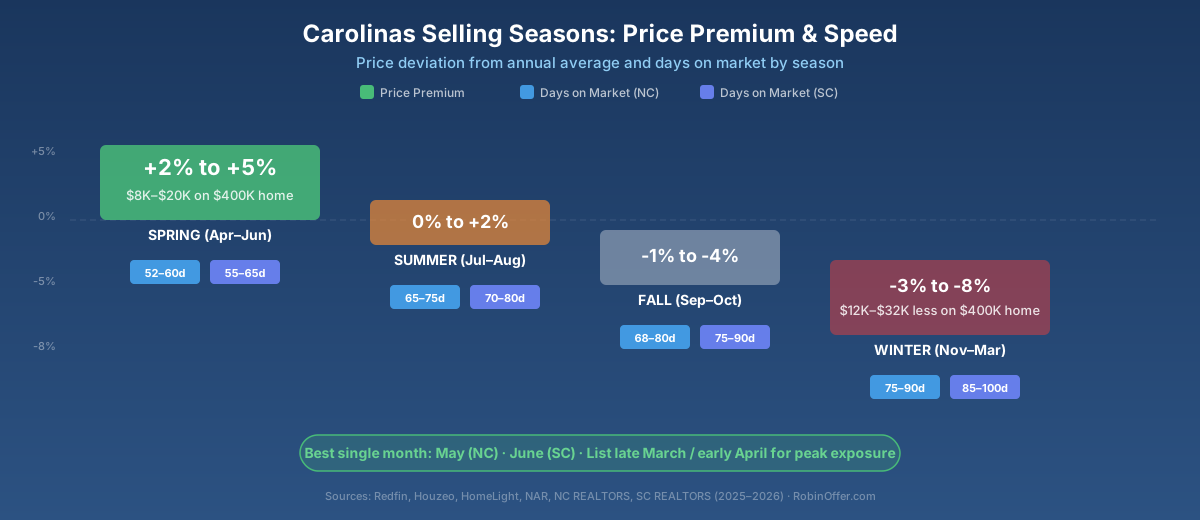
The best time to sell a house in North Carolina is late April through mid-June, with May as the single best month. In South Carolina, the same April–June window applies, but June edges ahead for maximum price. Homes listed during this window sell 11–17 days faster and command 2–5% higher prices than the annual average.
But every agent blog in America says "sell in spring." The real question is whether the spring premium is worth waiting for, and that depends on math most real estate content ignores. The price gap between the best month and worst month runs 8–13% peak-to-trough. On a $400,000 home, that is $32,000–$52,000 in theory. But if waiting six months costs you $18,000 in carrying costs (mortgage, insurance, taxes, maintenance), timing only helps sellers who have the luxury of choosing when to sell.
This guide gives you the month-by-month data for both Carolinas so you can make an informed decision. It also covers what to do when you cannot wait for spring, because life does not always cooperate with the real estate calendar.
If your timeline is being driven by a legal separation rather than seasonality, add this companion guide: selling during divorce in NC & SC. It helps you weigh timing against buyout feasibility, carrying costs, and conflict risk.
If your sale timing is driven by orders rather than seasonality, pair this with our military PCS relocation guide for NC and SC. It shows how to weigh certainty vs. top-line price when your report date is fixed.
2. The Seasonal Pattern: Why Spring Wins
The Charlotte metro's spring surge is not a marketing invention. It is driven by three forces that repeat every year with remarkable consistency.
Tax Refunds Hit Bank Accounts
The IRS processes the bulk of refunds between mid-February and late April. The average refund in the Carolinas runs $2,800–$3,200. For first-time buyers (and the Charlotte metro has a lot of them), that refund often becomes the difference between affording a down payment and not. When 200,000 households in the metro suddenly have an extra $3,000, buyer demand spikes.
The School Calendar Drives Family Moves
Both NC and SC school years typically end in late May or early June and start in mid-August. Families with school-age children (the largest segment of home buyers) want to be settled before the new school year begins. That means they need to find a home by June, close by July, and move by August. Working backward from that August deadline and you land squarely in the April–June listing window.
Weather Makes Homes Look Better
A home with a green lawn, blooming azaleas, and natural light pouring through the windows at 6 PM showings photographs and shows dramatically better than the same home on a gray January afternoon with bare trees and dead grass. Curb appeal is seasonal, and in the Carolinas, it peaks in April and May. Buyers form opinions in the first 30 seconds of pulling into the driveway, and those opinions are worth money.
Spring Selling by the Numbers
| Metric | Spring (Apr–Jun) | Annual Average | Spring Advantage |
|---|---|---|---|
| Average Days on Market (NC) | 52–60 days | 68–75 days | 11–15 days faster |
| Average Days on Market (SC) | 55–65 days | 72–81 days | 12–17 days faster |
| Price Premium vs. Average | +2% to +5% | Baseline | $8K–$20K on a $400K home |
| Buyer Competition | 1.5–2.5 offers per listing | 1.0–1.2 offers | More negotiating leverage |
| Showing Volume | 12–18 per week (first 2 weeks) | 6–10 per week | Higher exposure |
3. Best Month to Sell a House in North Carolina and South Carolina
Not every month is created equal, and the Carolinas have slightly different seasonal rhythms. Here is what the data shows for each month. The best time to sell a house in NC is not quite the same as SC.
January–February: The Dead Zone
The post-holiday slump is real: buyer activity drops 30–40% from the fall. Inventory is at its lowest, which sounds like it should help sellers, but it does not because the buyers who are active in January are bargain hunters and relocators on corporate timelines. They are not paying premiums.
| Metric | Jan–Feb (NC) | Jan–Feb (SC) |
|---|---|---|
| Days on Market | 75–90 days | 85–100 days |
| Price vs. Annual Average | -3% to -6% | -4% to -8% |
| Buyer Profile | Relocators, investors, motivated buyers | Snowbirds, retirees (coastal SC), investors |
| Seller Strategy | Price aggressively, emphasize turnkey condition | Price below comps, target relocation buyers |
When January works: If you are in a military-adjacent market (Fort Liberty area, Camp Lejeune corridor), January sees PCS orders being issued and military families starting their home search for summer moves. Getting listed early can capture this demand before the spring flood of listings.
March: The False Start
March is when serious spring buyers start looking, but most are not ready to make offers yet. They are attending open houses, getting pre-approvals, and narrowing their search area. Listing in March means your home is "seasoned" by the time peak buying activity hits in April and May, which can work against you if buyers perceive it as a stale listing.
The data is mixed: March listings sell slightly faster than January listings but at similar price points. You are essentially warming up the market without catching the peak wave. If you list March 1, your home may have 45+ days on market by mid-April, exactly when the freshest spring listings hit MLS. That is bad positioning.
The better play: Use March for pre-listing preparation (repairs, staging, professional photography) and go live the last week of March or first week of April. You want your listing to be brand new when peak buyer activity starts.
April–June: Peak Season
This is the window. Buyer traffic peaks, showing volume spikes, and multiple offers are most common. Within this window, the Carolinas differ slightly:
| Month | NC Advantage | SC Advantage | Best For |
|---|---|---|---|
| April | Fast sales (61 days avg) | Fastest month in SC (61 days avg) | Sellers prioritizing speed |
| May | Best month overall, highest prices, fastest sales (60 days) | Strong prices, strong traffic | Sellers wanting maximum price in NC |
| June | Still strong, slight cooling | Highest prices ($15K+ above average) | Sellers wanting maximum price in SC |
July–August: Summer Slowdown
Summer in the Carolinas is hot. Triple-digit heat index days in Charlotte, humidity that fogs your listing photos, and families already committed to summer plans. Buyer traffic drops 15–25% from the spring peak. But homes still sell, especially at lower price points where first-time buyers and relocators remain active.
| Metric | Jul–Aug (NC) | Jul–Aug (SC) |
|---|---|---|
| Days on Market | 65–75 days | 70–80 days |
| Price vs. Annual Average | 0% to +1% | 0% to +2% |
| Competition from Other Sellers | Moderate, some spring listings pulled off market | Moderate |
The silver lining of a July listing: the sellers who did not sell in spring are starting to reduce their prices, and new inventory drops off. If your home is priced correctly and shows well, you face less competition from other listings. The buyers who are still looking in July are motivated. They have a reason they need to move, and they are ready to act.
September–October: The Fall Window
Fall is the second-best selling season in the Carolinas, though it is a distant second. A brief surge in activity occurs after Labor Day as buyers make one more push before the holidays. The Charlotte metro typically sees a 10–15% bump in showings in September compared to August.
| Metric | Sep–Oct (NC) | Sep–Oct (SC) |
|---|---|---|
| Days on Market | 68–80 days | 75–90 days |
| Price vs. Annual Average | -1% to -3% | -2% to -4% |
| Buyer Profile | Corporate relocators, empty nesters, investors | Retirees, second-home buyers (coastal) |
Fall can work well for specific property types. Larger, more expensive homes ($600K+) in the Charlotte metro often perform better in fall because the buyer pool for those homes (established professionals, executives, empty nesters) is less tied to the school calendar. They buy when they find the right home, not when the season dictates.
November–December: The Holiday Headwind
The worst time to sell a home in the Carolinas by every metric, as buyer activity drops to its annual low and showings dry up during Thanksgiving week and barely recover before Christmas kills the remaining momentum. Homes listed in November take 20–30% longer to sell and close 5–8% below spring prices.
There is one counterargument worth mentioning: the buyers who are actively searching during the holidays are unusually motivated. A relocating executive who needs to close before year-end, a military family who just received orders, a divorcing couple with a court deadline. These are not casual browsers, and they will pay a fair price for the right home. But there are fewer of them, and you have no leverage in negotiations.
If you must list in November or December: Price 2–3% below where you would price in spring. Make the home feel warm and inviting for holiday showings (lighting matters enormously). And accept that you will likely not close until January or February, because lenders slow down during the holidays.
4. Charlotte Metro: The Biggest Market in the Carolinas
Charlotte's metro area spans 10 counties across both states: Mecklenburg, Union, Cabarrus, Iredell, and Gaston in NC, plus York and Lancaster in SC. More than 2.7 million people live here, and the housing market generates $15+ billion in annual transactions. When most Carolinas homeowners think about selling, they are thinking about this market.
Charlotte Metro 2026 Market Snapshot
| Metric | 2026 Data | Year-Over-Year |
|---|---|---|
| Median Home Price | ~$410,000 | Up 3–5% |
| Average Days on Market | 55 days | Down from 64 days (2025 avg) |
| Active Listings | ~4,800 | Up 24% |
| Months of Supply | 3.5–4.0 | Trending toward balance |
| Sale-to-List Ratio | 98.0–98.5% | Down from 99.5% (2024) |
| Cash Sale Percentage | ~37–40% | Stable |
The Charlotte market is normalizing. Days on market nearly doubled from 2024 to 2025 (29 to 64 days) before improving slightly to 55 days in early 2026. Inventory is up 24%, and multiple-offer situations are less common. This is not a crash (prices are still rising 3–5% annually), but it is a shift from a seller's market to a balanced market. In a balanced market, timing and pricing matter more than they did during the frenzy of 2021–2022 when anything sold in a weekend.
Best Time to Sell a House in Charlotte: Seasonal Timing
Charlotte's seasonal pattern is more pronounced than smaller Carolina markets because of the sheer volume of transactions. The spring surge here is driven by three distinct buyer pools arriving simultaneously: Charlotte corporate relocators (Bank of America, Wells Fargo, Truist cycle starts), families targeting the CMS and Fort Mill school calendars, and south-of-the-border buyers from SC crossing into Ballantyne, Weddington, and Indian Trail for NC school districts (or vice versa, Charlotte buyers crossing into Fort Mill and Indian Land for SC tax advantages). The Lake Norman corridor adds another layer, Huntersville's spring season peaks when lake lifestyle amenities are on full display, tightening list-to-sale ratios further.
| Season | Charlotte Metro Activity | Best Neighborhoods to List |
|---|---|---|
| Spring (Apr–Jun) | Peak, 40% of annual transactions | All neighborhoods benefit; family-oriented areas (Ballantyne, Fort Mill, Weddington) see the biggest surge |
| Summer (Jul–Aug) | Strong, 25% of annual transactions | Entry-level neighborhoods ($250K–$400K); first-time buyer activity remains high |
| Fall (Sep–Oct) | Moderate, 20% of annual transactions | Luxury and move-up neighborhoods ($600K+); corporate relocation continues |
| Winter (Nov–Mar) | Slow, 15% of annual transactions | NoDa, South End, Uptown condos (investor and young professional buyers are less seasonal) |
5. Best Time to Sell: NC vs. SC Differences
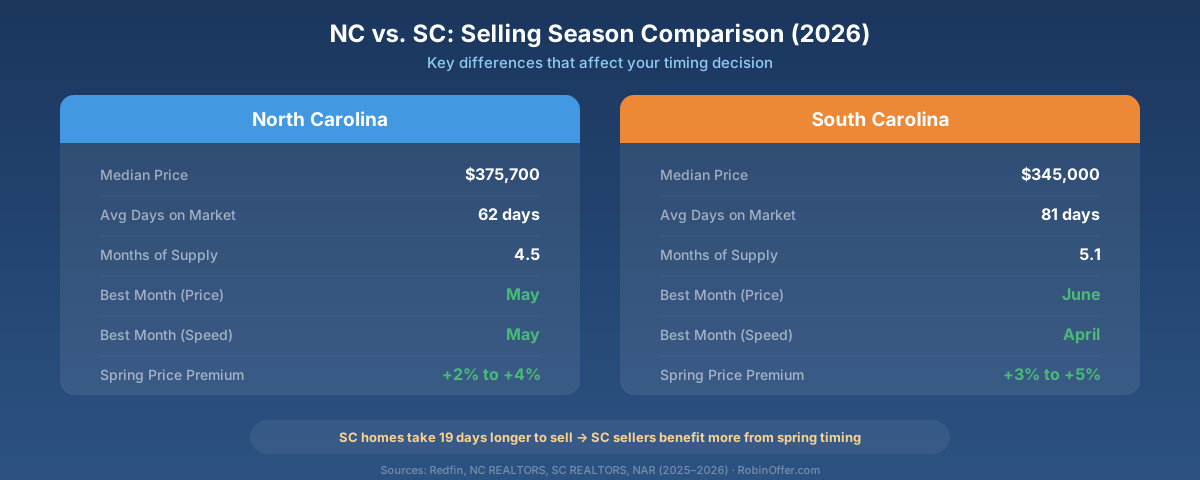
The best time to sell a house in SC is not quite the same as NC. The Carolinas share a border, a climate, and a major metro area, but the housing markets differ in ways that affect your timing decision.
NC vs. SC Market Comparison (2026)
| Metric | North Carolina | South Carolina |
|---|---|---|
| Statewide Median Price | $375,700 | $345,000 |
| Average Days on Market | 62 days | 81 days |
| Months of Supply | 4.5 | 5.1 |
| Best Month (Price) | May | June |
| Best Month (Speed) | May | April |
| Cash Sale % | 39.5% | 35–38% |
| Spring Price Premium | +2% to +4% | +3% to +5% |
Key Differences That Affect Timing
SC homes take longer to sell. South Carolina's average of 81 days on market versus NC's 62 days means SC sellers need to list earlier to close by any given target date. If you need to close before August 1 in SC, list by mid-March. In NC, you can wait until mid-April for the same target.
SC has more inventory relative to demand. With 5.1 months of supply versus NC's 4.5, SC is further into buyer's market territory, which means timing matters more. NC is approaching balanced but still slightly favors sellers. In SC's softer market, you need the spring demand surge to generate competition and multiple offers.
SC's coastal markets have different seasonality. Charleston, Myrtle Beach, and Hilton Head follow a different seasonal pattern than the Charlotte metro. Snowbird buyers and retirees drive demand spikes in October–November (pre-winter migration) and March–April (early spring). If you are selling coastal SC property, your optimal window may differ from the Upstate and Midlands.
NC's military markets have their own calendar. The Fort Liberty (Fayetteville) and Camp Lejeune (Jacksonville) corridors see a distinct demand pattern driven by Permanent Change of Station (PCS) orders, which are typically issued in spring for summer moves. Military families start searching 60–90 days before their report date, creating a mini-surge in those markets from March through June that overlaps with but is independent of the broader seasonal pattern.
Wondering what your home is worth right now?
Timing matters most when you know your starting point. Get a free home value estimate from ListRobin to see where your home stands in today's market.
6. The 2026 Market: What's Different This Year
Seasonal patterns are consistent, but the market conditions they play out in change every year. Here is what makes 2026 different from 2024 or 2025, and how it affects your timing decision.
Mortgage Rates Have Stabilized
After peaking near 7.5% in late 2023, 30-year fixed rates have settled into the 6.0–6.3% range as of early 2026. This is not the sub-3% environment that fueled the 2021 frenzy, but it is stable enough that buyers can plan and budget. Rate stability removes the urgency to "lock in before rates go higher" that compressed timelines in 2023–2024.
What this means for timing: Buyers are less likely to rush, which means the spring surge may spread out over a longer period (March through July) rather than concentrating in April–May. Pricing correctly matters more when buyers have time to compare.
Inventory Is Rising, But Not Flooding
Active listings across the Charlotte metro are up 24% year-over-year. In NC statewide, inventory is up roughly 11%. This is a normalization from the extreme shortage of 2021–2023, not a glut. Months of supply in Charlotte (3.5–4.0) is approaching the 4–6 month range that constitutes a balanced market.
What this means for timing: More competition from other sellers. In 2021, you could list a mediocre home in November and still get offers. In 2026, you need every advantage, and spring timing is one of the easiest advantages to capture. The cost of listing off-season is higher in a balanced market than in a seller's market.
Price Growth Is Slowing
Charlotte-area prices are still rising (3–5% annually), but the pace has decelerated from the 15–20% annual gains of 2021–2022. Slower appreciation means the "wait and sell later at a higher price" calculus changes. If prices are rising 0.3% per month, waiting three months for spring gains you 0.9% in appreciation, which may not offset three months of carrying costs ($8,400 at $2,800/month including mortgage, taxes, insurance, and maintenance).
| Scenario | Sell Now (January) | Wait for Spring (April) | Difference |
|---|---|---|---|
| Sale Price ($400K home) | $400,000 | $412,000 (+3% spring premium) | +$12,000 |
| 3 Months Carrying Costs* | $0 | -$8,475 to -$9,360 | -$8,475 to -$9,360 |
| Net Benefit of Waiting | +$2,640 to +$3,525 |
*Carrying costs include mortgage P&I ($1,935/mo at 6.1% on a $400K home with 5% down), property taxes, insurance, utilities, and maintenance. See the full breakdown in Section 8.
In this scenario, waiting three months for spring nets you roughly $2,600–$3,500. That is worth it for most sellers, but the margin shrinks fast. If your carrying costs are higher (two mortgages during a move, for example), or the spring premium for your specific home is closer to 2%, the math tilts toward selling now.
7. When You Cannot Wait: Selling Off-Season
Life does not consult the real estate calendar. Job loss, divorce, death in the family, PCS orders, and foreclosure timelines all create selling urgency that has nothing to do with whether it is April or November. If you are in one of these situations, here is how to make the best of off-season timing.
Off-Season Advantages (Yes, They Exist)
Less competition from other sellers. In the Charlotte metro, new listings drop 40–50% from October through January. If you are one of the few well-priced, well-presented homes on the market, you get disproportionate attention from the buyers who are actively searching.
More motivated buyers. Nobody browses open houses for fun in December. The buyers who are looking during the holidays are relocating, had a previous deal fall through, or have a financial deadline. They are ready to act and less likely to lowball.
Faster closings. Lenders, appraisers, and title companies are less busy in winter. The same closing process that takes 45 days in the spring frenzy may take 30–35 days in January simply because everyone in the transaction has more bandwidth.
Off-Season Strategies for the Carolinas
| Strategy | What It Means | Expected Impact |
|---|---|---|
| Price 2–3% below spring comps | Acknowledge the seasonal discount upfront | Faster sale, fewer price reductions |
| Invest in professional photography | Bright, warm interior shots; shoot on the rare sunny day | Better online impressions (90%+ of buyers start online) |
| Holiday staging | Tasteful, minimal seasonal decor; warm lighting; baked cookies scent | Emotional connection in cold-weather showings |
| Flexible showing schedule | Accept evening and weekend showings; keep lights on | Maximizes exposure during shorter daylight hours |
| Offer closing cost credits | 2–3% of sale price toward buyer's costs | Offsets buyer hesitation; common in off-season |
The Cash Offer Option: When Timing Does Not Matter
A cash offer eliminates the seasonal question entirely. Cash buyers do not care whether it is April or December. They buy based on the property's value and their investment thesis, not on buyer demand cycles. If your timeline is 30 days or less, a cash offer may be the only realistic path regardless of the calendar.
Cash timelines are consistent year-round:
- Day 1: Request an offer. You will receive one within 24–48 hours
- Days 2–5: Review the offer, compare against a CMA, ask questions
- Days 7–21: Close at a closing attorney's office (required in SC; standard in NC)
Whether it is January 15 or June 15, the cash timeline does not change. For sellers in time-sensitive situations (foreclosure, divorce, relocation, inherited property), this consistency is the primary value proposition. See our cash offer guide for the full breakdown of how cash offers work, what they typically pay, and how to avoid scams. And if you are weighing the two paths head-to-head, our cash offer vs. realtor comparison runs net proceeds at four price points with carrying costs included.
8. The Cost of Waiting: Carrying Cost Math
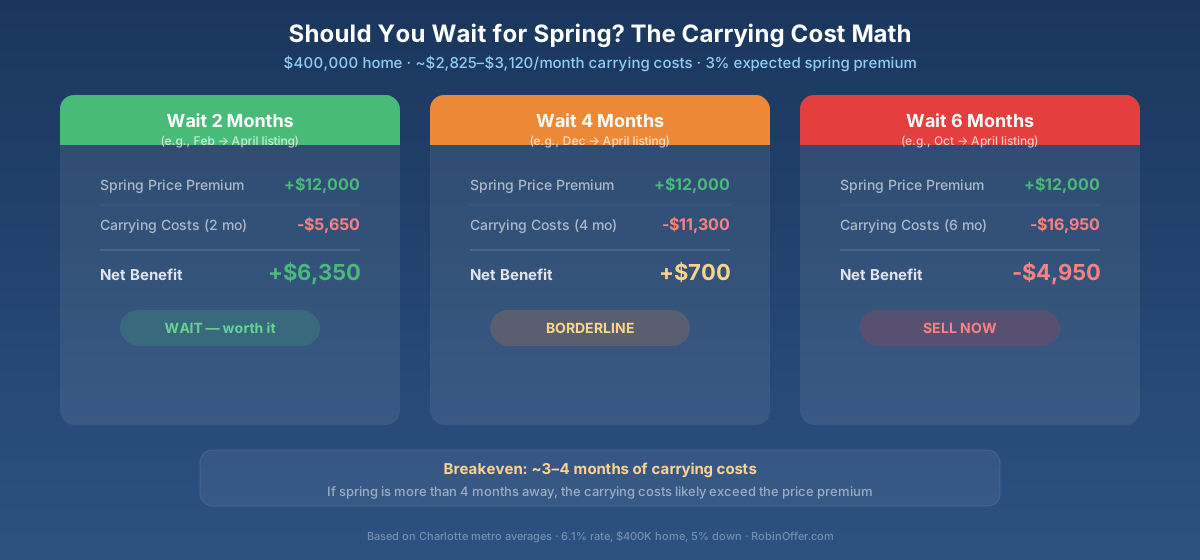
The most common mistake sellers make is treating "wait for spring" as a free option. It is not. Every month you hold the property, you are paying for the privilege of owning it. Here is how to calculate whether waiting actually makes you money.
Monthly Carrying Costs for a Typical Carolinas Home
| Cost Category | $300K Home | $400K Home | $500K Home |
|---|---|---|---|
| Mortgage Payment (P&I @ 6.1%) | $1,450 | $1,935 | $2,420 |
| Property Tax (monthly) | $200–$275 | $275–$370 | $345–$460 |
| Homeowner's Insurance | $140 | $185 | $230 |
| HOA (if applicable) | $50–$200 | $50–$250 | $75–$350 |
| Utilities (occupied) | $200 | $250 | $300 |
| Maintenance Reserve | $100 | $130 | $165 |
| Total Monthly Carrying Cost | $2,140–$2,365 | $2,825–$3,120 | $3,535–$3,925 |
The Wait-for-Spring Calculator
Here is the decision framework. Compare the expected spring price premium against your total carrying costs for the waiting period:
| Scenario | Wait 2 Months | Wait 4 Months | Wait 6 Months |
|---|---|---|---|
| Carrying Costs ($400K home) | $5,650–$6,240 | $11,300–$12,480 | $16,950–$18,720 |
| Expected Spring Premium (3%) | $12,000 | ||
| Net Benefit of Waiting | +$5,760–$6,350 | -$480 to +$700 | -$4,950 to -$6,720 |
The breakeven point for most Carolinas homeowners is roughly 3–4 months of waiting. If you are in October and spring is 5–6 months away, the carrying costs likely eat the spring premium. If you are in February and spring is 2 months away, waiting is almost always worth it.
Carrying costs eating the spring premium?
If waiting for the best month costs more than it earns, tell us about your home and we will send a real cash offer. Any condition, and you choose the closing date.
9. Carolina-Specific Timing Factors
Beyond the universal spring-is-best pattern, the Carolinas have regional factors that create micro-windows of opportunity, or risk.
Hurricane Season (June–November)
Both Carolinas sit in the hurricane path, and the insurance implications affect selling timelines. A major storm (or even a near-miss) can temporarily freeze lending. Insurers stop writing new policies until the threat passes, and buyers cannot close without insurance. Hurricane Florence (2018) and Hurricane Helene (2024) both caused temporary market disruptions in the Carolinas.
If you are listing in the August–October window, be aware that a named storm in the Atlantic can delay your closing by 2–4 weeks. This is not a reason to avoid fall selling entirely, but it is a reason to build extra time into your closing timeline.
Military PCS Cycles
North Carolina has two of the largest military installations in the country:
- Fort Liberty (Fayetteville): The world's largest military installation by population. PCS orders typically issue in March–April for summer moves, creating a demand surge in the Fayetteville, Sandhills, and southern Wake County corridors.
- Camp Lejeune / MCAS Cherry Point (Jacksonville / Havelock): Similar PCS-driven demand cycle. The eastern NC coastal corridor sees a spring buyer surge from military families.
If you are selling near a military base, the PCS cycle amplifies the spring advantage. Military buyers are often pre-approved with VA loans, motivated by a report date, and willing to pay market price for the right home that fits their timeline. List by March to capture this demand. For an execution-first checklist (VA assumptions, SCRA, and 60–90 day timeline controls), use our Military PCS relocation guide for the Carolinas.
University Town Timing: ECU and Academic Calendar Markets
If you are selling in a university town, the academic calendar creates timing patterns that override the standard spring-peak model. Greenville, NC (home to East Carolina University and ECU Health) is the clearest example in the region. Relocating faculty and staff activate in August before fall semester and in January before spring semester. Selling in May right after spring semester ends puts you directly in front of buyers with firm start dates and housing urgency, while a December listing hits the quietest window in any university market. For Greenville-specific timing strategy and ECU calendar planning, see our Greenville NC seller guide. The same dynamics play out in Chapel Hill, where UNC's academic calendar shapes when faculty recruiters, visiting researchers, and graduate families activate their housing search. Our Chapel Hill homeowner selling options guide covers Triangle-market timing and university-driven demand patterns.
Corporate Relocation Season
Charlotte is headquarters to Bank of America, Truist Financial, Lowe's, Duke Energy, and Honeywell, plus regional offices for Wells Fargo, Microsoft, and dozens of fintech companies. Corporate relocation packages typically initiate in Q1 for mid-year start dates, which feeds the spring demand surge with particularly well-qualified buyers (employer-backed, pre-approved, often with relocation assistance that covers closing costs).
These buyers are not price-sensitive in the way individual buyers are because their employer is subsidizing the move. If your home is in a Charlotte suburb with strong schools and an easy commute, corporate relocators are your best-case buyer, and they are most active from April through July.
The same relocation engine runs in the Triangle. Cisco, Epic Games, Apple, and the Research Triangle Park employers drive steady Q1-to-summer demand into towns like Apex, where top-rated schools and a $584K median make it a magnet for relocating families. If you are selling in the Apex area and want to align your listing with corporate timing, our Apex homeowner selling guide covers the local pricing strategy and Veridea-driven demand shifts.
New Construction Delivery Cycles
Builders in the Charlotte metro time their deliveries to coincide with peak demand. That means the spring months bring not just more buyers but also more competing inventory from new construction. In the Fort Mill / Indian Land / York County corridor, 200+ new-construction communities are actively selling. In Gastonia, the FUSE District development pipeline adds new units quarterly.
This creates a timing dilemma: spring brings the most buyers, but also the most competition from builders offering $10,000–$15,000 in incentives. If you are selling a resale home near active new construction, consider listing slightly ahead of the peak (late March) to get exposure before builders ramp up their spring marketing blitz. See our Gastonia guide and Belmont guide for more on competing against new construction in specific markets.
Tax Calendar Considerations
Capital gains timing: If you have owned your home for less than two years, selling before the two-year mark means paying short-term capital gains rates (taxed as ordinary income) instead of the more favorable long-term rate. In NC, that is 3.99% flat. In SC, long-term gains qualify for a 44% deduction (effective rate ~3.4% vs. up to 6% for short-term). On a $100,000 gain, this difference is $2,700–$3,000 in SC alone.
Year-end timing: Closing in December versus January shifts your tax liability by a full year. If you expect a large capital gain, you might prefer a January closing to defer the tax payment. Conversely, if you need the loss for tax purposes, a December closing captures it in the current tax year. Our NC capital gains tax guide covers all seven timing and reduction strategies in detail.
10. Your Decision Framework
You know the best month to sell a house in North Carolina and South Carolina. But seasonal timing is one input in a larger decision. Here is how to weigh it against your other priorities.
When to Wait for Spring
- You are within 8 weeks of the April–June window
- Your home is move-in-ready or close to it
- Your monthly carrying costs are manageable
- You are not under time pressure from a job, legal situation, or financial deadline
- Your home is in a family-oriented neighborhood where the school calendar drives demand
When to Sell Now (Any Season)
- You are more than 4 months from spring and carrying costs are eating your equity
- Your home needs significant repairs that you cannot or do not want to fund
- You are facing foreclosure, divorce, probate, or a relocation deadline
- You own a rental property or investment property (investors buy year-round)
- Your home is in a price range or neighborhood where buyer activity is relatively steady
- You are carrying two mortgages
When to Consider a Cash Offer
- Your timeline is 30 days or less
- Your home needs work and you do not want to invest in repairs
- You have inherited a property you cannot maintain from a distance (use our NC inherited property guide or SC probate process guide depending on location)
- The carrying cost math shows that waiting for spring will not be profitable
- You value certainty over maximum price: no inspection contingencies, no financing risk, no appraisal surprises
Your Next Step
Whether it is April or November, the best first step is knowing what your home is actually worth in the current market. A Comparative Market Analysis (CMA) from a local agent gives you the spring listing estimate. A cash offer from RobinOffer gives you the guaranteed, close-anytime number. With both numbers in hand, you can make an informed decision about timing.
- Get a free cash offer: Request your no-obligation evaluation from RobinOffer. We will send you a number, often within a day, and we will also tell you what we think you could get on the open market, because we do both.
- Compare both paths: We will model the traditional listing (with spring timing) against a cash close so you can see net proceeds, timelines, and carrying costs side by side.
- No pressure: You can take our numbers and do nothing with them. We would rather give you good information than a hard sell.
Disclaimer: This guide is for informational purposes only and does not constitute legal, financial, or tax advice. Market data referenced is sourced from Redfin, Zillow, ATTOM Data Solutions, NAR, NC REALTORS, and SC REALTORS and is subject to change. Seasonal trends are historical patterns and do not guarantee future performance. Consult with a qualified real estate professional, CPA, or financial advisor for advice specific to your situation. RobinOffer is a cash home buyer and works with a licensed real estate agent partner, Chamiese Evans of NorthGroup Real Estate, Inc.
For active-duty families who cannot wait for ideal seasonality, see the Military PCS relocation guide for certainty-weighted offer analysis and report-date planning.
Ready to see where your home stands?
Get a free, no-obligation estimate of your home's value from ListRobin — the first step in deciding when to sell.