
How to Avoid Foreclosure
in South Carolina
Your step-by-step guide to protecting your home, your equity, and your future — with real SC-specific options.
1. A Letter to the South Carolina Homeowner
If you're behind on your mortgage in South Carolina (or you can feel it coming), this foreclosure help guide was written for you. Not for attorneys, not for investors, not for people who want to buy your house at a discount. For you.
Maybe a job disappeared. Maybe medical bills turned into a second mortgage. Maybe a divorce split one household into two and the math just stopped working. Or maybe the bill that pushed you over the edge wasn't even the mortgage. It was the insurance premium that jumped 40% in two years, or the property tax reassessment nobody warned you about, or the HOA special assessment for a roof you didn't vote for.
If property-tax delinquency is part of your situation, keep our SC property tax lien timeline guide open too. Tax-sale deadlines and mortgage foreclosure deadlines can collide faster than most homeowners expect.
Whatever brought you here, I need you to hear two things before we go any further.
First: you are not alone. South Carolina ranked third in the entire nation for foreclosure filings in 2025, behind only Florida and Delaware. The Columbia metro area ranked second-worst nationally among major metros, and statewide, one in every 242 homes had a foreclosure filing last year. This isn't something you did wrong. It's a financial crisis that is hitting South Carolina harder than almost anywhere else in America right now.
Second: South Carolina's foreclosure process actually works in your favor. Unlike many states, SC requires every foreclosure to go through a judge. That means court oversight, mandatory timelines, and legal protections that give you real time to act. You typically have 6 to 12+ months from filing to sale, with several off-ramps at every stage.
The South Carolina foreclosure process in brief: South Carolina is a judicial-foreclosure state, so your lender has to sue you in court and win before it can sell your home. The process moves through set stages, a federally required 120 days of pre-filing outreach, a filed complaint you have 30 days to answer, a hearing before a Master-in-Equity or Special Referee, and finally a court-ordered sale. Start to finish it typically takes 6 to 12+ months from your first missed payment, and you keep the right to stop it by paying, reinstating, or selling at any point before the sale. Each stage is broken down in detail below.
I wrote this guide specifically for South Carolina homeowners. Not generic advice scraped from a national website. Every statute, every phone number, every resource is SC-specific. We'll walk through your options (there are at least nine), the judicial process, what the numbers actually mean for your situation, and exactly where to get free help (because yes, it exists, and yes, it's actually free).
So take a breath. Then let's figure this out, step by step.
If You're in a Rush: Your 5-Step Immediate Action Plan
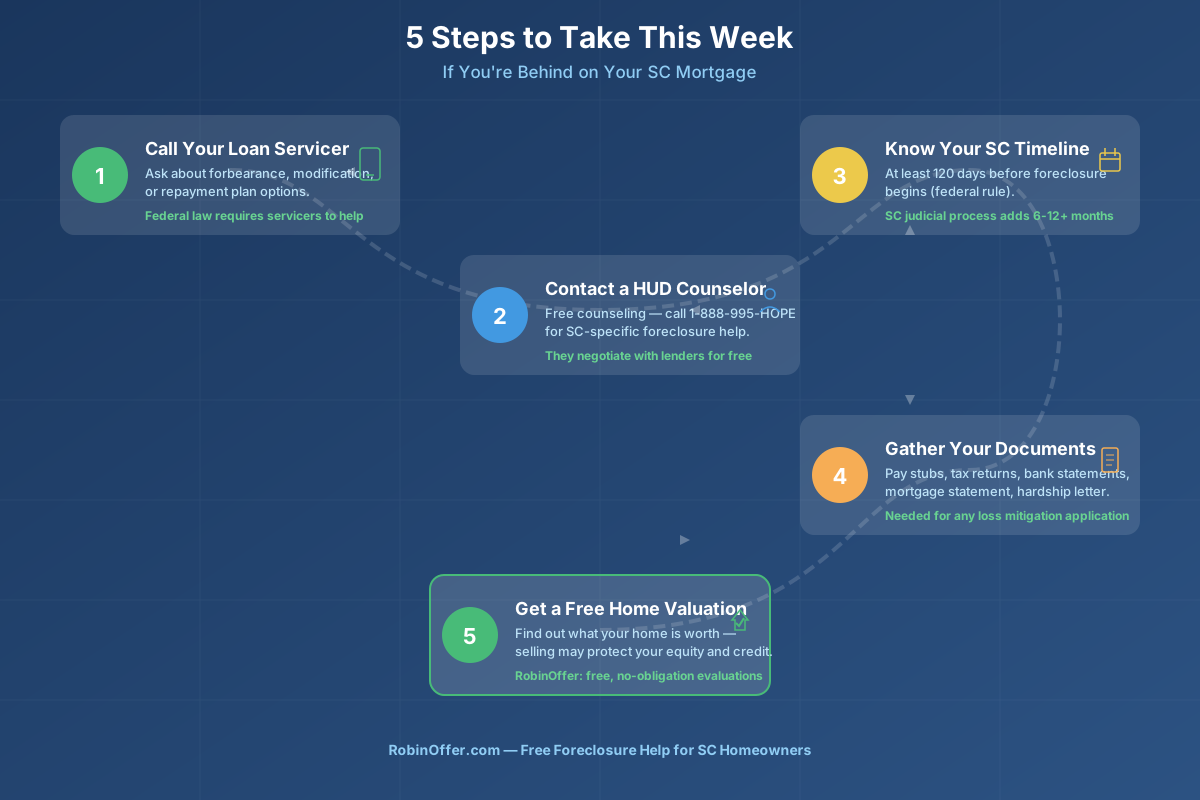
If you're behind right now and need to know what to do today, here's what I'd tell you if we were sitting across the kitchen table:
- Call your servicer's loss mitigation department and ask about forbearance, modification, or repayment plans. Do this before anything else.
- Call a HUD-approved counselor: 1-888-995-HOPE (4673) for free foreclosure counseling, no strings attached
- Gather your financials: last 2 pay stubs (or if self-employed: last 2 years of tax returns, profit-and-loss statement, and 12 months of bank statements), current mortgage statement, and a written monthly budget
- Find out what your home is worth: Get a free RobinOffer evaluation so you know your equity position
- Do not ignore mail from your servicer or the court because every notice contains deadlines that directly affect your options
That's the quick version. Now let's get into the details.
2. What's Happening in South Carolina Right Now
Before we talk about what to do, let's look at what's actually happening in South Carolina right now. The numbers matter, not to scare you, but because knowing you're not the only one dealing with this changes how you think about your options.
SC Foreclosure Snapshot
| Metric | Data | Context |
|---|---|---|
| SC Foreclosure Rate (2025) | 0.41%, 1 in every 242 homes | #3 nationally in foreclosure filings for 2025 (behind FL and DE) |
| Columbia MSA Foreclosure Rate | 0.28% (2,267 filings) | #2 nationally among metro areas with 200,000+ population |
| SC Mortgage Delinquency Rate | 4.26% (Q4 2025) | At the national average, but rising, up 0.4pp year-over-year |
| National Foreclosure Filings (Jan 2026) | 40,534 properties | Up 32% year-over-year nationally |
| SC Year-Over-Year Trend | Increases for 9+ consecutive months | Post-COVID moratorium catch-up still working through the system |
Let me put that in plain English: South Carolina had the third-highest foreclosure filing rate in the entire country last year and led the nation in Q4 2025. If you're reading this guide, you're not an outlier. You're part of a statewide crisis that's affecting tens of thousands of families.
What's Driving These Numbers
Several forces are hitting SC homeowners all at once:
Insurance costs are crushing coastal and suburban homeowners. South Carolina homeowners insurance increased 9.2% in 2024 alone, the largest single-year jump of the decade. In Myrtle Beach, the average annual premium has climbed to nearly $4,772. In Charleston, it's around $3,270. Even inland in Columbia, premiums average about $1,968. These increases flow straight into your escrow and bump up your monthly payment, even if your actual mortgage rate never changed.
The pandemic safety nets are gone. The forbearance programs, eviction moratoriums, and emergency relief funds that kept people afloat during COVID have all expired. South Carolina's Homeowner Rescue Program (the state HAF fund) helped over 14,500 families with $119 million in assistance, and it's completely exhausted. Nothing left.
Everything around your mortgage got more expensive. Property taxes, utilities, groceries, car insurance: all up significantly. Your mortgage payment might be the same number it was three years ago, but the total cost of keeping a roof over your family's head went up 25-30%.
SC has an average of 5 billion-dollar weather events per year. Hurricanes, flooding, and severe storms aren't just destroying homes. They're making insurance unaffordable and creating financial emergencies that cascade into missed mortgage payments.
The SC Metro Picture
| Metro Area | Foreclosure Context |
|---|---|
| Columbia | 2nd-highest foreclosure rate nationally among major metros. 2,267 filings in 2025, the only SC metro with 2,000+ filings. Fort Jackson's large transient military population adds complexity. |
| Charleston | Rising insurance costs and coastal flood risk compounding foreclosure pressure. One of the most expensive areas in the state for homeowners insurance. |
| Myrtle Beach / Conway | Tourism-dependent economy creates income volatility. Insurance premiums up to $4,772/year, nearly double the inland rate. Flood insurance requirements add further costs. |
| Greenville-Spartanburg | Relatively stronger economy insulates somewhat, but not immune. Upstate is seeing rising delinquencies as pandemic savings deplete. |
| Rock Hill / York County (Charlotte MSA) | Included in the Charlotte MSA statistics, 2,985 total filings in 2025 (including NC counties). Rapid growth has brought new construction competition and stretched household budgets. |
The point isn't to make you feel worse. The point is this: if you're struggling, you're struggling alongside thousands of other SC families who are dealing with the exact same math. And the earlier you act, the more options you keep on the table.
3. Your 9 SC Foreclosure Options, Ranked by Timeline
Here's the most important section of this guide. Before we get into the legal process, the statutes, and the court procedures, let's talk about what you can actually do. Because you have more options than you probably realize, and each one has a different window.
I'm ranking these roughly by urgency. The options at the top work best when you act early, and the ones at the bottom are for when you're further down the road.
Option 1: Reinstatement (Catch Up and Stay)
Best for: Homeowners who had a temporary hardship (job loss, medical event) but are back on their feet.
You pay the full past-due amount plus fees and penalties in one lump sum, and your mortgage resets to current. In SC's judicial process, you can reinstate any time before the foreclosure sale. The challenge is having enough cash on hand to cover everything at once.
Option 2: Loan Modification (Change the Terms)
Best for: Homeowners whose income dropped permanently or whose payments became unaffordable due to rate adjustments or escrow increases.
Your servicer changes the terms of your existing loan: lower interest rate, extended term, or even principal reduction in rare cases. This doesn't require a new loan. Under federal rules, your servicer must evaluate you for loss mitigation options before proceeding with foreclosure if you submit a complete application at least 37 days before a scheduled sale.
By loan type:
- FHA loans: Partial Claim (zero-interest subordinate loan to catch up), loan modification, and forbearance options through FHA loss mitigation
- VA loans: VA can intervene directly with your servicer; the VA Servicing Purchase (VASP) program lets VA buy the loan from the servicer and offer better terms
- USDA/Rural Development: Special loss mitigation for rural borrowers, common in SC's Pee Dee region, Lowcountry, and Upstate rural areas
- Conventional (Fannie/Freddie): Flex Modification program
Option 3: Forbearance (Hit Pause)
Best for: Homeowners with a short-term hardship who need breathing room (3-12 months).
Your servicer temporarily reduces or suspends your payments. You still owe the money, and it gets added to the end or structured into a repayment plan. This can stop a foreclosure filing or pause one that's already started. Call your servicer's loss mitigation department directly.
Option 4: Repayment Plan (Spread the Catch-Up)
Best for: Homeowners who can afford their regular payment plus a little extra each month.
Instead of paying everything at once (reinstatement), you spread the past-due amount across several months on top of your regular payment. Less painful than reinstatement, and your servicer may agree to this without a formal modification.
Option 5: Sell Your Home (Traditional or Cash Sale)
Best for: Homeowners with equity who want to protect their credit and walk away with money in their pocket.
If your home is worth more than what you owe, selling is often the smartest move. You pay off the mortgage, keep the difference, and avoid the 7-year credit hit from foreclosure. In SC's judicial timeline, you typically have months to sell before a court-ordered sale.
Two paths:
- Traditional sale with an agent: Higher sale price (typically), but 45-90+ day timeline and 5-6% in commissions
- Cash sale (through a company like RobinOffer): Lower price, but closes in 2-4 weeks with no commissions, no repairs, and certainty of closing. When you're racing a foreclosure timeline, speed can be worth more than the last dollar. Read our full cash offer guide to understand how it works.
Option 6: Short Sale (Sell for Less Than You Owe)
Best for: Homeowners who are underwater (owe more than the home is worth) but want to avoid foreclosure.
Your lender agrees to accept less than the full balance. The remaining unpaid portion may be forgiven (see Chapter 9 on tax implications) or you may still owe a deficiency depending on your lender's agreement. Your credit takes a hit, but significantly less than a foreclosure, and you avoid the court process.
Option 7: Deed-in-Lieu of Foreclosure (Hand Over the Keys)
Best for: Homeowners who have no equity, can't sell, and want to minimize the damage.
You voluntarily transfer the property to the lender. No court process, no public sale. In exchange, the lender releases the mortgage. Make sure to get the deficiency waiver in writing. Otherwise, the lender could still pursue you for the difference.
Option 8: Rent Your Home (Buy Time)
Best for: Homeowners who need to move but whose home won't sell for enough to cover the mortgage.
If the rental income covers (or mostly covers) your mortgage payment, renting buys you time while the market recovers or while you work out a longer-term plan. Be aware of your lender's rules about renting, since some mortgage agreements restrict it.
Option 9: Bankruptcy (The Emergency Brake)
Best for: Homeowners who need immediate protection from foreclosure and have other debts piling up.
Filing Chapter 13 bankruptcy triggers an automatic stay that immediately stops the foreclosure. You then enter a 3-5 year repayment plan to catch up on missed payments while keeping your home.
South Carolina's homestead exemption in bankruptcy is significantly more generous than many states: approximately $76,125 per individual (or about $152,250 for married couples filing jointly), adjusted for inflation every even-numbered year under SC Code 15-41-30. That means a substantial amount of your home equity is protected from creditors. For the full tax-homestead vs creditor-protection breakdown, use our SC Homestead Exemption Guide.
Important: SC is an opt-out state, so you must use South Carolina's state exemptions, not the federal bankruptcy exemptions.
Chapter 7 bankruptcy can discharge your personal liability on the mortgage (you won't owe the deficiency), but it doesn't save the house. Chapter 13 can save the house if you have enough income to fund a repayment plan.
Which Option Is Right for You?
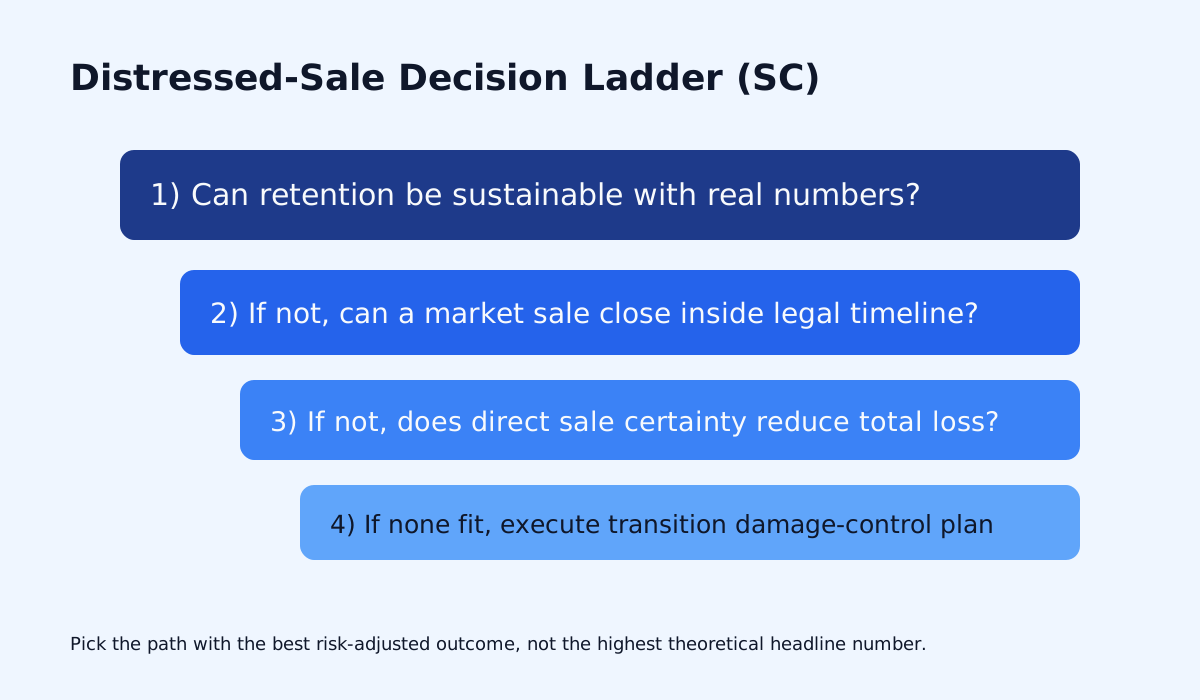
The honest answer: it depends on your equity, your income, how far behind you are, and how much time you have. The next few chapters will help you figure out exactly where you stand, starting with how SC's judicial foreclosure process works and how much time it actually gives you.
Considering a fast cash sale?
Tell us about your SC home and we'll send you a real, no-obligation cash offer — any condition, and you pick the closing date.
4. The South Carolina Foreclosure Process: How Judicial Foreclosure Works, Step by Step
South Carolina is a judicial foreclosure state, meaning every foreclosure must go through the court system. There is no shortcut: your lender can't just send a few letters and sell your house on the courthouse steps. They have to file a lawsuit, serve you, give you time to respond, and get a judge's approval before anything happens.
This matters because it gives you time, legal protections, and multiple chances to change the outcome that homeowners in non-judicial states don't have.
Here's how the process works, step by step:
Step 1: Default and the 120-Day Rule
Under federal law (CFPB Regulation X), your servicer cannot begin the foreclosure process until you're at least 120 days delinquent. During those 120 days, they're required to:
- Contact you by phone within 36 days of a missed payment
- Send written notice within 45 days about loss mitigation options
- Give you a chance to apply for help before filing anything with the court
This 120-day period is your first, and best, window to pursue options 1-4 from the previous chapter.
Step 2: Lis Pendens
The lender files a lis pendens (Latin for "pending suit") with the county clerk of court. This is a public notice that your property is subject to a lawsuit. Under SC Code 15-11-10, the lis pendens must be filed no more than 20 days before the complaint is filed. The lender must serve it within 60 days, or it expires.
Step 3: Summons and Complaint
The lender formally sues you by filing a Summons and Complaint with the court. This is the heart of what "judicial foreclosure" means: your lender can't sell your house on its own authority. It has to bring a lawsuit, prove its case to a judge, and get a court order before any sale happens. In most SC foreclosure cases that judge is the Master-in-Equity (you'll meet them in Step 6), who decides the case, orders the sale, and signs the deed over to the buyer. The deadlines that matter start running the day you're served, so treat these papers differently than the collection letters that came before them.
You'll be served personally (a process server delivers the papers) or, if you can't be located, by publication in a local newspaper for 3 consecutive weeks.
Step 4: Your 30-Day Answer Period
This is critical. You have 30 days from the date you're served to file a written Answer with the court. If you don't file an Answer, the lender can move for a default judgment, and the process speeds up dramatically.
Filing an Answer doesn't mean you have to hire a lawyer (though it helps). It means you're telling the court you want to contest the foreclosure or raise defenses. Common defenses include:
- The lender didn't follow proper notice procedures
- The lender violated the dual-tracking prohibition (filing for foreclosure while a loss mitigation application was pending)
- The lender doesn't have legal standing (can't prove they own the loan)
- SCRA violations for military servicemembers
- Improper service of process
Even if you don't have a legal defense, filing an Answer buys you time, often months, because it forces the case into the full litigation track.
Step 5: Loss Mitigation Doesn't Stop When the Lawsuit Starts
Being sued doesn't end your chance to work something out. Under the federal loss mitigation rules (12 CFR 1024.41, the same Regulation X from Step 1), your servicer still has to review a complete application for help even after the case is filed, and the court can ask where that review stands before it enters a final judgment.
So keep working the options from Chapter 3 while the case moves. Send your servicer a complete application, keep copies of everything, and document your hardship. A workout with your servicer, a sale, or a full payoff can resolve the case at any point before the foreclosure sale.
Step 6: Hearing Before the Master-in-Equity
If nothing resolves the case along the way, it goes to a hearing. Most SC foreclosure cases are heard by a Master-in-Equity (a judicial officer who handles equity court matters) or a Special Referee under SC Rule of Civil Procedure 71. This is essentially your trial.
The Master reviews the evidence, hears both sides, and decides whether the lender has proven its case. You have the right to present your own evidence and cross-examine their witnesses, even if you don't have a lawyer.
Step 7: Order of Foreclosure and Sale
If the Master rules in the lender's favor, the court issues an Order of Foreclosure that authorizes the sale. The order will set a date for the property to be sold at public auction.
Step 8: Notice of Sale (3 Weeks Publication)
Before the sale, the property must be advertised in a local newspaper for 3 consecutive weeks. This is your final public notice before the auction.
Step 9: The Foreclosure Sale
The sale is conducted by the Master-in-Equity as a public auction, typically at the county courthouse on designated sale days. The lender usually bids the amount of the debt, though third parties can also bid.
Step 10: The 30-Day Upset Bid Period (or Immediate Finality)
Here's where SC gets unique:
- If the lender reserved the right to a deficiency judgment: Bidding stays open for 30 days after the sale. Anyone (including you) can submit a higher bid during this window. On the 30th day, the property is offered for sale again to the highest bidder.
- If the lender waived deficiency rights: The sale is final on the day of sale. No upset bid period. No second chance.
Step 11: Confirmation and Master's Deed
After the bidding closes, the Master confirms the sale and executes a deed to the buyer. Sale proceeds are applied first to costs, then to the judgment amount, then to other lienholders. Any surplus is available to you, but you must file a verified claim within 45 days.
The Overall Timeline
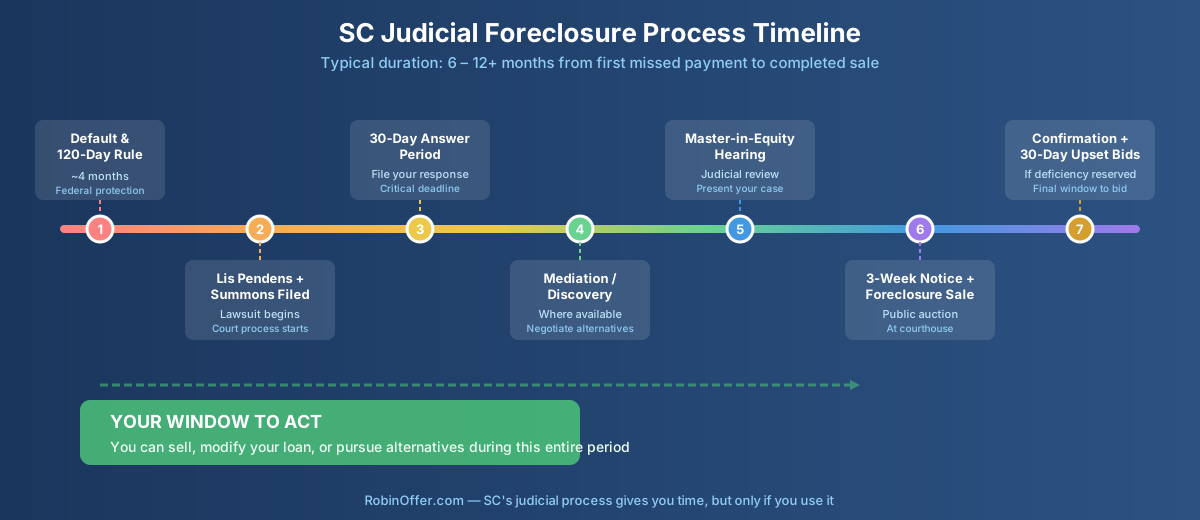
From first missed payment to completed sale, the SC judicial foreclosure process typically takes 6 to 12+ months. If you file an Answer, pursue a workout with your servicer, and the court has a backlog, it can take even longer. That's not a reason to delay acting. It's a reason to use every day wisely. For a stage-by-stage South Carolina sequence with day ranges, see the Stage-by-Stage: How Long Each Part Actually Takes timeline further down this guide. If your loan or ownership situation crosses state lines, compare timelines with our North Carolina foreclosure timeline guide so you can plan by jurisdiction.
Stage-by-Stage: How Long Each Part Actually Takes
The steps above tell you what happens. This is roughly when. Think of it as a range with decision points rather than a single countdown, because your own actions (and your county's docket) can compress or stretch every stage. How long does foreclosure take in South Carolina? See the stage-by-stage timeline for a deadline-first walkthrough of each phase.
| Stage | Approximate Timing | What's Happening | Your Priority |
|---|---|---|---|
| Stage 0: Delinquency | Missed payment through day 120 | Late fees and default interest accrue; servicer must attempt contact. No court case yet. | This is your cheapest window, pursue reinstatement, modification, or forbearance now. |
| Lis pendens + summons/complaint | Around day 120+, once federal rules allow filing | The public suit notice is filed and you're formally served. | Separate real court papers from collection letters. The clock starts at service. |
| 30-day answer window | 30 days from the date you're served | Your one chance to file an Answer and contest or slow the case. | The single most important deadline. File on time even without a lawyer. |
| Reference / case management | Weeks to a few months, varies by county | The case is referred to the Master-in-Equity; hearing gets scheduled. | Use the wait to organize records and finalize your strategy path. |
| Hearing on amounts due | Roughly months 4-8 from first missed payment | The court fixes the debt total, principal, interest, costs, and attorney fees. | Don't assume the lender's math is right. Compare it against your statements. |
| Judgment + order of sale | Shortly after the hearing | The court authorizes the auction and sets sale terms. | Options narrow fast here. Have a decision path already chosen. |
| Sale advertising | 3 consecutive weeks before sale day | The property is published in a local newspaper and posted on the county roster. | Monitor the county roster directly, dates can shift. |
| Auction + upset-bid window | Sale day, plus a 30-day upset-bid period when deficiency is reserved | Bidding may stay open 30 days if the lender reserved deficiency rights. | Don't assume sale day is final. Confirm whether bidding closes day-of. |
| Report of sale + surplus | After bidding closes | Proceeds are disbursed; any surplus becomes claimable. | File a verified surplus claim within 45 days if funds remain. |
| Possession / move-out | Additional weeks after finality | Sale and move-out are separate events; possession runs its own process. | Plan the move before you're forced to, last-minute moves cost far more. |
Zoomed out, most cases follow four phases: months 1-2 are pre-judgment pressure and record-gathering; months 2-4 shift from managing contact to managing deadlines once you're served; months 4-8 are the hearing-and-order track; and month 8 onward is sale administration and transition. A default (no-answer) posture can move faster than this; a contested case with a filed Answer usually runs longer.
Where the Money Adds Up: The Cost Accumulation Map
One of the most expensive mistakes is watching only your missed principal-and-interest and ignoring everything stacking on top of it. In a judicial foreclosure, costs pile up in predictable bands across the timeline, and the longer you wait without a decision, the more they compound.
| Timeline Band | Typical Cost Drivers | Risk If Ignored |
|---|---|---|
| Pre-filing delinquency | Late fees, default interest, escrow strain | Your workout gets less affordable every month |
| Filed case through hearing | Filing and service fees, attorney fees, document costs, growing balance | The debt jumps well beyond what you first expected |
| Order through sale | Publication and sale-administration costs, ongoing legal time | Less room left for a negotiated outcome |
| Post-sale transition | Moving and storage costs, housing transition, possible legal follow-on | Financial stress spills into your next housing chapter |
The practical lesson: when you weigh your options, don't just ask "how much do I owe today?" Ask "how much larger is my total loss if I wait another 30, 60, or 90 days?" Even a rough estimate usually makes it clear that time is not neutral.
County Differences You Should Expect Across South Carolina
State law sets the framework, but your county shapes the pace and the logistics. Court staffing, hearing calendars, roster practices, and local administrative habits all shift real-world timing. A case in a busy urban county can move on a very different rhythm than one in a smaller rural county, and Master-in-Equity operations (how sale rosters get posted, how bidder terms are handled) vary from place to place.
That's why statewide guidance like this always has to be paired with two things: watch your own county's docket and sale roster directly through official channels, and lean on counsel or a counselor who knows how your local court actually operates. Rumors and third-party sites are not reliable sources for case-specific sale status.
Get a cash offer before your sale date
We close in 7–10 days — no repairs, no showings. Tell us about your SC home and get a real offer.
5. The Right of Redemption: What It Really Means in SC
If you've been Googling foreclosure help, you've probably run into the phrase "right of redemption." Some websites make it sound like you can buy your home back after a foreclosure sale. That's not how it works in South Carolina, and misunderstanding this could cost you your home.
The Two Types of Redemption Rights
There are two completely different things that get called "right of redemption":
1. Equity of Redemption (Pre-Sale): You Have This
Before the foreclosure sale happens, you always have the right to pay off the full mortgage debt (plus accumulated fees, costs, and interest) and stop the foreclosure entirely. This is called the equity of redemption, and it exists from the moment you default until the gavel comes down at the sale.
In practical terms, this means if you can come up with the full payoff amount (through savings, family help, a new loan, or selling the property), you can stop the process at any point before the sale.
2. Statutory Right of Redemption (Post-Sale): SC Does Not Have This
Some states give homeowners the right to buy their property back for a set period after the foreclosure sale, sometimes 6 months, sometimes a year. South Carolina does not provide a statutory post-sale right of redemption. Once the sale is complete and confirmed by the court, the property belongs to the new owner. You cannot buy it back.
The 30-Day Upset Bid Window: Your Last Practical Chance
There's one narrow window that works a little like a second chance, but only in specific situations:
If the lender reserved the right to a deficiency judgment in their complaint, the sale stays open for 30 days. During this period, you (or anyone else) can submit a higher bid. On the 30th day, the property goes to the highest bidder.
This is not technically a "redemption right." It's a competitive bidding window. But if you can find the financing, it gives you one final shot at recovering the property.
If the lender waived deficiency rights, there is no upset bid period. The sale is final the day it happens.
What This Means for You
The practical takeaway: don't count on buying your home back after a foreclosure sale. Your best options are all pre-sale: modification, selling, bankruptcy, or paying the arrearage. Once the sale is confirmed and the deed transfers, it's over.
This is why acting early is so important in South Carolina. The judicial process gives you 6 to 12+ months before a sale can happen, but once it happens, you have essentially no recovery right. Use the time you have now.
Get Your Free, No-Obligation Cash Offer
Tell us about your SC home and we'll send you a real cash offer — any condition, no repairs, and you choose the closing date. Free and confidential.
6. Legal Realities: Deficiencies, Liens, and HOAs
The foreclosure itself isn't the only thing you need to worry about. There are a few legal landmines, and a few legal shields, that most SC homeowners don't know about until it's too late.
Deficiency Judgments: Can the Lender Come After You for the Difference?
If your home sells at foreclosure for less than what you owe, the difference is called a "deficiency." In South Carolina, the lender can pursue you for this amount, but only under specific conditions laid out in SC Code 29-3-660 and 29-3-680:
- The lender must have reserved the right to a deficiency in the original foreclosure complaint. If they didn't reserve it (or waived it), they cannot pursue a deficiency. Period.
- If deficiency was reserved, the sale stays open for 30 days for upset bids.
- The deficiency amount is calculated as the total debt minus the higher of the sale price or the fair market value of the property.
The Fair Market Value Appraisal Protection (SC Code 29-3-680)
This is one of the best protections SC homeowners have, and your lender can't make you waive it. Here's how it works:
If the lender seeks a deficiency judgment, the borrower may apply to the court for an order of appraisal within 30 days after the sale (SC Code 29-3-680). The process:
- Three appraisers are designated: one chosen by you, one by the lender, one by the judge
- The appraisers determine the fair market value of the property as of the sale date
- A majority must agree on the value
- The court limits the deficiency to the total debt minus the appraised fair market value (not the lower sale price)
In plain English: this stops the bank from buying your house cheap at auction and then suing you for the full difference. If your lender goes after a deficiency, make sure you or your attorney use this protection. It could save you tens of thousands of dollars.
HOA Liens: South Carolina Is Not a Super-Lien State
Good news on this front: unlike North Carolina and some other states, SC does not give HOA assessment liens priority over first mortgages. Under the SC Homeowners Association Act (SC Code 27-30-110 et seq.):
- Your first mortgage lien takes priority over HOA assessment liens
- If the bank forecloses, the HOA lien is typically wiped out
- The bank is not required to compensate the HOA for unpaid assessments
- However, the HOA can still pursue a separate personal judgment against you for unpaid dues
So while an HOA can't foreclose ahead of your bank, they can still sue you personally for the money you owe them. If you're behind on both your mortgage and HOA dues, address both, but know that the HOA cannot independently take your home ahead of the bank.
Property Tax Liens
Property tax liens are a different story. In South Carolina, property taxes are paid in arrears (the bill comes in fall for the current year, due January 15 of the following year). If you're delinquent on property taxes, the county can pursue a separate tax sale, and tax liens do take priority over mortgage liens.
If you can only pay one thing, prioritize property taxes alongside your mortgage. A tax sale can happen independently of and faster than the mortgage foreclosure process.
Other Liens to Watch For
- Judgment liens: If a creditor has sued you and won a judgment, it can attach to your property
- Mechanics liens: Contractors who performed work on your home can file liens for unpaid bills
- IRS/state tax liens: Federal and state tax debts can become liens on your property
Any of these liens complicate a sale. If you're planning to sell to avoid foreclosure, a title search will reveal all liens, and they must be resolved at closing. This is one reason having a South Carolina real estate attorney involved is important, and in SC, an attorney is legally required at closing anyway. If you've inherited property in SC that's facing foreclosure, the lien situation can be even more complex. For a step-by-step court and title sequence, use our South Carolina probate process guide.
7. Military Families: VA Loans and Base-Area Resources
South Carolina is home to five major military installations, and military families make up a big part of the homeowner population here. If you're active duty, a veteran, or a military spouse dealing with mortgage trouble, you've got protections and resources that most people don't know about.
The Servicemembers Civil Relief Act (SCRA)
The SCRA (50 USC 3953) provides powerful foreclosure protections for active-duty servicemembers:
- Foreclosure moratorium: No foreclosure sale is valid during active military service or within one year after the end of active duty, unless authorized by a court order or your written waiver
- Court order required: Even though SC already requires judicial foreclosure, the SCRA adds an extra layer: the lender must affirmatively demonstrate to the court that your military service is not affecting your ability to participate
- 90-day stay of proceedings: You can request a 90-day delay in any foreclosure action if military service prevents your participation. The court can grant additional stays.
- 6% interest rate cap: Pre-service mortgage interest rates must be reduced to 6% during active duty and for one year after. The lender must forgive the excess interest.
- Criminal penalties: Knowingly violating SCRA foreclosure protections can result in fines and up to one year imprisonment
South Carolina also passed its own version of the SCRA in 2019, which adds even more protections on top of the federal law.
VA Loan Foreclosure Protections
If your mortgage is a VA loan, you have additional resources:
- VA loan technicians can intervene directly with your servicer on your behalf. Call 1-877-827-3702.
- VA Servicing Purchase (VASP) program: The VA can purchase your loan from the servicer and offer modified terms, potentially lowering your payment significantly
- VA does not charge PMI so there's no private mortgage insurance company adding another layer of complexity
- VA encourages servicers to exhaust all alternatives before foreclosure: modification, repayment plans, special forbearance
PCS-Related Hardships
Permanent Change of Station (PCS) orders create unique foreclosure risks. You may need to sell quickly, can't rent for enough to cover the mortgage, or are managing a property from another state or overseas. If a PCS is creating financial strain, also review our Military PCS relocation guide for NC and SC homeowners for timeline and sell-vs-rent decision frameworks:
- Contact your servicer immediately about military-specific forbearance options
- Consider a cash sale to close quickly before you relocate
- Talk to your installation's JAG office (Judge Advocate General) for free legal advice specific to your situation
Base-Area JAG and Legal Assistance
| Installation | Location | Legal Assistance |
|---|---|---|
| Fort Jackson | Columbia, SC | Legal Assistance: (803) 751-4287 |
| Joint Base Charleston | Charleston, SC | Legal Office: (843) 963-5502 |
| Shaw AFB | Sumter, SC | Legal Office: (803) 895-1560 |
| MCAS Beaufort | Beaufort, SC | Legal Services: (843) 228-7330 |
| MCRD Parris Island | Port Royal, SC | Legal Assistance: (843) 228-3623 |
Additional military resources:
- Military OneSource: 1-800-342-9647 for free financial counseling for service members and families
- Armed Forces Legal Assistance: legalassistance.law.af.mil
- SCRA verification: scra.dmdc.osd.mil
Want to know what a cash sale could look like?
Tell us about your home and we'll send you a real, no-obligation cash offer — no repairs, no showings, close on your timeline.
8. Selling Before Foreclosure in SC: Costs and Net Proceeds
If selling is on the table for you, this chapter breaks down what it actually looks like financially in South Carolina. Because the real question isn't "what's my home worth?" It's "how much money do I actually walk away with?"
SC Closing Costs for Sellers
| Cost Item | Typical Range | Notes |
|---|---|---|
| SC Deed Recording Fee (Transfer Tax) | 0.37% of sale price | $1.85 per $500 ($1.30 state + $0.55 county). Paid by seller to clerk of court. |
| Real Estate Agent Commission | 5-6% of sale price | Negotiable. Eliminated entirely in a cash/direct sale. |
| Closing Attorney | $500 - $1,200 | SC requires a licensed attorney at every closing. This is not optional. |
| Title Search / Insurance | $300 - $600 | Required to clear title and identify all liens. |
| Prorated Property Taxes | Varies by county | SC taxes are paid in arrears. You'll owe your share through the closing date. |
| HOA Transfer Fees / Payoffs | $0 - $2,000+ | Depends on your HOA and any unpaid assessments. |
| Mortgage Payoff | Your outstanding balance | Includes principal, accrued interest, late fees, and any legal costs the lender tacked on. |
| Repairs / Concessions | $0 - varies | A cash buyer typically buys as-is. Traditional buyer may negotiate repairs. |
Sample Net Sheet: $275,000 SC Home
| Line Item | Traditional Sale (Agent) | Cash Buyer Sale |
|---|---|---|
| Sale Price | $275,000 | $248,000 (approx. 90% of market value) |
| Agent Commission (5.5%) | -$15,125 | $0 |
| Deed Recording Fee (0.37%) | -$1,018 | -$918 |
| Closing Attorney | -$800 | -$800 |
| Title / Recording | -$450 | -$450 |
| Prorated Taxes | -$1,200 | -$1,200 |
| Mortgage Payoff | -$215,000 | -$215,000 |
| Net to Seller | $41,407 | $29,632 |
The traditional sale puts $11,775 more in your pocket, if the sale closes, if the buyer's financing doesn't fall through, and if you have 45-90 days to wait. When you're facing a foreclosure timeline, those "ifs" matter a lot.
Three Scenarios: Where Selling Stands vs. Other Options
| Scenario | Equity Position | Best Path |
|---|---|---|
| You have $30K+ in equity | Home worth significantly more than you owe | Sell, protect your equity and your credit. Even a cash sale nets you money. |
| You're roughly break-even | Home value ≈ mortgage balance | Sell if you can, even walking away with $0 is better than a foreclosure on your credit. Or negotiate a deed-in-lieu. |
| You're underwater | You owe more than the home is worth | Short sale (with lender approval), deed-in-lieu, or explore modification/bankruptcy. |
The Credit Impact Comparison
| Event | Credit Score Drop | How Long It Stays |
|---|---|---|
| Voluntary Sale (current on payments) | None | N/A |
| Short Sale | 85-160 points | 7 years |
| Deed-in-Lieu | 85-160 points | 7 years |
| Foreclosure | 100-160+ points | 7 years |
| Bankruptcy (Chapter 7) | 130-240 points | 10 years |
| Bankruptcy (Chapter 13) | 130-200 points | 7 years |
The numbers tell the story: a voluntary sale protects your credit entirely, and even a short sale is significantly less damaging than foreclosure. Every option above is less damaging than letting the foreclosure run its full course.
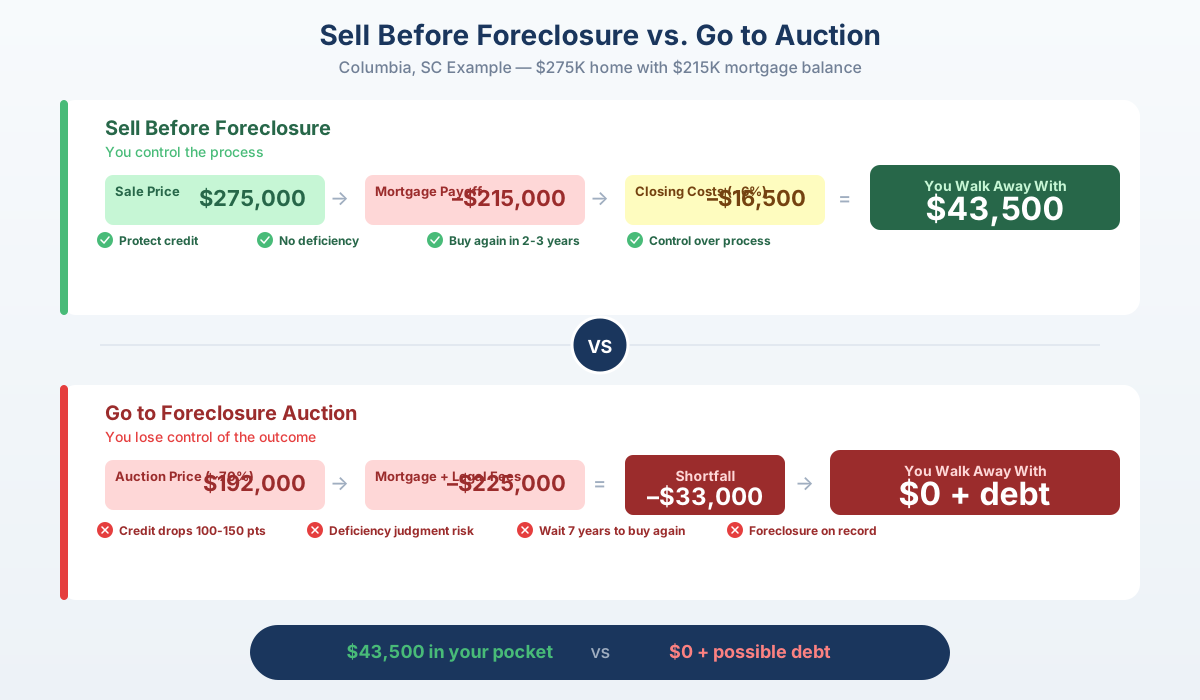
These numbers are illustrative. Run your own mortgage, taxes, insurance and upkeep through our cost-of-waiting calculator to see what your own timeline is really costing.
Get a cash offer before your sale date
We close in 7–10 days — no repairs, no showings. Tell us about your SC home and get a real offer.
9. Tax Implications for SC Homeowners
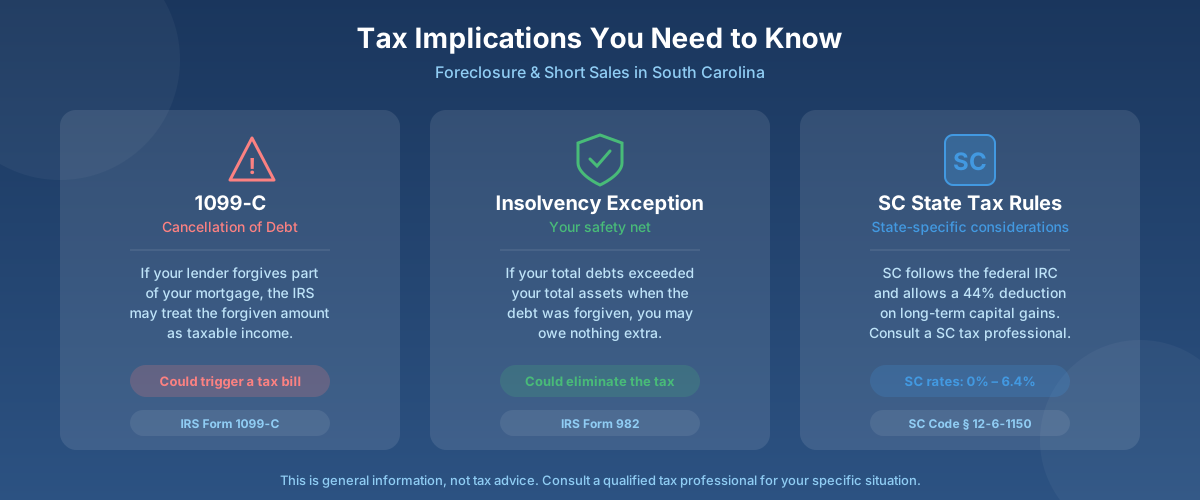
Here's something that blindsides a lot of people: if your lender forgives part of your mortgage debt, the IRS can treat that forgiven amount as income and send you a tax bill for it. Let's walk through how this works in South Carolina, and what protections you might have.
The 1099-C: Forgiven Debt Is Usually Taxable Income
If your lender forgives any portion of your mortgage debt (through a short sale, deed-in-lieu, or deficiency waiver), they'll send you a 1099-C form. The IRS treats forgiven debt as income, which means you could owe taxes on money you never actually received.
Example: You owe $250,000. Your home sells at foreclosure for $210,000 and the lender forgives the $40,000 difference. The IRS considers that $40,000 as taxable income.
Exclusions That May Protect You
Qualified Principal Residence Indebtedness (QPRI) Exclusion: If your primary residence is involved, you may be able to exclude up to $750,000 of forgiven mortgage debt from your taxable income. This federal exclusion (IRC 108(a)(1)(E)) expired on January 1, 2026, but it still covers debts forgiven under agreements signed before that date. If your situation qualifies, this alone could wipe out the entire tax bill.
Insolvency Exclusion: If your total debts exceeded your total assets at the time the debt was forgiven, you may exclude the forgiven amount up to the amount of your insolvency. This is the most commonly used exclusion for homeowners who don't qualify under QPRI.
Bankruptcy Exclusion: Debt discharged in Chapter 7 or Chapter 13 bankruptcy is fully excluded from taxable income.
South Carolina State Tax Treatment
South Carolina generally conforms to the Internal Revenue Code, so if forgiven debt is excluded from federal income, it's typically excluded from SC income as well.
SC's individual income tax rates range from 0% to 6% (the top rate was reduced from 6.2% to 6% effective July 1, 2025). If you do owe state tax on forgiven debt, it's at these graduated rates.
Capital Gains If You Sell
If you sell your home for a profit (even under foreclosure pressure), you may owe capital gains tax on the gain above your cost basis. However:
- Federal Home Sale Exclusion (IRC 121): You can exclude up to $250,000 in gain ($500,000 for married filing jointly) if you owned and lived in the home as your primary residence for at least 2 of the last 5 years.
- SC Capital Gains Deduction: South Carolina allows a deduction of 44% of net long-term capital gains. This effectively reduces the state tax rate on capital gains to approximately 3.36% (56% of the 6% top rate).
For most homeowners selling a primary residence under foreclosure pressure, the federal exclusion alone will eliminate any capital gains tax liability.
Get Professional Tax Advice
Tax implications of foreclosure, short sales, and debt forgiveness are complex and fact-specific. The general rules above give you a framework, but talk to a CPA or tax professional familiar with South Carolina law before making decisions based on tax consequences. Many VITA (Volunteer Income Tax Assistance) sites offer free tax help if you qualify.
Ready to take the first step?
Tell us about your home and we'll send you a free, no-obligation cash offer — any condition, close on your timeline. No pressure, no surprises.
10. Free SC Resources and Where to Get Help
You don't have to figure this out alone. South Carolina has real, free resources for homeowners in trouble, not "free consultation" scams that turn into sales pitches, but genuinely free services funded by federal and state programs. Here's where to go.
Your First Call: HUD-Approved Housing Counseling
| Resource | Contact | What They Do |
|---|---|---|
| HOPE Hotline | 1-888-995-HOPE (4673) | Free foreclosure counseling from HUD-certified counselors. Available 24/7. |
| HUD Toll-Free | 1-800-569-4287 | Find HUD-approved counseling agencies in your SC county. |
| CFPB Counselor Finder | consumerfinance.gov/find-a-housing-counselor | Search by zip code for agencies near you. |
HUD-approved counselors can negotiate with your lender on your behalf, help you apply for loss mitigation, review your budget, and explain your options, all at no cost. This should be your first call if you haven't made it yet.
SC State Housing Resources
| Resource | Contact | Notes |
|---|---|---|
| SC State Housing Finance & Development Authority (SC Housing) | 1-800-476-0412 or (803) 896-9521 | State housing agency with information on foreclosure avoidance and housing programs. |
| SC Housing Foreclosure Avoidance Page | schousing.com | Online resources and program information. |
Free Legal Help
| Resource | Contact | What They Do |
|---|---|---|
| South Carolina Legal Services | 1-888-346-5592 (Mon-Thu, 9am-6pm) | Free legal help for low-income South Carolinians including foreclosure defense. Main office: 2109 Bull Street, Columbia, SC 29170. |
| SC Bar Lawyer Referral Service | scbar.org/get-legal-help | Referrals to attorneys. Initial consultations may be free or low-cost. |
Consumer Protection
| Resource | Contact | What They Do |
|---|---|---|
| SC Department of Consumer Affairs | 1-800-922-1594 or (803) 734-4200 | Handles individual consumer complaints. File complaints about mortgage servicers, scams, or unfair practices. |
| CFPB (Mortgage Servicer Complaints) | consumerfinance.gov/complaint | Federal agency, file complaints about mortgage servicing, loss mitigation delays, or dual-tracking violations. |
Community and Crisis Support
| Resource | Contact |
|---|---|
| SC 2-1-1 (United Way) | Dial 211 or text "Rescue" to 211211 |
| 988 Suicide & Crisis Lifeline | Dial 988 (call or text, 24/7) |
Foreclosure is a financial problem, but it takes an enormous emotional toll. If you're feeling overwhelmed, anxious, or hopeless, please reach out. The 988 Lifeline is free, confidential, and available around the clock. There is no shame in asking for help.
The SC Homeowner Rescue Program: Closed
South Carolina received federal Homeowner Assistance Fund (HAF) money and launched the SC Homeowner Rescue Program (SC HRP). The program provided over $119 million in financial assistance to more than 14,500 SC households experiencing COVID-related hardship, covering up to 36 months of mortgage assistance.
This program is now closed and not reopening. Funds have been fully exhausted. If a website or caller tells you they can get you SC HAF money, that's a scam. The money is gone.
11. The Anti-Scam Playbook
When you're facing foreclosure, you're vulnerable, and scammers know it. South Carolina homeowners are specifically targeted because of the state's high foreclosure rate. Here's how to protect yourself.
Red Flags: If You Hear Any of These, Walk Away
- "We guarantee we can stop your foreclosure." Nobody can guarantee that. Not a lawyer, not a company, not a government agency. Anyone who guarantees it is lying.
- "Pay us first, before we do anything." Legitimate HUD-approved counselors are free. Legitimate attorneys typically don't charge large upfront fees for foreclosure work. If someone wants thousands of dollars before they've done a single thing, it's a scam.
- "Don't talk to your lender or attorney." A real professional would never tell you to cut off communication with your servicer. Your servicer is the one who can actually modify your loan.
- "Sign over your deed to us and we'll handle everything." This is a house-stealing scam. Never sign over your deed to anyone who isn't buying your house through a legitimate, attorney-supervised closing.
- "Pay us instead of your lender." Your mortgage payment goes to your mortgage servicer. Period. No middleman, no "trust account," no third-party payment processor.
- "We got your name from court records." Scammers monitor lis pendens filings and target homeowners who just entered foreclosure. The fact that they know your name and situation doesn't make them legitimate. It makes them predatory.
- "Act now or lose your home tomorrow." SC's judicial process takes months. Anyone creating false urgency is manipulating you.
Common SC Foreclosure Scams
Foreclosure rescue companies: They charge $1,000-$5,000+ for "services" that a HUD-approved counselor does for free, and often do nothing at all.
Rent-to-own schemes: They convince you to sign over your deed with a promise that you can rent the home and buy it back later. You lose the deed, they collect rent, and you never get the house back.
Fake government programs: They claim to have HAF money, stimulus funds, or a "new government program" that can save your home. The SC HRP is closed. There is no secret government fund.
Equity stripping: They offer to buy your house for far below market value, pressuring you to sign quickly. Always get a proper valuation before agreeing to any sale.
How to Protect Yourself
- Verify anyone who contacts you by calling the agency directly using a number from their official website, not the number they gave you
- Never sign anything you haven't read completely and had reviewed by an attorney
- Never pay upfront fees for foreclosure help. Free help exists
- Check the SC Bar's lawyer directory before hiring any attorney: scbar.org
- Report scams to the SC Department of Consumer Affairs: 1-800-922-1594
12. If Foreclosure Happens: What Comes Next
If the foreclosure has gone through and the sale is done, I know this is hard. But it's not the end of your story. Here's what happens next and how you start rebuilding.
Moving Out: The Eviction Process
In South Carolina, the new owner (usually the bank) cannot simply change the locks. They must go through a formal eviction process:
- The new owner files an ejectment action with the court
- You are served with notice of the action
- You have the right to respond
- If the court rules for the new owner, a writ of possession is issued
- The sheriff schedules a move-out date, typically giving you days to weeks of additional time
Some lenders will offer "cash for keys", where they'll pay you (usually $1,000-$5,000) to vacate the property quickly and leave it in good condition. If this is offered, it's worth considering. It puts money in your pocket and avoids the eviction process.
Remember: No Post-Sale Redemption in SC
As covered in Chapter 5, South Carolina does not provide a statutory right to buy back your home after the foreclosure sale is confirmed. The only post-sale window is the 30-day upset bid period (and only if the lender reserved deficiency rights). Once the deed transfers, the property belongs to the new owner.
Surplus Funds: Money You May Be Owed
If the foreclosure sale generated more money than the total debt, fees, and costs, the surplus belongs to you. But you must file a verified claim within 45 days from the date the Master files the statement of receipts and disbursements. Don't let this deadline pass. Surplus funds from foreclosure sales go unclaimed more often than you'd think.
Rebuilding Your Credit
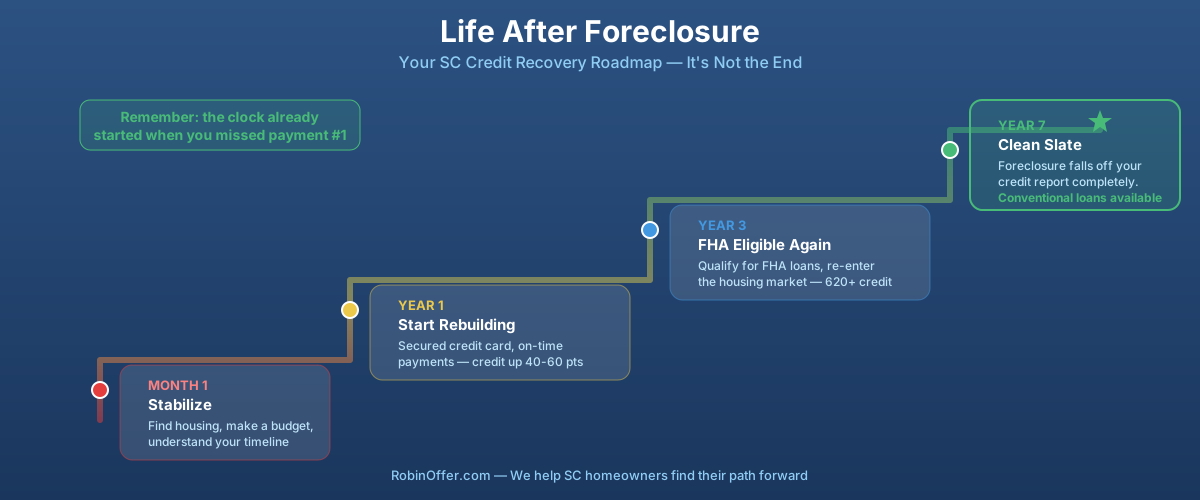
A foreclosure stays on your credit report for 7 years, but most people don't realize that clock started ticking the first month you missed a payment, not the date of the sale. If you've been in the process for a year, you're already a year into the recovery.
Steps to rebuild:
- Get a secured credit card as soon as possible and use it for small, recurring purchases (gas, groceries). Pay it off in full every month.
- Become an authorized user on a family member's credit card with good history
- Monitor your credit report for free at annualcreditreport.com and make sure the foreclosure is reported accurately
- Don't apply for new credit excessively because each hard inquiry temporarily lowers your score
- Pay every bill on time every time. Payment history is the single biggest factor in your credit score.
When Can You Buy a Home Again?
| Loan Type | Waiting Period After Foreclosure | With Documented Extenuating Circumstances |
|---|---|---|
| FHA | 3 years | 1 year |
| VA | 2 years | 2 years (no reduction) |
| Conventional (Fannie/Freddie) | 7 years | 3 years |
| USDA | 3 years | 3 years (no reduction) |
"Extenuating circumstances" means events outside your control: job loss, serious illness, divorce, death of a wage earner. If you can document the hardship that caused the foreclosure, you may qualify for a shorter waiting period on some loan types.
The waiting period starts from the date the foreclosure is completed (the sale date or transfer date), not from the date of your first missed payment. So the credit reporting clock and the mortgage re-qualification clock run on different timelines.
See What We'd Pay for Your Home
Whether you're leaning toward selling or just weighing your options, tell us about your home and we'll send you a real cash offer — any condition, close on your timeline. Free and confidential.
13. Your Next Step
You made it through this whole guide, which tells me you're serious about figuring this out. You know your options, you know the process, and you know where to get free help. The one thing left is to figure out your numbers: what's your home worth, how much equity do you have, and what does each path actually look like for you?
Your 90-Day Action Plan
If the whole thing still feels like too much to hold in your head, shrink it down to the next 90 days. Foreclosure stress creates decision paralysis, and a written plan is the simplest way to turn that into action. Here's the sequence:
| Action Window | What to Do | Goal |
|---|---|---|
| Days 1-10 | Confirm your case status in official records. Gather your full mortgage and correspondence file. Make your counselor call and your legal-intake call. Write down every deadline date. | Clarity and deadline control |
| Days 11-30 | File your Answer (or a motion strategy) with guidance. Build your option matrix: retain, sell, or exit. Start pulling together documents for the path you're leaning toward. | Preserve your rights |
| Days 31-60 | Execute your chosen path in earnest. Keep monitoring the docket and county roster. Build a contingency budget for a housing transition in case you need it. | Execution |
| Days 61-90 | Lock in the outcome and limit residual damage: negotiate terms, handle move logistics if needed, protect your records, and steer clear of scam solicitations. | Damage control and transition |
You don't need perfect certainty to start. You need a credible plan and the discipline to run it, even on your hardest days. The households that come through this best aren't the ones with the easiest circumstances, they're the ones who act early, document clearly, and stay consistent.
Here's what we offer at RobinOffer:
- Free home evaluation with no obligation, no pressure, no strings. Just an honest assessment of what your SC home is worth right now.
- Cash offer option: if selling quickly makes sense for your situation, we can close in as few as 14 days. No commissions, no repairs, no showings.
- We explain all your options, not just ours. If keeping your home makes more sense, we'll tell you that. If listing with an agent is the better move, we'll tell you that too.
Whether you're leaning toward selling, pursuing a modification, or you're just not sure yet, start with a free evaluation so you know your numbers. Everything gets clearer once you know where you stand.
Glossary of SC Foreclosure Terms
| Term | Definition |
|---|---|
| Deficiency Judgment | A court order requiring you to pay the difference between what you owed and what the home sold for at foreclosure. |
| Deed-in-Lieu | Voluntarily transferring your property to the lender to avoid foreclosure. |
| Dual Tracking | When a servicer pursues foreclosure while simultaneously reviewing a loss mitigation application, prohibited under federal law. |
| Equity of Redemption | Your right to pay off the full debt and stop the foreclosure at any time before the sale. |
| Judicial Foreclosure | Foreclosure that requires court approval, the only method allowed in South Carolina. |
| Lis Pendens | A public notice filed with the county clerk indicating that a lawsuit affecting the property has been filed. |
| Master-in-Equity | A judicial officer who presides over equity court matters, including foreclosure hearings and sales, in SC. |
| SCRA | Servicemembers Civil Relief Act, federal law providing foreclosure protections for active-duty military. |
| Short Sale | Selling your home for less than the mortgage balance, with the lender's approval. |
| Upset Bid | A higher bid submitted during the 30-day window after a foreclosure sale (only when deficiency rights are reserved). |
14. South Carolina Foreclosure FAQ
Quick answers to the questions SC homeowners ask most. Each one is covered in more depth in the chapters above.
Is South Carolina a judicial foreclosure state?
Yes. Every residential foreclosure in South Carolina goes through the court system, there is no power-of-sale foreclosure here. Most cases are heard by a Master-in-Equity or Special Referee, who also conducts the foreclosure sale.
How long does the foreclosure process take in South Carolina?
Under federal rules your servicer cannot file until you are at least 120 days delinquent. After the complaint is filed you have 30 days from service to answer, then the case moves to a hearing and a court-ordered sale. In practice, most SC foreclosures take roughly 6 to 12 months from the first missed payment to the sale, longer if you file an Answer or the county docket is backed up.
Can I stop a foreclosure in South Carolina once it starts?
Yes, until the sale happens. Your equity of redemption lets you stop the foreclosure at any point before the sale by paying off the full debt, and you can also pursue reinstatement, a loan modification or other loss mitigation with your servicer, or sell the home before sale day.
Can I sell my house while it’s in foreclosure in SC?
Yes. You can sell at any time before the foreclosure sale, the mortgage, fees, and costs are simply paid off at closing. Selling before the sale usually protects far more of your equity than letting the property go to auction.
Do I get my house back after a foreclosure sale in South Carolina?
No. South Carolina has no statutory post-sale right of redemption. The only post-sale window is the 30-day upset bid period, which applies only when the lender reserved the right to a deficiency judgment, and it is a competitive bidding window, not a buy-back right.
Can the lender come after me for money after the foreclosure sale?
Only if the lender reserved a deficiency judgment in its complaint. If it did, you can apply to the court for an order of appraisal within 30 days after the sale (SC Code 29-3-680), which can reduce or eliminate the deficiency if the home’s appraised value exceeds the sale price.
Disclaimer: This guide is for informational purposes only and does not constitute legal, tax, or financial advice. South Carolina foreclosure law is complex and fact-specific. Consult a licensed South Carolina attorney for advice about your individual situation. Statute citations are current as of February 2026 and were re-reviewed in July 2026. Verify against the current SC Code at scstatehouse.gov before relying on any specific provision.
Dealing with HOA assessment pressure too? Read our South Carolina HOA foreclosure guide for lien-specific timelines and negotiation strategy.