
Indian Land: Selling in a Builder-Competitive Market
A practical local guide for Indian Land homeowners: pricing strategy, selling paths, and clear decision frameworks.
1. The Counter-Narrative: Why Many Indian Land Sellers Misread This Market
If you own a home in Indian Land, South Carolina, you have probably heard some version of this sentence: “Everything up there sells fast.” It sounds right because the area has grown so quickly. New rooftops keep appearing. Traffic on Highway 521 keeps getting heavier. Retail keeps expanding. On paper, all of that growth should make selling easy.
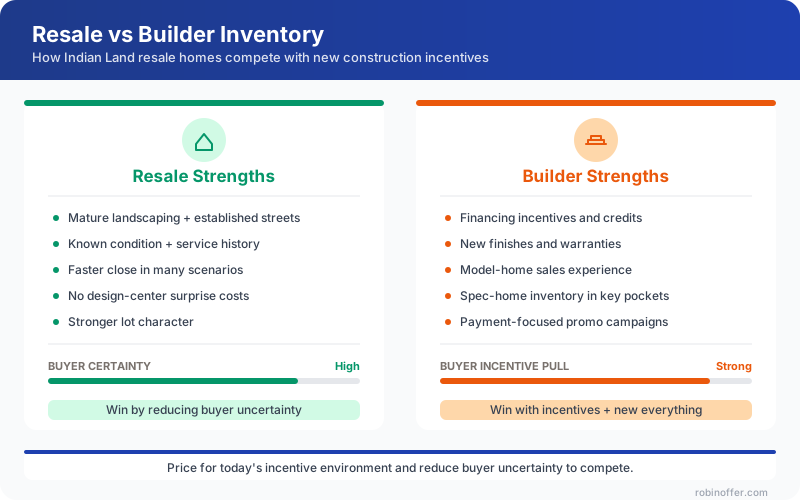
But here is the part most advice skips: a fast-growing area can still be a hard resale market if buyers have too many alternatives. In Indian Land, your biggest competition is not the house down the street. It is often a brand-new home with a builder rate buydown, closing-cost credits, fresh finishes, and a polished model-home experience. When buyers can compare your 2014 resale against a builder package worth $10,000 to $20,000 in concessions, “strong demand” does not automatically mean “strong leverage” for your listing.
This guide is built for that exact reality. It is not generic “how to sell a house” content. It is Indian Land-specific strategy grounded in Lancaster County tax mechanics, South Carolina closing rules, 29707 market speed, corridor-level development pressure, and neighborhood-level positioning. You will see where resale homes still win, where they lose, and how to price and present your property so you do not become the listing that sits through two weekends, three reductions, and one frustrated withdrawal.
You will also get practical tools: net-sheet math, timeline options, legal-resource links, and decision frameworks for sellers dealing with inherited property, divorce, relocation, or financial pressure. Read straight through or jump to the section that matches your situation. If you want a regional comparison, you can also review our Fort Mill homeowner selling guide, the broader best-time-to-sell guide for the Carolinas, and our cash offer guide.
2. What the 29707 Numbers Actually Say (And What They Don’t)
Let’s start with the data most homeowners see first. Redfin’s 29707 market snapshot showed a median sale price around $510,000 in early 2026, with homes averaging roughly 82 days on market and a sale-to-list ratio near 98%. That blend tells a mixed story. Prices are not collapsing, but speed is not instant. Buyers still negotiate. Sellers who overreach on list price often pay for it in time and eventual reductions.
It is important to interpret median price correctly in Indian Land. A single monthly median folds together active-adult inventory, newer two-story subdivisions, townhome product, and different school-zone preferences. A $510,000 median does not mean your house is worth $510,000. It means the center of all recent transactions sat near that point. Your value comes from your micro-market, not the zip code headline.
Another signal many sellers miss is absorption by price tier. In most fast-suburban markets, entry and mid-tier homes (for local buyers and move-up families) remain more liquid than upper-tier homes where monthly payments are more rate-sensitive. That means a house in a budget-friendly band may receive showings quickly even with average presentation, while a higher-end listing can sit if it is not staged, priced, and marketed with precision.
| 29707 Indicator | Recent Reading | Seller Meaning |
|---|---|---|
| Median closed price | About $510,000 | Demand is present, but this is a zip-wide blend rather than your exact valuation. |
| Average days on market | Around 82 days | Speed is selective. Correct pricing matters more than “growth story” optimism. |
| Sale-to-list ratio | Near 98% | Most homes still close with discount from ask; pricing buffer and negotiation plan required. |
| Competitive score | Somewhat competitive | Not a runaway seller’s market. Buyers retain options and bargaining power. |
Now the “what they don’t” part: these numbers do not capture builder incentives cleanly. Closed-sale data reflects final prices, but not always the full concession package that changed the buyer’s effective cost. If a builder keeps base price firm but gives rate buydown credits, appliance bundles, and closing support, that can undercut resale competition without showing up as a steep “price drop” in headline metrics.
For that reason, Indian Land sellers should evaluate market position using three filters at once: recently closed resale comps, currently active resale competition, and active new-construction alternatives offering financial incentives. If you only analyze one of those three buckets, you can accidentally price your home into the “showings but no offers” zone.
3. The 521 Corridor Effect: Growth Helps You, Supply Pressures You
Indian Land’s growth story is real. The corridor has attracted large mixed-use and retail investment, and county economic-development channels have highlighted major activity around projects like The Exchange at Indian Land, including anchor retail, townhome development, and future multifamily delivery. That level of investment increases visibility, improves convenience, and attracts more households who previously looked only at south Charlotte or central Fort Mill.
The same growth dynamic, however, creates constant resale competition. Every new phase release, every builder promo weekend, and every finished move-in-ready spec home gives buyers another reason to delay committing to your resale. In practical terms, growth is a tailwind on demand and a headwind on seller leverage at the exact same time.
Lancaster County planning and long-range growth frameworks also reinforce this reality: the Panhandle area, which includes Indian Land, is expected to remain a core growth engine. Sellers should not assume supply pressure disappears soon. The right mindset is not “wait until things calm down.” The right mindset is “learn to win in a market where new inventory is a standing feature.”
| Corridor Change Driver | How Buyers Experience It | Impact on Your Sale |
|---|---|---|
| Retail anchors and services expansion | Greater day-to-day convenience | Helps area appeal and inbound traffic. |
| New townhome and single-family phases | More fresh inventory choices | Raises comparison pressure on resale homes. |
| Medical and mixed-use pipeline activity | Confidence in long-term area growth | Supports values over time but does not guarantee fast resale now. |
| Population inflow from Charlotte metro | Steady buyer pool replenishment | Improves demand depth, especially for well-positioned listings. |
What does this mean for your strategy? Market your home as a proven, functioning alternative in a growing corridor: known lot, known HOA cadence, known utility setup, known neighborhood rhythm. Buyers who are overwhelmed by uncertain build timelines and change-order complexity often value certainty more than they expected when they began house hunting.
4. New Construction Incentives vs. Resale Reality: How to Compete Intelligently
Builder competition is the defining issue for many Indian Land resales. You do not need to “beat” builders at everything. You only need to win for the buyer profile most likely to choose your home. That starts with an honest comparison of buyer economics and experience.
Builders typically compete using financing and package mechanics: temporary rate buydowns, closing-cost credits tied to preferred lenders, upgrade allowances, and occasional inventory-home discounts near quarter-end targets. Resale sellers usually compete through price flexibility, mature-lot advantages, faster close, and fewer “unknown completion” risks.
| Buyer Decision Lens | Typical Builder Offer Strength | Resale Counter-Strategy |
|---|---|---|
| Monthly payment comfort | Rate buydown can lower payment short-term | Price where your payment remains competitive without hidden upgrade spend. |
| Upfront cash at close | Credits reduce immediate closing burden | Offer selective seller credits or targeted repairs with transparent net pricing. |
| Move timeline certainty | Inventory homes can be quick, new starts can slip | Emphasize known close window and reduced construction-delay risk. |
| Neighborhood maturity | New amenities may still be in phases | Highlight established landscaping, traffic patterns, and lived-in community stability. |
| Final cost certainty | Design-center additions can add substantial expense | Show total included value already in your list price. |
One common mistake is trying to defend a stale price by listing your upgrades line-by-line as if buyers reimburse dollar-for-dollar. They usually do not. In Indian Land’s competitive environment, buyers care less about what an improvement cost you and more about what it saves them in immediate hassle or future expense. A freshly serviced HVAC with documentation can be more persuasive than a long list of decorative changes that feel subjective.
Another mistake is ignoring payment-driven psychology. If rates are elevated, buyers compare monthly carrying cost more than absolute price. A home listed $15,000 too high can lose to a builder option even if your lot and finishes are superior, because the payment difference feels tangible each month. Strategic pricing frequently outperforms “hold the line and hope.”
When you review offers, look beyond headline price. Compare contingency risk, financing quality, inspection ask probability, and timeline confidence. A slightly lower but cleaner offer can net better than a high offer with weak financing and aggressive repair posture that retrades after inspections.
See what your Indian Land home is worth
Get a real, data-driven estimate based on your specific neighborhood and recent comps, even with new-construction nearby.
5. Indian Land Micro-Markets: Why Your Street Matters More Than the Zip Code
In 29707, broad averages hide large variation. Subdivision age, lot size, school assignment, amenity package, and proximity to corridor traffic all influence demand velocity. Two homes at similar square footage can perform very differently if one sits on a quiet internal street with mature landscaping and the other backs to a high-flow connector road near active construction phases.
Communities commonly referenced by local buyers include areas such as Sun City Carolina Lakes, Bridgemill, Walnut Creek, Legacy Park, and other master-planned or amenity-rich segments. Buyer intent differs by segment. Active-adult purchasers prioritize lifestyle and convenience details that may not matter to younger move-up families. Meanwhile, first-time and move-up households may focus heavily on monthly payment, school logistics, and commute simplicity over clubhouse fit.
| Micro-Market Type | Typical Buyer Priorities | Seller Prep Focus |
|---|---|---|
| Active-adult community resale | Lifestyle fit, HOA clarity, low-maintenance features | Document rules/fees early and show turnkey condition. |
| Family-oriented newer subdivision | School convenience, yard usability, kitchen/living flow | Stage main living zones and present practical upgrades. |
| Townhome segment | Payment, HOA coverage details, location convenience | Clarify monthly dues, reserves/assessments, and parking reality. |
| Higher-price detached segment | Lot quality, finish level, privacy, total carrying cost | Professional photography, pre-inspection, and pricing precision. |
This is why your comparative market analysis should include active competition and pending activity in your immediate segment, not just recent solds from the whole county panhandle. If your buyer is deciding between your home and two builder-backed inventory options within a ten-minute drive, those live alternatives influence your leverage now more than a six-month-old comparable from a different product type.
Neighborhood-level positioning also matters in marketing copy. Instead of vague language like “great location,” use specific value framing: proximity to daily retail, route options to Ballantyne employment centers, and known neighborhood amenities already operating today rather than promised in future phases.
6. South Carolina Process Rules Every Indian Land Seller Should Know
South Carolina differs from many states in one major way that surprises out-of-state sellers: residential closings are attorney-led. That means your transaction must run through a licensed South Carolina closing attorney, and legal coordination is not an optional add-on at the end. If you relocated to Indian Land from North Carolina and have never sold in SC, plan for this from day one.
Lancaster County offices also matter in practical pre-listing prep. Assessor resources, millage references, and register-of-deeds access can help you validate ownership records, mailing details, and tax assumptions before you go live. Small administrative errors become expensive when discovered late in the contract window.
| SC / Lancaster Topic | What It Means for Sellers | Where to Verify |
|---|---|---|
| Attorney-led closing requirement | You need closing counsel in transaction planning, not just final signatures. | South Carolina legal practice norms + attorney office guidance. |
| Assessment and legal residence status | Tax expectations for buyer can change based on occupancy and classification. | Lancaster County Assessor resources. |
| Millage context | Annual tax burden should be communicated carefully, not guessed. | Lancaster County millage publications. |
| Recorded document access | Deeds, restrictions, and related records should be confirmed pre-listing. | Lancaster County Register of Deeds and land-records portals. |
For legal support, South Carolina Bar referral resources can connect homeowners with counsel by practice area, and South Carolina Legal Services offers intake options for qualifying residents needing civil legal support. If your situation includes financial distress, the U.S. Bankruptcy Court for the District of South Carolina publishes process and location guidance that can help you understand timelines.
This guide is educational and not legal advice. For transaction-specific legal questions, use a qualified attorney who practices in South Carolina residential real estate and can assess your facts directly.
7. What It Really Costs to Sell in Indian Land
Many homeowners anchor on commission and miss the rest of the cost stack. In practice, your net is shaped by five categories: commission structure, buyer-side concessions, repair/inspection outcomes, attorney and recording-related charges, and carrying costs while listed. If you are also buying your next home, timing overlap adds another layer.
A useful way to plan is running three net scenarios before listing: optimistic (strong offer, low concessions), base case (typical negotiation), and conservative (price adjustment plus higher concessions). Doing this upfront prevents emotionally reactive decisions after your property has been active for a few weeks.
| Expense Bucket | Typical Range in Practice | Planning Note |
|---|---|---|
| Listing and buyer-agent commissions | Varies by agreement and local norms | Negotiate structure early and evaluate expected service scope. |
| Buyer-requested concessions | Often tied to financing or repairs | Common in payment-sensitive markets with builder competition. |
| Pre-list and post-inspection repairs | Can swing widely by home condition | Pre-inspection may reduce surprise renegotiation risk. |
| Attorney/recording/transaction charges | Transaction-specific | Confirm estimated settlement statement in advance. |
| Carrying costs while listed | Mortgage, taxes, insurance, utilities, HOA | Longer DOM can erase gains from “holding out” for price. |
In Indian Land, carrying cost discipline is especially important because buyer alternatives remain plentiful. A seller who resists one early concession can unintentionally lose more money by carrying the house another 45 to 60 days through summer utilities, mortgage payments, HOA dues, and eventual reduction stigma.
If you are deciding between open-market listing and a direct cash offer, compare true net after all expected costs and expected timeline risk. A lower headline cash offer can occasionally outperform a traditional path if your property needs substantial work or your timing window is tight. Our cash offer guide has a deeper framework for evaluating that tradeoff.
8. Three Practical Selling Paths for Indian Land Homeowners
You can sell through a traditional listing, a hybrid strategy (limited prep + targeted pricing + selective concessions), or a direct-sale/cash path. None of these is universally “best.” The right path depends on your home’s condition, your timeline, your appetite for showings/repairs, and your tolerance for uncertainty.
| Path | Best For | Likely Tradeoff |
|---|---|---|
| Traditional open-market listing | Move-in-ready homes where maximizing gross price is primary | Longer timeline and higher process complexity. |
| Lean-prep resale strategy | Sellers wanting balance between speed and value | Requires disciplined pricing and clear concession plan. |
| Direct cash / as-is sale | Tight timelines, major repairs, estate or distress scenarios | Lower gross price in exchange for speed/certainty. |
Traditional listing tends to work best when your property is already competitive versus builder alternatives and you can support staging, photography, and a full showing cycle. In Indian Land that usually means clean presentation, market-aligned updates, and realistic initial pricing.
Lean-prep strategy works when the home is solid but not perfect and you do not want to over-invest in renovations before listing. Focus spending on high-return items: paint correction, flooring touch-ups, lighting updates, landscaping refresh, and obvious deferred maintenance fixes. Then price for momentum and pre-commit to a response plan if activity underperforms in week one.
Direct sale is often rational in inherited properties, relocation deadlines, and situations where repair cost or uncertainty would consume too much capital and time. The key is getting multiple direct-offer comparisons and evaluating proof of funds, inspection terms, and close certainty rather than accepting the first inbound investor pitch. If a fast, as-is cash sale is the path you are weighing, you can get a cash offer on your Indian Land home and compare the net against a traditional listing.
Curious what your Indian Land home would sell for?
Get a real, data-driven value estimate based on your specific neighborhood and recent comps.
9. Pricing Strategy in a Builder-Competitive Market
Initial list price is your biggest controllable lever. In Indian Land, launching high “to leave room” often backfires because buyers immediately compare your payment and value against new inventory. If week-one interest is weak, your listing can age quickly in an algorithm-driven search environment where freshness influences engagement.
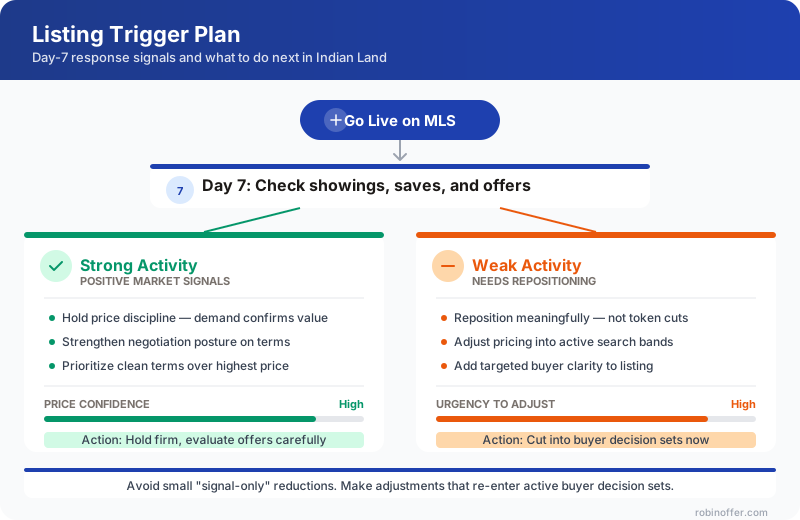
A practical pricing workflow looks like this: define your competitive set (including nearby builder alternatives), determine expected concession pressure, set a strategic launch range, and choose in advance when you will adjust if traction misses expectations. Waiting until emotions run hot after three quiet weekends usually leads to delayed reductions and worse final outcomes.
| Launch Signal in First 10 Days | Interpretation | Recommended Response |
|---|---|---|
| Strong showings + multiple serious inquiries | Price likely aligned | Hold discipline and negotiate from strength. |
| Good traffic + weak offer quality | Price/value gap or perceived condition concern | Tighten pricing or pre-offer concessions; address objections directly. |
| Low traffic + few saves/inquiries | Overpriced or poorly positioned in search filters | Make prompt pricing correction before listing staleness compounds. |
| Offers with large concession asks | Payment affordability pressure is active | Evaluate net equivalence of price cut vs targeted credits. |
Don’t treat all price reductions the same. A timely, meaningful correction can restore momentum. A tiny reduction that does not move your listing into a new buyer-search bracket often changes nothing and simply signals weakness. The objective is not to reduce; it is to re-enter the active decision set for serious buyers.
Also, frame value with total ownership clarity. Show utility efficiency upgrades, maintenance records, HOA scope, and practical livability improvements. Buyers comparing your home to a builder model are trying to estimate future hassle and future spend. Help them do that clearly, and your resale story becomes stronger.
10. Hard Situations: Inheritance, Divorce, Relocation, and Financial Stress
Not every sale starts from “we just want to move.” In Indian Land, many homeowners sell because life changed: a family death created inherited-property complexity, a separation introduced legal and timing constraints, a job move shortened the runway, or monthly carrying cost became unsustainable. In these moments, a technically perfect market strategy matters less than clear sequencing and risk control.
Inheritance / estate sale: Verify authority to sell, confirm title and deed details, gather property records, and coordinate with qualified legal counsel early. Deferred maintenance and deferred paperwork often appear together in inherited homes; address both before going active. If the property needs significant repairs, model whether as-is disposition or light pre-sale stabilization gives better net and lower risk.
Divorce-related sale: Build a timeline compatible with legal process and settlement terms. Keep communication channels structured and documented. Use objective valuation frameworks rather than emotionally anchored price expectations. If legal timing and sale timing are colliding, use a written milestone schedule and compare outcomes against practical alternatives in our cash-offer decision guide and timing guide for the Carolinas.
Relocation pressure: If your move date is fixed, reverse-engineer the listing timeline from that date instead of waiting for the “ideal” season. In a builder-competitive submarket, certainty often beats aspiration. A realistic launch and disciplined response schedule usually outperforms a high-stakes last-minute listing.
Financial distress: If payment pressure is building, act early. Delayed action narrows options and increases legal/credit consequences. South Carolina legal-aid and bar-referral resources, HUD counseling channels, and court-system information can provide direction while you evaluate sale alternatives. For foreclosure-process background in North Carolina markets, see our NC foreclosure timeline; South Carolina judicial-process content is published separately as available.
| Situation | First Priority | Common Mistake to Avoid |
|---|---|---|
| Inherited home | Authority and title clarity | Listing before paperwork and property-condition facts are organized. |
| Divorce transition | Decision governance and communication protocol | Using price as proxy for unresolved personal conflict. |
| Job relocation | Timeline certainty and risk management | Overpricing first, then compressing decisions under deadline stress. |
| Payment distress | Immediate options review | Waiting until legal deadlines force rushed, low-leverage choices. |
11. A 90-Day Seller Playbook for Indian Land
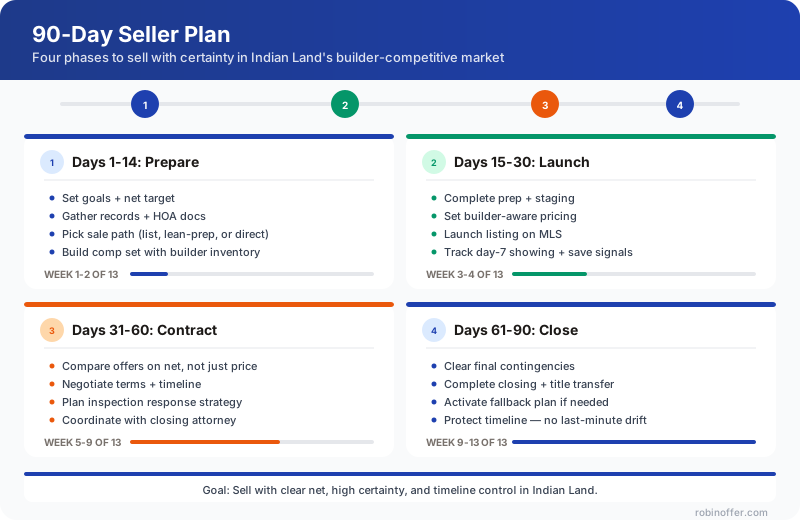
Most successful resale outcomes here come from disciplined execution over 60 to 90 days, not last-minute improvisation. Use this as a practical roadmap and adapt to your exact timeline.
Days 1–14: Decision and Preparation
Clarify your required net, preferred close window, and fallback options. Pull preliminary valuation ranges using local comparables and active competition. Gather key records: deed-related info, HOA details, utility averages, major system ages, and recent maintenance receipts. Decide your selling path (traditional, lean-prep, or direct) based on condition and timeline realities.
Days 15–30: Positioning and Launch
Complete high-impact prep work, stage key spaces, and produce professional listing assets. Set list price with explicit awareness of nearby builder inventory and incentives. Define your day-7 and day-14 response thresholds before launch so you can adjust without emotional delay. Publish and monitor showing feedback in real time.
Days 31–60: Negotiation and Contract Risk Control
When offers arrive, compare not just price but contingency quality, lender strength, concession probability, and closing reliability. Negotiate to protect net while preserving deal certainty. Keep attorney coordination tight and resolve inspection issues quickly with a pre-defined concession framework rather than open-ended back-and-forth.
Days 61–90: Closing Execution and Transition
Track milestone dates (inspection, financing, appraisal, title, closing disclosures) and maintain backup planning in case timelines slip. Prepare move logistics early. If the contract fails, relaunch quickly with a revised strategy and clear market narrative to avoid extended listing fatigue.
| Playbook Stage | Main Objective | Key Output |
|---|---|---|
| Weeks 1–2 | Clarity and readiness | Net targets, records packet, chosen sale path. |
| Weeks 3–4 | Market entry strength | Launch-ready listing with builder-aware pricing. |
| Weeks 5–8 | Offer quality and risk control | Contract with acceptable net and high close probability. |
| Weeks 9–12 | Reliable completion | Closed transaction and controlled transition. |
12. Net Proceeds Math: Three Indian Land Scenarios
Below is simplified planning math for a hypothetical home around the current mid-market range. These are educational examples, not a settlement statement. Real figures vary by contract terms, financing structure, commission agreements, and specific closing charges.
| Scenario Variable | Traditional List Path | Lean-Prep / Faster-Priced Path | Direct As-Is Offer Path |
|---|---|---|---|
| Illustrative contract price | $515,000 | $500,000 | $455,000 |
| Illustrative concessions/credits | $8,000 | $4,000 | $0 |
| Prep/repair spend before close | $9,000 | $4,500 | $0 |
| Illustrative marketing/transaction costs | Higher | Moderate | Lower |
| Illustrative timeline | 60–95 days | 40–70 days | 10–30 days |
| Primary risk | Inspection and appraisal renegotiation | Undershooting top-dollar upside | Lower gross value realization |
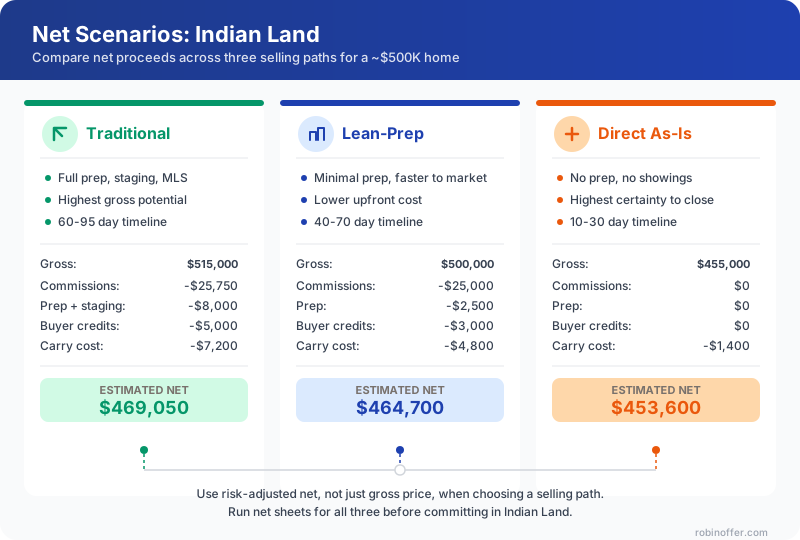
Notice what matters: it is possible for a lower headline path to produce a similar stress-adjusted outcome depending on repairs, concessions, and carry cost. This does not mean “always take cash.” It means compare complete outcomes, not just list-price fantasy. In Indian Land’s builder-incentive context, certainty has real financial value when timing pressure is non-negotiable.
If your goal is maximum net and you can absorb timeline risk, traditional exposure may still win. If your goal is reliable execution under life constraints, a simplified or direct path may be superior. The best choice is the one that fits your actual constraints and leaves you with the lowest regret after closing.
13. Indian Land vs. Nearby Markets: How Buyer Cross-Shopping Shapes Your Outcome
Buyers do not shop by municipal boundaries. Many Indian Land prospects cross-shop Fort Mill, south Charlotte, parts of Lancaster County, and nearby value segments in markets like Rock Hill based on commute, schools, taxes, and monthly payment. That means your listing competes in a regional decision matrix, not a local vacuum.
South Carolina’s tax structure and vehicle-tax differences remain meaningful talking points versus North Carolina alternatives for many households. At the same time, if your pricing drifts too close to high-amenity alternatives nearby, buyers may decide to “trade up” elsewhere. Your pricing and marketing should acknowledge both forces: Indian Land’s value narrative and the limits of that premium.
| Cross-Shop Market | Why Buyers Consider It | How to Defend Your Listing Position |
|---|---|---|
| Fort Mill areas | School reputation, established amenities, employer access | Emphasize total cost value and your home’s lot/condition advantage. |
| South Charlotte fringe | NC location preference, employer proximity | Show Indian Land tax and space value with concrete ownership-cost framing. |
| Other Lancaster County segments | Price sensitivity and product variety | Differentiate neighborhood quality, commute practicality, and move-in certainty. |
Effective listing language should answer buyer objections before they are spoken: commute routes, known HOA information, practical nearby retail and services, and whether the home is truly move-in ready without surprise post-close spending. This is where many resale listings underperform builder marketing. Builders are explicit and process-driven. Resale listings should be too.
14. Your Next Move: A Seller Checklist You Can Use This Week
If you take only one thing from this guide, make it this: Indian Land is a market where good homes can absolutely sell well, but only when strategy matches current competition. You are not stuck. You just need a plan grounded in real alternatives buyers are seeing right now.
Use this checklist before you list:
- Define your required net and latest acceptable closing date.
- Evaluate resale comps and active builder-incentive competition within your buyer radius.
- Choose your selling path (traditional, lean-prep, or direct) based on condition and timeline.
- Prepare records packet: HOA details, maintenance history, key system ages, utility and tax context.
- Set list price with pre-committed day-7/day-14 adjustment triggers.
- Create offer-comparison framework that values certainty, not just headline price.
- Coordinate South Carolina attorney-led closing requirements early.
- Build fallback options in case first contract falls through.
And if you are evaluating adjacent scenarios or timing questions, keep these resources open in parallel: the best season to sell in the Carolinas, a city-level comparison with Fort Mill sellers, and full tradeoff analysis in the cash-offer decision guide. If your situation is stress-driven rather than market-driven, start with legal and counseling support early through South Carolina Bar referral channels, South Carolina Legal Services intake, and HUD counselor pathways.
Indian Land has changed fast, and it will keep changing. Sellers who win here are not the ones who guess right once. They are the ones who execute a clear, local, data-aware process from day one through closing. That can be you.
See what your Indian Land home is worth
Get a real, data-driven estimate based on your specific neighborhood and recent comps.
15. Indian Land Seller FAQs (The Questions People Ask Right Before Listing)
Q: Should I wait for rates to drop before listing in Indian Land?
A: Waiting can help in some scenarios, but it is not automatically better. If active inventory rises at the same time rates soften, you may gain demand and lose scarcity simultaneously. In Indian Land, where new inventory is an ongoing factor, waiting only works if the expected price benefit exceeds your carry costs and timeline risk.
Q: How many internal links, disclosures, and detail points should my listing include?
A: More than average. Buyers in this corridor are comparison-heavy. Detailed listing remarks, neighborhood notes, and complete disclosure packets tend to outperform minimal listings because they reduce uncertainty and help buyers commit faster.
Q: Do I need to pre-inspect before listing?
A: Not always, but pre-inspection can be useful when home age or known deferred maintenance could trigger renegotiation. In Indian Land, where buyers have alternatives, reducing surprise issues often protects your contract strength.
Q: How quickly can a resale close in South Carolina?
A: Timelines vary by financing and transaction complexity, but resale closes can be fast when title, attorney coordination, and inspections are managed proactively. The key is organizing documents and resolving likely issues before contract deadlines tighten.
Q: I’m worried my home is “too old” compared to new builds. Should I renovate heavily?
A: Usually no. Heavy pre-sale renovations rarely return 100% of cost. Focus on functional confidence, cosmetic cleanliness, and pricing alignment. Buyers will often choose a well-prepared resale over a builder option when total value and certainty are obvious.
Q: What if my listing sits for 30+ days in Indian Land?
A: Diagnose quickly. Review showing feedback, online engagement, price position against active builder/resale competition, and condition objections. Then make a meaningful adjustment. Time-on-market stigma compounds if changes are delayed or too small to matter.
| Common Seller Question | Short Answer | Action Step |
|---|---|---|
| Wait or list now? | Depends on carry cost vs expected upside. | Run 60/90/120-day scenario math before deciding. |
| Big renovation needed? | Usually no. | Prioritize function, cleanliness, and confidence documentation. |
| Listing is stale? | Act decisively. | Make meaningful repositioning move within a defined timeline. |
These FAQ answers are practical guidelines, not legal or tax advice. For legal interpretation in your specific sale, coordinate with a qualified South Carolina attorney and transaction professionals who can evaluate your facts directly.
16. Final Decision Framework: Choose the Strategy You’ll Still Like 6 Months from Now
The last decision is not “What is the highest number I could maybe get?” The better decision is “What strategy gives me the best balance of net, certainty, timeline control, and stress level for my real-life constraints?” In Indian Land, this balance matters because competition is persistent and buyer alternatives are abundant.
Use a weighted framework. Score each path (traditional, lean-prep, direct) across four dimensions: expected net, closing certainty, timeline fit, and effort burden. Give each category a weight based on your priorities. A family managing school-year transitions may weight timeline certainty higher. A flexible seller with no immediate move may weight net outcome higher. There is no universal scorecard, only your scorecard.
| Decision Dimension | If This Is Your Top Priority | Path That Often Fits Best |
|---|---|---|
| Maximum potential net | You can tolerate market time and prep complexity | Traditional listing with disciplined pricing and presentation. |
| Balanced net + speed | You want predictable execution without over-investing | Lean-prep resale strategy. |
| Fastest certainty | You need to close quickly or avoid repairs/showings | Direct as-is/cash route with multiple offer comparisons. |
| Lowest stress load | You need fewer moving parts and lower process friction | Lean-prep or direct path depending on condition. |
Once you pick a strategy, commit to the operating plan. Most failed outcomes come from strategy drift: starting as a premium traditional listing, then switching to discount behavior after weak activity, then chasing a direct buyer late after time-on-market damage. Consistent execution from the start typically produces better results than constant pivots.
Before you finalize, review these three risk checks one more time:
- Market risk: Am I priced against today’s Indian Land options, including builder incentives?
- Process risk: Are records, disclosures, and attorney coordination ready before contract pressure begins?
- Personal risk: Does my sale path actually match my timeline, finances, and stress tolerance?
If the answer is yes across all three, you are in a strong position. If one is no, fix it now while you still have leverage. The sellers who do best in Indian Land are not lucky. They are prepared, realistic, and decisive.
And that is the right way to approach this market: not with hype, not with fear, and not with copy-paste advice from another city. With a local plan, executed on purpose.
Want a cash offer on your Indian Land home?
Tell us your address and timeline and we will get you a no-obligation cash offer.
17. Local Resource Appendix for Indian Land Sellers
This appendix is here so you can execute quickly without hunting for links after you make your plan. For Indian Land homeowners, speed and clarity matter. Having your county, legal, counseling, and market resources organized before listing can save days when deadlines tighten.
Lancaster County property and planning resources: Start with the Lancaster County Assessor pages for assessment context, legal residence information, and forms. Review millage resources so you can communicate tax context accurately to buyers. If you need to verify deed or record details, use the Register of Deeds and land-record portals early rather than mid-contract.
School and district context: Many Indian Land buyers ask district and school logistics early in the search process. Keep district links available and encourage buyers to verify assignment and enrollment details directly with official channels. Clear school-context communication supports confidence without overpromising anything outside your control.
Legal and support channels: For attorney needs, use South Carolina Bar referral resources to identify qualified counsel by issue type and geography. If your sale intersects with hardship, civil legal barriers, or urgent household stress, South Carolina Legal Services and LawHelp intake pathways can provide triage options. For housing counseling, HUD counselor pathways and SC housing-resource channels are useful starting points.
Financial-distress and court-context resources: If you are worried about escalating debt pressure, late notices, or legal filings, gather information early. Delayed action narrows options. The U.S. Bankruptcy Court for the District of South Carolina publishes process and location information that can help you understand the process while you coordinate with legal counsel.
Market-comparison references: Keep relevant guide references open while you prepare your Indian Land strategy, especially for cross-shopping and timing decisions. The Fort Mill guide helps with neighboring-market context, the best-time guide helps with seasonal planning, and the cash-offer guide helps evaluate certainty-versus-price tradeoffs.
| Resource Category | Why It Matters Before Listing | Suggested Use |
|---|---|---|
| Assessor and millage references | Prevents tax-context miscommunication | Validate property/tax assumptions in your prep packet. |
| Register of Deeds and land records | Reduces title/document surprises | Confirm core ownership and record details before contract stage. |
| Planning and county growth resources | Supports accurate local market framing | Use for informed neighborhood and corridor context in marketing. |
| School district resources | Addresses high-priority buyer questions | Provide official links and encourage direct verification. |
| SC Bar and legal-services channels | Connects sellers to issue-specific legal help | Use early for divorce, estate, title, or distress complexity. |
| HUD/SC counseling pathways | Helpful for households under financial strain | Engage early when affordability pressure is rising. |
| Regional comparison guides | Improves strategic decision quality | Cross-check pricing, timing, and path tradeoffs. |
Execution note for Indian Land sellers: collect these resources in one folder and keep a written “sale command sheet” with your priorities, deadlines, contacts, and fallback steps. When negotiations become active, this simple system prevents avoidable errors and keeps decisions aligned with your original goals.
Finally, remember that confidence in this market comes from preparation more than prediction. You do not need to know exactly where every rate and median will move over the next quarter. You need to know your constraints, your options, and your process. With that discipline, Indian Land homeowners can sell effectively even in a builder-competitive environment.