
Fort Mill Seller's Guide
The complete guide for Fort Mill homeowners — market data, SC tax advantages, new construction competition, neighborhood pricing, and every selling option compared.

1. Why This Guide Exists
Fort Mill used to be the town you drove through on the way to Carowinds. Not anymore. In the span of two decades it has gone from a quiet York County mill town to the seventh-fastest-growing suburb in the United States, a place where Charlotte salaries meet South Carolina tax advantages and nationally ranked schools. If you own property here, that growth has almost certainly put money in your pocket.
But growth also means competition. More than 200 new-construction communities are marketing aggressively to the same Charlotte buyers you need. If you want to sell your house in Fort Mill, SC, you need a strategy that accounts for that reality. What follows is Fort Mill-specific: York County tax data, South Carolina closing requirements, neighborhood-by-neighborhood pricing, and honest math on every path from listing with an agent to accepting a cash offer. We also cover the harder scenarios: probate through York County courts, equitable distribution in a SC divorce, and foreclosure in a judicial-only state.
Read the whole thing or jump to the section that fits your situation.
2. Fort Mill by the Numbers
To sell a house in Fort Mill, SC, you have three main options: list with a real estate agent (best for move-in-ready homes), sell FSBO to save on commissions, or accept a cash offer for speed and certainty. South Carolina requires a closing attorney for all residential sales, and Fort Mill sellers face unique competition from 200+ new-construction communities.
Your home's value is not a fixed number. It shifts with inventory, interest rates, buyer demand, and what the comparable houses in your subdivision closed at last month. The Fort Mill market your neighbor sold into twelve months ago is measurably different from the one you face today. Here is where the market actually stands.
Fort Mill Home Prices at a Glance
| Metric | Current Data | Year-Over-Year Change |
|---|---|---|
| Median Sale Price | $475,000 – $540,000 | Up 4–8% |
| Zillow Home Value Index (ZHVI) | $537,120 (29708) | Up 2.0% |
| Median Price Per Sq. Ft. | $210 – $240 | Varies by neighborhood |
| 29708 Zip (Tega Cay / West) | $537,120 (ZHVI) | Up 2.0–8.3% |
| 29715 Zip (Central Fort Mill) | ~$475,000 | Up 3–5% |
Data sourced from Redfin, Zillow, and Bankrate as of late 2025 / early 2026. Market conditions change, so request a current evaluation for the latest numbers specific to your home.
How Fast Are Homes Selling?
| Metric | Current (Late 2025) | Context |
|---|---|---|
| Average Days on Market | 45 – 74 days | Varies widely by price point |
| Sale-to-List Price Ratio | 98.5% | Most close near asking |
| Redfin Compete Score (29708) | 54 out of 100 | Somewhat competitive |
| Average Offers per Home | 1 | Not a bidding-war market |
A Compete Score of 54 puts Fort Mill in "somewhat competitive" territory, well below the frenzied markets of 2021-2022 but notably stronger than neighboring Rock Hill (43). Homes priced correctly in desirable subdivisions still move briskly, while overpriced listings in a single-offer market sit. The listing price you choose on day one is the single biggest lever you control.
How Fort Mill Compares to Its Neighbors
| Market | Median Price | Days on Market | Character |
|---|---|---|---|
| Fort Mill (29715) | ~$475,000 | 45–65 days | Master-planned suburbs, top schools |
| Tega Cay / Fort Mill (29708) | ~$537,000 | 60–74 days | Lake Wylie access, premium lots |
| Rock Hill | ~$310,000 | 64–76 days | More affordable, urban core revival |
| Indian Land (29707) | ~$430,000 | 50–65 days | Newer construction, Sun City 55+ |
| South Charlotte (Ballantyne) | ~$575,000 | 35–50 days | NC taxes, urban amenities |
Fort Mill home selling happens in this context: more affordable than south Charlotte with SC tax advantages, but more desirable (and pricier) than Rock Hill. That positioning is why demand remains strong even as the broader market cools. For sellers in neighboring markets, see our Tega Cay seller guide, Rock Hill seller's playbook, Indian Land guide, Gastonia guide, Belmont guide, or Huntersville guide for comparison.
3. Charlotte's Hottest Suburb
In 2025, Fort Mill was ranked the seventh-fastest-growing suburb in America. That is not a local chamber of commerce puff piece. It reflects sustained, measurable population growth driven by a combination of factors that are not slowing down.
Why Buyers Keep Coming
The math is straightforward. A Fort Mill household saves $2,800–$3,000 per year on property taxes, vehicle taxes, and income taxes compared to the same household in Ballantyne, and that gap widens every year as SC's income tax drops toward zero. Add the nationally ranked Fort Mill School District, a 20-minute I-77 commute, and home prices $75K–$100K below equivalent south Charlotte neighborhoods, and you start to understand why the migration keeps accelerating.
The remote work revolution accelerated what was already happening. Charlotte workers who traded Ballantyne apartments for Fort Mill homes with actual yards kept their Charlotte salaries. That migration pattern continues to support housing demand here even as interest rates temper buying activity across the broader metro.
Fort Mill's Growth by the Numbers
| Metric | Data |
|---|---|
| National Ranking | 7th fastest-growing suburb in the US (2025) |
| Median Household Income | $127,537 |
| Cost of Living vs. SC Average | 23% higher |
| Cost of Living vs. National Average | 14% higher |
| Average Home Value | $527,953 |
That median household income of $127,537 is nearly double the national median, and it tells you exactly who your buyer pool is: dual-income professional households with strong purchasing power. When you price your Fort Mill home, you are pricing for this buyer profile.
Major Employers Anchoring the Economy
| Employer | Sector | Notes |
|---|---|---|
| LPL Financial | Financial Services | Headquarters operations; one of the largest independent broker-dealers in the US |
| Lash Group | Healthcare / Pharma Services | Headquarters in Fort Mill |
| Schaeffler Group | Manufacturing | Americas HQ; York County's largest manufacturer; $164M expansion |
| Shutterfly | Technology / E-commerce | Major operations center |
| Wells Fargo | Financial Services | Regional operations |
| One Main Financial | Financial Services | Major employer |
| Ross Stores | Retail / Distribution | Distribution center |
| Ashley Furniture | Retail / Distribution | Distribution hub |
| Sunbelt Rentals | Equipment Rental | Headquarters |
This employer mix matters for sellers. Financial services and healthcare drive high-income households. Manufacturing and distribution provide stability. And the headquarters operations mean these are not satellite offices that relocate at the first sign of economic headwinds. They are invested in Fort Mill for the long term.
4. The SC Tax Advantage
This is the single biggest reason Charlotte-area buyers choose Fort Mill over south Charlotte, and it is the strongest card in your hand when marketing your home. Understanding the tax savings lets you frame your home's value in terms of total cost of ownership, not just sticker price.
SC vs. NC: The Tax Comparison
| Tax Category | South Carolina (Fort Mill) | North Carolina (Charlotte) | Advantage |
|---|---|---|---|
| State Income Tax (Top Rate) | 6% → 5.39% (2026, H4216) | 3.99% flat | NC for now; SC declining fast |
| Income Tax Path | Declining toward 1.99% flat (revenue triggers) | Flat 3.99%, no planned cuts | SC long-term |
| Property Tax (Owner-Occupied) | 4% assessment ratio | 100% assessment ratio | SC, significantly lower |
| Effective Property Tax Rate | ~0.55–0.74% | ~0.95–1.10% | SC |
| Vehicle Property Tax | None | Annual tax based on value | SC |
| Sales Tax | 6–8% | 6.75–7.25% | Similar |
What the Savings Actually Look Like
Let's run the math for a typical Fort Mill household: dual income, $175,000 combined, $500,000 home, two vehicles worth $35,000 each.
| Category | Fort Mill (SC) | Charlotte (NC) | Annual Savings |
|---|---|---|---|
| State Income Tax (2026 rates) | ~$7,600 | ~$7,875 | $275 |
| Property Tax on $500K Home | ~$2,750–$3,700 | ~$4,750–$5,500 | $1,800–$2,000 |
| Vehicle Property Tax (2 cars) | $0 | ~$700 | $700 |
| Total Annual Savings | $2,775–$2,975 |
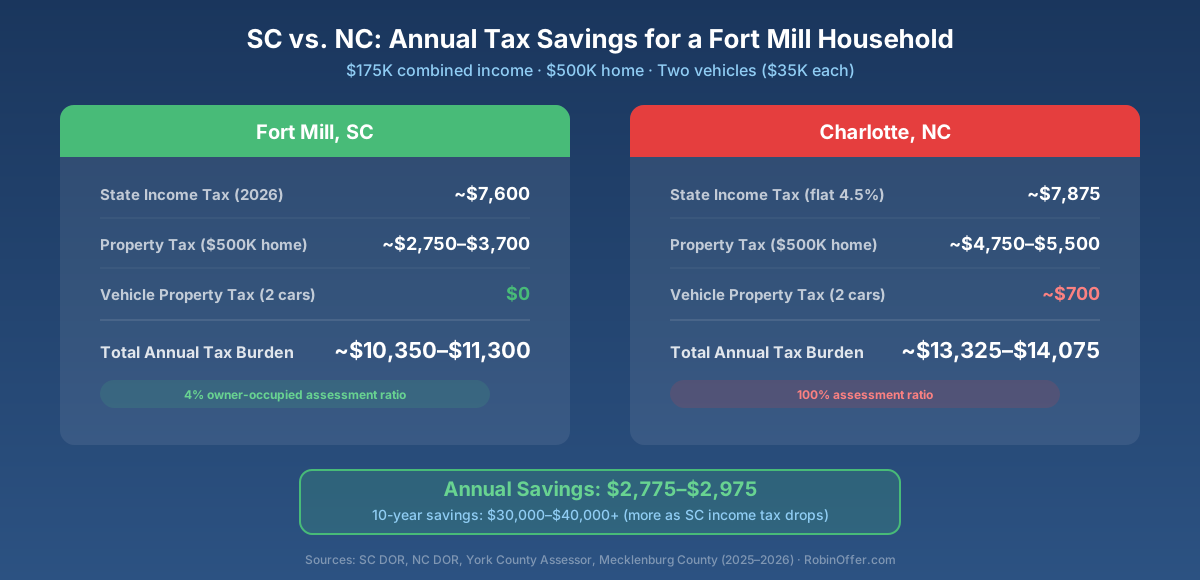
And that is using 2026 rates. As SC's income tax continues its scheduled decline toward 1.99%, that gap widens. Over a 10-year homeownership period, a Fort Mill buyer could save $30,000–$40,000+ compared to an equivalent Charlotte address, and possibly more if the income tax reductions continue beyond the current legislation.
South Carolina's Path to Zero Income Tax
In 2025, the SC House passed H4216, which sets the state on a glide path: the top income tax rate drops to 5.39% in 2026, with a new lower bracket at 1.99%. Revenue-based triggers will continue reducing rates toward a flat 1.99%. Legislative sponsors have stated their goal is eventual elimination, though future reductions depend on revenue triggers being met and continued legislative action. For your buyer, this means the already-compelling Fort Mill tax picture is on a trajectory to get better every year they own.
See what your Fort Mill home is worth
Get a real, data-driven estimate based on your specific neighborhood and recent comps.
5. Selling Against New Construction
This is the reality every Fort Mill resale seller faces: more than 200 active new-construction communities are competing for the same buyer pool. Builders have design centers, model homes, $10,000 closing cost incentives, and marketing budgets that dwarf anything an individual seller can match. You need to understand what you are up against and where resale actually wins.
The Major Developments
| Development | Price Range | What It Is |
|---|---|---|
| Baxter Village | $400K–$700K+ | New Urbanist walkable village; shops, restaurants, trails; the benchmark Fort Mill community |
| Kingsley | $375K–$650K+ | Master-planned with town center, swim complex, trails; resort-style amenities |
| Springfield Town Center | $660K–$835K | Cottages by Saussy Burbank; walkable to 300K+ SF of retail; Harris Teeter anchor |
| Riverwalk | $350K–$600K+ | 1,008 acres: 850 SFH, 250 townhomes, 550 apartments, Catawba River access |
| Massey | $350K–$550K | Large master-planned community; multiple builders; phased development |
| Regent Park | $550K–$900K+ | Golf community; established with resale inventory |
Where Resale Wins
Walk through a 10-year-old Baxter Village home on a July afternoon and you will notice it immediately: shade. Mature trees, established landscaping, privacy hedges that took a decade to grow. A new-build lot has red clay and a stick of a tree held up by two wires. Buyers who care about curb appeal (and in Fort Mill's walkable communities, most do) will pay for what time has built.
Location is the other advantage new construction cannot replicate. The best lots in established subdivisions are already built on. New construction gets what is left: smaller lots, closer to roads, backing to retention ponds or commercial zones. Your cul-de-sac lot or park-adjacent position has scarcity value that appreciates as the community fills in around it.
Then there is certainty. Your buyer will not get a $4,200 invoice for blinds three weeks after closing. They will not discover that "landscaping" meant sod in the front yard and red clay everywhere else. Resale homes have known costs, and what you see is genuinely what you get. And for buyers relocating on a corporate timeline, your home can close in 30–45 days. A new build takes 12 months. That speed gap matters more than most sellers realize.
Where New Construction Wins
Builders are not competing on product alone. They compete on incentives. $10,000–$15,000 in closing cost credits, rate buydowns, and design center upgrades are standard in Fort Mill right now. Your listing needs to account for this when pricing. A buyer comparing your $450K resale to a $450K new build with $12K in credits sees a $12K gap before they even walk through the door.
New construction also offers modern floor plans (open concepts, first-floor primary suites, larger garages, smart home wiring) and builder warranties (1-year full, 10-year structural) that a 15-year-old resale cannot match without investing in updates or purchasing a home warranty.
6. Three Ways to Sell Your Fort Mill Home
Every Fort Mill seller faces the same fundamental decision: how do I convert this property into cash? There are three real paths, each with genuine trade-offs. The right choice depends on your timeline, your home's condition, and how much effort you are willing to invest.
Option 1: List with a Real Estate Agent
Best for: Move-in-ready homes in desirable subdivisions where you have 3–6 months and want to maximize sale price.
| Factor | Details for Fort Mill |
|---|---|
| Typical Commission | 5–6% of sale price ($23,750–$32,400 on $475K home) |
| Average Days on Market | 45–74 days after listing goes live |
| Pre-Listing Prep Time | 2–4 weeks (staging, repairs, photography) |
| Total Timeline | 4–6 months from decision to closing |
| Expected Net | 90–92% of sale price after all costs |
The agent path works well in Fort Mill's $400K–$600K sweet spot where buyer demand is strongest. A skilled local agent who knows the difference between pricing for Baxter versus Kingsley versus an unincorporated Fort Mill address can mean the difference between a 30-day sale and a 90-day price reduction.
Option 2: Sell FSBO (For Sale by Owner)
Best for: Sellers who have done this before, have time to manage showings and negotiations, and want to save on listing commissions.
| Factor | Details for Fort Mill |
|---|---|
| Commission Saved | 2.5–3% (listing side; you likely still pay buyer's agent) |
| Dollar Savings on $475K | $11,875–$14,250 |
| SC Legal Requirement | Must use a closing attorney (not optional) |
| MLS Access | Flat-fee MLS listing services: $300–$500 |
| Typical FSBO Discount | FSBO homes sell for ~6% less on average (NAR data) |
The FSBO math can work in Fort Mill if your home is in a high-demand subdivision and priced correctly. But the NAR data is sobering: FSBO homes nationally sell for about 6% less than agent-listed homes. If that holds in Fort Mill, the commission savings evaporate. FSBO makes the most sense when you already have a buyer (relocation company, neighbor, family friend) and just need to execute the transaction. For a North Carolina comparison of micro-market pricing and timeline strategy, review the Mount Holly homeowner guide.
Option 3: Accept a Cash Offer
Best for: Sellers who need speed, certainty, or cannot make repairs (inherited homes, divorce situations, foreclosure timelines, or properties that need significant work).
| Factor | Details for Fort Mill |
|---|---|
| Timeline | 7–21 days from offer to closing |
| Repairs Needed | None, sold as-is |
| Agent Commission | None |
| Typical Offer Range | 70–85% of market value |
| Certainty | No financing contingency, no appraisal risk |
A Fort Mill cash buyer eliminates the uncertainty of financing, appraisals, and buyer contingencies. If you have inherited a home you cannot maintain, are facing a foreclosure deadline, or need to relocate in three weeks, the certainty of a cash close has genuine value that the open market cannot match. The discount versus full market value is the price of speed and simplicity.
Cash buyers active in the Fort Mill market include local operators like RobinOffer, JMS Home Buyers, and Connect Home Buyers, as well as national iBuyers like Opendoor (when active in the Charlotte metro). Offers and terms vary widely, so always get at least two cash offers and compare them against your agent's CMA. For a detailed breakdown of how cash offers work and red flags to watch for, see our cash offer guide for the Carolinas.
See what your Fort Mill home is worth
Get a real, data-driven estimate based on your specific neighborhood and recent comps.
7. Rent It Out or Stay Put
Not every homeowner needs to sell right now. Fort Mill's rental market is strong, and there are scenarios where holding makes more financial sense than selling today.
The Fort Mill Rental Market
Fort Mill's median household income of $127,537 and proximity to Charlotte create demand from professionals who are not yet ready to buy: relocating families testing the area, remote workers on short-term assignments, and young professionals priced out of Ballantyne. Monthly rents for single-family homes in Fort Mill typically range from $1,800–$2,800 depending on size, condition, and subdivision.
When Renting Makes Sense
- You are underwater or near break-even: If selling would net you little or nothing after closing costs, renting preserves your equity while the market appreciates.
- You are relocating temporarily: A 2-year work assignment does not require a permanent sale. Property management companies in Fort Mill typically charge 8–10% of monthly rent.
- You want long-term appreciation: Fort Mill's growth trajectory suggests continued appreciation. If you can cover your mortgage with rental income, time is on your side.
When Renting Does Not Make Sense
- You need the equity for your next home: Most Fort Mill homeowners need their sale proceeds for a down payment elsewhere.
- You do not want to be a landlord: Even with a property manager, you will deal with maintenance calls, tenant turnover, and the occasional 2 AM emergency. SC landlord-tenant law has specific requirements you will need to follow.
- The numbers do not work: If your mortgage payment, insurance, taxes, and management fees exceed what the market will pay in rent, you are subsidizing a tenant's housing. Run the numbers honestly.
Staying Put
There is no rule that says you must sell. If you love your Fort Mill home, your costs are manageable, and no life event is forcing a move, then staying put is a perfectly valid option. Fort Mill's continued growth, improving tax picture, and strong school district mean your home is likely to appreciate over time. Sometimes the best real estate decision is the one you do not make.
Get a cash offer on your Fort Mill house
If a relocation date, two mortgages, or an estate is forcing your timeline, a no-obligation cash offer lets you name the closing day and hit it. We will still tell you when listing nets more.
8. SC Seller Disclosure & Legal Requirements
South Carolina has specific legal requirements for home sellers that differ from North Carolina. Miss any of these and you risk delays, lawsuits, or a blown deal. Here is what Fort Mill sellers must know.
The SC Residential Property Condition Disclosure Statement
SC law requires sellers to complete a detailed disclosure covering:
- Structural condition (foundation, roof, walls, windows)
- Plumbing, electrical, and HVAC systems
- Water intrusion or moisture history
- Environmental hazards (lead paint, asbestos, radon, underground storage tanks)
- Pest and termite history
- HOA details and fees
- Zoning issues or easements
- Flood history (recently added requirement)
You have a 3-year liability window for undisclosed defects. If a buyer discovers a material issue you knew about but did not disclose, you can be held liable for three years after closing. Honesty on the disclosure form is not just ethical; it is your legal shield.
SC Closing Attorney Requirement
Unlike many states, South Carolina requires a licensed attorney to conduct all residential real estate closings. This is not optional and not negotiable. The attorney handles title search, document preparation, escrow, and recording. Budget $900–$1,500 for closing attorney fees.
CL-100 Termite Letter
While not technically required by law, virtually every Fort Mill transaction requires a CL-100 termite inspection. This is the "Official South Carolina Wood Infestation Report," a standardized form that buyers and their lenders expect. Cost: $75–$150. If active termite damage is found, you will need to address it before closing or negotiate a credit.
SC Deed Recording Fee
South Carolina charges a deed recording fee of $1.85 per $500 of the sale price. On a $500,000 sale, that is $1,850. This is a seller cost in most SC transactions and should be factored into your net proceeds calculation.
Lead-Based Paint Disclosure
If your Fort Mill home was built before 1978, federal law requires you to provide buyers with a lead-based paint disclosure and a copy of the EPA pamphlet "Protect Your Family from Lead in Your Home." This applies regardless of whether you know of any lead paint. The disclosure itself is mandatory.
9. Fort Mill Closing Costs: What You Actually Walk Away With
The sale price is not your number. Your number is the net proceeds check, what remains after every fee, commission, tax, and cost is subtracted. Here is a realistic breakdown for a Fort Mill home.
Net Proceeds: Traditional Agent Sale at $500,000
| Item | Amount | Notes |
|---|---|---|
| Sale Price | $500,000 | |
| Agent Commission (5.5%) | -$27,500 | Split between listing and buyer agents |
| SC Deed Recording Fee | -$1,850 | $1.85 per $500 |
| Closing Attorney | -$1,200 | Required in SC |
| CL-100 Termite Inspection | -$125 | Standard practice |
| Title Insurance (Owner's) | -$1,500 | Often split or paid by seller |
| Home Warranty (Buyer) | -$500 | Common seller concession |
| Staging & Photography | -$1,500 | Professional presentation |
| Minor Repairs / Touch-Ups | -$2,000 | Pre-listing prep |
| Seller Concessions | -$5,000 | Closing cost credits (common in current market) |
| Estimated Net Proceeds | $458,825 | 91.8% of sale price |
Subtract your remaining mortgage balance to find your true walk-away number. If you owe $300,000, your equity check is approximately $158,825.
Net Proceeds: Cash Offer at $500,000 Market Value
| Item | Amount | Notes |
|---|---|---|
| Cash Offer (80% of market) | $400,000 | Typical range: 70–85% |
| Agent Commission | $0 | No agents involved |
| Closing Costs | -$1,200 | Attorney + recording only |
| Repairs | $0 | Sold as-is |
| Staging / Photography | $0 | Not needed |
| Seller Concessions | $0 | Not applicable |
| Estimated Net Proceeds | $398,800 | Closes in 7–21 days |
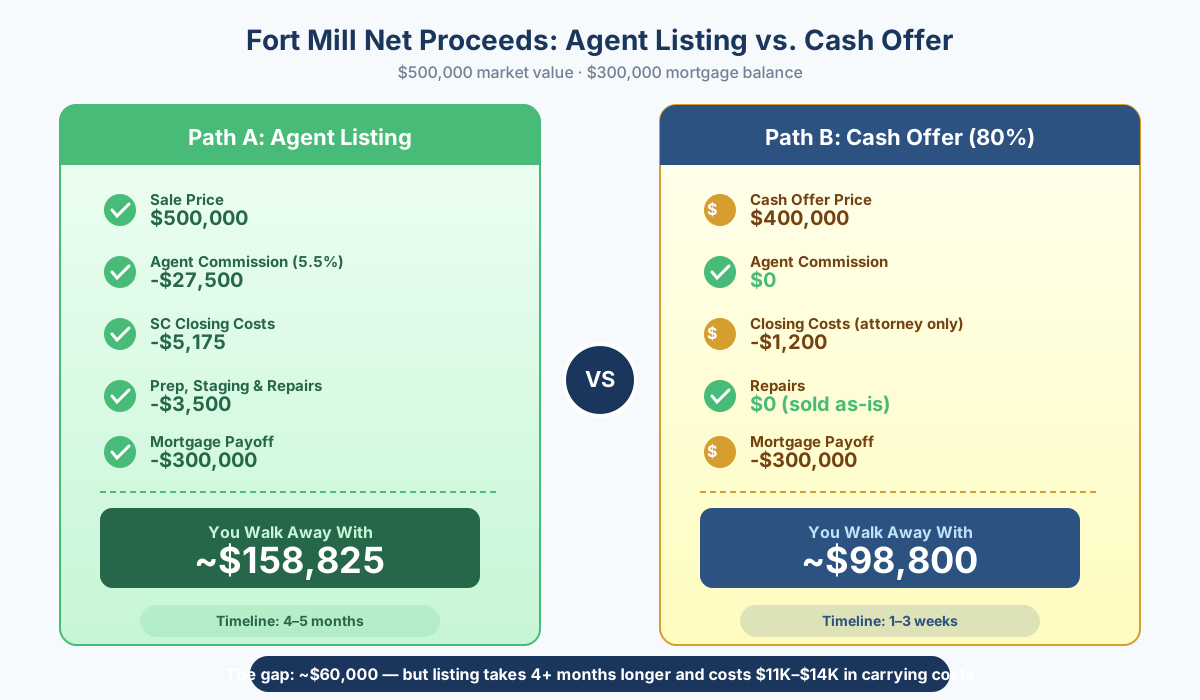
The gap between $458,825 (agent) and $398,800 (cash) is roughly $60,000, but the cash path saves you 4–6 months of carrying costs, mortgage payments, and uncertainty. If you are making $2,800/month in mortgage payments during a 5-month traditional sale process, that is $14,000 in carrying costs the cash path eliminates. The real gap narrows to ~$46,000, and narrows further when you factor in the value of certainty and time.
See what your Fort Mill home is worth
Get a real, data-driven estimate based on your specific neighborhood and recent comps.
10. Inherited a Fort Mill Home?
If you have recently lost someone and inherited a home in Fort Mill, I am sorry for your loss. What follows is the practical side: the legal and financial mechanics of selling an inherited property in South Carolina. The emotional side is yours to work through on your own timeline, but the money and paperwork do not have to be a mystery.
How SC Probate Works
In South Carolina, real estate automatically transfers to heirs or beneficiaries at the time of death based on the will or, if there is no will, SC intestacy laws. However, the personal representative (executor) may need court authority to sell the property, especially if the will is silent on this point or there are debts to settle.
Key facts about SC probate:
- SC probate is handled through the York County Probate Court
- The process typically takes 6–18 months, depending on complexity
- If all heirs agree and there are no disputes, you may be able to sell without full probate completion
- A closing attorney (required in SC) can coordinate with the probate court to ensure clean title transfer
- Inherited property receives a stepped-up cost basis, meaning your capital gains tax is calculated from the property's value at the date of death, not when it was originally purchased
Common Inherited Home Scenarios in Fort Mill
You live out of state: Many Fort Mill heirs live in Charlotte or elsewhere. Managing a property from a distance (lawn care, utilities, insurance, security) costs $300–$500/month even for a vacant home. A fast sale eliminates these carrying costs.
Multiple heirs disagree: When siblings or family members cannot agree on what to do with the property, a cash sale at fair market value is often the fastest path to resolution. Everyone gets their share without the emotional burden of managing a listing.
The home needs significant work: Inherited homes often have deferred maintenance: outdated kitchens, aging HVAC systems, foundation issues. Investing $30,000–$50,000 in repairs before listing may not make financial sense. Selling as-is to a cash buyer can be the pragmatic choice; our NC as-is guide breaks down the disclosure and pricing math for this decision.
Coordinating a sale from out of state, or between siblings who do not agree, adds layers that this section only touches on. Our SC inherited property selling guide breaks down every step, from York County probate filings to comparing a cash sale against a traditional listing.
11. Selling a Fort Mill Home During Divorce
If you are going through a divorce in Fort Mill, I am sorry. What follows is the practical framework: the financial and legal mechanics of selling the marital home under South Carolina law. The emotional side is yours to handle, but the money side does not have to be a mystery.
How SC Property Division Works
South Carolina uses equitable distribution, which means fair, not necessarily equal. The court considers the duration of the marriage, each spouse's contribution, financial situations, and other factors when dividing marital property. The family home is typically the largest single asset.
Your options for the house during a SC divorce:
- Sell the home and split proceeds: The cleanest path. Proceeds can be held in escrow during the divorce process and divided according to the settlement.
- One spouse buys out the other: Requires a refinance in the remaining spouse's name alone, which means qualifying on a single income.
- Continue joint ownership temporarily: Sometimes ordered by the court, usually when children are involved and stability is prioritized.
Practical Considerations for Fort Mill Divorce Sales
Court-ordered timelines: If the court orders the home sold, you may have a deadline. A cash offer can meet virtually any court timeline. A traditional listing may not, especially if the home needs repairs or the market is slow.
Both parties must agree: Until a court orders otherwise, both spouses must consent to the sale. If one party is uncooperative, your attorney may need to petition for a court order.
Capital gains timing: Married couples filing jointly get a $500,000 capital gains exclusion. Once divorced, each individual gets only $250,000. If your Fort Mill home has appreciated significantly, timing the sale before the divorce is finalized could save substantial taxes.
Watch for the emotional traps: Keeping the house to spite your ex costs you money. Forcing a below-market sale to punish them costs you both. It is a $500,000 asset. Treat it that way, even when it is hard.
12. Behind on Your Fort Mill Mortgage?
If you are behind on your mortgage in Fort Mill, you have more options than you think, but the window to use them narrows every week. South Carolina's foreclosure process is different from North Carolina's, and understanding it gives you an advantage.
How SC Foreclosure Works
South Carolina foreclosures are judicial, meaning the lender must file a lawsuit and get a court order to sell your home. This is different from NC, where foreclosure can proceed without court involvement. The judicial process gives you more time and more legal protections.
| Stage | Timeline | What Happens |
|---|---|---|
| Missed Payments | Day 1–90 | Lender sends notices; grace period varies |
| Lis Pendens Filed | ~90+ days | Lawsuit filed; you are officially in foreclosure |
| Court Process | 4–12 months | If you do not contest, sale can happen in 4–6 months |
| Auction Sale | After court order | Property sold at courthouse steps; you may still owe the difference |
Your Options Before Foreclosure
- Reinstatement: Pay the full past-due amount plus fees to bring your mortgage current. This is always an option until the sale date.
- Forbearance or repayment plan: Negotiate with your lender to pause or reduce payments temporarily. Lenders prefer this to foreclosure.
- Loan modification: Change the terms of your mortgage (lower rate, extended term, or principal reduction). Your servicer's loss mitigation department handles this.
- Sell before the auction: You can sell at any point before the auction date. As long as you have a signed offer, the lender cannot proceed with the foreclosure sale. A cash offer can close in 7–14 days, well within most foreclosure timelines.
- Short sale: If you owe more than the home is worth, your lender may accept less than the full balance. This requires lender approval and takes 2–4 months.
- Deed in lieu of foreclosure: You voluntarily transfer the property to the lender. This avoids the foreclosure process but still impacts your credit.
SC-Specific Warning: Deficiency Judgments
South Carolina allows deficiency judgments. If your home sells at auction for less than what you owe, the lender can sue you for the difference. This is a significant risk in a declining market and another reason to sell proactively rather than letting the process run to auction.
For a full breakdown of foreclosure options in NC, see our NC foreclosure guide. If you are in SC facing foreclosure, the judicial process gives you more time, but only if you use it.
See what your Fort Mill home is worth
Get a real, data-driven estimate based on your specific neighborhood and recent comps.
13. Your Neighborhood, Your Price
"Fort Mill" is not a single market. It is a collection of distinct neighborhoods, each with its own price dynamics, buyer profile, and competitive picture. Here is what sellers in each area should know.
Baxter Village
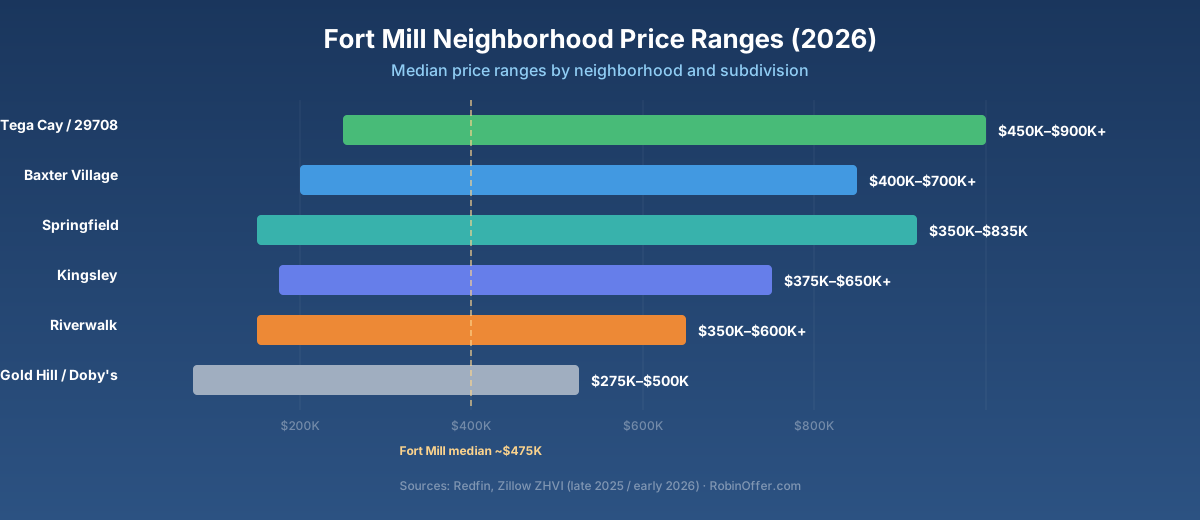
Price Range: $400K–$700K+ | Character: New Urbanist walkable community
Baxter is Fort Mill's flagship neighborhood, the one that put the town on the map for Charlotte buyers. Walkable streets, a village center with shops and restaurants, and a trail system that connects to Anne Springs Close Greenway. Resale homes here compete against the community's own reputation: buyers expect a premium, and they expect the home to match Baxter's aesthetic standards. Homes in the lower price range sell quickly; the $600K+ segment has more competition from new construction in nearby communities.
Kingsley
Price Range: $375K–$650K+ | Character: Master-planned resort-style amenities
Kingsley offers a different value proposition: resort-style amenities (Olympic pool, tennis, trails, town center) at slightly lower price points than Baxter. The community is still building out, which means resale sellers are directly competing with new construction within the same development. Price your home against the builder's base price plus standard upgrades, not against what your neighbor paid two years ago.
Tega Cay / 29708
Price Range: $450K–$900K+ | Character: Lake Wylie access, established neighborhoods
Technically its own city, Tega Cay shares a zip code (29708) and school district with parts of Fort Mill. Lake Wylie waterfront and water-access homes command significant premiums. The median here is $537K, highest in the Fort Mill area. East Tega Cay has seen 5.2% YOY appreciation, with homes in the $700K+ range. If you have lake access or a waterfront lot, that feature alone drives your pricing strategy. Days on market are longer here (74+ days) because the buyer pool for $500K–$900K homes is smaller and more selective.
Springfield / Springfield Town Center
Price Range: $350K–$835K | Character: Mixed-use, walkable retail, new construction
Springfield Town Center, built by the same developers behind Baxter and Kingsley, is anchored by Harris Teeter with 300,000+ SF of retail and restaurants. The Cottages by Saussy Burbank ($660K–$835K) are the premium product here. Older Springfield homes in the $350K–$450K range offer relative affordability but compete with newer builds in adjacent communities.
Riverwalk
Price Range: $350K–$600K+ | Character: Large-scale master plan, Catawba River access
Riverwalk is one of Fort Mill's most ambitious developments: 1,008 acres with plans for 850 single-family homes, 250 townhomes, 550 apartments, and Catawba River access. Early phases are selling well. Resale sellers in the area should monitor Riverwalk pricing closely, because as the development matures, it will increasingly define market expectations for the surrounding area.
Gold Hill / Doby's Bridge / Unincorporated Fort Mill
Price Range: $275K–$500K | Character: Larger lots, older homes, rural feel
These areas offer what the master-planned communities cannot: space. Half-acre and full-acre lots, no HOA, and a quieter pace. The buyer profile here is different, often families who want land for kids and dogs, or empty nesters downsizing from more expensive neighborhoods. Pricing is more variable because comps are less uniform. A good CMA from a local agent is essential.
14. Your Fort Mill Selling Timeline
Here is what the process actually looks like, week by week, from the moment you decide to sell through closing day.
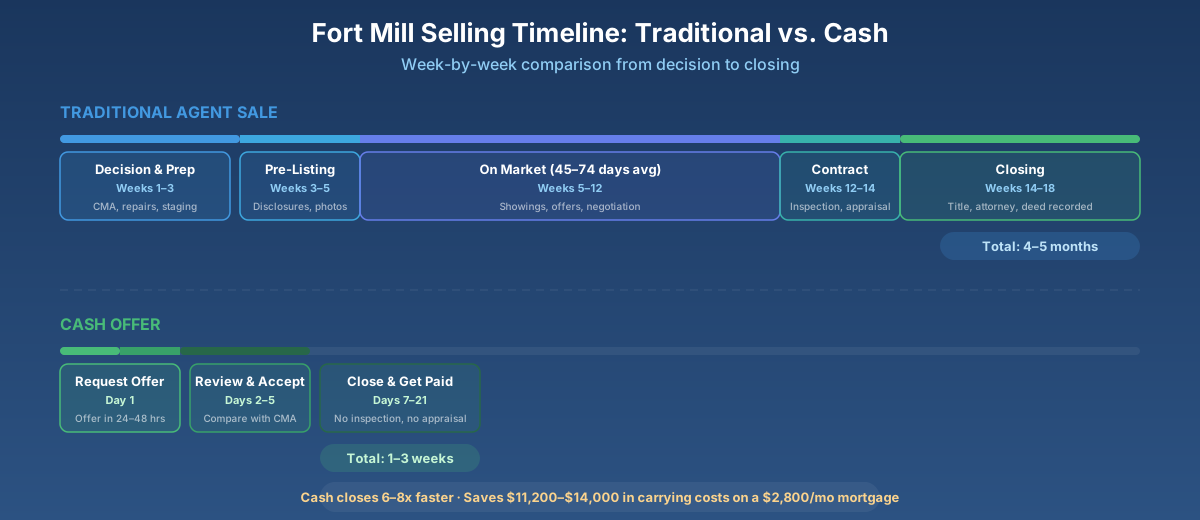
Traditional Agent Sale: Week-by-Week
| Phase | Timeline | What Happens |
|---|---|---|
| Decision & Prep | Weeks 1–3 | Get a CMA from a local Fort Mill agent. Get a cash offer evaluation for comparison. Review your mortgage payoff. Make a plan. |
| Pre-Listing | Weeks 3–5 | Complete the SC Residential Property Condition Disclosure. Schedule CL-100 termite inspection ($75–$150). Engage a SC closing attorney. Address cosmetic repairs. Professional photography and staging. |
| Go Live | Week 5 | List on MLS with syndication to Zillow, Realtor.com, Redfin. Install lockbox. Schedule open houses for the first weekend. |
| On Market | Weeks 5–12 | Fort Mill homes average 45–74 days on market. Review showing feedback weekly. If no offers by week 8, reassess pricing. Consider a price reduction by week 10. |
| Under Contract | Weeks 12–14 | Buyer completes inspection (7–10 days). Negotiate repair requests. Buyer's lender orders appraisal. Title search by closing attorney. |
| Closing | Weeks 14–18 | Clear any liens or title issues. Final walkthrough. Close at the attorney's office. Deed recorded with York County Register of Deeds. You get your check. |
Total traditional timeline: 4–5 months. Add another month if your home needs repairs before listing or if you hit appraisal issues.
Cash Offer Timeline
| Phase | Timeline | What Happens |
|---|---|---|
| Request Offer | Day 1 | Submit your property details. A Fort Mill cash buyer reviews and sends an offer within 24–48 hours. |
| Review & Accept | Days 2–5 | Review the offer. No obligation. Compare against your agent CMA. Accept if it works for your situation. |
| Closing | Days 7–21 | Closing attorney handles title search and paperwork. No inspection contingency, no appraisal, no financing risk. Close on your timeline. |
Total cash timeline: 1–3 weeks. Some sellers close in 7 days when the situation requires it.
15. Your Next Move
You have read the data. You know the tax advantages, the new-construction competition, your neighborhood's pricing dynamics, and every selling path available to you. Now it is time to do something with that knowledge.
If you are ready to sell:
- Get a CMA: A local Fort Mill agent can pull comparable sales for your specific street and subdivision. This is free and takes 24–48 hours.
- Get a cash offer: Request a no-obligation cash offer from RobinOffer. We will send you a number, often within a day. Compare it against the agent path and decide what makes sense.
- Run both scenarios: The smartest Fort Mill sellers get both numbers and compare net proceeds, timelines, and risk side by side. We built a free comparison tool to make this easy.
If you are not ready yet:
- Bookmark this guide. Market data changes quarterly. We update our numbers as new data comes in.
- Talk to your CPA about capital gains, stepped-up basis (if inherited), or timing around a divorce settlement.
- Monitor your neighborhood. When a comparable home in your subdivision closes, that sale resets the market for your home. Pay attention.
Key Government & Legal Resources
| Resource | What It Does | Contact |
|---|---|---|
| York County Assessor | Property tax records, assessed values | yorkcountygov.com/assessor |
| York County Register of Deeds | Deed recording, title searches | yorkcountygov.com/register-of-deeds |
| York County Probate Court | Estate and probate filings | yorkcountygov.com/probate |
| SC Real Estate Commission | Agent licensing, complaints | llr.sc.gov/rec |
| SC Housing Finance Authority | Foreclosure counseling, assistance programs | schousing.com |
| SC Bar Lawyer Referral | Find a SC closing attorney | scbar.org/lawyer-referral |
Disclaimer: This guide is for informational purposes only and does not constitute legal, financial, or tax advice. South Carolina real estate law requires a licensed attorney for all residential closings. Consult with a qualified attorney, CPA, or financial advisor for advice specific to your situation. Market data referenced in this guide is sourced from third-party providers including Redfin, Zillow, and Bankrate and is subject to change. RobinOffer is a cash home buyer and works with a licensed real estate agent partner, Chamiese Evans of NorthGroup Real Estate, Inc.
Want a cash offer on your Fort Mill home?
Tell us your address and timeline and we will get you a no-obligation cash offer.