
Jacksonville, NC: Selling in a Military-Timed Housing Market
A practical seller playbook for Jacksonville homeowners navigating PCS windows, Camp Lejeune demand cycles, and certainty-adjusted net decisions in 2026.
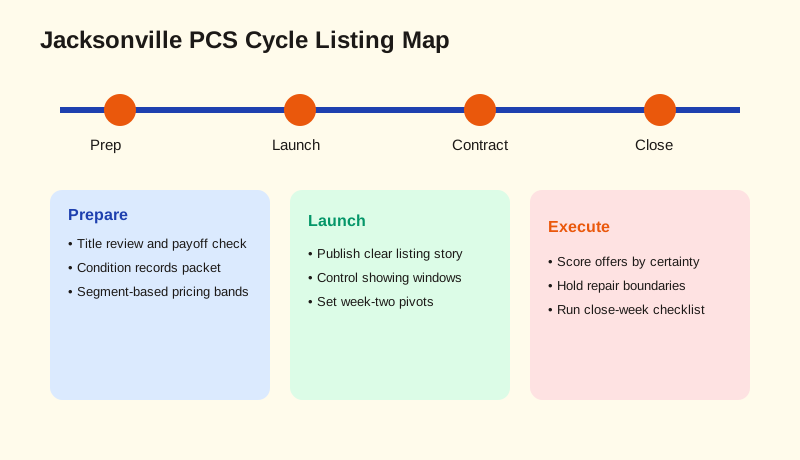
1. Jacksonville Sellers Run on a Different Calendar
If you own a home in Jacksonville, North Carolina, your market does not move on the same rhythm as Raleigh, Charlotte, or even Wilmington. This is a military mobility market anchored by Marine Corps Base Camp Lejeune and Marine Corps Air Station New River. The biggest timing variable is not "spring is hot"; it is when orders move families in and out, when on-base housing waitlists tighten or loosen, and when buyer demand clusters around predictable relocation windows. Sellers who understand this calendar can often improve both speed and certainty. Sellers who ignore it end up pricing against the wrong assumptions.
Jacksonville is also unusual because buyer behavior here is intensely practical. Many buyers are balancing duty schedules, school transitions, variable assignment horizons, and affordability pressure shaped by Basic Allowance for Housing (BAH) ranges. They are not browsing in a slow, lifestyle-only way. They are evaluating commute friction to gates, bedroom count efficiency, maintenance risk, and whether a home can close inside a realistic transfer window. Your listing strategy has to be built for that reality.
This guide gives Jacksonville homeowners a full decision framework for 2026: market timing, neighborhood positioning, pricing against military and civilian demand, NC legal and closing mechanics, and path selection between traditional listing, as-is cash sale, and hybrid certainty strategy. It also includes Onslow County process checkpoints, local resource links, and an execution timeline you can actually use when life is busy and deadlines are real.
The core thesis is simple: in Jacksonville, timing and terms often matter as much as headline price. A seller who chooses the right week, presents clean condition evidence, and negotiates certainty-adjusted net can outperform a seller who just aims for a high list number and hopes for the best. If you have PCS pressure, inherited property complexity, or financial timeline stress, the difference between a structured plan and a reactive plan can be thousands of dollars plus a lot less chaos.
2. The Jacksonville Housing Engine: Camp Lejeune + New River
Every city has an economic base. Jacksonville has an assignment base. Camp Lejeune and MCAS New River shape housing demand at a structural level, because they constantly rotate households through renting, buying, and selling decisions. Even buyers with no military connection feel this effect in inventory levels, pricing confidence, and competitive pressure for certain home types.
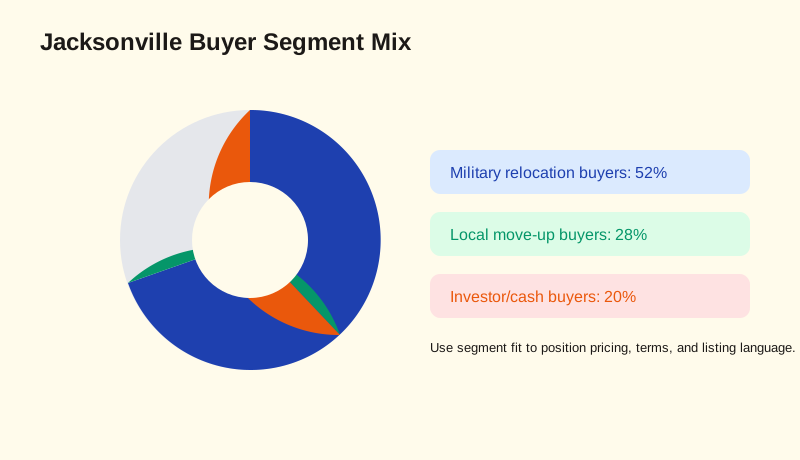
One useful way to think about Jacksonville is as a collection of micro-cycles inside a larger annual cycle. The annual cycle is linked to military transfer timing and school-year logistics. The micro-cycles are neighborhood-specific: gate-adjacent resale homes, suburban-family subdivisions, investor-leaning rental corridors, and higher-price homes where VA, conventional, and cash buyers compete differently. If you use a single generic pricing method for all these segments, you lose precision where precision matters most.
BAH policy is one of the most important context variables for this market. DoD updates BAH by military housing area and pay grade, and those numbers directly influence monthly affordability thresholds for many incoming households. You do not need to publish speculative BAH math in your listing remarks, but your pricing strategy should acknowledge that buyer payment bands are not random. They are often shaped by compensation design plus spouse income, debt profile, and down payment availability.
Military-connected demand also creates a distinct certainty premium. A buyer with a tight transfer timeline may value a home that is clearly maintained, accurately priced, and easy to close more than a home with slightly better finishes but higher risk. For sellers, that means documentation and logistics quality are not side details. They are value drivers.
| Jacksonville Demand Driver | What It Means for Sellers | How to Act on It |
|---|---|---|
| PCS movement windows | Demand surges can be compressed into practical listing periods | Launch with full prep before expected move windows, not after |
| BAH-shaped affordability | Many buyers shop in tight payment brackets | Price for search-band visibility, not aspirational overreach |
| Gate and commute friction | Location utility can outperform cosmetic upgrades | Lead with route practicality and daily-life convenience |
| Deadline-driven households | Certainty and speed can carry real premium | Pre-negotiate your terms strategy before first showings |
3. Why PCS Season Beats "Best Month" Advice in Jacksonville
Most national real-estate content says some variation of the same thing: list in spring. That advice can be directionally useful, but it is incomplete for Jacksonville. Here, many top outcomes happen when sellers align launch timing with military movement pressure, school transitions, and buyer urgency windows that are not evenly spread across the year.
Think about demand as two overlapping clocks. Clock one is broad consumer seasonality: weather, holidays, tax-refund behavior, and school-year planning. Clock two is military transfer timing: orders, reporting deadlines, temporary lodging constraints, and family decision deadlines. In Jacksonville, clock two often dominates. If your home is marketed clearly and priced correctly during an active transfer window, it can outperform a theoretically better "seasonal" slot with lower military urgency.
The practical implication: sellers should backward-plan from likely demand clusters and their own move constraints. If you need to close quickly because of relocation or financial pressure, waiting for a generic "peak" month can be expensive if carrying costs stack up. Conversely, if your home needs prep and your timeline is flexible, investing several weeks in repairs, records, and presentation may produce a higher certainty-adjusted net than rushing to market unprepared.
In Jacksonville specifically, preparation timing is often more important than listing date mythology. A home launched with accurate disclosures, clear maintenance history, realistic pricing, and strong photos can perform in more windows than a rushed listing with unresolved uncertainty.
4. Neighborhood Positioning: You Are Selling a Route, Not Just a Roof
Jacksonville buyers care about neighborhoods, but they often evaluate them through commute and lifestyle function first. "How far is this from my destination?" "Will daily traffic add stress?" "Can this house support a changing schedule?" These questions influence behavior more than generic marketing phrases.
That is why neighborhood positioning should focus on utility language. Instead of saying your home is in a "great location," explain what daily life looks like: practical access to major corridors, reliable access to schools and services, and a property setup that reduces friction. Buyers moving on tight timelines appreciate concrete usability over vague adjectives.
You should also classify your property into the likely buyer segment before listing. Is this a first-home payment-sensitive target? A military move-in-ready target? A civilian move-up buyer who compares against newer construction? An investor-calculus target? Each segment interprets value differently, so staging, copy, and pricing should reflect the segment with the highest conversion probability.
Jacksonville neighborhoods are not interchangeable from a demand standpoint. Even when two homes have similar square footage, differences in perceived convenience, lot feel, school assignment preferences, and maintenance confidence can create very different showing quality and negotiation patterns. Sellers who treat micro-location differences seriously make cleaner pricing decisions and fewer panic adjustments later.
5. BAH, VA Loans, and Buyer Math You Should Respect
You are not underwriting your buyer, but you are competing in a market where military financing patterns are common. VA-backed buyers are a major part of the Jacksonville ecosystem, and sellers who misunderstand VA dynamics can accidentally weaken their own outcomes. The smarter approach is to understand the mechanics enough to evaluate offer strength fairly.
First, BAH sets context for affordability, but households still differ by debt load, spouse income, savings, and financial priorities. Do not assume every military buyer has identical purchasing power. Second, VA financing is often highly competitive when presented cleanly with strong lender execution. Sellers who automatically prefer another financing type without evaluating lender quality may leave money on the table.
Third, appraisal and condition conversations should be handled with preparation, not fear. If you have documented updates, realistic pricing, and an agent who knows Jacksonville comps, many financing concerns become manageable. Problems usually arise when pricing is aspirational and documentation is thin.
Fourth, if your likely buyer segment includes newly arriving families, certainty and schedule clarity can be as important as concession amounts. A structurally clean offer that aligns to timeline may outperform a headline-higher offer with weak execution signals.
| Financing Context | Common Seller Assumption | Better Seller Approach |
|---|---|---|
| VA-backed offer | "Too complicated" | Evaluate lender quality, terms clarity, and execution strength |
| BAH-influenced buyer budget | "All military buyers can stretch" | Price in realistic payment bands to increase qualified showings |
| Conventional offer with low down payment | "Always safer" | Compare certainty package, not just financing label |
| Cash offer below ask | "Always bad value" | Model certainty-adjusted net and timeline cost before rejecting |
If you want the detailed framework for comparing fast-cash options versus full-market listing paths, review Cash Offer Guide for the Carolinas. That framework adapts well to Jacksonville when deadlines matter.
6. Pricing Strategy for Jacksonville in 2026: Band First, Ego Last
Pricing in Jacksonville should be treated as a search-band strategy, not a trophy-number strategy. Buyers generally discover listings in bracketed online ranges and then compare quickly by utility, condition confidence, and timeline fit. If you miss the right bracket at launch, you may lose your best early-window buyers and spend the next month chasing momentum that never fully returns.
The strongest approach is to build three comp groups before list date: direct local comparables, practical alternatives where your buyer could defect, and an adjustment group based on condition and timeline factors. That third group is often ignored, and it is where many net outcomes are won or lost.
Avoid the "we can always come down later" mindset unless you are intentionally testing with a short, pre-planned clock and hard pivot rules. In payment-sensitive segments, overpricing can reduce qualified traffic, increase stale perception, and encourage stronger concession demands when offers finally arrive.
Pricing discipline is especially important in Jacksonville because buyers often make decisions under compressed timelines. If your value proposition is obvious and your list price reads as credible, buyers are more likely to engage decisively. If your listing feels like a negotiation setup, they often move on to options that look easier to close.
7. Three Selling Paths Jacksonville Homeowners Actually Use
Most Jacksonville sellers choose one of three practical paths. Path one is traditional MLS listing, usually best for homes with strong condition, good presentation potential, and moderate timeline flexibility. Path two is as-is direct sale, usually best for properties with repair burden, inherited complexity, or hard deadlines. Path three is a hybrid path that gives the open market a short, disciplined opportunity while preserving a backup certainty option.
None of these paths is universally superior. The right path depends on your constraints. If your key objective is maximum headline price and you can tolerate timeline uncertainty, MLS may win. If your key objective is closing certainty in a narrow window, direct sale may win even with lower gross. If your objective is balancing upside with bounded downside, hybrid often makes sense.
The mistake to avoid is choosing a path based on emotion or habit. Choose based on modeled net, stress tolerance, and deadline consequences. For example, if waiting six extra weeks costs you thousands in carrying costs and destabilizes your move, that should be in your path decision from day one.
| Path | Typical Fit | Expected Timeline Range | Main Tradeoff |
|---|---|---|---|
| Traditional MLS | Move-in-ready home, flexible schedule | 45-120 days | Higher uncertainty in inspection/financing phases |
| Direct As-Is Sale | Deadline pressure, repair-heavy, estate complexity | 7-30 days | Lower gross price, higher certainty |
| Hybrid Certainty Plan | Wants upside with fallback | 14-60 days decision loop | Requires strict pivot discipline |
Robin’s take: Jacksonville sellers lose more money by drifting in the wrong path for 45 days than by choosing a slightly lower-gross path with cleaner execution from the start.
See what your Jacksonville home is worth
Get a real, data-driven estimate for your address before you decide your path.
8. Net Proceeds in Onslow County: The Number That Matters
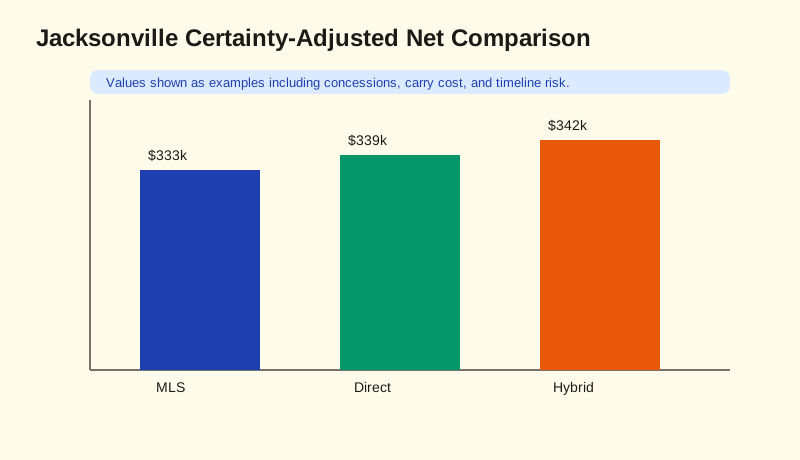
List price is marketing. Net proceeds are reality. In Jacksonville, where timelines can be compressed and concessions can swing quickly, focusing on net from the beginning is essential. Two offers that look far apart on the front page can land very close at closing once concessions, carrying costs, and delay risk are included.
Start with gross price, then subtract compensation structure, closing costs, tax prorations, attorney fees, agreed credits, and expected timeline carry. Add a risk adjustment if one offer has higher probability of renegotiation or delay. The goal is not perfect prediction; it is smarter comparison.
Onslow County tax rates are set annually by county and municipal governing boards, and city + county rates combine for properties inside municipal boundaries. That means local tax context should be included in your prorations and monthly carrying math while you compare timing choices.
Use a simple worksheet before responding to offers. If you negotiate without this worksheet, you are guessing. Guessing under deadline pressure usually benefits the buyer side, not yours.
| Line Item | Offer A (MLS) | Offer B (Direct) |
|---|---|---|
| Gross price | $365,000 | $344,000 |
| Compensation + closing structure | -$20,600 | -$2,300 |
| Expected concession reserve | -$6,000 | -$1,000 |
| Timeline carry to close | -$5,200 | -$1,400 |
| Estimated net pre-payoff | $333,200 | $339,300 |
This is exactly why Jacksonville homeowners should never choose solely on gross number.
9. Selling Against Newer Construction Without Panic
Some Jacksonville sellers feel boxed out when nearby newer homes offer modern finishes or builder incentives. The right response is not panic pricing; it is strategic differentiation. Resale homes can win on immediate availability, established lots, mature landscaping, route convenience, and known neighborhood behavior that buyers can see today rather than imagine.
If your home is older, prioritize confidence signals: roof and HVAC documentation, moisture and crawlspace clarity, repair receipts, and clear disclosure language. Buyers may accept dated style if they trust core systems. They rarely accept hidden uncertainty without discounting aggressively.
Another edge for resale homes is timeline certainty. New construction often carries completion variability, punch-list uncertainty, or delayed move-in risk. Buyers on assignment deadlines may prefer a well-prepared resale that can close predictably. Sellers who communicate this advantage clearly can protect net without over-conceding.
Use side-by-side total-cost framing where appropriate: purchase price, known upgrade needs, and likely move timeline. You are not attacking builders. You are helping buyers compare real-life outcomes.
10. Jacksonville Prep Plan: Spend Where Buyers Notice Risk
Preparation spending should target fear reduction. In Jacksonville, fear usually centers on maintenance surprises, moisture risk, and closing complexity, not whether every finish is trendy. You will get better return by solving practical concerns than by chasing cosmetic perfection.
High-return prep usually includes neutral paint where needed, lighting consistency, deep cleaning, exterior reset, and small repair items that trigger negative first impressions. If budget allows, focus on items that improve both photo performance and showing confidence. In many homes, that means entry sequence, kitchen visual clutter, and primary bath cleanliness and function.
Consider a focused pre-list walk-through by a qualified inspector or contractor if the home has age-related concerns. Even a modest pre-check can reveal issues early, when you still control timing and disclosure choices. It is often cheaper to decide your own repair story than react to a buyer’s repair narrative under contract pressure.
Document everything. Receipts, invoices, warranties, and service logs are negotiation leverage. They convert "I think" into "here is proof," and proof protects price.
11. NC Disclosure and Onslow County Title Steps
North Carolina disclosure rules are risk controls, not paperwork chores. Accurate disclosures reduce disputes, speed negotiations, and improve buyer confidence. In Jacksonville’s deadline-sensitive environment, anything that removes ambiguity is valuable.
If you have title complexity (multiple owners, inherited property, unresolved lien items, or divorce process overlap), address it before listing. Waiting until you are under contract often introduces avoidable delays and leverage loss. In Onslow County, title and recording process clarity matters because closing timelines are often tight.
The Register of Deeds office in Jacksonville provides key public-record access points and contact channels that help resolve documentation questions before they become transaction blockers. Build your file early: deed history, payoff contacts, lien status, and any required estate or court documents.
Use this checkpoint sequence before launch: verify ownership path, verify payoff numbers, verify disclosure completeness, verify closing-attorney process timing. Sellers who run this sequence early generally see fewer late-stage surprises.
| Pre-List Legal Check | Reason | Best Timing |
|---|---|---|
| Title chain confidence | Prevents contract-stage shocks | 2-4 weeks before listing |
| Lien/payoff verification | Improves net accuracy and close speed | Before pricing finalization |
| Disclosure accuracy review | Reduces renegotiation conflict | Listing prep week |
| Attorney timeline plan | Aligns move logistics with closing reality | Before accepting offer |
12. Hard Cases: PCS, Divorce, Inheritance, and Distress
Not every Jacksonville sale is elective. Many are tied to life events that compress timelines and raise stakes. If your sale is connected to orders, divorce, inheritance, or financial distress, your strategy should prioritize sequence and certainty first, optimization second.
PCS-related sales require clean calendar coordination. Decide early whether you need speed certainty or are willing to risk timeline drift for potential upside. If your household is already transitioning locations, uncertainty has real emotional and financial cost.
Divorce-related sales need written operational rules: who approves terms, who handles showing logistics, and how communication flows. Without clear rules, even good offers can collapse under process friction.
Inheritance cases need authority clarity. Confirm who can sign, what probate or estate steps are pending, and what condition strategy makes sense. If property has been vacant or deferred, as-is paths may be more efficient than trying to force full retail prep under emotional strain.
For homeowners under foreclosure pressure, time is the key asset. Parallel-track counseling, legal review, and sale-path analysis immediately. Helpful references include North Carolina foreclosure help, NC foreclosure timeline, and options to avoid foreclosure.
Robin’s take: In distress situations, the biggest mistake is pretending you still have unlimited time. You don’t. Speed with structure beats hope without structure.
13. Should You Rent Instead of Sell in Jacksonville?
Because Jacksonville has strong military-connected rental demand, many owners consider holding their property as a rental instead of selling. This can be smart in some cases, but only if the numbers are truly positive after realistic costs.
Run full-cost math, not optimistic math: mortgage, taxes, insurance, maintenance reserve, vacancy reserve, leasing turnover, and management fee if you will not self-manage. Then stress-test with one larger repair event. If the strategy only works when everything goes perfectly, it is not a stable plan.
Also include personal-capacity cost. Do you want to manage property risk while relocating or handling another major life change? Some owners do well with rentals; others discover they wanted liquidity and closure, not a second operational job.
Compare one-year and three-year hold scenarios against immediate sale net and your household priorities. If your objective is certainty and reduced cognitive load, selling may outperform a marginal rental thesis even if long-run appreciation might exist.
14. Offer Evaluation: Build a Certainty Scorecard
When offers arrive, Jacksonville sellers should use a scorecard to prevent emotional decisions. Evaluate each offer across price quality, financing execution, inspection risk, timeline fit, and renegotiation probability. Then map each offer to your actual constraints.
An example: Offer A is $8,000 higher but has weaker financing and broad inspection language. Offer B is lower but cleaner, faster, and backed by stronger proof of funds or lender quality. Depending on your timeline, Offer B may be the better expected net even before you include stress cost.
Establish your concession boundaries before reviewing offers. Sellers who decide boundaries in the middle of negotiations often over-concede because they are reacting, not executing.
Set a response rhythm too: deadline for best-and-final, requirement for complete documentation, and communication process through your representation team. Good process protects leverage.
| Score Category | Weight Example | What to Check |
|---|---|---|
| Price quality | 30% | Net after likely concessions, not just headline |
| Execution certainty | 25% | Lender strength, proof of funds, earnest seriousness |
| Inspection profile | 20% | Scope of repair language and renegotiation risk |
| Timeline fit | 15% | Can it close when you need it to close? |
| Communication quality | 10% | Responsiveness and professionalism signals |
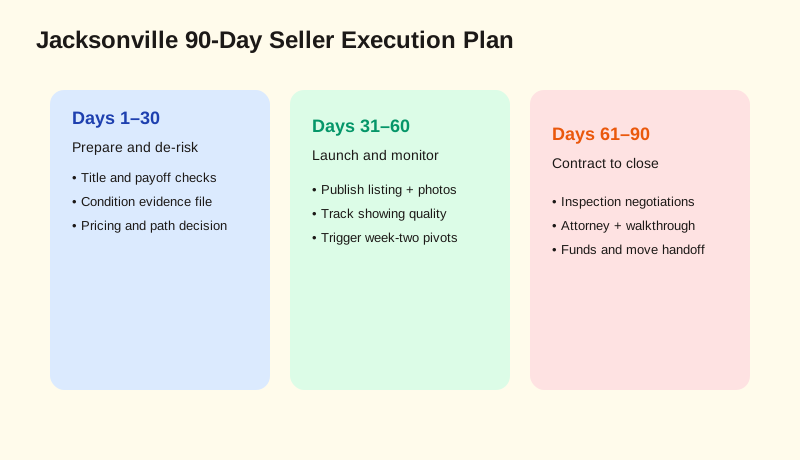
15. Jacksonville 90-Day Action Framework
Days 1-30: Prepare. Verify title and payoff context. Complete disclosure drafts. Gather service records. Define buyer segment. Build pricing bands and path options. Decide pivot rules if you are running a hybrid strategy.
Days 31-60: Launch and monitor. Go live with full presentation quality. Track showing quality, not just count. Compare feedback to your thesis. If metrics miss thresholds, execute pre-planned adjustment rather than waiting in denial.
Days 61-90: Contract and close. Manage inspection decisions with documentation. Protect timeline terms. Coordinate attorney and move logistics. Keep backup options alive until contingencies clear.
This framework reduces panic because every stage has predefined priorities. It also improves household alignment if multiple people are part of the decision process.
Want a cash offer on your Jacksonville home?
Tell us your timeline and property condition and we will get you a no-obligation cash offer — useful when a PCS window puts you on the clock.
16. Government and Local Resource Stack for Sellers
Strong sellers build a local resource stack before they need it. In Jacksonville and Onslow County, useful resources include county tax-rate pages, Register of Deeds contacts, city planning and project pages, district school information, HUD counseling search, and statewide legal-aid intake tools.
For military families or households comparing relocation decisions, include DoD BAH resources in your decision stack so affordability context stays grounded in official references. That does not replace personalized financial advice, but it improves planning quality.
If stress escalates, parallel support matters: counseling + legal + sale strategy at once. Waiting to solve one problem before opening the next usually burns time you do not have.
| Resource Type | Why Sellers Use It | Primary Link |
|---|---|---|
| County tax context | Estimate carrying and prorations correctly | Onslow County Tax Rates |
| Deed and recording contacts | Resolve title path questions early | Onslow Register of Deeds |
| City development updates | Frame neighborhood and future-market context | Jacksonville Projects/ED pages |
| Housing counseling | Budgeting + foreclosure-avoidance support | HUD Find a Counselor |
| Civil legal support | Low-income legal navigation in civil matters | Legal Aid of NC Get Help |
17. Common Jacksonville Seller Mistakes That Cost Money
Mistake one is overpricing to "test" the market without a strict test window. In this city, missed early momentum can be expensive because timing windows are meaningful. If you test, define exact triggers and dates for adjustment before launch.
Mistake two is failing to prepare documentation. Buyers in this market value confidence. Missing records invite deeper discounts and longer negotiations.
Mistake three is choosing offers by ego, not constraints. Highest gross is not always highest net. If you need a reliable close date, price-only thinking can backfire.
Mistake four is waiting too long under distress pressure. If foreclosure, tax pressure, or legal complexity exists, early action expands options. Late action narrows options dramatically.
Mistake five is inconsistent messaging. If your listing copy, photos, and showing narrative tell different stories, buyer confidence drops. Pick your positioning thesis and repeat it clearly.
18. Negotiation Scripts for High-Pressure Moments
Sellers do better when tough language is prepared in advance. Use calm, factual scripts through your representation team.
Price pushback script
"We appreciate the offer. Based on nearby Jacksonville comparables, condition documentation, and route utility, we are confident in this value range and open to moving forward with aligned terms."
Inspection credit script
"We reviewed each requested item for materiality and safety. We can address these priority items or offer a focused credit of $X, but we cannot support a blanket concession at the requested level."
Extension request script
"We can support a short extension through [date] with updated earnest terms and clear milestone commitments. Beyond that window, our timeline constraints change materially."
Competing-offer script
"We are reviewing complete offer packages for certainty, timeline fit, and expected net. Please submit highest and cleanest terms by [deadline]."
Scripts are not about sounding aggressive. They are about protecting clarity when stress rises.
19. Scenario Planning: If Plan A Misses
Every Jacksonville seller should define backup paths before going live. Plan A might be standard MLS at market-aligned price. Plan B might be a pre-defined repricing if first-week metrics miss. Plan C might be direct-buyer certainty pivot if timeline pressure increases. Write these plans down with trigger metrics and dates.
Without pre-defined pivots, many sellers drift. Drift creates carry cost, fatigue, and leverage erosion. With defined pivots, you preserve control and reduce household stress.
Scenario planning is especially important for families balancing school moves, work transitions, and possible purchase contingencies. When one part of the move slips, everything else can slip too. A written pivot map protects against cascade failure.
Robin’s take: Strategy shifts are not failure. Refusing to shift when evidence changes is failure.
20. Jacksonville Closing Week: Protect the Finish
The last week is where preventable errors show up. Confirm utility transfer schedule, final walkthrough expectations, attorney appointment timing, key and code handoff list, and repair documentation packet. Handle these details early, not the night before closing.
Verify wire instructions through trusted channels and never rely on unverified last-minute changes. Fraud risk rises during close-week communication volume.
If negotiated repairs were completed, keep invoices and proof organized. If certain fixtures or appliances are excluded, make sure removal is complete before walkthrough to avoid unnecessary conflict.
A smooth close is part of your value outcome. It reduces dispute risk and protects your transition to the next chapter.
21. FAQ for Jacksonville Homeowners Selling in 2026
Do I need to time my sale around PCS movement?
Usually yes, at least partially. Jacksonville has meaningful demand clusters tied to military movement. Even if you cannot choose perfect timing, understanding those windows helps you set realistic expectations and negotiate from context.
Should I avoid VA offers?
No. Evaluate the whole package: lender execution, documentation quality, timeline fit, and concessions. Blanket assumptions can cost you money.
Can as-is sales still work in Jacksonville?
Absolutely. As-is can perform well when condition is transparent, pricing is realistic, and buyer expectations are aligned from the start.
What if I need to sell fast because of financial pressure?
Move immediately on parallel tracks: counseling resources, legal intake if needed, and sell-path analysis. Delay is usually the most expensive option.
How many internal comparisons should I run before accepting?
At minimum: expected net, stress-case net, and timeline-risk score for each serious offer. If you do not run these, you are making a major decision with incomplete information.
22. Your Next Move: Build a Jacksonville-Specific Net Sheet
The best next step is not guessing your value from a generic estimate. It is creating a Jacksonville-specific net proceeds plan that compares all realistic paths for your exact property and timeline. That plan should include buyer-segment thesis, likely pricing band, prep priorities with expected return, concession boundaries, and timeline contingencies.
If you are deciding between list, as-is, or hybrid, ask for side-by-side math that includes carrying costs and timeline risk. If your life situation includes PCS pressure, estate complexity, or foreclosure risk, this math is not optional.
A disciplined seller plan will not eliminate uncertainty, but it will dramatically reduce costly surprises. In Jacksonville’s military-influenced market, that is often the difference between a stressful sale and a controlled one.
Whether your priority is maximum upside, faster close, or certainty under pressure, Jacksonville rewards clarity. Clear pricing. Clear documentation. Clear negotiation boundaries. Clear pivot triggers. If you build your strategy around those fundamentals, you give yourself the best odds of a strong outcome without burning unnecessary time or energy.
And if you only remember one thing from this guide, remember this: your home is not just a property in a database. In this market, it is a solution to a timing problem for a specific buyer profile. Solve that timing problem better than competing listings, and your odds improve immediately.
Jacksonville Seller Workbook: Pricing, Prep, and Pivot Decisions
A workbook mindset helps Jacksonville owners make better decisions under pressure. Instead of asking one giant question like “What is my house worth?”, break the decision into smaller, answerable questions. Question one: who is the most likely buyer for this address in Jacksonville right now? Question two: what is that buyer trying to avoid in their daily routine? Question three: what evidence can we provide in this listing package that lowers buyer uncertainty in the first ten minutes of review? These questions shift your process from generic valuation talk to targeted conversion strategy. In a military-driven market, that shift matters because buyers are often making decisions quickly with high consequences for timing and household stability.
The workbook approach also makes household alignment easier. Many sellers are not deciding alone. A spouse, parent, co-owner, executor, or adviser may have input, and those voices can conflict when emotions rise. A written workbook keeps everyone focused on agreed constraints: minimum net threshold, target close window, acceptable concession range, and non-negotiable process needs. If an offer appears strong but violates one or more constraints, the decision gets simpler. You can counter with confidence or decline without second-guessing. This reduces the cycle of “maybe we should…” conversations that burn days and often weaken negotiating posture.
For Jacksonville owners balancing military timing, the workbook should include a calendar page tied to likely demand windows and hard personal deadlines. Mark the latest viable list date for each path, the latest acceptable inspection timeline, and the point where direct-certainty options become financially preferable to continued MLS exposure. This does not mean you expect failure; it means you are prepared for variability. Prepared sellers pivot with intention. Unprepared sellers pivot with panic.
Another practical workbook section is “known unknowns.” List the things that could become friction points if unaddressed: old roof age with no documentation, unresolved permit questions, partial repairs without invoices, occupancy complexity, or title signatures across multiple parties. Then assign each item one of four actions: repair, document, disclose, or reprice. If an item is in none of these buckets, it is a hidden risk you have not managed yet. In Jacksonville’s compressed buyer timelines, hidden risk usually converts directly into lower offers or longer negotiations.
How to Build a Jacksonville Comp Set That Buyers Actually Believe
Comparable sales are not a spreadsheet ritual; they are a persuasion framework. If your comp set includes homes that buyers view as “not really comparable,” your price defense will fail when it matters. The solution is to build comp layers that mirror buyer logic. Layer one is close-match Jacksonville comps by age range, bed-bath utility, lot profile, and condition standard. Layer two is practical alternatives a buyer could choose if they leave your target band. Layer three is directional context for trend and speed, used carefully and never as a replacement for direct comparables. Each layer has a role, and mixing those roles causes confusion.
In a Camp Lejeune-oriented market, commute practicality and move-in readiness are often underweighted in lazy comp analysis. Buyers may pick a slightly smaller home if daily gate access stress is lower, or accept fewer cosmetic upgrades if systems confidence is stronger. Your comp narrative should account for this. If two homes sold at similar prices but one needed immediate capital repairs and yours does not, your adjustment should be explicit and supported with documentation. If your home has route advantages for typical assignment patterns, that should be reflected in the positioning narrative even if MLS data fields cannot fully capture it.
You should also use “decision-window comps,” meaning sales that closed in timing windows similar to your planned launch. Jacksonville demand can cluster around transfer rhythms, so a perfectly similar comp from a weak timing window may not be the best anchor for a listing entering a stronger one. This is not a trick to inflate value; it is an effort to model buyer intensity accurately. Likewise, a strong historical comp from a very different cost-of-money environment may need cautious interpretation in 2026 affordability conditions.
Finally, prep your comp defense for three audiences: buyers, buyer agents, and appraisers. Buyers need clarity and trust. Buyer agents need concise rationale they can explain to clients. Appraisers need evidence and relevance. If your comp package can satisfy all three audiences with minimal friction, your probability of a stable contract rises substantially.
Inspection Phase in Jacksonville: Control the Narrative Early
Inspection is where many sellers lose confidence. The key is to treat inspection as a managed phase, not a surprise ambush. Before listing, map likely concern zones by age and condition: roofing, HVAC, moisture control, crawlspace status, water heater life, windows, grading, and electrical panel labeling. Then decide how each zone will be handled: proactive repair, disclosure with evidence, or pricing acknowledgment. Buyers can handle known conditions. They react negatively to uncertainty, especially if they are balancing assignment deadlines and do not have extra time for repeated renegotiation cycles.
When requests arrive, separate safety-critical items from preference items. A structured response might approve specific critical repairs, offer a targeted credit for moderate items, and decline cosmetic requests that do not affect function or safety. The important part is consistency with your prebuilt plan. Sellers who improvise response logic under emotional pressure tend to issue mixed signals, which encourages larger second-round demands. In contrast, a documented and proportional response often shortens the negotiation path and preserves the buyer’s confidence that the transaction will remain orderly.
For Jacksonville sellers facing deadline pressure, time can be worth more than marginal concession savings. If a small concession preserves close certainty inside a required window, it may be the right decision even if it feels like giving ground. The opposite is also true: granting large, poorly justified credits to “keep peace” can undermine net and still fail to protect timeline certainty. Concession strategy works best when tied to explicit timeline value and pre-defined boundaries.
Post-inspection communication should also be clean and traceable. Confirm agreements in writing, track completion evidence, and align final walkthrough expectations early. A calm, organized inspection phase does not just reduce stress; it increases the chance that your buyer arrives at closing with confidence rather than fresh doubts.
Military Household Logistics and Showing Strategy
Jacksonville homes are often sold by households with irregular schedules, frequent obligations, and sometimes partial relocation already underway. Showing strategy has to account for that. Random all-day showing access sounds cooperative, but it can quickly exhaust families and degrade home presentation quality. Better approach: define showing windows that protect household stability while still giving buyers sufficient access. A predictable schedule lets you keep the home consistently ready and reduces burnout, which matters if your listing period extends beyond a week or two.
If you have children, pets, or shift-work realities, include a logistics note in your seller plan that outlines prep routines, temporary storage patterns, and quick-reset checklists. Homes that stay consistently clean and functional perform better in photos and in-person impressions. This may sound basic, but consistency is a conversion advantage in high-velocity markets where buyers may tour multiple properties in one afternoon and decide quickly.
For households already partially moved out because of PCS or job relocation, communicate occupancy status clearly and keep utility function intact for showing quality. Empty homes can look cold and amplifying defects; lightly staged or properly arranged spaces can improve dimension perception and buyer comfort. Even minimal staging cues (proper lighting, clean wall lines, balanced room flow) can reduce perceived risk and improve offer confidence.
A final logistics factor is coordination with contract milestones. If you need rent-back, delayed possession, or specific move-day alignment, incorporate those needs into offer evaluation early. Last-minute occupancy terms can disrupt otherwise strong contracts. In Jacksonville, where many buyers and sellers are moving on fixed calendars, proactive term clarity is a major advantage.
Cash Offer Due Diligence: Fast Does Not Mean Blind
Fast offers can be helpful in Jacksonville, but they should be evaluated with the same rigor as financed offers. Verify proof of funds quality, earnest-money seriousness, assignment language, inspection flexibility, and actual close-history behavior if possible. Some direct buyers are straightforward and reliable. Others are marketing-heavy operators who rely on retrade patterns after contract lock-in. Your job is to distinguish quickly.
Ask concrete questions: Who is the actual buyer entity? Is assignment allowed? What are earnest terms and when do they go hard? What conditions can trigger price renegotiation? Who pays standard closing-side costs? Can they show recent local close examples? The quality of answers often tells you more than the initial price. A clean, transparent direct buyer may be worth more in expected net than a nominally higher but structurally weak offer.
In deadline-sensitive situations, certainty-adjusted net should drive decisions. If a fast buyer can close inside your required window with minimal friction, that has measurable value. But do not skip diligence in the name of speed. A failed fast contract can consume precious time and leave you in a worse position than if you had screened rigorously from day one.
Use side-by-side contract comparison sheets for direct offers the same way you would for MLS offers. Put everything into standardized rows (price, deposits, contingencies, timeline, risk flags) so emotional framing does not distort judgment.
A Jacksonville Communication Plan That Prevents Deal Drift
Deal drift happens when communication is inconsistent across parties. Prevent it with a structured communication plan. Define who communicates what, by when, and through which channel. Keep critical decisions documented in writing with timestamps. This protects against misunderstanding and creates accountability when deadlines tighten.
Your plan should include weekly status cadence before contract and milestone cadence after contract. Before contract, track showing quality, feedback themes, and pricing response indicators. After contract, track inspection deadlines, repair response deadlines, appraisal timing, attorney milestones, and funding checkpoints. If a checkpoint slips, trigger escalation early rather than waiting for uncertainty to compound.
For multi-party ownership situations, assign a lead decision coordinator to consolidate feedback and avoid conflicting messages. Buyers lose confidence quickly when instructions are inconsistent or delayed by internal misalignment. A single coordinator keeps process clean and preserves trust.
Communication tone matters too. Firm and factual messaging generally outperforms reactive messaging. You can be flexible without being vague, and you can hold boundaries without being hostile. In Jacksonville’s practical buyer environment, professionalism itself is a negotiation asset.
Decision Math for Waiting vs Selling Now
Many Jacksonville owners ask whether to wait for “better conditions.” The right answer comes from math, not headlines. Build a waiting model with three columns: expected gain from waiting, guaranteed carry cost while waiting, and risk-adjusted downside if market response underperforms expectations. If expected gain is smaller than carry + risk, waiting is likely value-destructive for your situation.
Carry cost should include more than mortgage payment. Include taxes, insurance, utilities, maintenance drift, and your personal stress load if the property is not your ideal operating focus. For some sellers, stress cost is real and significant, especially when juggling relocation, family responsibilities, or legal process tasks. It is valid to include this in decision quality.
Also model scenario asymmetry. Upside from waiting may be capped while downside from delays can be open-ended if life constraints tighten. A modest expected premium might not justify the risk of missing a key transfer, school, or financial deadline. The best choice is the one that remains acceptable under realistic stress conditions, not just optimistic assumptions.
When you run this math honestly, many “wait and see” decisions turn into “act with structure now” decisions. That does not mean rush. It means execute a deliberate plan with defined metrics and fallback routes.
Post-Close Planning: What Smart Sellers Do Next
The sale is not the end of decision quality. Strong sellers also plan the transition period after closing. If you are buying next, preserve liquidity buffers and avoid overextending based on best-case assumptions. If you are renting temporarily, build a timeline for re-entry to ownership decisions with clear criteria. If this sale resolves distress, use the outcome to stabilize monthly cash flow and reduce recurring risk points.
Keep your closing file organized after completion: settlement statement, repair records, tax documents, and transaction correspondence. These records matter for tax prep, future lending, and any post-close questions that can arise. Organized files also help if family members ask for guidance and you want to give practical, evidence-based advice.
If the sale involved major life stress, schedule a short post-mortem: what worked, what almost broke, and which decisions preserved value. This is not busywork. It turns one difficult process into reusable competence for the next major financial decision.
For Jacksonville homeowners, this matters because life transitions in military-linked markets can be cyclical. A disciplined close now makes future transitions easier and less expensive.
Jacksonville Appendix: Street-Level Tactics That Improve Outcomes
One practical Jacksonville tactic is to write listing remarks in "problem-solution" format. Instead of generic claims, directly address the practical concerns Jacksonville buyers bring to tours: commute reliability, move-in timing, maintenance confidence, and monthly-payment predictability. Example structure: “If you need a Jacksonville home that supports a fast move, this property offers documented systems updates, practical route access, and clear closing flexibility.” That kind of clarity helps serious Jacksonville buyers self-select faster and reduces noise from unqualified interest. Sellers often underestimate how much cleaner buyer traffic can become when the listing narrative is built around real decision criteria rather than decorative language.
Another Jacksonville tactic is to run a photo-sequence audit before publishing. In Jacksonville, many buyers are relocating quickly and pre-screen homes online before deciding whether to schedule in-person tours. If your first ten photos do not answer core Jacksonville questions (layout flow, condition confidence, storage utility, exterior maintenance cues, and neighborhood feel), you will lose conversions before buyers ever step inside. A good Jacksonville photo sequence should tell a complete daily-life story: arrival, main living utility, kitchen workflow, bedroom function, bath condition, yard usability, and practical extras. This is not about expensive staging; it is about reducing uncertainty for Jacksonville households making high-speed decisions.
For Jacksonville homes with older systems, provide a concise property fact sheet at showings. Include service timelines, known repairs, utility context, and a short “what has been done / what has not been done” section. Jacksonville buyers are often balancing timelines and budget constraints, so transparent disclosure in this format builds trust quickly. It also reduces post-inspection shock because expectations are better aligned from day one. Sellers who hide age or condition details hoping to preserve leverage usually create the opposite result in Jacksonville: buyers assume bigger problems and negotiate harder. Straightforward transparency tends to produce better offers and fewer emotional standoffs.
Jacksonville sellers should also plan “week two strategy” before launch day. If showing quality or offer quality is below threshold after the first defined window, decide exactly what changes first: price, presentation, access logistics, or messaging. In Jacksonville, delay is often expensive because buyer attention shifts quickly to newer or better-positioned options. The discipline to act in week two can save a listing from becoming stale in week six. A common Jacksonville rescue pattern is small-but-credible price adjustment paired with improved evidence package and refreshed lead photos. Together, those changes can reset buyer perception faster than price cuts alone.
In Jacksonville, military households often care about execution reliability more than theatrical negotiation. If your communication is prompt, terms are clear, and documentation is organized, you gain a professionalism premium that can influence final outcomes. This is particularly true when buyers compare multiple Jacksonville options that are similar on paper. The listing that feels easier to close often wins. Sellers sometimes think professionalism is soft value. In Jacksonville, it is hard value: fewer extensions, cleaner walkthroughs, and reduced retrade attempts. Process quality can be a hidden spread between expected net and actual net.
Finally, keep a Jacksonville-specific “no-surprises checklist” for the last ten days before closing: final utility readings, HOA or neighborhood transfer items if applicable, key and access device inventory, appliance inclusion confirmation, and final property condition reset after move-out. Even simple misses can trigger avoidable tension in Jacksonville closings where both sides may be under relocation pressure. A calm close is easier when every small detail is handled early and communicated clearly. Sellers who use this checklist approach consistently report lower stress and stronger confidence that they did not leave easy money on the table.
The bottom line for Jacksonville homeowners is this: win with preparation, not improvisation. Jacksonville rewards sellers who are specific, documented, and timely. If your strategy reflects Jacksonville buyer math, Jacksonville timing windows, and Jacksonville process realities, you can handle 2026 conditions with much better control than generic advice would suggest. That control is what turns a complicated sale into a manageable one.
Jacksonville homeowners can also improve outcomes by pre-writing a one-page “offer acceptance memo” before any offers arrive. In that memo, list your minimum acceptable net, preferred close-date range, maximum repair credit exposure, and any required occupancy terms. When a Jacksonville offer comes in, run it through the memo immediately. This protects you from decision whiplash and helps your agent negotiate from clear authority. In Jacksonville, where buyers may be operating on transfer deadlines, decisions often need to happen quickly. Speed without a framework causes mistakes. Speed with a framework preserves leverage.
Another proven Jacksonville practice is maintaining a repair and condition log from the first prep day through closing. A simple dated log that records contractor visits, estimates, completed work, and unresolved items can prevent expensive misunderstandings. If a Jacksonville buyer asks whether an issue is new or previously addressed, you can answer with records instead of memory. That matters in inspection phases, appraisal discussions, and final walkthrough confidence. A transparent log also signals professionalism, which can reduce buyer anxiety and improve the tone of negotiations.
For Jacksonville sellers comparing multiple offers, add a “certainty discount” field in your spreadsheet. Estimate the probability that each deal closes on time and multiply expected net by that probability to create a certainty-adjusted net score. For example, if one Jacksonville offer has a higher gross but only moderate confidence of on-time close, and another has slightly lower gross but strong confidence, the second may produce better expected value when risk is quantified. This method helps sellers avoid headline bias and make choices aligned with real outcomes rather than optimistic assumptions.
Finally, Jacksonville owners should revisit their plan every seven days while active on market. Conditions, feedback, and buyer urgency signals can change quickly. A weekly Jacksonville review should answer five questions: Is pricing still aligned to the most likely buyer segment? Is the showing-to-offer conversion rate acceptable? Are objections repeating in feedback? Does current strategy still meet timeline constraints? Is Plan B fully ready if next-week metrics miss? This review cadence keeps strategy alive and prevents passive drift, which is one of the most common causes of weak final outcomes in Jacksonville transactions.
When Jacksonville feedback indicates recurring concern about one issue, solve the issue directly instead of rewriting the same listing language repeatedly. If Jacksonville buyers keep flagging exterior maintenance, fix the high-visibility items and document completion. If Jacksonville buyers keep questioning timeline certainty, tighten showing windows, response cadence, and contract-term clarity. If Jacksonville buyers keep perceiving pricing mismatch, adjust decisively with refreshed justification. Tactical action usually beats copy edits once the market has given clear signals.
A final Jacksonville principle: treat each week of marketing as an experiment with measurable outputs. Your Jacksonville dashboard can be simple: qualified showings, second-showing rate, written-offer count, average days between inquiry and showing, and concession pressure level. If these Jacksonville indicators trend in the wrong direction, change strategy early. Sellers who monitor this dashboard consistently make stronger decisions than sellers who wait for intuition to catch up. In a military-influenced city like Jacksonville, faster feedback loops are an advantage you can choose to use.
As you execute, keep Jacksonville context visible in every decision memo: Jacksonville timing windows, Jacksonville buyer utility priorities, Jacksonville financing patterns, and Jacksonville close-risk factors. Repetition of place-specific context is not redundancy; it is strategic focus. It prevents your team from drifting into generic advice that may be valid elsewhere but weak in Jacksonville. When sellers maintain this Jacksonville focus from prep through closing, they usually see better alignment between expected net and actual net, fewer avoidable delays, and less post-decision regret. That is the practical definition of a successful Jacksonville sale.
Jacksonville rewards sellers who decide early, communicate clearly, and document everything. If your next step is uncertain, start with numbers, not narratives: build your Jacksonville net sheet, set your Jacksonville timeline boundaries, and choose the Jacksonville path that still works under stress conditions. Then execute that Jacksonville plan with weekly checkpoints until the keys are delivered, funds clear, and your transition plan is complete without unresolved loose ends for sellers.