
How to Avoid Foreclosure
in North Carolina
Your step-by-step guide to protecting your home, your equity, and your future — with real NC-specific options.
1. A Letter to You, the North Carolina Homeowner
If you're facing foreclosure in North Carolina, or you're lying awake at night worried you might be headed that way, this guide is for you. Maybe you lost a job. Maybe medical bills piled up faster than anyone could manage. Maybe a divorce turned your finances upside down overnight. Or maybe you're just doing the math and realizing that between the mortgage, insurance that jumped 50%, property taxes, and the price of groceries, it doesn't add up anymore.
Whatever brought you here, I want you to hear two things.
First: you are not alone. North Carolina's mortgage delinquency rate hit 4.49% in late 2024 (above the national average) and it's been climbing. Nationally, foreclosure filings are up 32% year-over-year as of January 2026. This isn't something you did wrong. It's a financial reality that millions of families across the country are dealing with right now.
Second: you have more options than you think. And the earlier you act, the more of those options you keep on the table.
I wrote this guide specifically for North Carolina homeowners who need real foreclosure help, not generic advice copy-pasted from a national website, and not a legal textbook that'll put you to sleep. This is a plain-English walkthrough of how foreclosure actually works in NC, what your options are at every stage, where to get free help (yes, actually free), and how to make the smartest decision for your family, whether that means keeping your home, selling it, or finding a different path that protects your equity and your credit.
If foreclosure risk is overlapping with a pending divorce, use this companion decision guide alongside this one: selling during divorce in NC & SC. It covers buyout-vs-sale frameworks and how to structure timelines when legal and housing pressure hit at once.
If you need a shorter, action-first version of this topic, use our companion checklist guide: how to avoid foreclosure in North Carolina. It condenses decisions into first-72-hour steps, 30-day execution, and retention-vs-sale scorecards.
North Carolina's foreclosure process is different from most states. We've got a unique system that goes through the Clerk of Superior Court, with specific notice requirements that buy you time and state resources that were built for exactly this situation.
So let's walk through all of it, step by step.
If You're in a Rush: Your 5-Step Immediate Action Plan
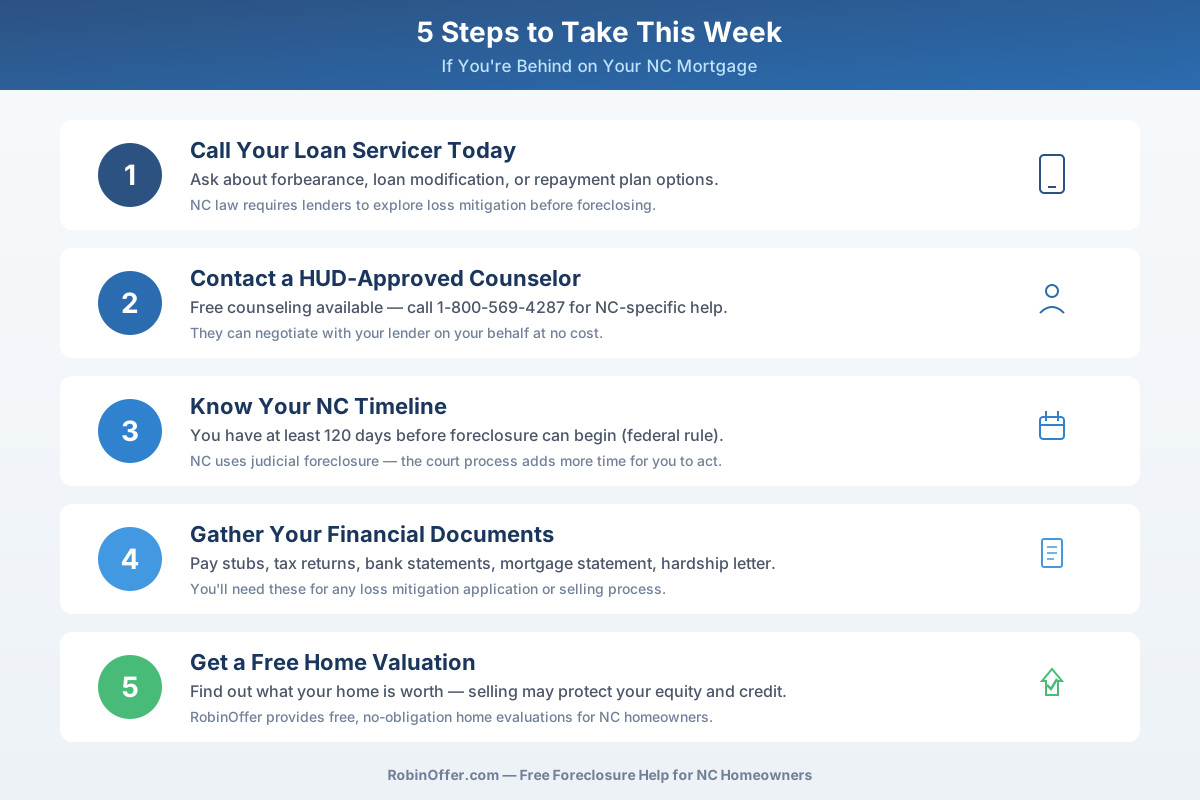
If you're behind on your mortgage right now and need to know what to do today, here's what I'd tell you if we were sitting at the kitchen table:
- Call the NC Foreclosure Prevention Hotline: 1-888-442-8188 (free counseling, no strings)
- Call your servicer's loss mitigation department and ask about forbearance, modification, or repayment plans
- Gather your financials: last 2 pay stubs (or if you're self-employed: last 2 years of tax returns, a profit-and-loss statement, and 12 months of bank statements), current mortgage statement, and a written monthly budget
- Find out what your home is worth: Get a free RobinOffer evaluation so you know your equity position
- Do not ignore mail from your servicer. Every notice contains deadlines that affect your options
That's the quick version. Now let's get into the details, so keep reading.
2. Foreclosure in North Carolina: The Numbers Right Now
Before we get into what you should do, let's look at what's actually going on in North Carolina right now. Understanding the NC foreclosure process starts with the numbers, because when you see the bigger picture, your own situation starts to make a lot more sense, and you'll understand why I keep saying "act early."
NC Foreclosure Snapshot
| Metric | Data | Context |
|---|---|---|
| NC Mortgage Delinquency Rate | 4.49% (Q4 2024) | Above the national average of 4.26% |
| NC Foreclosure Rate Ranking | 22nd worst in the U.S. (April 2025) | Middle tier nationally |
| NC Properties in Foreclosure (April 2025) | ~1,081 properties | Out of 4.8M+ housing units statewide |
| National Foreclosure Filings (Jan 2026) | 40,534 properties | Up 32% year-over-year |
| National Foreclosure Starts (Jan 2026) | Up 26% YoY | 11th consecutive month of annual increases |
Now, before you panic, let me give you some context. ATTOM CEO Rob Barber said in the January 2026 report: "Overall levels remain well below historic peaks, suggesting that most homeowners are still on stable footing." So we're not in 2008 territory. Not even close. But here's the honest truth: if you're one of the homeowners who isn't on stable footing, knowing that most people are doing fine doesn't exactly help you pay your mortgage. What matters is your situation and what you do next.
What's Driving the Numbers Up
So why are more NC homeowners falling behind? A few things are all hitting at once:
Insurance costs have gone through the roof. North Carolina homeowners insurance jumped roughly 56% between 2019 and 2025. That's not a typo. Fifty-six percent. If you were paying $1,200 a year in 2019, you might be staring at $1,870+ now. And that increase hits your escrow, which bumps up your monthly payment even if your actual mortgage rate didn't change.
Everything around your mortgage got more expensive too. Property taxes, utilities, and insurance collectively jumped about 30% in 2025. Your mortgage payment might be the same, but all the other costs of owning a home went up.
The pandemic safety nets are gone. Remember the moratoriums, forbearance programs, and emergency funds that kept people afloat during COVID? All expired. The NC Homeowner Assistance Fund, which helped more than 10,000 NC families, has completely run out of money. There's nothing left in that pot.
Lower-income communities are getting hit the hardest. The New York Fed's February 2026 analysis found that mortgage delinquencies in the lowest-income zip codes surged sixfold from 2021 to late 2025, jumping from about 0.5% to 3.0%, while wealthier neighborhoods barely moved. That's not a coincidence.
The NC Metro Picture
Not every part of North Carolina is in the same boat. Here's how the major metros are looking:
| Metro Area | Foreclosure Context |
|---|---|
| Fayetteville | Consistently one of the worst metro areas in the entire country, ranked 3rd worst nationally in January 2026 (1 in every 1,257 housing units) |
| Charlotte-Concord-Gastonia | Moderate activity tracking near the state average; banking/finance sector provides some insulation |
| Raleigh-Durham | Strong economy moderates the trend, though foreclosures spiked 159% in 2022 as pandemic protections ended |
| Greensboro-High Point | Historically elevated foreclosure activity relative to other NC metros |
| Asheville / Western NC | Rising serious delinquency (up 1.4 percentage points YoY) driven in part by Hurricane Helene aftermath |
Fayetteville is really struggling. It's home to Fort Liberty (formerly Fort Bragg), the largest military installation in the world by population, and the metro has been a national foreclosure hotspot for years. The metro has consistently ranked in the top 5 to 10 worst among all metro areas with 200,000+ people.
If you're in western NC and still dealing with Hurricane Helene fallout, you've got additional options beyond what's in the rest of this guide:
- FEMA Individual Assistance: if you haven't registered yet, do it now at DisasterAssistance.gov or call 1-800-621-3362
- Disaster forbearance: after a federally declared disaster, your servicer is supposed to offer at least 90 days of forbearance. Call and ask for it by name.
- HUD 203(h) loans: a special FHA program that lets disaster victims get a new mortgage with relaxed credit requirements to rebuild or buy a replacement home
- NC Department of Emergency Management has storm-specific housing recovery programs; check ncdps.gov/emergency-management
- Call the State Home Foreclosure Prevention Project at 1-888-442-8188; they can connect you to all of the above
If you have a homeowner's or flood insurance claim in progress and a mortgage in default, heads up: the insurance check may be made out to both you and your mortgage servicer. The servicer can hold those funds in escrow. A HUD counselor can help you work through that.
NC Property Tax Relief You Might Not Know About
While we're talking about costs, here are NC tax relief programs that could lower your monthly burden, and a lot of people don't even know these exist:
- Elderly/Disabled Homestead Exclusion: If you're 65+ or totally and permanently disabled, you can exclude the greater of $25,000 or 50% of your home's appraised value from property taxes. That can save you hundreds a year. Apply through your county tax assessor's office.
- Circuit Breaker Tax Deferral: If you're 65+ and your income is under a certain threshold, you can defer a portion of your property taxes. You'll eventually have to pay them back (when you sell or transfer), but it reduces your monthly costs right now when you need it most.
- Disabled Veteran Exclusion: NC veterans with a 100% service-connected disability (or certain other qualifying conditions) can exclude the first $45,000 of their home's appraised value from property taxes.
These won't solve a foreclosure on their own, but they can lower the monthly nut enough to make a modification or repayment plan work. Talk to your county tax office.
One more important note: property tax delinquency can trigger a separate foreclosure process by the county. That's different from mortgage foreclosure and has different rules (including a right of redemption). If you're behind on both your mortgage and property taxes, you're dealing with two problems and need to address both. Use our NC property tax lien timeline guide to map the county-side deadlines in parallel.
3. How Foreclosure Works in North Carolina
This is the part most people jump to first, and I get it: you want to know what you're up against. So let's break it down in a way that actually makes sense.
Here's the first thing to understand: North Carolina does foreclosure differently than most states. We use what's called a non-judicial foreclosure process, which is a fancy way of saying it doesn't go through a traditional lawsuit with a judge. Instead, it goes through the Clerk of Superior Court. And honestly? That's actually good news for you, because the Clerk has to hold a hearing and check some boxes before any sale can happen. You've got real protections baked into this process.
(NC technically allows judicial foreclosure too, which is a full court case, but it's pretty rare for regular homes. So we'll focus on the non-judicial process, which is what the vast majority of NC homeowners face.)
The NC Foreclosure Process: Step by Step
Step 1: You Fall Behind on Payments
The clock starts the moment you miss your first payment. But here's what a lot of people don't realize: federal law (called Regulation X, for the curious) actually puts some rules on your mortgage servicer:
- They have to try to reach you by phone within 36 days of the missed payment to talk about options
- They have to send you a written notice within 45 days about ways to get back on track
- And here's the big one: they cannot even start foreclosure until you're more than 120 days behind. That's a hard line. No exceptions.
That 120-day window? It's everything. It's your chance to explore every alternative before the legal wheels start turning. Please, please don't waste it.
One more thing you should know about, "dual tracking": Federal law makes it illegal for your servicer to keep moving forward with foreclosure while they're reviewing a complete loss mitigation application from you. This is called the dual-tracking prohibition, and it's a big deal. If you've submitted a complete application for a modification, forbearance, or other workout, and the servicer files for foreclosure anyway, that's a violation. You can report it to the CFPB and the NC Attorney General's office (1-877-566-7226), and you can raise it as a defense at the Clerk hearing. The key word is "complete," so make sure your application has everything they asked for, and get written confirmation that they received it.
Step 2: Pre-Foreclosure Notice (NC-Specific, G.S. 45-102)
On top of those federal rules, North Carolina adds another layer of protection. Your servicer has to send you a written pre-foreclosure notice at least 45 days before they can even file a Notice of Hearing with the court. That's a state law, and it's there to give you more time.
That notice has to include:
- How to contact your lender or servicer
- Contact info for at least one HUD-approved housing counseling agency in NC
- Contact info for the State Home Foreclosure Prevention Project (NCHFA)
Here's why this matters: When you get this notice, you've got at least 45 more days before the lender files anything with the court. That's 45 days to call a counselor, apply for a loan modification, or explore selling your home. Don't just put that letter in a pile; use this time.
Step 3: Notice of Hearing Filed with the Clerk
OK, now the legal process officially starts. The lender files a Notice of Hearing with the Clerk of Superior Court in your county. You have to be given notice of the hearing:
- 10 days before if they serve you in person
- 20 days before if they post it on your property
Step 4: The Hearing Before the Clerk
This is where North Carolina's process actually works in your favor. The Clerk holds a hearing, and before they can authorize a sale, they have to confirm all four of these things:
- There's a real debt, and the party trying to foreclose actually has the right to collect it
- You're actually behind on that debt
- The lender has the legal right to foreclose under your deed of trust
- You got proper notice, with all the i's dotted and t's crossed
Here's what you can do at this hearing:
- You can show up and fight it: contest the evidence, ask questions
- You can raise defenses: maybe they didn't give proper notice, or maybe the servicer never offered you loss mitigation like they're supposed to
- The Clerk can postpone the hearing if this is your primary home and they believe you're genuinely trying to fix things
- The Clerk can also look at whether the lender actually tried to work with you. Did they offer forbearance? A modification? Anything?
- And if you disagree with the Clerk's decision, you can appeal to Superior Court
I can't stress this enough: show up to this hearing. It's not a rubber stamp. If you're there, engaged, and you raise real concerns, it can change the whole outcome. If you skip it? You just gave up one of the strongest protections North Carolina gives you.
What to bring to the Clerk hearing (your game plan):
Look, I know a courtroom can be intimidating. But this hearing is before the Clerk, not a judge, and you don't need a lawyer (though having one from Legal Aid helps a lot). Here's what to bring:
- All correspondence with your servicer, including every letter, email, and notice they sent you, and anything you sent back
- Your loss mitigation records: if you applied for a modification or forbearance, bring the application, any confirmation numbers, and proof of when you submitted it
- Payment history, meaning any records showing payments you did make, even partial ones
- Evidence of dual-tracking violations: if you had a complete application pending and they filed anyway, bring the proof
- Evidence of improper notice: if you didn't get the pre-foreclosure notice, or it was missing required information, that's a defense
- A written request to postpone: if you need more time (e.g., you're mid-application for a modification), put it in writing and explain why
Defenses that have worked in NC:
- The servicer didn't follow the proper notice requirements under G.S. 45-102
- The servicer violated the dual-tracking prohibition by foreclosing while a loss mitigation application was pending
- The party filing foreclosure can't prove they actually hold the note (this is more common than you'd think, since many mortgages were sold and resold, and sometimes the paperwork doesn't follow)
- The servicer never offered loss mitigation options as required by Regulation X
If you qualify for free legal help through Legal Aid of NC (1-866-219-5262), try to get an attorney to come with you. They know exactly what arguments the Clerk will listen to.
Step 5: Notice of Sale
If the Clerk gives the green light, the lender still has to give you notice before the actual sale happens:
- They have to mail you a notice at least 20 days before the sale
- They have to post it in a public place
- They have to publish it in a local newspaper for two consecutive weeks (last publication no more than 10 days before the sale)
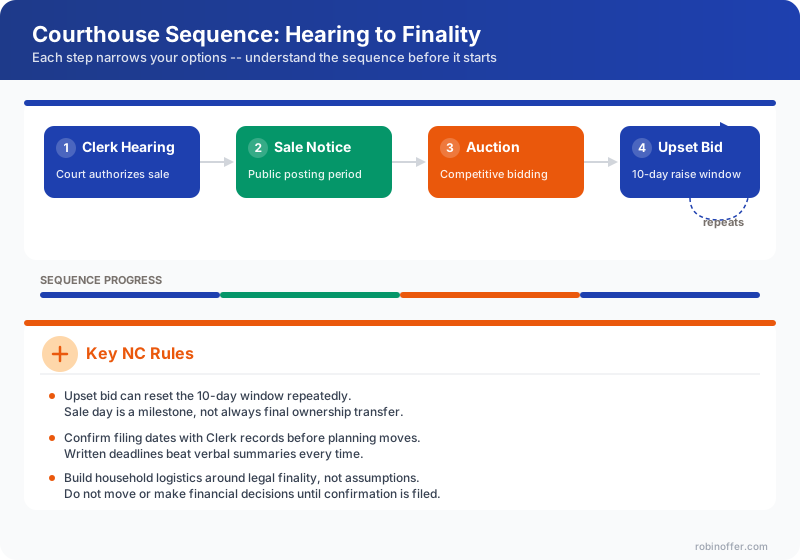
Step 6: The Foreclosure Sale (Auction)
This is the actual auction. It happens on the courthouse steps (or in the courthouse) in your county, between 10:00 AM and 4:00 PM. Anyone can bid. The lender usually opens with a bid equal to what you owe.
Step 7: The Upset Bid Period (G.S. 45-21.27)
Here's something a lot of people don't know about: after the auction, there's a 10-day upset bid period. Anyone can come in and say "I'll pay more." Each new bid has to beat the last one by at least $750 or 5% (whichever is more), and every time someone makes an upset bid, the 10-day clock restarts. Weekends and holidays count, but if the 10th day lands on a weekend or holiday, the deadline slides to 4:59 PM the next business day.
Once 10 days pass with nobody bidding higher, the sale is final.
A strategy most people don't know about: If your home goes to auction and the lender's opening bid is way below market value, you (or a buyer you've lined up) can make an upset bid during this 10-day window. For example, if the lender bids $180,000 on a home worth $250,000, a cash buyer could submit an upset bid of $200,000+. The extra money above what's owed goes to you as surplus proceeds. It's a last-resort play, but it can recover equity that would otherwise evaporate. Talk to a real estate attorney if you think this could apply to your situation.
Step 8: Deed Transfer
The Clerk confirms the sale, the trustee hands over the deed to whoever won the bidding, and ownership has changed hands.
What This Means for Your Timeline
| Phase | Approximate Duration |
|---|---|
| First missed payment to 120-day delinquency | ~4 months |
| NC 45-day pre-foreclosure notice | 45 days (overlaps with 120-day period) |
| Notice of Hearing served and hearing held | 10–20 days |
| Pre-sale hearing to Notice of Sale | 2–4 weeks typically |
| Notice of Sale publication period | At least 20 days |
| Foreclosure sale | 1 day |
| Upset bid period | 10 days minimum |
| Typical total timeline | 6–10+ months from first missed payment |
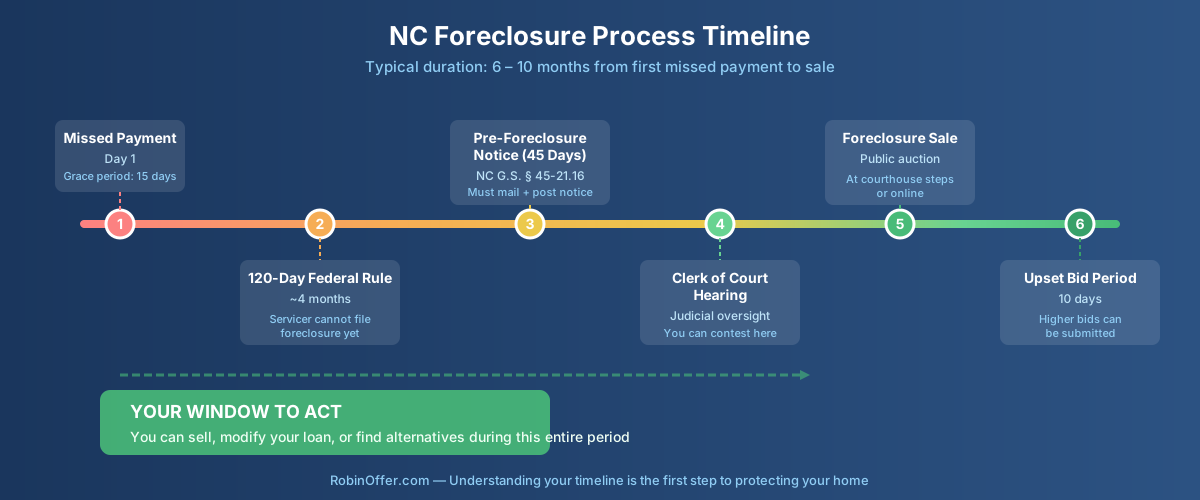
Here's what all that adds up to: From your first missed payment, you've probably got 6 to 10 months before a foreclosure sale actually goes through. That's more time than most people think. But I really need you to hear this: every week you wait, your options shrink. The folks who come through this in the best shape are the ones who pick up the phone in the first 30–60 days, not the ones scrambling in the last 30.
Considering a fast cash sale?
Tell us about your NC home and we'll send you a real, no-obligation cash offer — any condition, and you pick the closing date.
4. Legal Realities Every NC Homeowner Must Know
Before we get to your options to avoid foreclosure, I need to give you a heads-up about some legal realities specific to the NC foreclosure process. These aren't fun to talk about, but they absolutely should factor into whatever decision you make.
NC Has No Right of Redemption After Foreclosure Sale
In some states, you can buy your house back even after a foreclosure sale because you get a "redemption period" of a few months to come up with the money. North Carolina does not do that. Once the upset bid period is over and the sale is confirmed, it's done. You can't buy it back. The new owner gets the deed and you have to leave.
I know that's hard to read. But it's better to know this now so you can act while you still have the chance.
Quick note: NC does have a limited right of redemption for tax foreclosures, but that doesn't apply to mortgage foreclosures.
Deficiency Judgments Are Allowed (With Exceptions)
This surprises a lot of people: if your home sells at foreclosure auction for less than what you owe, the lender can actually come after you for the difference. That's called a deficiency judgment, and yes, North Carolina allows them.
If you are already carrying a major payoff gap, read our underwater mortgage options in NC guide alongside this foreclosure guide so you can evaluate short sale, retention, and controlled-exit terms before sale-day pressure takes over.
Let me put a number on it: Say you owe $250,000. The home sells at auction for $200,000. The lender can sue you for that $50,000 gap. Losing your house and getting a bill: that's the worst-case scenario.
Now, the good news. There are exceptions:
- Seller-financed mortgages (where the seller held the note): no deficiency allowed
- Nontraditional loans with negative amortization: exempt
- Rate spread home loans (high-APR loans on your primary home): also exempt
And you have a defense: If the lender bought the property at auction and then comes after you, you can argue that the home was actually worth what you owed (or close to it) at the time of sale and that the lender's bid was lowball. If the court agrees, the deficiency shrinks or goes away entirely.
Here's why this really matters for your decision: If you have equity in your home, selling before foreclosure takes the deficiency risk completely off the table. You sell, pay off the mortgage, and keep whatever's left. Even if you're a little underwater, a negotiated short sale usually means the lender agrees to forgive the remaining balance, and that's a whole lot better than a judgment following you around.
Other Liens on Your Property Can Complicate Things
Your mortgage isn't necessarily the only claim on your home. If any of these sound familiar, you'll need to factor them in:
- Second mortgage or HELOC: If you took out a home equity loan or line of credit, that's a second lien. Both lienholders need to be paid off (or negotiated with) when you sell. In a foreclosure, the first mortgage gets paid first, and the second lienholder may get nothing, but they can still pursue you for the balance.
- IRS or NC state tax liens: Unpaid federal or state taxes can result in a lien on your property. These have to be resolved before you can pass clean title to a buyer.
- Judgment liens: If a creditor (credit card company, medical provider, etc.) sued you and won, they may have recorded a judgment lien against your property. In NC, a money judgment automatically becomes a lien on real property in the county where it's docketed.
- Mechanic's liens: If you had work done on the home and didn't pay the contractor, they may have filed a lien.
Why this matters: If you're planning to sell before foreclosure, every lien on the property has to be satisfied or negotiated at closing. A title search will reveal all of them. If the total of all liens exceeds what your home is worth, you may need a short sale with multiple lienholders agreeing to take less, which is doable but takes more time. A HUD counselor or real estate attorney can help you sort through this.
HOA Dues: A Separate Foreclosure Risk
If your home is in an HOA or condo association and you're behind on dues, here's something critical: your HOA can foreclose on your home independently of your mortgage lender. Even if you're current on your mortgage, the HOA can take your home for unpaid assessments.
Under NC law (G.S. 47F-3-116 for planned communities, G.S. 47C-3-116 for condos), HOA assessment liens have super-priority status, meaning a portion of the HOA lien (generally up to 6 months of regular assessments) actually takes priority over your first mortgage. The HOA can file its own foreclosure proceeding without waiting for the mortgage lender.
If you're behind on both mortgage and HOA dues, you're facing two separate foreclosure threats. Address both. Call your HOA to set up a payment plan for dues, and if selling, remember that HOA transfer fees and estoppel fees (usually $150–$500) will come out of your proceeds at closing.
5. How to Avoid Foreclosure in North Carolina: Your Options
OK, here's the part you've been waiting for: the good news. You have real options at every stage of this process. And the sooner you start exploring them, the more doors are still open.
Option 1: Reinstatement (Catch Up on Missed Payments)
| What It Means | Pay all missed payments plus late fees and penalties to bring your loan current |
|---|---|
| Best For | Temporary hardship that's resolved (bonus received, new job secured, insurance settlement) |
| Timeline | Can be done anytime before the foreclosure sale |
| Impact on Credit | Late payments stay on your report, but no foreclosure recorded |
This is the simplest path if you can swing it. You fell behind, you catch up, and life goes on. The catch? The amount you owe grows every month as missed payments stack up, late fees pile on, and once the lender hires lawyers, those costs get added too.
Option 2: Loan Modification (Renegotiate Your Terms)
| What It Means | Your lender changes the terms of your loan (lower interest rate, extended term, or adding missed payments to the balance) |
|---|---|
| Best For | Long-term income reduction where you can still afford a modified payment |
| Timeline | Application takes 30–90 days to process |
| Impact on Credit | Depends on how it's reported; less damaging than foreclosure |
This is one of the most powerful tools in your toolbox. If your income dropped and it's not coming back to where it was, but you can afford a lower payment, a modification can save your home. And your servicer is actually required to evaluate you for loss mitigation options (including modification) if you submit a complete application more than 37 days before a scheduled foreclosure sale.
My advice: Call your servicer and ask specifically about modification options. Get everything in writing: names, dates, reference numbers. And keep making whatever payments you can while the application is being processed. Even partial payments show good faith.
Option 3: Forbearance (Temporary Pause or Reduction)
| What It Means | Your servicer temporarily reduces or suspends your mortgage payments |
|---|---|
| Best For | Short-term hardship (medical recovery, temporary job loss, natural disaster) |
| Timeline | Typically 3–6 months; can sometimes be extended |
| Impact on Credit | Depends on terms; some forbearance plans report as current |
Think of forbearance as a bridge, not a destination. It buys you breathing room to get back on your feet, but the missed payments don't just vanish. They're usually tacked onto the end of your loan or rolled into a repayment plan once the forbearance ends. So before you say yes, make sure you understand what happens when it's over.
Option 4: Repayment Plan
| What It Means | You resume regular payments plus an extra amount each month to catch up on what you owe |
|---|---|
| Best For | You can afford your regular payment plus a little extra, and you're not too far behind |
| Timeline | 6–12 months of catch-up payments |
| Impact on Credit | Shows you're resolving the delinquency |
This one's pretty straightforward. You start making your regular payment again, plus a little extra each month to chip away at what you missed. It works well if you're back on your feet and you're not too deep in the hole. Your servicer has to agree to the plan, but most will if you can show you've got the income to handle it.
Option 5: Sell Your Home Before Foreclosure
| What It Means | You list and sell your home (or sell to a cash buyer) before the foreclosure sale |
|---|---|
| Best For | When you have equity and need to get out cleanly |
| Timeline | 30–90 days depending on the path |
| Impact on Credit | No foreclosure on your record; late payments still show |
If you have equity (and a lot of NC homeowners do after years of home prices going up), selling is often the smartest money move, even though it's an emotional one. You sell, pay off the mortgage, pocket what's left, and dodge the credit damage of a foreclosure sitting on your report for 7 years.
I know nobody wants to sell. But sometimes the best way to protect your family's future is to make the hard call now. We'll dig into the selling options in the next section.
Option 6: Short Sale (Sell for Less Than You Owe)
| What It Means | You sell the home for less than the mortgage balance, and the lender agrees to forgive the difference |
|---|---|
| Best For | When you're underwater (owe more than the home is worth) |
| Timeline | 60–120+ days; requires lender approval |
| Impact on Credit | Less damaging than foreclosure; typically shows as "settled" |
A short sale needs your lender to sign off, since they're agreeing to eat a loss. That makes it slower and more complicated than a regular sale. But the end result is so much better than a foreclosure, for your credit score, your finances, and your ability to buy a home again down the road.
Option 7: Deed in Lieu of Foreclosure
| What It Means | You voluntarily transfer the title of your home to the lender instead of going through foreclosure |
|---|---|
| Best For | Last resort when other options aren't available |
| Timeline | 30–90 days |
| Impact on Credit | Less damaging than foreclosure, but still significant |
This is basically walking up to the lender and saying: "Look, just take the house. Let's skip the whole auction mess." The lender saves the time and money of a foreclosure, and you avoid having that foreclosure judgment on your record. It's better than going through foreclosure, but it's not as good as selling or getting a modification. And heads up: not every lender will agree to this, especially if there are other liens on your property.
Option 8: Rent Out Your Home as a Bridge Strategy
This one doesn't get talked about enough. If you can't afford your mortgage but your home would rent for enough to cover the payment (or close to it), you might be able to move in with family or into a cheaper rental and become a temporary landlord.
Things to think about:
- Check your mortgage terms, because some loans (especially VA and FHA) require owner occupancy. Violating this could trigger a default.
- You'll need to handle landlord responsibilities (maintenance, tenant issues, legal compliance with NC landlord-tenant law)
- Rental income takes time to start (finding a tenant, screening, move-in could take 30 to 60 days)
- You'd need to cover the mortgage in the meantime
- This works best if you're in the early stages of delinquency and can get caught up once rent is flowing
It's not for everyone, but for the right situation, especially if you love the home and believe your income will recover, it can be a lifeline.
Option 9: Bankruptcy (The Nuclear Option That Sometimes Saves Your Home)
I saved this one for last among the "keep your home" options because it's serious, but for some people, it's the right move. Let me break down what you actually need to know.
Chapter 13 Bankruptcy (the one that can save your home):
- You propose a 3–5 year repayment plan to the court that includes catching up on your mortgage arrears
- An automatic stay goes into effect immediately, which stops the foreclosure process cold
- You keep your home and make your regular mortgage payments going forward, plus extra through the plan to cure the arrears
- Other debts (credit cards, medical bills) may be reduced or restructured
- Stays on your credit report for 7 years from filing
- NC's homestead exemption: you can protect up to $35,000 of home equity per person ($70,000 for a married couple filing jointly) from creditors in bankruptcy. If you're 65+ or disabled, additional exemptions may apply. For edge cases involving judgment liens or exposed equity above the cap, see our NC Homestead Exemption Guide.
Chapter 7 Bankruptcy (this one does NOT save your home):
- Chapter 7 discharges your personal liability on the debt, meaning the lender can't come after you for a deficiency
- But it does not stop the foreclosure on the property itself. The lien survives. The lender can still take the house.
- The automatic stay is temporary, and the lender will typically get court permission ("relief from stay") to continue foreclosure
- Stays on your credit report for 10 years
- May make sense if you've already decided to let the home go and want to eliminate the deficiency risk and other debts
Before you file: Federal law requires you to complete a credit counseling course within 180 days of filing (11 U.S.C. § 109(h)). Don't skip this; your case will be dismissed without it. And please, talk to a bankruptcy attorney. Many offer free consultations, and the stakes are too high to wing it.
Side-by-Side: All Your Options to Avoid Foreclosure
| Option | Keeps Your Home? | Requires Lender Approval? | Credit Impact | Best Timing |
|---|---|---|---|---|
| Reinstatement | Yes | No | Moderate | Anytime before sale |
| Loan Modification | Yes | Yes | Moderate | Early, before default deepens |
| Forbearance | Yes (temporarily) | Yes | Low–Moderate | During active hardship |
| Repayment Plan | Yes | Yes | Moderate | When you can afford extra |
| Sell (with equity) | No | No | Low | As early as possible |
| Short Sale | No | Yes | Moderate | When underwater |
| Deed in Lieu | No | Yes | Moderate–High | Last resort |
| Renting out your home | Yes (you move) | Check mortgage terms | Low | If rent covers mortgage |
| Bankruptcy (Ch. 13) | Yes | Court-supervised | Severe (10 years on report) | When other options fail |
| Foreclosure | No | N/A | Severe (7 years) | This is what you're working to avoid |
Special Situation: Inherited Property Facing Foreclosure
If you inherited a home from a parent or family member and now you're getting foreclosure notices, take a breath. Your situation is different from a typical borrower's, and you have specific rights.
Here's what you need to know:
- You're generally not personally liable for the mortgage. The mortgage follows the property, not you. If you don't want the home, you can walk away and the lender can only foreclose on the property; they can't come after your personal assets for the balance (unless you signed something).
- You have the right to assume the mortgage under the federal Garn-St. Germain Act. The lender cannot enforce a due-on-sale clause just because the property transferred to a family member through inheritance.
- If the home is in probate (the legal process to settle the estate), the foreclosure timeline and the probate timeline are running simultaneously. NC probate goes through the Clerk of Superior Court, the same office handling the foreclosure. You need to coordinate both.
- You may have equity to protect. If the home is worth more than the mortgage balance, selling it (either through the estate or after probate) lets you keep that equity. If you let it go to foreclosure, you lose it.
- Tax bonus: Inherited property gets a "stepped-up basis," meaning your cost basis for capital gains purposes is the fair market value at the date of death, not what the original owner paid. This can greatly reduce or eliminate capital gains if you sell.
What to do: Contact Legal Aid of NC (1-866-219-5262) or a probate attorney. If you're trying to keep the home, call the servicer and tell them you're the heir, and ask about loss mitigation options. If you're trying to sell, a cash buyer can often close on inherited property quickly, even during probate. For the full picture, see our complete NC inherited property guide.
Your Options Depend on Your Loan Type
One thing I haven't covered yet, and it matters a lot, is that your options look different depending on what type of mortgage you have. Here's what you should know:
FHA Loans (Federal Housing Administration):
FHA has its own loss mitigation playbook, and it's actually one of the most borrower-friendly:
- Partial Claim: HUD can provide a zero-interest subordinate loan to bring you current. You don't pay it back until you sell, refinance, or pay off the first mortgage.
- FHA-HAMP Modification: Combines a modification with a partial claim to get your payment down to an affordable level.
- Special Forbearance: More flexible than conventional forbearance, often with more generous terms.
- FHA requires that you be offered loss mitigation before foreclosure. If your servicer skipped this step, that's a violation.
- Important: You can look up whether your loan is FHA-insured at HUD's FHA lookup.
VA Loans (Department of Veterans Affairs):
If you have a VA-backed loan, the VA is actually your advocate in this process. They don't want you to lose your home either:
- VA Loan Technicians at your regional VA office can intervene directly with your servicer on your behalf
- VA Servicing Purchase (VASP) program: The VA can buy your loan from the servicer and modify the terms, including reducing your interest rate and extending the term
- Refunding: The VA may purchase the loan at foreclosure sale to protect your benefits
- Special forbearance and modification programs specific to VA loans
- Contact the VA directly at 1-877-827-3702 and ask about foreclosure avoidance. With Fort Liberty (Fayetteville) in our backyard, a lot of NC homeowners have VA loans.
USDA/Rural Development Loans:
If you're in one of NC's many rural areas and have a USDA Section 502 loan:
- USDA has its own loan modification, special forbearance, and reamortization programs
- Contact your local USDA Rural Development office directly
- These loans are common in eastern NC, the foothills, and mountain communities
Conventional Loans (Fannie Mae / Freddie Mac):
- If your loan is owned by Fannie or Freddie, you're eligible for the Flex Modification program, which can reduce your payment by up to 20%
- Look up who owns your loan: Fannie Mae Loan Lookup | Freddie Mac Loan Lookup
- Both have a Homeowner Assistance Finder on their websites with personalized options
Reverse Mortgages (HECMs):
If you're a senior (or the heir of a senior) with a reverse mortgage, the foreclosure triggers are completely different. You don't fall behind on monthly payments. Instead, default happens when:
- Property taxes or insurance go unpaid
- The home is no longer your primary residence
- The borrower passes away
Surviving spouses have specific protections under HUD rules, and heirs typically have 6 months (extendable to 12) to sell or pay off the balance. Contact a HUD-approved reverse mortgage counselor, because these situations have their own rules and deadlines.
Get Your Free, No-Obligation Cash Offer
Tell us about your NC home and we'll send you a real cash offer — any condition, no repairs, and you choose the closing date. Free and confidential.
6. When Selling Makes More Sense Than Staying
I'm going to be straight with you: for a lot of NC homeowners facing foreclosure, selling the home ends up being the best financial move. Not because giving up your home is easy (believe me, I know it's not). But when you sit down and look at the numbers, it's often the thing that puts your family in the strongest position for what comes next.
The Equity Question
If your home is worth more than what you owe, that difference is your equity, and it's your money to protect. A foreclosure auction almost never gets full market value for your home. But a private sale? That's a different story.
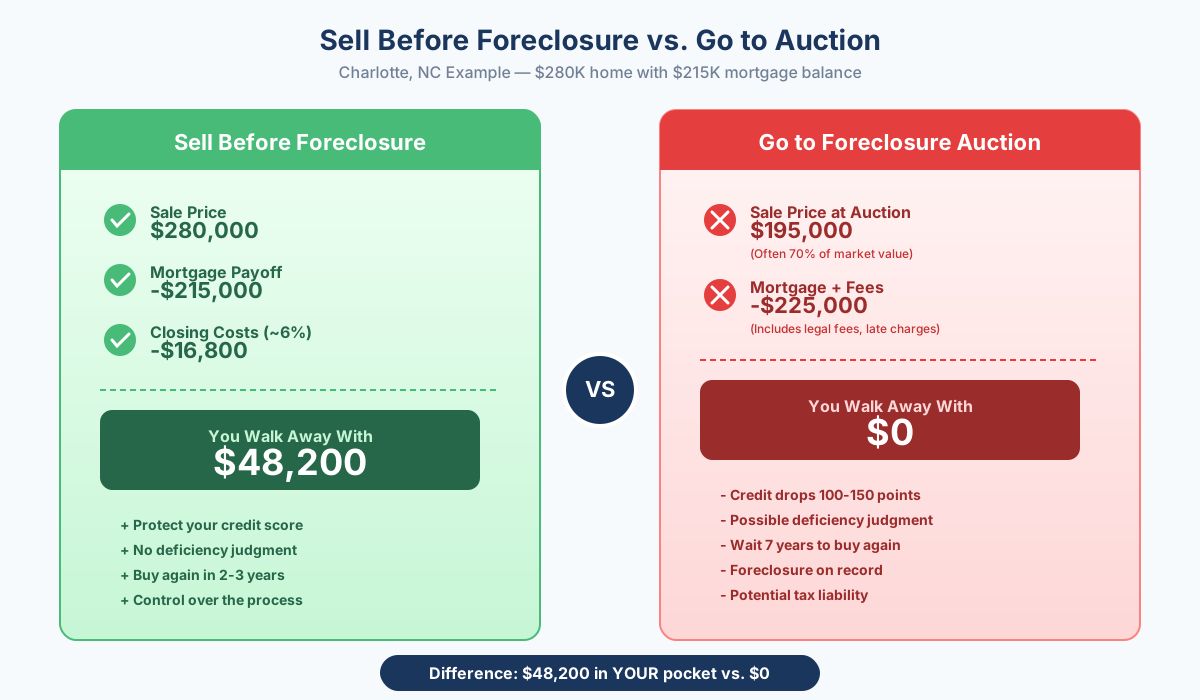
Let me show you what I mean with some real numbers:
Say you've got a home in Charlotte worth $310,000 and you still owe $220,000 on it. That's $90,000 in equity, money that's yours if you play this right.
| Scenario | What You Walk Away With |
|---|---|
| Sell on the open market | $310K sale price – $220K mortgage – ~$25K closing costs/commissions = ~$65,000 in your pocket |
| Sell to a cash buyer | $260K–$280K offer – $220K mortgage – minimal costs = ~$35,000–$55,000 in your pocket |
| Go through foreclosure | Home sells at auction (often below market) – $220K mortgage – fees = $0 to you, possible deficiency judgment |
See the difference? In foreclosure, you lose the equity, trash your credit for 7 years, and might still owe money on top of it. When you sell on your own terms, you keep your equity, your credit takes a much smaller hit, and you control the timeline instead of the court. If you need a date-by-date breakdown before choosing, use our NC foreclosure timeline guide to map your next move by stage.
Real-World Scenarios
Scenario A, she acted fast: A Gastonia homeowner loses her job and misses one mortgage payment. She calls her servicer within 2 weeks, applies for forbearance, and gets a 3-month pause. During that time, she lands a new job and resumes payments through a repayment plan. Total credit damage: one late payment. No foreclosure. Crisis handled.
Scenario B, they sold smart: A Fayetteville family is 60 days behind after a PCS relocation fell through. They owe $190,000 on a home worth $240,000. Instead of burying their heads in the sand, they accept a cash offer at $215,000, close in 14 days, pocket roughly $22,000 after payoff and costs, and avoid foreclosure entirely. They're renting now, rebuilding, and they've got cash in the bank.
Scenario C, he waited too long: A Raleigh homeowner puts the servicer's letters in a drawer for 5 months. By the time he finally calls for help, the Notice of Hearing has already been filed. His options have shrunk to selling under extreme time pressure or watching the home go to auction, where it sells for $30,000 less than it was worth, and the lender comes after him for the difference.
If you are in the Triangle and facing foreclosure pressure on a high-value property, the math is different from Fayetteville or Gastonia, a $584K Apex home or a $445K Raleigh home has more equity to protect and more to lose at auction. Our Apex homeowner selling guide covers the full selling-path comparison with local numbers, including foreclosure options specific to Wake County.
Your Selling Options
Traditional Agent Sale (60–130 days)
This gets you top dollar, but it takes time, and time may be the one thing you're short on. Works best if you're in the early stages and your home shows well. The agent's commission (5 to 6%) comes out of your proceeds.
Cash Buyer / Quick Sale (7–30 days)
You'll get a lower price (typically 70–90% of market value), but here's what you get in return: speed and certainty. No repairs, no showings, no praying that a buyer's financing doesn't fall through. This works well when you're further into the foreclosure timeline or you just need to get it done. Read our complete guide to cash offers in the Carolinas to understand the 5 types of cash buyers and what they actually pay. RobinOffer works with NC homeowners in exactly this situation, and you can get a free cash offer to see where you stand.
FSBO (For Sale By Owner)
You save on the listing agent's commission, but you're doing everything yourself: marketing, showings, negotiation, paperwork. When you're already under foreclosure pressure, that's a lot of stress to pile on. I'd only recommend this if you've sold a home before and you've already got a buyer in mind.
The Credit Math
| Event | Credit Score Impact | How Long It Stays |
|---|---|---|
| 30-day late payment | –60 to –110 points | 7 years |
| 90-day late payment | –70 to –135 points | 7 years |
| Foreclosure | –100 to –160+ points | 7 years |
| Short sale | –50 to –130 points | 7 years |
| Selling before foreclosure | Late payments remain, no foreclosure | Late payments: 7 years |
The big takeaway? Selling before foreclosure keeps the worst mark (the foreclosure itself) off your credit report. That's the difference between qualifying for a new mortgage in 2 to 3 years versus waiting 5 to 7.
What About Capital Gains Tax When You Sell?
Good news here: for most NC homeowners selling before foreclosure, you probably won't owe capital gains tax. Under IRS Section 121, if you've lived in your home as your primary residence for at least 2 of the last 5 years, the first $250,000 of profit ($500,000 if you're married filing jointly) is tax-free.
But here's what you need to watch: If you've already moved out, that 2-of-5-year clock is still ticking. The longer you wait to sell after vacating, the closer you get to losing this exclusion. One more reason not to wait.
If you inherited the home, you get a "stepped-up basis," so your cost basis becomes the home's fair market value at the date of death, not the original purchase price, which often means little to no capital gains even on a home that's appreciated a great deal.
Bottom line: Talk to a CPA before closing, but most primary-residence sellers are in the clear on capital gains. It's the tax on forgiven debt that catches people off guard, and there's more on that in the tax implications section.
Every month you sit on this decision has a real dollar cost attached to it. Run your own mortgage, taxes, insurance and upkeep through our cost-of-waiting calculator to see exactly what your own timeline is costing.
7. NC Closing Costs for Distressed Sales
If selling is how you plan to avoid foreclosure, you need to go in with your eyes open about what comes out of those proceeds. Nobody likes surprises at the closing table, so let me lay out the standard North Carolina seller costs.
NC Seller Closing Costs
| Cost Item | Amount | Notes |
|---|---|---|
| NC Excise Tax (Transfer Tax) | $1.00 per $500 of sale price (0.2%) | Paid by seller to Register of Deeds |
| Real Estate Agent Commission | 5–6% of sale price | Negotiable; not applicable for cash buyers |
| Closing Attorney Fees | $500–$1,200 | NC requires attorney-supervised closings |
| Title Search | $150–$300 | Ensures clean title |
| Recording Fees | $25–$75 per document | Standard |
| Prorated Property Taxes | Your share through closing date | Varies by county |
| Mortgage Payoff | Remaining balance + accrued interest | Your servicer provides the payoff statement |
| Wire/Transfer Fees | $35–$50 | Standard |
One small bright spot: North Carolina's excise tax is actually pretty reasonable at $1.00 per $500 ($2.00 per $1,000). That's lower than South Carolina's $1.85 per $500. On a $300,000 sale, you'd pay $600 in NC versus $1,110 if you were across the border in SC.
Heads up if you're in the Outer Banks area: Seven northeastern NC counties (Camden, Chowan, Currituck, Dare, Pasquotank, Perquimans, and Washington) tack on an extra transfer tax of $1.00 per $100 (1%). If your property is in one of those counties, make sure you factor that in.
Sample Net Sheet: Selling a $300,000 NC Home to Avoid Foreclosure
| Line Item | Amount |
|---|---|
| Sale Price | $300,000 |
| Mortgage Payoff (est.) | – $230,000 |
| Agent Commission (5.5%) | – $16,500 |
| NC Excise Tax | – $600 |
| Closing Attorney | – $750 |
| Prorated Property Taxes | – $500 (est.) |
| Misc. Fees | – $400 |
| Estimated Net Proceeds | $51,250 |
That $51,250? That's yours. In a foreclosure, it evaporates. Gone. That's what waiting too long actually costs. Get your personalized net sheet →
With a cash buyer (no agent commission):
| Line Item | Amount |
|---|---|
| Cash Offer (est. 85% of value) | $255,000 |
| Mortgage Payoff (est.) | – $230,000 |
| Closing Costs (minimal, often buyer-paid) | – $0 to $1,000 |
| Estimated Net Proceeds | $24,000–$25,000 |
Less money than a traditional sale? Yeah. But you close in 7–14 days, you know it's going to happen, and you move on with cash in hand.
Want to know what a cash sale could look like?
Tell us about your home and we'll send you a real, no-obligation cash offer — no repairs, no showings, close on your timeline.
8. Tax Implications of Selling or Losing Your Home
This section trips up more people than almost anything else, and most foreclosure help guides skip it entirely. Whether you sell, do a short sale, or lose your home to foreclosure, there are tax consequences, so let me walk you through the tax stuff in plain English.
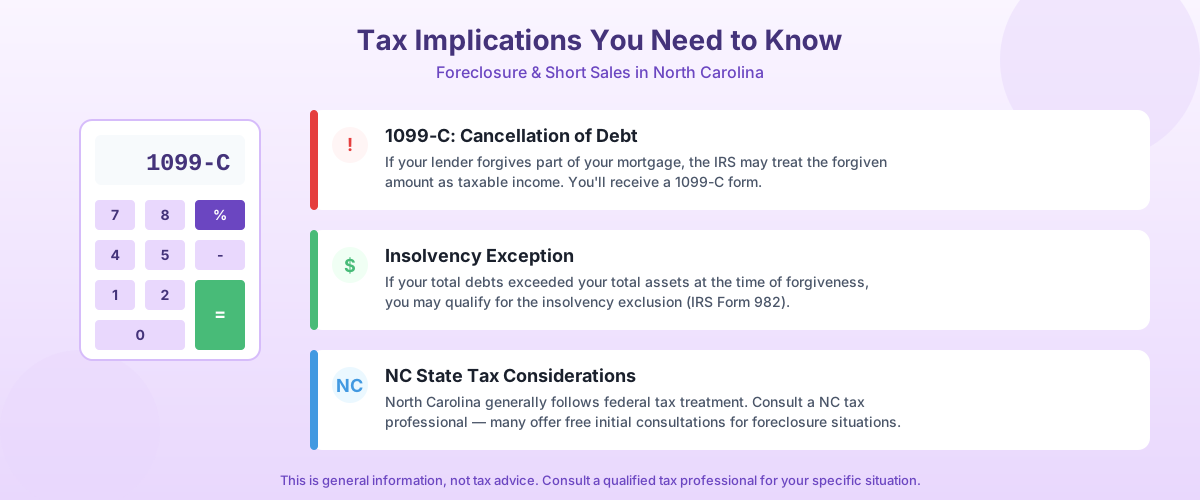
The 1099-C: When Forgiven Debt Becomes Taxable Income
If a lender forgives debt (whether through a short sale, deed-in-lieu, or waiving a deficiency after foreclosure), the IRS may treat that forgiven amount as taxable income. You'll get a Form 1099-C (Cancellation of Debt) in the mail, and the IRS gets a copy too.
Example: You do a short sale for $200,000 on a $250,000 mortgage. The lender forgives the $50,000 difference. The IRS could consider that $50,000 as income, and you'd owe taxes on it, potentially $10,000 to $15,000 depending on your tax bracket.
Nobody warns people about this, and it can be a nasty surprise.
But there are important exceptions:
- The Mortgage Forgiveness Debt Relief Act: This law has been extended multiple times and has historically excluded forgiven mortgage debt on your primary residence from taxable income. Check the current status, because it has been extended and expired repeatedly. A CPA can tell you whether it applies to your situation in the current tax year.
- The insolvency exception: If your total debts exceeded your total assets at the time the debt was forgiven (i.e., you were "insolvent"), you may owe zero tax on the forgiven amount. This is actually pretty common for homeowners in foreclosure, since you're behind precisely because you can't pay everything you owe.
- NC state taxes: North Carolina generally conforms to federal tax treatment, but verify with a CPA since state rules can lag behind federal changes.
What This Means for Your Decision
- Selling with equity = no forgiven debt = no 1099-C issue. This is one more reason selling before foreclosure is often the cleanest outcome.
- Short sale or deed-in-lieu = likely forgiven debt = talk to a CPA first. Don't agree to anything until you understand the potential tax hit.
- Foreclosure with deficiency waiver = same 1099-C issue. The lender may report the forgiven amount, so plan accordingly.
My advice: Before you close on a short sale or agree to a deed-in-lieu, spend $100 to $200 on a CPA consultation. It could save you thousands. And ask specifically about the insolvency exception, because it's the escape hatch many homeowners don't know about.
9. Free Foreclosure Help for NC Homeowners
Here's something I really want you to hear: you don't have to figure this out by yourself. North Carolina has real, legitimate, free resources that were built specifically for people in your situation. They're not trying to sell you anything, and they genuinely want to help. Use them.
The First Call to Make
State Home Foreclosure Prevention Project (SHFPP)
- Phone: 1-888-442-8188
- What they do: Free housing counseling regardless of your stage of foreclosure. Counselors can work directly with your servicer on your behalf, and they can refer you to free legal services if you're low-income.
- Administered by: NC Housing Finance Agency (NCHFA)
- Website: nchfa.com/homeowners/are-you-struggling-pay-your-mortgage
If you make one phone call today, make it this one. These are trained counselors who help people in your situation every single day. They're not going to judge you or try to sell you something, and they've seen every version of this story.
HUD-Approved Housing Counseling
- CFPB Housing Counselor Finder: consumerfinance.gov/find-a-housing-counselor or call 1-855-411-2372
- HUD Toll-Free: 1-800-569-4287
- NC Housing Counseling Network: (919) 881-0707, nchousing.org
HUD-approved counselors are 100% free. They'll sit down with you (or on the phone), look at your finances, help you understand your options, deal with your servicer on your behalf, and walk you through the loss mitigation application. These folks are genuinely on your side.
Legal Help
Legal Aid of North Carolina
- Phone: 1-866-219-5262
- Website: legalaidnc.org
- What they do: Free legal assistance for qualifying low-income homeowners, including foreclosure defense and representation at Clerk hearings
- Note: Legal Aid has experienced recent funding reductions, so wait times may be longer than usual. Apply early.
NC Justice Center
- Website: ncjustice.org
- What they do: Foreclosure avoidance FAQs and resource guides
LawHelp NC
- Website: lawhelpnc.org
- What they do: Directory of free and low-cost legal services across NC, including the Mortgage Foreclosure Prevention Project
Your Servicer
I know, I know, the last people you want to talk to. But hear me out. The single biggest mistake homeowners make is avoiding their servicer's calls and letters. What most people don't realize is that lenders lose money on foreclosures. It costs them tens of thousands of dollars. Most of them would genuinely rather work something out with you. So pick up the phone, and when you call:
- Ask for the loss mitigation department specifically
- Ask about forbearance, modification, and repayment plan options
- Get the name of the person you speak with and a reference number
- Follow up in writing (email or letter) so you have a paper trail
- Keep making whatever payments you can, because even partial payments show good faith
NC Attorney General's Office: Consumer Protection
If your servicer is behaving badly (ignoring your loss mitigation application, dual-tracking, not responding to your calls, or doing anything that feels shady), the NC Attorney General's Consumer Protection Division wants to hear about it.
- Phone: 1-877-566-7226
- File a complaint: ncdoj.gov/file-a-complaint
- The AG's office has pursued enforcement actions against predatory servicers in the past. Your complaint creates a paper trail and may trigger an investigation.
Taking Care of Yourself Through This
I'm going to say something that most foreclosure guides skip: this is really, really hard on you and your family emotionally. The stress, the shame, the anxiety, the arguments: it's all normal, and you're not weak for feeling it. Financial stress literally impairs your ability to make decisions, which is exactly when you need to make the most important ones.
A few things that can help:
- NC 2-1-1: Dial 2-1-1 from any phone. It's a statewide helpline that connects you to local resources: counseling, emergency assistance, housing help, food banks. Free, confidential, available 24/7.
- 988 Suicide & Crisis Lifeline: If you're in a dark place, call or text 988. Financial crisis can trigger very real mental health crises. There's no shame in asking for help.
- Talk to your HUD counselor about the emotional side too. Good counselors know this isn't just a numbers problem. They've helped thousands of families through this and they understand what you're going through.
- Talk to your kids honestly. If a move is coming, they can handle more than you think, especially if you explain it calmly and frame it as a family decision, not a failure.
Many families who go through this come out the other side in better financial shape, because they stopped trying to maintain something that wasn't sustainable and made a fresh start. It doesn't feel like it right now, but there is a life on the other side of this.
Programs That Have Ended (So You're Not Chasing Ghosts)
NC Homeowner Assistance Fund (NC HAF): You might hear about this one. It was a great program funded by the American Rescue Plan that gave up to $40,000 per household for mortgage payments, taxes, insurance, and HOA dues, and it helped more than 10,000 NC families. But it's closed now. NC's $273 million pot has been completely used up. If someone tells you to apply, they're giving you outdated info.
NC Foreclosure Prevention Fund: This was originally funded by the U.S. Treasury's Hardest Hit Fund: interest-free loans up to $36,000 to cover mortgage payments for up to 36 months. The original program has wound down. Check with NCHFA to see if any remaining funds or successor programs exist, but don't count on it.
Ready to take the first step?
Tell us about your home and we'll send you a free, no-obligation cash offer — any condition, close on your timeline. No pressure, no surprises.
10. Anti-Scam Checklist: Protect Yourself
When you're looking for foreclosure help in North Carolina, you'll run into people who want to help and people who want to help themselves to your money. When word gets out that someone is behind on their mortgage, the scammers come crawling out of the woodwork. They prey on people who are scared and desperate. Don't let them take advantage of you.
If You See Any of These, Walk Away
- Someone guarantees they can stop your foreclosure. Nobody can guarantee that. Period.
- Someone asks you to sign over your deed as part of a "rescue" plan. This is almost always a scam.
- Someone wants money upfront before helping you. Real HUD-approved counselors are free.
- Someone tells you to stop talking to your lender. That's the opposite of what you should do.
- Someone says to make your mortgage payments to them instead of your servicer. Absolutely not.
- Someone pressures you to sign papers you haven't had time to read. Slow down, walk away.
- A company offers a "forensic mortgage audit" to find errors in your loan for a fee. These are almost always worthless.
The Rules That Keep You Safe
- Real housing counselors don't charge you. If someone wants money for foreclosure counseling, they're not legit. Walk away.
- Never sign anything you don't fully understand. Take it home. Show it to someone you trust. Get a second opinion from Legal Aid or a HUD counselor.
- Never transfer your deed to anyone except through a real sale with a closing attorney.
- Check credentials. You can verify any housing counselor is HUD-approved through the CFPB database.
- If it sounds too good to be true, it is. There are no magic tricks. There are only the legitimate options I've listed in this guide.
11. If Foreclosure Happens: What Comes Next
I've spent most of this guide helping you avoid foreclosure in NC. But I also want to be honest: sometimes, despite your best efforts, it happens. If you've been through the NC foreclosure process and come out the other side, your life isn't over. You need to know what to expect and how to start rebuilding.
How Long Do You Actually Have to Leave?
A lot of people think the sheriff shows up the day after the auction. That's not how it works in North Carolina.
After the deed transfers to the new owner (once the upset bid period ends), the new owner has to go through a legal process called ejectment to remove you:
- The new owner files an ejectment action in Superior Court
- You're served with the complaint and have time to respond
- If the court grants the ejectment, a writ of possession is issued
- The sheriff schedules an actual move-out date
This process takes weeks to months from the deed transfer, so you don't have to leave the day of the sale or even the day the deed transfers. But you should be making plans.
Cash for Keys (Yes, This Is a Real Thing)
This surprises most people: the new owner (whether it's the bank or a third-party investor) often wants you to leave quickly and voluntarily, and they're willing to pay you for it. This is called "cash for keys."
Typical offers range from $1,000 to $5,000 (sometimes more) in exchange for:
- Leaving by a specific date
- Leaving the property in clean, undamaged condition (no stripped fixtures, no holes in walls)
- Handing over all keys
This is negotiable. If they offer $1,500, you can counter. They save thousands by avoiding the ejectment process, so they have incentive to work with you. Get the agreement in writing before you move.
Don't Damage the Property
I know emotions run high. But stripping out appliances, fixtures, or copper, or intentionally damaging the property, can result in criminal charges (larceny or vandalism) or a civil lawsuit for damages. Everything attached to the home (appliances, light fixtures, HVAC, etc.) is considered part of the property. Leave it.
What to Do About Your Stuff
Take all your personal belongings before you leave. If you leave items behind after an ejectment, NC law requires the new owner to follow abandoned property procedures, but you may not get it back. Don't leave behind anything you care about.
Practical move-out checklist:
- Transfer all utilities out of your name
- Forward your mail through USPS
- Document the condition of the home with photos (in case of disputes)
- Take all personal property, documents, and irreplaceable items
- Return all keys and garage openers
- Cancel any home services (lawn, pest control, security system)
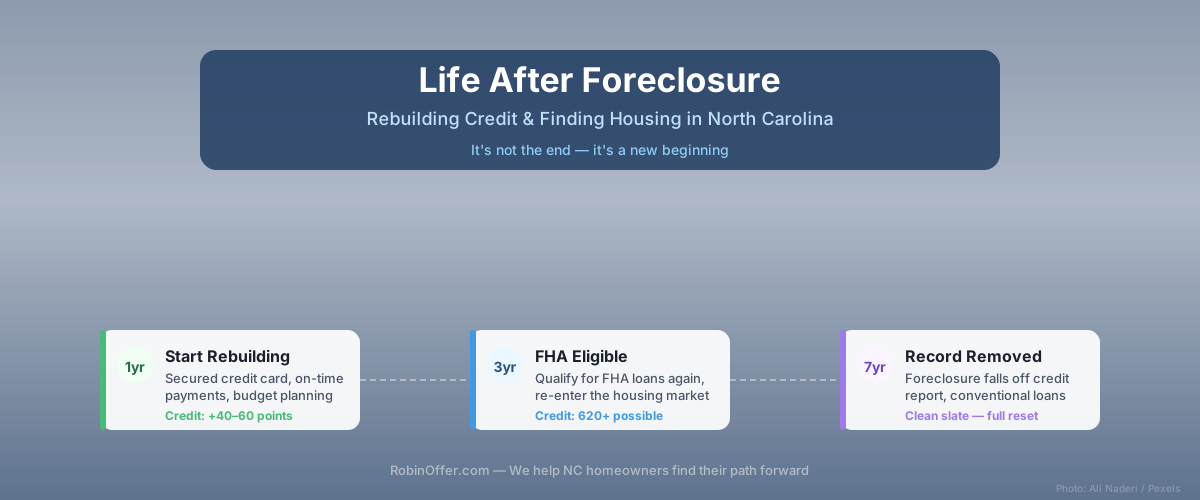
How Soon Can You Buy a Home Again?
This is one of the first questions people ask, and the answer depends on the type of loan you'd apply for next:
| Loan Type | Waiting Period After Foreclosure | With Extenuating Circumstances |
|---|---|---|
| FHA | 3 years | 1 year (with documented hardship) |
| VA | 2 years | Varies |
| Conventional (Fannie/Freddie) | 7 years | 3 years (with documented hardship) |
| USDA | 3 years | Varies |
"Extenuating circumstances" means things like job loss, medical crisis, or divorce, not just deciding to stop paying. If you have documentation of a genuine hardship, the waiting period can be significantly shorter.
Renting After Foreclosure
Let's be real: when you apply for a rental with a foreclosure on your credit report, it's going to come up. But it doesn't mean you can't find a place. Here's what helps:
- Be upfront about it. Many landlords respect honesty. Explain what happened, that it's resolved, and that you're rebuilding.
- Offer a larger security deposit if you can afford it, since it shows you're serious
- Get references from previous landlords or your employer
- Look at private landlords rather than large property management companies, because they're often more flexible with credit requirements
- Consider a co-signer if a family member is willing
Rebuilding Your Credit
A foreclosure hits hard (100 to 160+ points off your score), but credit does recover. Here's how to start:
- Get your free credit reports at AnnualCreditReport.com and review them for errors. Servicers sometimes misreport payments or dates, and under the FCRA, you have the right to dispute inaccurate information.
- The 7-year clock starts from the date of first delinquency, not the foreclosure date itself. So if you first fell behind in January 2026, the foreclosure falls off your report in January 2033 regardless of when the actual sale happened.
- Open a secured credit card and use it for small purchases, paying the full balance monthly
- Keep paying all other bills on time. Payment history is 35% of your credit score
- Avoid new debt you can't afford. You're rebuilding, not re-digging the hole
Some people see a 50–100 point recovery within the first 1–2 years after foreclosure, especially if they're disciplined about other credit.
Emergency Housing Resources
- NC 2-1-1: Dial 2-1-1 for housing assistance referrals, emergency shelters, and transitional housing programs in your area
- Local Housing Authority: Check whether you qualify for Section 8 / Housing Choice Vouchers (waitlists vary by county)
- Salvation Army / local nonprofits: Some offer emergency rental assistance or temporary housing
- Ask your HUD counselor, because they can connect you to local programs
12. Frequently Asked Questions
How can I avoid foreclosure in North Carolina?
You've got three moves that make the biggest difference: (1) Call your servicer's loss mitigation department today and ask about forbearance, modification, or repayment plans. (2) Call the NC State Home Foreclosure Prevention Project at 1-888-442-8188 (it's free, and they do this every day). (3) If you have equity, seriously consider selling your home before it gets to auction so you keep your money and protect your credit. The sooner you act, the more options you have. I've laid out all nine options in Section 5.
How long do I have before my home is sold at auction?
More time than most people think, typically 6 to 10 months from your first missed payment to an actual sale. Federal law says your servicer can't even start the foreclosure process until you're more than 120 days behind. And North Carolina piles on extra notice requirements and a Clerk hearing that add more time. But don't bank on getting the full 10 months; act early and give yourself the most room to work with.
Can I sell my home while in pre-foreclosure or after foreclosure has been filed?
Absolutely, yes. You can sell your home at any point before the foreclosure sale is finalized. In fact, selling during pre-foreclosure is one of the smartest moves out there if keeping the home just isn't in the cards. The money from the sale pays off your mortgage, and whatever's left over is yours to keep.
Will foreclosure ruin my credit forever?
Not forever, but a long time. A foreclosure sits on your credit report for 7 years and can knock your score down 100 to 160+ points. If you sell before foreclosure, the damage is way less: you'll have late payments on your record, but no foreclosure. Most people who sell before things get to that point can qualify for a new mortgage in 2 to 3 years. After a foreclosure? You're looking at 5 to 7 years of waiting.
What if I owe more than my home is worth?
If you're "underwater" (meaning you owe more than the home is worth), a short sale might be your best path forward. That's where you sell for less than you owe, and the lender agrees to let the rest go. It takes longer than a regular sale and you need the lender's OK, but it's miles better than a foreclosure. Your servicer or a HUD-approved counselor can walk you through it.
Are HUD housing counselors really free?
Yes, 100%. HUD-approved housing counselors don't charge you a penny. They're funded by federal and state grants, and that's the whole point. If someone is asking you to pay for foreclosure counseling, they are not a legitimate HUD agency. Walk away.
What is the difference between forbearance and modification?
Think of it this way: forbearance is like hitting the pause button. Your payments get temporarily reduced or suspended while you deal with a short-term problem, but those missed payments don't disappear and you'll have to pay them back eventually. Modification actually rewrites your loan (lower rate, longer term, or both) so your payment is permanently smaller going forward. If your income dropped and it's not bouncing back, modification is the stronger move.
Can I file bankruptcy to stop foreclosure?
It can, yes. Filing for bankruptcy triggers something called an automatic stay, which temporarily puts the brakes on foreclosure. Chapter 13 bankruptcy can let you catch up on missed payments over a 3 to 5 year plan while keeping your home. But bankruptcy is a serious legal step with long-term consequences. Don't go down this road without talking to a bankruptcy attorney first.
What happens to my other debts if I lose my home to foreclosure?
Foreclosure wipes out your mortgage obligation (assuming the lender doesn't come after you with a deficiency judgment), but it doesn't touch your other debts. Your credit cards, car loan, student loans, and medical bills all stay right where they are. And if the lender does pursue a deficiency judgment, you could be on the hook for the gap between what you owed and what the home sold for at auction.
I'm in the military. Are there special protections?
Yes, and thank you for your service. The Servicemembers Civil Relief Act (SCRA) gives active-duty military serious protections, including limits on interest rates, holds on foreclosure proceedings, and extra notice requirements. If you're active duty or recently separated, get in touch with your installation's legal assistance office or call Military OneSource at 1-800-342-9647. They know this stuff inside and out.
I inherited this house and now it's in foreclosure. Am I on the hook?
Generally, no. You're not personally liable for the mortgage just because you inherited the property. The mortgage follows the property, not you. But you do have a choice to make: you can assume the mortgage and try to keep the home (lenders can't block this under the federal Garn-St. Germain Act); sell the property and pocket the equity; or walk away and let the lender foreclose on the property only. If the home is in probate, both timelines are running simultaneously, so act fast. See the inherited property section for the full breakdown.
What is "dual tracking" and how does it protect me?
Dual tracking is when your servicer keeps moving forward with foreclosure while your loss mitigation application is being reviewed. Under federal law (Regulation X), this is illegal if you've submitted a complete application more than 37 days before a scheduled sale. If your servicer is doing this, file a complaint with the CFPB and the NC Attorney General (1-877-566-7226), and raise it as a defense at the Clerk hearing.
Will I owe taxes if my lender forgives part of my mortgage?
Possibly. When debt is forgiven (through a short sale, deed-in-lieu, or deficiency waiver), the IRS may treat the forgiven amount as taxable income. You'll get a 1099-C form. However, there are important exceptions: the Mortgage Forgiveness Debt Relief Act and the insolvency exception can eliminate or reduce the tax. See the tax implications section and talk to a CPA before agreeing to anything.
My HOA is also threatening foreclosure. Can they do that?
Yes. In North Carolina, your HOA or condo association can foreclose on your home independently of your mortgage lender for unpaid dues. A portion of the HOA lien even has "super-priority" over your first mortgage. If you're behind on both, you're facing two separate foreclosure threats. See the HOA section for details.
How long after foreclosure can I buy another home?
It depends on the loan type: FHA is 3 years (1 year with documented hardship), VA is 2 years, conventional is 7 years (3 with extenuating circumstances), and USDA is 3 years. See the full breakdown with table in the post-foreclosure section.
I'm self-employed. What documents do I need for a modification application?
Servicers will want to see your last 2 years of federal tax returns, a year-to-date profit-and-loss statement, and 12 months of bank statements. Regular pay stubs don't apply to you, and this is the #1 reason self-employed homeowners get delayed or denied: incomplete documentation. Get it all together before you apply.
See What We'd Pay for Your Home
Whether you're leaning toward selling or just weighing your options, tell us about your home and we'll send you a real cash offer — any condition, close on your timeline. Free and confidential.
13. Your Next Step: Getting a Free Home Evaluation
If you've made it this far, you now know more about the NC foreclosure process, and how to avoid foreclosure, than 95% of homeowners. You understand how it works, what your rights are, what the timeline looks like, and where to get help. Now it's time to figure out which path makes the most sense for your situation.
Start with a Free, No-Obligation Home Evaluation
Whether you're leaning toward selling, pursuing a modification, or you honestly have no idea yet, the first step is the same: find out what your home is actually worth today. Not a Zestimate, and not what your neighbor's cousin's place sold for last summer. A real, current number for your property.
At RobinOffer.com, we give free home evaluations to North Carolina homeowners. No obligation, no surprises, no high-pressure sales pitch. Just the numbers, so you can make your decision with clarity instead of guessing.
What a RobinOffer Evaluation Includes
- What your home would likely sell for today, based on the latest MLS data in your area
- How much you'd actually walk away with after the mortgage payoff and closing costs, giving you your own personalized net sheet
- How a cash offer stacks up against a traditional listing, so you can weigh speed versus price with real numbers
- A real conversation about your situation, on your timeline, at your pace, no pressure
The Math That Matters
If you have equity in your home, every day that passes without a plan is a day that money is sitting on the table, at risk. Foreclosure doesn't just take your house; it takes the money you could have walked away with.
The people who come through financial hardship in the best shape? They're not the ones who waited and hoped things would magically work out. They're the ones who took a deep breath, looked at their situation honestly, explored their options early, and made a decision based on numbers instead of fear.

Get your free NC home evaluation now → No obligation. You'll hear back within 24 hours. Whether you end up selling, staying, or finding a completely different path, we just want to make sure you have the real numbers so you can choose what's best for your family. Real foreclosure help starts with knowing your numbers.
You can also give us a call or visit RobinOffer.com to learn more. We're here when you're ready.
Disclaimer: This guide is for informational purposes only and does not constitute legal, financial, or tax advice. North Carolina law governs real estate transactions and foreclosure proceedings in this state. Always consult with licensed NC professionals (real estate attorneys, housing counselors, tax advisors) before making decisions about your home. Market data is sourced from ATTOM Data Solutions, the Mortgage Bankers Association, the New York Federal Reserve, Safeguard Properties, CFPB, NCHFA, and other public sources as of early 2026. Foreclosure laws and available programs may change; verify current information with the resources listed in this guide.
Glossary: Terms You'll Hear During This Process
| Term | What It Means (In Plain English) |
|---|---|
| Automatic Stay | A legal freeze triggered by filing bankruptcy that temporarily stops all collection actions, including foreclosure |
| Clerk of Superior Court | The NC court official who oversees the foreclosure hearing. Not a judge, but has real authority |
| Deed of Trust | The document that gives the lender a security interest in your property. It's what lets them foreclose if you default |
| Deed in Lieu | Voluntarily handing your home's title to the lender to avoid the foreclosure process |
| Deficiency Judgment | A court order requiring you to pay the difference between what you owed and what the home sold for at auction |
| Dual Tracking | When a servicer continues foreclosure proceedings while simultaneously reviewing your loss mitigation application (this is illegal under federal law) |
| Ejectment | The legal process in NC to remove someone from a property after foreclosure; the new owner has to go through the courts |
| Equity | The difference between your home's current market value and what you still owe on it. This is your money to protect |
| Escrow | The portion of your monthly payment that covers property taxes and insurance, held by your servicer and paid on your behalf |
| Forbearance | A temporary pause or reduction in your mortgage payments, with the missed amount repaid later |
| HECM | Home Equity Conversion Mortgage, the official name for a federally insured reverse mortgage |
| Lien | A legal claim against your property. Mortgages, tax debts, HOA dues, and court judgments can all create liens |
| Loss Mitigation | The umbrella term for all the options your servicer offers to help you avoid foreclosure (modification, forbearance, repayment plan, etc.) |
| Modification | A permanent change to your loan terms (lower rate, longer term, or both) to make the payment affordable |
| MERS | Mortgage Electronic Registration Systems, a company that tracks mortgage ownership. Many NC mortgages list MERS on the deed of trust |
| Non-Judicial Foreclosure | Foreclosure that happens outside of a traditional courtroom. In NC, this goes through the Clerk of Superior Court |
| Partial Claim | An FHA program where HUD provides a zero-interest second loan to bring your mortgage current |
| Pre-Foreclosure | The period after you've fallen behind but before the foreclosure sale. This is your best window to act |
| Reinstatement | Paying all missed payments, fees, and costs to bring your loan fully current |
| Servicer | The company that collects your mortgage payments and manages your loan day-to-day (which may not be the same as the original lender) |
| Short Sale | Selling your home for less than what you owe, with the lender agreeing to forgive the difference |
| Super-Lien | A lien (typically from an HOA) that has priority over even first mortgages under certain conditions |
| Trustee | The third party named in your deed of trust who conducts the foreclosure sale on behalf of the lender |
| Upset Bid | A higher bid submitted during the 10-day period after a foreclosure auction in NC; must beat the prior bid by $750 or 5% |
| 1099-C | IRS form reporting cancelled/forgiven debt. You may owe taxes on forgiven mortgage debt unless an exception applies |