
How to Avoid Foreclosure in North Carolina
A practical decision guide for homeowners: timeline checkpoints, retention-vs-sale pathways, and execution plans that protect household stability.
Also relevant: if your mortgage payoff is higher than expected net sale value, read Underwater Mortgage Options in North Carolina for retention-vs-sale decision math.
If you are deciding between workout options and a sale in Pitt County, use the Greenville homeowner selling options guide for city-specific timelines, buyer-pool strategy, and local process checkpoints.
1. How to Avoid Foreclosure in North Carolina: First 72-Hour Plan
Avoid foreclosure in North Carolina by acting in the first 72 hours: open every notice, call your servicer loss-mitigation team, and start a documented plan for either retention or a controlled sale.
If you are behind on your mortgage in North Carolina, you are not out of options, but the options get narrower the longer you wait. Most homeowners lose leverage because they spend the first month in avoidance mode: not opening certified mail, not answering unknown numbers, and hoping one good paycheck will fix everything. That delay is understandable. It is also expensive.
The practical goal in week one is not “solve foreclosure forever.” The goal is to buy time, preserve leverage, and force every decision onto paper instead of panic. In North Carolina, foreclosure most often moves under power-of-sale rules. That means the process can move faster than many homeowners expect, with a clerk hearing as a key checkpoint. If you wait to act until the hearing notice shows up, you are negotiating from the weakest possible position.
What to do immediately:
- Open every mail item from your servicer or trustee. Look for late notices, breach letters, and hearing notices. Scan and save everything into one folder.
- Call your servicer loss-mitigation department. Ask what “retention” options and what “liquidation” options are currently available for your loan.
- Create a one-page hardship summary. Job loss, reduced hours, medical event, divorce, insurance delay. Keep it factual and dated.
- List your exact monthly housing burn. Principal/interest, escrow, HOA dues, utilities, and any arrears.
- Run a fast equity estimate. If you have equity, a controlled sale can protect cash and credit far better than waiting.
North Carolina court guidance explicitly points homeowners to early intervention: contact your servicer, use HUD-approved counselors, and call the state-supported counseling network through NCHFA resources. That is not generic advice. It is the shortest route to either a save-the-home path or a clean exit path before the clock runs out.
2. North Carolina Foreclosure in Plain English: What Happens, Who Controls What, and Where You Still Have Leverage
In NC, many foreclosures run as power-of-sale special proceedings. The trustee or substitute trustee files a notice of hearing with the county clerk of superior court. At that stage, the issue is not whether your life circumstances are fair. The clerk is looking at specific findings required by statute: valid debt, default, right to foreclose, proper notice, and related statutory conditions.
You should know three structural truths:
- Servicer and trustee timelines are operational, not emotional. If your documents are incomplete, they move forward while you “gather things.”
- The clerk hearing is a legal checkpoint, not a full hardship negotiation. Hardship arguments matter most in loss-mitigation with the servicer before sale rights are fixed.
- A delayed decision usually increases arrears, fees, and stress. Waiting can reduce your net from any eventual sale.
That does not mean you are powerless. You still control:
- How quickly you submit a complete package for workout options.
- Whether you engage housing counseling and legal aid early.
- Whether you choose retention (keep) or disposition (sell/exit) before emergency mode.
- Whether you preserve equity through a managed sale versus a distressed auction outcome.
| Stage | What Usually Happens | Best Homeowner Move | Risk If You Delay |
|---|---|---|---|
| Early delinquency | Collection calls, late fees, breach communications | Call servicer and open loss-mitigation file immediately | Arrears stack; options narrow |
| Pre-hearing window | Trustee activity increases; notice prep | Submit complete hardship + financial docs | Incomplete review; procedural momentum to hearing |
| Hearing notice period | Formal county process starts | Legal review + documented workout/sale plan | Reactive decisions under deadline pressure |
| Post-authorization / sale setup | Sale can be scheduled with little practical cushion | Execute chosen path fast (modification or sale) | Forced timeline; lower negotiating leverage |
If you want the deep legal timeline detail, read our NC foreclosure timeline guide. If your core issue is negative equity (you owe more than likely value), pair this with our Underwater Mortgage Options in NC guide. This page is focused on decisions that protect your household and your equity.
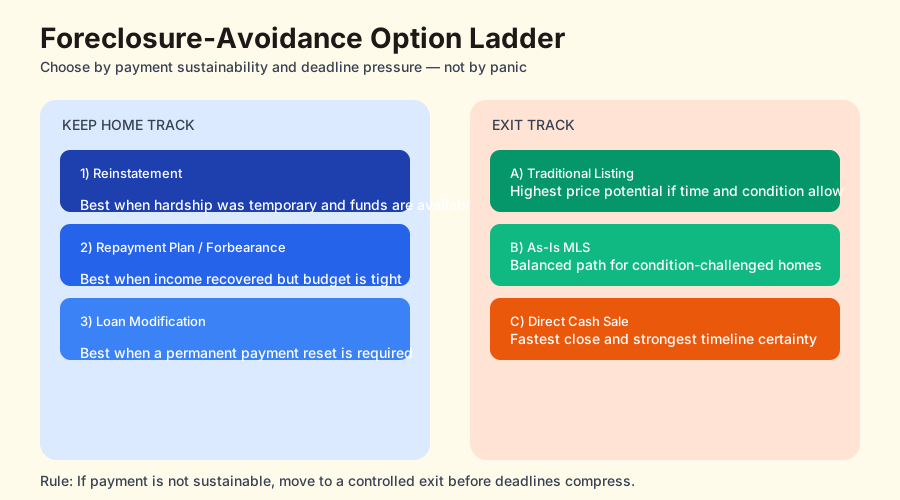
3. Option Ladder: Keep the Home, Exit Cleanly, or Pause Long Enough to Reposition
Most homeowners ask, “What is the best option?” The better question is: “Which option fits my income reality, deadline pressure, and equity position right now?” Below is a practical ladder.
| Path | Deadline Pressure | Who It Fits | Main Advantage | Main Tradeoff |
|---|---|---|---|---|
| Reinstatement | High | Temporary setback, access to lump sum | Fastest way to cure default | Requires large immediate cash |
| Repayment plan | Medium | Income recovered, can absorb extra monthly payment | Keeps home without refinance | Tight budget for 6–18 months |
| Forbearance | Medium | Short-term hardship with expected recovery | Temporary payment relief | Missed amounts still resolved later |
| Loan modification | Medium-High | Longer-term payment reset needed | Can create sustainable payment | Documentation heavy; servicer timelines vary |
| Traditional listing | High | Meaningful equity + property marketable | Often highest gross sale price | Time, prep, showings, financing contingencies |
| As-is cash sale | Very High | Severe time pressure or property condition issues | Speed and certainty | Typically lower price than retail listing |
| Short sale | High | Little/no equity and servicer cooperation | Potentially avoids foreclosure event | Approval complexity; lender controls much of process |
| Deed in lieu | High | No viable sale path, negotiated surrender | Can end process without sale campaign | Lender acceptance not guaranteed; credit impact remains |
Notice what is missing from the table: “do nothing and hope.” That is not a strategy. If you keep the house, you need a payment sustainability plan. If you exit, you need a timeline that closes before forced sale risk overtakes you.
4. How to Talk to Your Servicer So You Actually Get Decisions (Scripts + Document Stack)
Servicer calls are where many homeowners lose weeks. Not because help is impossible, but because conversations stay vague. Your goal is to leave each call with concrete next steps, owner names, and due dates.
Call Structure That Works
- Identity + intent: “I am requesting review for all available foreclosure-prevention options and need a documented list of required items.”
- Status check: “Is my loan in active foreclosure referral? If yes, what are the next dated milestones?”
- Option menu: Ask specifically about repayment, forbearance, modification, short sale, and deed in lieu.
- File completeness: “What exactly is missing for a complete package today?”
- Escalation: Request supervisor if answers are inconsistent or generic.
Documents to Assemble Before You Call Back
- Most recent pay stubs or proof of income
- Two months of bank statements
- Monthly expense worksheet (mortgage + non-housing obligations)
- Hardship letter with timeline and cause
- Tax return and W-2/1099 where requested
- Any unemployment/disability/benefit documentation if applicable
Create one PDF per category and label files clearly. A complete package can move you from “we need more info” loops into real underwriting decisions.
| Common Servicer Response | What It Usually Means | Your Exact Follow-Up |
|---|---|---|
| “We’re still reviewing.” | File likely incomplete or unassigned | “Please read missing items line-by-line and give me the case note reference.” |
| “You may qualify for options.” | No determination made yet | “Which specific option types are open today, and what blocks final decision?” |
| “Please resend documents.” | Upload mismatch or indexing failure | “Confirm receipt timestamp and document names while I’m on the call.” |
| “Foreclosure is proceeding.” | Parallel legal and mitigation tracks | “What is the nearest legal date, and what submission deadline can pause movement?” |
If calls are not productive, involve a HUD-approved counselor through NCHFA channels. Counselors often help homeowners package submissions in the format servicers actually process.
5. Free and Low-Cost Help in NC: Counselors, Legal Aid, and County Entry Points
You should not go through this process alone. North Carolina has real support infrastructure, and using it early can materially improve outcomes.
State and Federal Counseling Channels
The North Carolina Housing Finance Agency (NCHFA) points homeowners to free counseling through the State Home Foreclosure Prevention Project and lists a call route to housing counselors. HUD and NC court resources also direct homeowners to HUD-approved agencies for loss-mitigation assistance.
- NCHFA counseling pathway: homeowner mortgage-struggle resources and counselor connection
- HUD-approved counselor lookup: statewide approved agencies
- NC Courts housing help pages: procedural explanations and links
Legal Aid and Attorney Pathways
Legal Aid of North Carolina provides foreclosure-related services for income-qualified households and can be critical when there are procedural issues, predatory servicing concerns, or hearing-stage urgency. If you do not qualify for free representation, the NC Bar referral system can route you to paid consults quickly.
| Support Channel | Best Use Case | When to Contact |
|---|---|---|
| HUD-approved counselor | Document prep, option comparison, servicer communication support | As soon as you miss or expect to miss payment |
| NCHFA-linked prevention resources | State-specific counseling intake and direction | Early delinquency or hardship onset |
| Legal Aid NC | Income-qualified legal triage and defense support | At hearing notice or earlier if disputes arise |
| NC Bar referral | Private attorney consult for urgent legal strategy | When case complexity exceeds self-navigation |
Do not wait for perfect readiness. Make contact first, then organize documents with guidance. Speed beats perfection in foreclosure prevention.
6. If a Hearing Notice Arrives: What to Prepare Before You Step Into the Clerk Process
A hearing notice changes the game from “possible default” to active legal process. At this point, your preparation should be evidence-based and focused.
Your Evidence Packet
- Chronology of payments and hardship events
- Copies of all servicer correspondence and upload confirmations
- Proof of pending mitigation review (if any)
- Any discrepancy notes (dates, balances, notice concerns)
- Current income documents if you are requesting retention alternatives
NC statutes and court guidance emphasize specific required findings and notice procedures. You should understand what the clerk can and cannot decide. This is exactly where legal aid or private counsel becomes high-value, because procedural timing and evidence framing matter.
If your realistic path is now a sale, treat the hearing timeline as a hard deadline and build a closing plan backward from it. Delay in this stage tends to produce rushed offers and lower nets.
7. Selling to Avoid Foreclosure in NC: Traditional Listing vs As-Is Listing vs Direct Cash
If you have equity, selling can protect both credit trajectory and household cash position better than letting the process run to forced sale risk. But execution matters.
Traditional Retail Listing
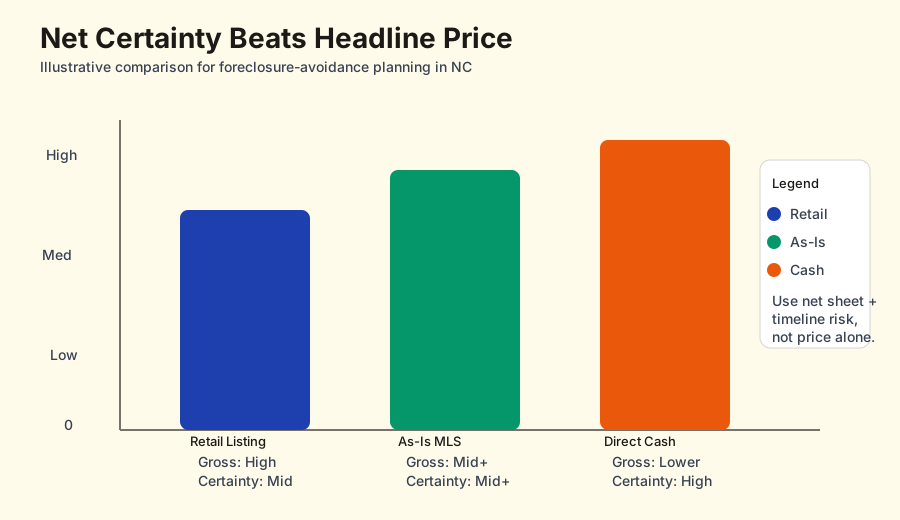
Best when the home is financeable and you have enough time for prep + market exposure + buyer financing timelines. Usually highest gross price, but also highest timeline uncertainty.
As-Is MLS Listing
Best when condition issues are real but still marketable to broad buyer segments. You may capture stronger pricing than direct-investor sale while reducing repair burden. Our NC as-is selling guide walks through this path in detail.
Direct Cash Sale
Best when timeline certainty is the primary objective: severe deadline pressure, heavy repairs, tenant challenges, or inherited/complex title contexts. Price is often lower, but speed can preserve outcomes when legal clocks are tight. Our cash offer guide for the Carolinas explains buyer types and contract protections.
| Sale Path | Typical Time-to-Close | Price Potential | Execution Burden | Certainty Level |
|---|---|---|---|---|
| Traditional listing | Longer | Highest potential | High (prep, showings, contingencies) | Medium |
| As-is MLS | Medium | Mid-to-high | Medium | Medium |
| Direct cash | Shortest | Lower gross | Low | High |
Where possible, compare at least two sale structures in writing before committing. A fast certainty path is valuable, but only when you understand the net tradeoff clearly.
8. The Money Math Most Homeowners Skip: Net Proceeds, Deficiency Risk, and Tax Reality
Foreclosure stress pushes people to ask only one question: “Can I stop this?” The better financial question is: “Which path leaves me with the strongest position six months from now?”
Run a Net Sheet, Not a Headline Price
A high offer with long timeline risk can produce worse results than a lower offer with high certainty when carrying costs are burning monthly cash. Build side-by-side nets:
- Expected gross price
- Mortgage payoff and arrears
- Closing costs and legal/agent costs
- Carrying costs until expected close
- Contingency or fall-through probability
| Comparison Line | Path A (Retail) | Path B (As-Is MLS) | Path C (Direct Cash) |
|---|---|---|---|
| Expected gross | Higher | Medium-high | Lower |
| Time-dependent carrying burn | Highest | Medium | Lowest |
| Fall-through exposure | Higher | Medium | Lower |
| Estimated net certainty | Variable | Moderate | More predictable |
Deficiency and Debt Questions
Whether a deficiency claim can arise depends on loan details, sale outcomes, and legal context. Do not assume “foreclosure ends the debt story.” Ask legal counsel to review your exact exposure and any negotiated release language if using short sale or deed-in-lieu structures.
If your foreclosure risk is tied to negative equity (you owe more than your home can sell for), pair this with our underwater mortgage options guide for North Carolina to model payoff-gap strategy before your timeline narrows further.
Tax Considerations
Forgiven debt, distressed sale dynamics, and principal-residence rules can have tax implications that vary by household. Coordinate with a tax professional before finalizing. “I’ll deal with taxes later” is the same pattern that causes foreclosure problems in the first place.
Facing a deadline and considering a fast sale?
Tell us about your North Carolina home and we'll send you a real, no-obligation cash offer — any condition, and you pick the closing date.
9. Special Situations That Change the Strategy: HOA Liens, Property Taxes, Inherited Homes, and Military Households
Some homeowners are dealing with layered risk, not just mortgage delinquency. Those layers can accelerate pressure and change which option wins.
HOA or Condo Delinquency
North Carolina law allows association lien enforcement pathways. If you are behind on both mortgage and HOA, your timeline pressure is often higher than you think. Bring HOA balance letters into your option analysis immediately.
Property Tax Delinquency
County property tax obligations and enforcement pathways are separate from mortgage servicing. NCDOR resources help you understand rate environments statewide; county tax offices and legal resources determine local enforcement realities. If tax delinquency exists, include it in your net worksheet now, not at closing week.
Inherited Property in Distress
Probate/title transfer can delay sale readiness just when timeline pressure is highest. If this is your situation, compare this guide with our NC inherited property guide and move quickly on title/legal sequencing.
Military and PCS Timelines
For active-duty households, deployment and relocation timelines can collide with foreclosure risk. NC statutes include protections in specific military contexts, and federal protections may apply depending on circumstances. Use legal review early and pair it with logistics planning. Our PCS relocation guide can help with execution planning.
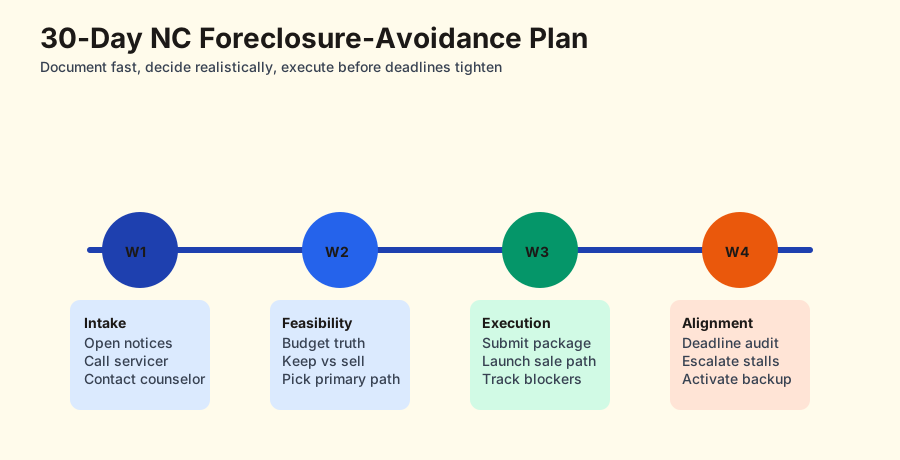
10. A Practical 30-Day Foreclosure-Avoidance Plan for NC Homeowners
Use this plan if you need structure now.
Days 1–3
- Open all notices and create one digital file repository.
- Call servicer and request complete option list + missing-doc checklist.
- Contact a HUD-approved counselor or NCHFA-linked support channel.
Days 4–7
- Submit complete package (income, hardship, expenses, statements).
- Document every call: date, time, rep name, summary, promised follow-up.
- If hearing notice exists, seek legal aid/private counsel consultation.
Days 8–14
- Pressure-test retention path: can you truly sustain payment?
- If not, launch disposition track (retail/as-is/cash comparisons).
- Collect payoff, arrearage, HOA, and tax balance numbers for net sheet.
Days 15–21
- Select primary strategy and one backup strategy.
- Execute: list the home or finalize mitigation package follow-through.
- Keep counselor/legal support looped in on every major update.
Days 22–30
- Recalculate timeline against legal milestones.
- Escalate stalled files to supervisory channels.
- Move from “considering options” to signed plan with dates.
| Week | Primary Deliverable | Proof You’re On Track |
|---|---|---|
| Week 1 | Complete intake and documentation | Confirmation numbers + counselor contact |
| Week 2 | Feasibility decision (retain vs exit) | Written budget and option comparison |
| Week 3 | Execution start | Submitted package or active listing/offer process |
| Week 4 | Deadline alignment | Calendar with legal and transaction milestones |
11. County-Level Reality: Where to Find the Right Office Fast
Foreclosure process logistics are county-specific in practice even when state law is shared. The NC Courts locations directory is your starting point for finding your county clerk and courthouse information. Use it immediately if you receive hearing documentation or need local process clarity.
Build your own county resource sheet with:
- County clerk/superior court contact details
- Trustee or substitute trustee contact info from notices
- Servicer escalation line
- Counselor contact and case ID
- Legal aid/private attorney contact
| Resource Type | What You Need From It | How Often to Check |
|---|---|---|
| NC Courts county page | Correct clerk contact and location details | At notice receipt and before hearing dates |
| Servicer portal/call center | File status and missing items | Every 3–5 days during active review |
| Counselor case channel | Packaging and escalation support | Weekly or at each major update |
| Legal counsel | Procedural and rights review | At any notice escalation or dispute trigger |
In other words: move from random searching to one command center. Households that operate from a documented case file make better decisions faster.
12. How to Avoid Foreclosure in North Carolina: Pick One Primary Path in 48 Hours
If you are reading this under pressure, here is the plain answer: choose one primary strategy now and one backup strategy now. The right strategy is the one you can execute fully before deadlines overtake you.
Choose retention if your post-hardship income can support payment sustainably and your servicer file is moving with documented milestones.
Choose disposition if income recovery is uncertain, arrears are compounding, or legal timelines are too tight to gamble on extended review cycles.
Either way, keep documentation disciplined, involve expert support early, and evaluate outcomes by net certainty, not by wishful headline numbers.
If you want a side-by-side reality check for your exact situation (including timeline pressure, estimated net options, and a practical execution sequence), we can help you map that in plain language before you commit to a path you cannot reverse.
And if you need deeper context on a specific branch of this decision, use these companion guides:
- Complete NC foreclosure help guide
- NC day-by-day foreclosure timeline
- Selling as-is in North Carolina
- Cash offer comparison guide
- Selling during divorce in NC & SC
- Greenville NC seller guide (includes Pitt County court contacts, county process details, and all selling path options for Pitt County homeowners under timeline pressure)
The best time to act was when you missed your first payment. The second-best time is today.
13. Real-World Decision Scenarios: What Good Execution Looks Like Under Pressure
It is easier to understand foreclosure options when you see how they play out in realistic situations. These are not legal opinions or guarantees. They are practical scenario maps based on the kinds of NC homeowner cases we see repeatedly.
Scenario A: Temporary Income Shock, High Desire to Keep the Home
A two-income household in Wake County loses one income for three months. They miss two payments, panic, and consider listing immediately. Instead, they open loss mitigation within the first week after hardship, submit complete income and hardship documentation, and work with a counselor to structure communication. The servicer confirms available retention pathways and requests supplemental proof once, not five times, because the package is complete.
The family keeps the house, but the hidden win is not just retention. The hidden win is process control: clear logs, complete submissions, and consistent follow-through. The opposite version of this scenario, where documents arrive piecemeal and calls are undocumented, usually ends in “we are still reviewing” loops that waste valuable time.
Scenario B: Income Won’t Recover Fast Enough, Equity Exists
A homeowner in Mecklenburg County has meaningful equity but unstable self-employment income after a major client loss. The emotional instinct is to “hold on a little longer,” but the financial worksheet shows monthly burn is too high. They choose a controlled sale path quickly, compare as-is MLS versus direct cash, and prioritize certainty over trying to squeeze every last dollar while deadlines tighten.
They close before crisis stage, preserve equity, and avoid compounding arrears. This is a classic example where “sell early, sell deliberately” beats “wait and hope.”
Scenario C: Layered Distress (Mortgage + HOA + Repairs)
An owner-occupant in a condo project is behind on mortgage and HOA dues while facing expensive interior system failures. They are not just in foreclosure risk; they are in multi-front pressure. The winning strategy is to stop treating each problem separately. One integrated plan is built with legal review, payoff/dues verification, and a timeline-first exit strategy. Waiting would have increased friction from every side.
The lesson from all three scenarios: best outcomes come from early documentation, realistic budget truth, and quick commitment to one executable strategy.
| Scenario Type | Critical Insight | Primary Failure Pattern | Better Move |
|---|---|---|---|
| Temporary hardship | Retention can work if file is complete fast | Partial submissions and inconsistent calls | Complete package + counselor support |
| Income reset unlikely | Equity protection may beat prolonged struggle | Waiting for a financial miracle | Controlled sale before hard deadlines |
| Layered distress | Multi-problem cases need integrated planning | Handling mortgage, HOA, and repairs separately | One timeline, one net worksheet, one execution plan |
14. Communication Templates You Can Use Today
Stress makes conversations vague. Templates force clarity. Use these as starting points and customize to your facts.
Servicer Call Opener
“I am requesting immediate review for all available foreclosure-prevention options on this loan. Please confirm whether my file is currently in foreclosure referral, list all open retention and liquidation options, and provide an itemized checklist of any missing documents. I also need the nearest legal milestone date on record.”
Hardship Letter Structure
- Date hardship began
- Cause (income reduction, medical event, divorce, etc.)
- Actions already taken to stabilize cash flow
- Current monthly affordability
- Requested path (retention or disposition) and why
Keep tone factual and specific. Avoid long emotional narratives without dates or numbers. Underwriters and reviewers make decisions from verifiable facts.
Document Receipt Confirmation Script
“I uploaded six files today. Please confirm each file name and timestamp while I’m on the phone. If any item is unclear or unreadable, tell me now so I can replace it immediately.”
Escalation Script for Stalled Cases
“My file has remained in pending review for [X] days. I need supervisor review and a written list of outstanding blockers today. Please include case note references and expected decision window.”
Listing Agent/Buyer Conversation Starter When Time Is Tight
“We are operating on a deadline-sensitive timeline and need a high-certainty close path. We will evaluate offers on net certainty, not headline price alone. Please present timeline, contingencies, and close-probability assumptions clearly.”
Templates reduce ambiguity. Ambiguity is what costs time.
15. Mistakes That Turn a Manageable Problem Into a Crisis
The following mistakes are common, predictable, and avoidable.
Mistake 1: Treating Silence as a Strategy
Ignoring notices does not pause legal progression. It removes your chance to shape outcomes while options are still open.
Mistake 2: Waiting for Perfect Information Before Acting
You do not need complete certainty to start. You need immediate motion with the best available information, then iterative updates.
Mistake 3: Submitting Incomplete Packets Repeatedly
One strong complete submission is better than five partial submissions. Incomplete files create delay loops that are hard to unwind under deadline pressure.
Mistake 4: Choosing by Headline Price Instead of Net Certainty
A high offer with low closing probability can leave you worse off than a lower, faster, more certain option.
Mistake 5: Hiding Complexity From Advisors
If there are HOA dues, tax problems, code issues, probate questions, or occupancy complications, disclose them early. Surprises destroy timeline reliability.
Mistake 6: Overestimating Future Income Recovery
Optimism is useful. Unrealistic affordability assumptions are dangerous. Budget to documented income, not hoped-for income.
Mistake 7: Failing to Use Free Support Channels
HUD-approved counselors and legal aid pathways exist for a reason. Many homeowners skip these resources until very late, then regret it.
| Mistake | Short-Term Comfort | Long-Term Cost | Replacement Habit |
|---|---|---|---|
| Avoiding calls | Less immediate stress | More legal and financial pressure | Scheduled weekly status calls |
| Chasing perfect plan | Feels cautious | Deadlines pass | Act now, refine weekly |
| Partial documents | Feels like progress | Review stalls | Submission checklist discipline |
| Headline-offer focus | Feels like winning | Failed closings and delay | Net-certainty scoring model |
16. Family Stability Planning During Foreclosure Risk (Housing, School, Utilities, Mental Load)
Foreclosure risk is not only a legal and financial event. It is a household stability event. Decisions should protect family continuity, not just transaction outcomes.
School Continuity
For families with children, school disruption is often the biggest hidden cost of delayed planning. NC DPI resources on homeless education and McKinney-Vento protections highlight school-of-origin rights and liaison support for eligible families facing housing instability. If relocation risk is real, contact school support channels early rather than after a forced move.
Utilities and Essential Services
Create a non-negotiable priority list: shelter, power, water, food, transportation to work and school. A strict essentials-first plan can keep the household functioning while you execute the larger foreclosure-avoidance strategy.
Communication Boundaries at Home
Financial stress can create conflict spirals. Hold short weekly household check-ins focused on facts: current timeline, next deadlines, assigned tasks, and what support each person needs. Replace blame with task ownership.
Move Readiness Without Panic
Even if your primary strategy is retention, build a lightweight backup move-readiness plan. This does not mean you are “giving up.” It means you are protecting your family from emergency disruption if your primary plan fails.
- Identify affordable rental fallback zones tied to school/work needs
- Organize key documents in one portable folder
- Create a minimal moving budget and timeline assumptions
- List household items by keep/sell/donate priorities
17. Advanced Checklist for High-Complexity Cases
If your case includes legal or title complexity, use this expanded checklist.
Title and Ownership
- Confirm all record owners and vesting details
- Identify any estate/probate requirements
- Check for unresolved liens or judgments
- Verify trustee/substitute trustee information from notices
Financial Stack
- Mortgage arrears and reinstatement quote
- HOA balance and lien status
- Property tax delinquency totals
- Utility arrears that could affect move/close logistics
Property Condition Risk
- Safety-critical repairs (electrical, plumbing leaks, structural concerns)
- Code or permit issues that could delay retail sale
- Occupancy status and access constraints
- Insurance constraints (vacancy or claim complications)
Transaction Readiness
- Payoff and lien payoff request procedures identified
- Closing attorney engaged early
- Sale path selected with backup route
- Calendar of legal and transaction milestones shared with all parties
| Complexity Layer | Lead Owner | Deadline | Status Signal |
|---|---|---|---|
| Legal notices + hearing prep | Homeowner + counsel | Immediate | Packet ready and reviewed |
| Mitigation file completion | Homeowner + counselor | 48–72 hours | Complete submission confirmed |
| Sale strategy execution | Homeowner + listing/advisor | Week 1–2 | Active path launched |
| Close coordination | Attorney + stakeholders | Final window | Clear-to-close checklist complete |
18. Frequently Asked Questions From NC Homeowners Facing Foreclosure
Can I still save my home after I receive formal foreclosure paperwork?
Sometimes, yes, but options and leverage depend on timing, documentation quality, and your ability to sustain payments going forward. Immediate action is essential.
Should I stop talking to my servicer if I decide to sell?
No. Keep communication active. Parallel tracks are common. You need servicer status visibility while executing any sale plan.
Is cash always the best move when foreclosure pressure is high?
Not always. Cash is often strongest on certainty and speed. It is not always strongest on gross price. Compare net certainty across at least two viable paths.
What if I am embarrassed to ask for help?
That feeling is normal. Acting anyway is what protects your household. Counselors and legal support teams work with these situations every day.
Can I manage this entirely alone?
Some homeowners can in simple cases. In complex or deadline-heavy cases, professional guidance usually improves outcomes materially.
How do I decide between retention and sale quickly?
Use one test: can your verified post-hardship income support a sustainable payment and household essentials? If no, prioritize controlled exit planning now.
What is the single highest-value action I can take today?
Open a complete, documented action file: servicer call + counselor contact + one-page budget truth. That single move converts panic into process.
If you want help turning this into a concrete execution plan, gather your notices, payoff details, and monthly budget facts first. Then evaluate your options using timeline and net certainty, not hope, not fear, and not pressure tactics.
Get Your Free, No-Obligation Cash Offer
Tell us about your North Carolina home and we'll send you a real cash offer — any condition, no repairs, and you choose the closing date. Free and confidential.
19. Retention Track Playbook: Keeping the Home Without Guesswork
This section is for homeowners who want to keep their NC home and have a plausible path to sustainable payment. Retention is not about saying “I want to stay.” It is about proving, on paper, that staying is workable for both household cash flow and servicer underwriting standards.
Step 1: Build a Realistic Payment Ceiling
Start with verified monthly take-home income. Subtract essential non-housing costs first: food, utilities, insurance, transportation, childcare, required medical expenses, and minimum debt obligations. The amount left is your true housing capacity. If your modified or resumed mortgage payment exceeds this figure, retention becomes fragile from day one.
Do not use best-case assumptions. Use conservative assumptions. If overtime is inconsistent, do not underwrite your future to overtime. If side-income is unstable, treat it as bonus, not baseline. Sustainable plans survive average months, not ideal months.
Step 2: Request the Full Retention Menu in Writing
Many homeowners ask for “help” and receive vague replies. Ask for each option category explicitly: reinstatement, repayment plan, forbearance, and modification. Request written confirmation of eligibility criteria and submission requirements for each path. If available, ask for side-by-side payment illustrations so you can compare outcomes before committing.
Step 3: Submit a Clean, Complete Packet Once
Retention reviews are often delayed by avoidable formatting problems: missing pages, cut-off bank statements, inconsistent dates, mismatched names, and unsigned forms. Your packet should be complete, labeled, and internally consistent. Keep a duplicate copy of everything you send and obtain confirmation of receipt line-by-line.
Step 4: Track Every Interaction Like a Project Manager
Use a log with columns for date, representative name, phone number, department, key statements, promised deadlines, and next action item. This is not overkill. It is what lets you escalate credibly when a file stalls. A documented trail also helps counselors and attorneys intervene effectively.
Step 5: Set a Retention Decision Deadline
Retention cannot be open-ended while legal pressure increases. Pick a firm deadline (for example, 10–14 days from today) to evaluate whether retention remains viable. If by that date there is no concrete path to affordable payment, launch disposition planning in parallel. Delay is expensive; dual-track planning is protective.
| Retention Control Point | Good Signal | Warning Signal | Action |
|---|---|---|---|
| Affordability test | Payment fits verified monthly budget | Payment depends on best-case income | Rework assumptions immediately |
| File quality | Complete packet acknowledged | Repeated “missing docs” loops | Counselor-assisted resubmission |
| Timeline clarity | Clear decision milestones | No dates, vague status updates | Supervisor escalation |
| Legal alignment | Mitigation cadence matches legal dates | Legal milestones approaching with no plan | Activate backup sale strategy |
20. Disposition Track Playbook: Selling Before Outcomes Collapse
This section is for households where retention is unlikely or too risky. A well-executed sale can preserve equity and reduce long-term damage. A poorly timed sale can still fail under pressure. Execution quality determines outcome.
Step 1: Define Your Mission Clearly
Your mission in foreclosure-avoidance sales is usually one of three things:
- Maximize net proceeds with acceptable timeline risk
- Maximize closing certainty with acceptable price tradeoff
- Balance both because household cash buffer is limited
Write your mission down before you review offers. Otherwise, pressure from outside parties can push you toward a path that feels urgent but does not match your objective.
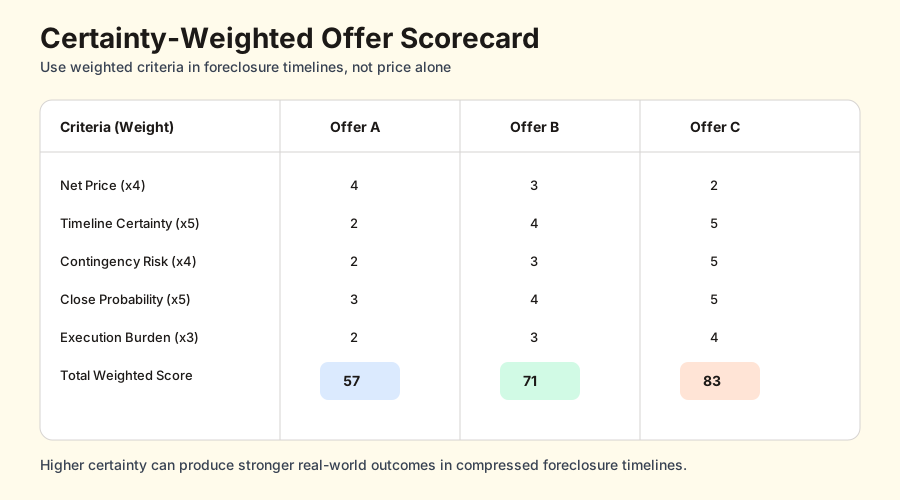
Step 2: Build a Certainty-Weighted Offer Scorecard
Do not compare offers only by price. Score each offer on timeline reliability, contingency burden, buyer proof of funds/financing strength, repair expectations, and close-probability. A lower offer with clean terms can outperform a higher offer with heavy contingencies and delay risk.
Step 3: Clarify Property Condition Strategy
If your home is financeable and only needs cosmetic updates, as-is MLS can be highly effective. If condition issues are severe and timeline is tight, direct-cash pathways may provide the certainty needed to close before legal pressure intensifies. Decide early whether you are optimizing for price spread or timeline compression.
Step 4: Assemble Closing Stakeholders Up Front
Waiting to engage closing professionals until late stages creates avoidable bottlenecks. Bring in the closing attorney, payoff contacts, and any lien stakeholders early. Complex payoff coordination is common in distressed contexts. Early communication reduces last-minute surprises.
Step 5: Protect Against Drift
Distressed transactions fail when deadlines drift and no one owns timeline accountability. Establish weekly milestone check-ins with clear owners for each action item. If a milestone slips, trigger contingency actions immediately rather than “waiting a few more days.”
21. Weekly Operating Rhythm: A Simple System That Prevents Deadline Drift
When homeowners say, “Everything happened so fast,” what they usually mean is: there was no operating rhythm. Use this weekly cadence to stay in control.
Monday: Status Capture
Update all case facts: servicer status, legal milestones, document requests, sale activity, counselor/legal updates.
Tuesday: External Follow-Ups
Run all high-impact calls and emails: servicer, trustee contacts, counselor, legal support, listing/sale stakeholders.
Wednesday: Document Hygiene
Upload/confirm any requested items. Resolve mismatches immediately. Archive confirmations in a single folder.
Thursday: Decision Checkpoint
Assess whether your primary strategy still holds. If not, activate backup strategy the same day.
Friday: Deadline Audit
Review next 14 days of calendar pressure. Identify blockers, assign owners, and set exact follow-up times.
Small rhythm beats heroic bursts. Cases improve when actions are consistent, not sporadic.
| Day | Core Task | Output |
|---|---|---|
| Monday | Status capture | Current case dashboard |
| Tuesday | High-priority follow-ups | Updated commitments from key parties |
| Wednesday | Document quality pass | Confirmed receipt of all submissions |
| Thursday | Strategy validation | Primary/backup path confirmation |
| Friday | Deadline audit | Two-week action calendar |
22. Scripted Negotiation Phrases for Distressed-Sale Conversations
Language shapes outcomes. Use language that centers certainty, transparency, and speed without surrendering leverage.
When You Need Timeline Certainty
“We are evaluating offers based on net certainty and timeline reliability. Please include realistic close dates, contingency windows, and evidence supporting your timeline assumptions.”
When a Buyer Asks for Excessive Repair Credits in a Deadline Case
“We are open to practical adjustments tied to documented findings, but we will prioritize path reliability over prolonged renegotiation cycles. Please submit a final clean revision by [date/time].”
When You Need to Decline Ambiguous Terms
“We appreciate the offer. Given timeline pressure, we can only proceed with terms that are clear on contingencies, deadlines, and close obligations. Please revise with specific language and dates.”
When You Need to Keep Backup Options Alive
“We are continuing parallel evaluations to protect timeline certainty. If you want priority consideration, provide your strongest clean terms now.”
When Internal Family Stakeholders Disagree
“Let’s compare options on one sheet: expected net, certainty score, and timeline fit. We can disagree on preference, but we need one decision rule for this week.”
Negotiation clarity is especially important when foreclosure risk is active. Confusion is costly, and mixed signals attract low-quality behavior from counterparties.
23. Extended FAQ: 20 Practical Questions NC Homeowners Ask in Real Cases
1) How soon should I ask for help after missing a payment?
Immediately. Early outreach increases available options and reduces compounding fees and stress.
2) Do I need a counselor if I already called my servicer?
Often yes. Counselors can improve file quality and communication discipline, which increases practical effectiveness.
3) Can I sell while also pursuing retention options?
In many cases, parallel planning is wise. It protects you if one track stalls.
4) Is “we are reviewing” a good sign?
Only if paired with clear deadlines and documented file completeness.
5) Should I accept the first fast offer I receive?
Not automatically. Run a certainty-weighted comparison first.
6) What if my home needs major repairs?
Condition issues can shift strategy toward as-is or direct-cash pathways, especially under tight timelines.
7) Can I still negotiate after receiving legal notices?
Possibly, but your leverage tends to decline with time. Act fast and keep documentation tight.
8) How often should I contact my servicer?
During active review, every 3–5 days is reasonable, with logged notes and action confirmation.
9) What if representatives give conflicting answers?
Request supervisor review and written clarification tied to case notes.
10) Should I prioritize price or speed?
Prioritize the combination that best protects your net certainty before hard deadlines.
11) Can tax or HOA debt derail a sale?
Yes, if discovered late. Verify balances and payoff workflows early.
12) Is retaining the home always the best choice for my family?
Only if payment is truly sustainable. Unsustainable retention can cause deeper harm later.
13) What if I am self-employed with variable income?
Use conservative affordability assumptions and clean documentation to avoid overpromising.
14) How do I explain hardship without oversharing?
Use clear dates, cause, and impact. Keep it factual and concise.
15) Should I wait for one more month to “see what happens”?
Usually no. In foreclosure contexts, indecision is an active decision with real cost.
16) Can family members help cure arrears temporarily?
Sometimes, but temporary fixes should align with long-term affordability to avoid repeat distress.
17) What if I feel overwhelmed and cannot think clearly?
Use a checklist-based weekly rhythm and delegate tasks where possible. Process reduces panic.
18) Do I need an attorney in every case?
Not always, but legal guidance is high-value in complex, disputed, or deadline-heavy cases.
19) How do I know my primary strategy is failing?
If deadlines approach without concrete progress, switch to backup strategy immediately.
20) What is success in this process?
Success is the best achievable outcome for your household stability and net position under real constraints, not perfection.
24. Final Action Checklist (Print This)
- ☐ Open and scan all notices today
- ☐ Call servicer and request full option list + missing-doc checklist
- ☐ Contact HUD-approved counselor / NCHFA-linked support
- ☐ Build verified monthly affordability sheet
- ☐ Submit complete mitigation file and confirm receipt
- ☐ Create one-page net-certainty comparison (at least two paths)
- ☐ Engage legal review if hearing notice or case complexity exists
- ☐ Select one primary strategy and one backup strategy
- ☐ Calendar all deadlines for next 14 days
- ☐ Run weekly operating rhythm until resolved
You do not need perfect certainty to move. You need disciplined action, honest math, and a plan you can execute under real conditions.
25. Reference Appendix: NC Resource Map and What Each Source Is Best For
Homeowners lose time when they use the wrong source for the wrong question. Use this map to match your question to the right authority.
| Question You Have | Best Source | Why It Matters |
|---|---|---|
| How does NC power-of-sale process work at a high level? | NC Judicial Branch foreclosure topic pages | Consumer-readable procedural overview |
| What does the statute actually require at hearing? | NC General Statutes (Chapter 45 sections) | Primary legal language for findings and notice |
| Where do I find counseling help statewide? | NCHFA + HUD-approved counseling channels | Trusted intake for practical mitigation support |
| I need legal help and may be income-qualified | Legal Aid of North Carolina | Foreclosure-related legal triage and support |
| I need paid attorney referral fast | NC Bar Lawyer Referral Service | Structured route to private counsel consults |
| I need county court contact details | NC Courts county locations directory | County-specific clerk and courthouse access |
| I need tax-rate context and county tax references | NCDOR property tax rate resources | State-level tax framework and county references |
| My child’s school stability is at risk | NC DPI McKinney-Vento resources | School-of-origin and liaison support guidance |
Bookmark these resources in one browser folder. In deadline situations, reducing search friction can save meaningful time.
26. Foreclosure Avoidance Glossary (Plain-English Definitions)
This glossary is written for homeowners, not attorneys. Definitions are simplified for practical decision-making.
Arrears
Total past-due amount on your loan, including missed principal/interest and often related fees or escrow shortages.
Breach Letter
A servicer notice describing default and what is required to cure under loan terms before escalation.
Clerk Hearing (Power of Sale)
A county-level legal checkpoint where specific statutory findings are considered for foreclosure authorization.
Contingency
A condition in an offer or contract that must be satisfied for the deal to proceed (financing, inspection, etc.).
Deed in Lieu
A negotiated transfer of property ownership to the lender instead of completing foreclosure sale pathways.
Deficiency
Potential remaining debt if sale proceeds do not fully satisfy loan obligations and related amounts.
Forbearance
Temporary payment relief arrangement; missed amounts are typically addressed later under agreed terms.
Hardship Letter
A dated written explanation of what caused payment trouble and what has changed or is expected next.
HUD-Approved Counselor
A housing counselor associated with approved agencies that can assist with foreclosure-prevention workflows.
Liquidation Option
A path that exits ownership (for example, sale-related solutions) rather than retaining the home.
Loss Mitigation
The servicer-side process for evaluating options to avoid foreclosure, including both retention and exit pathways.
Modification
A permanent or longer-term change to loan terms aimed at making payments more sustainable.
Net Proceeds
What you actually keep after payoff, costs, fees, and timeline-related expenses, not the headline sale price.
Power of Sale
A contractual foreclosure mechanism in NC often used under deed-of-trust language, subject to legal procedure.
Reinstatement
Paying required arrears and related amounts to bring the loan current and stop immediate default progression.
Repayment Plan
An agreement to repay missed amounts over time in addition to regular monthly payments.
Retention Option
An option intended to keep you in the home, assuming affordability and approval requirements are met.
Short Sale
A lender-approved sale where proceeds may be less than total debt payoff, subject to lender terms.
Substitute Trustee
An entity or person substituted into trustee role under deed-of-trust process responsibilities.
Timeline Compression
When shrinking decision windows force faster execution and reduce room for trial-and-error approaches.
If a term appears in your paperwork and is still unclear, ask your legal advisor to explain how that term applies to your specific file, not just in theory.
27. What to Prepare Before Your Next Three Calls
Use this mini-checklist right before your next servicer, counselor, or legal call so each conversation ends with usable outcomes.
Call 1: Servicer
- Loan number and latest notice date in front of you
- Exact question list (status, options, missing docs, nearest legal date)
- Notebook or digital log ready for timestamps and names
- Upload confirmation numbers if you previously submitted files
Call 2: Counselor
- Income and expense worksheet draft
- Hardship summary draft with dates
- List of confusing servicer responses for clarification
- Decision deadline for retain-vs-exit call
Call 3: Legal Consultation
- All hearing or trustee notices organized chronologically
- Question list about procedural posture and risk points
- Any lien/tax/HOA/title complications listed plainly
- Desired outcome and deadline realities written in one paragraph
Preparation quality directly affects guidance quality. Advisors can only act on facts you provide.
28. Closing Perspective: Protect the Next Five Years, Not Just the Next Five Days
Foreclosure pressure creates short-term thinking. That is understandable, but it can produce long-term damage if every decision is made only to reduce today’s anxiety. A better lens is: “What path best protects our household over the next five years?”
Sometimes that answer is retention, if income is stable and payments become sustainable. Sometimes it is a controlled sale that preserves cash and resets stress before legal pressure compounds. In both cases, the common ingredients are the same: clear documentation, timeline discipline, and willingness to choose realism over delay.
If you are still undecided, return to three filters:
- Sustainability: Can we truly afford the retained payment structure?
- Certainty: Which path has the highest probability of successful completion before deadlines tighten?
- Household impact: Which option best protects family stability, school/work continuity, and mental load?
You are not choosing between “perfect” and “bad.” You are choosing between constrained options under pressure. Good decisions are possible in that environment, but they require immediate, disciplined action.
29. One-Page Scorecard: Choose Your Path in 15 Minutes
If analysis paralysis is your current problem, use this scorecard now. Print it, fill it quickly, and let the totals guide your next action.
How to Score
Rate each path from 1 to 5 on each criterion (5 = strongest fit for your current reality). Multiply by weight. Highest weighted total is your practical lead option for this week.
| Criterion | Weight | Retention Path Score | As-Is MLS Score | Direct Cash Score |
|---|---|---|---|---|
| Payment sustainability | 5 | |||
| Timeline fit vs legal deadlines | 5 | |||
| Expected net certainty | 4 | |||
| Execution complexity tolerance | 3 | |||
| Household disruption level | 3 | |||
| Ability to handle contingencies | 3 | |||
| Total weighted score |
Rules of use:
- If retention scores highest but payment sustainability is below 4, do not choose it yet. Rework budget assumptions first.
- If an exit path scores highest and deadline fit is 4 or 5, move to execution immediately.
- If two paths are close, run them in parallel for seven days and reassess with real data.
Example (Illustrative)
A homeowner with unstable income and tight hearing timeline may score retention low on sustainability and timeline fit, while scoring direct-cash high on certainty and deadline alignment. That does not mean cash is “always best.” It means in this specific case, certainty under pressure likely protects more value than chasing maximum price with high fall-through risk.
Another homeowner with strong re-employment and no immediate hearing milestone may score retention highest because payment sustainability and timeline fit both improve. Same state, different facts, different answer.
The scorecard is valuable because it forces explicit tradeoffs. Hidden assumptions become visible. Family disagreements become more productive when everyone can see which factors are driving the decision.
Decision Commitments After Scoring
- Commitment 1: Choose a primary path and one backup path before end of day.
- Commitment 2: Assign an owner and due date to each next action item.
- Commitment 3: Schedule a 7-day review using updated facts, not feelings.
This process may feel mechanical. That is a feature, not a bug. Mechanical decision systems are exactly what help households act clearly in high-stress windows.
30. Final 10-Day Sprint Plan (When Time Is Critically Tight)
If your timeline is compressed and you need immediate structure, use this sprint plan. The objective is simple: produce one executable outcome before uncertainty and delay consume remaining leverage.
Day 1
Run full case inventory: notices, balances, hardship facts, affordability worksheet, and known legal dates. No analysis yet, only fact capture.
Day 2
Complete servicer call with documented action list. Confirm missing documents and nearest legal milestone in writing if possible.
Day 3
Submit complete mitigation package and confirm receipt. Contact counselor and schedule follow-up checkpoint.
Day 4
Build side-by-side path comparison (retention vs as-is MLS vs direct cash) with certainty notes and expected timing.
Day 5
Pick primary and backup strategy. Inform all relevant parties and align next actions to deadlines.
Day 6
Execute primary path aggressively: if retention, push underwriting clarity; if disposition, launch listing/offer process immediately.
Day 7
Audit blockers. Escalate stalled communications to supervisors or legal channels as needed.
Day 8
Update net-certainty worksheet with real responses and revised timing assumptions.
Day 9
Reconfirm legal timeline alignment and close-readiness items. If primary path weakens, activate backup now.
Day 10
Lock next milestone with responsible owner and date. Avoid open-ended “we’ll see” outcomes.
In compressed windows, speed without structure creates mistakes. Structure without speed misses deadlines. You need both, every day.
31. If You Only Remember Three Things
First: foreclosure outcomes are timeline outcomes. Every day of delay changes leverage. Move now, even if your plan is imperfect.
Second: affordability truth beats wishful thinking. A plan that looks good on paper but fails your real monthly budget is not a rescue plan.
Third: choose by net certainty, not by stress, shame, or pressure tactics from anyone. Your goal is the strongest realistic outcome for your household, financially, legally, and emotionally.
If you follow those three rules and keep your documentation disciplined, you will make better decisions than most homeowners in similar situations.
Progress starts with one call, one checklist, and one decision made today instead of postponed to next week.
If county tax delinquency is also in play, use our NC Property Tax Lien Timeline guide to map tax-foreclosure milestones alongside your mortgage timeline.