
HOA Foreclosure in South Carolina
Liens, Deadlines & How to Stop It
A practical stage-by-stage map for South Carolina homeowners facing HOA lien and foreclosure risk.
1. A Kitchen-Table Start: When an HOA Balance Becomes a House-Level Threat
If you opened a letter expecting a routine neighborhood notice and instead found a demand with legal language, deadlines, and the word lien, your chest probably tightened. Most South Carolina homeowners are prepared for a mortgage risk conversation, not an HOA foreclosure conversation. The emotional whiplash is real: you bought in a neighborhood for stability, and now a few thousand dollars in unpaid assessments can start a legal chain touching the title to your home.
This guide is for that exact moment. Not a generic “here are your options” article written for all 50 states. This is South Carolina specific, statute specific, and process specific. We are going to walk from first principles to practical decisions: what the Homeowners Association Act does, what it does not do, where lien authority usually comes from, how a foreclosure suit actually proceeds in South Carolina courts, where homeowners lose leverage, where they gain leverage, and what to do in the next 7 to 30 days if you are already in collection status.
One important truth before we get tactical: HOA foreclosure risk rarely appears out of nowhere. It usually builds from a stack of pressures: rising mortgage escrow, insurance jumps, medical interruptions, job changes, or family transitions. If you are navigating mortgage delinquency at the same time, keep two companion resources open while you read this guide: our South Carolina foreclosure help guide and our SC foreclosure process guide. The overlap matters because a homeowner can face both a mortgage enforcement timeline and an association collection timeline at once.
Also: this is educational content, not legal advice for your specific file. When a summons is on the table, personalized counsel beats generalized reading every time. But informed homeowners make better calls with lawyers, counselors, and lenders. That is the point of this page: to help you make stronger decisions under pressure.
Your immediate 72-hour checklist
- Pull your governing documents (declaration, bylaws, rules, amendments) and verify the assessment and lien language.
- Get a full, itemized ledger from the association or management company, including principal dues, late fees, legal fees, and collection costs.
- Confirm what has already been recorded at the county level (lien, lis pendens, lawsuit filing) and copy those documents.
- Calendar every stated deadline in writing, including cure dates and hearing dates.
- If served with a summons and complaint, do not wait. South Carolina response windows are not suggestions.
You are not trying to win an argument by emotion. You are trying to protect equity, control timeline, and reduce irreversible damage. That requires facts, sequence, and documentation. Let’s build those now.
2. What the South Carolina HOA Act Covers (and What It Does Not)
Many homeowners understandably assume the South Carolina Homeowners Association Act is a full “HOA rights code” that decides every collection and foreclosure issue. It is not. The Act in Title 27, Chapter 30 is heavily focused on governance, transparency, record access, notice practices, and consumer complaint data collection through the South Carolina Department of Consumer Affairs (SCDCA). Those are important protections, but they are not a complete foreclosure shield.
Where does that leave you? In practice, the foreclosure conversation usually involves four layers at once:
- Recorded governing documents for your community (declaration/covenants and amendments);
- South Carolina statutes affecting associations, liens, and real property enforcement;
- South Carolina civil procedure and local court practices;
- Your account-level facts (ledger accuracy, notice quality, timing, and cure efforts).
The Homeowners Association Act still matters because it sets a baseline culture of governance and disclosure and creates a formal complaint-data channel at SCDCA. It also reinforces the importance of recorded documents and homeowner access expectations. But it is a category error to assume that filing an SCDCA complaint alone pauses litigation. SCDCA’s own materials state it collects and reports HOA complaint data and offers educational resources; it is not a courtroom substitute that adjudicates or enforces your private covenants in the way many homeowners hope.
So treat the Act as one part of your strategy. Use it to frame expectations and support documentation requests, not as your only defensive tool. If your account has moved from routine billing to legal collection, the practical battleground becomes lien validity, amount accuracy, procedural compliance, and settlement structure.
| Question | What to know in SC | Why it matters to you |
|---|---|---|
| Does the HOA Act exist? | Yes, Title 27 Chapter 30. | Provides governance/consumer framework and references complaint infrastructure. |
| Does SCDCA take HOA complaints? | Yes, including required data collection under state law. | Useful for records, reporting, and pattern visibility, but not a court injunction by itself. |
| Is every HOA foreclosure question answered by one statute? | No. | You must analyze governing docs, lien law, and court procedure together. |
| Can waiting for “agency review” protect deadlines? | Usually no. | Court response and payment deadlines continue unless formally stayed or resolved. |
Bottom line: don’t collapse legal complexity into a single website FAQ. Build a file from primary documents and timeline evidence. That approach changes outcomes.
Robin Take #1: Precision beats panic
Most owners lose leverage not because they lacked a legal argument, but because they lacked a documented timeline and line-item position. Build those first.
3. Where Assessment Lien Power Usually Comes From in South Carolina
Homeowners ask one core question first: “Can they really do this?” In many South Carolina communities, assessment lien authority is grounded in recorded covenants and reinforced by state statutory framework for common-expense obligations and enforcement mechanics, especially in condominium/horizontal property contexts. A key statute often cited in this discussion is S.C. Code § 27-31-210, which describes lien status for unpaid common expense assessments and foreclosure by suit in a manner comparable to mortgage foreclosure process. Because that suit runs through the same courts, its stages and deadlines largely mirror the standard SC foreclosure timeline.
That does not mean every account automatically becomes a foreclosure case, and it does not mean every dollar on a ledger is automatically valid. It means associations may have a legally recognized path to enforce unpaid obligations, subject to proper procedure and proof. Your defensive leverage comes from testing each part of that chain:
- Was the assessment authorized under the governing documents?
- Was notice provided according to the documents and governing law?
- Is the ledger mathematically correct and internally consistent?
- Are legal fees and collection add-ons contractually/statutorily permitted?
- Was recording and service executed correctly?
A surprisingly high percentage of high-stress files include errors: duplicate charges, stale fee structures, posting mistakes, misapplied owner payments, or inflated legal-cost lines with weak backup documentation. None of those are guaranteed winners in court by themselves, but each can alter negotiation posture, reduce claimed totals, or improve settlement terms.
There is also a practical priority issue homeowners need to understand: association liens typically do not float in a vacuum. Tax liens and recorded mortgage interests can alter economic incentives and strategy for every party. That is why a homeowner with meaningful equity often has a broader menu of options than a homeowner with minimal equity and multiple competing claims.
In short, “they can’t foreclose over this” and “they can always take the house” are both oversimplifications. The real answer is file-specific, document-specific, and procedure-specific. Your job is to force precision into each component.
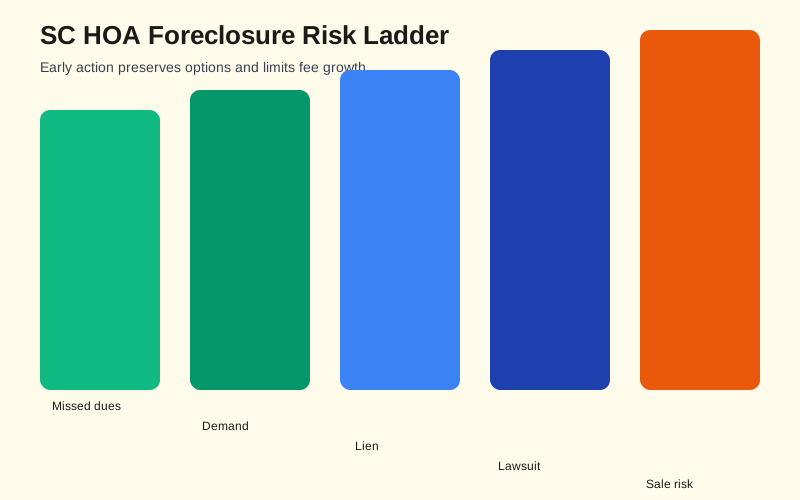
4. The Collection Ladder: From Missed Dues to Litigation Posture
Most HOA cases move through recognizable stages before they become courtroom events. Understanding that ladder helps you intervene earlier and at lower cost.
Stage A: Routine delinquency notices
You miss dues; the association or manager sends balance notices and adds late fees per governing documents. This is the cheapest stage to resolve and the easiest place to preserve credit and relationships.
Stage B: Demand letters and acceleration behavior
The tone shifts. You may receive formal demand with cure windows, attorney contact information, and warnings about further action. Some communities accelerate portions of balance treatment depending on document language.
Stage C: Lien recording
If unresolved, a claim/lien may be recorded against the property. This clouds title and can interfere with refinance or sale. Owners often first realize seriousness at this stage.
Stage D: Litigation filing
The matter becomes a civil action seeking judgment, enforcement, and potentially foreclosure relief. At this point, deadlines harden and legal costs rise quickly.
Stage E: Judgment/sale pathway
If not contested or settled, case may proceed toward court-approved sale mechanics depending on pleadings and orders.
| Stage | Typical homeowner risk | Best counter-move |
|---|---|---|
| Routine notices | Fee snowball | Request ledger + propose payment plan before legal transfer |
| Demand phase | Attorney fees begin | Dispute errors in writing, request payoff and reinstatement figures |
| Lien recorded | Title clouding, leverage loss | Validate recording details; negotiate release terms tied to payment |
| Lawsuit filed | Default judgment risk | File timely response; document defenses and cure intent |
| Judgment/sale path | Equity loss + long credit damage | Settlement, refinance, or sale strategy with strict calendar control |
The biggest mistake homeowners make is treating each letter as “just another warning.” The most expensive day in many files is not the hearing date. It is the day a manageable account crosses into legal collections, because no one answered the first serious notice with a documented plan.
Want out before HOA fees and legal costs escalate further?
We buy homes in any condition and can send a real cash offer so you can close on your timeline.
5. South Carolina Court Procedure: Deadlines, Service, and What Fails Homeowners
Once litigation starts, process discipline matters more than righteous frustration. South Carolina foreclosure-related procedure runs through court rules and case management practices where missed response windows can move you from contested dispute to default posture quickly.
Here are recurring failure points:
- Ignoring service: Homeowners assume “I never signed for anything” means nothing happened. Service rules can still be satisfied.
- Verbal-only disputes: Phone calls without written follow-up create weak records.
- No filed response: You can be morally right and still lose by default if you miss filing deadlines.
- Incomplete financial package: Settlement talks fail when owner cannot prove ability to perform.
- No hearing prep: Entering court without a timeline binder and ledger analysis cedes credibility.
What good looks like instead: a dated chronology, all notices scanned, recorded documents pulled from county systems, payment history matched against association ledger, and a concise issue list identifying disputed lines and requested remedy. Judges and opposing counsel respond better to precise records than broad accusations.
If your community account is entangled with mortgage stress too, your legal strategy must be integrated. A homeowner trying to save the property via mortgage workout while ignoring HOA litigation can accidentally undermine both tracks. That is why we recommend reading this page with our broader South Carolina foreclosure resources, including the SC foreclosure timeline guide and the SC property tax lien timeline guide, to avoid surprise deadline collisions.
Remember: courts evaluate evidence and compliance, not intent alone. Your narrative must become a record.
6. The Math Homeowners Must Do Before Negotiating Anything
Negotiation without math is panic with paperwork. Before you accept a payment plan, consent order, or settlement letter, build a simple but complete financial model. You need to know what resolution you can actually perform and whether keeping the property still makes economic sense.
Core numbers to calculate
- Total claimed HOA balance by component (dues, special assessments, late fees, legal fees, interest, collection costs)
- Mortgage status (current, delinquent, modified, or in active loss mitigation)
- Tax status and insurance status
- Estimated market value and likely net if sold
- Monthly housing carry cost after any proposed HOA cure arrangement
Then run three scenarios: keep and cure, keep and restructure, or sell and exit. Homeowners get trapped when they only evaluate “Can I make this month work?” instead of “Can I sustain this for 12 months?” Sustainability is what prevents repeat default.
| Scenario | When it works | Main risk |
|---|---|---|
| Keep + lump-sum cure | Temporary hardship ended; cash available | Liquidity shock leaves no emergency buffer |
| Keep + structured settlement | Stable income can absorb plan payment | One missed installment may trigger fast enforcement |
| Sell before deeper litigation | Useful equity exists and timeline is tight | Delay can reduce net through added costs/fees |
| Refinance/cash-out (if eligible) | Credit + equity + underwriting fit | Rate/payment may still be unsustainable long-term |
For owners with enough equity, an orderly sale may preserve far more value than a prolonged fight funded by credit cards. For owners with little equity but strong recovery prospects, a tightly drafted settlement can be the right move. Different facts, different answers. What never works is avoiding the numbers.
Robin Take #2: A sustainable plan is better than a heroic plan
If a payment structure empties your reserves and assumes perfect income for six months, it is not a solution. It is a delayed failure.
7. Homeowner Rights and Defensive Tools That Actually Move Outcomes
“Rights” can sound abstract until translated into action steps. The following tools have practical value when used early and in writing.
Document access and account transparency requests
Request governing documents, amendments, budgets, collection policy language, and detailed account history. You are trying to verify authority and arithmetic, not merely gather paperwork.
Written dispute letters with line-item precision
Do not send generic “I disagree” emails. Identify each challenged entry by date, amount, and reason (duplicate posting, unauthorized fee, unsupported legal charge, misapplied payment). Request correction and revised payoff by a firm date.
Payment-plan proposals tied to proof of ability
A weak proposal is “I’ll try to catch up.” A strong proposal includes amount, start date, method, and supporting budget/income documents. Associations and counsel evaluate performance risk.
Counsel and legal aid pathways
South Carolina homeowners can use SC Bar referral pathways and, when eligible, South Carolina Legal Services support channels. Early legal review often saves far more than it costs by preventing procedural mistakes.
Parallel foreclosure prevention resources
If mortgage distress is present, connect with HUD-approved counseling routes and statewide housing resources quickly. A coordinated plan beats separate, conflicting plans.
Notice the theme: rights are leverage only when converted into documented, timed, and specific action.
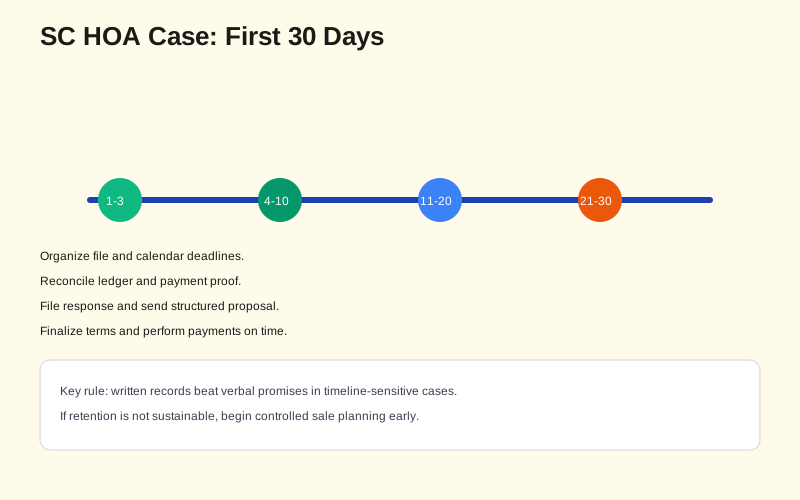
8. When the Case Is Already Filed: A Practical Playbook for the Next 30 Days
If you are reading this with active litigation in hand, treat the next month as mission-critical. The goal is to stop passive loss and restore controlled negotiation.
Day 1–3: Stabilize the file
- Create a single folder with lawsuit papers, prior notices, and payment history.
- Calendar response deadlines and hearing dates in two places (phone + physical calendar).
- Pull county records for any lien/lis pendens recordings and verify property/legal description.
Day 4–10: Build your evidence packet
- Reconcile homeowner bank payments with association ledger.
- Mark disputed charges and request supporting authority/document source for each.
- Draft your written narrative: hardship cause, cure efforts, requested resolution.
Day 11–20: File and negotiate in parallel
- Ensure timely court response with proper formatting/service requirements.
- Send settlement structure proposal to opposing counsel with performance proof.
- If property retention is unrealistic, begin sale pathway analysis immediately.
Day 21–30: Execute, don’t drift
- Follow up on unresolved document requests in writing.
- Prepare for hearing with a clean timeline exhibit and issue matrix.
- Do not miss interim payments promised during negotiation windows.
Homeowners often think they must choose between “fighting” and “cooperating.” In reality, the best strategy is documented cooperation paired with procedural protection. You preserve defenses while demonstrating good-faith cure capacity.
9. Strategy Branches: Keep, Sell, or Transition Out Safely
At some point every owner reaches a strategic fork. The emotionally preferred path is not always the financially correct one. Here is a clean way to choose.
Branch A: Keep the home
Choose this if your post-cure monthly housing load is sustainable and you can build a reserve after plan payments. Keeping with zero emergency cushion often recreates the same crisis in 3–6 months.
Branch B: Sell with control before forced sale pressure
Choose this if equity exists and legal momentum is accelerating. A controlled sale usually preserves more value than waiting for procedural deterioration. If timeline is tight, compare listing vs speed-oriented sale options using net sheets, not assumptions.
Branch C: Transition with legal closure
In limited cases, negotiated exit structures or other settlement pathways may reduce prolonged damage. The key is written closure terms on deficiency and lien release mechanics.
If you are evaluating sale pathways while under pressure, pair this guide with our Carolinas cash offer guide and our timing guide for selling in the Carolinas. The objective is not to push one method. It is to avoid unforced equity loss from delay.
Get Your Free, No-Obligation Cash Offer
Tell us about your home and we’ll send a real cash offer, any condition, and close on the timeline that works for you.
10. Common Myths That Cost South Carolina Homeowners Real Money
Myth 1: “It’s only a few thousand dollars, so foreclosure won’t happen.”
Small principal balances can still escalate into major risk once legal fees, court costs, and timeline slippage stack on top.
Myth 2: “If I file a complaint, the case pauses automatically.”
Agency complaint channels are useful, but court deadlines generally continue unless a formal legal pause exists.
Myth 3: “If I call and explain, that counts as a response.”
Phone calls without written confirmation are weak evidence. Court process relies on filed papers and provable notice.
Myth 4: “I should wait until things are calmer before negotiating.”
Delay usually increases cost and reduces options. Early structured proposals outperform late emotional appeals.
Myth 5: “I have to figure this out alone first.”
The highest-value move in many cases is early professional review plus counselor support where eligible.
Myths thrive in silence. Replace them with records, timelines, and math.
11. South Carolina Resource Directory for HOA Distress and Foreclosure Pressure
Use this directory as a launchpad for action, not background reading.
| Resource Type | Primary Source | How to use it fast |
|---|---|---|
| State HOA law text | SC Code Title 27 Chapter 30 (scstatehouse.gov) | Confirm governance and complaint framework citations in your letters. |
| Assessment lien statute reference | S.C. Code § 27-31-210 (scstatehouse.gov) | Understand lien priority and foreclosure-by-suit language. |
| Court foreclosure procedure context | SC Rule 71 (sccourts.org) | Review sale/judgment and process expectations. |
| HOA complaints + reports | SCDCA consumer.sc.gov | File structured complaint and review annual issue trends. |
| Legal referral | SC Bar / lrs.scbar.org | Get matched with counsel quickly for timeline-sensitive files. |
| Legal aid screening | South Carolina Legal Services | Check eligibility and request support early. |
| Housing counseling | HUD-approved / SC Housing pathways | Coordinate broader distress strategy when mortgage pressure overlaps. |
If your household is simultaneously handling HOA pressure, mortgage delinquency, or property-tax exposure, use one integrated action calendar. Fragmented plans fail when deadlines overlap.
12. Your Next Move: Build Leverage in 7 Days, Not 7 Months
You do not need perfect certainty to take the right first step. You need a short list of concrete actions completed this week. Here is the seven-day leverage plan:
- Gather and organize every governing and account document in one folder.
- Reconcile the ledger and identify disputed charges with line-item precision.
- Send one written package: dispute points, document requests, and proposed path forward.
- Protect litigation posture by meeting all court deadlines and filing requirements.
- Run keep-vs-sell math with realistic monthly sustainability assumptions.
- Engage counsel/referral and counseling resources where appropriate.
- Choose one strategy branch and execute it with calendar discipline.
If the right answer is keeping the property, structure that plan so it survives a bad month, not just a good one. If the right answer is exiting, do it in a way that protects as much equity and credit as possible before procedural pressure worsens terms.
And if you need a fast, no-obligation value baseline to compare resolution options, start with a direct home valuation conversation through RobinOffer. Clarity on market value is the anchor for almost every decision in an HOA enforcement file.
You are not powerless here. But power comes from speed, evidence, and execution. Start now.
13. Special Assessments, Fee Stacking, and Ledger Forensics
When homeowners say “I fell behind on dues,” that phrase usually hides a more complex account structure. The principal monthly assessment might be manageable, but the ledger can include special assessments, interest, late fees, legal demand charges, administrative collection costs, certified mail fees, filing costs, and management transfer charges. Some of these are contractually expected. Others are disputed because timing, authorization, or posting sequence is questionable. If you do not break the balance into components, you cannot evaluate fairness or legal defensibility.
Start by asking for a transaction-level ledger with running balance, not just a summary statement. You want each entry date, entry type, amount, and whether it was a debit or credit. Then request the policy or document source for each non-dues line. A practical homeowner question is simple: “Show me where this exact charge is authorized.” This is not adversarial theater. It is normal audit behavior for an account under legal pressure.
Special assessments are particularly sensitive. In many communities, they require specific board action and sometimes member notice mechanics. Even where authority exists, the communication timeline can create confusion about due dates, installment options, and late-fee trigger points. If your default began around a special assessment cycle, review board meeting materials, notices, and any member communication archive closely. Homeowners routinely discover they were never clearly informed about timing or cure options.
Another high-impact review point is payment application order. Suppose you sent partial payments during hardship months. Were those payments applied first to legal fees and late charges, leaving principal dues technically unpaid and producing additional late penalties? Governing documents and policy may control application order, but owners should confirm actual posting behavior matched disclosed policy. Misapplication can inflate balances quickly and worsen perceived delinquency.
Do not overlook data hygiene errors. Real account ledgers are managed by humans and software transitions. Common issues include duplicate late fees, reversed entries not properly netted, attorney charge lines copied from prior templates, and historical balances carried forward after ownership transfer reconciliations. A single unnoticed error can become “accepted fact” if not challenged early. Your forensic posture should be calm, specific, and relentlessly documented.
Below is a practical review matrix you can use while auditing your own account:
| Ledger Item | What to verify | Common problem pattern |
|---|---|---|
| Monthly assessments | Correct amount and due date per budget/covenants | Old rate used after budget update or amendment |
| Special assessments | Board/member authorization trail + notice timing | Insufficient notice clarity or installment ambiguity |
| Late fees/interest | Trigger date and percentage consistency | Compounded or duplicated penalties |
| Legal demand charges | Invoice date, description, and account tie-out | Template charges without case-specific support |
| Collection admin fees | Policy basis in governing documents | Charges added by vendor policy not owner-approved docs |
| Owner payments | Application order and posting date | Credits posted late or applied contrary to policy |
When you send a dispute package, separate confirmed amounts from disputed amounts. That makes you look solution-oriented and preserves credibility. For example: “I acknowledge $X in principal unpaid assessments through [date]. I dispute $Y in line items listed below pending documentation.” This framing often improves settlement dialogue because it avoids the all-or-nothing posture that causes counsel to harden immediately.
If you are trying to keep the property, pair any dispute package with a performance proposal. Associations and opposing counsel are more likely to engage constructively when they see both accountability and feasibility. “We dispute everything” with no plan often stalls. “Here are specific dispute lines, here is what we can pay now, and here is a realistic schedule for the remainder” often moves the file toward resolution.
Finally, preserve every response. If corrected ledgers arrive, compare them line by line to prior versions and store both copies. Changes in claimed totals can materially affect legal posture and negotiation range. In litigation-sensitive accounts, version history is evidence.
14. Courtroom Reality: What Judges and Opposing Counsel Actually Respond To
Homeowners often imagine litigation success depends mostly on eloquence or dramatic proof of hardship. Hardship context matters, but courtroom credibility is usually built on procedural respect and factual organization. Judges are handling large dockets. They are looking for people who can identify issues clearly, follow deadlines, and present clean evidence.
What does that mean in practice? First, if you have a response deadline, meet it. If you need extension, request it properly and early. Second, if you claim an amount is wrong, show your math and records. Third, if you request additional time to cure, show concrete payment capacity, not hopeful statements. Fourth, when you speak, keep your points narrow and document-backed.
Opposing counsel similarly evaluates risk and efficiency. They ask: Is this homeowner likely to perform under a settlement? Is there meaningful dispute risk if we push forward? Will this file consume more resources than a structured resolution? Your materials should answer those questions in your favor. A homeowner who arrives with a reconciled ledger, proposed terms, and evidence of stable income is a very different counterpart than a homeowner relying only on verbal promises.
Another practical point: tone matters. Angry letters that accuse everyone of corruption without specific evidence usually reduce cooperation. Precise, firm, and professional communication tends to produce better results. You can be assertive without being inflammatory. For example: “Please provide document authority for line items 14, 17, and 21 within ten business days” is more effective than “You are illegally stealing from me.”
Where hearings are involved, prepare like this:
- One-page timeline of key events with dates.
- One-page issue list with requested outcomes.
- Binder or digital packet of exhibits in order (not random screenshots).
- Short opening statement focused on relief requested.
- Backup plan if primary request is denied (e.g., alternative payment framework).
If settlement discussions are active, memorialize every material term in writing. Verbal “we’re close” conversations do not protect you if deadlines pass. Written confirmation of interim arrangements is especially important when hearings are approaching.
Many homeowners also underestimate the importance of proof-of-performance after agreement. If you settle and miss the first payment, the file can re-accelerate quickly and your credibility may drop sharply. Build settlement terms you can keep even during a rough month. It is better to negotiate a slightly longer schedule you can perform than a short aggressive schedule that collapses.
Judges do not expect perfection. They expect seriousness. Show process respect, factual clarity, and a workable path. That combination wins more often than theatrics.
15. Parallel Risk Management: HOA Debt, Mortgage Distress, and Tax Exposure Together
Some of the hardest homeowner situations are not single-problem cases. They are stacked-risk cases: HOA delinquency, mortgage arrears, and property-tax stress all developing at once while income remains unstable. In these cases, “solving one bill” can accidentally worsen another obligation unless you use an integrated plan.
Begin with a three-column risk board: HOA, mortgage, taxes/insurance. Under each column list (1) current balance status, (2) next legal or administrative deadline, (3) minimum action required to avoid acceleration, and (4) decision owner. This forces clarity when stress clouds prioritization. Then rank by irreversible consequence. A deadline that can trigger legal acceleration generally outranks a negotiable administrative notice.
Mortgage and HOA timelines can collide in ways homeowners do not anticipate. For example, an owner may focus all liquidity on an HOA settlement while mortgage arrears deepen toward separate enforcement. Or the reverse: owner funds mortgage catch-up and allows HOA case to proceed into avoidable legal-cost expansion. Neither outcome is ideal. The fix is coordinated budgeting and communication across all parties.
Taxes and insurance also matter because they directly influence housing sustainability. Even if you resolve immediate legal pressure, a payment structure that ignores escrow reality may fail quickly. Build future projections with conservative assumptions for insurance renewals and association budget adjustments. If your plan only works in a best-case environment, it is not a durable plan.
For homeowners using outside support (housing counselors, legal aid, private counsel), share the full stack early. Partial disclosure creates partial strategy. The best support teams can help sequence actions so one solution does not sabotage another.
A useful framework is “stabilize, restructure, then optimize”:
- Stabilize: Stop immediate legal acceleration risk with timely responses and temporary arrangements.
- Restructure: Negotiate sustainable payment architecture across obligations, not in isolation.
- Optimize: Decide long-term keep-versus-sell path using full-cost and reserve requirements.
If the integrated numbers do not support long-term retention, deciding earlier can preserve far more equity and reduce stress. Delayed recognition is expensive. Controlled exits are emotionally difficult but financially rational in many stacked-risk cases.
This is why we keep repeating calendar discipline. Deadlines do not care that your file is complex. Integrated planning is the only reliable answer.
Need a fast, certain sale before auction risk grows?
A cash sale skips repairs, showings, and financing delays. We can send an offer and close when you need to.
16. Negotiation Templates You Can Adapt for Real Files
Homeowners often freeze because they do not know how to phrase requests. Below are practical structures you can adapt. Keep your tone factual and your asks specific.
Template A: Ledger and authority request
“Please provide, within 10 business days, (1) a transaction-level account ledger from [start date] to present, (2) governing-document authority for each non-assessment charge category, and (3) copies of any legal invoices or summaries billed to the account. We are reviewing account accuracy and intend to resolve valid balances promptly.”
Template B: Line-item dispute plus partial acknowledgment
“We acknowledge unpaid regular assessments totaling $[X] through [date]. We dispute $[Y] consisting of the following items: [list with dates/amounts/reasons]. Please issue a revised payoff separating undisputed and disputed amounts.”
Template C: Structured cure proposal
“To resolve this matter efficiently, we propose payment of $[down payment] by [date], followed by $[monthly amount] on the [day] of each month for [N] months. We request suspension of additional legal escalation while this plan is performed. Supporting income documentation is attached.”
Template D: Settlement confirmation
“Thank you for discussing resolution terms on [date]. Please confirm in writing: total settlement amount, due dates, treatment of disputed fees, conditions for lien release/dismissal, and default cure period. We are ready to execute upon receipt of complete written terms.”
These templates are intentionally plain. Fancy language is unnecessary. Precision is everything. Also, always include full contact information and property address on every communication. Misrouted messages are a silent source of delay in high-volume management environments.
When you send proposals, attach a simple budget summary. Decision-makers need confidence in your ability to perform. A one-page budget and proof of income can be more persuasive than five pages of narrative. If hardship has stabilized, say when and why. If still unstable, propose conservative terms that account for uncertainty.
If no response arrives by your deadline, send a concise follow-up and document it. Non-response history can matter later when courts evaluate reasonableness of parties’ behavior.
And never send money without written terms when litigation is active. Payment context matters. Confirm how funds will be applied and what procedural step will occur in return (e.g., temporary hold, dismissal filing, lien release timeline).
17. Long-Form FAQ: The Questions South Carolina Homeowners Ask Most
Can an HOA really move toward foreclosure over assessments?
In many cases, yes, depending on governing documents and applicable legal framework. That is why early intervention matters. Do not assume small principal automatically means low risk after fees and process costs accumulate.
Does paying something each month automatically stop legal action?
Not necessarily. Partial payments can help negotiation, but they do not automatically pause legal timelines unless agreed in writing and reflected in procedural action where required.
If I dispute charges, should I pay nothing until they respond?
Usually risky. A stronger approach is paying undisputed amounts while disputing specific lines in writing. This demonstrates good faith and may reduce fee growth.
What if I cannot gather all documents quickly?
Start with what you have and send targeted requests immediately. Courts and counsel respond better when they see prompt organized effort, even if your file is still building.
Should I call or email?
Both, but written records are essential. Phone calls can clarify; emails/letters preserve evidence and timeline proof.
Can I negotiate directly without a lawyer?
Sometimes yes, especially earlier in the collection ladder. Once litigation is active or terms become complex, legal review is highly valuable.
How fast can costs rise after legal transfer?
Often faster than homeowners expect. That is why waiting for “one more month” is frequently expensive.
What if I plan to sell anyway?
Begin title and payoff clarity now. Unknown lien balances can disrupt closing timelines and reduce negotiating leverage later.
Will filing a complaint with a state agency stop the case?
Complaint channels can support your documentation strategy, but they typically do not create an automatic court pause by themselves.
Can a settlement remove recorded lien impact?
Potentially, but release mechanics and recording timelines must be explicit in writing. Do not assume release is automatic without documented terms.
FAQ sections matter because they convert uncertainty into action. If your question is not listed, map it into one of three categories: amount dispute, timeline risk, or strategy decision. Then gather evidence and act.
18. Closing Perspective: Protecting Equity, Dignity, and Optionality
HOA enforcement pressure can feel uniquely personal because it comes from the community context where you live, not from a distant national lender brand. That emotional intensity is real, and it can trigger avoidance. But avoidance is the one strategy that almost never works. Action, even imperfect action, creates room to negotiate.
Your main objective is not to “win every point.” Your objective is to protect what matters: home stability if viable, equity preservation if transition is smarter, and credit/income resilience for the next chapter. Some files end in reinstatement. Some end in structured settlement. Some end in a controlled sale that prevents bigger loss. Success is choosing the path grounded in real numbers and legal timing, then executing it reliably.
If you are in active distress today, do three things before this day ends: send one written document request, calendar every deadline, and schedule one professional support conversation (counsel, referral, or housing counselor depending on your situation). Those three actions alone can change trajectory.
And if your file includes meaningful equity, treat time as an asset. Every week of drift can consume value through compounding fees, legal expansion, and reduced option quality. Every week of disciplined execution can preserve value.
You do not need to solve everything today. You do need to begin, in writing, with a plan you can perform. That is how homeowners in South Carolina move from panic to leverage, and from leverage to resolution.
See What We’d Pay for Your Home
No pressure and no obligation—just a real cash offer, any condition, with a closing date you choose.
19. Case Patterns from the Field: Four Composite Scenarios and Better Outcomes
The most useful way to translate law and process into action is to look at realistic case patterns. The examples below are composites, not individual client stories, but they reflect recurring South Carolina dynamics. Pay attention to the turning point in each case, the moment where better documentation and quicker action changed the trajectory.
Scenario 1: The “small balance, big legal bill” trap
A homeowner in a planned community fell behind by under $1,200 after a temporary income interruption. They ignored two notices, believing the amount was too small to trigger serious action. By the time counsel became involved, added charges pushed the demand above $4,000. The owner panicked and sent scattered partial payments without written allocation terms. Ledger confusion followed.
The turnaround came when the homeowner stopped improvising and sent a structured package: line-item dispute, acknowledgment of principal dues, and a documented 6-month cure plan. Counsel revised totals after correcting duplicate late-fee entries. The account resolved without sale exposure, but only after avoidable cost growth.
Lesson: “Small delinquency” is not a strategy. Early written structure prevents fee acceleration and preserves leverage.
Scenario 2: Special assessment shock + no reserve buffer
A household that had always paid regular dues on time was hit by a large special assessment tied to major common-area repairs. Communication around installment options was unclear, and the owners assumed they could “catch up next quarter.” They did not realize legal transfer thresholds in their community policy were calendar-based, not amount-only.
When demand arrived, they were simultaneously dealing with rising insurance escrow. Their first instinct was to borrow from retirement savings to pay everything at once. Instead, they paused, ran a 12-month sustainability model, and negotiated an installment structure aligned to actual cash flow. They also built a small emergency reserve before making accelerated prepayments.
Lesson: A cure that drains all reserves can create repeat default risk. Sustainable plans beat hero payments.
Scenario 3: Active litigation with inaccurate ledger entries
An owner facing filed litigation believed all charges were valid and almost accepted a high settlement number. A final pre-signing review uncovered multiple posting irregularities and unsupported legal-cost entries. With evidence organized, counsel reopened negotiation and reduced the amount materially while preserving dismissal terms after performance.
Lesson: Verify numbers even late in the process. “It is in legal” does not make every line item correct.
Scenario 4: Keep-vs-sell decision delayed too long
A homeowner with meaningful equity stayed in negotiation limbo for months because selling felt emotionally like “giving up.” During delay, costs rose, buyer seasonality changed, and home condition worsened. The eventual sale still closed, but with lower net proceeds than a timely controlled listing would likely have produced.
Lesson: Delayed decisions are still decisions. If the keep path does not pencil over 12 months, preserving equity through timely sale may be the stronger outcome.
These scenarios all point to the same discipline: identify facts early, document everything, and decide from numbers rather than fear. Homeowners who do that rarely love the process, but they usually protect more value.
20. A 12-Month Recovery Framework After HOA Delinquency Resolution
Resolving a delinquency case is not the finish line. It is the reset point. Many households clear the immediate legal issue but fall back into distress within a year because the underlying budget structure was never repaired. Use this framework to convert short-term relief into long-term stability.
Month 1–2: Post-resolution stabilization
Confirm all closure mechanics in writing: balance status, lien release recording timeline, dismissal status if applicable, and future billing cycle. Pull fresh account statements after the first two new-cycle bills to confirm no legacy charges reappeared unexpectedly. If your agreement involved conditional terms, calendar every milestone.
At the same time, build a minimum emergency buffer, even if small. Legal resolution without cash buffer is fragile. Start with a practical target like one month of essential housing costs, then expand.
Month 3–4: Structural budget repair
Rebuild your budget from actual observed costs, not pre-crisis assumptions. Include realistic line items for HOA dues, insurance changes, property taxes, utilities, and household volatility categories like medical and transportation. If your budget has no contingency line, it is not complete.
Review automatic payment setup carefully. Autopay is useful, but only if account funding and statement review routines are healthy. Many repeat delinquencies begin with silent account drift, not intentional nonpayment.
Month 5–6: Risk reduction and document hygiene
Create a permanent household “housing file” with governing docs, policy updates, budget notices, payment confirmations, and key contact details. This reduces chaos during future disputes. Monitor association communications proactively so changes in dues or project assessments do not arrive as surprises.
If your prior delinquency involved communication breakdown, establish one protocol: all important requests and disputes are sent in writing and saved. This single habit prevents most “we never received that” conflicts.
Month 7–9: Equity and strategy checkpoint
Run an updated equity analysis and maintenance forecast. Ask honestly whether the property is now sustainable given your household goals. Some families conclude they are stable and stay confidently. Others decide a planned move is wiser before major deferred maintenance or market changes reduce options.
If considering a move, plan it on your timeline, not in reaction to renewed distress. Strategic moves preserve dignity and money.
Month 10–12: Long-term resilience plan
By this point, your objective is not merely “avoid delinquency.” It is to create resilience against shocks. That means a stronger reserve target, periodic budget reviews, and early intervention rules (for example: if two major bills spike in the same quarter, trigger spending triage and creditor communication immediately).
Recovery is a system, not a mood. Families who treat it as a system usually avoid repeat legal crises.
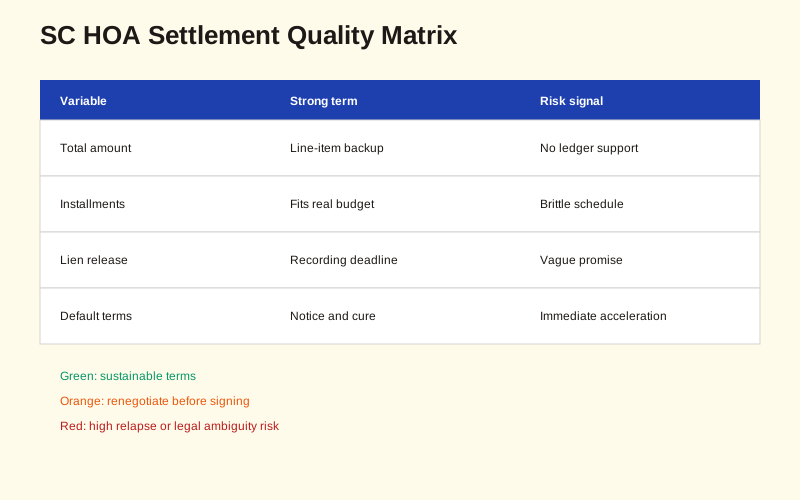
21. Advanced Decision Matrix: Evaluating Settlement Offers Under Pressure
When a settlement letter lands, homeowners often focus on one number: the total amount due. That number matters, but offer quality depends on at least nine variables. Use the matrix below before signing anything.
| Offer Variable | What to check | Red flag |
|---|---|---|
| Total amount | Tie-out to latest corrected ledger | No transaction backup provided |
| Down payment requirement | Fits available liquidity without zeroing reserves | Requires unsafe borrowing at high rates |
| Installment schedule | Matches stable monthly cash flow | First missed payment triggers immediate acceleration |
| Interest/fee accrual during plan | Clearly capped or defined | Open-ended cost growth language |
| Lien treatment | Release timing and recording responsibility defined | Vague promise with no deadline |
| Litigation treatment | Dismissal/stay terms clear and conditional triggers explicit | Procedural status left ambiguous |
| Default cure period | Reasonable grace and notice before severe remedy | No cure opportunity |
| Payment application order | Specified in writing | Unstated allocation allows future disputes |
| Mutual communication protocol | Designated contact + response timelines | No channel clarity during performance |
After scoring variables, run a stress test: assume one income disruption month and one unexpected household expense month. Can the plan survive both without immediate collapse? If not, renegotiate before signing. A brittle settlement is a deferred default.
Also evaluate opportunity cost. If a settlement consumes most available liquidity and still leaves you with unsustainable long-term housing cost, a controlled sale path may produce better total outcome even if emotionally harder in the short term.
When in doubt, request clarifying edits in writing. Settlement documents are negotiable more often than homeowners think, especially where you present clear performance rationale. A respectful, evidence-backed revision request can improve terms materially.
Finally, never treat unsigned drafts as final protection. Until terms are executed and procedural actions are confirmed, maintain all deadline compliance as if no deal exists.
22. Implementation Workbook: A Practical Weekly Workflow Until Resolution
If your situation still feels overwhelming after all this information, use this weekly workflow. It converts a complex legal-financial problem into repeatable actions.
Weekly Monday: Status snapshot
- Update balances (HOA, mortgage, taxes) from latest statements.
- Review next 21 days of deadlines and required actions.
- Set three priority outcomes for the week (e.g., file response, send dispute addendum, finalize plan draft).
Weekly Tuesday: Documentation day
- Reconcile any new transactions and save proof of payments.
- Prepare outgoing written requests with clear due dates.
- Archive incoming responses and label by topic/date.
Weekly Wednesday: Negotiation and support
- Follow up with association counsel/manager on open items.
- Check in with legal/counseling support resources if engaged.
- Update proposed terms based on newly verified data.
Weekly Thursday: Financial sustainability check
- Compare actual spending to planned budget.
- Adjust payment proposals if assumptions changed.
- Recalculate reserve trajectory to avoid hollow victories.
Weekly Friday: Compliance and contingency
- Confirm all filings, service steps, and notices are complete.
- Prepare backup plan if a response is delayed or denied.
- Send one concise weekly summary email to key parties where appropriate.
This rhythm may look simple, but consistency is powerful. Most bad outcomes do not come from one catastrophic event; they come from cumulative missed steps. A weekly operating system prevents drift.
Keep this perspective as you work: your goal is not to become an HOA law expert overnight. Your goal is to make a series of high-quality decisions under pressure using evidence, deadlines, and realistic math. That is enough to protect a remarkable amount of value.
And if your final analysis points toward a controlled sale, that is not failure. It is financial leadership under difficult conditions. If your analysis supports retention, perform that plan with discipline and reserve-building from day one. Either way, clarity plus execution wins.
Robin Take #3: Control the calendar or the calendar controls you
In HOA litigation-risk files, missed dates are often more damaging than weak arguments. Calendar discipline is non-negotiable.
23. Final Technical Appendix: Building Your Evidence Binder for a South Carolina HOA Case
For homeowners who want a concrete, repeatable method, this appendix gives you the binder structure we recommend in timeline-sensitive HOA enforcement files. Whether you keep it digital, physical, or both, the organizing principle is the same: every claim and every response should be traceable within 30 seconds. If you cannot find it quickly, it effectively does not exist when decisions are being made under pressure.
Binder Section 1: Property and governing-document identity
Include deed reference, legal property description, current owner names as they appear on title, and the latest governing documents: declaration, bylaws, rules, and recorded amendments. Add a one-page summary listing where assessment authority, late-fee authority, and collection-cost language appear. You are not writing a legal brief; you are creating a fast reference map.
Binder Section 2: Billing and ledger records
Store every statement, ledger export, and revised balance letter in chronological order. If totals change, preserve both old and new versions. Create a side-by-side worksheet with columns for “association entry,” “homeowner evidence,” and “status” (confirmed/disputed/pending documentation). This worksheet becomes the backbone of your negotiations.
Binder Section 3: Payment proof and bank traces
Gather bank confirmations, check images, portal receipts, and any returned-payment notices. Label each item by date and amount. Then create a payment index table that maps your proof to corresponding ledger entries (or flags missing postings). Nothing builds credibility faster than clean payment tracing.
Binder Section 4: Notice and communication log
Maintain a communication log with date, sender, channel (mail/email/phone), subject, and next required action. Save envelopes when possible for mailed notices because postmark and receipt timing can matter. For phone calls, log who you spoke with and send a same-day recap email: “Thank you for speaking with me today; my understanding is…” That simple habit converts verbal conversations into usable records.
Binder Section 5: Court filings and procedural timeline
If litigation is active, include summons, complaint, service proof, responses filed, orders, hearing notices, and docket snapshots. Add a front-page deadline calendar with response dates, hearing dates, and settlement milestones. Use two reminders per deadline (one week prior and two days prior). Missing procedural steps is one of the most expensive unforced errors in these files.
Binder Section 6: Financial capacity and proposal support
Place income proof, budget summary, hardship explanation, and proposed payment schedule in one section. Update this packet whenever material facts change. Negotiation quality improves when your proposal is supported by current numbers, not old assumptions. If you can show exactly how and when payments will be made, opposing counsel has fewer reasons to reject structure.
Binder Section 7: Resolution documents and performance tracking
Once terms are reached, store signed agreements, payment confirmations under the agreement, and proof of procedural follow-through (dismissal filing, lien release recording, or account zero confirmations). Track every obligation in a checklist. Do not assume closure until each post-settlement mechanic is complete and documented.
To make this appendix practical, here is a rapid implementation checklist you can finish in one weekend:
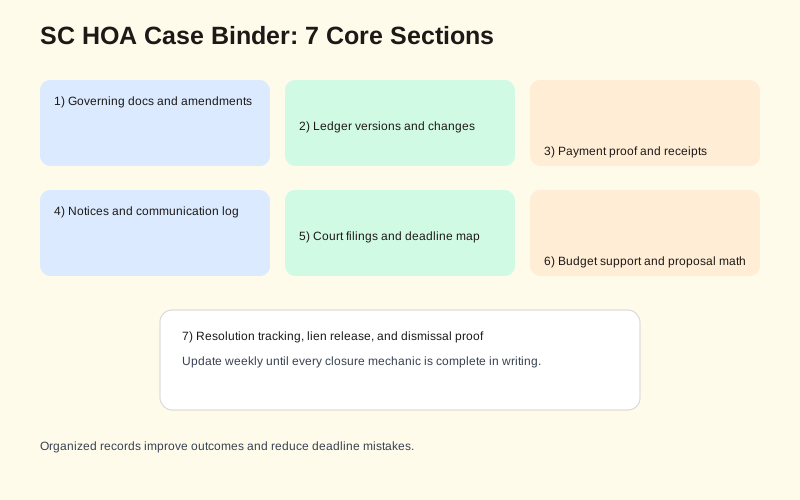
- Create folder structure matching Sections 1 through 7.
- Scan all paper documents to searchable PDFs with consistent file names.
- Build one spreadsheet with tabs for ledger audit, payments, and communications.
- Draft a one-page case summary: status, disputed amount, desired outcome, next deadline.
- Share the summary and key documents with any advisor assisting you.
Advanced tip: keep a “decision journal” page. Every major choice should include date, options considered, selected path, and reason. This prevents hindsight confusion and helps professionals understand your logic quickly if they join midstream.
If your case stretches over months, schedule monthly binder maintenance. Archive closed items, update open-item tracker, and refresh the financial capacity packet. Stale documentation causes avoidable friction in long files.
The reason this appendix matters is simple: legal and financial systems reward organized participants. You cannot control every outcome, but you can control preparation quality. Preparation quality drives leverage quality. Leverage quality drives resolution quality.
That is the practical end of this guide: know the legal terrain, audit the numbers, respect the deadlines, communicate in writing, and run decisions from sustainable math. Do those consistently and you give yourself the strongest available position in a South Carolina HOA foreclosure-risk case.
One more operational point for homeowners who feel frozen: pick a fixed time window each day for case work (for example, 30 to 45 minutes). Open the binder, process one task, close the binder. This prevents the case from consuming your entire day while still moving it forward consistently. Slow, steady progress beats occasional panic marathons.
When family members share responsibility, assign clear roles. One person tracks deadlines, another handles document intake, and another manages payment logistics. Shared stress without shared roles creates errors. Shared roles create accountability and lower the chance of missed steps.
Finally, schedule a quarterly “housing health review” even after the case closes: compare current dues and escrow to budget, check reserve status, and verify no unresolved account anomalies remain. Preventive review is boring, and extremely effective. Most households that avoid repeat distress do not rely on luck; they rely on routine.
If you keep one mantra from this guide, make it this: document, decide, and do the next right task. Documentation creates truth, decisions create direction, and execution creates outcomes. In South Carolina HOA matters, that sequence is often the difference between manageable correction and expensive escalation.
Even under stress, one well-documented action today can prevent ten costly legal actions next month.
Keep moving, one documented step at a time.