
NC Due Diligence Period: What Sellers and Buyers Must Know (2026)
Selling? See why the due diligence window is your highest-risk stretch and how to keep a deal alive. Buying? Get the Form 2-T rules, 2026 fee ranges, and the 21-day checklist.
North Carolina's due diligence period gives buyers a negotiated window, typically 14 to 30 days, to inspect, appraise, and secure financing on a home before committing to close. It's written into every standard NC purchase contract, and it works differently from any other state's real estate process.
This guide covers both sides of the transaction. Selling in NC? The due diligence window is your highest-risk stretch: your buyer can walk for any reason, and you can lose weeks of market time when they do. If that happens, RobinOffer will buy your NC home for cash with no due diligence period, no repairs, and a closing date you pick. Buying? You'll learn exactly what to do during those 14 to 30 days, what the due diligence fee actually buys you, and where the deadline traps are, plus current Charlotte and statewide fee ranges, a day-by-day checklist, and the 2026 Form 2-T changes.
If you're weighing a cash offer, where the due diligence period is often shortened or waived, our guide to cash offers in NC and SC covers what those buyers actually pay and when a faster close makes financial sense.
1. What the NC Due Diligence Period Actually Is, Form 2-T, Paragraph by Paragraph
The NC due diligence period is a negotiated window, defined in Paragraph 1(j) of Form 2-T, that begins on the contract's Effective Date and gives buyers unrestricted termination rights until it expires. The standard NC purchase contract (co-authored by NC REALTORS and the NC State Bar) builds every transaction around this single deadline.
During this period, the buyer can terminate the contract for any reason. Any reason at all. The buyer doesn't need to explain, doesn't need the seller's consent, and doesn't need to prove a defect. They just need to deliver written notice before the deadline. That's the fundamental deal in NC real estate: the seller gets paid a non-refundable fee upfront for taking their home off the market, and the buyer gets an unrestricted window to investigate.
What the Buyer Can Do During Due Diligence
Paragraph 4 of Form 2-T outlines the common investigations, but the list isn't exhaustive. During the NC due diligence period, buyers typically:
- Order a general home inspection, usually $400–$600 for a standard single-family home
- Schedule specialist inspections, pest/termite ($75–$125), radon ($150–$200), septic ($300–$500), well water ($100–$250)
- Request a property survey, $400–$700 depending on lot size and terrain
- Complete the appraisal, ordered by the lender, $450–$600 typical
- Run a title search, performed by the closing attorney, looking for liens, encumbrances, easements
- Review HOA documents, bylaws, CC&Rs, meeting minutes, reserve fund balance, pending special assessments
- Apply for and secure financing, final underwriting, rate lock, conditions clearance
- Negotiate repairs or credits, based on inspection findings
- Obtain insurance quotes, homeowner's insurance, flood insurance if applicable
- Pull permit records, verify renovations were permitted, check for open permits
What Happens When the DD Period Expires
Once the due diligence deadline passes, everything changes. The buyer's unrestricted termination right disappears. If the buyer walks away after the DD period ends, they forfeit both the due diligence fee (already gone) and the earnest money deposit. The only post-DD exit ramps are specific contract defaults by the seller, like failing to deliver marketable title under Paragraph 8 or material property damage under Paragraph 12.
This is where the NC system creates real consequences. In states with traditional contingencies, a buyer can stretch an inspection contingency or renegotiate endlessly. In NC, the clock is the clock. When it expires, the buyer is either committed or they've already walked.
Why NC Does It This Way
North Carolina adopted the due diligence system in 2011, replacing the older contingency-based contract. The change was driven by a practical problem: under the old system, buyers could tie up a seller's home for weeks under vague inspection and financing contingencies, then back out and get their earnest money back with minimal consequences. Sellers had no compensation for the lost time.
The DD system solves this by separating the buyer's investigation freedom (unrestricted termination during DD) from the buyer's financial commitment (the non-refundable DD fee). The seller gets immediate compensation for taking their home off the market. The buyer gets a clean window to investigate without navigating multiple contingency deadlines. Both sides know exactly what's at stake and when.
No other state uses this exact structure. Texas has an "option period" with a smaller fee, but it's more limited in scope. Most states still use traditional contingencies. NC's approach is unique, and once you understand it, it's arguably cleaner than the alternative.
2. DD Fees Across North Carolina: What Buyers Actually Pay in 2026
The due diligence fee is a negotiated amount paid by the buyer directly to the seller at contract execution. Not into escrow. Not to the closing attorney. Directly to the seller. The seller deposits it on day one and it's theirs to keep regardless of whether the deal closes, the buyer terminates, or the property burns down.
Before we get to the amounts, here's how that payment actually works in practice: typically a certified check or wire transfer delivered through the buyer's agent to the seller's agent. Some agents handle the exchange at contract signing; others arrange delivery within 24 hours. The 2026 Form 2-T gives buyers until the end of the next banking day if the contract becomes effective after business hours or on a weekend. If you're buying from out of state, ask your agent exactly how they'll handle the DD fee delivery before you write the offer, don't assume a personal check or Venmo will work.
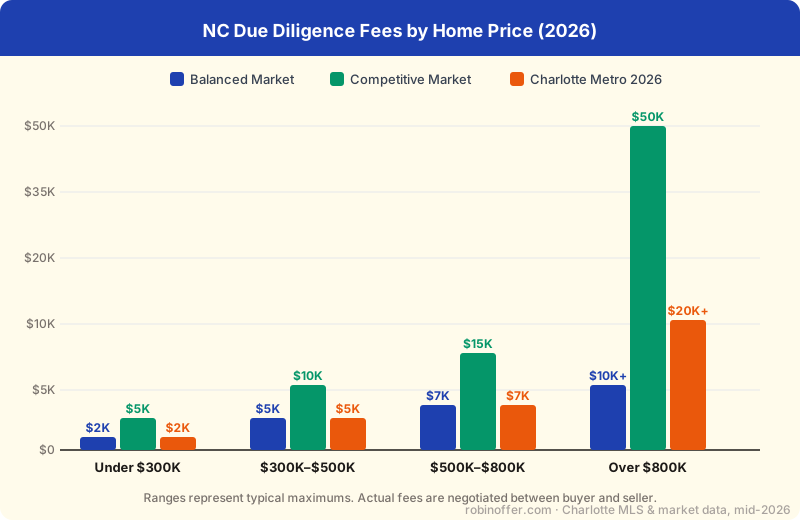
The general rule of thumb is roughly 1% of the purchase price, but that's a very loose guideline. The actual amount depends on the market, the price point, the competition level, and how badly the buyer wants the house.
| Price Range | Balanced Market DD Fee | Competitive Market DD Fee | Charlotte Metro 2026 |
|---|---|---|---|
| Under $300K | $500–$2,000 | $2,000–$5,000 | $500–$2,000 |
| $300K–$500K | $1,500–$5,000 | $5,000–$10,000 | $1,500–$5,000 |
| $500K–$800K | $5,000–$7,000 | $7,000–$15,000 | $5,000–$7,000 |
| Over $800K | $10,000+ | $15,000–$50,000 | $10,000–$20,000+ |
Charlotte metro context: With the median home price sitting around $399,000–$429,000 in mid-2026, most Charlotte-area buyers are paying $1,500–$5,000 in due diligence fees on a typical purchase. Days on market have stretched to 42–55 days, and active listings are up 12–19% year-over-year. That inventory increase has shifted negotiating power back toward buyers, meaning DD fees have come down from the $10,000–$20,000 levels we saw during the 2021–2022 frenzy.
Where DD Fees Run High
Certain Charlotte neighborhoods still command premium DD fees because of limited inventory and persistent demand:
| Charlotte Neighborhood/Area | Typical DD Fee Range | Why It's Higher |
|---|---|---|
| SouthPark / Myers Park | $5,000–$20,000+ | High price points ($600K–$2M+), limited teardown-eligible lots |
| Ballantyne | $3,000–$8,000 | Top-rated schools, corporate relocations |
| South End / NoDa | $2,000–$5,000 | Young professionals, walkability premium, condo market |
| Lake Norman communities | $5,000–$15,000 | Waterfront scarcity, seasonal demand spikes |
| Fort Mill / Indian Land (SC) | N/A, SC doesn't use DD fees | Different contract structure across the state line |
3. Due Diligence Fee vs. Earnest Money: Two Deposits, Two Rulebooks
NC buyers put up two separate deposits when they go under contract, and the two are often confused. They're not the same thing. They follow different rules, go to different places, and have different refund conditions.
| Feature | Due Diligence Fee | Earnest Money Deposit |
|---|---|---|
| Paid to | Seller directly | Escrow (held by closing attorney) |
| When paid | At contract execution (Effective Date) | Within 5 days of Effective Date (typical) |
| Refundable? | No, non-refundable from Day 1 (with narrow exceptions) | Yes, if buyer terminates during DD period |
| Typical amount | ~1% of purchase price ($1,500–$5,000 on a $400K home) | ~1% of purchase price ($4,000 on a $400K home) |
| Purpose | Compensates seller for taking home off market | Demonstrates buyer's financial commitment |
| If buyer terminates during DD | Seller keeps DD fee | Buyer gets earnest money back |
| If buyer terminates after DD | Seller keeps DD fee | Seller keeps earnest money |
| Applied at closing | Yes, credited toward purchase price | Yes, credited toward purchase price |
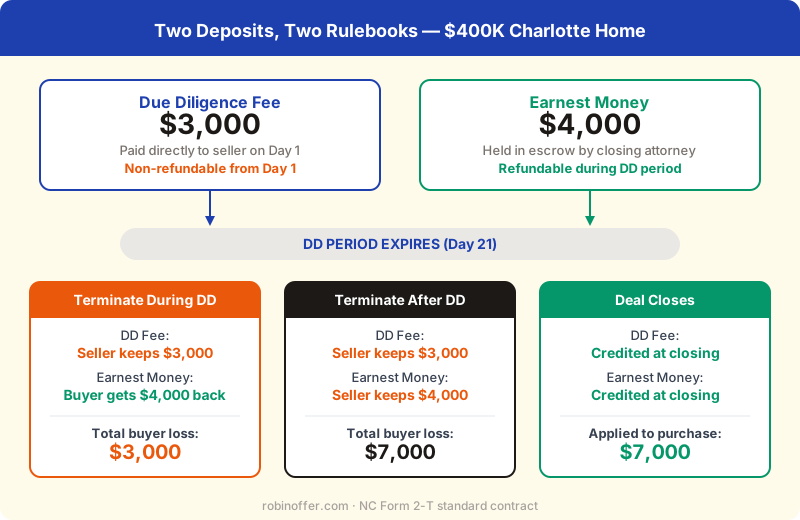
How the Money Flows on a $400K Charlotte Home
Here's a concrete example using typical Charlotte metro numbers:
| Deposit | Amount | Paid To | Buyer Terminates Day 10 | Buyer Terminates Day 25 (After DD) | Deal Closes |
|---|---|---|---|---|---|
| Due diligence fee | $3,000 | Seller | Seller keeps $3,000 | Seller keeps $3,000 | Credited to buyer at closing |
| Earnest money | $4,000 | Escrow | Buyer gets $4,000 back | Seller keeps $4,000 | Credited to buyer at closing |
| Total buyer risk | $7,000 | $3,000 lost | $7,000 lost | $7,000 applied to purchase |
The critical insight: terminating during the DD period costs the buyer only the DD fee. Terminating after costs the buyer both deposits. That cliff, the moment the DD period expires, is the single highest-stakes deadline in an NC real estate transaction.
4. Your 21-Day DD Action Plan: What to Do Before the Clock Runs Out
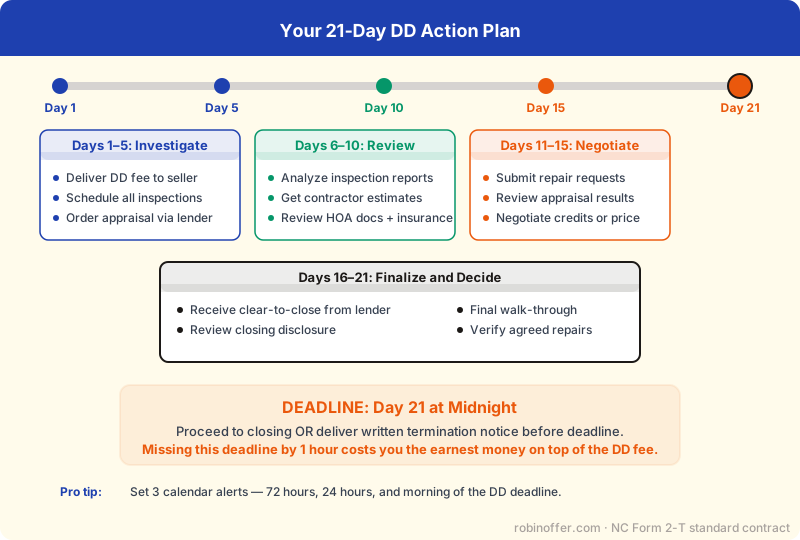
Twenty-one days sounds generous until you realize that inspectors are booked two weeks out, appraisals take 10 business days, and your lender needs five business days for final underwriting. A 21-day DD period has maybe three days of slack built in, if everything goes right.
Here's the action plan we recommend for a standard 21-day NC due diligence period. If your DD period is shorter (14 days in competitive situations), compress Days 1–3 into Day 1 and move everything up accordingly.
| Day | Action Item | Who's Responsible | What Goes Wrong If You Wait |
|---|---|---|---|
| Day 1 | Deliver DD fee to seller. Schedule general home inspection. Request HOA docs from management company. | Buyer / buyer's agent | Inspectors book 5–10 days out in spring; every day you wait compresses your window |
| Day 2 | Book radon test, termite inspection, and any specialist inspections (septic, well, chimney, pool) | Buyer's agent | Specialist inspectors have fewer availability slots than general inspectors |
| Day 3 | Pull permit records from county. Request surveys from seller. Alert your lender to order the appraisal. | Buyer / buyer's agent / lender | Permit searches in some NC counties take 3–5 business days |
| Days 4–5 | Attend home inspection. Ask the inspector questions in person, don't just read the report. | Buyer | Written reports miss context the inspector shares verbally on-site |
| Days 6–7 | Receive inspection report. Identify major vs. cosmetic issues. Get contractor estimates for any big items. | Buyer / buyer's agent | Contractors are slow to quote, get them lined up before you need them |
| Days 7–10 | Review HOA documents (budget, reserves, minutes, CC&Rs). Confirm insurance availability and pricing. | Buyer / buyer's agent | HOA special assessments or low reserves can change your cost projections by thousands |
| Days 8–12 | Submit repair request or Credit in Lieu of Repairs. Negotiate with seller. | Both agents | Waiting until Day 18 to negotiate leaves no room for counter-offers |
| Days 10–14 | Receive appraisal results. If appraisal comes in low, begin renegotiation. | Lender / buyer's agent | Appraisal challenges take 5–10 business days, if you get a low appraisal on Day 15, you're out of time |
| Days 14–18 | Receive final loan approval (clear to close). Review closing disclosure draft. | Lender / closing attorney | Last-minute underwriting conditions can delay closing by weeks |
| Days 19–20 | Final walk-through if needed. Verify any agreed repairs were completed. | Buyer / buyer's agent | Discovering incomplete repairs after DD expires leaves you with no leverage |
| Day 21 | DD period expires. Decide: proceed to closing or terminate with written notice before midnight. | Buyer | Missing this deadline by one hour costs you the earnest money on top of the DD fee |
What Happens When You Can't Fit Everything In
A 14-day DD period, common in competitive Charlotte neighborhoods like SouthPark and Ballantyne, compresses this entire checklist into two weeks. The practical impact: you lose the buffer days between inspection findings and repair negotiations. You may receive your appraisal results on Day 13 and have 24 hours to decide whether a low appraisal is a dealbreaker.
If you're negotiating a 14-day DD period, here's what has to change:
- Schedule the inspection before the contract is executed. Some agents pre-schedule inspections pending contract acceptance. The inspector holds the slot; if the contract falls through, you cancel.
- Order the appraisal on Day 1, not Day 3. Every day matters. A 10-business-day turnaround starting on Day 1 delivers results on Day 14. Starting on Day 3 delivers results on Day 17, three days past your deadline.
- Request HOA documents during the offer process. Ask the listing agent to include HOA bylaws, budget, and reserve study with the seller's counter-offer. Don't wait until Day 2 to request them.
- Get insurance quotes before going under contract. Call your insurance agent with the property address during your pre-offer due diligence (before you even write the offer). A quick quote takes 24 hours. If the property is uninsurable, you've saved yourself a DD fee.
For buyers in Fort Mill or Indian Land, remember: South Carolina doesn't use the DD period structure at all. If you're comparing homes on both sides of the border, the timeline and deposit rules change completely at the state line. Section 9 covers the differences.
The Insurance Trap Nobody Warns You About
Insurance underwriting has quietly become a deal-killer in North Carolina. Carriers have tightened standards significantly since 2023, particularly for:
- Roofs older than 15 years, many carriers now refuse to write new policies on asphalt shingle roofs past this threshold, especially in hail-prone areas
- Polybutylene piping, homes built 1978–1995 with original plumbing may face coverage denials or exclusions
- Federal Pacific or Zinsco electrical panels, known fire hazards that trigger automatic declination from most carriers
- Properties in updated FEMA flood zones, Charlotte-area maps were revised in 2024, moving some properties into or out of flood zones
If you discover during the DD period that you can't get affordable insurance, or can't get insurance at all, that's a legitimate reason to terminate. Don't wait until Day 19 to call your insurance agent. Get quotes by Day 7.
5. The Seller's Side: Why DD Period Is Your Highest-Risk Window
Sellers love the DD fee. You get non-refundable cash on Day 1 just for accepting an offer. But the period itself, those 14 to 30 days when the buyer can walk away for any reason, creates real risk for sellers who aren't prepared.
What Sellers Need to Know
The DD period isn't just about the buyer investigating your home. It's about the buyer getting cold feet, finding a different house, having their financing fall through, or deciding the commute is too long. They can terminate for any of those reasons, or for no reason at all, during the DD period. You keep the DD fee, but you've lost weeks of market time.
| Seller Risk During DD Period | How It Costs You | How to Mitigate |
|---|---|---|
| Buyer terminates after 18 days | You've been off market for 18 days. Other interested buyers moved on. | Price competitively to attract multiple offers. Higher DD fees compensate for time risk. |
| Buyer requests $15,000 in repairs on Day 15 | Counter-offer takes 3–4 days. If negotiations fail, you're back to square one on Day 19. | Get a pre-listing inspection ($400–$600). Fix major issues before listing. Fewer surprises = fewer renegotiations. |
| Buyer's financing falls apart on Day 20 | DD expires tomorrow. Buyer terminates, keeping their earnest money. You restart from scratch. | Ask for a pre-approval letter from a local lender (not an online pre-qualification). Verify the buyer has spoken to an underwriter. |
| Buyer's appraisal comes in low | Buyer requests price reduction. If you refuse, buyer terminates during DD, and you relist at a price the market just told you is too high. | Price based on recent comps, not aspirational numbers. An overpriced home invites low appraisals and DD terminations. |
How to Prepare Your Home for Due Diligence
The best thing a seller can do is remove reasons for the buyer to terminate. That means:
- Complete your NC Residential Property Disclosure (RPOADS) honestly and thoroughly. A disclosure form full of "No Representation" answers makes buyers nervous and aggressive on price. If you want to understand every question on the form, our guide to selling a house as-is in North Carolina covers the disclosure strategy for sellers who don't want to make repairs.
- Gather your records. Warranties, permits, HOA documents, survey, insurance claims, repair receipts. When buyers request these during DD, delays create anxiety. Anxiety creates terminations.
- Consider a pre-listing inspection. A $400–$600 inspection before you list lets you fix problems on your terms and your timeline. It also removes the element of surprise, the number-one deal killer during DD.
- Keep utilities on and maintain the property. Failure to maintain property condition during the contract period is a material breach under Form 2-T. If the buyer can prove you let the property deteriorate, they may be entitled to a DD fee refund, one of the very few circumstances where that happens.
Buyer walked during due diligence?
You keep the fee, but the clock restarts. Tell us about your NC home and we will send a real cash offer with no due diligence period, no repairs, and a closing date you pick.
6. Repair Negotiations During Due Diligence: Why a Closing Credit Beats a 25-Item Fix List
The inspection report lands. It's 45 pages with 87 line items, color-coded red, yellow, and green. Your first instinct, buyer or seller, is to argue about every line. Don't.
The Two Approaches to Repair Negotiation
NC buyers have two main options for addressing inspection findings during the due diligence period:
| Approach | How It Works | Advantage | Risk |
|---|---|---|---|
| Fix-It List (Repair Request) | Buyer sends a list of specific repairs. Seller agrees to complete them before closing. | Repairs done before you move in | Seller hires the cheapest contractor, does minimum-quality work, you have no control over materials or craftsmanship |
| Credit in Lieu of Repairs | Buyer requests a dollar amount credited at closing instead of repairs. Buyer hires their own contractor after closing. | You control the contractor, the quality, and the timeline. Simpler negotiation, it's one number, not 25 line items. | You're paying out of pocket after closing (or financing the repairs into the loan if your lender allows) |
When to Use Which
- Credit in Lieu of Repairs works best for cosmetic issues, HVAC replacement, roof repairs, plumbing updates, and any work where you want to choose your own contractor. It also simplifies negotiations, instead of arguing whether the seller has to replace the water heater or just fix the leak, you agree on a $2,500 credit and move on.
- Fix-It Lists work best for safety hazards that need to be resolved before closing (electrical panel replacement, gas leak repair, structural stabilization) or issues that would affect your ability to get homeowner's insurance.
The Math That Drives Repair Negotiations
Here's a real example from a $380,000 Charlotte-area home where the inspection found a 16-year-old HVAC system, a minor foundation crack, and a water heater past its useful life:
| Inspection Finding | Contractor Estimate | Credit Requested | Negotiation Outcome |
|---|---|---|---|
| HVAC system (16 years old, functional but nearing end of life) | $7,500–$9,000 replacement | $5,000 credit | Seller agreed, system works today, but buyer assumes replacement cost |
| Foundation crack (hairline, no structural concern per engineer) | $800–$1,200 repair | $1,000 credit | Seller agreed, cosmetic fix, easy number to accept |
| Water heater (12 years old, functional) | $1,200–$1,800 replacement | $1,200 credit | Seller countered at $800 credit, buyer accepted |
| Total | $9,500–$12,000 | $7,200 | $6,800 credit agreed |
The buyer got $6,800 in credits on a $380,000 home, about 1.8% of the purchase price. The seller avoided the hassle of managing three contractor jobs during the contract period. Both sides moved forward without the deal blowing up over a water heater.
If you're a seller considering listing as-is to avoid repair negotiations entirely, read our guide to selling a house as-is in North Carolina. As-is listings still go through the DD period, the buyer's inspection rights don't disappear. But the seller's negotiating posture changes.
7. The Four Scenarios Where a DD Fee Actually Gets Refunded
The default rule is simple: the due diligence fee belongs to the seller from the moment the contract becomes effective. Period. It doesn't matter if the buyer terminates on Day 1 or Day 21. It doesn't matter if the inspection reveals $50,000 in problems. It doesn't matter if the buyer's financing falls through. The DD fee is the seller's money.
But there are exceptions. They're narrow, and they all come down to one thing: the seller broke the contract first.
The Four Refund Scenarios
| Refund Trigger | What Happened | Legal Basis (Form 2-T) | How Common |
|---|---|---|---|
| Seller can't deliver marketable title | Title search reveals liens, encumbrances, or ownership disputes the seller can't resolve | Paragraph 8 (Seller Obligations) | Uncommon, most title issues are resolvable |
| Material property damage before closing | Fire, flood, tree fall, or other damage that materially changes the property's condition | Paragraph 12 (Risk of Loss) | Rare, requires significant damage, not cosmetic issues |
| Seller material breach | Seller fails to maintain property, removes fixtures, or otherwise violates contract terms | General contract law + specific Form 2-T provisions | Uncommon, but happens when sellers start moving out early and damage the property |
| Addendum-specific terms | A contract addendum contains specific refund conditions that were negotiated separately | Per addendum language | Depends on the deal, custom addenda can create custom refund rights |
The NC Real Estate Commission (NCREC) has published multiple bulletins clarifying this point because the refund question comes up constantly. Their guidance is consistent: the DD fee is non-refundable except when the seller materially breaches the contract or fails to meet specific obligations under Paragraphs 8 or 12.
The Gray Area: "But the Seller Lied on the Disclosure"
What if the buyer discovers during due diligence that the seller checked "No" on the disclosure form for a known defect? Does the DD fee come back?
Not automatically. Your option during the DD period is to terminate, you keep your earnest money but lose the DD fee. If the seller lied on the disclosure, your lawyer can go after them for that separately, but it's a different lawsuit. It doesn't trigger an automatic DD fee refund. The NCREC has been clear on this point: a seller's misrepresentation on the disclosure form doesn't by itself qualify as the kind of "material breach" that entitles the buyer to their DD fee back under the standard contract.
The practical move: if you discover the seller hid a major defect, terminate during DD (lose the fee), then talk to your attorney about a separate misrepresentation claim if the damages justify the legal costs. Don't try to force the DD fee refund through the disclosure issue, that's a different legal path with different rules.
8. How Charlotte's 2026 Market Shifts DD Negotiating Power
The due diligence period doesn't exist in a vacuum. Market conditions determine how much leverage each side has, and Charlotte's 2026 market looks meaningfully different from 2021–2023.
| Charlotte Metro Metric | 2022 Peak | Mid-2026 Current | What It Means for DD Negotiations |
|---|---|---|---|
| Median days on market | 5–7 days | 42–55 days | Sellers have less leverage to demand short DD periods or high DD fees |
| Sale-to-list price ratio | 103–105% | ~99% | Homes selling at or below ask, buyers negotiate from strength |
| Active inventory change | Historically low | Up 12–19% YoY | More options for buyers means less urgency to waive DD protections |
| Median sale price | $370,000–$390,000 | $399,000–$429,000 | Prices still elevated, but growth slowing to 2–4% annually |
| Multiple offer frequency | 70–80% of listings | 20–30% of listings | Most buyers aren't competing, standard DD terms are accepted |
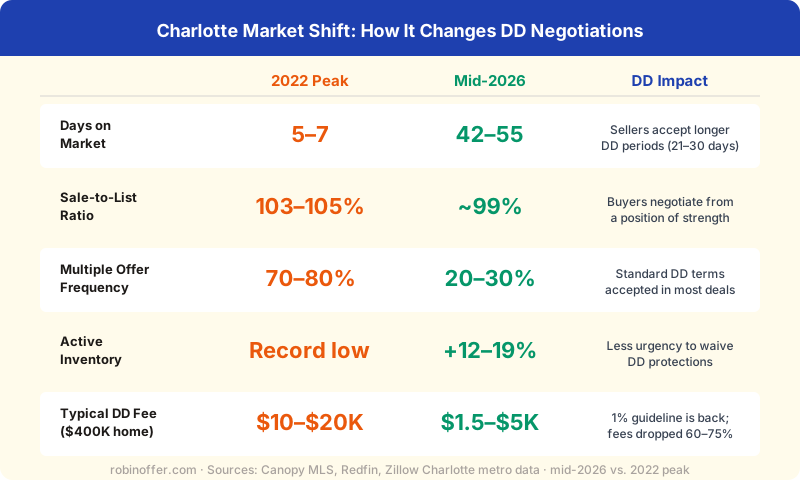
What This Means for Buyers in 2026
- DD periods: You can negotiate 21–30 days in most situations. The 14-day or 7-day DD periods that sellers demanded in 2021–2022 are largely gone outside of SouthPark and Myers Park.
- DD fees: The 1% guideline is back in play. You shouldn't need to exceed $5,000 on a home under $500K unless you're in a multiple-offer situation.
- Repair credits: Sellers are more willing to negotiate credits. In a market where the next buyer might ask for the same thing, and they'll have to start the DD clock over again, conceding a $5,000 credit is often cheaper than losing 30+ days.
What This Means for Sellers in 2026
- DD fees matter more per deal. When you were getting 12 offers in 2022, losing one buyer to a DD termination was a minor inconvenience. In 2026, losing your one buyer after 21 days on market means relisting at Day 62+, which is when buyers start asking, "What's wrong with this house?"
- Pre-listing inspections pay for themselves. A $500 inspection that prevents a DD termination saves you 30+ days of carrying costs. On a home with a $2,500/month mortgage, that's $2,500+ saved for a $500 investment.
- Price it right the first time. An overpriced home that sits for 30 days, gets one offer, and then loses the buyer during DD is now 51+ days old. That's the death zone for listing freshness. If you want to understand the timing dynamics, our guide to the best time to sell in the Carolinas covers seasonal patterns and how days on market affect your leverage.
The Carrying Cost of a DD Termination
When a buyer terminates during the DD period, the seller keeps the DD fee, but loses time. That time has a tangible cost. Here's what a DD termination costs a seller on a $400,000 Charlotte-area home with a $2,800/month mortgage, assuming 21 days of lost market time:
| Carrying Cost Component | 21-Day Cost | Notes |
|---|---|---|
| Mortgage payment (P&I + PMI) | $1,960 | $2,800/month prorated to 21 days (assumes 10% down at ~7%) |
| Property taxes | $225 | Based on $3,900 annual Mecklenburg County taxes |
| Homeowner's insurance | $105 | Based on $1,800 annual premium |
| Utilities (maintaining show-ready condition) | $175 | Electric, water, gas at reduced occupancy |
| Lawn/property maintenance | $100 | One mowing cycle plus maintenance |
| Total 21-day carrying cost | $2,565 | What the seller pays to hold the property during a failed DD period |
If the DD fee was $3,000, the seller nets $435 after carrying costs. If the DD fee was $1,500 (which is increasingly common in today's market), the seller is actually $1,065 in the hole after a DD termination. The fee doesn't fully compensate for the lost time, it just reduces the damage.
This math is why pre-listing inspections matter so much in 2026. A $500 inspection that prevents one DD termination saves the seller $2,500+ in carrying costs plus the intangible cost of a stale listing.
See your traditional sale options
Get a clear picture of how a traditional listing works in North Carolina — pricing, timeline, and what happens during due diligence — with ListRobin.
9. NC vs. SC: Why Crossing the Border Rewrites the Contract
If you're shopping in the Charlotte metro, you might look at homes in both North Carolina and South Carolina, Charlotte and Fort Mill, Gastonia and Rock Hill, Lake Norman and Lake Wylie. The due diligence system is completely different on each side of the state line, and the difference catches buyers and sellers off guard.
| Contract Feature | North Carolina | South Carolina |
|---|---|---|
| Standard contract form | Form 2-T (NC REALTORS + NC State Bar) | Varies, SC REALTORS forms or custom |
| Due diligence fee | Non-refundable, paid directly to seller on Day 1 | Not a standard feature, some contracts use "option fees" but they're not universal |
| Primary risk deposit | Two deposits: DD fee + earnest money | One deposit: earnest money held in escrow |
| Buyer's termination right | Unrestricted during DD period, any reason | Contingency-based, must cite inspection, financing, or appraisal contingency |
| Inspection contingency | Built into DD period, not a separate contingency | Separate written contingency with specific deadline |
| Financing contingency | Built into DD period | Separate written contingency with specific deadline |
| Closing attorney requirement | Yes, NC attorney must supervise closing | Yes, SC attorney must supervise closing |
The Practical Difference
In NC, the buyer's freedom is front-loaded. You can walk away for any reason during DD, but you lose the DD fee. After DD, you're committed.
In SC, the buyer's freedom is contingency-specific. You can walk away under your inspection contingency if the inspection reveals problems. You can walk away under your financing contingency if your loan doesn't get approved. But you can't walk away because you "changed your mind", that costs you your earnest money.
For sellers, NC's system provides cash certainty (you keep the DD fee regardless) but timeline uncertainty (the buyer can ghost you during DD for any reason). SC's system provides more predictable reasons for termination but less upfront compensation.
What Catches Cross-Border Buyers Off Guard
The most common mistake we see from Charlotte-area buyers shopping both sides of the border: they write an offer on a Fort Mill or Indian Land home using NC assumptions. They expect to pay a DD fee directly to the seller. They expect an unrestricted termination right. Neither exists in SC's standard contract.
In South Carolina, the earnest money is your primary risk deposit. If you need to exit the contract, you must do so under a specific contingency, inspection, financing, or appraisal. Walking away "because you changed your mind" (which is perfectly legal during NC's DD period) costs you your earnest money in SC.
The flip side: SC buyers crossing into NC are often surprised that the DD fee goes directly to the seller from Day 1, not into escrow. They've never written a non-refundable check to someone they've never met. It feels risky. It is risky. That's the point, the fee compensates the seller for taking their home off the market while you investigate.
If you're considering homes on both sides of the border, our guides for Fort Mill and Rock Hill cover the SC contract process in detail.
10. The 2026 Form 2-T and Form 4-T Updates That Matter
The NC REALTORS and NC State Bar update the standard contract forms periodically. The 2025 and 2026 updates included changes that directly affect how the due diligence period works.
Form 2-T Changes (2026 Version)
The most significant change to the 2026 Form 2-T is in Paragraph 1(i), the due diligence fee delivery timing:
Old language: The DD fee must be "payable and delivered to Seller" by the Effective Date.
New clarification (2026): If the DD fee is not paid on the Effective Date, the buyer is not considered in breach until the end of the next banking day. This gives buyers a one-day grace period, not an extension of the DD period itself, just a window to get the payment processed without being in immediate default.
This change addresses a practical problem: contracts often become effective in the evening or on a weekend. A buyer who signs at 8 PM on a Friday couldn't physically deliver a check until Monday. The 2026 language prevents sellers from claiming a breach over weekend timing.
Form 4-T Changes (2025 Version)
Form 4-T is the Agreement to Amend Contract, the form used to modify the purchase contract after execution. The 2025 updates added two significant capabilities:
- DD period can now be shortened or extended. Previously, Form 4-T only allowed extensions of the DD period. The 2025 version allows shortening as well. This matters when a buyer has completed all inspections and appraisal early and wants to lock in their commitment, shortening the DD period removes the seller's risk of a late termination.
- Buyer or seller removal from contract. A new paragraph was added allowing one party to be removed from the contract without terminating the entire agreement. This is relevant in co-buyer situations (e.g., one buyer drops off but the other continues) or in divorce situations where one spouse needs to be removed from the purchase.
- DD fee payment direction clarified. New language was added to inform the buyer/buyer's agent that the seller or seller's agent can direct the method and destination of the DD fee payment. This reduces confusion about where and how the DD fee gets delivered.
11. Five DD Period Mistakes That Cost NC Homeowners Thousands
We see the same mistakes repeat across hundreds of transactions. Here are the five that cost the most money, and all of them are preventable.
Mistake 1: Missing the DD Deadline (Buyer)
This is the most expensive mistake a buyer can make. If you decide to terminate but miss the DD deadline by even an hour, you forfeit both the DD fee and the earnest money. On a $400K home with a $3,000 DD fee and $4,000 earnest money, missing the deadline turns a $3,000 exit into a $7,000 exit.
Prevention: Set three separate calendar alerts for the DD deadline, 72 hours before, 24 hours before, and the morning of. Your agent should do the same. And know this: termination must be delivered in writing under Paragraph 21 of Form 2-T. A phone call doesn't count. Here's what does count as valid delivery:
- Hand delivery to the seller or seller's agent
- Email to the address specified in the contract's notice provisions
- Fax to the number in the contract (yes, some offices still use fax)
- Overnight courier (FedEx, UPS), but check the contract's delivery-date rules
A text message alone is risky, unless the contract specifically authorizes text as a notice method, don't rely on it for termination. Send a written termination notice via email to your agent and the seller's agent, then follow up with a phone call to confirm receipt. Get written confirmation that the notice was received. Do this before midnight on the DD expiration date, not at 11:58 PM.
Mistake 2: Skipping Inspections to Save Money (Buyer)
A general home inspection costs $400–$600. Skipping it to "save money" on a $350,000 purchase is like declining a $15 oil change on a $40,000 car. The math makes no sense.
We've seen buyers skip inspections on new construction because "it's brand new." New homes have defects. Every builder delivers punch list items, and some deliver structural problems that a $500 inspection would have caught. NC law gives you the DD period to inspect. Use it.
Prevention: Always get a general inspection. Add radon ($150–$200) and pest/termite ($75–$125) at minimum. For homes with septic systems, wells, or pools, add those specialists too. Total cost: $700–$1,200. Insurance against a $10,000–$30,000 surprise.
Mistake 3: The Sunk-Cost Trap (Buyer)
The inspection finds $20,000 in problems. The buyer already paid a $3,000 DD fee. The buyer thinks: "I can't lose $3,000." So they close on the house and inherit the $20,000 problem.
The DD fee is gone whether you close or walk away. It's a sunk cost. The only question is: do you want to spend $3,000 (walk away) or $23,000 (close and fix)?
Prevention: Before making the DD fee decision, run the numbers. Write down the cost to terminate (DD fee only). Write down the cost to close (purchase price + repairs + carrying costs). Compare. The math usually makes the decision obvious.
Mistake 4: Not Preparing for DD as a Seller
Disorganized sellers lose deals during DD. When the buyer's agent requests the HOA documents on Day 2 and the seller says "I'll look for those," the clock is already ticking. When the buyer asks about a permit for the deck addition and the seller says "I think the previous owner did that," the buyer starts calculating risk.
Prevention: Before listing, assemble your DD packet: disclosure forms (completed), HOA documents (budget, reserves, minutes, CC&Rs), warranties and manuals, survey, permit records, insurance claims history, repair receipts. Hand it to your agent on listing day. When the buyer's agent calls on Day 1, your agent says "I'll send it over this afternoon." That response sets the tone for the entire transaction.
Mistake 5: Non-Disclosure of Known Issues (Seller)
A seller who knows about a defect and hides it isn't just risking a DD termination, they're risking a post-closing lawsuit. NC's Residential Property Disclosure Act (Chapter 47E) requires sellers to disclose conditions "of which the owner has actual knowledge." Checking "No Representation" when you know the answer is fraud.
The practical risk: the buyer discovers the defect during DD inspection, terminates, and you lose weeks of market time. Or worse, the buyer doesn't discover it during DD, closes, finds it later, and sues you for the repair costs plus damages. In either scenario, disclosure would have been cheaper.
Prevention: Disclose everything you know. Provide context when needed. If you're selling an inherited property and genuinely don't know the home's condition history, our guide to selling inherited property in North Carolina covers the disclosure strategy for situations where "No Representation" is actually appropriate.
Bonus Mistake: Confusing "Due Diligence Period" with "Inspection Contingency"
This one shows up constantly with out-of-state agents and buyers from Georgia, Virginia, Tennessee, and Florida. In those states, you have a distinct inspection contingency, typically 7–10 days during which the buyer can only terminate for inspection-related reasons. NC's DD period is broader: it covers inspections, financing, appraisal, insurance, title, HOA review, and literally any other reason the buyer wants.
The confusion creates two problems:
- Buyers under-utilize the DD period because they treat it like an inspection-only window. They order the home inspection but don't bother reviewing HOA documents, pulling permits, or confirming insurance availability, all things the DD period is designed for.
- Sellers misunderstand their exposure because they think the buyer can only terminate for inspection findings. When the buyer terminates because their financing fell through on Day 18, the seller feels cheated. They weren't, the contract was clear. But the seller didn't understand the scope of the buyer's termination right.
If you're an agent working with out-of-state clients, walk them through the full scope of the DD period on Day 1. The 90-second conversation saves hours of confusion later.
12. NC Real Estate Resources: Attorneys, Counselors, and Regulatory Contacts
North Carolina requires a licensed attorney to supervise all residential real estate closings. If you're buying or selling and need legal guidance on your due diligence rights, these resources can help.
Regulatory Bodies
| Organization | Role in DD Process | Contact |
|---|---|---|
| NC Real Estate Commission (NCREC) | Regulates real estate brokers, publishes official DD period guidance via bulletins | (919) 875-3700 · ncrec.gov |
| NC REALTORS | Co-authors Form 2-T with NC State Bar, publishes risk management guidance | (336) 294-1415 · ncrealtors.org |
| NC State Bar | Co-authors Form 2-T, regulates closing attorneys, issues ethics opinions | ncbar.gov |
| HUD Housing Counseling | Housing counseling hotline, certified counselor directory | (800) 569-4287 · hud.gov/counseling |
Charlotte-Area Real Estate Attorneys
These firms handle residential real estate closings and can advise on due diligence period issues. This is not an endorsement, we recommend interviewing at least two attorneys before selecting one.
| Firm | Location | Phone | Specialties |
|---|---|---|---|
| McGrath & Spielberger, PLLC | 6201 Fairview Road, Suite 330, Charlotte | (704) 271-5000 | Residential closings, foreclosure defense |
| Berger & Kindberg Law, PA | 5925 Carnegie Blvd, Suite 200, Charlotte (SouthPark) | (704) 900-3816 | Residential closings, real estate litigation, partition actions |
Housing Counselors and Legal Aid
| Organization | Services Offered | Contact |
|---|---|---|
| Charlotte Center for Legal Advocacy | HUD-certified housing counseling, consumer protection | (704) 376-1600 |
| Legal Aid of North Carolina | Foreclosure defense, fair housing, eviction help (income-qualified) | 1-866-219-5262 · legalaidnc.org |
| NC Housing Finance Agency (NCHFA) | Find a housing counselor, Homeowner Assistance Fund | nchfa.com |
| NC Equal Justice Alliance | Foreclosure prevention, property tax assistance, HAF applications | ncequaljusticealliance.org |
| Land Loss Prevention Project | Preventing property loss, heirs property issues, agricultural land | (800) 672-5839 |
NCREC Bulletins on Due Diligence (Official Guidance)
The NC Real Estate Commission publishes bulletins that serve as the authoritative interpretation of DD period rules. These are the ones that matter most:
- Due Diligence Questions and Answers, comprehensive Q&A covering buyer rights, broker obligations, and common scenarios
- Due Diligence Fees: When Must They Be Deposited?, timing requirements for DD fee delivery
- Due Diligence Fees: When Are They Refunded?, refund conditions and seller breach scenarios
- But the Seller Breached: When Should DD Fees Be Refunded?, detailed analysis of breach-triggered refunds
13. What to Do With This Information, Your DD Decision Framework
The NC due diligence period is designed to protect both sides of a real estate transaction, but only if you use it strategically. Buyers who procrastinate on inspections, skip the appraisal order, or fall into the sunk-cost trap end up overpaying. Sellers who don't prepare their records, hide known defects, or overprice their home end up losing deals and weeks of market time.
Here's what to do next, depending on where you are:
If You're Buying
- Day of contract execution: Deliver DD fee, schedule inspection, call your lender to order the appraisal.
- First week: Complete inspections, request HOA docs, pull permits, get insurance quotes.
- Second week: Negotiate repairs or credits. Review appraisal results.
- Before DD expires: Make your decision. Proceed or terminate in writing.
If You're Selling
- Before listing: Complete your RPOADS honestly and thoroughly. Gather all records, permits, warranties, HOA documents, surveys, insurance claims. Consider a pre-listing inspection to eliminate surprises.
- During DD period: Respond promptly to buyer document requests. Maintain the property in its current condition. Keep utilities on. Don't start packing or removing fixtures, that's a potential contract breach.
- If the buyer terminates: Don't take it personally. The DD system is designed to allow terminations. Relist promptly. If the termination was inspection-driven, consider whether a price adjustment or repair is warranted before the next buyer finds the same issue.
- If multiple buyers terminate during DD: That's a signal, not bad luck. Either the inspection is revealing a problem you should fix, or your price is higher than what the property appraises for. Address the root cause before listing again.
If You're Exploring Your Options
If you're a homeowner thinking about selling and want to understand what your home might be worth before entering any contract, get a free home value estimate to see where you stand. No DD fee, no contract, no commitment, just the numbers.
And if you'd rather skip the DD period entirely and sell to a cash buyer, get a no-obligation cash offer from our team. Cash sales often shorten or eliminate the DD period, which means faster closing and less uncertainty for sellers who want to avoid the 21-day waiting game and the risk of a late termination blowing up their timeline.
The DD period is the one window where you have leverage, information, and an exit. Use every day of it. Order the appraisal on Day 1. Get insurance quotes by Day 7. Make your termination decision by Day 19, not Day 21 at 11 PM. The system works when both sides understand the rules and move quickly. Now you do.
Ready to plan your sale?
Explore how to list and sell your NC home the traditional way with ListRobin's step-by-step guidance.
14. Frequently Asked Questions About the NC Due Diligence Period
What is the due diligence period in North Carolina real estate?
North Carolina's due diligence period gives buyers a negotiated window, typically 14 to 30 days, to inspect, appraise, and secure financing on a home before committing to close. During this period the buyer can terminate the contract for any reason. The buyer pays a non-refundable due diligence fee directly to the seller at contract execution as compensation for taking the home off the market.
How much is a typical due diligence fee in North Carolina?
The general guideline is roughly 1% of the purchase price, but amounts vary by market conditions. In the Charlotte metro in mid-2026, most buyers pay $1,500 to $5,000 on homes in the $300K-$500K range. Competitive neighborhoods like SouthPark and Lake Norman can see DD fees of $5,000 to $20,000 or more.
What is the difference between a due diligence fee and earnest money in NC?
The due diligence fee is paid directly to the seller at contract execution and is non-refundable from Day 1. Earnest money is held in escrow by the closing attorney and is refundable if the buyer terminates during the DD period. If the buyer terminates after the DD period expires, the seller keeps both deposits.
Can a buyer get the due diligence fee refunded in NC?
The DD fee is non-refundable by default. Refunds occur only in narrow circumstances: the seller can't deliver marketable title, material property damage occurs before closing, the seller materially breaches the contract, or an addendum contains specific refund conditions. A seller's misrepresentation on the disclosure form does not automatically trigger a DD fee refund.
How does the NC due diligence period differ from South Carolina contracts?
NC uses a single due diligence period with an unrestricted termination right and a non-refundable DD fee paid directly to the seller. SC uses separate contingencies (inspection, financing, appraisal) with earnest money held in escrow. In NC the buyer can walk away for any reason during DD; in SC the buyer must cite a specific contingency to exit without losing earnest money.
This guide is for educational purposes only and does not constitute legal advice. North Carolina real estate transactions involve complex legal obligations. Consult a licensed NC attorney for advice specific to your situation. Information current as of June 2026, contract forms and market conditions change. Verify current data before making financial decisions.