
Inherited a House
in South Carolina?
SC probate court, taxes, carrying costs, and every option for heirs — written in plain English, not legal jargon.
1. A Letter to You: What to Do When You Inherit a House in South Carolina
If you're reading this, chances are you just lost someone you love. A parent. A grandparent. Someone who was the anchor of your family. And now, on top of the grief and the funeral arrangements and the sheer exhaustion of it all, someone has told you that you've inherited a house in South Carolina.
Maybe you grew up in that house. Maybe you haven't visited in years. Maybe you live in Charlotte or Atlanta or somewhere across the country, and you're wondering how you're going to manage a property hundreds of miles away.
If the inherited property is in North Carolina, see our NC inherited property guide. The probate process is meaningfully different.
If you specifically need a probate-process walkthrough (appointment, creditor timing, title transfer sequence), use our How Probate Works in South Carolina guide.
If the house is in York County (York, Rock Hill, Fort Mill, Tega Cay, Clover, or Lake Wylie), see our York County inherited-home guide for local probate court details, carrying costs, and selling options with York County numbers.
Whatever your situation, I want you to know two things.
First: there is no rush to make a major decision right now. Despite what you might hear from people eager to buy the property (and they will call, they will send letters, they may even knock on the door), you have time. Not unlimited time, because carrying costs are real, but enough time to make a smart decision rather than a pressured one.
Second: this guide was written for you, not for attorneys or real estate investors. I'm going to walk you through the entire process of inheriting property in South Carolina: the SC Probate Court system, taxes, costs, your options, and how to sell if that's the right move. All in plain English, with no legal jargon and no sales pitch disguised as advice.
By the time you finish reading, you'll understand exactly where you stand and what to do next.
Your First 72 Hours: What to Do Right Now
You don't need to figure out everything today. But there are a few things that are genuinely time-sensitive. Here's what to handle this week:
- Secure the property. If the house is now vacant, change the locks, make sure all doors and windows are secured, and set the thermostat to prevent frozen pipes (55°F minimum in winter, because SC winters can get cold enough). Forward the deceased's mail.
- Locate the will. Check the deceased's home (filing cabinets, safe, desk drawers), their attorney's office, and the Probate Court in their county. If there's no will, that's okay. We'll cover what happens in Chapter 2.
- Check the homeowner's insurance. This is urgent. Call the insurance company and notify them of the death. Most policies have vacancy clauses that can void coverage after 30 to 60 days. Ask about adding yourself as an additional insured or converting to a vacant-property policy. Do not let the insurance lapse.
- Find out if there's a mortgage. Check the deceased's mail, bank statements, and loan documents. If there's a mortgage, call the servicer to notify them. The federal Garn-St. Germain Act prevents them from calling the loan due because of the death.
- Order death certificates, at least 10 certified copies. You'll need them for the bank, insurance company, mortgage servicer, Probate Court, title company, and more. The funeral home usually orders the first batch; if you need extras, contact DHEC Vital Records in Columbia at (803) 898-3630 ($12 standard / $17 expedited).
- Cancel or redirect recurring payments. Check the deceased's bank accounts for auto-pay subscriptions (streaming, cell phone, gym, newspapers) that will keep draining funds. Notify credit card companies. File a "deceased" notice with the three credit bureaus (Equifax, Experian, TransUnion) to prevent identity theft.
- Do not sign anything from anyone trying to buy the property. Investors monitor probate filings and obituaries. Take your time.
What About the Belongings?
You're not just inheriting a house. You're walking into someone's life. Decades of furniture, clothing, photo albums, and the little things that remind you of them every time you open a drawer.
- You do not need to clear the house right away. The belongings can stay for now unless there's a specific safety concern.
- Gather important documents first. Look for: the will, life insurance policies, bank statements, property deed, mortgage documents, tax returns, and vehicle titles.
- If there are multiple heirs, agree on a process before dividing anything. Each person lists the sentimental items that matter most, compare lists, and take turns choosing where there's overlap.
- Estate sale companies typically charge 25%–40% of gross sales. They handle sorting, pricing, advertising, and the sale itself. In Columbia, Charleston, and the Greenville-Spartanburg area you'll find plenty of options, so get at least two quotes.
- Donate what's left to Habitat for Humanity ReStore, Goodwill, or a local charity for a tax deduction.
Take a breath. Take photos. Give yourself permission to grieve while handling the logistics.
2. How Probate Works in South Carolina
South Carolina handles probate differently from neighboring North Carolina, and the differences matter when you've inherited real estate. Here's what you need to know.
The Key SC Difference: Real Property Goes Through Probate
Unlike North Carolina where real property often passes directly to heirs outside the estate, in South Carolina, real property must go through the probate process. The property is considered part of the estate and requires a Deed of Distribution from the Probate Court to formally transfer ownership to the heirs.
What this means: you cannot sell the inherited house until the probate process has progressed far enough for the court to authorize the transfer or sale. This adds time, but it also provides a clear legal framework that protects everyone involved.
SC Has a Dedicated Probate Court
South Carolina has a dedicated Probate Court in each county, separate from the Circuit Court. This is different from NC, which uses the Clerk of Superior Court. The SC Probate Court handles:
- Appointment of the personal representative (executor or administrator)
- Validation of the will
- Oversight of estate administration
- Issuance of the Deed of Distribution for real property
- Resolution of disputes among heirs
Find your county's Probate Court at sccourts.org/probate.
Informal vs. Formal Probate: SC Gives You Options
South Carolina offers two probate tracks:
| Feature | Informal Probate | Formal Probate |
|---|---|---|
| Court hearing required? | No, administrative process | Yes, judge presides |
| Timeline | Faster (weeks for appointment) | Slower (requires scheduling hearing) |
| Cost | Lower court fees | Higher fees + possible attorney costs |
| When used | Uncontested estates, clear will, cooperative heirs | Contested wills, disputes, complex estates |
| Can convert? | Yes, can convert to formal if disputes arise | N/A |
If the estate is straightforward (clear will, no disputes, cooperative heirs), informal probate is faster, cheaper, and less stressful. Your attorney can advise which track is appropriate.
What to Bring to the Probate Court
When you go to open the estate, bring:
- The original will (if there is one; copies are not accepted)
- A certified death certificate
- Your valid photo ID
- A copy of the obituary or funeral program listing surviving family members
- Information about the deceased's assets and debts (approximate values are fine)
- Names and addresses of all heirs and beneficiaries
- The filing fee ($25–$150, varies by county and estate value)
Call the Probate Court ahead of time to confirm hours and requirements. Find your county's court at sccourts.org/probate.
What If There's a Will?
- File the will with the Probate Court in the county where the deceased lived
- Apply for appointment as personal representative (informal or formal track)
- Receive Letters Testamentary granting authority to act
- Publish notice to creditors (SC requires publication in a newspaper of general circulation)
- Inventory and manage estate assets
- Pay debts and distribute property according to the will
What If There's No Will? (Intestate Succession)
South Carolina's intestate succession laws determine who inherits:
| Surviving Family | Who Inherits |
|---|---|
| Spouse only, no children | Spouse inherits entire estate |
| Spouse + children | Spouse gets ½; children share ½ equally |
| Children only, no spouse | Children share equally |
| No spouse, no children | Parents → then siblings → then extended family |
The Probate Court appoints an administrator who receives Letters of Administration and follows the same process as executor-led probate, but with intestate distribution rules.
The Deed of Distribution: The Key Document
This is the document unique to SC probate that you need to understand. The Deed of Distribution is issued by the Probate Court and formally transfers the real property from the estate to the rightful heir(s). Without it, you do not have marketable title and cannot sell the property to a traditional buyer.
The personal representative petitions the court for the Deed of Distribution after debts are paid and the estate is ready for distribution. Once granted, the deed must be recorded with the county Register of Deeds to update the public record.
3. How Long Does Probate Take in SC? Month-by-Month Timeline
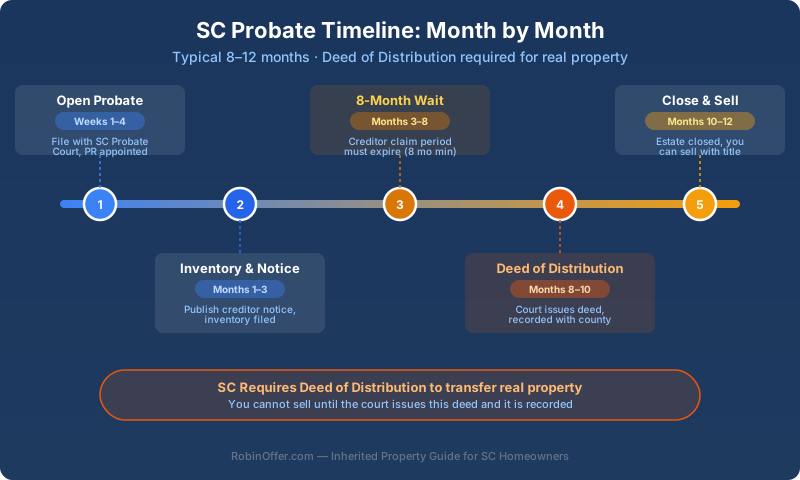
The short answer: 8 to 12 months for most SC estates. Uncomplicated cases with cooperative heirs sometimes finish in 6 months. Contested estates (disputed wills, fighting siblings, tangled titles) can stretch past 18 months.
| Timeframe | What Happens |
|---|---|
| Week 1–2 | File the will with SC Probate Court. Apply for Letters Testamentary (with will) or Letters of Administration (no will). Choose informal or formal probate track. |
| Month 1 | Personal representative appointed. Estate bank account opened. Creditor notice published. Asset inventory begins. |
| Months 1–8 | Full inventory filed. Property valuations obtained. Bills managed. Creditor claim period runs (8 months from appointment in SC, longer than most states). |
| Months 8–10 | Creditor claims resolved. Debts paid. Personal representative petitions for Deed of Distribution for real property. Final accounting prepared. |
| Months 10–12 | Deed of Distribution issued and recorded. Remaining assets distributed. Final tax returns filed. Estate closed. |
What Can Delay the Timeline
- Disputes among heirs: disagreements about selling can add 6+ months and force conversion to formal probate
- Contested will: triggers formal probate with court hearings
- Title problems: liens, missing deeds, or unclear chain of ownership
- Debts exceeding assets: insolvent estates require creditor prioritization
- Out-of-state property: property in another state requires ancillary probate
Can the Personal Representative Sell Before Probate Is Finished?
Yes, if:
- The will explicitly grants the personal representative authority to sell real property
- The court grants permission for a sale (usually to pay debts or estate expenses)
- All interested parties consent
The sale proceeds become part of the estate and are distributed according to the will or intestate laws. An heir cannot independently sell before receiving the Deed of Distribution.
4. How Much Does It Cost? Probate Fees, Carrying Costs & Insurance Gaps
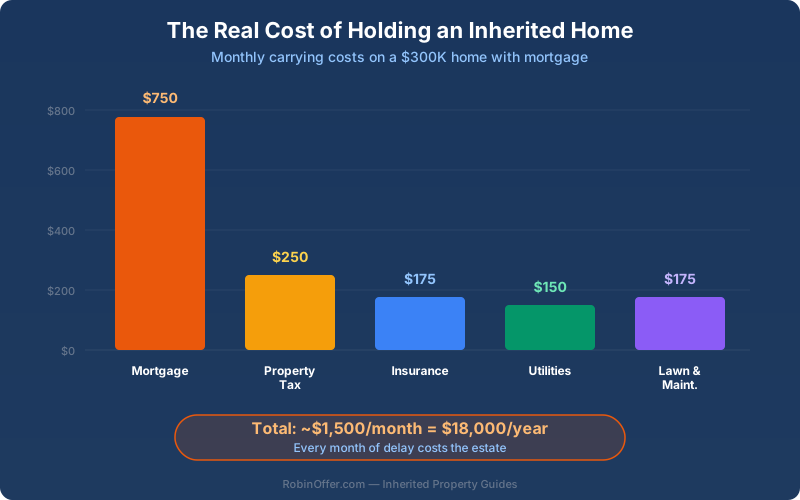
Here's what catches most heirs off guard: that house isn't just sitting there. It's costing you money every single month, whether anyone lives in it or not.
SC Probate Costs
| Cost | Typical Amount | Notes |
|---|---|---|
| Court filing fees | $25–$150 | Varies by county and estate value |
| Attorney fees | $2,500–$6,000+ | Straightforward estate. Complex: $10,000+ |
| Personal representative compensation | Up to 5% of appraised estate value | Family members often waive this |
| Appraisal fee | $350–$500 | For property valuation (establishes step-up basis) |
| Title search | $200–$400 | To confirm clear title |
| Deed of Distribution recording | $25–$50 | County Register of Deeds fee |
| Publication of notice | $50–$150 | Required newspaper notice to creditors |
Total probate costs for a typical SC estate: $3,500–$8,000. This comes out of the estate, not your personal funds.
Monthly Carrying Costs: The Silent Drain
| Expense | Monthly Estimate (on $300K SC home) | Annual |
|---|---|---|
| Property taxes | $125–$200 | $1,500–$2,400 |
| Homeowner's insurance | $150–$275 | $1,800–$3,300 |
| Utilities (electric, water, gas, even vacant) | $100–$200 | $1,200–$2,400 |
| Lawn care / exterior maintenance | $75–$150 | $900–$1,800 |
| HOA dues (if applicable) | $50–$350 | $600–$4,200 |
| Mortgage payment (if remaining loan) | $1,200–$2,000+ | $14,400–$24,000+ |
| Unexpected repairs | $100–$300 (averaged) | $1,200–$3,600 |
Every SC estate is different. Plug your own mortgage, taxes, insurance and upkeep into our cost-of-waiting calculator to see the real number for this house.
SC Property Tax Advantage
One piece of good news: South Carolina has relatively low property taxes compared to most states. SC assesses owner-occupied homes at 4% of fair market value (vs. 6% for non-owner-occupied). If the home was the deceased's primary residence and you plan to live there, you may qualify for the 4% assessment rate and the homestead exemption ($50,000 for those 65+).
However, if the property sits vacant or is used as a rental, it will be assessed at the 6% rate, a 50% increase in property taxes.
The Insurance Gap Nobody Warns You About
When the homeowner dies, their insurance doesn't automatically protect you:
- Vacancy clauses can void coverage after 30–60 days of an empty home
- The named insured is deceased and claims may be denied
- Change of ownership requires notification to the insurer
Call the insurance company in the first week. Ask about adding the estate or yourself as named insured. If the home will be vacant for more than 30 days, get a vacant-property endorsement or standalone policy ($1,000–$3,000/year).
Vacant homes in SC also face risks from humidity and storms. Mold moves fast in the Lowcountry, and coastal properties from Myrtle Beach to Hilton Head can take serious damage during hurricane season. Upstate properties in Greenville and Spartanburg have their own issue: frozen pipes in winter if the heat is off. Set the thermostat to at least 55°F year-round and have someone check the property monthly.
What If the House Has a Mortgage?
The Garn-St. Germain Act (federal law) prevents the lender from calling the loan due when property transfers to an heir. Your options:
- Assume the mortgage and continue existing payments
- Refinance with a new loan in your name
- Sell and pay off the balance from proceeds
- Walk away if the mortgage exceeds the value. You are not personally liable unless you signed the note
Keep making payments while you decide, because foreclosure proceedings don't pause for probate.
What If the House Has a Reverse Mortgage?
Reverse mortgages are increasingly common among SC homeowners 62 and older, and they work very differently from a traditional mortgage. When the borrower dies, the lender sends a "Due and Payable" notice within 30 days. You typically have 6 months to act (with possible extensions to 12 months).
- Pay off the loan from the estate or your own funds, and keep the house
- Sell the property and use the proceeds to repay the loan; keep the difference
- Pay 95% of the appraised value. If the loan balance exceeds the home's value, you only owe 95% of the current appraised value, not the full balance
- Walk away. Reverse mortgages are non-recourse loans. You can sign a deed in lieu of foreclosure and owe nothing beyond the property itself
The key thing to know: you will never owe more than the house is worth. Even if the reverse mortgage balance has grown to $350,000 and the house is worth $250,000, your maximum exposure is the house value. Don't walk away from equity because the loan balance looks scary.
Utility Transfers
Utility accounts are still in the deceased's name, but the bills keep coming. Contact each provider (electric, gas, water, internet, trash) within the first few weeks with a death certificate. You can transfer service to your name, the estate's name, or designate a responsible party. If the home will be vacant, ask about a minimum-use rate. Don't shut off water (frozen pipes in the Upstate) or electricity if there's a sump pump, security system, or refrigerator running.
Paying to maintain a home you didn't plan for?
SC probate takes 8–12 months minimum. Get a free, no-obligation cash offer on the property — any condition, no repairs or showings — before carrying costs eat into the estate.
5. Do You Pay Taxes on an Inherited House in SC?
If there's one chapter in this guide that should let you exhale, it's this one. The tax situation for inherited property in SC is genuinely favorable.
The Stepped-Up Basis
When you inherit property, your cost basis "steps up" to the fair market value on the date of death. This is the single most important tax concept for heirs.
| Scenario | Amount |
|---|---|
| Original purchase price (1990) | $65,000 |
| Fair market value at date of death (2026) | $310,000 |
| Your stepped-up basis | $310,000 |
| You sell for | $315,000 |
| Taxable capital gain | $5,000 |
Without the step-up, your gain would be $250,000. With it, just $5,000. Sell soon after inheriting, and you likely owe little or no capital gains tax.
What If You Keep the Property for Years?
The stepped-up basis freezes at the date-of-death value. Any appreciation after that date is taxable when you eventually sell. If you inherited at $310,000 and sell ten years later for $410,000, you owe capital gains on $100,000.
Two things in your favor:
- Inherited property automatically qualifies for long-term capital gains rates (0%, 15%, or 20% federally) regardless of how long you've owned it.
- If you move in and use it as your primary residence for 2 of the 5 years before selling you can exclude up to $250,000 in gains ($500,000 for married couples) under the Section 121 exclusion, on top of the stepped-up basis.
Bottom line: the tax advantage of the stepped-up basis is strongest when you sell early. If you're considering keeping or renting (Chapter 8), factor in that the tax benefit fades with time.
South Carolina State Taxes
- SC estate tax: None. South Carolina has no state estate tax.
- SC inheritance tax: None.
- SC capital gains tax: Taxed as ordinary income at SC rates (0%–6%, with a 44% deduction for net capital gains). The effective maximum rate is approximately 3.4%, significantly lower than the statutory top bracket.
- Federal capital gains tax: 0%, 15%, or 20% depending on your income bracket.
Federal Estate Tax
Almost certainly does not apply. The federal estate tax exemption for 2026 is $15 million per individual ($30 million for married couples). Unless the total estate exceeds that threshold, no federal estate tax is owed. This exemption will be indexed for inflation in future years.
SC Transfer Tax
When you sell, South Carolina charges a deed recording fee and transfer tax of $1.85 per $500 of the sale price, effectively $3.70 per $1,000. On a $300,000 sale, that's $1,110. This is higher than NC's $600 on the same sale.
6. Multiple Heirs & Disagreements: How to Handle It
If you're the only heir, skip ahead to Chapter 8. But if you inherited this property with siblings, cousins, or other family, this is where things get personal. I've watched families in Greenville, Columbia, and the Lowcountry come apart over a house that was supposed to be a blessing. Family disagreements derail more inherited property situations than probate, taxes, or market timing combined. The ones that go well? Someone had a direct conversation early.
How Co-Ownership Works in SC
Multiple heirs each own an undivided fractional interest, not a specific room but a percentage of the whole property. Three siblings inheriting equally each own one-third. This means:
- All owners must agree to sell. One person cannot unilaterally sell the property.
- All co-owners share carrying costs proportionally.
- Any co-owner can live there but may owe others fair rental value.
- Any co-owner can sell their own share but fractional interests are nearly impossible to sell to a third party.
Common Disagreements and Solutions
"I want to sell, my sibling wants to keep it."
- Buyout: The keeping sibling buys out the others at appraised value.
- Rent and share: Rent the property, split income, defer the decision.
- Mediation: A neutral mediator ($200–$400/hour) helps reach agreement. SC courts often require mediation before allowing partition.
"We all want to sell but disagree on terms."
Get 2–3 independent valuations. Data resolves disagreements faster than arguments.
Partition Actions in SC
If agreement is impossible, any co-owner can file a partition action in SC Circuit Court (not Probate Court; partition is a separate proceeding):
- Partition in kind: Court divides the property physically (rare for houses)
- Partition by sale: Court orders the property sold and divides proceeds
Partition actions cost $5,000–$15,000+ in legal fees and take 6–12 months. Court-ordered sales typically produce below-market prices. A negotiated resolution is almost always better.
How to Split the Proceeds
Once everyone agrees to sell:
- The closing attorney distributes proceeds at the closing table
- Estate debts, probate costs, and selling expenses come out first
- Since SC real property goes through probate, the personal representative typically receives the proceeds into the estate account and distributes per the will or intestate law
- Each heir reports their share of any capital gain on their own tax return
Get the split in writing before you list. A simple signed agreement prevents arguments at the closing table.
7. Title & Ownership Issues: Clearing the Path to Sell
Inherited property in South Carolina can come with title complications that you wouldn't encounter in a normal home sale. Understanding and resolving these early saves time, money, and headaches.
The Deed of Distribution: Why It Matters
In SC, you don't have marketable title until the Probate Court issues the Deed of Distribution. This is the legal document that formally transfers the property from the estate to you. Without it:
- No title company will insure the transaction
- No buyer's lender will approve a mortgage on the property
- You cannot provide clear title at closing
The personal representative petitions the court after debts are paid and the estate is ready for distribution. Timeline: depends on the creditor claim period (8 months minimum) and court processing time.
Common Title Issues with Inherited Property
- Unreleased liens: Mortgages, judgments, or mechanics' liens that were paid off but never formally released in the public record
- Missing chain of title: If previous transfers were never properly recorded (common with informal family transfers)
- Unpaid property taxes: Tax liens take priority over all other claims
- Boundary disputes: Encroachments or unclear property lines
- Heirs' property: Land passed down without wills or deeds across generations, creating a web of fractional interests (see below)
Heirs' Property in South Carolina: A Major Issue
Heirs' property is land that has been passed down informally (without a will, without a deed transfer, and without going through probate) across one or more generations. South Carolina has one of the highest concentrations of heirs' property in the nation, particularly in the Lowcountry, Gullah Geechee communities, and rural areas across the state.
According to the USDA, heirs' property accounts for an estimated $28 billion in lost land equity among Black families in the South. This is not a distant problem. It affects thousands of SC families right now.
Heirs' property creates serious problems:
- You can't sell it without the agreement (or court order) of every co-owner
- You can't refinance or get a home equity loan because no lender will accept unclear title
- You may not be able to insure it properly
- You can't qualify for FEMA disaster assistance without documented ownership
- Any co-owner can force a sale through a partition action, potentially selling the family property to a stranger
South Carolina adopted the Uniform Partition of Heirs Property Act (UPHPA), which provides critical protections:
- The court must order a fair market appraisal before any partition sale
- Co-owners who want to keep the property get a right of first refusal to buy out the petitioning owner
- If a sale is necessary, the court must order an open-market sale, not a courthouse auction
- The court considers sentimental value and long-term family connection to the land
If you suspect the inherited property is heirs' property, contact the Center for Heirs' Property Preservation in Charleston, the leading SC organization focused on this exact issue. They provide free legal assistance to qualifying families: heirsproperty.org.
How to Clear Title
- Get a title search ($200–$400) to identify all issues
- Hire a real estate attorney experienced in estate and title work
- File a quiet title action if ownership is disputed ($3,000–$10,000 depending on complexity)
- Obtain lien releases for any paid-off debts still showing on the record
- Record the Deed of Distribution with the county Register of Deeds once issued
Budget $500–$2,000 for straightforward title cleanup, more for complex cases. This is not optional. You cannot close a sale without clear title.
SC Legal Aid Resources
- SC Legal Services: Free legal help for qualifying residents. sclegal.org
- SC Bar Lawyer Referral Service: scbar.org. Initial consultations often $50
- SC Appleseed Legal Justice Center: Focuses on heirs' property and land loss prevention
- Center for Heirs' Property Preservation: Charleston-based nonprofit providing free legal help to heirs' property owners. heirsproperty.org
Worried about title issues or heirs' property in SC?
We work with inherited properties regularly and can make a cash offer once the Deed of Distribution clears. No repairs, no showings, no obligation.
8. Your Options: Keep It, Sell It, or Rent It Out
You've sat through the probate rules, the costs, and the potential complications. Now for the question you've probably been asking since page one: what do I actually do with this house?
Option 1: Keep It and Move In
When it makes sense:
- You need a home and the property works for your life
- The property is in good condition
- You can afford ongoing costs
- You qualify for SC's owner-occupied 4% assessment rate (vs. 6% for non-owner-occupied)
To consider: You'll need the Deed of Distribution, new insurance, deed updates, and potentially a mortgage assumption or refinance.
Option 2: Rent It Out
When it makes sense:
- The property is in a desirable rental market
- Rent exceeds carrying costs by a meaningful margin
- You're prepared for landlord responsibilities or will hire a property manager (8%–10% of rent)
To consider: SC landlord-tenant law compliance, the 6% non-owner-occupied tax assessment, and the fact that holding the property long-term means your eventual capital gain grows beyond the stepped-up basis.
Option 3: Sell the Property
When it makes sense:
- Carrying costs are draining funds
- Multiple heirs want to split proceeds
- The property needs repairs you don't want to invest in
- You want to lock in the stepped-up basis tax advantage
- You live out of state and don't want to manage a remote property
A Decision Framework
| Question | If Yes… |
|---|---|
| Do you live near the property? | Keep or rent are more practical |
| Do you live out of state? | Selling is usually simpler |
| Are there multiple heirs? | Selling and splitting proceeds avoids disputes |
| Does the property need major repairs? | Cash sale avoids repair investment |
| Do you need money within 60 days? | Cash sale is the fastest option |
| Can you afford $1,400+/month in carrying costs? | If not, sooner sale protects the estate |
What If There's a Tenant in the Property?
If the deceased was renting the property to a tenant, you inherit the lease agreement. The tenant's rights don't end because the owner died.
- An active lease must be honored until expiration. The estate steps into the landlord's role.
- A month-to-month tenancy can be ended with proper written notice (SC generally requires 30 days).
- Send a "change of management" notice so the tenant knows who to contact and where to send rent.
- The security deposit transfers with the property, and you're responsible for returning it per SC law.
- If selling you can sell with the tenant in place (investor buyers often want occupied rentals) or wait for the lease to expire. "Cash for keys" (offering the tenant money to vacate voluntarily) is often faster and cheaper than eviction.
HOA Transfers and Fees
If the property is in an HOA community, contact them right away:
- Submit a change-of-ownership notification with a death certificate
- Pay any transfer fee ($100–$500 depending on the community)
- Resolve any outstanding violations or fines that accumulated during the transition
- Check for rental restrictions if you're considering renting
Unpaid HOA dues are a lien on the property and must be cleared before closing. In SC communities with active HOAs (common in Fort Mill, Bluffton, and the Myrtle Beach area), these can add up fast.
Get Your Free, No-Obligation Cash Offer
Tell us about the inherited property and we'll send a real cash offer — any condition, no repairs or showings, and you close on your timeline. Free and confidential.
9. How to Sell an Inherited House in SC Step by Step
Selling inherited property in South Carolina takes more steps than a normal sale. The Deed of Distribution alone adds a layer you won't find in most states. But it's a clear process once you know what's coming.
Step 1: Complete Probate and Get the Deed of Distribution
Unlike NC where you may be able to sell before probate closes, SC generally requires the Deed of Distribution before you have marketable title. Options for earlier sales:
- If the will grants the personal representative authority to sell, they can sell during probate (proceeds go into the estate)
- The court can authorize a sale if needed to pay debts
- If all heirs and the personal representative agree, the court may approve an early sale
Step 2: Get a Property Valuation
- Formal appraisal: $350–$500. Required for tax basis documentation.
- CMA from a real estate agent: Free. Good for pricing.
- Cash offer: Free evaluation from a cash buyer. Useful for comparison.
Step 3: Clear Title Issues
Run a title search and resolve any liens, missing deeds, or ownership disputes before listing. Budget $200–$400 for the search and additional for any cleanup needed. See Chapter 7 for details.
Step 4: Choose Your Selling Method
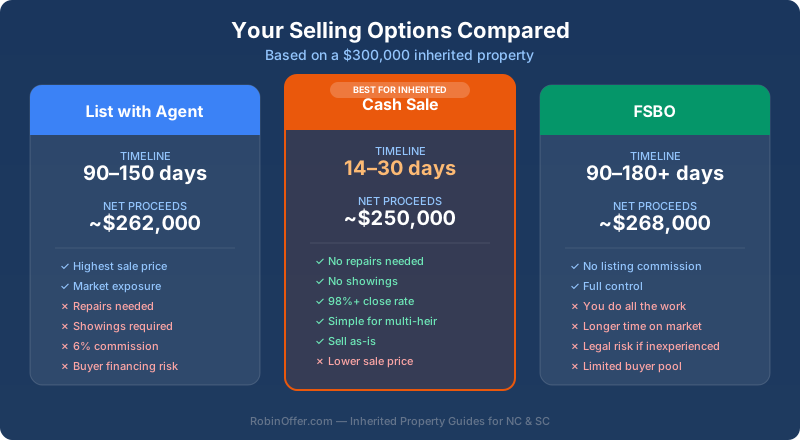
| Method | Timeline | Net Proceeds ($300K home) | Best For |
|---|---|---|---|
| List with agent | 90–150 days | ~$260,000 (after 6% commission + closing costs) | Good condition, no time pressure |
| Cash sale | 14–30 days | ~$240,000–$258,000 | As-is, fast closing, multiple heirs |
| FSBO | 90–180+ days | ~$266,000 (no listing agent commission) | Experienced sellers with time |
If listing traditionally and timing matters, see our guide on the best time to sell in the Carolinas.
Step 5: Prepare the Property
If listing traditionally: remove belongings, deep clean, handle critical repairs, consider staging.
If selling for cash: most buyers purchase as-is, so skip repairs, and many will let you leave furniture behind.
Step 6: SC-Specific Closing Requirements
- SC Seller's Disclosure: South Carolina requires a residential property condition disclosure statement. Estates may qualify for a partial exemption if the heir never lived in the home, but you must still disclose known material defects.
- Transfer tax: $1.85 per $500 of sale price ($1,110 on $300K).
- Deed type: The personal representative provides a Personal Representative's Deed or Special Warranty Deed.
- Attorney closing: SC is an attorney-close state. Budget $500–$900 for the seller's attorney.
- Title insurance: Budget $1,000–$2,500 for the buyer's required policy.
10. How to Sell an Inherited House Fast in South Carolina
SC's 8-month creditor period means you've likely been waiting a long time to get here. By the time you can actually sell, you may have already spent $11,000–$14,000 in carrying costs just waiting for the Deed of Distribution. Adding another 4–5 months for a traditional listing? That's hard to stomach. A cash sale won't get back the money you've already spent, but it stops the meter running.
The SC Math: Why Timing Matters More Here
In most states, you could list the house during probate and close when you're ready. In South Carolina, the 8-month creditor period means you've been paying carrying costs for the better part of a year before you even have the Deed of Distribution. By the time you can sell, the estate has likely spent $11,000–$14,000 just holding the property.
Adding a traditional listing on top of that (3 to 5 months of showings, repairs, and buyer negotiations) means another $4,200–$8,500 in carrying costs. A cash sale compresses that to 14–30 days.
Why Cash Works for SC Inherited Property
- You've already waited 8+ months. After the creditor period and Deed of Distribution, most heirs want this done, not another season of open houses.
- As-is condition: A house that's been sitting through SC summers (humidity, mold risk) and winters may need work you don't want to invest in. Cash buyers take the property as they find it.
- Multi-heir resolution: After months of managing an estate together, siblings are ready for a clean number and a clean split. One decision, done.
- Out-of-state heirs: If you've been managing this from Charlotte, Atlanta, or further away, you've been making long-distance calls and coordinating property checks for the better part of a year. A cash sale means one final trip to sign the paperwork.
- Certainty after uncertainty: After 8–12 months of probate, the last thing you need is a buyer's financing falling through. Cash closes at 98%+ rates.
Cash Sale vs. Traditional Listing: After the 8-Month Wait
| Factor | List with Agent | Sell for Cash |
|---|---|---|
| Timeline after Deed of Distribution | Add 90–150 days | 14–30 days |
| Total time from death to closing | ~12–17 months | ~9–10 months |
| Repairs needed | $5K–$20K (after months of vacancy) | None, as-is |
| Showings | 10–30+ (more coordination) | One walkthrough or none |
| Out-of-state seller friendly | Difficult after months of remote management | One final trip |
| Multiple heirs | All must agree on agent, price, repairs, showing schedule | One number, one signature |
| Additional carrying costs (post Deed) | $4,200–$10,200 (3–7+ more months) | $700–$2,550 (0.5–1.5 months) |
| Total estimated carrying costs (full process) | $15,000–$24,000+ | $11,000–$16,000 |
| Agent commission | 5%–6% ($15K–$18K on $300K) | $0 |
| Certainty of close | ~85% (deals fall through) | ~98%+ (cash is cash) |
How to Get a Fair Cash Offer
- Get multiple offers at least 2–3 from different buyers
- Ask how they calculated the number. Comps, repair estimates, and margin should be transparent
- Watch for red flags: pressure to sign immediately, non-refundable deposits they ask YOU to pay, assignment clauses (wholesaler, not a buyer)
- Have an attorney review any contract ($200–$400)
- Verify proof of funds: bank statement or bank letter showing they have the money
For more on identifying legitimate cash buyers and avoiding scams, see our complete Cash Offer Guide for the Carolinas.
Want a cash offer on the inherited property?
No repairs, no showings, no waiting for a buyer's mortgage. A cash buyer can close as soon as the Deed of Distribution clears — see what an offer looks like.
11. Common Mistakes That Cost SC Heirs Thousands
- Letting the insurance lapse. One uninsured incident can cost more than the property is worth. Keep coverage active from day one.
- Not getting an appraisal to establish stepped-up basis. Without documentation of the value at date of death, the IRS may use a lower figure, and you'll owe more in capital gains tax. $350–$500 now saves thousands later.
- Waiting too long to decide. At $1,400–$1,700/month in carrying costs, six months of indecision costs $8,400–$10,200. Set a deadline: 60 to 90 days after the funeral.
- Not understanding SC's Deed of Distribution requirement. You cannot sell without it. Start the probate process immediately so the clock starts ticking on the 8-month creditor claim period. Every week you delay filing is a week added to your timeline.
- Signing contracts with the first person who calls. Investors monitor probate filings and obituaries. Get multiple offers and have an attorney review any contract.
- Ignoring the mortgage. Missing payments triggers foreclosure regardless of probate status. Call the servicer, explain the situation, arrange continued payments or forbearance.
- Not communicating with co-heirs early. The longer disagreements fester, the harder and more expensive they are to resolve. Have an honest conversation within the first month.
- Spending money on major renovations. Unless the property is unsellable in its current condition, major renovations rarely return full cost. Cash buyers purchase as-is. If listing, focus on cosmetics only.
- Forgetting the property tax rate change. SC assesses owner-occupied homes at 4% but non-owner-occupied at 6%. If the deceased had the lower rate and you're not moving in, expect your tax bill to increase by 50%. This catches heirs in York County, Greenville County, and Charleston County off guard every year.
- Not using free resources. SC Legal Services offers free legal help. The SC Bar's Lawyer Referral Service provides initial consultations for $50. Many probate attorneys offer free first consultations.
12. FAQ: Inherited Property in South Carolina
Do I have to go through probate to sell an inherited house in SC?
Yes. In South Carolina, real property must go through probate. The personal representative needs to obtain a Deed of Distribution from the Probate Court to transfer the property to heirs. Only then can you sell with clear, marketable title. The personal representative may be able to sell during probate if the will authorizes it.
How long does probate take in South Carolina?
Typically 8 to 12 months. SC has an 8-month creditor claim period (longer than most states), which sets the minimum timeline. Simple estates may wrap up faster if claims are resolved early. Complex or contested estates can take 18 months or more.
Do you have to pay capital gains tax on inherited property in SC?
You likely owe very little or nothing thanks to the stepped-up basis. Your cost basis resets to the fair market value at the date of death. If you sell soon after inheriting, the taxable gain is minimal. SC has no state estate or inheritance tax.
What is a Deed of Distribution in South Carolina?
A Deed of Distribution is the legal document issued by the SC Probate Court that formally transfers real property from the estate to the heir or beneficiary. It's the SC-specific mechanism for getting the property into your name. Without it, you don't have marketable title.
Can one heir sell an inherited property without the others' consent in SC?
No. All co-owners must agree to sell the entire property. If heirs can't agree, any co-owner can file a partition action in SC Circuit Court. This is expensive ($5,000–$15,000+), slow (6–12 months), and usually produces below-market results. Mediation first.
What happens if you inherit a house with a mortgage in SC?
The federal Garn-St. Germain Act prevents lenders from demanding immediate payoff. You can assume the mortgage, refinance, or sell and pay off the balance. You are NOT personally liable unless you signed the promissory note.
What's the difference between formal and informal probate in SC?
Informal probate is an administrative process with no court hearing, making it faster and less expensive. It works for uncontested estates with clear wills and cooperative heirs. Formal probate involves a court hearing and judge, required when there are disputes, contested wills, or complex issues. You can start with informal and convert to formal if problems arise.
How do I transfer inherited property into my name in SC?
The personal representative petitions the Probate Court for a Deed of Distribution. Once granted, this deed is recorded with the county Register of Deeds to update the public record and put the property in your name. A real estate attorney handles the process.
Can I sell an inherited house before probate is finished in SC?
The personal representative can sell during probate if the will authorizes it or the court grants permission. Sale proceeds become part of the estate. An individual heir cannot sell before receiving the Deed of Distribution. Starting probate immediately is key because the 8-month creditor period is the bottleneck.
What happens if someone dies without a will in South Carolina?
SC intestate succession laws apply. The surviving spouse receives one-half of the estate if there are children (children share the other half equally). If there's only a spouse and no children, the spouse inherits everything. If there are only children, they share equally. The Probate Court appoints an administrator.
Ready to Take the Next Step?
Get a free, no-obligation cash offer on the inherited property — any condition, no repairs or showings, and close on your timeline. No pressure.
13. Planning Ahead: Making It Easier for Your Family
Maybe you're reading this guide not because you've inherited a house, but because you want to make sure your family never has to scramble through the process described in the chapters above. If that's you, everything in this guide is preventable with a few hours of planning.
Get a Will, and Tell Someone Where It Is
A simple will costs $300–$1,000 with an SC attorney. Without one, your family faces intestate succession (Chapter 2), which almost always takes longer and costs more. Store the original where your executor can find it: with your attorney, in a fireproof safe, or pre-filed with the Probate Court in your county.
Consider a Transfer on Death Deed
South Carolina allows Transfer on Death (TOD) designations on real property. You name a beneficiary on the deed, and at your death, the property transfers directly to them, potentially simplifying the probate process significantly. The deed is revocable at any time during your lifetime and doesn't affect your ownership rights while you're alive. This is especially valuable in SC, where real property normally requires the Deed of Distribution process.
An SC real estate attorney can prepare a TOD deed for $200–$500. It's simpler and cheaper than a trust for a single property.
Joint Ownership with Right of Survivorship
Adding a spouse or child to your deed as a joint tenant with right of survivorship (JTWROS) means the property passes automatically at death with no Deed of Distribution and no probate delay. But this has real risks: the co-owner's creditors can attach the property, adding a non-spouse creates a taxable gift, and you lose sole control. Talk to an attorney first.
Living Trusts
A revocable living trust lets you transfer the house into the trust while you're alive. At death, the successor trustee distributes it without going through SC probate, bypassing the 8-month creditor period and the Deed of Distribution entirely. Cost: $1,500–$4,000. A trust is particularly valuable in South Carolina because SC probate for real property is more involved than in states like NC. The most common mistake: creating the trust but never transferring the deed into it.
Create a "Life File"
Put everything your family will need in one clearly labeled folder:
- Your will and any trust documents
- Property deed and mortgage information
- Homeowner's insurance policy
- Life insurance policies
- Bank and investment account information
- Vehicle titles
- A list of recurring bills and auto-pay arrangements
- Digital account passwords or password manager reference
- Your attorney's and CPA's names and contact info
Tell at least two people where it is. This one step saves your family hours of searching during the hardest week of their lives.
Have the Conversation
Every family disagreement in Chapter 6, every heirs' property crisis in Chapter 7, and most of the costly mistakes in Chapter 11 could have been prevented by one conversation. Tell your family what you want to happen with the house. If the split isn't equal, explain why. Name your executor and make sure they understand the role. It's an uncomfortable conversation. Have it anyway.
Keep Everything Current
Make sure property taxes and HOA dues are paid. Keep insurance active and verify the coverage amount. If you have a mortgage, make sure your heirs know the servicer and where to find statements. And be aware of SC's property tax assessment: if you have the 4% owner-occupied rate and your heirs don't move in, their tax bill jumps to the 6% rate immediately.
14. Your Next Step
You made it through the entire guide, all 14 chapters. That alone puts you ahead of most heirs, who are still piecing together advice from Google, well-meaning relatives, and investors who showed up uninvited.
Here's where things stand:
- If the house is in good condition and you can afford the carrying costs keep it or rent it, and take time to make the best long-term decision.
- If you want to sell but have time and the house is in good shape list with a local agent to maximize sale price.
- If you want a fast resolution, especially with multiple heirs, an out-of-state property, or a house that needs work get a cash offer. Close in as little as 14 days, sell as-is, split proceeds cleanly.
Remember: SC probate has an 8-month creditor claim period. The sooner you start the process, the sooner you reach the point where you can act. File the will and open the estate this week if you haven't already.
And the worst option? Doing nothing while carrying costs drain the inheritance at $1,400+ per month.
If you'd like to know what the property is worth, whether it's a family home in Rock Hill, a Lowcountry cottage, or a place outside Columbia you haven't visited in years, we're here. We work with SC heirs regularly, and we understand the Deed of Distribution timeline. No pressure, no obligation.
Get your free property evaluation and see where you stand.