
Kings Mountain: Selling with Affordability and Strategy
A practical local guide for Kings Mountain homeowners comparing selling options, costs, and timeline tradeoffs.
1. Kings Mountain Homeowner Selling Options: The Real Story Behind the "Affordable Commuter Town" Label
Kings Mountain homeowner selling options are not just a cheaper version of Charlotte-area selling strategy. That is the first thing we want to make clear. Yes, the city is still more affordable than many nearby markets, and yes, buyers who are priced out elsewhere keep looking west along I-85. But if you are preparing to sell in Kings Mountain, the number that matters most is not a metro headline. It is whether your specific house has a clear buyer story compared with other homes in Kings Mountain right now.
Here is the counter-narrative: affordability by itself does not make your listing easy. In smaller markets, buyers can hesitate when they feel uncertain about future appreciation, commute tradeoffs, or school fit. At the same time, affordability attracts practical buyers who will move fast when pricing and condition make sense. So this is not a hype market and it is not a dead market. It is a decision market. Good strategy gets rewarded. Lazy strategy sits.
Below we break down Kings Mountain-specific reality: what affordability means in net terms, how the I-85 corridor influences buyer confidence, why comps are harder in smaller pockets, and how to evaluate traditional listing vs direct-offer paths without lying to yourself about risk.
You can read this from top to bottom, or jump to the sections that matter most for your timeline. If you are comparing options in nearby markets, these guides are useful companions: our Gastonia homeowner selling options guide, the Lincolnton homeowner selling options guide, the Shelby homeowner selling options guide, the cash offer guide for NC & SC, and our best time to sell in the Carolinas guide.
2. The Kings Mountain Market Lens: Affordability Creates Demand, But Not Automatic Leverage
When homeowners hear "affordable market," they usually expect strong leverage. Sometimes that is true. Sometimes it is not. In Kings Mountain, affordability tends to keep buyer traffic alive, but the leverage swings based on price tier, condition, and confidence in location-specific tradeoffs. A buyer can like your house and still wait if they think another option is likely to appear soon at a similar payment.
Recent market snapshots from public-facing housing platforms have placed Kings Mountain median sales in roughly the mid-$200,000s to high-$200,000s, with days-on-market often landing in a "not instant, not frozen" zone. The key takeaway is not the exact monthly number; it is the pattern. Homes priced and presented well move. Homes listed with optimistic pricing because "everything is expensive now" tend to stall, then retrade through reductions.
In practical terms, you should build your strategy around three filters: what sold recently, what is active now, and what a buyer can negotiate today. That third filter matters most in this type of market. If buyers are getting credits or price improvements in current negotiations, that pressure applies to your listing even if your closed comp from two months ago looks stronger on paper.
| Market Signal | What It Usually Means in Kings Mountain | Seller Action |
|---|---|---|
| Median prices still below many metro peers | Entry and move-up buyers keep considering the city | Compete for value-conscious buyers with clear pricing logic |
| Moderate time on market | Buyers are willing to wait and compare | Plan a week-1 and week-3 adjustment strategy before listing |
| Sale-to-list discounts in many transactions | Negotiation remains normal, not exceptional | Set a negotiation buffer and net floor in advance |
| Inventory pockets with uneven quality | Condition and presentation create bigger spread in outcomes | Fix obvious defects and simplify buyer objections early |
Affordability also creates a psychological split among buyers. Some are relieved to find lower payment options and will move decisively. Others are suspicious and assume "cheap means compromise." Your marketing and showing prep should answer that second mindset directly by showing value, not apologizing for it. Documentation, clean maintenance history, and transparent disclosures can outperform generic "beautiful home" copy in this market.
3. History, Identity, and Buyer Psychology: Why Kings Mountain Feels Different Than Generic Suburbs
Kings Mountain has a strong identity tied to place and history. The area around the battlefield and nearby recreational assets gives the city a cultural anchor many commuter towns do not have. That identity can be a selling advantage, but only if you translate it into everyday homeowner value. Buyers do not purchase "heritage" as an abstract concept. They purchase daily life: where they shop, how they commute, what weekends feel like, and whether the neighborhood matches their pace.
One mistake sellers make is assuming every buyer values the same story. A history-focused buyer and a payment-focused buyer can view the same house differently. The first might care about place identity and local character. The second might care about utility costs, roof age, and drive time. You do not need one story. You need layered positioning that supports both rational and emotional decision-making.
In Kings Mountain, buyer confidence is often built through specifics: proximity to I-85 access points, realistic trip times to job centers, practical neighborhood tradeoffs, and clear property condition. If your listing copy stays vague, buyers fill in the blanks with caution. If your listing is specific, buyers spend less time guessing and more time deciding.
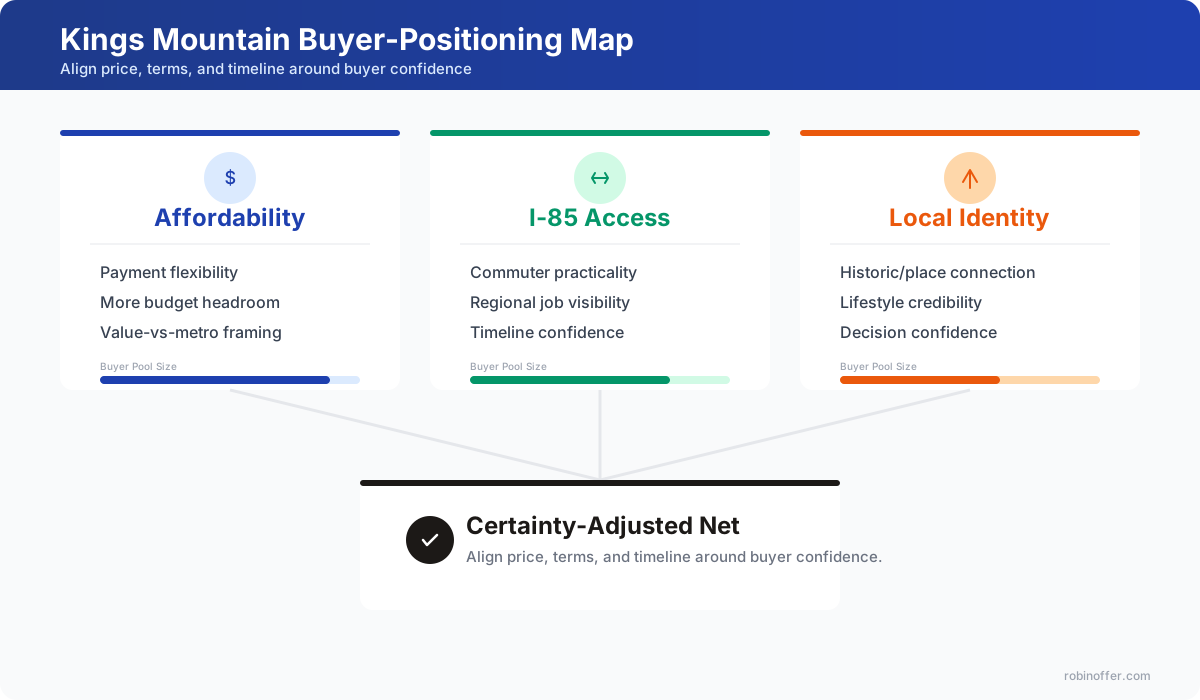
Think of this section as your framing rule for the whole process: do not sell a stereotype of Kings Mountain. Sell your property's fit for a buyer's real life. That is what cuts through indecision in an affordability-first but comparison-heavy market.
4. I-85 Corridor Momentum and the Employment Story: What It Means for Seller Timing
Economic development activity along the broader I-85 corridor is one of the most relevant medium-term signals for Kings Mountain homeowners. Public economic development updates have highlighted major industrial and logistics investments nearby, including large-scale facilities with significant square footage and highway access advantages. You do not need to pretend this instantly transforms every subdivision. But it does matter for buyer confidence in local demand and household movement.
For sellers, corridor momentum affects timing in two ways. First, it can expand the buyer pool over time by keeping the area visible to relocating workers and families seeking more affordable ownership options. Second, it can increase listing competition as more owners decide to test the market when confidence rises. In other words, positive macro news helps demand and can also increase supply.
That is why timing decisions should be based on your specific carry-cost and condition profile, not generalized optimism. If your house is market-ready now and carrying costs are meaningful, waiting six to nine months "for better headlines" can easily erase gains. If you need targeted upgrades that materially improve marketability, a short prep window can be worthwhile. The difference is measured prep, not indefinite waiting.
| Corridor Dynamic | Potential Benefit to Sellers | Hidden Risk |
|---|---|---|
| Industrial/logistics expansion | More regional job visibility and relocation awareness | Other owners list at the same time, increasing competition |
| Highway connectivity narrative | Commuter-buyer interest remains active | Buyers still discount for traffic pain if pricing is stretched |
| Broader metro affordability pressure | Inflow from higher-cost submarkets | Inflow is payment-sensitive and negotiates hard |
| Growth story in local media | Supports long-term confidence | Can tempt sellers into unrealistic list pricing |
A practical timing question to ask yourself: if your home did not sell in the first 30 days, what would that cost you in mortgage principal and interest, taxes, insurance, utilities, and HOA? That number should be in your strategy document before photos are taken. It keeps decisions grounded when emotions rise after week two.
5. Neighborhood-Level Reality: Why Street-by-Street Pricing Beats Citywide Averages
Kings Mountain is not one uniform market. Pricing and speed can vary materially based on street layout, lot usability, surrounding inventory quality, and perceived distance to daily errands. That means countywide or citywide averages are directional, not dispositive. They help orientation, but they cannot set your number.
In smaller cities, a handful of outlier sales can distort monthly statistics. A newer, fully updated home selling quickly can make nearby owners think demand is hotter than it is for older homes needing deferred maintenance work. Conversely, one distressed or heavily concession-driven sale can make owners fear the whole market has softened. Good pricing strategy filters for true comparability first, then applies broad trends.
Your local comp set should include: recently sold true peers, currently active substitutes, and pending listings where possible. Many homeowners skip the active substitutes and then wonder why showings do not convert. Buyers are comparing what they can buy now, not just what sold before your listing launched.
| Comp Layer | Why It Matters | Common Seller Mistake |
|---|---|---|
| Closed sales | Confirms what buyers actually paid | Treating old comps as if current negotiation conditions are unchanged |
| Active listings | Represents your direct competition today | Ignoring stronger active alternatives with better updates |
| Pending contracts | Signals current buyer appetite by tier | Assuming pending means "full-price" without context |
| Failed/expired listings | Shows what the market rejected | Repeating the same overpricing pattern |
Street-level nuance is especially important when inventory is sparse and comp quality varies. In that environment, pricing bands beat point estimates. Build a likely-close range, then choose strategy by timeline needs. If your timeline is strict, list near the high-confidence close zone. If your timeline is flexible and condition is strong, you can test upper-range pricing with a pre-planned reduction checkpoint.
See what your Kings Mountain home is worth
Get a real, data-driven estimate based on your specific neighborhood and recent comps.
6. North Carolina Process Rules and Local Contacts Sellers Should Have Before Listing
North Carolina transactions carry process details many homeowners forget until late in contract. In most NC resale transactions, the disclosure package and due-diligence dynamics heavily influence negotiation leverage. The earlier you organize records, known defects, and service history, the fewer surprises buyers can weaponize during the inspection phase.
For Kings Mountain specifically, having local contact references ready reduces delay and anxiety. The city planning department publishes planning and zoning contact information (including 704-734-4595). City FAQ resources also direct homeowners to county tax offices for city-tax collection questions, including Cleveland County Tax Office contacts and relevant support numbers. This may feel administrative, but it matters when buyers or agents request clarifications quickly.
You should also know where county records live before the listing goes active. Cleveland County Register of Deeds resources and county tax portals can help confirm parcel details, deed consistency, and ownership information. A small record discrepancy discovered late can delay closing or reduce buyer confidence when you can least afford friction.
| Pre-Listing Administrative Item | Why It Matters | Where to Start |
|---|---|---|
| Property tax collection contacts | Avoid confusion in buyer Q&A and net calculations | City FAQ + county tax offices |
| Zoning/planning questions | Important for additions, use assumptions, buyer concerns | City Planning, Zoning, and Land Use department |
| Deed/record verification | Reduces title and closing surprises | Cleveland County Register of Deeds resources |
| Disclosure prep and repair records | Builds trust and limits inspection renegotiation | Your service files + pre-list review |
This is educational guidance, not legal advice. If your sale involves probate, inherited title complexity, divorce orders, liens, or foreclosure pressure, use licensed legal counsel in North Carolina early. If you need support pathways, Legal Aid of North Carolina and HUD-linked counseling networks provide intake routes for qualifying households.
7. What It Costs to Sell in Kings Mountain: Build Net-Proceeds Reality Before You Pick a Strategy
Most sellers know commission is part of cost. Fewer quantify the full stack before listing. Your actual net outcome is determined by seven buckets: compensation structure, buyer concessions, inspection outcomes, closing/legal fees, tax proration, moving overlap, and carrying cost while on market. If you only model one bucket, you can choose the wrong path for your timeline and stress tolerance.
A useful process is to run three net scenarios: momentum case, base case, and friction case. Momentum assumes fast offer conversion and lower concessions. Base assumes normal negotiation and average timing. Friction assumes delayed activity, one material concession, and longer carry. The spread between those scenarios is often larger than homeowners expect.
| Cost Category | Typical Behavior in This Market Type | Why It Changes Decisions |
|---|---|---|
| Agent compensation | Negotiable by agreement and service scope | Affects headline net but should be weighed against execution quality |
| Buyer concessions | Common in payment-sensitive conditions | Can be cheaper than extended days-on-market |
| Inspection repairs/credits | Varies by property condition and buyer type | Pre-list fixes can reduce retrade probability |
| Closing/recording/legal costs | Predictable but often under-estimated | Should be included in every net sheet version |
| Carrying costs | Compounds each month of delay | Frequently erases the gain from overpricing strategy |
Carrying costs are where strategy mistakes become expensive. Suppose your all-in monthly carry is meaningful and you lose two extra months because your original list price was too aggressive. Even if you eventually sell near your intended number, the delay can lower net proceeds more than an earlier, disciplined concession would have.
If your property needs significant repairs or your timeline is short, compare traditional listing math against direct-sale options with the same rigor. Do not compare gross-to-gross. Compare net-to-net, with timeline risk priced in. Our cash offer guide walks through that framework in more detail for Carolina homeowners.
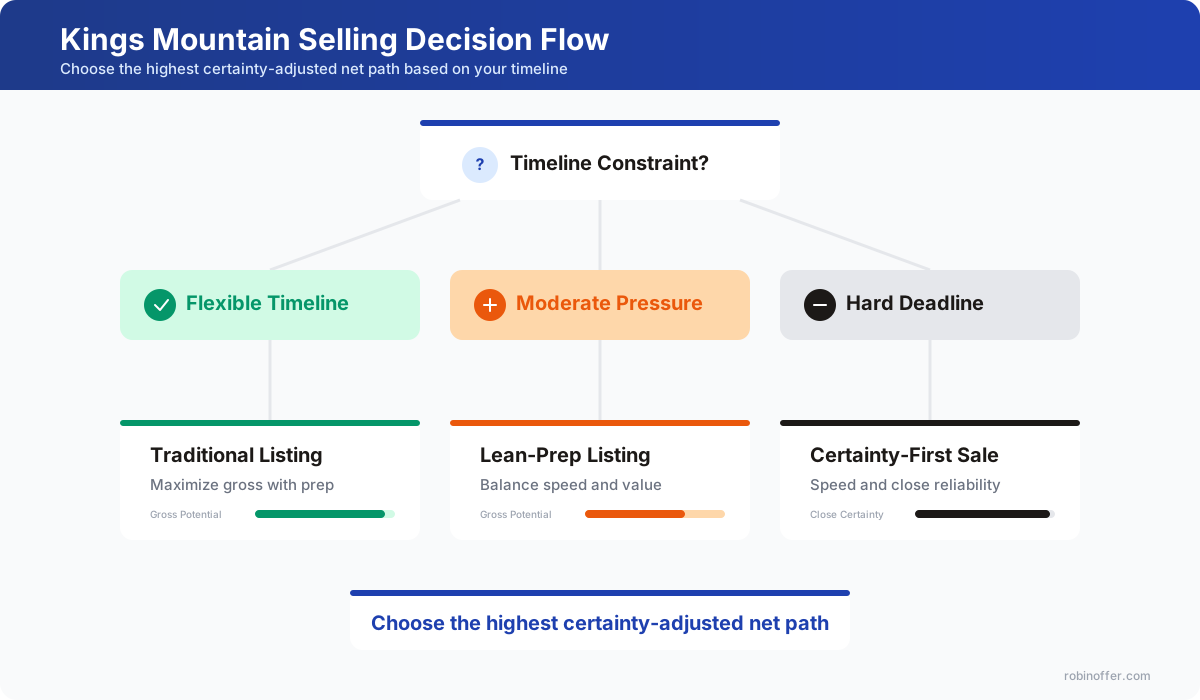
8. Three Kings Mountain Homeowner Selling Options (And How to Choose Without Regret)
Most sellers in Kings Mountain end up choosing one of three paths: full traditional listing, lean-prep listing, or direct/off-market sale. The best path depends on your condition profile, your timeline rigidity, and how much transaction complexity you can absorb. There is no universal winner.
| Path | Best Fit | Main Tradeoff |
|---|---|---|
| Traditional list-and-market | Homes in strong condition with seller flexibility | More steps, more showings, and higher process variance |
| Lean-prep targeted listing | Sellers wanting balance of speed and value | Requires disciplined pricing and fast feedback response |
| Direct or investor sale | Tight deadlines, heavy repair burden, inherited complexity | Typically lower gross in exchange for certainty and speed |
Traditional listing works well when the home can compete cleanly on photos, showing condition, and inspection confidence. You need a deliberate first-week launch, high-quality visuals, and a clear negotiation plan. Without those, traditional listing becomes expensive "hope marketing."
Lean-prep listing is often the practical middle ground in Kings Mountain. You complete high-return fixes, stage key rooms lightly, and price for momentum instead of vanity. This path is powerful because it keeps cost controlled while still giving you market exposure and negotiation leverage.
Direct sale can be rational when timeline certainty matters more than maximizing gross, or when repair complexity is high enough that traditional prep would consume too much cash and time. The critical rule is to compare multiple offers and verify terms, proof of funds, and close timeline quality instead of chasing the highest initial number.
The no-regret framework: choose the path that maximizes certainty-adjusted net, not just potential gross. Certainty-adjusted net asks what you are likely to keep after expected costs, timeline risk, and effort. That is usually the number that predicts peace of mind after closing.
See what your Kings Mountain home is worth
Get a real, data-driven estimate based on your specific neighborhood and recent comps.
9. The 90-Day Execution Blueprint: From Decision to Closing Without Chaos
Most homeowners do not fail because of one bad decision. They fail because they have no sequence. A simple 90-day blueprint helps you avoid reactive choices and keeps everyone aligned when stress rises.
Days 1–10: Decision and prep plan
Set your primary objective (max net, max speed, minimum disruption, or balanced). Build your cost stack. Pull records. Confirm title basics. Decide whether you need legal or tax consults due to estate, divorce, or lien complexity. At this stage, clarity beats speed.
Days 11–25: Property readiness sprint
Complete high-return maintenance: safety fixes, visible deferred maintenance, paint touch-ups, and lighting updates. Deep clean and simplify spaces. Capture photo/video assets once condition is truly show-ready. Avoid half-prep launches. They undercut confidence and invite low-quality offers.
Days 26–45: Launch and response discipline
Go live with pricing anchored to real substitutes, not hopes. Track showing-to-offer conversion and buyer feedback patterns. If activity misses target benchmarks, execute pre-planned price or concession adjustments. Do not improvise under pressure.
Days 46–70: Negotiation and contract management
Evaluate offers by net, risk, and certainty. Review financing quality, contingencies, inspection behavior, and close timeline credibility. Keep documentation organized to reduce retrade opportunities. Every delayed response in this window can weaken leverage.
Days 71–90: Closing execution
Coordinate inspections, repair resolutions, final walk-through prep, and utility transitions. Confirm settlement figures early. Avoid last-week surprises by over-communicating with all parties. Closing week should be administrative, not dramatic.
| Milestone | Target Outcome | Fallback Action |
|---|---|---|
| Week 1 on market | Healthy showing pace and actionable feedback | Adjust photos, copy, and accessibility immediately |
| Week 2–3 | Offer activity or strong intent indicators | Execute planned price/concession refinement |
| Inspection phase | Controlled repair negotiation | Use pre-defined concession thresholds |
| Final 10 days | Clean path to settlement | Escalate issues early to avoid closing slip |
A written process is not bureaucracy. It is leverage protection. Sellers who document decisions early generally keep more control over net outcome.
10. Hard-Situation Playbook: Inherited Homes, Divorce, Foreclosure Pressure, and Sudden Relocation
Hard situations change the math. In these scenarios, speed and certainty often matter more than maximizing list price fantasy. The mistake is applying standard-market advice to non-standard constraints.
Inherited property: the core challenge is usually title, heirs, condition, and timeline alignment, not marketing creativity. If ownership is clear and the house is in acceptable shape, a lean-prep listing can work. If ownership or condition is messy, a certainty-first sale path may protect net and family relationships better.
Divorce-driven sale: the critical risk is decision deadlock. Set objective pricing rules and timeline checkpoints upfront so choices are process-based, not emotion-based. Our divorce-selling guide for NC & SC offers a deeper framework.
Foreclosure pressure: delay is expensive. If time is short, prioritize options with high close certainty and immediate legal/timeline guidance. Review our North Carolina foreclosure help guide and NC foreclosure timeline guide as starting points.
Relocation deadlines: when job or family moves are fixed, certainty-adjusted net often favors earlier pricing realism and lower deal risk rather than aspirational list tests. A clean, predictable close can outperform months of uncertainty even if gross is slightly lower.
| Situation | Primary Objective | Common Trap |
|---|---|---|
| Inherited home | Resolve title/condition and exit cleanly | Listing before legal/admin basics are solved |
| Divorce | Reduce conflict and preserve net | Letting emotion dictate pricing changes |
| Foreclosure timeline pressure | Protect equity and avoid deadline misses | Waiting for "perfect" offer that may never come |
| Relocation | Certainty and schedule control | Overpricing despite hard move date |
These situations are difficult enough already. Build a strategy that reduces uncertainty first. The emotional cost of drawn-out transactions is real, and it should be counted alongside dollars.
11. Pricing Mechanics That Work in Smaller-Comp Markets (Without Guessing)
In Kings Mountain, thin comp pools can tempt sellers and agents to anchor on weak comparables. A better approach is to use a pricing range with explicit assumptions and pre-planned adjustment triggers. This avoids emotional whiplash when first-week feedback arrives.
Start with a conservative-close band based on true peers, then identify an "aspirational but plausible" launch point only if condition, presentation, and inventory context justify it. If your launch performance misses predefined targets (showing volume, second-showing interest, written intent), adjust quickly. The market often punishes delayed adjustments more than modest early corrections.
Also, avoid treating upgrade spending as guaranteed value capture. Buyers rarely reimburse full renovation cost. They pay for relevance and confidence. A practical, documented repair can outperform expensive cosmetic updates that do not materially change buyer risk perception.
| Pricing Rule | Why It Works | Execution Detail |
|---|---|---|
| Use range, not single magic number | Reflects comp uncertainty honestly | Define likely-close, stretch-close, and floor before launch |
| Tie strategy to timeline | Prevents endless "wait and hope" loops | Set week-1 and week-3 decision checkpoints |
| Price against active substitutes | Matches real buyer behavior | Re-check active inventory at launch week |
| Adjust early when signal is weak | Protects listing freshness | Use objective trigger metrics, not gut feeling |
The listing freshness window is finite. Buyers and agents monitor days-on-market closely, and a stale listing often invites lower-confidence offers. Pricing for momentum is not "leaving money on the table" by default; in many cases, it is how sellers protect net by compressing timeline risk.
12. Preparing the Home for Kings Mountain Buyers: High-Return Fixes vs Low-Return Projects
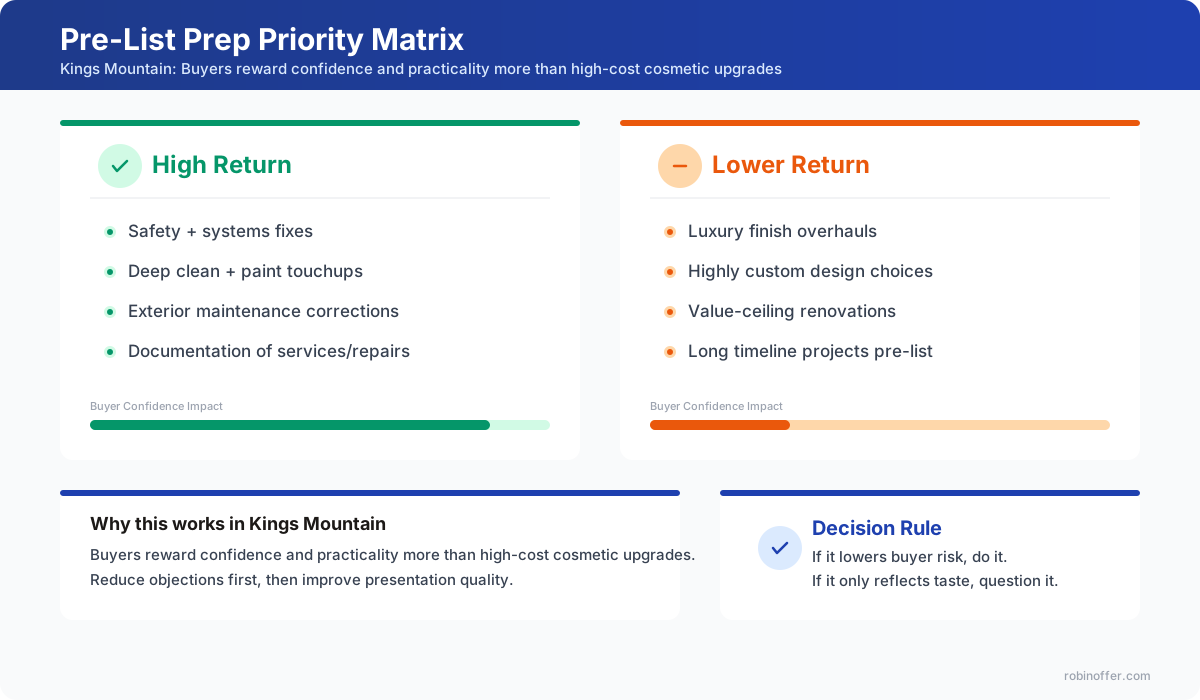
Preparation should be return-driven, not perfection-driven. In this market, high-return prep usually includes safety and systems confidence, visual cleanliness, and practical flow. Low-return prep often includes expensive custom choices buyers may not value proportionally.
High-return examples: fixing obvious leaks, servicing HVAC with records, correcting exterior deferred maintenance, modernizing key lighting, touching paint in high-visibility areas, and tightening curb presentation. Low-return examples: over-custom finishes, room conversions with narrow appeal, and major remodels that exceed neighborhood value logic.
If budget is tight, prioritize defect removal and confidence builders over design trends. A buyer who feels the house is "well cared for" is often more flexible on cosmetic style. A buyer who sees unresolved maintenance risk will discount aggressively, even if finishes look nice in photos.
| Prep Category | Usually Worth Doing | Usually Not Worth Doing Pre-List |
|---|---|---|
| Systems confidence | Service records, safety fixes, major-function checks | Full system replacements without market support |
| Visual readiness | Neutral touch-ups, deep clean, declutter, lighting refresh | Designer-grade custom finishes with narrow appeal |
| Exterior first impression | Basic landscaping trim, entry cleanup, visible repairs | High-cost hardscape projects with uncertain ROI |
| Kitchen/bath updates | Small practical improvements and repair completion | Luxury remodels in mid-tier price bands |
Document your prep decisions. Keep invoices, service receipts, and before/after notes. During negotiations, that documentation can reduce buyer uncertainty and support cleaner terms.
13. Crossroads Decision Matrix: Sell Now, Hold, Rent, or Shift to Certainty-First Exit
Not every homeowner should sell immediately. The better question is: which option best matches your constraints and expected net over your real timeline? In Kings Mountain, the four common options are sell now, hold and improve, convert to rental, or take a certainty-first direct exit.
Sell now is often right when you have a clear timeline, acceptable condition, and limited appetite for carrying risk. Hold and improve can work if upgrades are targeted and you are confident they fit neighborhood value ceilings. Rent conversion may be viable when rental demand and maintenance profile line up, but landlord complexity is real. Certainty-first exit is rational when timeline or condition risk dominates.
| Option | Best When | Primary Risk |
|---|---|---|
| Sell now | You need clarity and can execute clean launch | Leaving upside if major market shift occurs later |
| Hold and improve | You can fund high-return updates and wait | Over-improving beyond local buyer willingness to pay |
| Rent conversion | Expected rent and management reality support it | Vacancy, maintenance variability, and operational burden |
| Certainty-first direct exit | Timeline or condition complexity is high | Lower gross compared with ideal traditional outcome |
If you are considering a hold-or-rent path, run conservative assumptions: vacancy allowance, maintenance reserves, turnover costs, insurance changes, and management effort. Many "rent and wait" plans fail because they use optimistic spreadsheets and ignore operational friction.
Decision quality improves when you compare options on the same net framework. Use one worksheet, one assumption set, and one timeline window. If an option only wins under perfect assumptions, it is probably not your lowest-regret path.
14. Kings Mountain Homeowner Selling Options: Action Checklist, FAQ, and Your Next Best Step
Kings Mountain homeowner selling options become simpler once you separate headline stories from your actual constraints. You do not need perfect certainty to make a good decision. You need a process that protects your net, your timeline, and your stress level.
Action checklist (next 7 days)
- Define your objective: highest net, fastest close, lowest disruption, or balanced.
- Build a three-scenario net sheet (momentum/base/friction).
- Verify records, tax/admin basics, and known disclosure items.
- Choose high-return prep tasks only; defer vanity projects.
- Set week-1 and week-3 pricing/terms decision checkpoints.
- Decide now what deal-risk profile you will and will not accept.
FAQ for Kings Mountain sellers
How long does it usually take to sell in Kings Mountain?
It varies by condition and price tier, but many homes in this market type fall into a moderate timeline rather than instant-sale conditions. Well-priced, well-prepared homes tend to move faster than aspirational listings.
Is overpricing and negotiating down a smart strategy here?
Usually not. In affordability-sensitive markets, buyers compare aggressively and monitor days-on-market. Delayed adjustments can reduce net through carrying costs and listing fatigue.
Should I fix everything before listing?
No. Prioritize high-return confidence builders: visible maintenance, systems reliability, clean presentation, and practical repairs. Full luxury remodels often underperform in mid-range tiers.
When does a direct sale make sense?
Direct sale can be rational when timeline certainty, condition burden, or legal/estate complexity is high. Compare multiple offers and evaluate certainty-adjusted net, not just headline gross.
How many local resources should I line up before listing?
At minimum, have records access, tax contact references, and legal guidance pathways ready for edge cases. Administrative readiness reduces avoidable closing delays.
Extended homeowner Q&A (for deeper planning)
How should I think about pricing if my house is nicer than nearby comps?
Give yourself credit for meaningful differences, but tie that premium to buyer-visible value and current alternatives. In Kings Mountain, buyers compare monthly payment impact and condition confidence at the same time. A stronger kitchen, newer roof, and documented systems updates can justify a premium if your final payment remains competitive and the home shows cleanly. What usually fails is pricing from emotion: "we put so much into this house." Cost to improve is not the same as market value capture. Build a range that includes a confidence premium, test it early, and pre-define your adjustment point so you stay in control rather than reacting under stress.
What if my home gets showings but no offers?
That signal usually points to value mismatch or unresolved risk perception. In practical terms, buyers like the home enough to tour but not enough to commit. Review feedback for recurring objections: price relative to alternatives, visible deferred maintenance, layout friction, or uncertainty around repairs. Then act quickly. In medium-velocity markets, two to three weeks of weak conversion can erode freshness and leverage. The fix is typically a combination of sharper positioning, targeted defect correction, and realistic pricing refinement. "Waiting for the right buyer" is only strategic when your carry cost and timeline allow it.
Should I offer concessions up front or wait for negotiation?
In many cases, controlled up-front flexibility works better than stubborn posturing. Buyers in affordability-focused markets are payment-sensitive, so a targeted credit or selective repair completion can improve conversion without fully discounting your list price. The key is discipline: define your concession budget before you launch. If you improvise later, concessions feel emotional and inconsistent. If you plan them in advance, they become a tactical tool that protects your timeline and often your final net.
How do I estimate carrying costs accurately?
Use your real monthly principal and interest, property tax allocation, insurance, utilities, HOA dues if applicable, and a maintenance buffer. Do not call this whole number "mortgage" in your planning notes. Mortgage is only principal and interest. Carrying cost is broader and is the number that determines the real price of delay. If your all-in carry is material, every extra month on market becomes a strategic expense. That is why overpricing can be surprisingly costly even when you eventually close.
Is spring always the best time to sell in Kings Mountain?
Spring often brings stronger buyer activity, but timing alone does not rescue weak strategy. In Kings Mountain, preparation quality and list-price alignment can matter more than month selection, especially when buyers are comparing affordability across multiple nearby cities. If your home is ready and your timeline is fixed, waiting solely for seasonality can backfire through additional carry cost and life disruption. If you have flexibility, seasonal timing can help, but only when combined with disciplined execution.
How do commute patterns influence value in this city?
Commute convenience affects buyer confidence, particularly for households balancing Charlotte-area employment with more affordable ownership goals. Homes that make daily travel feel predictable often convert better than similarly priced homes with less convenient access or perception challenges. You do not need to oversell commute claims. Be specific and honest about practical routes and common timing windows. Trust increases when expectations are realistic.
Do I need professional photography in an affordable market?
Yes. Affordability does not lower presentation standards; in many cases it raises them because buyers are comparing many options and scanning quickly online. Professional photos, clear room flow, and accurate light balance can materially improve showing quality. Poor visuals invite low-confidence traffic and weak offers. If budget is limited, cut low-return prep projects before cutting media quality.
How much should I invest in pre-list repairs?
Invest where risk reduction is obvious to a buyer: safety items, visible defects, systems reliability, and first-impression quality. Skip over-custom projects with uncertain resale lift. A practical way to decide is this: if the repair prevents a likely inspection objection or boosts confidence in ownership quality, it is usually worth considering. If it mainly reflects your personal taste, it is likely lower return.
What documents should I gather before listing?
Start with deed and ownership confirmation, major repair receipts, service records, utility history if available, warranties, permit documentation for significant work, and any HOA information relevant to buyers. Also keep local contact references handy for planning/tax questions. Organized documentation shortens response time and reduces buyer anxiety during due diligence.
How should I evaluate multiple offers?
Compare more than price. Evaluate financing strength, contingency burden, timeline credibility, repair expectations, and probability of smooth closing. A slightly lower but cleaner offer can produce a better certainty-adjusted outcome than a high offer with retrade risk. Build a scoring sheet before offers arrive so you are not deciding emotionally in the moment.
What if I need to buy another home after selling?
Sequence planning is essential. Model overlap risk, temporary housing options, and moving logistics before your listing goes live. In many households, stress from bad sequencing costs more than minor pricing outcomes. If your replacement purchase depends on sale proceeds, prioritize close certainty and realistic timing assumptions.
Can rental conversion be a good backup if listing activity is weak?
Sometimes, but only with conservative math. Include vacancy assumptions, ongoing maintenance, insurance changes, turnover costs, and management effort. If your rental plan only works under perfect occupancy and no repair surprises, it is fragile. A backup plan should be resilient, not optimistic.
How do smaller-comp markets affect appraisal risk?
Appraisals in thinner-comp areas can be more sensitive to comp selection quality and adjustment logic. This does not mean values are unstable, but it does mean pricing far ahead of support can create financing friction. Pre-list comp discipline and realistic expectations reduce appraisal-related surprises.
Should I accept an as-is offer quickly?
As-is can be a strong path when timeline certainty matters, but it should still be compared, not auto-accepted. Verify proof of funds, earnest money structure, inspection terms, and close timeline reliability. Some as-is offers are genuinely clean; others are designed for later retrade. Read terms, not just price.
How do I keep the process from taking over my life?
Use a simple operating rhythm: weekly decision checkpoints, a documented concession framework, and one communication channel for updates. Process clarity lowers emotional load. Without structure, every showing and every comment feels like a crisis. With structure, you can respond with calm and consistency.
What are common seller regrets in this area?
The biggest regrets are usually strategic, not cosmetic: launching before true readiness, ignoring active substitutes, delaying necessary adjustments, and accepting high-risk contracts because the headline number looked attractive. Most of these regrets are preventable with planning discipline.
How should I think about buyer credits versus price cuts?
Both tools can work. Credits may preserve headline price while addressing payment sensitivity or repair concerns. Price cuts can reset market attention faster. The better tool depends on feedback patterns and your objective. Either way, choose deliberately and communicate the rationale clearly.
When should I pause and relaunch instead of continuing?
If listing data shows chronic misalignment and major repositioning is needed (price, condition, visuals, or story), it can be better to pause briefly, execute improvements, and relaunch cleanly. Continuous minor edits with no strategy shift often create fatigue without results.
Is it worth waiting for lower interest rates before selling?
Maybe, but treat this as scenario planning, not certainty. Rate changes are uncertain, and waiting has known costs today. Compare realistic carry costs and life constraints against potential upside. If waiting only helps under one optimistic macro outcome, it is not a strong strategy.
How can I make my listing stand out without overspending?
Focus on clarity and confidence: accurate pricing, strong photos, transparent condition documentation, clean presentation, and precise copy that explains practical lifestyle fit. In Kings Mountain, trust and usability often outperform flashy marketing.
How can I talk about Kings Mountain affordability without sounding defensive?
Frame affordability as flexibility, not compromise. Explain that Kings Mountain gives buyers room in their monthly budget while still offering practical access and local identity. Buyers respond well when affordability is connected to a stronger household budget, lower stress, and options for future planning rather than just a lower sticker price. In listing communication, pair affordability language with confidence language: condition, records, and realistic pricing discipline.
What if my house is in good shape but the layout feels dated?
In Kings Mountain, many buyers will accept an older layout if the home is clean, functional, and priced with honesty. You can improve flow perception with staging, lighting, and room-purpose clarity without major reconstruction. The goal is to reduce uncertainty during the showing. If a buyer can immediately understand how their life would function in the space, layout concerns become negotiable instead of deal-killing.
How should I handle inspection findings that feel minor to me?
Treat buyer concerns as risk perception issues, not personal criticism. In a comparison-driven market, even minor unresolved findings can push buyers toward alternative listings. The practical response is to classify findings by safety, function, and cost, then respond with repair, credit, or documented rationale. A calm, transparent response usually protects leverage better than arguing over whether an item is "really a problem."
What role does curb appeal play in Kings Mountain specifically?
Curb appeal is a conversion tool, not vanity. Because many Kings Mountain buyers are comparing affordability options across several neighborhoods, first impression quality helps your home stay in the final decision set. Basic exterior readiness (trimmed landscaping, clean entry, visible maintenance completion) signals ownership confidence. That can materially improve showing quality and offer confidence.
Should I prioritize open houses or private showings?
Both can help, but private showings usually carry stronger intent data. Open houses generate awareness and can create social proof, while private tours reveal whether serious buyers can picture daily life in your home. In practical terms, use open houses for exposure and private tours for conversion. Track both, but make pricing and strategy decisions based on high-intent feedback.
How can I avoid overreacting to one negative comment?
Use pattern thinking. One comment is noise. Three consistent comments are a signal. Build a feedback log and categorize by price, condition, layout, and location perception. When patterns emerge, adjust quickly. This keeps decision-making objective and prevents emotional swings that can destabilize your strategy.
Is there a best way to set an offer deadline?
Offer deadlines work best when demand indicators justify them. In Kings Mountain, setting an arbitrary short deadline without strong activity can reduce trust and backfire. If you do set a deadline, communicate it clearly, keep terms fair, and avoid creating pressure games that scare off quality buyers. Deadlines are tools, not magic.
How do I know if a reduction is strategic or desperate?
A strategic reduction is planned in advance, tied to market signal, and sized to reset attention effectively. A desperate reduction is reactive, inconsistent, and driven by frustration. In smaller markets, thoughtful reductions can be powerful because they create a clean new value story. Random tiny cuts often signal uncertainty and prolong listing fatigue.
Can staging still help if my home is occupied?
Absolutely. Occupied homes can stage well with selective edits: reducing visual clutter, balancing furniture scale, improving light flow, and clarifying room purpose. Buyers in Kings Mountain are often practical and budget-minded, but they still need to feel spatial confidence. Occupied does not mean unstageable.
What if I receive a quick offer below expectations?
Fast offers are useful market data. A lower early offer does not automatically mean your value is low, but it may indicate where buyer confidence currently sits. Respond with your pre-planned framework: compare net, terms, and certainty; counter within your range; and decide based on objective thresholds. Do not reject purely on emotion.
How do school questions affect negotiations?
School fit influences buyer urgency and willingness to compromise on other features. You should not make unsupported claims, but you can be ready with factual district references and practical commute context for school routines. Buyers appreciate clarity, and clarity helps reduce decision drag during offer consideration.
Should I invest in pre-list inspection?
A pre-list inspection can be valuable when you want fewer surprises and cleaner negotiation posture. It is especially useful if your home has known age-related concerns or deferred items. The point is not to make the house perfect. The point is to reduce unknowns that buyers may price aggressively during due diligence.
How do I manage negotiations when multiple decision-makers are involved in my sale?
Set governance rules before offers arrive: who decides, what thresholds trigger consensus, and what terms are non-negotiable. This is critical in inherited-property and family-coordinated sales. Without pre-agreed decision rules, strong offers can be lost while parties debate basics under deadline pressure.
Are buyer love letters or emotional narratives useful anymore?
Sometimes they influence preference when offers are close, but financial and risk terms still drive outcomes in most Kings Mountain transactions. Keep focus on certainty-adjusted net and close reliability. If emotional context appears, treat it as secondary, not primary decision criteria.
What if my home needs repairs I cannot afford?
You still have options. Price with transparency, disclose honestly, and evaluate as-is buyer pools alongside traditional marketing paths. Your best move is often to control the narrative: identify what is known, what is not, and what concessions you can support. Uncertainty costs more than imperfection when handled poorly.
How should I choose between accepting an offer now and waiting for potentially better one?
Compare expected value, not hypothetical best-case value. If the current offer meets your net and certainty thresholds, waiting introduces carry-cost and deal-risk exposure that should be quantified. In many cases, an offer that is "good enough and reliable" outperforms a speculative wait strategy.
Can I sell in Kings Mountain during a personal transition without burning out?
Yes, if process is simplified. Use a limited prep scope, firm showing windows, documented decision thresholds, and clear communication cadence. Complexity expands to fill available time unless you constrain it. A bounded process protects both mental bandwidth and transaction quality.
What metrics should I watch weekly while listed?
Track showing volume, second-showing rate, online engagement quality, feedback themes, and offer quality trajectory. Raw click counts are less useful than conversion indicators. Good decisions come from actionable metrics, not vanity metrics.
How do I make sure my next-step decision is still right if market conditions shift?
Build conditional triggers now. For example: if no offer by week three, execute Adjustment A; if financing volatility rises, prioritize certainty-heavy terms; if repair requests exceed threshold, pivot to option set B. Pre-committed decision logic prevents panic and protects consistency.
What is the most important mindset for Kings Mountain sellers in 2026?
Think like a portfolio manager, not a storyteller. Respect local identity and buyer psychology, but run the sale as a sequence of decisions under uncertainty. Homes close well when strategy is clear, numbers are honest, and adjustments happen on schedule.
Scenario drills: practical examples for Kings Mountain sellers
Scenario A: Move-up family with moderate timeline flexibility.
A family plans to sell in Kings Mountain and buy within the region, but they can tolerate a two- to three-month overlap if needed. Their house is in decent condition with a few visible maintenance issues and dated paint. The best strategy is usually lean-prep plus momentum pricing. Why? Because modest improvements can raise confidence quickly without burning capital on low-return upgrades. They should set a week-three adjustment trigger and prioritize an offer profile that balances net with close reliability, since replacement-home timing adds complexity.
Scenario B: Inherited property with out-of-town heirs.
An inherited Kings Mountain property has deferred maintenance and multiple family decision-makers. The biggest risk is not just price; it is coordination delay. In this scenario, governance and certainty become central. Heirs should agree on decision thresholds before listing: minimum net, acceptable close window, repair policy, and who has authority to finalize terms. If coordination is fragile, an as-is or certainty-first path may preserve both equity and family relationships better than a long traditional sale process.
Scenario C: Relocation deadline in 45 days.
A seller has a fixed relocation date and cannot sustain prolonged overlap costs. Here, certainty-adjusted net dominates strategy. The listing can still perform traditionally, but launch pricing should prioritize conversion speed and term quality. Waiting for a speculative premium can be expensive when timeline is hard. A dual-track approach (traditional exposure plus vetted direct-offer backup) often creates better control and prevents deadline panic.
Scenario D: High pride-of-ownership home with premium expectations.
The home is beautifully maintained, and the seller expects top-tier pricing. This can work if premium claims are supported by buyer-visible value and local substitutes. The risk is emotional anchoring to renovation cost or sentimental attachment. In Kings Mountain, even strong homes are still evaluated through affordability filters. A well-prepared premium listing should include excellent media, transparent records, and a calibrated negotiation strategy. Premium pricing without premium execution usually stalls.
Scenario E: Seller facing cash-flow pressure.
When monthly carrying cost is straining finances, every extra week matters. This seller should run brutally honest math and avoid strategies that require prolonged market exposure. Fast feedback response, early adjustment discipline, and offer-quality prioritization are key. In many cases, accepting a slightly lower but highly certain offer improves total outcome compared with waiting for a theoretical better deal while cash stress compounds.
Scenario F: Rental conversion temptation after weak first month.
The listing has activity but no contract, and the seller considers switching to rental. This is a valid option only if the rental model survives conservative assumptions: vacancy buffer, maintenance reserves, turnover cost, management overhead, and insurance changes. If those assumptions are thin, pivoting to rental can trade one uncertainty for another. A refined sale strategy may still be the lower-risk outcome.
Scenario G: Buyer pool mismatch because of unclear positioning.
Sometimes the home is fine but the marketing story attracts the wrong buyer cohort. For example, positioning heavily toward "starter affordability" may miss move-up buyers who actually value the property's lot and layout. In Kings Mountain, clear audience targeting matters: know whether you are speaking to first-time buyers, move-up households, downsizers, or relocation buyers. Better audience fit usually improves showing quality and offer confidence faster than cosmetic tweaks alone.
Scenario H: Offer arrives with strong price but weak terms.
A high headline offer includes fragile financing, broad contingencies, and a long close window. Sellers often accept this because the number looks exciting. The disciplined move is to model retrade risk and timeline risk explicitly. If comparable certainty-adjusted net is higher on a slightly lower but cleaner offer, the cleaner offer is usually the better business decision. A transaction is only as good as its probability of closing on promised terms.
These examples are not scripts to copy line-by-line. They are decision patterns. Most real households are a blend of scenarios. The goal is to identify your dominant constraint, pick the strategy that best fits it, and execute with consistency. That is how Kings Mountain sellers reduce regret and keep control from listing to closing.
Final calibration notes before you lock your plan
Before you finalize your Kings Mountain selling strategy, run one last calibration pass with a simple checklist: Is your pricing range anchored to current alternatives, not just historical comps? Is your prep plan focused on risk reduction and confidence, not perfection? Have you quantified carrying cost and defined a real adjustment schedule? Have you separated headline price from certainty-adjusted net in offer evaluation? Have all decision-makers agreed on negotiation boundaries before the first contract arrives? If any answer is "not yet," pause and tighten the plan now. Small ambiguities become expensive later. In practical terms, this final calibration step is where experienced sellers create their advantage. They do not wait for pressure to force clarity; they create clarity before pressure shows up. In Kings Mountain specifically, where affordability draws attention but buyers still compare hard, this discipline is often the difference between a controlled sale and a drawn-out, emotionally draining process. The goal is not to win every conversation in the transaction. The goal is to close on terms that protect your timeline, your net, and your peace of mind. That outcome is absolutely achievable when strategy, preparation, and decision rules are aligned from day one.
Your next move
If you want a low-regret sale in Kings Mountain, start with numbers, not assumptions. Build your net scenarios, choose your strategy path, and execute with discipline. If you need help comparing paths, use the related guides above and map your options side by side before you sign anything.
One practical final step: write a one-page seller brief for your own household before listing. Include your preferred close window, your concession ceiling, your minimum acceptable certainty-adjusted net, and your fallback plan if week-three metrics are weak. Keep this brief visible during the process. When emotions run high after a tough inspection report or a borderline offer, the brief anchors decisions to your original priorities. Kings Mountain transactions are manageable when your strategy is written, shared, and consistently applied. They become stressful when the strategy changes every time new feedback arrives and confidence erodes.
Remember the core principle for Kings Mountain homeowner selling options: strategy quality beats prediction quality. You do not need to predict every macro move or every buyer behavior pattern. You need a plan that adapts quickly when new information arrives. If your preparation is solid, your pricing is reality-based, and your decision rules are documented, you can handle uncertainty with confidence and close on terms that make sense for your life.
As a final checkpoint, review your plan against real-life constraints: work schedule, family logistics, move timing, and risk tolerance. A technically perfect sales plan that overwhelms your household is not a good plan. In Kings Mountain, practical execution wins. Keep it clear, keep it documented, and keep decisions tied to the numbers that matter most.
Use this guide as a working document: revisit sections after each major milestone, update your assumptions, and keep your Kings Mountain strategy aligned with real-time market feedback instead of static expectations. Consistency in execution usually beats perfect forecasting today.
Educational use only. This guide is not legal or tax advice. For legal questions specific to your property, consult a licensed North Carolina attorney or qualified tax professional. Verify all local details before contracting.
Want a cash offer on your Kings Mountain home?
Tell us your address and timeline and we will get you a no-obligation cash offer.