
NC Seller Disclosure Requirements
Every question on the RPOADS form explained — what to answer, when 'No Representation' helps vs. hurts, and the real cost of getting disclosure wrong in North Carolina.
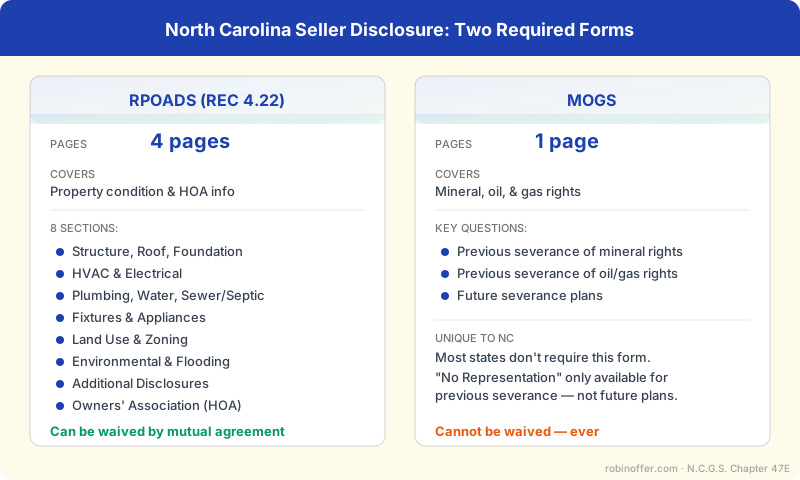
NC seller disclosure law requires every residential seller to provide two forms before a buyer makes an offer: the RPOADS (property condition) and the MOGS (mineral rights). You can answer "No Representation" on most questions, but not if you have actual knowledge of a defect.
This NC seller disclosure guide walks through every section of the form, explains what's smart to disclose versus what's legally required, and shows the real cost when sellers get it wrong. Whether you're listing through an agent, selling FSBO, or weighing a cash offer, the NC seller disclosure rules follow you.
If you're selling as-is and wondering whether you can skip this entirely, read our companion guide: selling a house as-is in North Carolina. Short answer: you can't skip it. But the strategy changes.
1. Two Forms, One Deadline, Zero Negotiating Room
North Carolina's Residential Property Disclosure Act (Chapter 47E of the NC General Statutes) requires sellers to provide two separate disclosure documents before a buyer submits an offer. Not after. Not at closing. Before.
Form 1: The RPOADS (REC 4.22)
The Residential Property and Owners' Association Disclosure Statement is a four-page form prescribed by the North Carolina Real Estate Commission. It covers the physical condition of the property, environmental hazards, land use issues, and HOA information. The seller answers each question with "Yes," "No," or "No Representation."
Form 2: The MOGS
The Mineral and Oil and Gas Rights Mandatory Disclosure Statement is a single-page form about whether mineral, oil, or gas rights have been severed from the property. This one is unique to North Carolina, most states don't require it. The "No Representation" option is only available for questions about previous severance of mineral rights and previous severance of oil and gas rights. For future severance, you must answer directly.
When They're Due
| Timing Rule | What Happens | Legal Basis |
|---|---|---|
| Before buyer makes an offer | Standard delivery, buyer sees forms before writing the contract | N.C.G.S. § 47E-5 |
| Not delivered before offer | Buyer can cancel within 3 calendar days of contract formation or 3 days from receipt, whichever comes first | N.C.G.S. § 47E-5 |
| Never delivered | Buyer's cancellation right stays open until 3 days after eventual receipt, or indefinitely if never provided | N.C.G.S. § 47E-5 |
2. The "No Representation" Question Every NC Seller Asks
North Carolina is unusual. The state requires you to fill out the disclosure form, but it lets you answer "No Representation" on almost every question. That means you're not saying yes, you're not saying no, you're saying "I'm not making a statement either way." In practice, this turns a mandatory disclosure form into an optional one.
This is the caveat emptor (buyer beware) backbone of NC real estate law. And it's the single most misunderstood part of selling a home in this state.
What "No Representation" Actually Means
| Answer | Legal Meaning | When to Use |
|---|---|---|
| Yes | Affirms the condition exists, you're on the hook for accuracy | You have direct knowledge and it's verifiable |
| No | Denies the condition, you're on the hook if it turns out to be true | You're certain the condition doesn't exist |
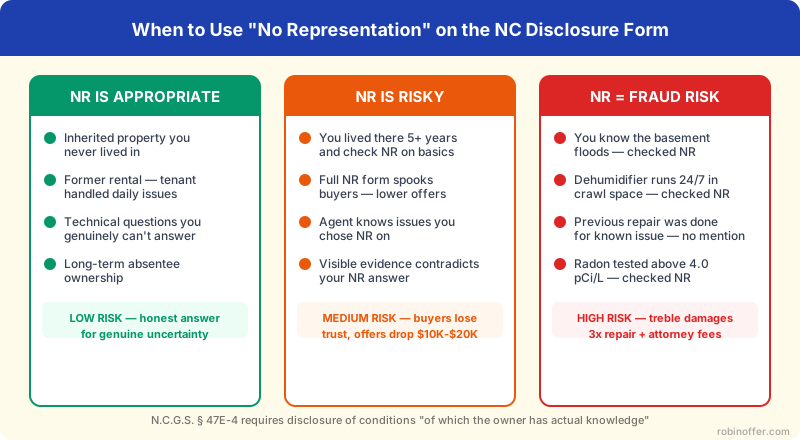
| No Representation | You're making no statement, shifts inspection burden to buyer | You genuinely don't know, or the property is inherited/former rental |
When "No Representation" Makes Sense
- Inherited properties: You didn't live there. You don't know if the crawl space has moisture issues or when the HVAC was last serviced.
- Former rentals: Tenants handled day-to-day issues. You may not know the full condition history.
- Long-term absentee ownership: You moved out years ago and a property manager handled everything.
- Specific technical questions: You don't know what refrigerant your HVAC uses or whether the electrical panel was ever recalled.
When "No Representation" Backfires
- You have actual knowledge. If you know the basement floods every spring and you check "No Representation" on the water intrusion question, you haven't protected yourself, you've committed fraud. N.C.G.S. § 47E-4 is clear: the form asks about conditions "of which the owner has actual knowledge." Checking NR when you know the answer is not a legal shield.
- Buyer perception tanks your offers. A disclosure form full of "No Representation" answers tells buyers one of two things: you don't know your own home (which makes them nervous), or you're hiding something (which makes them aggressive on price). Either way, you lose negotiating power.
- Your agent still has to disclose. Even if you check NR on everything, your listing agent has an independent legal duty under N.C.G.S. § 93A-6(a)(1) and NCREC Rule 58A .0114(c) to disclose material facts they know or reasonably should know. Your agent can't hide behind your disclosure choices.
3. Every Question on the RPOADS, Section by Section
The REC 4.22 form is four pages long and covers eight categories. Here's what each section actually asks, and what trips up Charlotte-area sellers most often.
Section 1: Structure, Windows, Roof & Foundation
| Question Topic | What It's Really Asking | Charlotte Metro Alert |
|---|---|---|
| Year built and structural changes | Any additions, conversions, or renovations, and whether they were permitted | Unpermitted sunrooms and garage conversions are common in pre-2000 homes |
| Exterior wall materials | Specifically whether EIFS (synthetic stucco) is present | EIFS caused a class-action wave in NC in the early 2000s, buyers and insurers are still wary |
| Roof age and leaks | Current condition plus any history of leaks, even if repaired | Hail damage claims spiked 2023–2025; check whether your roof has an insurance claim history |
| Water seepage in basement/crawl space | Any current or past water intrusion below grade | Red clay soil across Mecklenburg, Gaston, and Union counties causes hydrostatic pressure that pushes water through foundation walls |
| Wood-destroying insects/organisms | Current or past termite, beetle, or fungal damage, even if treated | NC's humid climate means termite bonds are common; check if yours is transferable |
| Foundation, floors, walls | Cracks, settling, bowing, or structural movement | The red clay shrink-swell cycle is the #1 foundation issue in the Charlotte metro, the soil expands when wet and contracts when dry, stressing foundations year after year |
Section 2: HVAC & Electrical
| Question Topic | What It's Really Asking | Charlotte Metro Alert |
|---|---|---|
| Electrical system problems | Known issues with wiring, panels, or outlets | Federal Pacific and Zinsco panels (common in 1960s–1980s homes) are known fire hazards, insurance companies increasingly refuse to cover them |
| Heating/cooling type and age | System type, fuel source, and manufacture year | R-22 refrigerant was banned from production in the U.S. in 2020. If your HVAC uses R-22, disclose it, replacement units run $5,000–$12,000 and buyers will factor that in |
Section 3: Plumbing, Water, Sewer & Septic
| Question Topic | What It's Really Asking | Charlotte Metro Alert |
|---|---|---|
| Water supply source | City/county water or private well, and last test date for wells | Some areas of south Mecklenburg and Union County still use wells; water quality testing is required for FHA/VA loans |
| Pipe materials | Copper, galvanized, plastic, or polybutylene | Polybutylene piping (homes built 1978–1995) is a major disclosure item, it's known to fail and many insurers won't cover it. If your home was replumbed, you still must note the original material was present |
| Sewer vs. septic | Which system and, for septic, the permit bedroom count and pump history | Septic systems in Gaston and Lincoln counties sometimes have a permitted bedroom count lower than actual bedrooms, which creates financing problems for buyers |
Section 4: Fixtures & Appliances
| Question Topic | What It's Really Asking |
|---|---|
| Elevators, fans, irrigation, sump pumps | Whether these exist and whether they're working |
| Garage doors and openers | Functionality and safety sensor compliance |
| Pools, spas, hot tubs | Existence, condition, and compliance with NC pool barrier requirements |
| Conveyable appliances | Any known issues with appliances that stay with the home |
Section 5: Land Use & Zoning
| Question Topic | What It's Really Asking | Charlotte Metro Alert |
|---|---|---|
| Drainage, grading, or soil concerns | Water flow patterns, standing water, erosion | Charlotte's 2024–2025 stormwater ordinance changes affect grading requirements for properties near creeks and floodways |
| Zoning violations or setback issues | Whether any structure violates current zoning code | Recent rezoning in east Charlotte and south Mecklenburg means some properties now have nonconforming structures |
| Easements and shared driveways | Utility, access, or drainage easements that affect the property | Duke Energy easements across rear yards are common and can prevent fencing or structures |
| Encroachments | Structures crossing property lines, yours or neighbors' | A survey costs $400–$700 and often reveals surprises that should be disclosed |
Section 6: Environmental & Flooding
| Question Topic | What It's Really Asking | Charlotte Metro Alert |
|---|---|---|
| Hazardous materials | Asbestos, radon, lead-based paint, methane, formaldehyde | Charlotte metro radon levels average 6.6 pCi/L, well above the EPA's 4.0 pCi/L action level. If you've tested and know your level, disclose it. If it's above 4.0 and you know, you must disclose as a material fact |
| Underground storage tanks | Buried fuel oil tanks, common in homes built before 1980 | Decommissioning a leaking underground tank can cost $10,000–$50,000 depending on soil contamination |
| Flood zone status | Whether the property is in a FEMA flood zone, has flooded, or has received FEMA assistance | FEMA updated Charlotte-area flood maps in 2024, some properties moved into or out of flood zones. Check FIRMette maps before completing this section |
| Environmental monitoring | Whether any government agency has installed monitoring equipment | Properties near old industrial sites in west Charlotte and along I-85 occasionally have monitoring wells |
Section 7: Additional Disclosures
| Question Topic | What It's Really Asking |
|---|---|
| Liens or special assessments | Tax liens, mechanic's liens, HOA assessment liens |
| Pending or anticipated lawsuits | Any litigation affecting the property |
| Leases or rental agreements | Whether tenants or other parties have occupancy rights |
| Restrictive covenants | HOA rules, deed restrictions, or historic district requirements |
Section 8: Owners' Association
| Question Topic | What It's Really Asking | Practical Note |
|---|---|---|
| HOA name and contact | Which association governs the property | Some properties are governed by multiple associations (master + sub) |
| Regular assessments | Monthly/quarterly/annual dues amount | Buyers factor this into affordability, a $350/month HOA fee reduces purchasing power by ~$55,000 at current mortgage rates |
| Special assessments | Pending or anticipated special assessments | If your HOA has been discussing a special assessment at meetings, that likely needs to be disclosed even if not yet voted on |
| Violations | Any current HOA violations on the property | Outstanding violations can delay or derail closings |
4. The Lead Paint Rule That Overrides Everything
If your home was built before 1978, federal law adds a separate disclosure layer that North Carolina can't waive or modify. The Residential Lead-Based Paint Hazard Reduction Act of 1992 (Title X, Section 1018) requires sellers to:
- Disclose known lead-based paint hazards, any tests, reports, or known presence of lead paint
- Provide all available records and reports, inspection results, remediation documentation
- Give the buyer a copy of the EPA pamphlet "Protect Your Family From Lead in Your Home"
- Include a Lead Warning Statement in the purchase contract (Form 2A9-T in NC)
- Allow 10 days for a lead inspection, the buyer can hire an inspector specifically for lead paint, and you can't shorten this window without the buyer's written consent
| Lead Paint Rule | NC Disclosure Rule | Key Difference |
|---|---|---|
| Federal, applies to all pre-1978 homes nationwide | State, N.C.G.S. Chapter 47E | Lead paint disclosure cannot be answered with "No Representation", you must disclose what you know |
| 10-day inspection period is a right | Due diligence period is negotiated | The 10-day lead window exists even if due diligence is shorter |
| Penalties: up to $16,773+ per violation (2026 EPA schedule) plus treble damages in private lawsuits | Civil liability for fraud | Federal penalties are significantly higher than state-level disclosure liability |
How Lead Paint Disclosure Works With the RPOADS
The lead paint disclosure is a completely separate document from your RPOADS. They run in parallel. You fill out the NC state form for property condition. You fill out the federal lead paint form for lead hazards. Neither replaces the other.
The practical mechanics: your closing attorney or listing agent will provide the EPA's lead-based paint disclosure form (Form 2A9-T in NC standard contracts). You sign it. The buyer signs it. The buyer gets the EPA pamphlet "Protect Your Family From Lead in Your Home." The buyer gets a 10-day window to hire a lead inspector. This 10-day window cannot be shortened without the buyer's written agreement, even if your due diligence period is only 7 days. For a complete explanation of how the DD period functions under Form 2-T, including termination rights, fee ranges, and the buyer's day-by-day checklist, see our NC due diligence period guide.
What Sellers of Pre-1978 Homes Should Know
- You don't have to test for lead. The law requires you to disclose what you know, not what you haven't tested for. If you've never had a lead test, you can disclose "no known lead-based paint" and comply. But if you have had a test, even an old one, you must share the results.
- Renovation records matter. If you hired a contractor who did lead-safe renovation work (under EPA's RRP Rule), those records should be in your disclosure file. If your contractor disturbed lead paint without RRP certification, that's a separate compliance issue, but it doesn't change your disclosure obligation.
- Insurance doesn't always cover lead claims. Some homeowner's insurance policies exclude lead-related claims. If a buyer later discovers lead exposure from undisclosed paint, your policy may not defend you.
5. Who Gets a Pass: The Complete Exemption List
Not every sale requires the RPOADS. N.C.G.S. § 47E-2 lists specific exemptions, and they're narrower than most sellers think.
| Exempt Transfer Type | RPOADS Required? | MOGS Required? | Common Scenario |
|---|---|---|---|
| Court-ordered transfer (estate administration, writ of execution) | No | No | Executor selling as part of probate through court order |
| Foreclosure sale | No | No | Bank or trustee selling after foreclosure |
| Transfer by fiduciary (trustee in bankruptcy) | No | No | Bankruptcy trustee liquidating assets |
| Transfer by eminent domain | No | No | Government taking property for public use |
| Decree for specific performance | No | No | Court ordering a sale to enforce a contract |
| Transfer between co-owners | No | No | Buying out a sibling's share of an inherited property |
| Transfer to a spouse or direct family member | No | No | Parent deeding property to child |
| Transfer from divorce decree | No | No | Property awarded to one spouse in divorce settlement |
| First sale of dwelling never inhabited | No | Yes | New construction from a builder, MOGS still required |
| Lease with option to purchase (lessee occupying) | No | Yes | Rent-to-own arrangement, MOGS still required |
| Both parties agree in writing to waive | No | N/A (cannot be waived) | Buyer and seller mutually agree to skip the RPOADS, but MOGS must still be provided |
Common Exemption Mistakes
Three exemption mistakes come up repeatedly in the Charlotte metro:
- "My parents left me this house, so it's exempt." Not automatically. The exemption covers court-ordered transfers during estate administration, not all inherited property. If the estate closed and the deed transferred to you, and now you're listing it on MLS, you need the RPOADS.
- "We're getting divorced and selling the house." If both spouses are selling to a third party, the RPOADS is required. The exemption only covers transfers between the divorcing spouses as part of the decree, not the subsequent sale to a buyer.
- "It's a new build, so the builder handles everything." New construction is exempt from the RPOADS, but the MOGS is still required. And the moment a home is occupied and then resold, even if it's only been lived in for six months, the exemption no longer applies. First resale requires full disclosure.
If you're selling an inherited property and want to understand the full probate-to-sale process, see our guide to selling inherited property in North Carolina. For divorce-related sales, our divorce selling guide for NC and SC covers the disclosure and timing considerations.
Planning to list your NC home?
Disclosure is one step in the traditional-sale process. ListRobin walks you through the whole thing — pricing, listing, and closing — so nothing catches you off guard.
6. Your Agent's Separate Disclosure Duty
Here's a fact that surprises most sellers: your real estate agent has their own legal obligation to disclose material facts about your property, completely independent of your RPOADS answers.
Under N.C.G.S. § 93A-6(a)(1) and NCREC Rule 58A .0114(c), all licensed NC brokers must disclose material facts they know or "reasonably should know" about a property. This duty exists whether they represent the seller, the buyer, or are acting as dual agents.
What This Means in Practice
| Scenario | Your RPOADS Answer | Agent's Obligation |
|---|---|---|
| You tell your agent the basement floods in heavy rain | You check "No Representation" | Agent must still disclose the flooding to buyers, your NR doesn't bind them |
| Agent sees a crack running across the foundation during the listing walk-through | You check "No" on structural issues | Agent must disclose the visible crack regardless of your answer |
| Home inspector finds elevated radon during a previous failed deal | You don't update the form | If your agent knows about the radon report, they must disclose it to the next buyer |
| You mention the HVAC makes a grinding noise "but it still works" | You check "No" on system problems | Agent should recommend you change your answer, and may disclose independently if you don't |
The Timing Rule for Agents
A broker must disclose material facts in time for the information to be "meaningful in connection with the consumer's decision-making." Translation: before the buyer commits. If the agent learns something after the contract is signed, they must disclose it immediately, not wait for closing.
The NCREC recommends that agents make all disclosures in writing and retain that documentation for three years. This protects both the agent and the seller.
7. What Happens When Sellers Get It Wrong: Liability, Lawsuits, and the 3-Year Clock
NC seller disclosure mistakes don't end at closing. A buyer who discovers an undisclosed defect can pursue legal action, and the statute of limitations gives them more time than most sellers realize.
The Legal Standard for Seller Liability
To hold a seller liable for nondisclosure in North Carolina, a buyer must prove three things:
- The seller had actual knowledge of a material latent defect
- The defect was not reasonably discoverable by the buyer through normal inspection
- The seller intentionally misrepresented or failed to disclose the defect
This standard comes from the common law duty to disclose latent defects, reinforced by two key NC appellate decisions: Everts v. Parkinson (NC Court of Appeals, 2001) and Cummings v. Carroll (NC Supreme Court, 2021).
The 3-Year Discovery Rule
Under N.C.G.S. § 1-52(9), the statute of limitations for fraud is three years, but the clock doesn't start at closing. It starts when the buyer discovers (or reasonably should have discovered) the fraud. That means a buyer who closes in June and finds a concealed foundation crack in December has three years from December, not June.
| Claim Type | Statute of Limitations | Clock Starts |
|---|---|---|
| Fraud / intentional misrepresentation | 3 years | Date of discovery (not closing) |
| Negligent misrepresentation | 3 years | Date of injury (typically closing) |
| Breach of contract | 3 years | Date of breach |
| Unfair and deceptive trade practices (UDTP) | 4 years | Date of the deceptive act |
What Damages Look Like
If a buyer wins a disclosure lawsuit, the seller typically pays:
- Repair costs, the actual cost to fix the undisclosed defect
- Diminished value, the difference between what the buyer paid and what the home was actually worth with the defect
- Attorney fees, in UDTP claims, the buyer can recover legal costs
- Treble damages, under NC's Unfair and Deceptive Trade Practices Act (N.C.G.S. § 75-16), the court can triple the actual damages if the conduct qualifies
Real-World Cost of Common Disclosure Failures
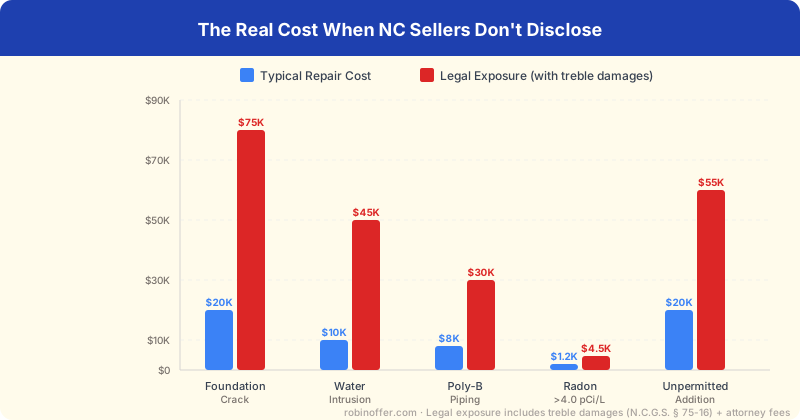
| Undisclosed Issue | Typical Repair Cost | Potential Legal Exposure (with treble damages) | What Disclosure Would Have Cost |
|---|---|---|---|
| Foundation crack (structural, known to seller) | $8,000–$25,000 | $24,000–$75,000 + attorney fees | $0, just a checkmark on the form |
| Active water intrusion in crawl space | $5,000–$15,000 (drainage + encapsulation) | $15,000–$45,000 + attorney fees | $0, honest answer + documentation of any mitigation |
| Known polybutylene piping | $4,000–$10,000 (full replumb) | $12,000–$30,000 + attorney fees + potential insurance claim denial | $0, note the pipe material on the form |
| Radon above 4.0 pCi/L (tested, not disclosed) | $800–$1,500 (mitigation system) | $2,400–$4,500 + potential health-related claims | $800–$1,500 if you mitigate before listing; $0 if you just disclose the test results |
| Unpermitted addition | Varies, could require demolition or retroactive permitting | $10,000–$50,000+ depending on scope | $0, disclose the improvement and let the buyer investigate permitting |
8. The Five Charlotte-Metro Disclosure Landmines
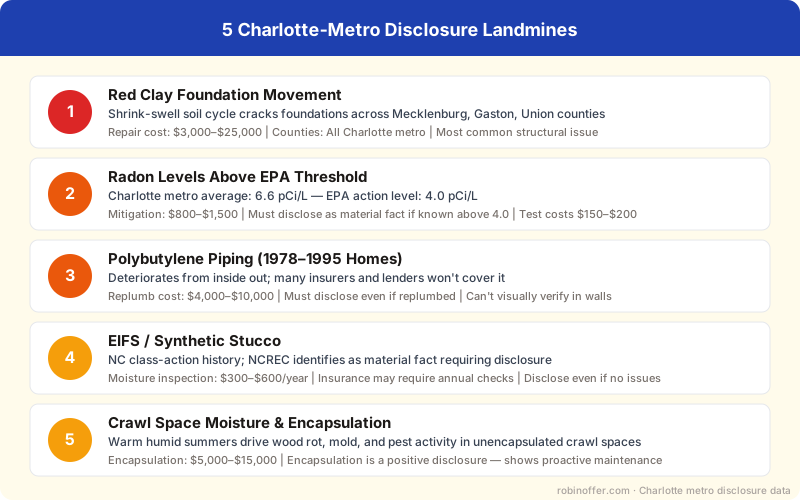
Every region has its own set of property issues that catch sellers off guard on the disclosure form. In the Charlotte metro, which stretches from Gaston County to Union County and into York County, SC, five issues create the most post-closing disputes.
Landmine 1: Red Clay Foundation Movement
The Piedmont region's red clay soil is expansive, it swells when wet and shrinks when dry. This cyclical movement puts stress on foundations, causing cracks, settling, and bowing walls. It's the most common structural issue in the Charlotte metro.
If you've noticed stair-step cracks in block walls, doors that stick seasonally, or floors that slope, those are signs of foundation movement, and they need to be disclosed. Having a pier system installed isn't something to hide; it's something that tells a buyer the problem was identified and addressed professionally.
Landmine 2: Radon
The Charlotte metro's average radon level is 6.6 pCi/L, well above the EPA's 4.0 pCi/L action threshold. If you've tested your home and the results came back above 4.0, that's a material fact that must be disclosed. If you've installed a radon mitigation system, disclose both the original test results and the mitigation.
Worth knowing: a mitigation system is actually a selling point. It shows you took the problem seriously and fixed it. A home with a tested and mitigated radon system is objectively safer than a home that's never been tested.
Landmine 3: Polybutylene Piping
Homes built between 1978 and 1995 across the Charlotte area may contain polybutylene plumbing. This material is known to deteriorate from the inside out, often failing without warning. Many insurance companies won't cover homes with polybutylene, and some lenders require replacement before closing.
The disclosure form asks what material your water pipes are made of. If your home ever had polybutylene, even if you've replumbed with PEX or copper, note the original material. You can't visually verify what's inside walls, so "No Representation" is appropriate if you genuinely don't know. But "No" is dangerous if you've ever been told the home has or had polybutylene.
Landmine 4: EIFS / Synthetic Stucco
Exterior Insulating and Finishing System (EIFS), commonly called synthetic stucco, caused a wave of moisture damage claims in North Carolina in the late 1990s and early 2000s. A class-action lawsuit and settlement followed. The NCREC has identified EIFS as a material fact that must be disclosed.
If your home has EIFS, disclose it, even if it was installed correctly and has no moisture issues. Buyers and their inspectors will ask. Insurance companies sometimes require annual moisture inspections for EIFS homes. Being upfront saves you from a deal falling apart at the inspection stage.
Landmine 5: Crawl Space Moisture and Encapsulation
Charlotte's warm, humid summers make crawl space moisture a persistent issue. Moisture buildup leads to wood rot, mold, and pest activity. Many homeowners have installed encapsulation systems (vapor barriers, dehumidifiers, drainage matting) to manage the problem.
If you've encapsulated your crawl space, that's a positive disclosure, it shows proactive maintenance. If you haven't, and you know there's moisture down there, disclose it. Buyers' inspectors will check the crawl space, and a disclosure that matches what they find builds trust. A disclosure that contradicts their findings starts a lawsuit.
9. How a Pre-Listing Inspection Writes Your Disclosure For You
Here's a move that most NC sellers don't think about: getting a home inspection before you list, not after a buyer orders one. A pre-listing inspection costs $350–$550 (depending on square footage and whether you add radon, termite, or sewer scope) and gives you three advantages the typical seller doesn't have.
Advantage 1: Honest, Accurate Disclosure Answers
When you know the actual condition of your roof, HVAC, plumbing, and foundation, you can answer the RPOADS honestly. No guessing, no "I'm not sure, so I'll check No Representation." That confidence shows on the form, and it shows in negotiations.
Advantage 2: Fix-or-Disclose Decision Making
A pre-listing inspection gives you a menu. For each issue found, you decide:
| Issue Found | Option A: Fix It | Option B: Disclose It | Which Is Better? |
|---|---|---|---|
| Minor roof leak around a vent boot | $200–$400 repair | Disclose and expect $1,000+ price negotiation | Fix it, small cost, big perception impact |
| HVAC nearing end of life (18+ years) | $5,000–$12,000 replacement | Disclose age and condition, price accordingly | Disclose, buyers will discover this anyway |
| Elevated radon (above 4.0 pCi/L) | $800–$1,500 mitigation system | Disclose the test results, expect negotiation | Fix it, mitigation systems are cheap relative to the negotiation hit |
| Foundation crack (structural) | $3,000–$15,000 depending on scope | Disclose and provide repair estimate | Get a structural engineer's assessment, then decide based on buyer pool |
| Polybutylene piping | $4,000–$10,000 full replumb | Disclose and expect financing/insurance complications | If selling on open market, consider replumbing, it removes a deal killer |
Advantage 3: Reduced Post-Closing Liability
A pre-listing inspection report becomes part of your disclosure package. If a buyer later claims you hid a defect, you can point to the inspection report: "We knew about it, we disclosed it, and the buyer chose to proceed." That's a powerful defense.
What a Pre-Listing Inspection Covers
A standard pre-listing inspection in the Charlotte metro runs $350–$550 for homes under 3,000 square feet. Add-ons change the total:
| Inspection Type | Cost | When to Add It |
|---|---|---|
| Standard home inspection | $350–$550 | Always, this is your baseline |
| Radon testing | $150–$200 | If you've never tested, or if your last test was more than 2 years ago |
| Termite/WDO inspection | $75–$125 | Required for most financed sales; good to have in your file |
| Sewer scope | $200–$350 | Homes with cast iron or clay sewer lines (typically pre-1975) |
| Mold testing | $250–$500 | If you've had water intrusion or visible mold growth |
| EIFS moisture inspection | $300–$600 | If your home has synthetic stucco |
Total for a thorough pre-listing package: $500–$1,000. Compare that to the $5,000–$20,000 price concessions buyers extract when they find surprises during their own inspection.
Finding an Inspector
North Carolina requires home inspectors to be licensed through the NC Home Inspector Licensure Board (HILB). Verify your inspector's license at the NCDOI website before booking. For pre-listing inspections, look for an inspector who has experience working with sellers, some inspectors primarily serve buyers and may frame findings differently than you'd want in a pre-listing context.
10. Selling As-Is? The Disclosure Form Still Follows You
"As-is" means you won't make repairs. It does not mean you can skip the disclosure form. North Carolina law requires the RPOADS regardless of how you sell, as-is, through an agent, FSBO, or to a cash buyer. The only escape: if both parties agree in writing to waive the RPOADS (the MOGS can never be waived).
The one scenario where this matters most: cash buyer deals. Many experienced investors will agree to waive the RPOADS in writing. If they offer, take it, it's the cleanest legal position for an as-is seller. But get the waiver signed before closing, and still hand over the MOGS.
For the full as-is selling strategy, pricing, buyer types, due diligence leverage, and the disclosure approach for each path, read our guide to selling a house as-is in North Carolina.
See your traditional sale options
Get a clear picture of how to list and sell your NC home the traditional way, including where disclosure fits in, with ListRobin.
11. Change of Circumstances: Your Disclosure Isn't "Set It and Forget It"
Your RPOADS is accurate on the day you sign it. But what happens when something changes between listing and closing?
N.C.G.S. § 47E-7 requires sellers to update the disclosure if circumstances change materially before closing. This isn't optional. If your HVAC dies in week three of the listing, you can't close with the old disclosure that says the heating system works fine.
Common Changes That Require Updates
- System failure: HVAC, water heater, or electrical panel fails after disclosure was completed
- New damage: Storm damage to roof, tree falls on fence, hail event
- New discovery: You find out about an issue you didn't know about when you completed the form (e.g., a plumber tells you there's polybutylene in the walls during a unrelated repair)
- HOA changes: Special assessment is approved, dues increase, or new violation is cited against your property
- Legal changes: Lawsuit is filed against the property, new lien is recorded
- Flood event: Property floods or takes water damage after disclosure was signed
How to Update
There's no separate update form. You amend the original RPOADS or provide a written addendum noting the change. Your agent should deliver the updated information to the buyer or buyer's agent promptly. "Promptly" in NCREC guidance means as soon as practically possible, not at closing, not the day before.
The Update Scenario Most Charlotte Sellers Face
Charlotte's weather creates a predictable pattern of disclosure updates. Spring listings that extend into summer are the most common trigger. Here's how a typical scenario plays out:
| Timeline | Event | Disclosure Impact |
|---|---|---|
| March, listing goes live | HVAC was serviced in February, running fine | RPOADS says "No" to HVAC problems, accurate at the time |
| May, first heat wave | 15-year-old compressor starts cycling irregularly | Gray area, intermittent issue, but worth noting internally |
| June, buyer under contract | Compressor fails completely during buyer's due diligence | Mandatory update, RPOADS answer is now inaccurate and must be amended |
| Seller's options | 1. Update disclosure + offer credit ($3,000–$5,000 typical) 2. Replace unit ($5,000–$12,000) 3. Do nothing and hope (fraud risk) | Option 1 or 2 keeps the deal together. Option 3 risks the deal and creates post-closing liability. |
The same pattern applies to storm damage (spring hail season in Charlotte runs March through May), plumbing failures (especially in homes with galvanized or polybutylene pipes), and tree damage (ice storms in winter, microbursts in summer).
12. NC vs. SC: Why the Border Changes Your Disclosure Rules
If you're in the Charlotte metro, you may be comparing homes on both sides of the state line. Fort Mill, Rock Hill, and Indian Land are just as "Charlotte" as Belmont, Gastonia, and Mount Holly, but the disclosure rules are different.
| Disclosure Element | North Carolina | South Carolina |
|---|---|---|
| Required form | RPOADS (REC 4.22), 4 pages | Residential Property Condition Disclosure Statement, 4 pages |
| Mineral/oil/gas rights form | MOGS required (unique to NC) | Not required |
| "No Representation" option | Available on virtually every question | Available but with more liability if seller had actual knowledge |
| Waiver by mutual agreement | RPOADS can be waived; MOGS cannot | Can be waived by mutual agreement |
| Caveat emptor lean | Strong, seller-friendly disclosure structure | Moderate, SC courts have been less forgiving of NR abuse |
| Agent's independent disclosure duty | Extensive, NCREC Rule 58A .0114(c) | Exists but governed by different standards |
| Closing process | Attorney state, must use NC-licensed attorney | Attorney state, must use SC-licensed attorney |
Why This Matters for Charlotte Metro Sellers
The Charlotte metro straddles the NC-SC border. If you're selling in Mecklenburg, Gaston, Lincoln, or Union counties, you're under NC disclosure rules. If you're selling in York or Lancaster counties (Fort Mill, Rock Hill, Indian Land, Lake Wylie, Tega Cay), you're under SC disclosure rules. The forms look similar but the legal consequences are different.
The most important practical difference for investors who own properties in both states: NC's "No Representation" approach is significantly more seller-friendly. A blanket NR strategy that works in Gastonia could create real liability exposure in Fort Mill. Know which side of the line you're on, literally.
For SC-specific disclosure rules, see our Fort Mill homeowner guide (Section 8) or Rock Hill homeowner guide (Section 8).
13. A Section-by-Section Disclosure Game Plan
Here's the practical approach we recommend for completing your RPOADS. This isn't legal advice, it's the strategic framework we've seen work for hundreds of Charlotte-metro sellers.
Before You Start
- Pull your permits. Check your county's online permit portal. Every addition, renovation, and major repair should have a corresponding permit. If it doesn't, you've got an unpermitted improvement that needs to be disclosed. See our NC closing costs guide for how unpermitted work affects your sale.
- Gather your records. HVAC service records, roof warranty, termite bond, septic pump receipts, radon test results, HOA documents. Having these in hand before you sit down with the form makes the process faster and more accurate.
- Get a pre-listing inspection. (See Section 9 above.) This is the single best investment you can make for disclosure accuracy.
The Section-by-Section Approach
| RPOADS Section | Strategy | Watch Out For |
|---|---|---|
| Structure/Roof/Foundation | Answer honestly. If you've done repairs, disclose the original issue AND the repair. Documentation is your best friend. | Red clay foundation movement, hail damage history, unpermitted structural changes |
| HVAC & Electrical | Check the manufacture date on your units. Note the refrigerant type. Check your panel brand against recall lists. | R-22 systems, Federal Pacific/Zinsco panels, knob-and-tube wiring in pre-1950 homes |
| Plumbing/Water/Sewer/Septic | Know your pipe material. Check septic permit vs. actual bedroom count. Note well test dates. | Polybutylene piping, septic bedroom count mismatch, well water quality |
| Fixtures & Appliances | List what stays and what goes. Note any appliance issues honestly. | Pool barrier compliance, garage door safety sensors |
| Land Use & Zoning | Check for easements on your plat. Verify current zoning against any structures. | Duke Energy easements, stormwater ordinance changes, shared driveways |
| Environmental & Flooding | Check FEMA FIRMette maps. Disclose known radon levels and any environmental monitoring. | Updated 2024 flood maps, radon above 4.0 pCi/L, underground tanks |
| Additional Disclosures | Disclose any liens, pending lawsuits, or active leases. | HOA assessment liens, mechanic's liens from recent work |
| Owners' Association | Get current dues, any pending special assessments, and check for open violations. | Upcoming special assessments that have been discussed but not voted on |
14. What You Don't Have to Disclose in North Carolina
The disclosure law has boundaries. There are things you're not required to tell a buyer, and understanding these boundaries is just as important as knowing what's required.
Items NOT Required on the RPOADS
| Not Required | Why | Practical Note |
|---|---|---|
| Deaths in the home | NC has no statutory death disclosure requirement, including suicides, natural deaths, or homicides | If asked directly by a buyer, consult your agent and attorney before answering |
| Sex offender proximity | NC does not require disclosure of registered sex offenders near the property | NC's Sex Offender Registry is public, buyers can look it up themselves |
| Paranormal activity | NC does not consider alleged hauntings a material fact | This comes up more often than you'd think |
| Unknown defects | You're only required to disclose defects you have actual knowledge of, you're not required to investigate | This is why "No Representation" exists, for things you genuinely don't know |
| Minor cosmetic issues | Normal wear and tear, small scratches, trivial imperfections | Unless they indicate a larger structural problem (e.g., nail pops from settling) |
| Neighborhood demographics | Fair Housing Act prohibits disclosure based on race, religion, national origin, etc. | Agents cannot answer questions about neighborhood composition |
15. Your NC Seller Disclosure Action Checklist
Whether you're listing next week or next year, this checklist puts you in the strongest possible position on disclosure day.
30+ Days Before Listing
- Schedule a pre-listing home inspection ($350–$550)
- Pull permits from your county's online portal
- Gather HVAC service records, roof warranty, termite bond
- Check your electrical panel brand against recall lists
- Test for radon if you've never done so ($150–$200 for professional test)
- Check your flood zone status on FEMA's updated maps
- Request current HOA documents: dues, special assessments, violations, reserve study
- If your home was built 1978–1995, determine whether polybutylene piping is present
7 Days Before Listing
- Complete the RPOADS (REC 4.22) using inspection report and gathered documents
- Complete the MOGS
- If your home was built before 1978, prepare the lead-based paint disclosure and EPA pamphlet
- Review all answers with your listing agent, they'll catch items you may have missed
- Upload both forms to MLS so buyer's agents can access them before showings
During the Listing Period
- Update the RPOADS immediately if anything changes (system failure, new damage, new discovery)
- Keep a file of all disclosure-related correspondence
- If a buyer's inspection reveals something you didn't know, update the form for the next buyer if this deal falls through
At Closing
- Verify the signed RPOADS is in the closing file
- Verify the signed MOGS is in the closing file
- If pre-1978 home: verify lead paint disclosure and signed acknowledgment are in the file
- Keep copies of all disclosure documents for at least 3 years (matching the fraud statute of limitations)
For a complete walkthrough of NC closing costs and what you'll net after selling, see our NC seller closing costs guide.
If you're weighing whether to sell through an agent, FSBO, or accept a cash offer, our guide to cash offers in the Carolinas breaks down what each path actually costs.
Ready to sell? Start with a plan.
Explore the traditional-sale process end to end with ListRobin so your disclosure and listing strategy line up.
16. Frequently Asked Questions About NC Seller Disclosure
What do sellers have to disclose in North Carolina?
NC sellers must provide two forms before a buyer makes an offer: the Residential Property and Owners' Association Disclosure Statement (RPOADS) covering property condition, and the Mineral and Oil and Gas Rights Mandatory Disclosure Statement (MOGS). The RPOADS covers structure, HVAC, plumbing, environmental hazards, flooding, land use, and HOA information. Pre-1978 homes also require federal lead-based paint disclosure.
What are the most common disclosure issues in the Charlotte metro area?
Five issues create the most post-closing disputes in Charlotte: red clay foundation movement (shrink-swell soil), radon levels averaging 6.6 pCi/L (above the EPA 4.0 action level), polybutylene piping in homes built 1978–1995, EIFS/synthetic stucco moisture problems, and crawl space moisture in the humid climate. See Section 8 for the full breakdown and disclosure strategy for each.
Can I just check "No Representation" on everything?
Technically, yes, the form allows it on most questions. But you cannot legally check "No Representation" if you have actual knowledge of a condition. If you know the basement floods and check NR, that's fraud. For items you genuinely don't know about (especially inherited or former rental properties), NR is the appropriate answer.
Do I need to disclose if I'm selling to a cash buyer?
Yes, unless both parties agree in writing to waive the RPOADS. The MOGS cannot be waived regardless. Most cash buyers who are experienced investors will agree to waive the RPOADS, ask before assuming.
What if I find a problem after I've already completed the disclosure?
You're required to update the disclosure under N.C.G.S. § 47E-7. Provide a written amendment to the buyer or buyer's agent as soon as possible. Don't wait for closing.
How long can a buyer sue me after closing for a disclosure issue?
For fraud claims: 3 years from when the buyer discovers (or should have discovered) the issue. For unfair and deceptive trade practices: 4 years. The discovery rule means the clock often starts well after closing.
My agent says I should just check NR and let the buyer get an inspection. Is that good advice?
It depends on the situation. For inherited properties or homes you've never lived in, a full NR disclosure is legitimate. For homes you've occupied for years, blanket NR answers create buyer suspicion and don't protect you from fraud claims if you actually knew about issues. The safest approach is honest answers backed by a pre-listing inspection.
Does selling "as-is" change my disclosure requirements?
"As-is" means you won't make repairs. It does not change your disclosure obligations. You must still complete the RPOADS and MOGS. The only difference is that your pricing already accounts for the home's condition, the buyer knows what they're getting.
I inherited a house and never lived there. What do I disclose?
"No Representation" on most questions is appropriate, since you genuinely don't know the condition history. But if you've been inside the house and noticed obvious issues (leaking ceiling, broken HVAC, standing water in crawl space), those become your actual knowledge. Disclose what you've observed. For everything else, NR is the honest answer.
My home was built in the 1980s. Do I need to worry about polybutylene?
Yes. Homes built between 1978 and 1995 in the Charlotte metro were commonly plumbed with polybutylene. Look for gray or blue flexible piping at the water heater connections or under sinks. If you can see copper or PEX, the home may have been replumbed, but you should disclose the original material was polybutylene if you know that. The most honest approach: if you're uncertain about what's inside the walls, "No Representation" on the pipe material question. If you know the house was replumbed, disclose that too.
Does my agent fill out the disclosure form for me?
No. The RPOADS must be completed by the property owner, not the listing agent. Your agent can help you understand the questions and review your answers, but the legal responsibility for accuracy falls on you. Many agents will sit with you and walk through the form question by question, that's standard practice and a good idea. But your name goes on the form, and your knowledge is what the answers are based on.
We renovated the kitchen and bathrooms. Do we need to disclose that?
Renovations themselves aren't defects. But the disclosure form asks about structural changes and whether improvements were permitted. If you pulled permits, great, disclose the improvements and note they were permitted. If you didn't pull permits (or if you're not sure), that's the item to disclose. Unpermitted renovations are a material fact because they affect the property's legal status and could create problems with future buyers, insurers, or appraisers.
The buyer's inspector found something I didn't know about. Am I liable?
Generally no, as long as you didn't have actual knowledge. NC's disclosure standard is based on what you actually knew, not what a professional inspector would find. If the inspector discovers a hidden termite damage behind drywall that you had no reason to know about, that's not a disclosure failure. But if the inspector finds evidence of a long-standing leak in a location where you had a bucket, that's a different story. The question is always: did you know, and did you misrepresent?
This guide is for informational purposes only and does not constitute legal advice. North Carolina real estate disclosure law involves specific statutes and court decisions that may affect your situation. Consult a licensed North Carolina real estate attorney for advice specific to your transaction. Guide authored by CC Evans with research current as of June 2026.