
SC Homestead Exemption Guide
What qualifies, what it cannot do, and how to protect your options before deadlines force bad choices.
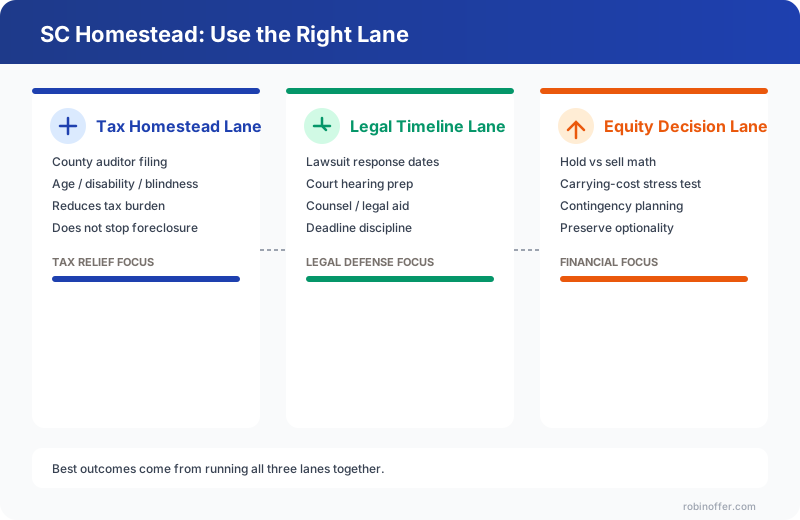
1. The South Carolina homestead reality: one name, two very different systems
If you searched “South Carolina homestead exemption,” you probably expected one clean answer. What you actually get is two different legal systems sharing the same phrase. One system is a property-tax break for homeowners who are 65+, totally and permanently disabled, or legally blind. The other is a bankruptcy/creditor-protection exemption that applies in debt cases. Homeowners mix these up constantly, and that confusion can cost real money.
Here’s the practical version: if your worry is your annual tax bill, you care about the tax homestead exemption in S.C. Code §12-37-250 and county-auditor application rules. If your worry is a judgment creditor, debt lawsuit, or bankruptcy filing, you care about South Carolina’s debtor exemption framework and court procedure. One does not automatically solve the other.
That distinction matters even more in 2026 because there is heavy legislative activity around homestead amounts and eligibility rules. Proposed bills are not the same as enacted law. We are seeing homeowners make decisions based on headlines (“they raised it!”) before county offices have implemented any changes. That is dangerous when your deadline is attached to a tax year, a court date, or a foreclosure hearing.
This guide is built to be decision-first, not theory-first. We’ll map what is live law now, what might change, how county implementation actually works, and where homeowners under age 65 often feel exposed. We’ll also show where the homestead exemption helps less than expected, especially if your biggest risk is mortgage delinquency, tax delinquency, or a lawsuit with deadlines already moving.
| Question You’re Actually Asking | System That Applies | Main Gatekeeper | Typical Deadline Pressure |
|---|---|---|---|
| “Can I lower my SC property tax bill?” | SC Property-Tax Homestead Exemption | County Auditor + SC DOR rules | Tax-year qualification and filing timing |
| “Can a creditor force sale of my house?” | Debtor/Creditor and bankruptcy exemptions | Court process + legal counsel | Lawsuit response and bankruptcy filing windows |
| “Will this stop my mortgage foreclosure?” | Foreclosure law (judicial in SC) | Court + lender loss-mitigation process | Service of complaint, answer deadline, hearings |
| “What if laws are changing at the State House?” | Legislative tracking + implementation lag | General Assembly + county execution | Effective date vs practical rollout date |
2. The tax homestead exemption in plain English (and who qualifies)
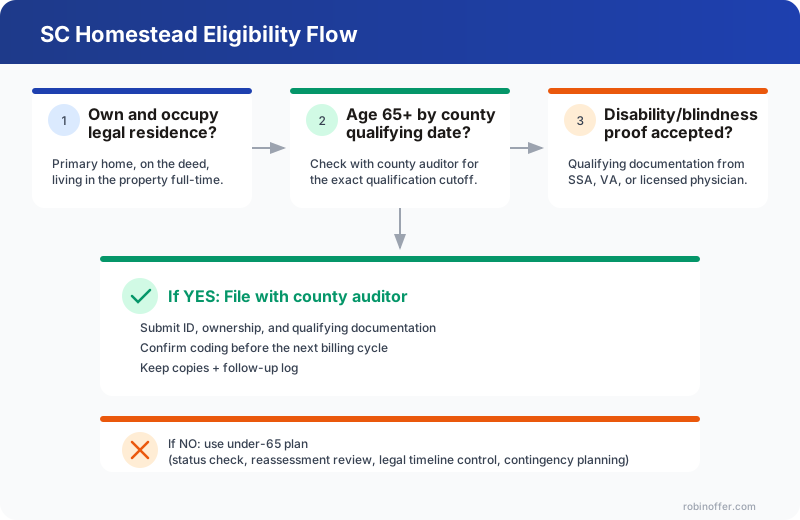
South Carolina’s property-tax homestead exemption is governed by statute and administered locally. In plain English, it exempts a portion of your legal residence value from property taxes if you meet one of three qualifying tracks: age, total/permanent disability, or legal blindness. County auditors handle the front door; state-level structures handle reimbursement and policy guidance.
For homeowners, the operational part matters more than the legal prose. You need to know: Do I qualify this year? What documents prove qualification? Which office processes my claim? If I miss timing, can I correct it next cycle? County websites often summarize this in practical terms, and those summaries are worth reading because they reflect how applications are actually processed where you live.
One subtle but important detail: county systems may discuss “first $50,000 fair market value” based on current statutory text while simultaneously referencing pending legislative proposals that could raise caps or alter age thresholds. Until enacted and implemented, the live rule is the live rule. That means you should file based on current eligibility, not rumored future eligibility.
| Qualification Path | Typical Proof Requested | Common Homeowner Misunderstanding | Practical Fix |
|---|---|---|---|
| Age 65+ by statutory date | ID, date-of-birth verification | “I turn 65 this year so I’m already covered.” | Confirm the exact qualifying date with your county auditor. |
| Total and permanent disability | Federal or state disability determination docs | “My doctor note is enough for all counties.” | Ask for county-specific accepted documents before applying. |
| Legal blindness | Ophthalmologist or state-accepted certification | “I can submit later without consequence.” | File promptly; don’t assume retroactivity without written confirmation. |
| Legal residence requirement | Owner-occupancy and residency evidence | “Second home can also get homestead.” | Homestead applies to legal residence, not vacation/investment property. |
If you are in a major growth county (York, Berkeley, Charleston, Greenville, Horry, Lexington), documentation and processing volume can create delays. The solution is to submit complete paperwork early and keep a copy of everything you filed. If there is any change in ownership structure, trust status, or occupancy, update the county quickly so you do not discover a mismatch only after tax bills are generated.
3. Why under-65 homeowners feel exposed (and what is actually true)
When we say South Carolina has a “two-tier” feel for homestead rules, this is what we mean in homeowner terms: many under-65 owners do not access the same property-tax homestead relief that qualifying seniors/disabled/blind owners can claim. That creates a practical perception gap, especially in counties with rising values and reassessment pressure.
But under-65 does not mean “no protection anywhere.” It means your property-tax homestead lane may be narrower. You still may have other forms of relief and risk management options: legal-residence assessment ratio treatment, appeal rights during reassessment, lender workout options, and (in debt cases) legal strategies under debtor law. The real mistake is assuming one missed benefit equals total helplessness.
We see this pattern constantly: a 52-year-old homeowner in a fast-growing county gets a bigger tax bill after value movement, sees neighbors with senior homestead relief, and concludes there is no lever to pull. In reality, there may be reassessment appeal pathways, escrow recalculation opportunities, or sale-timing options that preserve more equity than waiting passively for carrying costs to compound.
The emotional version of this problem is comparison. “Why do they get this and I don’t?” The financial version is cash flow. If your monthly carrying cost is stretching because taxes plus insurance plus mortgage jumped, the right question becomes: which decision protects equity and stability over the next 6-18 months? Sometimes that’s fighting value, sometimes modifying debt, sometimes selling before pressure forces worse terms.
4. Property-tax math: how homestead interacts with SC assessment ratios
South Carolina property taxes are not simply “value times one rate.” The framework includes assessment ratios by property class, then millage. For owner-occupied primary residences, the assessment ratio structure is comparatively favorable versus some other classes. That matters because two homeowners with similar market values can still have very different tax experiences depending on classification and exemptions.
For practical planning, homeowners should run three scenarios each year: current baseline, projected next-bill estimate, and stress-case estimate. Stress-case planning sounds pessimistic, but it prevents panic decisions. If your stress-case creates a cash-flow shortfall, you can prepare now (budget adjustment, escrow analysis, appeal strategy, or sale prep) instead of reacting after delinquency letters arrive.
| Scenario | Home Value | Classification Notes | Tax Impact Direction | Action Trigger |
|---|---|---|---|---|
| Baseline | $320,000 | Legal residence correctly coded | Stable to modest increase | No major change; monitor annually |
| Reassessment uplift | $365,000 | Value increase with same occupancy | Noticeable tax rise | Review valuation data and appeal window |
| Status mismatch | $365,000 | Legal residence coding error | Sharp increase relative to expectation | Immediate county correction request |
| Qualified homestead approved | $365,000 | Age/disability/blindness path confirmed | Reduced effective burden | Track carryforward and annual notices |
If your mortgage escrow is involved, tax changes can hit twice: through the tax bill itself and through escrow shortage adjustment. That can feel like an overnight payment jump even though the underlying tax shift developed over time. Build a “payment shock buffer” into your plan when you are near your budget edge.
If you need broader context on Carolina timing pressure and sell-vs-wait tradeoffs, our best-time-to-sell-house-carolinas guide is useful for sequencing decisions before the numbers force your hand.
5. County implementation: what actually happens when you apply
The statute is statewide; the lived process is county-level. That distinction is everything. Counties vary on intake format (online, in-person, mail), documentation checklist style, and follow-up communication. Some counties are highly digital; others still rely on office workflows that reward phone confirmation and document copies.
Your success rate goes up when you treat this like a mini-audit packet. Include identity documentation, ownership proof, occupancy confirmation, and any eligibility-specific evidence in one complete submission. Partial submissions cause avoidable delays, and delayed processing can create a mismatch between your expectations and the bill you receive.
If title is held in trust, jointly owned, or changed recently, do not assume the county can infer your status from prior-year records. Ask directly how your county wants trust documents, life-estate arrangements, or survivorship situations presented. This is where homeowners lose months because each office has practical handling preferences even when legal standards are statewide.
| Application Step | What You Submit | What the County Verifies | Typical Delay Cause |
|---|---|---|---|
| Initial filing | Form + core IDs + proof documents | Eligibility category and legal residence status | Missing identity or ownership document |
| Record matching | Parcel and owner identifiers | Title consistency with tax record | Name mismatch after deed or marital change |
| Qualification confirmation | Disability/blindness/age proofs | Statutory threshold satisfaction | Non-standard letter format |
| Final coding | Internal county processing | Billing system update | Volume backlog near tax-cycle deadlines |
Pro tip: once approved, still review each annual notice. Automated systems are good, not perfect. Ownership changes, refinancing paperwork, or address mismatches can trigger unintended reclassification if left uncorrected.
6. What homestead does not do: foreclosure, tax liens, and urgent lawsuits
Homeowners are often shocked to learn what homestead does not stop. A property-tax homestead exemption can reduce tax burden for qualified owners; it does not erase mortgage contract obligations. If you are in default, the foreclosure process has its own legal track. In South Carolina, foreclosure is judicial, so court response deadlines matter.
Similarly, if you are already facing lawsuit service or judgment collection pressure, tax homestead relief may help long-term affordability but not immediate litigation risk. That is why homeowners need parallel tracks: compliance with county tax process and immediate legal response to court documents.
South Carolina Legal Services materials emphasize not ignoring summons and complaint documents. Waiting because you are “working on the homestead paperwork” is a common and expensive mistake. Courts and county auditors solve different problems on different clocks.
| Problem | Can Tax Homestead Alone Solve It? | Better Immediate Move | Helpful Resource |
|---|---|---|---|
| Mortgage foreclosure complaint served | No | File timely legal response and seek counsel | south-carolina-foreclosure-help |
| Escrow-driven payment shock | Partially (if qualified) | Escrow analysis + budget stress test | cash-offer-guide-carolinas |
| HOA assessment foreclosure threat | No | Validate lien math + answer deadlines + negotiation plan | sc-hoa-foreclosure-guide |
| Debt collection lawsuit | No | Legal defense review + asset strategy | SC Bar / Legal Aid channels |
| Property-tax delinquency spiral | Sometimes | County payment communication + timeline plan | County treasurer/auditor offices |
Not sure how much equity you have?
Your housing options start with your home's value. Get a free estimate from ListRobin to see where you stand before any deadline forces your hand.
7. Bankruptcy and creditor-protection homestead rules: where they fit
Now the second system: debtor protection. In bankruptcy contexts, homestead exemptions are about how much equity can be protected from creditors under applicable law. This is a separate legal lane from county property-tax homestead applications. The overlap in terminology is why homeowners get confused.
The practical takeaway: you do not “file your county homestead form” and become creditor-proof. Bankruptcy protection questions depend on case type, exemption elections allowed, equity amount, lien priority, and legal strategy. Those are attorney-level questions, not county-counter questions.
If your risk is unsecured debt pressure and your home has meaningful equity, a pre-filing analysis is critical. The wrong timing can convert a manageable case into an avoidable loss. The right timing can protect flexibility and reduce panic decisions. Either way, you need actual legal analysis tied to your numbers, not internet folklore.
Homeowners considering bankruptcy should also map the “if not bankruptcy” path: negotiated settlement, structured payoff, refinance feasibility, or planned sale. Sometimes a deliberate sale protects more equity and stress load than contested litigation. Sometimes bankruptcy is clearly better. The point is to choose intentionally, not by exhaustion.
8. Reassessment cycles and the 15% cap discussion homeowners misread
South Carolina reassessment cycles and cap language are widely discussed and frequently misread. Homeowners hear “15% cap” and assume the cap solves all value-increase concerns. It does not work that simply across all situations and triggers. Sale events, improvements, and classification details can change outcomes.
County reassessment notices are not just informational mailers; they are decision points. You typically have a review and appeal window. If you miss that window, your leverage shrinks. In high-growth corridors where values moved quickly, this can create years of elevated carrying costs before the next full cycle gives you another broad reset opportunity.
| Homeowner Belief | Reality Check | What to Do Instead |
|---|---|---|
| “Cap means my bill can’t jump much.” | Billing can still shift materially due to millage, status, or triggers. | Model tax + escrow scenarios annually. |
| “Notice is just informational.” | Notice may start your best challenge window. | Calendar review deadlines immediately. |
| “Neighbors got lower treatment so mine is wrong.” | Comparables can differ by classification and timing. | Pull parcel-level details before appealing. |
| “I can fix this next year if needed.” | Delay can compound carrying-cost pressure. | File correction requests now, not later. |
If your financial runway is thin, combine reassessment review with contingency planning. Don’t wait until fall tax and escrow adjustments arrive simultaneously.
Start with what your home is worth
Before weighing hold vs. sell, get a free home value estimate from ListRobin so you can plan around your real equity.
9. Senior/disabled homeowner action plan: claim it right the first time
If you likely qualify for the SC tax homestead path, execution quality matters. A clean first submission usually beats a correction cycle every time. Start with your county auditor’s specific checklist and contact method. Then build a packet that is over-complete rather than minimal.
Good packet habits: include identification, proof of legal residence, supporting eligibility docs, and proof of ownership format exactly as reflected on tax records. Label your files clearly. If submitting in person, request confirmation. If submitting online or by mail, document timestamp and retain copies.
After filing, set a reminder to verify coding before the next bill cycle. Do not assume “filed” equals “implemented.” If you are dealing with probate, trust transfers, or recent deed changes, expect extra scrutiny and allow extra time. For inherited-home complexity, the probate playbook in how-probate-works-south-carolina can help sequence title and tax steps cleanly.
And if you are helping an older family member, do not do this by text fragments and memory. Put everything in one folder with copies of every submission and every county response. Documentation discipline prevents repeat trips and avoidable billing surprises.
10. Under-65 homeowners: five alternatives when homestead won’t carry the load
If you do not qualify for the senior/disabled/blind property-tax homestead lane, that does not mean you sit still. You need a five-lane contingency framework: (1) classification accuracy, (2) reassessment review, (3) debt timeline control, (4) budget triage, and (5) optional sale planning.
Lane one: classification accuracy. Confirm legal residence coding and ownership details are correct. Incorrect coding is one of the fastest ways to overpay. Lane two: reassessment review. If value notice is off, act within the formal window. Lane three: debt timeline control. If litigation or delinquency risk is present, get legal support early.
Lane four: budget triage. Separate fixed essentials from discretionary spending and stress-test payment shock scenarios. Lane five: optional sale planning. Prepare as if you may sell, even if you hope not to. Optionality is power; last-minute selling is expensive.
If you are weighing quick-certainty options against traditional listing timelines, compare paths with real net math in our cash-offer-guide-carolinas breakdown before urgency decides for you.
11. Pending legislation watch: what could change, and what has not changed yet
South Carolina has active homestead-related bills in recent sessions, including proposals to increase exemption amounts and adjust age thresholds. As of early 2026, none of these proposals have been enacted into law. Treat pending legislation as scenario planning, not current entitlement: build your decisions on enacted law and confirmed county guidance, and update only when implementation is real. When in doubt, request written guidance from the county office handling your account.
For direct verification, monitor live sources: South Carolina Code Title 12, Chapter 37 at scstatehouse.gov, active homestead bills at the General Assembly tracker, and implementation contacts via SC Department of Revenue Local Government Services.
12. When selling can protect more equity than waiting
There are situations where the best homestead strategy is still not enough to stabilize the full financial picture. If mortgage, tax, insurance, and debt obligations are compounding faster than income, waiting can silently convert an equity problem into a liquidity crisis.
Selling is not always the right answer, but “never sell under pressure” is bad advice. The right question is whether a controlled sale today preserves more net equity and less stress than a forced sale later. Controlled means you choose timing, prep level, and negotiation posture while you still have runway.
If your situation includes foreclosure risk, compare timeline options with the court process map in the South Carolina foreclosure guide. If your pressure source is divorce, use selling-during-divorce-carolinas to avoid title and timing mistakes that destroy net proceeds. Different pressure sources require different sequencing, even when the house is the same.
A pre-sale equity check should include: current payoff, estimated tax and closing costs, required repair assumptions, and timeline sensitivity. Do this before panic, not after default notices stack up.
Facing deadline pressure? Know your number.
A fast, free home value estimate from ListRobin gives you the figure you need to act quickly instead of guessing.
13. Frequently asked questions homeowners ask after the first phone call
Does SC homestead exemption stop my mortgage foreclosure?
No. Property-tax homestead relief is not a foreclosure defense by itself. If you are served in a foreclosure case, respond on the court timeline and get legal help immediately.
Is the exemption automatic once I turn 65?
Usually no. You generally need to file through your county auditor and provide documentation. Always confirm local procedures.
If a bill proposes higher homestead amounts, should I wait to file?
No. File under current law now. If future law changes are enacted and implemented, you can follow updated county guidance then.
I’m under 65. Do I have any meaningful protection?
You may have other legal and financial protections, but often not the same property-tax homestead lane. Focus on classification accuracy, valuation review, legal timeline management, and contingency planning.
Can county offices fix prior-year issues retroactively?
It depends on the issue type and local/state rules. Ask the county in writing for your specific parcel and tax years rather than assuming.
Do I need an attorney for homestead filing?
For basic county tax-homestead filing, many homeowners file directly. For litigation, foreclosure, bankruptcy, or complex title issues, legal counsel is strongly recommended.
Where can I find low-cost or free legal help in SC?
The South Carolina Bar Lawyer Referral Service and South Carolina Legal Services are primary starting points. HUD-approved counselors can also help with housing stability planning.
What is the fastest way to reduce risk if I’m overwhelmed?
Triage in this order: legal deadlines first, then tax/escrow accuracy, then monthly cash-flow stabilization, then sale-option planning. Sequence beats panic.
See what your SC home is worth today
Get a free, no-pressure home value estimate from ListRobin to anchor your homestead and equity decisions.
14. Bottom line: use the right homestead tool for the right problem
South Carolina homeowners do better when they stop looking for one “homestead answer” and start using the right tool for the right risk. Tax homestead can reduce burden for qualifying owners. Debtor protections operate in a different legal lane. Foreclosure and litigation deadlines run on their own clocks. Legislative headlines are not implementation notices.
If you qualify for tax homestead, file cleanly and verify coding. If you do not qualify, use the other five levers early so pressure does not choose for you. If your timeline is already tight, move from information gathering to action sequencing this week, not next month.
The core goal is simple: preserve equity, preserve options, and avoid forced decisions. That usually means acting earlier than feels emotionally comfortable. But earlier is cheaper, calmer, and almost always gives you better outcomes.
Need a practical next-step plan? Start with your county status check, then compare hold-vs-sell math using real numbers. If you want a certainty-first framework for Carolina homeowners, review cash-offer-guide-carolinas and layer in timeline guidance from the foreclosure and seasonal timing guides linked above.
Scenario A: Retired owner in a fast-appreciating county
Imagine a homeowner who bought in York County in 2014, paid down principal steadily, and now has substantial equity. Their biggest fear is not immediate foreclosure. It is payment creep. Taxes rise, insurance rises, maintenance rises, and fixed retirement income does not. In this profile, homestead filing is not optional paperwork; it is foundational budget infrastructure. The filing itself is step one, but step two is just as important: verify county coding and keep all supporting documents accessible for future confirmation requests. Many retirees assume one successful filing means “set and forget.” In reality, ownership changes, trust updates, or clerical mismatches can create future friction if not monitored.
The better approach is a yearly review ritual. Once per year, compare tax bill structure to prior-year structure, confirm legal-residence indicators, and validate that your mortgage servicer escrow calculation reflects the same assumptions. If anything is off, address it before payment shock compounds. If your objective is to stay in place long-term, your strategy is not one action; it is a maintenance system. That system includes exemptions, expense monitoring, home-maintenance reserves, and periodic liquidity planning in case health changes force faster decisions. In long retirement horizons, process discipline protects peace just as much as dollars.
Retired homeowners should also model “what if one thing breaks at the worst time?” For example, one major HVAC event plus one insurance premium jump can wipe out a year of perceived tax relief. This is where homestead helps but does not complete the plan. The complete plan includes a reserve ladder, family communication, and optionality on downsizing or sale timing. The goal is not fear-based planning; it is avoiding forced decisions while under stress. In our experience, families that pre-plan these scenarios preserve relationships as well as equity because everyone understands the trigger points and next actions in advance.
Scenario B: Mid-career owner under 65 facing cost compression
Under-65 owners in growth markets often describe the same feeling: “I’m doing everything right, but every bill got bigger at once.” This profile usually includes a mortgage originated at lower rates, then escrow adjustment after tax/insurance movement, plus general household inflation. Even without legal distress, the margin disappears. In this case, homestead confusion can create false hope. People spend months chasing a tax-homestead expectation that may not apply yet, while ignoring the tools that do apply now. The practical response is a five-part compression plan: verify status coding, challenge obvious valuation errors inside deadlines, renegotiate insurance intelligently, tighten discretionary burn, and build a contingency sale packet early.
The contingency packet is not a surrender plan. It is leverage. Include current payoff, estimated closing costs, likely repair tolerance, minimum acceptable net, and preferred timeline windows. If your situation improves, great; you hold with confidence. If it deteriorates, you are ready before panic discounts your outcome. Homeowners who wait until 30-day crisis windows almost always accept weaker terms. Homeowners who pre-build options choose from strength. Under-65 owners especially benefit from this because they cannot rely on age-based tax relief to close the gap quickly.
If debt pressure is part of the picture, add legal timing to the same dashboard. Keep court dates, response deadlines, and lender communication logs in one place. Financial strain becomes dangerous when timeline management breaks down. You can survive a hard year with a coherent timeline. You can lose control fast when mail piles up and no one owns the next action.
Scenario C: Disability qualification with documentation friction
Disability-based qualification is often legally straightforward but administratively frustrating. Homeowners may have legitimate disability status yet still face delays because one document format does not match county expectations. The emotional impact is real: people feel they are being disbelieved when the issue is sometimes just workflow compatibility. The best response is not argument-first; it is documentation-first. Ask the county exactly which issuing authority documents are accepted, whether originals are required, and whether supplemental statements are needed. Confirm by phone, then confirm by email when possible.
Where households get stuck is submitting partial packets repeatedly. Each cycle restarts processing time and erodes confidence. Build one complete packet with cover sheet listing every enclosed document, parcel number, and contact details. If the file is large, ask if the office prefers staged submission or appointment-based review. County staff are often willing to help when requests are precise and organized. This approach reduces both delay and frustration.
If your household is also balancing medical scheduling, caregiver logistics, and reduced income, set a single family point person for county correspondence. Distributed responsibility causes dropped steps. One owner, one checklist, one follow-up calendar. That sounds basic, but it dramatically improves outcomes in high-stress households.
Scenario D: Inherited home, title complexity, and homestead timing
Inherited-home cases are where tax classification, probate sequencing, and occupancy proof collide. Families often assume they can complete homestead steps before title mechanics are clean. Sometimes that works, often it creates rework. The safer sequence is: confirm title pathway, document legal residence status for the occupying heir, then align county records with current ownership structure before expecting stable exemption treatment. If multiple heirs are involved, communication quality is as important as legal paperwork. Misaligned expectations create delay, and delay can create avoidable cost.
In inherited properties, the carrying-cost clock keeps running while paperwork is sorted. Taxes, insurance, utilities, and maintenance do not pause because the family is deciding what to do. If family consensus is uncertain, model both hold and sell paths early with transparent math. A clean spreadsheet reduces emotional debate because everyone can see the monthly burn and equity implications in plain numbers. Families who refuse to model costs often drift into forced timeline decisions that no one wanted.
If one heir is living in the home and others are not, define decision authority up front. Who communicates with county offices? Who receives notices? Who pays interim costs? Ambiguity here is expensive. This is why we recommend pairing homestead review with probate task sequencing rather than treating them as separate projects.
Scenario E: Foreclosure pressure plus homestead confusion
When foreclosure pressure is active, homeowners are prone to “program shopping,” looking for one filing that can pause everything. Homestead tax relief is useful for affordability, but it is not a foreclosure pause button. In judicial foreclosure settings, response deadlines and hearing preparation are decisive. If those deadlines are missed, your strategic options narrow fast regardless of long-term tax treatment.
The right move is dual-track execution: legal defense track plus affordability track. Legal track means immediate document review, timely response, and counsel outreach (legal aid, referral service, or private counsel). Affordability track means accurate budget, realistic payment capacity, and evaluation of retention vs. exit pathways. If retention math fails even after best-case assumptions, controlled sale planning should start immediately. This is not defeat. It is damage control with dignity.
Homeowners who frame this as “fight vs surrender” lose valuable time. Better framing is “which path preserves the most equity and stability from today forward?” Sometimes that is reinstatement, sometimes workout, sometimes sale. Homestead status can improve one piece of this equation, but only when integrated into a full timeline plan.
Scenario F: Divorce, occupancy changes, and legal-residence risk
Divorce transitions can quietly break tax assumptions. One spouse moves out, title stays unchanged for months, mailing addresses drift, and county records may not reflect occupancy reality. This is where homeowners get blindsided by classification or billing surprises at the same time legal fees are already high. The fix is early coordination between divorce process, title intent, and county record updates. Waiting until decree finalization can be too late for that tax cycle.
If one party intends to keep the home, map the bridge period in detail: who pays mortgage, taxes, and insurance during transition; when occupancy status changes officially; and how refinance or buyout timing affects classification and affordability. If sale is likely, run the net proceeds model before emotional negotiations lock in unrealistic expectations. Clear numbers reduce conflict and preserve time.
In many cases, the strongest move is to align legal and housing strategy in one timeline document. You do not need perfect certainty; you need shared checkpoints and trigger actions. Divorce is already complex, and housing ambiguity makes it worse. A simple decision grid can prevent months of avoidable bleed.
Scenario G: Military and relocation households
Relocation households, especially military families, operate on compressed timelines and uncertain orders. Homestead status and legal residence assumptions can become tangled when families move between duty locations while retaining property. The operational priority is documentation accuracy and timeline clarity. Know which residence is primary for tax purposes, keep occupancy evidence current, and coordinate with local offices before assumptions drift.
If relocation likely means renting the property, evaluate classification implications early and update budget projections accordingly. Many families underestimate the combined effect of property-management fees, vacancy risk, maintenance reserves, and classification changes. A rental plan that looks positive on paper can become negative after realistic allowances are included. That does not mean renting is wrong. It means your model must be honest.
If sale is the likely path, pre-plan prep scope and timeline before orders become final. Mobility penalties usually come from rushed execution, not from the concept of moving itself. Families that prepare optionality early keep more control over both net outcome and stress level.
Scenario H: Insurance shocks and the false comfort of exemption wins
One of the most common homeowner traps is celebrating a tax-side win while insurance costs quietly outpace it. A successful homestead filing can reduce pressure, but a large premium increase can absorb that relief quickly. The household feels betrayed because they “did the right thing” and still ended up squeezed. The lesson is not that homestead failed; the lesson is that single-variable wins do not solve multi-variable budgets.
Create a quarterly housing-cost dashboard: mortgage principal/interest, taxes, insurance, HOA if applicable, and expected maintenance reserve. Track trend direction, not just current amount. If any line item shows persistent acceleration, intervene early: shop coverage, review deductibles, evaluate risk mitigation steps, and build a cash buffer before renewal cliffs.
Households with thin margins should run a six-month stress test twice per year. Assume one adverse event and verify whether reserves hold. If not, decide proactively what expense can be reduced or what asset decision would preserve stability. This is boring planning, but boring planning is what prevents chaotic outcomes.
Scenario I: Small-business owner with personal guarantees
Entrepreneurs often discover housing risk when business volatility spills into personal guarantees or creditor claims. In that moment, homestead terminology can be dangerously misleading because tax exemption concepts and creditor-protection strategies are not interchangeable. If you have signed personal guarantees, get legal analysis before crisis stage. Waiting until collection escalates limits your options and increases costs.
Business owners should maintain a personal-liquidity plan separate from business forecasts. Revenue optimism does not pay a court deadline. Track household obligations independently, stress-test downturn scenarios, and establish trigger points for restructuring or asset decisions. If housing equity is at risk, evaluate legal pathways and controlled sale options while you still have leverage.
There is no shame in pivoting early. The expensive version of this story is denial plus delay. The survivable version is early realism plus structured action. Homestead-related cost relief may help the runway, but only if integrated into a broader risk plan.
Scenario J: Elder-care transition and multigenerational occupancy
As households become multigenerational, occupancy facts can change faster than tax records. Adult children move in, ownership structures are adjusted, caregiving needs evolve, and documentation trails get messy. Homestead qualification and classification stability depend on clean records. Families that treat this casually often face avoidable corrections later.
Set a family “home records binder” that includes deed copies, tax notices, insurance declarations, qualification documents, and office contact logs. Assign one person to maintain it. During elder-care transitions, this binder saves hours and prevents missed steps when multiple family members are assisting. It also reduces conflict because everyone can reference the same facts.
If the long-term plan may include sale to fund care, discuss it early while decision-makers can participate calmly. Waiting until crisis makes every option feel forced. Early planning creates dignity and better financial outcomes.
Scenario K: Data discipline for homeowners who hate spreadsheets
You do not need complex models to make good housing decisions. You need three numbers updated consistently: monthly carrying cost, realistic net equity if sold, and minimum cash reserve runway. If those three numbers are current, most major decisions become clearer. If those numbers are stale, every decision feels emotional and uncertain.
A simple one-page tracker can outperform complicated tools. Update it monthly. Add alerts for legal deadlines, reassessment windows, insurance renewal dates, and tax-cycle milestones. Most households lose money through missed timing, not through lack of intelligence. Timing systems solve that.
If you hate paperwork, delegate with accountability. A spouse, adult child, or advisor can manage tracking, but ownership must be explicit. “I thought you handled it” is not a strategy. It is how avoidable penalties happen.
Scenario L: The 90-day stabilization plan
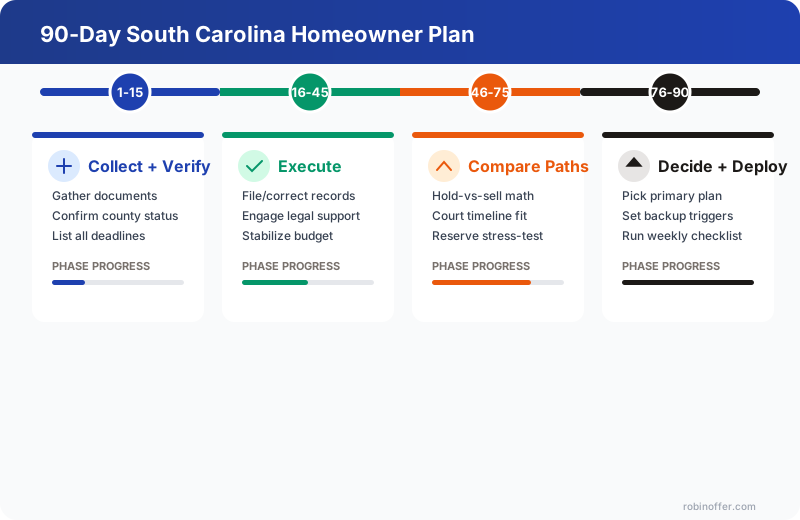
If you are overwhelmed, use a 90-day sequence. Days 1-15: collect documents, confirm county status, and identify all legal/tax deadlines. Days 16-45: execute filings or corrections, engage legal/counsel resources where needed, and finalize a realistic monthly budget. Days 46-75: run hold-vs-sell scenarios with real numbers and timeline assumptions. Days 76-90: choose a primary path and a backup path, then schedule checkpoint reviews.
This method works because it replaces panic with sequence. You cannot solve every variable instantly, but you can remove uncertainty layer by layer. Each completed step reduces risk and increases clarity. By day 90, you should know whether your best path is stabilized hold, structured debt action, or controlled sale.
The goal is not perfection. The goal is regaining control. South Carolina homestead rules are one important piece of that control system. Use them fully if you qualify. If you do not, use the rest of the toolkit just as aggressively. What matters is not which label fits your case. It is whether your next actions are timely, documented, and financially grounded.
Extended FAQ: advanced homeowner questions that come up in real cases
What if I filed homestead paperwork and then moved temporarily for medical care? Temporary relocation can create confusion if mailing addresses change and county records are not updated. Notify the county office handling your parcel proactively, explain the temporary nature of the change, and keep occupancy/residence documentation organized. Do not assume systems infer intent. They process records.
Can I rely on online forums for county-specific interpretation? You can use them for clues, not final answers. County-level implementation details change over time and are not always reflected in crowd-sourced posts. Verify directly with your county auditor or equivalent office in writing where possible.
How do I avoid being surprised by escrow re-analysis? Request periodic escrow statements, compare line items year over year, and model a conservative next-year estimate. If taxes or insurance moved materially, assume servicer adjustments will follow. Build buffer before the formal re-analysis notice arrives.
What if I’m helping a parent who is overwhelmed by paperwork? Create a one-page checklist with deadlines, office contacts, and required documents. Sit down once, gather everything, and submit a complete package. The number-one predictor of delay is fragmented submission.
Do trust-owned homes complicate eligibility? They can. Trust structures are not disqualifying by default, but documentation requirements can be stricter and county workflows can differ. Confirm required trust paperwork before filing and keep copies of all submitted pages.
What if my value notice appears reasonable but my bill still jumps? Bill changes can be driven by factors beyond value alone, including millage shifts, coding changes, and escrow dynamics. Review each component separately before assuming one root cause.
How many times should I follow up after filing? At least once after submission confirmation, once before billing-cycle cutoff if not yet reflected, and once upon receipt of first bill showing expected treatment. Follow-up cadence should be respectful and documented.
What if county phone guidance conflicts with website language? Ask for clarification with specific parcel details. General website language may not reflect edge-case circumstances. Keep notes with date, time, and representative name for your records.
Can I combine legal aid, HUD counseling, and private counsel? Yes, many households use layered support. Counseling helps with affordability and planning; legal aid or counsel handles legal rights and procedural defense. The best outcomes often come from coordinated support rather than one channel alone.
When is the latest I should start planning if I feel pressure? Immediately. Waiting for a “better time” usually narrows options. Planning early does not force a decision; it preserves decision quality.
Practical documents checklist homeowners can copy
| Document Group | Examples | Why It Matters | Where to Store |
|---|---|---|---|
| Identity and residency | Driver license, voter registration, utility bill | Supports legal residence and identity matching | Primary folder + digital backup |
| Ownership and title | Recorded deed, trust excerpt, survivorship docs | Ensures county record consistency | Home records binder |
| Eligibility evidence | Age proof, disability certification, blindness documentation | Core qualification basis | Dedicated “homestead” subfolder |
| Tax and bill history | Prior-year notices, current bill, reassessment letters | Trend tracking and dispute support | Year-labeled archive |
| Mortgage and escrow | Servicer escrow analysis, payment change notices | Connects tax changes to monthly payment | Monthly finance folder |
| Legal timeline | Court papers, attorney notes, hearing dates | Prevents missed deadlines | Priority folder with alerts |
Most homeowners do not lose control because they lack intelligence. They lose control because key papers are scattered across text messages, email screenshots, and unopened envelopes. Systematize your records and decision quality improves immediately.
Final decision matrix: hold, modify, or sell
Use this matrix after you finish your status and timeline audit. Hold is strongest when payment stress is manageable, legal risk is low, and projected 12-month stability is positive even under conservative assumptions. Modify/defend is strongest when legal pressure exists but payment recovery is plausible with structured intervention and documented timeline control. Sell is strongest when compounding carrying costs and legal timelines are likely to erode net equity faster than expected market upside can offset.
Whichever lane you choose, assign ownership for each action item, set explicit dates, and define fallback triggers in advance. If trigger A happens, do B within 72 hours. If trigger C happens, activate sale-prep plan. The more specific your decision architecture, the less likely panic will control outcomes. This is the real value of doing the work early: you trade uncertainty for prepared options.
If you need context for certainty-first execution, keep these references open while planning: the South Carolina foreclosure guide, and cash-offer-guide-carolinas. They answer different pieces of the same homeowner puzzle: timeline, rights, and outcome math.
Case studies: what different timelines actually feel like
Case study 1: Early planner, stable outcome. A homeowner in Lexington County noticed annual housing costs trending up and ran a six-month stress test before any legal issue appeared. They corrected a record mismatch, updated insurance assumptions, and built a small reserve. Twelve months later, they were still in the home with less stress and clearer cash-flow control. The key move was timing: they acted while options were wide open.
Case study 2: Delayed planner, expensive scramble. A homeowner in a coastal county assumed “I’ll figure it out when the bill comes.” By the time escrow jumped and legal notices arrived, decisions were compressed into a few weeks. They still found a workable outcome, but with weaker terms, higher stress, and less retained equity than if planning had started earlier. The cost of delay was measurable.
Case study 3: Family-coordinated transition. An older homeowner qualified for homestead relief, but paperwork was scattered and follow-through was inconsistent. Adult children created a shared checklist, centralized documents, and assigned one coordinator. Filing, verification, and bill review became predictable. The homeowner stayed in place with fewer surprises because the family treated the process as a system, not a one-time event.
Case study 4: Under-65 contingency sale that preserved equity. A mid-career owner without age-based tax relief faced sustained payment pressure. Instead of waiting for distress, they prepared a controlled sale plan while still current. They compared options, chose timing deliberately, and avoided forced-discount dynamics. The emotional lesson was powerful: planning for sale early does not mean you failed; it means you protected choice.
Communication scripts you can use with county offices and counselors
Many homeowners freeze because they do not know what to say on the phone or in email. Use direct, respectful scripts. Example county script: “I’m confirming eligibility and documentation requirements for homestead on parcel [number]. I want to submit a complete packet the first time. Can you confirm required documents and preferred submission method?”
Example follow-up script after filing: “I submitted documents on [date] for parcel [number]. Can you confirm receipt and whether anything is missing to complete review?” This avoids vague status requests and helps staff answer quickly.
Example counselor/legal script: “I’m trying to preserve housing stability and avoid deadline mistakes. Here are my key dates and current monthly obligations. I need help deciding whether hold, modify, or sell is the safest path.” Professionals can help faster when you present a concise timeline and numbers up front.
The best script principle: ask one clear question at a time, document the answer, then execute the next step immediately. Complexity is manageable when communication is structured.
One-page weekly checklist (printable approach)
Use this checklist every week during active planning periods:
- Reviewed mail/email for legal, tax, or servicer deadlines.
- Updated housing-cost tracker with current payment assumptions.
- Confirmed progress on any county filing or correction request.
- Logged all calls/emails with offices, counselors, or attorneys.
- Re-ran hold-vs-sell net math if a major variable changed.
- Checked reserve runway under conservative assumptions.
- Assigned next week’s top three actions with owners and due dates.
This weekly rhythm prevents “administrative drift,” where nothing is catastrophically wrong in one day but outcomes degrade over months due to small missed tasks. Homeownership under pressure is partly a financial challenge and partly an operations challenge. Treat both seriously.
Final reminder: homestead strategy is not about winning an argument online. It is about preserving your options in real life. If you use the right category, document everything, and act on deadlines early, you can make significantly better decisions even in tough conditions.
Quick-reference timeline: first 30 days after you realize there is a problem
Day 1-3: Gather every relevant document into one place: latest tax notice, mortgage statement, insurance declaration, any legal papers, and county correspondence. Missing context is the fastest path to poor decisions.
Day 4-7: Confirm county classification and homestead status. If eligible and not filed, begin filing immediately. If filed, verify processing status and ask whether anything is missing.
Day 8-14: Build a plain-language budget snapshot with three columns: required monthly housing costs, required non-housing essentials, and discretionary costs. Identify immediate reductions that do not create new risk.
Day 15-21: If legal pressure exists, contact counsel or legal-aid intake and calendar every response date. If no legal pressure exists but payment stress is rising, prepare hold-vs-sell comparison now while timelines are still flexible.
Day 22-30: Choose a primary strategy for the next 90 days and name backup triggers. Example: “If total payment rises above X or reserve drops below Y, activate sale-prep plan.” Concrete triggers prevent emotional drift.
This first-month framework is intentionally practical. You are not trying to solve your entire future in 30 days. You are creating control, removing ambiguity, and preventing deadline mistakes that reduce options later.
Use homestead tools where they apply. Use legal tools where they apply. Use financial planning tools everywhere. Households that integrate all three usually keep more equity and less stress than households chasing one perfect answer.
Last practical note: if you only do one thing this week, create a deadline list with exact dates and put it somewhere visible. Most costly homeowner errors are not from bad intentions. They are from missed timing. Deadlines for county processing, court responses, insurance renewals, and escrow adjustments are all manageable when tracked in one place. They are overwhelming when scattered.
And if you are supporting a spouse, parent, or sibling through this process, keep communication simple: what happened, what is due next, who owns it, and when it will be done. Clear ownership turns stress into progress. Progress protects equity.
None of this is glamorous work, but it is high-impact work. Every completed step (one corrected record, one timely filing, one avoided deadline miss) improves your position. The households that win are rarely the ones with perfect circumstances. They are the ones that stay organized, ask specific questions, and move early while choice still exists. That is the real homestead strategy in practice.
Start now, document everything, and revisit your plan weekly until your housing path is stable, affordable, and aligned with your family’s real timeline.
Clarity beats panic, and speed beats delay when deadlines are real.