
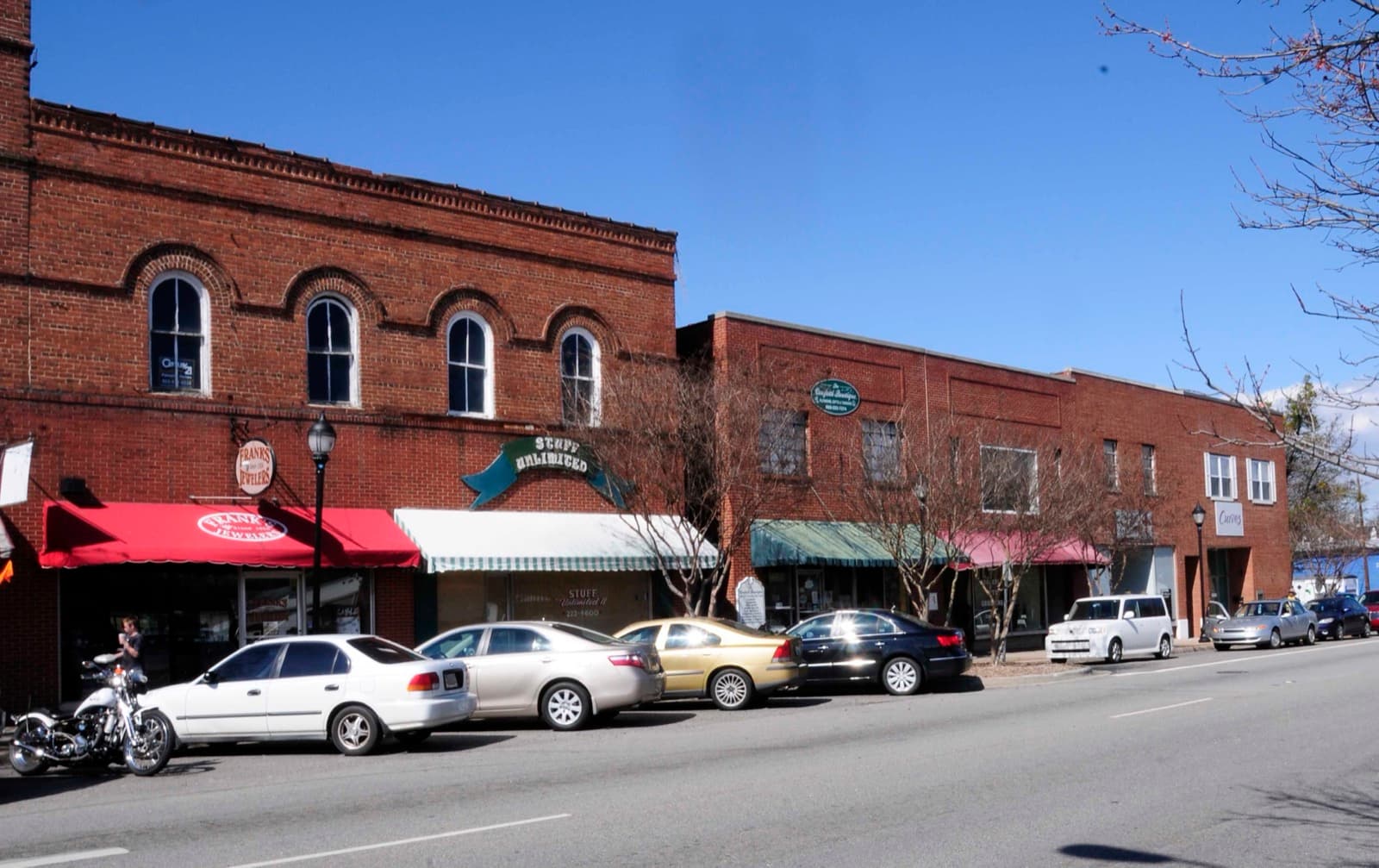
Sell your house fast in Clover.
A real cash offer in 24 hours. You pick the closing day.
- No fees
- You pick the closing date
- We're the buyer, not a lead list
Your buyer’s lender gets a vote. Sometimes it votes no.
A normal sale isn’t really you and a buyer shaking hands. It’s you, a buyer, and the buyer’s bank, and the bank has a rulebook.
Here are the six rules that stop Clover deals. They’re somebody else’s underwriting, not our opinion.
A mobile home built before June 15, 1976
This one’s absolute. “Manufactured home” is just the legal name for a mobile home. FHA will only lend on one built on or after June 15, 1976, when federal safety standards took effect, and it has to carry its HUD tag. Homes built before that date must be rejected. There’s no exception, and Fannie Mae draws the same line. It’s a category, not a condition. No repair, no price, and no amount of equity moves it.
HUD manufactured-home age requirements; Fannie Mae Selling Guide B2-3-02.A manufactured home that isn’t legally real estate yet
Fannie Mae needs the home legally classified as real property, not a vehicle, and set on a permanent foundation: anchored to the ground, not resting on blocks. If yours is still titled like a vehicle, an ordinary mortgage has nothing to attach to. Ask a closing attorney where your title stands before you count on a financed buyer.
Fannie Mae Selling Guide B2-3-02.A private well and a septic tank
Let’s kill a myth: FHA lends on well and septic every day. But if your house is on a well and septic instead of town water and sewer, a financed buyer brings a water test, a health-department report, separation distances between the well and the tank, and an appraiser who has to flag a failing septic. That doesn’t make your house unfinanceable. It makes four more places the deal can stall.
HUD Handbook 4000.1 property requirements.Land and acreage with nothing to compare it to
An appraiser has to back up the price with recent sales of similar places. Around Clover, there often aren’t any. So the appraisal comes in low, or it doesn’t come in at all, and the loan dies with it.
Repairs a lender won’t let slide
The roof. The systems. The foundation. A financed buyer’s lender turns those into a repair bill due before closing, paid by you, on a house you’re trying to leave.
A house with fire or water damage
A place that took a fire, a burst pipe, or a flood is a house a financed buyer’s lender wants made whole before it will fund the loan. Out here that means contractors driving well past town and a repair bill due before closing, on a house you’re trying to leave. We buy it burned, soaked, or gutted, as it stands.
We’re not getting a mortgage, so none of that is a condition of our closing. Pre-1976, un-titled, on a well, on ten acres: we take it as it is, and we price that in. Our offer trades the top dollar a clean listing might fetch for a sale that actually closes, as-is, on the day you pick.
If a lender will touch your house, list it.
That’s the honest answer, and it’s the one we’d give a neighbor. Everywhere else, the argument is about which path nets more. Here it depends on what your house is.
- You’re on town water and sewer.
- The house is financeable: site-built, or a post-1976 manufactured home already titled as real property on a permanent foundation.
- It shows well.
- Nothing’s forcing your date. No estate to settle, no empty house bleeding money, no deal that already fell apart.
Then list it. Genuinely. In a market this small, a clean, financeable house doesn’t have much competition, and a listing will very likely net you more than we will. If that’s your move, our sister service ListRobin can help you list the traditional way, and our cash offer vs. realtor guide walks through the math. You can also check recent sales near 29710 to see what Clover and Lake Wylie houses actually closed for.
- It’s a mobile home from before the 1976 standard, or a manufactured home that isn’t titled as real property yet.
- The septic is failing, or there’s work a lender will turn into a repair bill.
- It’s land or acreage with almost nothing to appraise it against.
- A financed deal already fell through once. The buyer wanted it. The bank didn’t.
- There’s an estate to settle, or a vacant house you can’t keep paying for.
Then you may not be choosing between two prices. You may be choosing between a sale and no sale.
For the first list, we’re the worse deal, and we’ll tell you so. For the second, we might be the only option you have, not because we’re better, but because the mortgage market isn’t open to that house.
Not sure which list you’re on? Send us the address and we’ll tell you straight, or call (704) 712-2717.
Only about 13 houses sell in Clover in a typical month.
That’s the entire sample. And “Clover” isn’t one market anyway. The Clover School District (York County School District 2) covers the town and the Lake Wylie area, and the houses inside it run from brick cottages downtown to manufactured homes to farmhouses on acreage to brand-new subdivisions.
So a median from that few sales, across that much spread, tells you little about your house.
Here’s the part that cuts against us. It means our number is an estimate too. It means an agent pricing your house is squinting at the same thin comps. And it means the appraiser on a financed buyer’s loan is squinting at them as well, which is how a Clover deal that looked finished falls apart in week three.
One more thing about that last number: it stops at contract, not at closing. The real timeline runs longer.
Source: Redfin, Clover, SC, May 2026.
That is the year-round typical, and the pace swings with the season. Over the past year, homes took anywhere from 29 days to sell in the busiest month to 141 days in the slowest, and this past May they were near the fast end.
What the numbers mean for you, whichever way you’re leaning:
If you list it
Plan on real time. A typical Clover listing takes 74 days to sell, and that’s before prep and after closing. It moves with the season too, so timing matters more than it would in a hot market.
If you need a date
That’s the part a listing can’t promise. Selling to us skips the showing period and the buyer’s financing, so you name the closing day and it holds. A written offer in 24 hours.
If you’re not on a clock
And the house shows well, a patient listing may net you more. We’ll tell you if we think it will. We’d rather be straight than win a house we aren’t the best answer for.
What selling your house actually costs.
A traditional sale has real costs that come out of your price before you see a dollar. Move the numbers to see where the money goes, then compare a cash sale with us.
Your numbers
Where the money goes
Traditional listing, illustrative estimate. Clover example median $320,000 (Redfin, May 2026).
With RobinOffer, the commission line is zero.
We are the buyer, not your agent. If a normal listing would net you more, we will tell you that. Our partner Chamiese Evans is a licensed real estate agent in NC and SC.
Illustrative only. This estimates the net from a traditional listing, not a RobinOffer offer. Actual costs vary by contract, negotiated commission, HOA status, tax proration date, and your loan balance.
Source: SC agent-commission survey (ListWithClever).
Source: SC Code 12-24-10 et seq..
Source: Typical SC closing-attorney fee range.
Source: SC statewide deed-recording charge (effective 2019-08-01).
If it came down through the family, start with the title.
If a house or a piece of land passed down without a will, the title may now be split among cousins, in-laws, and grandchildren, some who’ve never seen the place, and some nobody can find.
Often the hardest part isn’t the paperwork, it’s that the family can’t agree. Several relatives end up owning one homeplace: one wants to sell, one wants to keep it, one can’t be reached for months. That disagreement is real, and settling it isn’t ours to do. What we can be is a patient, straight buyer once the family and the court have sorted out who owns what.
South Carolina has a law for exactly this. The Clementa C. Pinckney Uniform Partition of Heirs’ Property Act, effective January 1, 2017, covers land that several relatives ended up owning together because it passed down without a will and was never divided or put in one name.
If one owner asks a court to sell, the Act gives the others a chance to buy that share at a price set by an independent appraisal the court orders, and it tells the court to prefer dividing the property over selling it. What it means for your family is a lawyer’s question, not ours.
We cannot buy a house whose title is not clear.
And we’re not going to pretend otherwise. But once probate clears the title, we can be, and we’ll still be here. Neither we nor anyone else can close before the chain of title is sorted out, and that’s a probate attorney’s job, not a buyer’s.
Here’s what we can honestly do:
- Look at the property and tell you what it’s worth to us as-is.
- Wait while probate runs. We don’t need to close this month.
- Still be a buyer on the day the title is finally clean.
Start with how probate works in South Carolina and selling an inherited house in SC, then call a probate attorney.
What it actually costs to sell in South Carolina.
- An attorney runs your closing.South Carolina closings are attorney-supervised (State v. Buyers Service Co.). A real estate attorney handles title and payoff. That step, not financing, sets the floor on how fast any sale here can close, ours included.
- The deed recording fee: $1.85 per $500.This is the county’s charge to record the sale: $1.30 to the state and $0.55 to the county, and sellers usually cover it. With us there’s no commission stacked on top, no fee, and nothing spent on repairs or staging. You’ll see every line before you sign. What a cash offer actually nets →
- The 4% → 6% jump.South Carolina taxes only a fraction of your home’s value. A home you live in is taxed on 4% of it. One you don’t, an inherited house sitting empty while the estate drags on, or a rental, is taxed on 6%. It’s a real change to the annual bill, and it’s why a vacant family house gets more expensive the longer it waits. What happens if SC property taxes go unpaid →
- If you’re behind on payments.South Carolina foreclosure is judicial. A lender can’t sell your house on its own say-so. It has to file a lawsuit in state court, and in this county the case runs through the Master in Equity at the courthouse in York. The South Carolina foreclosure guide →
Straight answers about selling in Clover.
My house is a mobile home. Can a buyer even get a loan on it?
Often, no, and that’s the honest answer, not a pitch. FHA must reject a manufactured home built before June 15, 1976. Fannie Mae wants it built to that same 1976 standard, legally classified as real property, and set on a permanent foundation. There’s no fixing it: the house just isn’t eligible for a normal mortgage. If your home is on the wrong side of that line, almost no buyer can get a mortgage on it. That’s the house we exist to buy.
It’s on a well and septic. Does that kill the sale?
No. FHA lends on well and septic every day. What it adds is a water test, a health-department report, separation distances between the well and the tank, and an appraiser who has to flag a septic showing signs of failure. That’s four more places a financed deal can stall, not four reasons your house is worthless.
I inherited the place and I’m not sure the title is clear. Can you buy it?
Not until the title is clear, and neither can anybody else. The chain of title has to be sorted out before anyone closes, and that’s work for a probate attorney, not for a buyer. What we can do: tell you what the property is worth to us as-is, wait while probate runs instead of needing to close this month, and still be here when the title is clean. Start with our guides on probate in South Carolina and selling an inherited house, then talk to a probate attorney.
Barely anything sells in Clover. So how do you price my house?
Carefully, and we show our work. In a typical month, Redfin counts only about 13 sales in Clover, across a market that runs from downtown cottages to manufactured homes to farmhouses on acreage to new subdivisions near Lake Wylie. A median pulled from a sample that small, across a spread that wide, is a weak guide to any one house. That’s true for us, for an agent, and for the appraiser on a financed buyer’s loan. So we tell you which sales we used, and why.
Should I just list it?
If your house is financeable, on town water and sewer, shows well, and nothing’s forcing your date: yes, list it. You’ll very likely net more than we’d pay, and we’d rather say so than waste your month. Check the calendar first, though: the median Clover house took 74 days to go under contract (Redfin, May 2026), and that’s before the prep and before the closing. If the house itself is the problem, that path may not be open to you at all.
What does it cost to sell a house in South Carolina?
With us: no commission, no fee, no repairs. What you do pay is the deed recording fee, the county’s charge to record the sale: $1.85 per $500 of the price ($1.30 state, $0.55 county), which sellers typically cover, plus the closing attorney’s fee. For scale, the Clover median sale price was $320,000 in May 2026 (Redfin). We put every line in front of you up front, so you can hold it against what a listing would actually net.
Tell us about your Clover house.
A written offer in 24 hours. No fee, no obligation, and you pick the closing day. And if listing is the better move for you, we’ll say that instead.
Rather talk it through? Call (704) 712-2717.