
Tega Cay: Selling with Precision on a Peninsula Market
A practical local guide for Tega Cay homeowners comparing selling options, costs, and timeline tradeoffs.

1. Tega Cay Is Not One Market: It Is a Peninsula of Micro-Decisions
At 6:40 a.m. on a weekday in Tega Cay, you can watch the entire local housing economy in ten minutes. Golf carts roll out before school drop-off. Contractors queue at subdivision entrances waiting for HOA and gate routines. Commuters head toward I-77 while dog walkers loop trails along coves where dock lights are still on. If you are preparing to sell a house in Tega Cay, SC, this rhythm matters more than broad headlines about “the Charlotte market.” Buyers do not buy generic metro data. They buy a very specific bundle: peninsula geography, lake access (or lack of it), school expectations, HOA rules, commute tolerance, and tax math versus North Carolina.
Tega Cay homeowners are often told one of two lazy stories: either “everything sells because lake town” or “buyers are slowing, just cut price now.” Both can be wrong on the same street. A water-view property with clean permit history and updated systems may still create urgency. A non-water home priced like a dock lot can sit for weeks in a one-offer environment and then sell below where it should have started. If you are trying to sell your house in Tega Cay, your strategy needs more precision than either of those clichés.
Below you will find current 29708 market signals, an explanation of why Tega Cay’s HOA ecosystem changes buyer behavior, South Carolina tax and closing mechanics, a side-by-side selling-options comparison, and real net-proceeds math so you can decide with fewer regrets. We also cover harder scenarios homeowners actually face: inherited properties, divorce-driven timelines, payment stress, and properties with deferred maintenance. If that is your situation, our dedicated guides on selling during divorce in the Carolinas, South Carolina foreclosure timeline, and cash-offer structures give deeper detail.
One ground rule before we start: no guide can replace legal, tax, or financial advice tailored to your household. South Carolina closings are attorney-supervised, York County records and tax administration are local, and HOA obligations can vary dramatically by neighborhood. Use this to ask better questions and make cleaner decisions.
2. The 29708 Snapshot: What the Market Is Saying Right Now
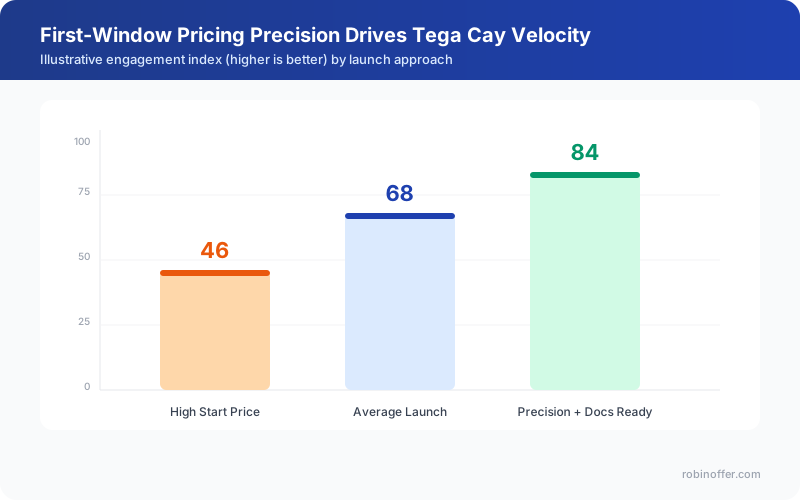
The short answer: Tega Cay and surrounding 29708 activity remains viable, but it is no longer a market where weak pricing gets rescued automatically. Public market trackers for the ZIP show a median sale price around the low-to-mid $500Ks, one-offer dynamics on average, and marketing times that can stretch near the 70-day range when a home misses the first pricing window. In plain language, demand exists, but buyers are comparison-heavy and negotiation-aware.
Because many portals aggregate nearby Fort Mill and broader 29708 activity, you should treat every “median” number as context rather than as your value. On-peninsula lot characteristics, water adjacency, amenity proximity, and HOA profile can create major spreads between homes that look similar on paper. A generalized zip code number helps you orient, but your list strategy should be built from recent micro-comps and active competition, not one headline metric.
Current market context for Tega Cay sellers
| Metric | Recent Signal | Seller Implication |
|---|---|---|
| ZIP 29708 median sale price | ~$540,000 (portal-reported) | Useful anchor, not your valuation |
| Average offers per home | ~1 offer | Price + positioning matter more than bidding-war hope |
| Days on market | ~70+ days in aggregated tracker views | First 14 days are critical for momentum |
| ZHVI trend (29708) | ~$537K typical value, modest YoY gain | Resilience, but not automatic premium |
| Buyer behavior | Payment-sensitive, incentive-aware | Condition and certainty messaging matter |
What does this mean if you plan to list in the next 30 to 90 days? First, your initial list price is now a strategic tool, not a vanity statement. Second, your pre-list prep has to reduce buyer uncertainty: roof age, HVAC service, dock paperwork, HOA packet readiness, and clear disclosure of known issues. Third, listing presentation matters because buyers compare your resale home to both existing listings and builder product in nearby markets. If your home asks resale-plus pricing without showing clear value, it can get filtered out quickly.
If you are cross-shopping where to buy next, compare this market context with neighboring guides such as Lake Wylie homeowner selling options, Fort Mill homeowner selling options, and Rock Hill homeowner selling options. The differences in pace and pricing logic are meaningful even within short driving distance.
3. Peninsula Geography: Why Street-Level Positioning Beats Zip-Code Averages
Tega Cay’s peninsula shape creates a practical truth that many valuation models miss: two homes can share the same ZIP, school district, and rough square footage but appeal to very different buyers because of access patterns and everyday logistics. Some buyers prioritize immediate lake or cove adjacency. Others care more about direct commute routes, easier service access, or lower HOA complexity. Geography is not just scenery here; it is a pricing variable.
For sellers, this matters in three ways. First, your comp set should respect micro-positioning, not just bedroom count. Second, your marketing should describe lifestyle realistically (trail access, golf-cart usability, amenity proximity, school commute flow), not with generic “close to everything” filler. Third, your showing strategy should anticipate traffic and route friction. On a peninsula, friction costs attention. If tours feel logistically awkward, buyers mentally discount value.
How buyers interpret peninsula location signals
| Location Signal | What Buyers Usually Assume | How to Position It Honestly |
|---|---|---|
| Direct or near-direct water adjacency | Premium lifestyle + scarcity | Lead with permit clarity, shoreline details, and actual view quality |
| Interior lot in amenity-heavy area | Lifestyle access without waterfront price | Frame convenience and lower entry cost versus dock homes |
| Route convenience to schools/arterials | Daily life efficiency | Highlight practical routines and commute windows |
| Quiet cul-de-sac with mature canopy | Privacy and established feel | Show lot use, shade advantage, and maintenance history |
| Road-proximate or higher-throughput segment | Possible noise/travel friction | Preempt concerns with pricing realism and interior condition strength |
If you are thinking, “My house is not waterfront, am I stuck?” No. Interior and near-amenity homes can perform well when priced for their buyer pool and presented with confidence. The mistake is pretending they compete on the same logic as true dockable properties. They compete on convenience, livability, and cost-to-own value, especially for families balancing payment, school priorities, and commute realities.
There is also a timing angle. Peninsula markets can magnify seasonal effects: daylight for showings, weather perception near water, and weekend visitation patterns all influence engagement. That does not mean you can only sell in spring, but it does mean your listing calendar should be intentional. For timing framework detail, see best time to sell in the Carolinas.
4. The HOA Reality: Documents, Dues, and Decision-Speed Friction
Most Tega Cay sellers already know HOAs shape neighborhood appearance. What is easier to miss is how HOA process quality directly affects deal velocity. Buyers are cautious around unknown rules, pending assessments, architectural restrictions, and amenity obligations. If your HOA package arrives late or incomplete, financing and underwriting timelines can stretch, and buyer confidence can drop even when the house itself is attractive.
You do not need to be defensive about HOA governance. You need to be organized. A prepared seller can turn HOA complexity into trust-building. Before listing, gather governing documents, recent budget summaries if available to owners, known upcoming projects, current dues schedule, amenity structure, and any architectural approvals for major additions. If there were prior violations that were resolved, document closure cleanly. The goal is fewer surprises after contract.
HOA readiness checklist before listing
| Item | Why Buyers Care | Best Seller Move |
|---|---|---|
| CC&Rs / bylaws summary | Use restrictions and expectations | Have digital copies ready before showings |
| Dues + transfer fees | Monthly payment planning | Confirm current numbers and include in net sheet |
| Amenity rights | Lifestyle value and recurring costs | Clarify what is included vs optional |
| Pending special assessments | Immediate post-close cost risk | Disclose known items early, not late |
| Architectural approvals history | Permit confidence for additions | Provide records for decks, docks, major work |
Some sellers hesitate to lead with this information because they worry it will “scare buyers.” In practice, uncertainty scares buyers more than facts do. Clarity reduces re-trades. It also helps your agent and closing attorney keep the file moving. South Carolina transactions already require attorney-supervised closings; adding preventable documentation delays on top of that is unnecessary pain.
If your home is in a neighborhood with active community identity and amenities, that can be a major strength, but only when communicated with specificity. “Great HOA” is weak marketing. “Pool and recreation structure with current dues and no pending special assessment disclosed by seller as of listing date” is useful marketing. Useful wins.
See what your Tega Cay home is worth
Get a real value estimate for your address using recent 29708 peninsula sales.
5. Lake Access Tiers: Dockable, View-Oriented, and Off-Water Pricing Logic
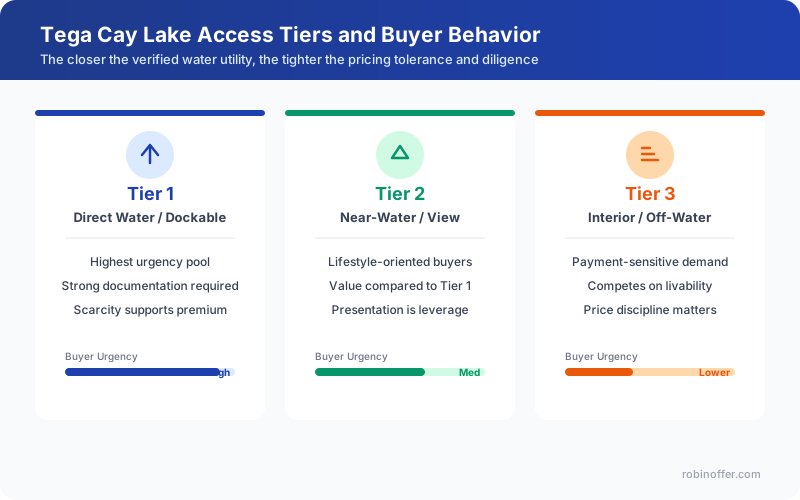
Tega Cay buyers do not evaluate “lake lifestyle” as a single checkbox. They evaluate tiers. A fully dockable property with verified permit history and practical shoreline conditions sits in a different decision bracket than a home with partial view and no direct water rights. And a well-presented off-water home can still win strongly when positioned as a lower-friction, lower-cost entry into peninsula living.
The trap for sellers is trying to borrow pricing psychology from a higher tier without offering higher-tier value proof. If you are dock-adjacent, documentation and condition are your leverage. If you are view-oriented, visual storytelling and outdoor usability are your leverage. If you are off-water, payment efficiency, layout quality, and amenity proximity are often your leverage. There is no weak tier; there are only mismatched expectations.
Practical pricing framework by lake-access tier
| Tier | Buyer Priority | Common Pricing Error | Smarter Strategy |
|---|---|---|---|
| Direct water / dockable | Scarcity + use rights | Assuming all dock homes are equal | Prove permit/dock condition and shoreline specifics |
| Water view / near-water | Lifestyle aesthetics without top premium | Overpricing as if direct-use rights exist | Price to view utility + condition + lot quality |
| Interior, non-water | Cost-to-own + community amenities | Trying to “split the difference” too high | Win on value clarity and lower-friction ownership |
Lake Wylie itself is large (approximately 13,443 acres with extensive shoreline), but local usable value depends on your specific cove, access, and rights. Buyers know this. They ask better questions than they did five years ago. If your listing answers those questions before they are asked, you shorten the path to serious offers.
6. Schools, Commute, and Tax Math: The Buyer Profile You Are Actually Selling To
Many Tega Cay buyers are not buying just a house. They are buying a household system: district confidence, commute practicality, and a long-run cost structure that compares favorably to nearby North Carolina alternatives. That is why your marketing should move beyond finishes and square footage into ownership math and daily routine clarity.
Fort Mill School District coverage and school directory depth are a recurring draw in this corridor, and local households frequently evaluate address decisions through school logistics and schedule coordination. At the same time, South Carolina’s owner-occupied 4% assessment framework and York County millage mechanics create real tax-structure differences that relocation buyers consider when comparing with NC options. They may not phrase it that way, but they run the payment math.
What relocation and move-up buyers often compare
| Decision Dimension | Tega Cay / York County Angle | How to Use It in Listing Strategy |
|---|---|---|
| School logistics | Established district ecosystem in corridor | Provide practical commute-to-school narrative |
| Property-tax structure | SC legal-residence assessment framework | Encourage buyers to verify owner-occupied implications |
| Cross-state comparison | NC vs SC total monthly ownership cost | Frame value as total cost, not just list price |
| Daily route friction | Peninsula ingress/egress realities | Address route timing honestly in showing notes |
| Lifestyle access | Lake + cart-friendly community identity | Highlight amenities with concrete examples |
This section is also where sellers can accidentally over-claim. Avoid statements you cannot document (for example, blanket “best schools” claims without source context). Confidence is good; unsupported superlatives are not. Ground your narrative in concrete, verifiable facts and buyer-useful details.
For homes that compete with newer product elsewhere, tax and operating-cost clarity can offset “new-build smell” psychology. Buyers willing to trade brand-new finishes for established setting and better overall ownership profile can be excellent candidates for your property if they understand the math.
7. City Process and Development Signals: Why Public Meetings Matter to Sellers
Most homeowners do not read city agendas before selling, but in Tega Cay that is a missed opportunity. Council agendas, planning commission calendars, and comprehensive-plan updates tell you what future buyers may ask about: growth direction, zoning context, infrastructure timing, and neighborhood-adjacent changes. You do not need to become a policy analyst; you do need to avoid being surprised by easy-to-find public information.
The city maintains active agenda archives, and recent cycles include regular council, planning, and economic-development activity. Public references to the 2025–2035 comprehensive-plan process signal ongoing long-range planning conversations. When buyers move into a place with visible growth pressure, they often ask future-oriented questions. A seller who can answer at a high level (“Here is what is public; here is what we know vs do not know”) appears credible.
Public-information prep that helps a listing
| Public Input | Why It Matters in a Sale | Seller Action |
|---|---|---|
| City agenda archives | Shows active issues near your neighborhood | Review recent agendas before going live |
| Planning commission schedule | Signals potential zoning/development direction | Prepare neutral, factual responses for buyer questions |
| Comprehensive plan updates | Frames long-term growth expectations | Avoid speculation; point to public sources |
| Utility/infrastructure notices | Can affect short-term perception | Disclose known nearby activity when relevant |
This is especially important if your home is near visible project zones or recent public works activity. Buyers today often search local meeting notes and social channels before they write offers. If your listing presentation ignores local context, they may assume you are hiding something even when you are not. Transparency is usually cheaper than skepticism.
One final point: development conversation can cut both ways. Some buyers want stability; others want growth and amenity expansion. Your job is not to spin either side. Your job is to align the right buyer with the right expectations so the deal survives due diligence.
8. Three Ways to Sell in Tega Cay (and Who Each Path Fits)
You have three practical paths to sell a house in Tega Cay: a traditional listing, a direct/cash sale, or a hybrid strategy (short market test with predefined fallback). None is morally superior. The right path depends on timeline, condition burden, and your tolerance for uncertainty.
Option A: Traditional listing with full-market exposure
Best fit: homes in solid condition where you can tolerate prep, showings, and a negotiation timeline.
Traditional listing gives you full exposure and often the highest gross outcome when pricing and presentation are sharp. But it also includes prep cost, open-ended negotiation risk, and potential concessions after inspections. In today’s one-offer average environment, “list high and wait” usually underperforms disciplined pricing and strong early presentation.
Option B: Direct/cash-style sale
Best fit: sellers prioritizing speed, certainty, privacy, or low-prep execution.
Direct sales can reduce friction: fewer showings, shorter closing windows, and less condition sensitivity in many cases. The tradeoff is usually lower headline price than a best-case retail listing. Whether it is a good choice depends on your certainty-adjusted net (not just gross). If you need deeper context on offer structures and quality checks, see our Carolina cash-offer guide.
Option C: Hybrid strategy (structured market test + fallback)
Best fit: sellers who want upside but refuse indefinite drift.
This path sets hard checkpoints before listing. Example: list with an aggressive first 14-day plan, then execute predefined adjustment rules (price change, concession structure, or direct-offer fallback) if engagement or offer quality misses thresholds. Hybrid strategy protects against both overconfidence and panic cuts.
| Path | Typical Timeline | Prep Burden | Price Potential | Certainty |
|---|---|---|---|---|
| Traditional listing | 45-120+ days total | Medium to high | Highest in strong-fit scenarios | Moderate |
| Direct/cash | 7-30 days in many cases | Low | Lower headline, higher certainty | High |
| Hybrid | 14-60 days structured | Medium | Balanced | Moderate to high (if disciplined) |
Whatever path you choose, write the plan down before listing. Verbal plans dissolve under stress. Written plans improve decisions.
See what your Tega Cay home is worth
Get a real, data-driven estimate for your address before you decide your path.
9. Net Proceeds Math: The Only Number That Should Decide Your Path
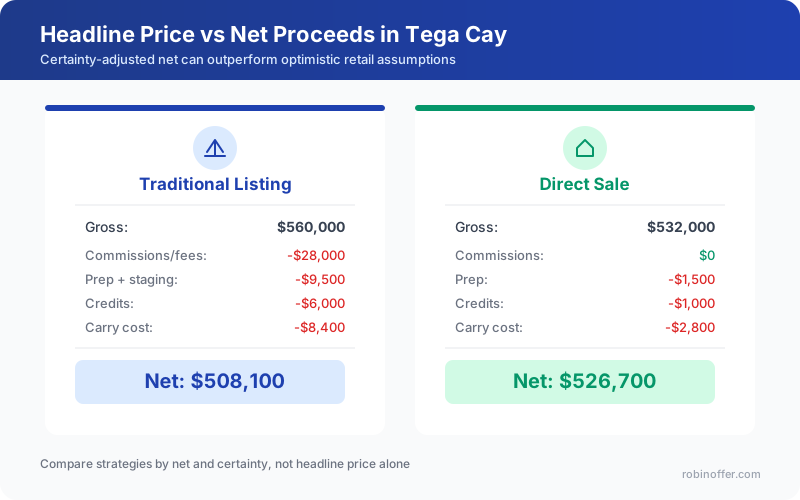
Homeowners understandably focus on sale price because it is visible and emotional. But sale price is not what you keep. Net proceeds are what you keep after commissions (if any), concessions, prep, attorney/closing expenses, taxes/dues proration, carrying costs during the listing window, and mortgage payoff. If you compare strategies on gross only, you can choose the wrong option while feeling “smart.”
A practical Tega Cay decision model uses three scenarios: optimistic retail, realistic retail, and certainty-first direct sale. Then subtract real costs and include the cost of waiting. On a peninsula property where monthly carrying costs can be substantial, delay matters. A theoretically higher sale in three extra months can net less than a faster, cleaner close.
Illustrative net comparison (example only)
| Line Item | Traditional (Realistic) | Direct Sale (Certainty-First) |
|---|---|---|
| Gross offer | $560,000 | $532,000 |
| Agent commissions/fees | -$28,000 (example) | $0 |
| Prep + staging + repairs | -$9,500 | -$1,500 |
| Seller concessions / credits | -$6,000 | -$1,000 |
| Additional carrying cost (2-3 months) | -$8,400 | -$2,800 |
| Estimated net before payoff | $508,100 | $526,700 |
This table is not predicting your outcome; it is proving the concept. A lower headline can outperform after friction is priced honestly. The reverse can also happen. The point is to run your own numbers with your real monthly carrying cost and your real timeline pressure.
Carrying-cost framework you can use today
| Monthly Cost Component | Your Amount | Notes |
|---|---|---|
| Principal + interest | ____ | Loan statement |
| Property tax escrow equivalent | ____ | Use annual tax / 12 |
| Insurance | ____ | Home + flood/umbrella if applicable |
| HOA + amenity dues | ____ | Include all recurring obligations |
| Utilities + baseline maintenance | ____ | Conservative monthly average |
| Total monthly carrying cost | ____ | Multiply by expected months to close |
Get a cash offer on your Tega Cay house
Compared the paths and worried a lender will stall on the dock, seawall, or condition? A no-obligation cash offer closes with no appraisal and no repair addendum, dock and all.
10. Prep That Pays in Tega Cay: What to Fix, What to Leave Alone
Not all prep creates return. In this market, high-return prep usually reduces uncertainty, improves first impression, and shortens inspection negotiation. Low-return prep often means expensive personalization that buyers may not value. The goal is not perfection. The goal is fewer reasons for a buyer to hesitate.
High-ROI prep priorities for peninsula homes
| Prep Category | Why It Matters Here | Typical Priority |
|---|---|---|
| Roof / HVAC service documentation | Confidence on big-ticket systems | High |
| Moisture and exterior envelope issues | Water-proximate buyer sensitivity | High |
| Dock/deck records and condition | Lake-lifestyle due diligence | High (if applicable) |
| Paint + lighting + curb cleanup | Fast visual impact on tours/photos | High |
| Major cosmetic remodels | Often over-capitalized pre-sale | Low to medium |
For HOA neighborhoods, add one more category: compliance cleanup. Buyers and their agents notice obvious noncompliant conditions (visible exterior issues, unresolved violations, missing approval records). Cleaning this up before launch prevents transaction drag later.
If you are handling prep while still living in the home, use a “showing-stability” approach: neutralize clutter, repair visible defects, then stop. Endless pre-list projects can burn time without improving conversion. Your best performance window is often a disciplined, timely launch with clean fundamentals, not a six-month renovation loop.
For distressed-condition scenarios where repair scope is larger than your budget or energy, compare direct-sale alternatives early instead of after failed listing attempts. You can still test market options, but do it with a fallback plan in place.
11. South Carolina Transaction Mechanics: Attorney Closings, Records, and Timelines
South Carolina real-estate closings are attorney-supervised. That reality changes workflow compared with states where title/escrow structures dominate. In practical terms, sellers in Tega Cay should expect closing coordination to involve attorney offices, document review cadence, and county recording logistics. This is normal, and it works well when paperwork is complete and expectations are set early.
York County’s Register of Deeds resources and fee references are public, and county tax offices maintain owner-occupied framework guidance. Your closing team and agent typically manage execution details, but you benefit from understanding the sequence so you can avoid preventable delays.
Simplified seller timeline (typical flow)
| Stage | What Happens | Seller Focus |
|---|---|---|
| Pre-list | Disclosures, prep, pricing, docs | Accuracy + readiness |
| Go-live + showings | Buyer traffic and feedback | Fast response + adjustment discipline |
| Contract acceptance | Due diligence/earnest terms, timeline set | Understand contingency risk |
| Inspection/repair phase | Credits or repairs negotiated | Protect net with objective decisions |
| Title/attorney coordination | File prep, payoff, compliance checks | Send requested docs quickly |
| Recording and funding | Deed recording + disbursement | Final walkthrough and handoff readiness |
Delay risk usually comes from three places: missing documentation, unrealistic repair positioning, and slow communication. You can control all three. If your house has complex elements (trust ownership, unresolved permits, shoreline improvements, inherited title issues), get those reviewed early by qualified professionals. Early clarity is cheaper than late surprises.
If your timeline is constrained by legal or financial pressure, review the focused process guides on South Carolina probate mechanics and South Carolina foreclosure help alongside this guide.
12. Tough Situations: Inheritance, Divorce, Delinquency, and Deferred Maintenance
Not every sale starts from a calm planning process. Many Tega Cay homeowners sell because life forced the timing: a death in the family, marital separation, income disruption, major repair burden, or relocation on short notice. These situations require a different decision framework: fewer assumptions, faster documentation, and a higher premium on certainty.
Common pressure scenarios and practical first moves
| Scenario | Typical Constraint | First Practical Move |
|---|---|---|
| Inherited property | Title/probate complexity | Confirm authority to sell before marketing |
| Divorce-related sale | Decision conflict + timeline pressure | Agree on process rules before pricing debate |
| Tax/payment stress | Time loss increases risk | Contact counseling/legal resources immediately |
| Major deferred maintenance | Inspection renegotiation exposure | Price for condition or pursue direct-sale bids early |
For financial stress, South Carolina homeowners have counseling and legal-aid channels that should be engaged early, not when deadlines are already critical. SC Housing resources reference 888-995-HOPE for HUD-approved counseling connection. LawHelp.org/SC and South Carolina Legal Services maintain intake paths and topic resources, including housing-related issues. If you are in York County, the Rock Hill SCLS office serves local households.
If foreclosure risk is part of your reality, timeline literacy matters. Judicial foreclosure in South Carolina can provide more process steps than nonjudicial states, but that does not mean unlimited time. The wrong assumption here is “I will deal with it later.” Later is usually more expensive. Use our SC foreclosure timeline guide for sequence detail. If a fast cash sale is the exit you need, see selling a house facing foreclosure in York County, SC.
For divorce scenarios, treat the house like a shared project with strict decision checkpoints instead of a battlefield for unresolved conflict. That sounds emotional, but it is financial strategy. Deals collapse when process collapses. For a fast, low-conflict path, see selling a house during divorce in York County, SC.
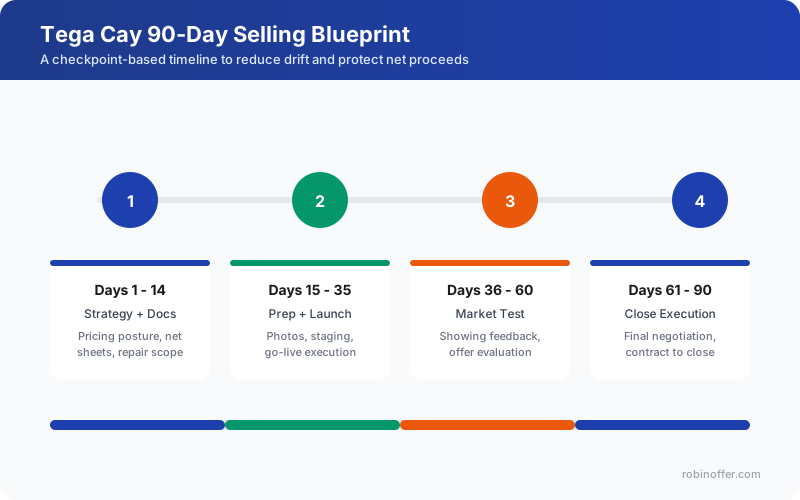
13. A 90-Day Selling Blueprint for Tega Cay Homeowners
If you want structure, here is a working 90-day model. You can compress or expand it, but the sequencing helps reduce last-minute chaos.
Days 1-14: Strategy and documentation sprint
- Gather property records, HOA materials, service records, and major repair documentation.
- Confirm any shoreline/dock documents if applicable.
- Run three-path net scenarios (traditional, direct, hybrid).
- Set non-negotiables: target close window, minimum acceptable net, fallback trigger points.
Days 15-35: Prep and launch package
- Complete high-impact repairs and presentation work.
- Capture photography that supports your true buyer pool.
- Build listing copy around access, adjacency, and cost-to-own clarity.
- Pre-wire answers for common buyer diligence questions.
Days 36-60: Market test with hard checkpoints
- Track showing volume, save rates, and feedback quality (not just raw count).
- Evaluate whether your price is attracting the intended buyer pool.
- If threshold missed, execute preplanned adjustment (not ad hoc panic).
Days 61-90: Contract discipline and close execution
- Negotiate based on net certainty, not ego around list-to-sale ratio.
- Keep attorney/closing file moving with fast document responses.
- Manage moving logistics and handoff to prevent end-stage stress.
This framework works for both confident and uncertain sellers because it replaces vague hope with checkpoints. It also makes conversations with spouses, heirs, and advisors easier because everyone can see the plan and the fallback rules.
14. Local Resource Stack + Final Decision Framework
Before you choose your path, build a simple resource stack. Keep links and phone numbers in one place so you are not scrambling later.
| Resource Type | Where to Start | Use Case |
|---|---|---|
| City contacts | Tega Cay City Hall / Departments | Permits, development questions, local process context |
| Public meeting records | Tega Cay Agenda Center | Neighborhood-adjacent policy/project awareness |
| Tax mechanics | York County Assessor/Auditor resources | Owner-occupied status, tax formula understanding |
| School directory | Fort Mill School District directory | Buyer routine questions and district orientation |
| Counseling support | SC Housing / 888-995-HOPE | Early intervention for payment stress |
| Civil legal aid | LawHelp.org/SC + South Carolina Legal Services | Housing/legal guidance for eligible households |
| Comparative market context | Neighboring RobinOffer city guides | Cross-market pricing and timing calibration |
Now, your final framework. Ask these five questions in order:
- What net do I need, not want? Put a real number on paper.
- How much timeline uncertainty can I absorb? Be honest about monthly carrying cost and stress tolerance.
- What condition risks could blow up a retail deal? Name them before buyers do.
- What is my fallback if first strategy underperforms? Define triggers now.
- Who needs to agree? Spouse, co-owner, heirs, or advisors.
If you can answer all five, you are ready to move from “thinking about selling” to executing. If you cannot, spend another week in planning mode and tighten your numbers.
When you want a practical side-by-side for your property, the next step is straightforward: gather your payoff balance, monthly carrying costs, known repair issues, HOA details, and preferred close window. Then compare your three paths with certainty-adjusted net math. That will give you a decision you can defend later.
Neighborhood-level strategy notes for Tega Cay sellers
One reason this guide is intentionally long is that sellers in Tega Cay are often trying to solve for multiple audiences at once. You may have one buyer who cares almost entirely about lake identity and neighborhood feel, another who is laser-focused on monthly payment and school routine, and another who is relocating and mostly evaluating execution risk. If you only market for one of those people, the other two can look at your listing and silently move on. A stronger approach is to build your presentation so each audience can find its “yes” quickly without confusing the core story.
Start by mapping your home into one of three narrative lanes: lifestyle-premium, efficiency-premium, or certainty-premium. Lifestyle-premium homes are usually those with unusual outdoor utility, stronger visual identity, or high-demand amenity adjacency. Efficiency-premium homes are usually those that produce better ownership math than nearby alternatives. Certainty-premium homes are those with unusually complete documentation and straightforward condition profile that make buyers feel safe transacting. Most homes are a blend, but one lane should be primary. Choose it deliberately.
Tega Cay sellers also benefit from being explicit about what their home is not. That sounds counterintuitive, but clear boundaries build trust. If your property is not a direct-water lot, say so and then make the value case for what it is: lower carrying burden, easier upkeep, better interior layout, or stronger day-to-day convenience. If you do have direct water or dock features, avoid broad claims and give concrete documentation. Precision filters out weak leads and draws stronger ones.
Offer-quality filters that prevent expensive mistakes
In slower-than-frenzy conditions, the best offer is not always the highest top-line number. You should evaluate offer quality with a weighted scorecard, especially if you receive multiple offers with different risk profiles. A financed offer at a higher number can still net less if repair credits and delay risk are likely. A clean offer with shorter timeline and fewer contingencies can win on certainty-adjusted net even if list-to-offer optics look less dramatic. This is where experienced negotiation and written decision criteria matter.
| Offer Variable | Why It Matters | How to Score It |
|---|---|---|
| Purchase price | Sets gross proceeds | Important but never isolated |
| Proof of funds / lender strength | Failure risk predictor | Higher confidence = higher score |
| Contingencies | Renegotiation pathways | Fewer or clearer contingencies score better |
| Inspection posture | Potential credit exposure | Look for realistic language, not aggressive reopeners |
| Close timeline | Carrying-cost impact | Shorter reliable close often improves net |
| Earnest money structure | Commitment signal | Stronger earnest terms usually reduce fallout risk |
Another underused filter in Tega Cay is “documentation readiness match.” If a buyer asks sophisticated due-diligence questions early, that often signals a serious file that can close cleanly if you respond quickly and accurately. Sellers sometimes misread this as “difficult buyer.” In many cases, it is the opposite: these are buyers trying to de-risk their process up front instead of surprising you at inspection day 11.
Negotiation patterns unique to this corridor
Because many buyers compare Tega Cay with Fort Mill, Lake Wylie, and parts of south Charlotte in one shopping cycle, negotiations often include cross-market reference points. You may hear things like, “But this same price gets me newer construction over there,” or, “That neighborhood has lower dues,” or, “This one has better route convenience to my office.” Do not fight those comparisons emotionally. Use them to clarify your property’s actual value proposition and where it wins or does not win.
Seller concessions have also become more tactical than they were in peak frenzy periods. Instead of blunt price cuts, some deals improve conversion through targeted concessions that preserve appraisal logic while helping buyer payment comfort. That can include credit structures aligned with closing costs or high-priority repairs that remove lender friction. The right move depends on your net model, but binary “no concessions ever” positions can cost you more than they save in this market.
In HOA-influenced neighborhoods, unresolved document questions frequently become negotiation leverage. If buyers cannot verify dues, transfer details, or known assessment posture, they may push for broader concessions as a risk premium. You can reduce this dramatically by preparing your HOA packet before go-live and keeping it updated through contract.
How to handle pricing adjustments without signaling panic
Price adjustments are normal. Panic adjustments are expensive. If your home underperforms early, you should adjust with an explanation-driven strategy rather than random reductions. First, identify whether the issue is traffic, conversion, or offer quality. Low traffic implies price-position mismatch or weak first-impression package. Good traffic but weak offers can imply condition uncertainty or value-story mismatch. Different problem, different fix.
When you adjust price, pair it with a refreshed value package: updated photo order, clearer feature callouts, improved document availability, and if relevant, a targeted concession policy. Buyers and buyer agents watch for signs of motivated-but-organized sellers. They also watch for signs of disorganized sellers who may accept anything. You want to be the first category.
| Underperformance Signal | Likely Root Cause | Best Corrective Action |
|---|---|---|
| Low showings first 10 days | Price or first-impression mismatch | Reposition price band + rewrite opening marketing copy |
| Showings but no offers | Condition uncertainty or weak differentiation | Address top objections + improve documentation |
| Offers but heavy credits requested | Inspection or risk concerns | Preempt with selective repairs or structured credits |
| Repeated financing fall-through | Buyer qualification mismatch | Tighten offer-quality filters and lender verification |
In Tega Cay specifically, sellers sometimes overreact to a quiet week and then overshoot with a steep reduction that leaves money on the table. A better path is predefined adjustment logic: one measured move, then a 7-day evaluation window. Structured iteration usually outperforms emotional swings.
Showing strategy for peninsula logistics
Showing logistics influence conversion more than most sellers expect. Peninsula travel patterns can make back-to-back tour windows difficult during peak traffic periods, and poorly planned scheduling can accidentally filter out serious buyers who are coordinating school pickups, work calls, and multi-stop touring days. A practical tactic is to create consistent windows that align with likely buyer availability while keeping the home truly show-ready during those windows.
If your home has outdoor features that matter (dock, cove angle, sunset view, cart storage, trail adjacency), make sure tours can actually experience those features. Twilight or morning window differences can materially change perception for lake-oriented homes. A technically accurate listing that never lets buyers experience the key value driver is leaving leverage unused.
For occupied homes, reduce friction with a written “fast reset” checklist: surfaces clear, lights standardized, scent neutral, and high-value features visible in under two minutes. You are not staging for a magazine. You are staging for decision speed.
What relocation buyers ask that local sellers miss
Relocation-heavy buyers often ask practical questions local owners overlook because they feel obvious: nearest daily essentials, route reliability by time block, expected service access, school transport realities, and neighborhood rhythm by weekday versus weekend. Answering those at a high level can materially increase confidence because it helps buyers imagine real life, not just square footage.
In Tega Cay, relocation buyers also notice whether a seller understands the local transaction process. If your side appears ready on HOA docs, repair records, and attorney coordination expectations, that signals lower execution risk. Execution risk is a hidden discount variable in every transaction. Reduce it and you often improve both offer quality and post-contract stability.
If your buyer pool includes corporate transferees or households managing a cross-state move, certainty has monetary value. A cleaner file with fewer late surprises can outperform a nominally higher but fragile contract that drags into extensions and re-trades.
Advanced net math: adding probability to your decision
Earlier we covered basic certainty-adjusted net. Advanced sellers can go one step further and assign probabilities to each outcome path. For example, if your optimistic retail scenario has a 20% chance, realistic retail has a 50% chance, and delayed/reduced retail has a 30% chance, your expected value may differ substantially from your favorite scenario. This does not replace judgment, but it disciplines it.
| Scenario | Estimated Net | Probability | Weighted Value |
|---|---|---|---|
| Retail optimistic | $540,000 | 20% | $108,000 |
| Retail realistic | $508,000 | 50% | $254,000 |
| Retail delayed/reduced | $485,000 | 30% | $145,500 |
| Total expected retail value | $507,500 | ||
| Direct certainty path | $526,000 | 80% | $420,800 |
| Direct renegotiated path | $515,000 | 20% | $103,000 |
| Total expected direct value | $523,800 |
Again, these numbers are examples, not forecasts. The principle is the point: your brain tends to anchor on the single best-case number. Weighted outcomes force you to account for what usually happens, not what could happen on your favorite day.
When to pause, not push, a listing decision
Sometimes the best selling decision this month is “not yet.” If you are missing core documents, dealing with unresolved ownership issues, or facing major repair unknowns, launching early can turn into a low-confidence listing that performs poorly and then stigmatizes the property after repeated adjustments. A short, focused prep delay is often cheaper than a public underperformance cycle.
Reasons to pause briefly can include unresolved trust/probate authority, incomplete HOA or permit records, known structural or moisture concerns without basic assessment, or household decision misalignment (for example, one owner wants speed while another insists on top-dollar timeline without a plan). Pausing to align those variables can protect both net and sanity.
Reasons to proceed quickly despite imperfection can include hard deadline pressure, comp-window opportunity, or carrying-cost burden where waiting erodes expected upside. The key is intentionality. “We are going now because X and Y” is strategy. “We should probably just list and see” is drift.
What success looks like six months after closing
Define success now, not in retrospect. A successful Tega Cay sale is one where you met your critical net threshold, avoided avoidable timeline drift, and completed closing with manageable stress. It is not necessarily the all-time highest gross number. If your sale supports your next move without financial whiplash, that is success.
This perspective matters because social comparison can distort good decisions. You will always hear about a neighbor’s “record price” without hearing their prep budget, concession stack, delay costs, or personal timeline flexibility. Build your decision around your constraints and your targets, not someone else’s highlight reel.
If you follow the framework in this guide (micro-market positioning, documentation readiness, three-path net analysis, and precommitted adjustment rules), you are operating with more structure than most sellers in this corridor. Structure does not guarantee a perfect outcome. It does improve the odds of a good one.
Case-study style examples for common Tega Cay seller profiles
Profile A: The move-up family with a 60-day target. This seller owns an interior-lot home in Tega Cay with good condition, moderate HOA dues, and manageable cosmetic needs. Their challenge is timing: they are under contract on a replacement home and cannot afford indefinite overlap. For this profile, the strongest plan is often a hybrid: aggressive first-window pricing, documented pre-list improvements, and a preapproved fallback option if no acceptable contract lands by day 21. Their win condition is predictable timing with acceptable net, not absolute top-line maximization.
Profile B: The waterfront owner with deferred exterior work. This seller has premium location but aging dock/deck components and uncertain permit paperwork. Their instinct is to list at top neighborhood comp because “location carries it.” In many cases that backfires. Buyers willing to pay waterfront premiums are also the most diligence-heavy. A better path is to either (1) complete targeted exterior and documentation cleanup pre-list, or (2) price transparently for condition with explicit disclosures and a confidence-building inspection packet. Either way, clarity beats denial.
Profile C: The inherited property with sibling co-owners. These sellers often underestimate process friction. Decision-making can stall, property condition knowledge is uneven, and timeline expectations differ by co-owner. The right first step is governance: establish one decision protocol, verify sale authority, and align on minimum net + timeline priorities before listing. Without that internal alignment, the market will feel chaotic because the ownership group is chaotic. For a cash-sale walkthrough written for heirs, see selling an inherited house in York County, SC.
Profile D: The payment-stressed homeowner. This household has rising monthly pressure and limited repair budget. Their strategic error is usually waiting for a “perfect month” while carrying costs compound. In this scenario, certainty often matters more than peak pricing. Early consultation with counseling/legal resources and parallel exploration of direct or low-prep sale paths can preserve options that disappear when the timeline gets too tight.
Common myths that cost Tega Cay sellers money
Myth 1: “My neighbor sold high, so my number is obvious.” Neighbor comps are useful, but context can differ materially: lot orientation, feature quality, condition, timing window, and concession structure. Unless you have line-item understanding of their deal, copying their result is not strategy.
Myth 2: “If we start high, we can always come down.” Sometimes true, often costly. In this market, overpricing can burn your highest-attention period. Later reductions may recover traffic but not always trust. Buyers and agents notice stale days and may assume hidden defects even when the issue was just optimistic pricing.
Myth 3: “Buyers don’t care about documents until contract.” Wrong for many Tega Cay transactions. Serious buyers increasingly screen for documentation quality before they offer, especially where HOA, water-related features, or permit history are relevant.
Myth 4: “Cash offer means bad deal automatically.” Not automatically. Some direct offers are weak; some are competitive after friction is priced honestly. Quality screening matters: proof of funds, track record, inspection posture, and close reliability.
Myth 5: “I should renovate everything before listing.” Full renovation is often unnecessary and sometimes value-destructive. High-confidence maintenance and presentation updates usually outperform expensive personalization.
A practical communication plan for households selling together
Many Tega Cay homes are sold by households with multiple decision-makers: spouses with different risk tolerance, siblings handling inherited assets, or partners balancing job relocation timelines. A communication plan is not soft process; it is a financial control mechanism. When communication breaks, pricing and negotiation decisions become reactive and inconsistent. If a job relocation is driving your timeline, see selling a house for a job relocation in York County, SC.
| Decision Topic | Who Decides | When It Must Be Final | Fallback Rule |
|---|---|---|---|
| Initial list price band | All owners | Before photography | Use agreed comp range midpoint |
| Repair budget cap | Primary decision lead | Before showings begin | No spend above cap without unanimous vote |
| Offer acceptance threshold | All owners | Before first showing | Use minimum net + max timeline rule |
| Price adjustment trigger | Designated negotiator | Day 14 review | Execute pre-set reduction/concession plan |
| Fallback to direct path | All owners | Pre-list | Activate if no acceptable offer by trigger date |
Even simple written rules like these dramatically reduce conflict during high-stress moments. They also make your representation team more effective because instructions are clear and consistent.
If your home does not sell quickly: a 4-step recovery protocol
Step 1: Diagnose objectively. Was the problem demand, conversion, or contract quality? Do not guess. Use showing logs, feedback themes, and buyer-agent commentary patterns.
Step 2: Rebuild first impression. Refresh listing photography order, improve headline copy, and lead with your strongest verified value points. In Tega Cay, that might be location utility, documentation quality, or ownership-cost framing.
Step 3: Correct one major variable at a time. Usually price or risk posture. Randomly changing five variables makes learning impossible and can communicate desperation.
Step 4: Set a decision deadline. If revised strategy misses target by a defined date, execute your fallback route. This prevents endless drift and protects net from ongoing carrying costs.
Recovery is common and can still produce solid outcomes. The key is disciplined response, not denial or panic.
Closing-week checklist for Tega Cay sellers
- Confirm final utility transition timing and account details.
- Prepare all keys, remotes, gate/fob devices, and amenity access materials.
- Ensure agreed repairs/credits are documented and complete.
- Verify move-out condition aligns with contract expectations.
- Coordinate final walkthrough window with minimal schedule friction.
- Keep attorney/closing office requests prioritized for same-day response when possible.
Most closing-week stress comes from preventable logistics, not legal complexity. A 48-hour checklist and one shared communication thread with all decision-makers solves most of it.
Final decision rubric (quick score)
| Question | Score 1 (Low) | Score 3 (Medium) | Score 5 (High) |
|---|---|---|---|
| Need for speed/certainty | Flexible timeline | Moderate pressure | Hard deadline / high stress |
| Home condition confidence | Major unknowns | Mixed condition | Strong documented condition |
| Documentation readiness | Incomplete | Mostly ready | Fully organized |
| Tolerance for showings/repairs | Very low | Manageable | High |
| Carrying-cost sensitivity | Low | Moderate | High monthly burden |
Interpretation: higher total scores on speed/carrying-cost pressure tend to favor certainty-oriented paths or hybrid structures with strict fallback rules. Higher readiness and lower pressure can support broader market testing. This is not a formula that replaces judgment, but it gives your household a shared language for tradeoffs.
Extended local due-diligence checklist for Tega Cay transactions
Use this checklist as a final pre-contract quality control pass. It is intentionally detailed because Tega Cay transactions often combine normal resale diligence with neighborhood-specific and water-adjacent questions. The goal is not to scare buyers with paperwork. The goal is to remove avoidable uncertainty so your deal holds together after excitement fades and underwriting begins.
- Ownership clarity: Verify deed vesting and confirm all required signers are known before listing. If trust or estate-related, confirm sale authority and supporting documentation.
- Mortgage payoff planning: Request an updated payoff estimate and understand timing sensitivity if your planned close date shifts.
- HOA packet readiness: Gather governing docs, dues schedule, transfer rules, known assessment posture, and community contact process.
- Major system records: Keep invoices or service history for HVAC, roof, water heater, electrical updates, and plumbing repairs.
- Exterior and moisture disclosures: Be explicit about known drainage, crawlspace, siding, or prior remediation items.
- Waterfront elements (if applicable): Organize dock, shoreline, and improvement records with clear dates and scope.
- Permit history: Assemble permits or approvals for major additions, decks, structural changes, and significant mechanical work.
- Insurance context: Be ready for buyer questions on current policy structure and any notable claim history.
- Utility expectations: Document average ranges where appropriate so buyers can model total ownership cost.
- Move-out logistics: Plan relocation timing early to avoid last-week stress that can create closing friction.
In Tega Cay, where buyers may compare multiple submarkets quickly, confidence is a competitive advantage. A listing that feels transparent and operationally ready often performs better than a listing that feels polished but vague. You cannot control every variable in a transaction, but you can control preparedness, responsiveness, and realism. Those three alone can improve both offer quality and close reliability.
If you are deciding this week, do one thing: run your own certainty-adjusted net model and pair it with this due-diligence checklist. Then choose the path that fits your real timeline and risk tolerance. That is how you make a good decision in Tega Cay, not by chasing the loudest anecdote in the neighborhood Facebook group.
One last practical reminder for Tega Cay homeowners: decide in advance how you will respond to the first imperfect offer. In this corridor, first offers are often negotiation starts, not final destinations. If your household has already agreed on minimum net, acceptable contingencies, and timeline thresholds, you can negotiate from strength instead of fear. If you have not, you may reject workable deals and then chase weaker ones later. That pattern is common and expensive.
A strong seller posture is calm, documented, and flexible within boundaries. Calm means you do not confuse urgency with panic. Documented means your file answers questions quickly. Flexible within boundaries means you can trade terms intelligently while protecting your non-negotiables. That posture works especially well in Tega Cay because buyers here often evaluate both lifestyle and risk at the same time.
If you want a simple Tega Cay rule: launch prepared, negotiate with numbers, and adapt on schedule. Homes that do those three things usually perform better than homes that rely on hope, delay decisions, or hide uncertainty. Buyers in 29708 still move decisively when they trust what they are seeing.
In Tega Cay, consistency wins: consistent pricing logic, consistent disclosure quality, and consistent follow-through from first showing through York County closing day.
Frequently asked questions
How long does it usually take to sell a house in Tega Cay?
Many sellers should plan for a multi-week to multi-month total timeline depending on condition, pricing, financing path, and negotiation complexity. In current 29708 conditions, first-window pricing and presentation quality strongly influence how long your home sits.
Do non-water homes in Tega Cay still sell well?
Yes. Non-water homes can perform very well when positioned for the right buyer pool (schools, lifestyle access, payment efficiency, and neighborhood fit). Problems usually come from pricing non-water homes like dock-tier properties.
Is a direct cash offer always worse than listing?
Not always. Direct offers often have lower headline price but can outperform on net when you include prep costs, concessions, carrying cost, and certainty value. Compare certainty-adjusted net outcomes rather than gross price alone.
Should I wait for spring to sell in Tega Cay?
Season can help, but strategy matters more. A well-positioned listing in an “off” season can beat a poorly priced spring listing. Use a timeline-adjusted decision model and compare the cost of waiting with expected upside.
Want a cash offer on your Tega Cay home?
Share your payoff and preferred close window and we will get you a no-obligation cash offer.