
Underwater Mortgage Options in North Carolina
A practical homeowner guide to negative-equity math, timeline pressure, and keep-vs-sell decisions when you owe more than your home is worth.
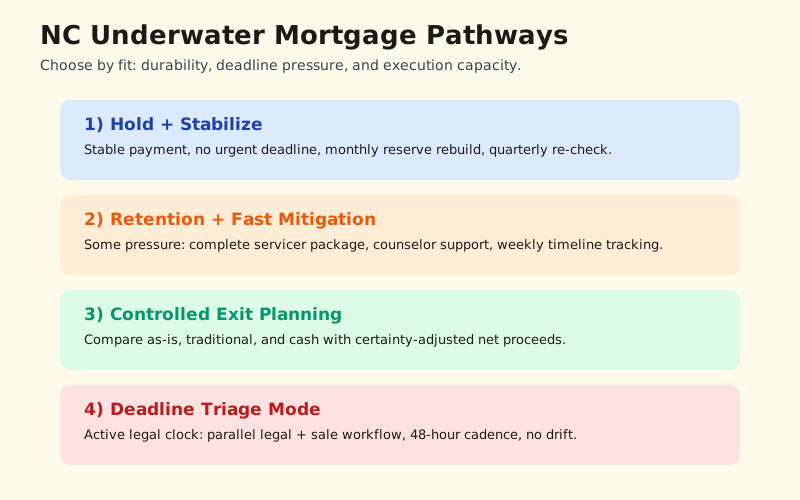
1. Underwater Mortgage in North Carolina: The Straight Answer First
Underwater mortgage in North Carolina means your total payoff is higher than what your home would realistically sell for today, and the right move is usually to slow down, calculate the exact gap, and compare three paths: keep, sell, or settle. You are not out of options, but the clock matters.
If you found this guide at 2:00 a.m. after opening a mortgage statement you did not want to open, you are in good company. We talk to homeowners in North Carolina every week who feel trapped because they owe more than they think their house is worth. Most of them are not irresponsible. They bought during a fast market, then rates changed, jobs changed, or life changed. A house that looked like a long-term win turned into a monthly stress test.
Here's the first important reframe: being underwater is a math problem and a timeline problem, not a moral problem. Once we move it out of shame and into numbers, the next steps get clearer. You need to know your true payoff, your all-in selling cost, your likely market value, and your monthly burn rate. With those four numbers, you can stop guessing.
North Carolina homeowners have an extra challenge: foreclosure timelines can move faster than people expect once delinquency stacks up. If you are behind, every week you wait to gather documents gives your lender's timeline a head start. The goal of this guide is to help you take that control back in a practical way.
We'll walk through real calculation frameworks, North Carolina legal realities, lender workout options, and decision trees you can actually use with your own numbers. We'll also show you where homeowners commonly lose money: misunderstanding closing costs, calling total carrying costs a "mortgage," and waiting too long to package hardship documentation.
2. Start With the Real Gap: How to Calculate Negative Equity Correctly
Before you choose any option, calculate the actual negative equity gap. Not Zillow estimate minus principal. Not what your neighbor sold for last year. Your real gap today. The formula below is what we use because it forces every relevant cost into one line:
| Formula Component | What to Include | Why It Matters |
|---|---|---|
| Current payoff amount | Principal + accrued interest + late fees + escrow advances + any corporate advances | Your lender payoff is almost always higher than principal shown in your app |
| Expected sale price | Likely market value based on current comps, condition, and days on market | This is the cash coming in before selling costs |
| Selling costs | Agent compensation (if listed), transfer tax, attorney/closing fees, title costs, concessions | These reduce net proceeds and are often underestimated |
| Cure costs before close | HOA arrears, utility liens, code liens, required repairs for financed buyer | These can quietly add thousands to your out-of-pocket total |
Negative equity gap = payoff + selling/cure costs - expected sale price.
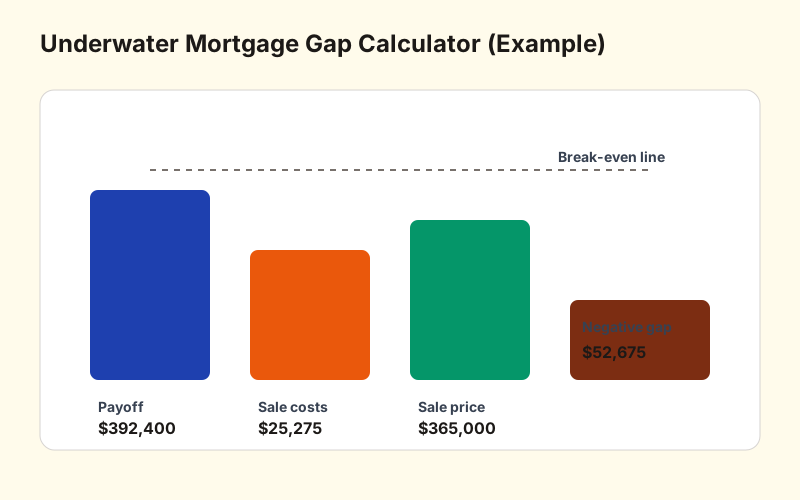
Let's run a North Carolina example. Suppose your servicer payoff quote is $392,400. Your likely sale price in current condition is $365,000. You plan to list with an agent at 5.5% total compensation, expect $2,300 in attorney/title/recording, and $1,100 in transfer-related local costs. You also have a $1,800 HOA balance that must be cleared at closing.
| Line Item | Amount |
|---|---|
| Mortgage payoff quote | $392,400 |
| Agent compensation (5.5% of $365,000) | $20,075 |
| Attorney/title/recording estimate | $2,300 |
| Additional transfer/transaction costs | $1,100 |
| HOA arrears and fees | $1,800 |
| Total outflow | $417,675 |
| Expected sale price | $365,000 |
| Estimated negative equity gap | $52,675 |
That $52,675 number is what your plan has to solve. Not a feeling. Not a guess. A number.
Three Mistakes That Distort the Gap
- Using principal instead of payoff. Payoff includes interest through close and other charges.
- Ignoring transaction friction. Even "simple" deals carry legal and transfer costs in North Carolina.
- Assuming a perfect sale price. If your house needs work, your likely price may be below cleaned-up comp values.
If you are more than 60 days delinquent, add one more line item to your model: time risk. Every additional month may increase arrears, legal fees, and stress. That's why we always run multiple scenarios side-by-side instead of just one "best case" case.
| Scenario | Sale Timing | Expected Sale Price | Estimated Gap |
|---|---|---|---|
| Fast as-is disposition | 15-30 days | $345,000 | $68,000-$75,000 |
| Standard MLS exposure | 45-75 days | $365,000 | $50,000-$55,000 |
| Repair then list | 90-150 days | $382,000 | $38,000-$48,000 (after repair spend) |
The best scenario on paper is not always the best scenario for your life. If your monthly carrying costs are crushing you, a slightly worse headline number with much faster certainty can still be the smarter decision.
3. The North Carolina Timeline: What Happens if You're Behind
Underwater and current on payments is one strategy conversation. Underwater and behind is a different one. In North Carolina, once delinquency deepens, you need to understand both federal servicing rules and state foreclosure procedure. The details matter because missing one deadline can remove options you still had last week.
Federal Servicing Baseline
CFPB mortgage servicing rules are designed to push servicers toward loss mitigation review before foreclosure filing. In practice, homeowners should know two timing concepts: servicer outreach typically starts early in delinquency, and there are procedural limits around initiating foreclosure before certain delinquency thresholds. The exact application depends on loan type and servicing history, but the practical takeaway is simple: submit a complete package as early as possible.
North Carolina Foreclosure Procedure Highlights
North Carolina power-of-sale foreclosures run through the clerk process. Under N.C. Gen. Stat. §45-21.16, notice of hearing must be served not less than 10 days before the hearing date. If service defects happen, continuances can occur, but do not treat that as strategy. Treat it as warning time.
| Milestone | What It Means | Action You Should Take |
|---|---|---|
| 30 days delinquent | You are in early default status | Call servicer, request loss mitigation packet, start document folder |
| 60 days delinquent | Arrears accelerating; serious risk | Submit complete hardship package; contact HUD-approved counselor |
| 90 days delinquent | High risk window for legal escalation | Get NC foreclosure attorney consult; evaluate sale alternatives now |
| Hearing notice served | Formal process underway | Confirm service details, hearing date, and pending workout review status |
| Scheduled sale | Very limited runway | Finalize workout, bankruptcy counsel, or disposition strategy immediately |
Could deficiency still be an issue in North Carolina? Potentially, yes, depending on the loan and foreclosure facts. Under §45-21.36, borrowers may raise value-based defenses where the creditor buys at sale and then seeks deficiency recovery. There are also purchase-money deficiency limitations under §45-21.38 that may apply in certain structures. Do not self-interpret these statutes if real money is on the line. Have counsel review your specific note, deed of trust, and transaction history.
If this sounds overwhelming, that's normal. The point is not to become your own lawyer. The point is to act early enough that your lawyer and counselor still have room to negotiate.
If you are in immediate pre-foreclosure stress, read our step-by-step NC foreclosure avoidance guide and our broader North Carolina foreclosure help resource after this section. Those two pieces pair well with this underwater strategy framework.
4. Option 1: Keep the Home (Modification, Recast, Refinance, or Repayment)
Staying in the home can absolutely be the right call if the payment can become sustainable and your long-term plan still points to North Carolina for at least three to five years. The key is choosing the right retention tool instead of chasing whichever term sounds familiar online.
Retention Tools at a Glance
| Option | When It Fits | Tradeoffs |
|---|---|---|
| Repayment plan | Temporary hardship resolved; can afford catch-up over months | Higher short-term payment burden |
| Forbearance + post-plan workout | Short-term income shock, expected recovery | Deferred amount still must be addressed |
| Loan modification | Payment permanently too high relative to income | Longer term, possible capitalization of arrears |
| Principal curtailment + recast | You can bring meaningful cash but not full payoff gap | Requires available cash and servicer approval mechanics |
| Refinance | Sufficient equity/credit/income or special program eligibility | Often unavailable when deeply underwater |
For GSE-backed loans, start by confirming ownership with the Fannie Mae Loan Lookup tool and Freddie Mac Loan Look-Up tool. If your loan is there, your workout menu and documentation rules often become more standardized.
How We Stress-Test a Keep Strategy
Do not approve a keep plan just because the trial payment looks better this month. Stress-test it across twelve months of real life.
| Stress-Test Input | Target Standard | Why |
|---|---|---|
| Housing payment-to-net income | Preferably below 35% after modification | Above this, one surprise expense can restart delinquency |
| Emergency reserve after closing workout | At least 2-3 months essential expenses | No reserve means next job hiccup restarts the cycle |
| Job stability horizon | Reasonable confidence for 12 months | Retention fails when income assumptions are fragile |
| Deferred maintenance exposure | Known major repairs mapped and budgeted | Big roof/HVAC surprises can break a tight budget |
Example: A homeowner drops from a $2,940 monthly payment to $2,460 after modification. That looks like a $480 win. But if household net income is $6,200 and known maintenance needs average $250 monthly over the next year, true housing load may still be too tight. We do this math before signing permanent papers, not after.
If you are thinking, "Could I just wait for appreciation?" maybe. North Carolina's long-run home price trend has been positive, and the FHFA/FRED NCSTHPI series shows broad statewide growth over time. But appreciation is not a certainty over your next 12 to 24 months, and it does not solve a payment you cannot carry now.
5. Option 2: Sell While Underwater (Cash to Close vs. Short Sale)
If you need to move or cannot sustain the payment, selling while underwater usually comes down to two broad structures: bring cash to closing and pay off in full, or request lender approval for a short sale where proceeds are less than payoff. Both are legitimate. The right fit depends on liquidity, timeline, and negotiation leverage.
Path A: Bring Cash to Close
This is cleanest legally and operationally. You sell, close conventionally, and satisfy payoff in full using sale proceeds plus your cash contribution. No short sale approval process. Faster underwriting with normal buyers. Credit reporting impact usually less complex than distressed disposition paths.
When does this make sense? Usually when the gap is manageable and paying it now protects larger life goals: new financing, relocation, custody timelines, or business transition.
Path B: Short Sale
Short sale means lender approval to accept less than full payoff. It is documentation-heavy and timing-sensitive. You will typically need:
- Hardship letter with clear timeline and facts
- Recent pay stubs or income proof
- Tax returns and bank statements
- Listing agreement and purchase contract
- Estimated settlement statement showing shortfall
- Any requested investor-specific forms and affidavits
| Comparison Point | Cash to Close Sale | Short Sale |
|---|---|---|
| Process complexity | Moderate | High |
| Typical closing certainty | Higher once under contract | Depends on lender/investor response speed |
| Out-of-pocket requirement | Higher at closing | Lower upfront but still may involve negotiated contribution |
| Timeline control | Mostly market-driven | Partly lender-driven |
| Credit/underwriting aftermath | Often more straightforward | Varies by servicer reporting and loan type |
Do not assume short sale means automatic deficiency waiver. The approval letter language matters. You want explicit terms about remaining liability release where available, not verbal reassurance. Have counsel review final lender letters before closing if there is any ambiguity.
If your property condition is rough and timeline is tight, compare as-is disposition choices carefully. Our as-is North Carolina selling guide can help you model price vs. speed tradeoffs under pressure, especially when repair dollars are limited.
Net Proceeds Example With and Without Short Approval
| Item | Conventional Payoff Sale | Short Sale Structure |
|---|---|---|
| Contract price | $360,000 | $360,000 |
| Total sale costs | $24,100 | $24,100 |
| Net to lender before deficiency | $335,900 | $335,900 |
| Total payoff demand | $385,000 | $385,000 |
| Shortfall | $49,100 (seller funds) | $49,100 (lender decision) |
| After-closing liability | None (paid in full) | Depends on written approval terms |
Emotionally, short sale can feel like public failure. It is not. It is a negotiated financial resolution tool. The mistake is waiting too long to start documentation, then running out of runway before approval can be granted.
6. Option 3: Rent It Out and Hold (When That Actually Works)
"We'll just rent it for a year" sounds easy in family conversations. In reality, renting an underwater home only works when the monthly cash flow and risk profile make sense under realistic assumptions, not optimistic ones. North Carolina has strong rental demand in many markets, but demand alone does not guarantee a workable hold strategy.
Your Rental Reality Model
| Monthly Item | Example Amount | Notes |
|---|---|---|
| Gross rent | $2,350 | Based on current local comp rentals |
| P&I payment | $2,180 | Loan contractual payment |
| Taxes + insurance | $420 | Escrow equivalent |
| Maintenance reserve (8%) | $188 | Average reserve target |
| Vacancy reserve (5%) | $118 | No unit rents 12/12 perfectly forever |
| Management (8% if outsourced) | $188 | Even self-managers should price their time |
| Net monthly cash flow | -$744 | Negative carry before major repairs |
That table explains why "just rent it" fails for so many underwater owners. If the hold plan bleeds $500 to $900 a month, appreciation has to outrun both negative carry and life stress. Sometimes it does. Sometimes it doesn't. You need honest ranges.
When Hold Is Plausible
- Rent comfortably exceeds total carrying costs plus reserves
- You have a reserve fund for vacancy, turnover, and repairs
- Your relocation or life timeline allows active management complexity
- The property condition and neighborhood support stable tenant demand
If any of those are weak, hold can become an expensive delay strategy rather than a recovery strategy.
Also remember tax and insurance shifts when you convert a primary residence to rental. Policy type, deductibles, and landlord coverage terms change. Accounting complexity changes too. If you are near breakeven already, those administrative costs matter.
If your core goal is flexibility and speed instead of long-term landlord exposure, compare the hold path to faster disposition options in our cash offer guide for the Carolinas. Not every underwater owner should become a reluctant landlord.
7. Option 4: Last-Resort Paths (Deed in Lieu, Bankruptcy, and Controlled Exit)
Sometimes keep/sell/rent scenarios all fail the math or timeline test. That's where last-resort tools come in. "Last resort" does not mean "bad." It means these tools are best used with legal guidance because the downstream consequences can be significant.
Deed in Lieu of Foreclosure
A deed in lieu means voluntarily transferring title back to the lender in exchange for negotiated debt treatment. Lenders are usually more open to this when there are no major junior liens and title is clean. You must get clear written terms about deficiency treatment and relocation support (if any) before signing.
Chapter 13 or Chapter 7 Bankruptcy Considerations
Bankruptcy is legal strategy, not financial shame. Chapter 13 can create a court-supervised repayment path that may stop immediate foreclosure pressure while you cure arrears over time if your income supports a plan. Chapter 7 may fit different debt structures. Whether either path helps depends on your full debt picture, equity profile, household income, and goals.
| Tool | Primary Goal | Who Should Explore It Quickly |
|---|---|---|
| Deed in lieu | Avoid full foreclosure process and exit property | Owners with limited marketability and little path to cure |
| Chapter 13 consult | Structured arrearage cure and timeline protection | Owners with stable income but severe delinquency |
| Chapter 7 consult | Broader unsecured debt reset evaluation | Owners where mortgage distress is part of larger debt crisis |
| Negotiated short with counsel | Exit with cleaner liability terms | Owners with active buyer interest but large payoff gap |
The homeowners who do best in these harder scenarios are the ones who build one coordinated team early: housing counselor + real estate attorney + (if needed) bankruptcy counsel. Fragmented advice creates contradictory steps. Coordinated advice creates options.
8. North Carolina Landmines: Deficiency, Taxes, and Documentation Errors
Most financial damage in underwater cases comes from process errors, not from one giant bad decision. Here are the North Carolina-specific landmines we see most often.
Landmine 1: Assuming "No Deficiency" Without Reading Approval Language
Never assume your remaining balance disappears automatically after short resolution. It may, but only if written terms clearly release liability. Put every debt-treatment term in writing and store final copies permanently.
Landmine 2: Mixing Up "Mortgage" and "Carrying Costs"
Your mortgage payment is principal and interest (plus escrow if collected). Your carrying costs include mortgage, taxes, insurance, HOA, utilities, upkeep, vacancy drag, and administrative friction. When homeowners undercount carrying costs, they choose hold strategies that quietly fail.
| Cost Category | Typical Monthly Range (NC Example) | Often Forgotten? |
|---|---|---|
| Principal + interest | $1,600-$3,200 | No |
| Taxes + insurance | $300-$750 | Sometimes |
| HOA dues/assessments | $0-$300+ | Yes |
| Maintenance reserve | $150-$400 | Yes |
| Utilities on vacant/turnover property | $120-$350 | Yes |
| Management/time cost equivalent | $150-$400 | Yes |
Landmine 3: Ignoring Tax Reporting Issues
IRS Publication 523 and related IRS guidance make clear that home sale and debt cancellation events can carry tax consequences depending on your facts. Some canceled debt may be excludable in specific circumstances and years, but this is not a guess-and-hope category. Work with a qualified tax professional before finalizing disposition.
Landmine 4: Incomplete Hardship Packets
Servicers deny or delay incomplete submissions constantly. Missing one pay stub, unsigned form, or outdated bank statement can reset review cycles. Use a checklist and date every submission. If your file moves to attorney referral while your packet is half complete, your leverage drops.
Landmine 5: Waiting for Perfect Market Timing
We all want to sell at the top. Underwater owners often cannot wait for perfect timing because delinquency costs compound. The "best" month to sell matters less than preserving options while you still have them. If timing strategy is part of your plan, layer it onto a survival timeline, not vice versa. Our best time to sell in the Carolinas guide can help with seasonal expectations, but use it as refinement, not rescue.
9. Local Market Context Across North Carolina: Why Region Still Matters
An underwater strategy in Charlotte suburbs may differ from one in a coastal county, mountain county, or smaller Piedmont market with slower liquidity. Statewide trend lines can help with macro framing, but your exit path depends on micro-market behavior: days on market, buyer financing mix, inventory pressure, and property condition appetite.
The FHFA/FRED NC house price index (NCSTHPI) shows long-run statewide growth and a positive recent trajectory through late 2025. That's useful context, but it does not guarantee your specific neighborhood has recovered enough for a clean payoff. We see neighborhoods where one side of a zip code absorbs listings quickly while another section sits longer due to school assignment shifts, new-construction competition, or inventory concentration.
| Region Pattern | Typical Underwater Impact | Strategy Adjustment |
|---|---|---|
| High-growth metro fringe | Potentially better buyer demand, but heavy new-construction competition | Price realism and condition positioning become critical |
| Urban core with mixed inventory | Demand can be strong for move-in ready homes, weaker for deferred maintenance | As-is discount calibration matters more than average comp headline |
| Rural/small-market areas | Longer marketing times and narrower buyer pool | Timeline risk and hold cost assumptions should be conservative |
| Coastal/insurance-sensitive zones | Insurance costs and risk perception can affect affordability and exits | Carry-cost modeling must include insurance volatility |
If you are near South Carolina border metros and comparing cross-state moves, your legal framework still follows the state where the property sits. Do not assume South Carolina timelines or deficiency treatment apply to a North Carolina deed of trust.
For homeowners making family-law or estate-driven decisions, you may need to combine underwater strategy with life-event planning. If that is your reality, read our divorce selling guide or inherited property in NC guide alongside this one so your legal and housing timelines stay aligned.
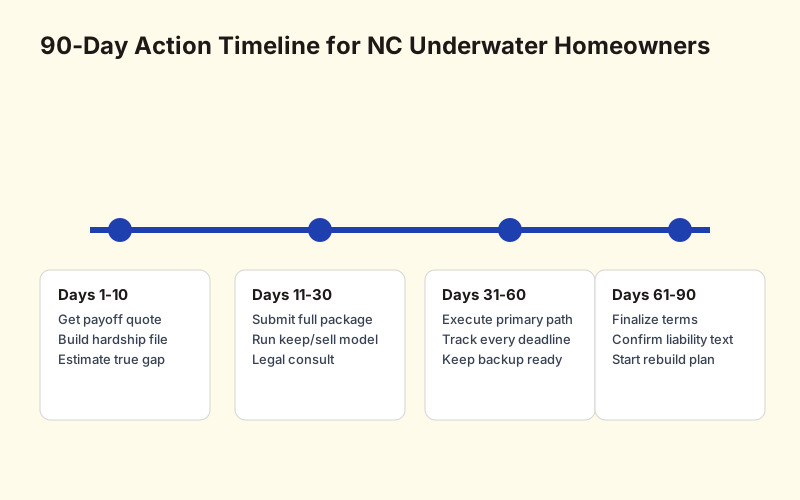
10. Your 30-60-90 Day Underwater Action Plan
When people are stressed, they need sequence more than theory. Here is the action plan we use with underwater homeowners in North Carolina. Print this and check boxes.
Days 1-10: Stabilize Information
- Request formal payoff quote from servicer (good-through date documented).
- Pull complete payment history and delinquency status.
- Build hardship file: income docs, bank statements, budget, hardship narrative.
- Run market value range using current-condition comps.
- Calculate negative equity gap using full-cost model.
Days 11-30: Build Option Set
- Contact HUD-approved counseling channel and NC-specific resources.
- Verify loan investor (Fannie/Freddie lookup tools if applicable).
- Submit complete loss mitigation package.
- Get legal consult on deficiency and foreclosure posture.
- Model keep vs. sell vs. hold outcomes with real carrying costs.
Days 31-60: Execute Primary Path, Protect Backup Path
- If retention path chosen: track trial/permanent milestones and confirmation letters.
- If sale path chosen: launch listing/disposition, package short docs early if needed.
- If legal intervention needed: coordinate attorney timeline with servicer milestones.
- Update budget weekly to reflect actual, not projected, cash burn.
Days 61-90: Finalize and De-Risk
- Lock written terms on liability treatment before closing or transfer.
- Confirm credit reporting expectations in writing where available.
- Create post-resolution plan: emergency reserve rebuild, rental/future housing budget, and documentation archive.
- If remaining unsecured debt or tax exposure exists, schedule follow-up planning immediately.
| Week | Top Priority | Success Metric |
|---|---|---|
| Week 1 | Know your exact gap | Written payoff + verified valuation range + cost sheet completed |
| Week 2 | Launch mitigation file | Complete package submitted, confirmations saved |
| Week 3-4 | Decision branch selected | Primary strategy chosen with backup documented |
| Week 5-8 | Execution discipline | No missed deadlines, no missing documents |
| Week 9-12 | Resolution and cleanup | Signed final terms, post-resolution cash plan in place |
Owe more than your home is worth and want a clean exit?
We buy homes in any condition and can send a real cash offer so you can move with confidence, on your timeline.
11. North Carolina Resource Stack: Who to Call and Why
You do not need to solve this alone. Use a layered support stack so each specialist handles their part.
| Resource Type | Where to Start | What They Help With |
|---|---|---|
| State foreclosure counseling | NCHFA State Home Foreclosure Prevention Project (1-888-442-8188) | Loss mitigation coaching, servicer communication support, referrals |
| HUD-approved counseling network | HUD NC resources and counselor finder | Budget review, hardship planning, document readiness |
| Legal aid referral | LawHelpNC Mortgage Foreclosure Prevention Project (1-866-219-5262) | Foreclosure defense support for eligible households |
| State banking regulator complaint channel | N.C. Office of the Commissioner of Banks complaint portal | Regulated-entity complaint escalation and response tracking |
| Tax planning professional | CPA/EA with debt-cancellation experience | 1099-C, basis, and home sale reporting strategy |
| Real estate attorney | NC licensed attorney in foreclosure/short sale matters | Deficiency language review and closing-term protection |
What should you ask on first calls? Keep it short and specific:
- "My payoff is approximately X, likely sale value is Y, and I'm Z days delinquent. What is the first document set you need from me?"
- "Can you review whether my expected resolution includes clear deficiency release language?"
- "What is the realistic timeline from submitted packet to decision in cases like mine?"
- "Which deadline, if missed, would hurt my options the most?"
That framing gets you practical answers faster than broad storytelling on first contact. You can fill in context once the advisor has your core numbers.
12. Decision Matrix: Pick the Least-Damaging Path, Then Move
At this point, you know your gap, your timeline risk, and your option set. The final step is deciding without overcomplicating it. You are not picking a perfect outcome. You are picking the least-damaging, most controllable path for your household over the next 12 to 24 months.
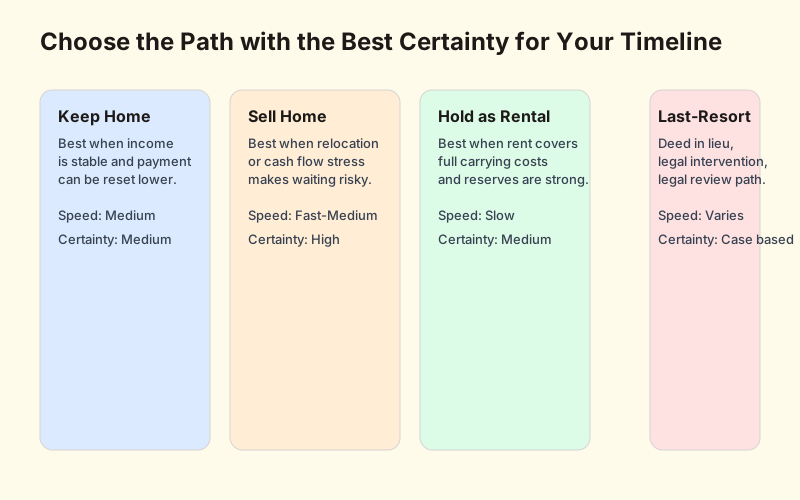
| If Your Situation Looks Like... | Usually Best First Path | Backup Path |
|---|---|---|
| Current on payments, stable income, moderate gap | Retention evaluation (mod/recast/structured hold) | Orderly sale with cash contribution if needed |
| Behind on payments, income recovering, wants to stay | Immediate loss mitigation + legal timeline review | Marketed sale before foreclosure window narrows |
| Must relocate, limited cash, large gap | Short sale packaging early | Negotiated deed-in-lieu assessment |
| Severe debt stress beyond mortgage | Bankruptcy consult integrated with housing strategy | Controlled disposition with counsel |
| Negative-cash-flow hold scenario | Disposition planning now | Time-limited hold only if reserves are strong |
The people who recover fastest after an underwater period are not always the ones who preserve the most equity on paper. They are the ones who preserve decision capacity: no missed deadlines, no ambiguous legal terms, no fantasy budgets, and no silent tax surprises.
If you need a simple way to start today, do this in order:
- Get your formal payoff and verify your true gap.
- Submit a complete mitigation packet this week, not "soon."
- Run keep/sell/hold side-by-side with real carrying costs.
- Have North Carolina counsel review any final liability language before signing.
And if you're trying to decide whether this is a retention fight or a strategic exit, we can run the decision math with your real numbers and timeline so you can choose once and execute cleanly.
13. Four North Carolina Case Patterns (With Full Math)
Let's make this concrete with four realistic case patterns. These are educational examples, not promises, but they show how different goals change the best choice even when all owners are underwater.
Case A: Wake County Relocation, Moderate Negative Equity, Strong Income
A homeowner in Wake County gets relocated to Atlanta. Payoff is $418,000. Expected sale value in current condition is $392,000. Estimated transaction costs are $24,000. Gap is about $50,000. Household has available liquidity from savings and stock sale, and wants a clean exit before buying next home in Georgia.
| Metric | Amount | Planning Insight |
|---|---|---|
| Payoff + costs | $442,000 | Total liability at closing |
| Expected sale price | $392,000 | Current condition estimate |
| Gap | $50,000 | Cash contribution required for full payoff |
| Monthly carrying cost if delayed | $2,950 | Delay for 4 months costs about $11,800 |
Best path here is often a fast conventional sale with cash to close because certainty preserves borrowing flexibility on the next purchase. Waiting for a marginally better price while paying nearly $3,000 monthly can erase potential upside quickly.
Case B: Mecklenburg Delinquency, Wants to Stay, Recovering Income
Borrower is 75 days delinquent after a temporary income interruption. Payoff is not the core issue yet; payment sustainability is. Household now has restored income, but cannot cure full arrears in one payment. Here, the retention path has real potential if a complete loss mitigation package is submitted immediately.
| Metric | Before Workout | Potential After Workout |
|---|---|---|
| Monthly housing payment | $2,780 | $2,340-$2,520 range |
| Arrears due immediately | $8,600 | Capitalized or repaid through plan |
| Housing payment / net income | 42% | 34%-37% target range |
| Foreclosure timeline pressure | Rising | Can stabilize if review is timely/complete |
The error in cases like this is delaying because the owner is embarrassed about temporary hardship. Lenders evaluate documents and timelines, not pride. A complete packet beats a perfect story every time.
Case C: Triad Market, Deep Gap, Limited Cash
Owner owes $309,000, property likely sells near $250,000 in current condition, and full closing costs push total outflow to roughly $324,000. Estimated gap is around $74,000. Owner has no practical way to fund that amount at closing and cannot sustain payments for many more months.
| Decision Variable | Observation | Likely Implication |
|---|---|---|
| Gap depth | Large | Cash-to-close payoff sale unlikely |
| Liquidity | Low | Need negotiated payoff pathway |
| Timeline | Tightening | Short sale packet should begin now |
| Legal exposure | Fact-specific | Attorney review required for final terms |
This is where short sale strategy plus legal review can preserve more control than letting the file drift into sale-day chaos. Again, the final approval letter language can make or break long-term recovery.
Case D: Coastal County, Insurance Shock, Negative Cash Flow Rental
Owner moved out and turned home into rental. Insurance renewal jumps sharply, maintenance rises, and effective monthly cash flow turns negative by $680. Owner hoped to hold until equity returned, but reserves are now dropping faster than planned.
| Hold Metric | Original Assumption | Current Reality |
|---|---|---|
| Insurance cost | $180/month equivalent | $340/month equivalent |
| Maintenance reserve | $120/month | $260/month realistic |
| Net monthly cash flow | +$90 | -$680 |
| Annual reserve impact | +$1,080 | -$8,160 |
In this pattern, hold is no longer a bridge strategy. It is a reserve depletion strategy. Exiting sooner is often the financially safer choice even if headline sale numbers are disappointing.
14. Negotiation Scripts You Can Use With Servicers and Buyers
People freeze in calls because they do not know what to say. Use scripts. Scripts are not manipulative. They are clarity tools. Below are practical talking points for common calls.
Servicer Call Script: Requesting a Structured Review
"I'm calling to request a full loss mitigation review. My loan number is [X]. I can submit complete hardship documentation within [48 hours / 72 hours]. Please confirm exactly which forms and dated statements you require so my package is complete on first submission. Also confirm the fax/email/upload channel, reference number, and expected acknowledgment timing."
Then ask this follow-up: "Once submitted, what event would pause or escalate legal referral, and how can I monitor status without gaps?"
Write down representative name, call time, reference number, and next required action. A detailed call log is one of the strongest tools you control.
Listing Agent Interview Script (Underwater Context)
"I need your strategy for a likely negative-equity disposition, not a generic listing pitch. Show me your plan for pricing in current condition, expected days to contract, buyer financing risk, and communication with lender counsel if a short approval is required. Also show me two recent transactions where you managed payoff complexity or distressed timelines."
| Question to Ask an Agent | Strong Answer Signals | Weak Answer Signals |
|---|---|---|
| How do you set list price in underwater cases? | Comp-based with condition and timeline adjustments | "We'll just test high first" |
| How do you coordinate with servicers? | Document cadence, milestone tracking, lender-specific process awareness | Vague promises and no documented workflow |
| How do you reduce fall-through risk? | Buyer qualification depth, realistic repair framing, backup communication plan | Only focuses on marketing photos/open houses |
Buyer-Side Script for As-Is or Distressed Positioning
"The seller is making a timeline-driven decision. We are pricing to reflect current condition and certainty needs. Offers with clear financing, limited contingencies, and documented ability to close on schedule will be prioritized."
This script attracts the right buyer pool and reduces rounds of low-probability negotiation.
Attorney Consult Prep Script
Before your consult, send a one-page brief: payoff amount, delinquency status, property valuation range, expected gap, and preferred outcome. Then ask: "What are my best and worst legal outcomes under this fact pattern in North Carolina, and what language do we require in any approval or settlement document to avoid residual liability surprises?"
15. Document Checklist: What to Gather Before You Need It
Underwater cases move faster when your file is complete before urgency spikes. Waiting until after a formal notice arrives to organize paperwork is backwards. Build the file now.
| Document Group | Minimum Items | Common Failure Point |
|---|---|---|
| Loan records | Recent statements, full payment history, payoff quote, escrow analysis | Using stale payoff numbers |
| Income records | Last 2 paystubs or equivalent proof, benefit letters, P&L for self-employed | Missing pages or unsigned statements |
| Tax records | Last 1-2 years returns, W-2/1099 support where requested | Submitting summary without full schedules |
| Bank records | Most recent 2-3 months full statements | Redacted entries that trigger follow-up delays |
| Property records | HOA statement, insurance declarations, known liens/violations | No current HOA balance letter |
| Hardship narrative | One-page timeline with dates and recovery plan | Overly emotional but missing concrete facts |
Hardship Letter Structure That Works
- What changed: one paragraph with specific dates and trigger event(s).
- Current status: what has improved and what remains unresolved.
- Requested resolution: modification, repayment, short approval, etc.
- Affordability logic: concise monthly budget snapshot.
- Commitment statement: willingness to provide updates quickly.
Do not write a three-page novel. Do not write two vague sentences. One crisp page with dates and numbers is ideal.
Submission Discipline Rules
- Submit through the requested channel only (portal/email/fax per instructions).
- Name files consistently: Lastname_DocType_YYYYMMDD.
- Save confirmation screens and timestamps.
- Call within 24-48 hours to verify the packet is marked complete.
- Track expiration dates for paystubs and bank statements; refresh before requested.
If you are coordinating a short sale, layer these additional items:
| Short Sale Add-On | Purpose |
|---|---|
| Listing agreement | Shows market exposure plan |
| Executed purchase contract | Supports lender value review and decisioning |
| Estimated settlement statement | Quantifies projected shortfall and cost structure |
| Buyer preapproval/proof of funds | Demonstrates close probability |
| Repair estimates/condition packet | Supports value position if condition is challenged |
Clean files close faster. Messy files create silence, then panic.
16. Rebuild Plan After Resolution: Credit, Cash, and Housing Stability
Getting out of the underwater trap is not the finish line. It's the handoff to recovery. The households that stabilize fastest treat the first six months after resolution as a structured rebuild period.
First 30 Days After Resolution
- Create a final digital archive: closing docs, lender letters, settlement language, payoff records.
- Set up a simple cash-flow system with separate buckets for essentials, reserve, and variable spending.
- Pull updated credit reports and verify key mortgage tradeline reporting for accuracy.
- If debt cancellation documents arrive, route them immediately to your tax preparer.
Months 2-6: Stability Sprint
| Recovery Goal | Target | How to Track |
|---|---|---|
| Emergency reserve | 1 month essentials by month 3; 2-3 months by month 6 | Automatic weekly transfer and monthly checkpoint |
| On-time payment streak | 100% on all obligations | Calendar reminders + autopay where safe |
| Debt ratio control | Avoid re-leveraging into unstable housing payment | Payment-to-net income check before any new commitment |
| Housing decision clarity | Document next 24-month housing plan | Written plan reviewed quarterly |
Emotionally, the rebuild period can be harder than expected. Many homeowners feel relief and grief at the same time, especially if the property carried family history. That is normal. Treat rebuilding as a project with weekly actions, not a mood you wait for.
If you eventually return to ownership, use this experience to set guardrails: stress-test payment at current rates, maintain stronger reserves, and avoid assuming future appreciation will solve affordability. The best outcome of a hard chapter is better underwriting discipline in the next one.
17. FAQ: Hard Questions Homeowners Ask When They Owe More Than the Home Is Worth
"Should I stop paying if I'm already underwater?"
Usually, no. Being underwater by itself is not the same as being unable to pay. Strategic nonpayment carries legal, credit, and timeline consequences that can reduce flexibility. If affordability is truly broken, build a documented transition plan first so your next step is deliberate, not reactive.
"How far underwater is too far?"
There is no universal percentage threshold. A 6% gap can be impossible for one household and manageable for another. What matters is your combined profile: monthly cash flow, reserves, relocation pressure, and delinquency timeline. We have seen 15% gaps resolved cleanly and 4% gaps spiral because owners ignored timeline costs.
"Can appreciation bail me out if I wait?"
Sometimes, but only if you can carry the property safely while waiting. Waiting is a financial strategy only when the monthly burn is sustainable and your life timeline supports it. Waiting while losing cash every month is usually speculation, not strategy.
"Will a short sale ruin my credit forever?"
No single event ruins credit forever, but distressed outcomes can have meaningful temporary impacts depending on prior history and reporting details. The better question is what path creates the most stable credit behavior over the next 12 to 24 months. A controlled resolution followed by consistent on-time payments often recovers better than prolonged delinquency chaos.
"Can I negotiate fees or commissions if I'm underwater?"
You can negotiate almost every transaction term, but don't chase fee reductions at the expense of execution quality. Saving one percentage point on paper is irrelevant if the transaction fails twice and timeline risk worsens. Focus on net certainty, not one isolated line item.
"If the lender says 'we'll work with you,' am I safe?"
Encouraging language is not a legal outcome. You are safe when required documents are submitted, acknowledged, reviewed, and reflected in written decisions. Process discipline beats verbal reassurance.
"Do I need an attorney if I trust my servicer and agent?"
In meaningful underwater situations, especially with delinquency or short approvals, attorney review is strongly advisable. Trust is good; documented legal clarity is better. Counsel is especially important for liability language and timeline interventions.
"Could renting short-term while deciding be smart?"
It can be, if rent materially offsets carrying costs and you have reserves. But if your hold scenario is negative monthly cash flow, "temporary renting" often becomes long-term erosion. Run the model first.
"How do I explain this to my family without panic?"
Use numbers and milestones, not dramatic labels. Share your current gap estimate, your top two options, and this week's actions. Fear drops when people can see sequence and ownership of next steps.
| FAQ Topic | What Usually Helps Most | What Usually Hurts Most |
|---|---|---|
| Payment stress | Early package submission and budget triage | Silence and avoidance |
| Decision paralysis | Side-by-side scenario table | Waiting for certainty |
| Family conflict | Weekly update cadence with facts | Ad-hoc emotional debates |
| Professional coordination | Single shared timeline tracker | Multiple advisors with no central plan |
18. The Mistakes That Cost the Most (and How to Avoid Them)
After reviewing hundreds of distressed and near-distressed homeowner situations, the biggest losses usually come from a predictable set of mistakes. If you avoid these, your odds improve dramatically even if your starting point is hard.
Mistake 1: Building a plan on stale numbers
Homeowners commonly model decisions using last month's statement or a rough online value estimate. By the time they act, payoff and price assumptions are wrong. Avoid this by refreshing both numbers before every major decision: current payoff quote and current-condition value range.
Mistake 2: Treating "status checks" as progress
Calling every few days for updates is not the same as moving the file forward. Progress is document completeness, written acknowledgment, and milestone advancement. Build your own tracker with date, action, expected response window, and next escalation step.
Mistake 3: Prioritizing pride over optionality
People sometimes reject viable solutions because they feel like admitting defeat. But housing strategy is not identity. If a short sale, deed-in-lieu review, or legal intervention preserves your future stability, that is a success move, not a failure move.
Mistake 4: Running one scenario only
If you model only your preferred path, you are fragile when that path slows or fails. Always maintain a primary path and a backup path with trigger points. Example: "If no complete review acknowledgment by date X, launch backup listing path by date Y."
Mistake 5: Not pricing time as a real cost
Time is a line item. Every month of indecision has a cost in payments, fees, and mental load. Include a monthly time cost line in your model so delays are visible.
| Delay Window | Illustrative Monthly Carry | Total Delay Cost | Strategic Meaning |
|---|---|---|---|
| 30 days | $2,700 | $2,700 | Often manageable if plan quality improves |
| 60 days | $2,700 | $5,400 | Can erase modest negotiation wins |
| 90 days | $2,700 | $8,100 | Usually requires stronger rationale to justify waiting |
| 180 days | $2,700 | $16,200 | Delay becomes a dominant economic factor |
Mistake 6: Assuming professionals share the same plan automatically
Your counselor, agent, attorney, and tax preparer each see one slice of the situation. Unless you provide a unified timeline, they may optimize their piece but not your total outcome. Send everyone the same one-page summary with numbers, preferred path, backup path, and deadlines.
Mistake 7: Forgetting post-resolution design
Some owners resolve the immediate property problem then drift into the same financial fragility because they never rebuilt reserves or payment guardrails. Build the next chapter while closing the current one.
A simple post-resolution framework:
- Rule 1: No new housing payment that exceeds your tested affordability threshold.
- Rule 2: Reserve-first budgeting until 2-3 months essentials are rebuilt.
- Rule 3: Quarterly check-in on debt and cash flow trends.
- Rule 4: Keep all settlement documents archived for future underwriting and tax reference.
19. Build Your Own Underwater Scorecard (One-Page Worksheet)
By now you've seen a lot of frameworks. This section converts them into a one-page scorecard so you can make a decision without rereading the full guide every time new information arrives. Use this worksheet weekly until your file is resolved.
Step 1: Enter Core Numbers
| Input | Your Number | Update Frequency |
|---|---|---|
| Current payoff quote (good-through date) | ________ | Every major decision point |
| Likely sale price range (low / likely / high) | ________ | Biweekly in active market |
| Total estimated selling costs | ________ | At listing and contract stage |
| Current delinquency status (days) | ________ | Weekly |
| Total monthly carrying cost | ________ | Monthly |
| Cash reserves available for housing strategy | ________ | Weekly |
When these six lines are fresh, decision quality improves immediately. If any line is stale, refresh before making commitments.
Step 2: Score Your Keep/Sell/Hold Paths
Rate each path from 1 (weak) to 5 (strong) on the criteria below. This is not perfect science, but it prevents emotional over-weighting of one factor.
| Criteria | Keep | Sell | Hold as Rental |
|---|---|---|---|
| Monthly affordability is sustainable | __ | __ | __ |
| Timeline risk is manageable | __ | __ | __ |
| Out-of-pocket requirement is realistic | __ | __ | __ |
| Legal complexity is manageable | __ | __ | __ |
| Household stress impact is tolerable | __ | __ | __ |
| 12-month stability outlook is strong | __ | __ | __ |
| Total | __ | __ | __ |
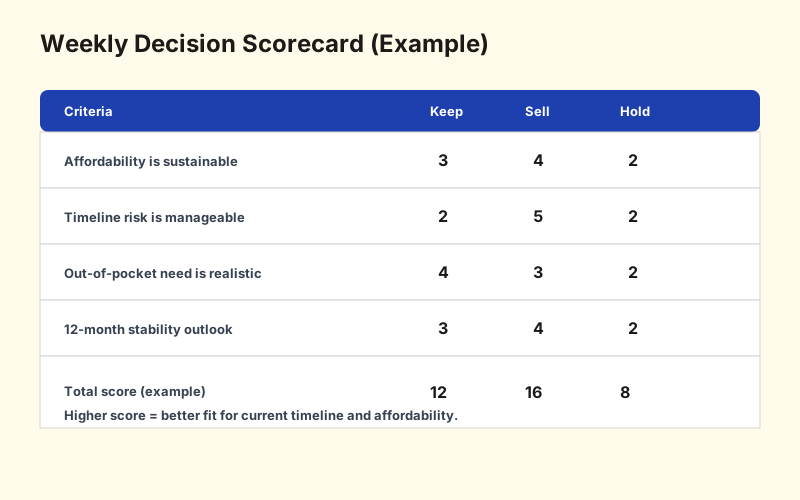
Highest score is not auto-winner, but if one path clearly trails on affordability and timeline, it should move to backup status.
Step 3: Define Trigger Points
A trigger point is a pre-committed rule that tells you when to switch from plan A to plan B. Without triggers, people drift and lose time.
| Trigger Event | If This Happens | Then Do This |
|---|---|---|
| No complete-package acknowledgment by date X | Servicer process uncertain | Escalate via written follow-up and activate backup sale prep |
| Monthly negative carry exceeds target by 20%+ | Hold strategy deteriorating | Move hold from primary to backup; prioritize disposition |
| Unexpected legal notice milestone | Timeline compression | Immediate attorney review and revised action calendar |
| Material income drop without reserve buffer | Retention affordability breaks | Reopen full option comparison within 72 hours |
Triggers remove debate during stressful weeks. You decide your rules while calm, then follow them when pressure rises.
Step 4: Weekly Operating Rhythm
A reliable weekly rhythm is one of the strongest predictors of successful resolution. Here's a practical structure:
- Monday: update numbers (payoff status, delinquency, reserves, carry cost).
- Tuesday: document check and submission updates with servicer/counselor.
- Wednesday: market reality check (if sale path active): showings, feedback, comp shifts.
- Thursday: professional coordination note to all advisors.
- Friday: plan audit: what moved, what stalled, what trigger is nearest.
Most homeowners don't need more effort; they need better sequencing. This weekly cadence makes complex files manageable.
Step 5: Family Communication Template
Housing stress can strain relationships. Use a short recurring update format to lower friction:
- Current gap estimate: ___
- Primary path this week: ___
- Biggest risk this week: ___
- Action completed: ___
- Action due next: ___
This structure keeps conversations factual and reduces re-litigation of old arguments.
Step 6: Professional Packet You Can Email in 10 Minutes
Keep a ready-to-send packet folder so any new attorney, counselor, or listing professional can get up to speed quickly:
| Folder Item | Why It Saves Time |
|---|---|
| One-page case summary | Gives immediate context and desired outcome |
| Payoff quote + statement history | Anchors financial reality |
| Budget snapshot + income docs | Supports affordability analysis |
| Market value evidence package | Supports pricing/negotiation position |
| Timeline log with milestones | Prevents repeated discovery calls |
| Open questions list | Focuses advisor attention where it matters |
Prepared homeowners get better advice faster because professionals can spend time solving, not extracting basic facts.
Step 7: Red Flag Dashboard
If any of these appear, accelerate immediately:
- Unreturned servicer communications beyond stated response windows
- Conflicting instructions from different representatives with no written confirmation
- New fees appearing that are unclear or unexplained
- Buyer interest stalling while carrying costs continue climbing
- Household reserve trend turning negative faster than forecast
Red flags are not panic signals. They are escalation signals.
Step 8: Life-Event Overlay (Because Housing Isn't Happening in a Vacuum)
Most underwater files are not only about the mortgage. They are connected to another life event: job change, divorce, probate, caregiving, health costs, or relocation. Your worksheet should include this overlay so the housing plan aligns with real life constraints.
| Life Event | How It Changes Housing Strategy | What to Prioritize |
|---|---|---|
| Job relocation | Time certainty becomes more valuable than maximum sale price | Fast decision branch and clear close timeline |
| Divorce or separation | Coordination and legal clarity outweigh small pricing advantages | Written agreements, role clarity, attorney alignment |
| Inheritance/probate | Title timing and estate administration can delay execution | Probate status tracking and carrying-cost control |
| Caregiving or medical hardship | Cash-flow stability and reduced administrative burden matter more | Simpler process path and support-team involvement |
| Business income volatility | Retention decisions need stronger stress testing | Conservative affordability assumptions and backup path |
When homeowners ignore the life-event overlay, they often choose technically correct housing strategies that are practically impossible to execute. A plan you can execute beats a theoretically optimal plan you can't sustain.
Step 9: Final Pre-Signing Checklist
Before you sign any permanent workout, short approval, listing adjustment, or settlement letter, run this final checklist:
- Have I read every page, including addenda and exhibits?
- Do I understand exactly what balance is forgiven, deferred, or still owed?
- Is deficiency treatment stated in plain written terms where applicable?
- Are deadlines realistic for my household and document capacity?
- Has a qualified attorney or tax professional reviewed the parts that carry long-tail risk?
- Do I have a backup plan if this agreement fails at the last minute?
If the answer is no to any of those, pause and resolve it first. One day of review can prevent years of cleanup.
One final principle before you close this guide: every underwater decision should be reversible for as long as possible. That means avoid burning bridges early, keep both your primary and backup pathways documented, and communicate with professionals in writing so you can pivot quickly if a lender timeline shifts or a contract falls apart. Reversible strategy is how you stay in control while facts are still moving. Irreversible strategy is what traps people into rushed signatures they later regret.
Also remember that documentation quality compounds over time. A complete file today saves you from duplicate requests next week, and that saved time often becomes the difference between an orderly resolution and a last-minute scramble. Even if your outcome is not the one you hoped for at the start, a well-documented process protects you in future lending conversations, tax preparation, and any later dispute over what was agreed. In other words: your paperwork is part of your equity recovery strategy, even after the house decision is done. Keep digital and printed copies in one secure place.
Editorial note: This guide is educational and not legal or tax advice. North Carolina foreclosure, deficiency, and debt-cancellation outcomes are fact-specific. Confirm legal strategy with a licensed NC attorney and tax strategy with a qualified tax professional before making final decisions.
Get Your Free, No-Obligation Cash Offer
Tell us about your North Carolina home and we’ll send a real cash offer, any condition, and close on the timeline that works for you.