
Mount Holly: Selling Smart in a River-Corridor Market
A practical playbook for Mount Holly homeowners: neighborhood pricing, timeline strategy, and clear net-outcome math.
1. Saturday on Main Street and the Riverbank: Why Mount Holly Is Different
At 8:15 on a Saturday morning, Mount Holly feels like two cities layered on top of each other. One is the old mill-and-rail town where people still reference intersections by family names and where neighbors ask where you went to high school before they ask what you do. The other is the newer commuter city where buyers from Charlotte, Huntersville, and South End arrive with pre-approval letters, walkability filters, and a clear number in mind for what they will and will not fix after move-in. Those two versions of Mount Holly now share the same streets, and if you are selling a house here in 2026, your result depends on understanding both.
Mount Holly is not selling the same story as Belmont, and it is not trying to be Gastonia either. The city’s edge is its river geography and its pace. You can stand near downtown, cross toward Tuckaseege Park, and feel how quickly the market changes block by block: bungalow streets with cosmetic upside, newer subdivisions with two-car garages and HOA pools, and river-influenced pricing pockets where buyer behavior follows access, flood map confidence, and commute confidence all at once. That complexity is exactly why generic internet estimates miss by tens of thousands of dollars in this town.
This guide is built for homeowners who want real decision support, not slogans. We are going to walk through market numbers, neighborhood-level pricing patterns, the FUSE spillover effect from Gastonia’s westward revitalization, and the practical math between listing with an agent, selling to a cash buyer, or holding as a rental. We will also cover the legal and closing-cost details that directly affect your net, because “top-line price” means very little until you subtract commissions, credits, transfer taxes, and carrying costs.
For sellers comparing Mount Holly against farther-west affordability dynamics, our Kings Mountain homeowner selling options guide and Lincolnton homeowner selling options guide break down certainty-first strategy and value-corridor pricing in neighboring markets.
If your timeline is straightforward, this guide gives you a clean operating plan. If your timeline is complicated by probate, divorce, missed payments, inherited title issues, or a relocation deadline, this guide gives you a triage framework. Either way, your goal is the same: make a high-consequence decision once, with confidence, and avoid expensive do-overs.
2. Mount Holly Snapshot 2026: Price, Pace, and Buyer Mix
Mount Holly’s housing market is active but not reckless. Buyers are still purchasing, but they negotiate more than they did in peak frenzy years, and timelines have stretched in ways that reward preparation. Recent Redfin snapshots have shown median sale prices in the low-to-mid $400,000 range with meaningful year-over-year volatility month to month. That volatility matters: it tells you this is a market where listing strategy and condition can produce two very different outcomes for homes that look similar at first glance.
| Mount Holly Market Signal | Recent Reading | Why Sellers Should Care |
|---|---|---|
| Median sale price | ~$415,000 (recent monthly read) | Sets expectation anchors for buyer financing ranges |
| Median price per square foot | ~$215 | Useful for adjusting size/condition deltas between comps |
| Average days to pending | ~72 days (hot homes faster) | Timeline planning must include carrying costs |
| Sale-to-list behavior | Average homes slightly below list | Initial pricing discipline beats multiple cuts later |
| Competitiveness | Somewhat competitive | Presentation and neighborhood-specific pricing still win |
Demographically, Mount Holly is no longer just a “cheaper alternative” to Charlotte. It is now an intentional choice for buyers who want small-city rhythm with practical metro access. Census and ACS-linked profiles consistently show population growth, household formation, and stable middle-income buyer demand in this corridor. Combined with constrained inventory in nearby submarkets, that creates a reliable base of demand for move-in-ready homes priced to current buyer math instead of last year’s headlines.
For sellers, the operational implication is simple: your first 14 days on market matter disproportionately. Serious buyers, especially those relocating from higher-cost neighborhoods, monitor new inventory tightly and decide quickly whether a listing is a real candidate or a “wait for reduction” listing. Your photos, your repair posture, your disclosure completeness, and your opening price all determine which category your house falls into.
It is also worth saying plainly: internet estimate tools are directionally useful, but they are weak at distinguishing micro-market context in Mount Holly. A home with similar square footage in a river-adjacent pocket with clean flood-map posture can outperform a larger home farther out with weaker commute patterns and no walkability narrative. The spreadsheet matters, but the map matters too.
3. The Catawba Gradient: How River Distance Changes Your Number
“Near the river” sounds like one feature to out-of-town buyers, but in Mount Holly it behaves like a gradient. Value changes along at least four dimensions: distance to water or greenway access points, floodplain certainty, neighborhood maturity, and commute friction to major job nodes. Sellers who frame only one of those dimensions miss the full value narrative buyers are actually pricing.
| River-Proximity Band | Typical Buyer Perception | Pricing Behavior Pattern |
|---|---|---|
| Walkable river/greenway-adjacent pockets | Lifestyle premium, recreation access, identity location | Higher interest velocity when condition is turnkey |
| Short-drive river access zones | Value + convenience balance | Broadest buyer pool; strongest comp relevance |
| Peripheral neighborhoods with weaker access narrative | Primarily utility-driven purchase | More sensitive to price-per-square-foot and concessions |
| Flood-sensitive addresses | Insurance/risk filtering dominates | Wider spread between list and close unless fully documented |
This is where experienced pricing discipline beats optimism. If your property has a strong river lifestyle story, your listing package should prove it: mapped trail access, drive-time proof to launch areas, clear flood-zone status, and a photo set that leads with usability rather than generic exterior shots. If your property is outside premium bands, you can still win; you just win with certainty, cleaner inspection posture, and sharper financing-friendly pricing.
Sellers often ask whether flood-zone proximity automatically kills value. It does not. Uncertainty kills value. When a listing includes a vague risk profile and no prepared documentation, buyers assume worst-case carrying costs and offer accordingly. When sellers provide clear FEMA map context, recent insurance history where appropriate, and transparent disclosures, uncertainty premiums shrink and negotiation quality improves.
In practical terms: one of the highest ROI actions for river-influenced Mount Holly listings is assembling a pre-listing “confidence packet.” Include survey references if available, flood map excerpts, permit records for major systems, and repair invoices from the last three to five years. Buyers paying attention in this submarket reward certainty with stronger terms.
4. FUSE Spillover and the Westward Buyer Shuffle
Mount Holly homeowners are increasingly affected by demand that did not originate in Mount Holly. A meaningful slice now arrives from Charlotte affordability pressure and from westward movement linked to Gastonia’s FUSE District revitalization narrative. Even buyers who never set foot in CaroMont Health Park still absorb that broader west-of-uptown momentum and expand their search maps accordingly.
What this means for your sale is subtle but important: buyers are now evaluating Mount Holly against a wider option set that includes Belmont, selected Gastonia neighborhoods, Cramerton, and farther-ring Charlotte tradeoff zones. They compare schools, commute reliability, tax burden, and house condition at a level of detail that did not show up in this corridor ten years ago. Cramerton in particular shares Mount Holly's river geography but carries a distinct waterfront premium. Our Cramerton homeowner selling guide explains how that shapes buyer decisions across both markets. If your listing presentation ignores that comparison context, buyers will do it anyway and you may not like the assumptions they make.
| Buyer Origin Pattern | What They Compare First | Listing Angle That Performs |
|---|---|---|
| Charlotte move-out buyers | Monthly payment vs. space/yard gain | Cost-to-space upgrade story with commute realism |
| Belmont overflow buyers | Price gap for similar bedroom count | “Same corridor, stronger value” framing |
| Gastonia/FUSE-aware buyers | Future growth narrative + lifestyle | River + Main Street + practical access mix |
| Investor-light buyers | Rentability and maintenance profile | Systems documentation and durable upgrades |
The spillover story should never be exaggerated. It should be translated. Show the buyer exactly what their daily life looks like from your address: credible drive windows, core retail access, school routing, and weekend recreation paths. This keeps your listing grounded in utility while still capturing upside narrative.
There is also a sequencing effect worth noting. As buyers expand westward from Charlotte, they typically test one “familiar” submarket first (often Belmont), then widen to Mount Holly and selected Gaston corridors after seeing payment pressure or inventory constraints. If your listing appears when that second-wave search opens, your chance of attracting serious comparison buyers rises quickly.
That is why timing plus readiness matters. A listing that launches with complete documentation, clean disclosures, strong photos, and accurate neighborhood positioning can capitalize on search-window timing. A listing that launches half-ready often misses its best buyer wave and spends the rest of the cycle negotiating from weakness.
See what your Mount Holly home is worth
Get a real, data-driven estimate based on your specific neighborhood and recent comps.
5. Neighborhood Playbook: Riverfront to Dutchmans Ridge
Mount Holly should be treated as a set of micro-markets, not a single average. This section gives a practical playbook for common neighborhood profiles sellers ask about most. The exact price point changes by month, but the demand shape and buyer behavior patterns are stable enough to guide decisions.
| Neighborhood Profile | Typical Price Envelope | Best-Fit Sale Strategy | Buyer Objection to Preempt |
|---|---|---|---|
| River-influenced communities (e.g., Riverfront-style profile) | Upper-mid to premium | Agent-led launch with high documentation depth | Flood/insurance uncertainty |
| Established family subdivisions (e.g., Dutchmans Ridge-style profile) | Mid to upper-mid | MLS + targeted prep upgrades | Competition from nearby newer inventory |
| Value-forward mature streets | Entry to mid-tier | Price-precision + inspection transparency | Deferred maintenance concerns |
| Hybrid commuter pockets near key corridors | Mid-tier | Commuter utility framing + realistic days-on-market plan | Traffic and timing unpredictability |
For river-influenced homes, your biggest lever is confidence engineering. The buyer pool here has money but also standards. They want certainty around systems, risk, and upkeep. Give them a reason to believe the property has been managed like an asset, not deferred like a project. That includes clean permits, roof/HVAC timelines, and a realistic pre-inspection narrative.
For established family subdivisions, your competitor is not the house across the street; it is the decision between your resale home and a nearby builder inventory option offering rate buydowns. That means your strategy must directly answer, “Why this resale over that new build?” The strongest answers are lot usability, mature landscaping, completed upgrades, and known neighborhood rhythm.
For value-forward streets, cash-flow-minded buyers and first-time financed buyers often overlap. You do not need perfect finishes, but you do need structural trust. A price that admits cosmetic age while proving functional soundness often beats over-improving and overpricing.
For hybrid commuter pockets, your listing should avoid broad commute claims and instead provide realistic routing ranges at typical work windows. Buyers punish listings that feel like marketing copy. They reward listings that feel like truth.
6. Three Sale Paths in Mount Holly (with Net Scenarios)
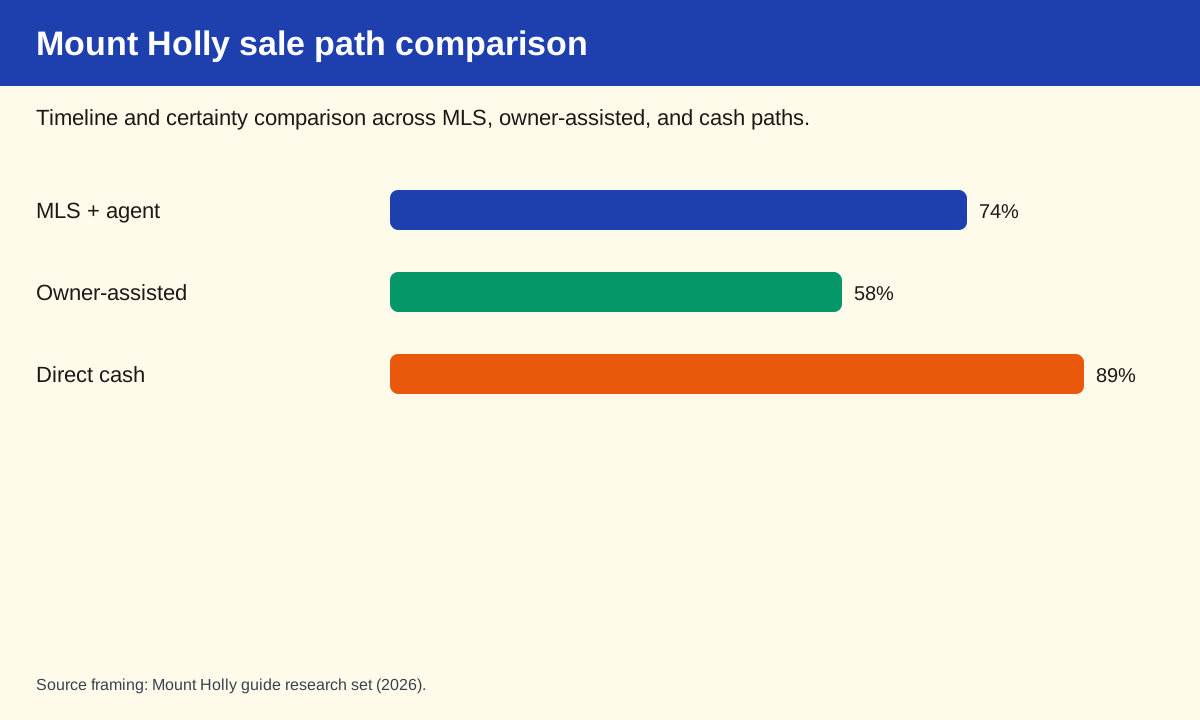
Most sellers choose between three operational paths: traditional MLS with representation, owner-assisted/flat-fee approach, or direct cash sale. None is universally best. The correct answer depends on your timeline risk, property condition, and tolerance for process friction.
| Sale Path | Typical Gross Price Range vs Market | Process Burden | Timeline Reliability |
|---|---|---|---|
| Traditional MLS with agent | Highest gross when priced and presented well | Medium to high (prep, showings, negotiations) | Moderate (financing/appraisal risk exists) |
| Flat-fee / owner-assisted model | Can approach MLS outcomes with strong execution | High owner workload | Moderate |
| Direct cash buyer | Usually below open-market top end | Low | High (speed/certainty) |
Traditional MLS path: Usually optimal when your house shows well, your timeline can absorb 60-120 days, and maximizing net is priority one. In this path, your biggest value levers are pricing discipline, listing quality, and concession management. In a “somewhat competitive” market, overpricing is still the fastest way to reduce your eventual net.
Owner-assisted path: Works for experienced sellers with bandwidth and detail discipline. You can reduce certain fees, but you absorb scheduling, negotiation, and coordination workload. This path often underperforms when sellers underestimate process fatigue and overestimate pricing power.
Cash path: Rational for compressed timelines, heavy repair needs, inherited properties needing quick liquidation, or situations where certainty is worth a meaningful price tradeoff. The right way to use this path is not as an emotional shortcut; it is as a benchmark in your option set. Compare realistic net after carrying costs and stress costs, not just headline offer.
| Scenario (Illustrative) | Traditional MLS | Owner-Assisted | Cash |
|---|---|---|---|
| Expected contract speed | 3-10 weeks | 4-14 weeks | 3-14 days |
| Typical close window after contract | 30-45 days | 30-45 days | 7-21 days |
| Likely repair negotiation pressure | Medium | Medium to high | Low |
| Certainty of close | Moderate | Moderate | High |
If you want to make the best decision, run all three paths on one net sheet model with the same assumptions for taxes, closing fees, and monthly carrying costs. Then stress-test the timeline. A slightly lower offer with far lower timing risk can be economically rational in the right circumstances.
For deeper cash-buyer mechanics, read our Carolinas cash offer guide. For broader market timing context, compare with best-time seasonality across NC and SC.
Curious what your Mount Holly home would sell for?
Get a real, data-driven value estimate based on your specific neighborhood and recent comps.
7. Keeping the House: Rent, Refi, or Wait
Selling is not mandatory. In Mount Holly, the hold strategy can be reasonable when your mortgage rate is favorable, your property has durable rental demand, and your risk tolerance supports landlord responsibilities. The key is doing this with clear math, not “maybe appreciation saves me” thinking.
Rent path: Estimate gross rent conservatively, then subtract management, maintenance reserve, vacancy allowance, taxes, insurance, and periodic capex. If you still produce positive monthly cash flow and your debt service remains stable, holding can create both income and optionality. If you are marginal before maintenance, holding can become an expensive guess.
Refinance/HELOC path: If your core issue is cash liquidity rather than property suitability, equity access may solve the immediate pressure without forcing a sale. This option depends heavily on today’s rates and your debt profile. For many owners with sub-4% first mortgages, replacing that debt can be costly; equity-line structures may offer a more surgical tool.
Wait path: Reasonable only if you can afford uncertainty. Waiting should have a defined thesis and a review date, not open-ended hope. For example: “Hold 12 months, complete targeted upgrades, re-evaluate after two comp cycles.” That is a strategy. “Let’s just see” is not.
| Hold Decision Lens | Healthy Signal | Warning Signal |
|---|---|---|
| Monthly cash flow if rented | Positive after reserves | Negative before reserves |
| Maintenance readiness | Major systems recently updated | Near-term major capex expected |
| Debt posture | Rate/payment manageable | Payment stress already present |
| Owner bandwidth | Can manage tenant/process risk | No time for property operations |
Hold decisions should also include opportunity cost. Equity locked in one property could be used to reduce high-interest debt, stabilize household finances, or fund a move that better fits your current life stage. The “best investment” is sometimes the one that lowers your total risk, not the one with the highest hypothetical upside.
If you are split between hold and sell, run both cases side-by-side for 24 months. Compare expected net worth under conservative assumptions and include friction costs in each path. This makes your choice resilient instead of reactive.
8. Local Rules, Disclosures, and Legal Checkpoints in NC
North Carolina home sales run through a legal framework that rewards disclosure accuracy and punishes ambiguity. In practice, most sellers are required to provide the Residential Property and Owners’ Association Disclosure Statement. “As-is” does not remove your duty to disclose known material facts. It only clarifies that you are not agreeing to make additional improvements beyond negotiated terms.
For Mount Holly sellers, the legal checkpoints that matter most include known water intrusion history, flood-zone context where relevant, material repairs, and HOA obligations in subdivision communities. Buyers and their counsel look for clean disclosure narratives. If your disclosure packet is sloppy, your contract risk goes up and your leverage goes down.
If your sale intersects probate, title defects, lien cleanup, or pending legal disputes, do not wait until contract week to engage legal help. Early legal cleanup often protects both timeline and price. The longer issues remain unresolved, the more they narrow your buyer pool to discount-seeking offers.
| Legal/Disclosure Item | What to Prepare Early | Why It Protects You |
|---|---|---|
| Property disclosure statement | Complete known-condition record | Reduces post-contract conflict risk |
| HOA documents (if applicable) | Dues, rules, transfer fees, contacts | Avoids late-stage buyer surprises |
| Flood/insurance context | Map references + policy clarity | Preempts uncertainty discounts |
| Title review | Confirm liens, judgments, vesting | Prevents closing-table delays |
When legal stress enters the picture, use specialized guides instead of compressing every issue into one hurried decision. If foreclosure pressure exists, see NC foreclosure options and the NC timeline guide. If you inherited the house, review the NC inherited property guide before choosing a sale route.
9. Closing Cost Blueprint for a Mount Holly Sale
The number you keep is determined by the line items you control before you sign. In North Carolina, sellers should model excise tax, commissions or service fees, attorney-related closing costs, prorations, concessions, and monthly carrying costs during listing and escrow windows.
| Seller Cost Component (NC) | Typical Range | Control Lever |
|---|---|---|
| NC excise tax (revenue stamp) | $1 per $500 of sale price | Mostly fixed statutory item |
| Listing/buyer-agent compensation | Varies by agreement/market | Structure + negotiation strategy |
| Attorney/closing admin items | Market-dependent | Pre-close planning and document quality |
| Repairs or credits | Variable | Pre-inspection and realistic pricing |
| Carrying costs during listing/escrow | Monthly, cumulative | Timeline discipline |
To keep this practical, run two nets at minimum: one optimistic and one conservative. Your conservative case should assume slightly longer days on market, one meaningful buyer request, and one timing delay. If you can live with that outcome, your sale plan is durable. If conservative net creates hardship, adjust before launch.
Property-tax context also matters in buyer psychology. Gaston County tax office resources and Mount Holly’s local fiscal messaging can support a value narrative versus higher-cost metro alternatives, but do not overstate tax claims in listing copy. Use verifiable references and let the buyer’s lender and attorney validate final numbers.
A disciplined seller treats net-sheet work like underwriting, not paperwork. When every option is modeled with the same assumptions, emotional bias drops and decision quality rises.
See what your Mount Holly home is worth
Get a real, data-driven estimate based on your specific neighborhood and recent comps.
10. If Life Changes Fast: Inheritance, Divorce, Payment Stress
Many sales are not elective. They are triggered by life events with deadlines. In those cases, speed and certainty can matter more than maximizing theoretical top-end price. The right process is triage: stabilize legal position, define timeline constraints, then choose sale method that matches constraints.
Inheritance: If title passed through an estate, confirm authority to sell before marketing. In NC, probate mechanics and executor authority determine timeline and transaction structure. Delay usually increases carrying costs and conflict risk among heirs. Early legal coordination can preserve both family relationships and net proceeds.
Divorce: Real estate decisions are often downstream from broader settlement terms. Put ownership, occupancy, expense responsibilities, and sale triggers in writing before listing. Ambiguity here is one of the fastest ways to break a pending contract.
Payment stress/foreclosure risk: Time is the critical asset. The earlier you act, the larger your option set. Waiting until hearing-stage urgency narrows outcomes and gives less room for orderly marketing. If foreclosure pressure is present, combine lender communication, housing-counselor support, and legal review immediately.
| Situation | First 72-Hour Priority | Common Mistake |
|---|---|---|
| Inherited property | Verify authority and title path | Listing before legal readiness |
| Divorce-related sale | Written decision rights and timeline | Unclear approval process between spouses |
| Payment distress | Contact lender + document status + evaluate sale timing | Going silent until deadlines compress |
Hard situations deserve process, not panic. Start with an accurate value range, then select the path that best protects certainty and net within your real timeline. If you need a fast benchmark, compare a direct cash option against a tightly scoped MLS plan and choose based on expected net after timeline risk, not social pressure.
11. 90-Day Operating Plan for Mount Holly Sellers
Great outcomes usually follow simple plans executed consistently. This 90-day framework keeps you from drifting, especially in a market where momentum can be lost quickly.
Days 1-14: Build the file. Pull payoff statement, gather permit/repair records, complete disclosure draft, document HOA items, and prepare neighborhood-specific comp set. Decide target path (MLS, owner-assisted, cash benchmark). If legal complexity exists, schedule attorney review before going live.
Days 15-30: Prepare and position. Execute only upgrades with clear return potential. Deep clean, photo prep, and fix obvious inspection red flags. Build listing narrative tied to your micro-market: river utility, commute reality, school routing, and condition certainty. Finalize pricing from live comparable inventory and recent closes.
Days 31-45: Launch with discipline. Do not trickle-launch incomplete marketing. Start with full asset quality: photos, disclosures, pricing logic, and showing readiness. Track showing-to-offer conversion weekly. If conversion is weak by week two, diagnose price/positioning immediately.
Days 46-70: Manage negotiation as a project. Evaluate offers on net certainty, not just gross price. Appraisal and financing quality matter. Keep documentation organized so buyer-side diligence does not create avoidable delays.
Days 71-90: Close cleanly and preserve optionality. Confirm moving logistics, utility transitions, and final statement accuracy. Keep complete records post-close for tax and legal hygiene.
| Plan Milestone | Success Metric | Intervention Trigger |
|---|---|---|
| Pricing week | Competitive positioning vs active comps | Price set from stale comparables |
| Launch week | Strong showing volume and qualified inquiries | Low activity in first 10 days |
| Negotiation phase | Offer quality and clean diligence response | Repeated buyer fall-through patterns |
| Pre-close phase | No title/document surprises | Late-stage unresolved liens or disclosures |
This structure is intentionally boring. Boring is good. Boring closes on time.
Want a cash offer on your Mount Holly home?
Tell us your address and timeline and we will get you a no-obligation cash offer.
12. Resource Directory: Contacts Homeowners Actually Use
The fastest way to reduce uncertainty is to call the right office first. Keep this list with your sale file.
| Resource Type | Primary Contact | URL |
|---|---|---|
| Mount Holly planning/development | Planning & Development Office, 400 E Central Ave | https://www.mtholly.us/departments/planning/index.php |
| Gaston County tax office | Tax Office collections/appraisal services | https://www.gastongov.com/583/Tax-Office |
| Property tax lookup/pay inquiry | Gaston property tax inquiry portal | https://gastonnc.devnetwedge.com/ |
| Gaston clerk/courts directory | NC Judicial Branch directory | https://www.nccourts.gov/locations/gaston-county/contact-directory |
| Federal bankruptcy court (WDNC) | Charlotte office, 401 W Trade St | https://www.ncwb.uscourts.gov/content/charlotte |
| Legal aid | Legal Aid of NC (Gastonia office) | https://legalaidnc.org/office/gastonia/ |
| Housing counseling | HUD counselor finder + city HUD page | https://www.hud.gov/findacounselor |
For legal-content topics, always verify current statute text directly from NC General Assembly pages before acting. For foreclosure process detail, start here: NCGS Chapter 45, Article 2A. This guide is practical support, not legal advice.
If you want neighboring-market context while deciding, compare this page with Belmont homeowner options, Gastonia homeowner options, the Lowell homeowner selling options guide for airport-access value positioning, and our Cramerton homeowner selling guide for a compact riverfront market that shares your Gaston County tax base but behaves differently at the pricing margins. If affordability is the lens, the Dallas homeowner selling guide covers the county's historic seat at a $315K median, a different buyer pool and a different set of tradeoffs. The overlap is helpful, but the pricing math is not identical.
13. Decide with Numbers, Not Noise
Mount Holly homeowners are making decisions in a market that rewards calm execution. You do not need perfect forecasts. You need a reliable process: accurate comps, timeline realism, legal cleanliness, and a net-sheet comparison across all viable paths.
If you list, list like a professional project: complete documentation, precise pricing, and fast response cadence. If you hold, hold with defined review checkpoints and conservative cash-flow assumptions. If you need speed, use direct-sale certainty intentionally and benchmark it against realistic alternatives. In each case, the objective is the same: protect your outcome while reducing avoidable risk.
The most expensive decisions in this market are usually made with partial information and social pressure. Ignore both. The market does not care what your neighbor said their cousin got in a different zip profile six months ago. It cares about your specific address, condition, timing, and buyer confidence at the moment you list.
To make that practical, here is a deeper operating checklist you can run in Mount Holly before you commit to any sale path. In Mount Holly, each item below is designed to reduce one specific form of uncertainty that normally erodes seller leverage.
In Mount Holly, start by building a one-page property brief that includes address facts, major system ages, lot characteristics, and any river-adjacent context a buyer will ask about in the first conversation. A complete brief for Mount Holly reduces back-and-forth and keeps your early conversations focused on value, not missing details.
In Mount Holly, pull at least three closed comparable sales and three active or pending comparable listings that match your neighborhood profile rather than just your bedroom count. In Mount Holly, the same square footage can produce very different outcomes depending on flood confidence, lot usability, and commute practicality, so your comp set must reflect geography and buyer utility, not just house size.
In Mount Holly, separate must-fix items from optional upgrades before spending money. A Mount Holly seller who repairs obvious structural or safety concerns generally improves both buyer confidence and contract quality, while cosmetic over-improvement in Mount Holly often fails to recover full cost unless the finish level precisely matches neighborhood expectations.
In Mount Holly, calculate monthly carrying cost with precision: mortgage, taxes, insurance, utilities, lawn, HOA, and basic maintenance reserve. Mount Holly sellers who know this number negotiate with more clarity because they can compare a lower but faster offer against a higher but slower offer using real timeline math instead of intuition.
In Mount Holly, create a disclosure packet before listing day, not after the first offer. A complete Mount Holly disclosure packet should include known defects, repair invoices, permit records where available, and clear notes about any recurring maintenance history. In Mount Holly, proactive transparency tends to reduce late-stage retrades.
In Mount Holly, pre-negotiate your decision rules with anyone who has authority over the sale. If you are selling in Mount Holly with a spouse, co-owner, or estate stakeholder, define approval rights and minimum acceptable terms in writing. Mount Holly contracts move more smoothly when internal decisions are made early.
In Mount Holly, decide your showing logistics like an operator. Set clear windows, occupant protocols, pet handling, and security steps. Buyers touring Mount Holly homes often compare multiple properties in one corridor trip, so poor showing execution in Mount Holly can quietly push a qualified buyer to another listing before price is even discussed.
In Mount Holly, script your response to common objections before they happen. If buyers in Mount Holly ask about traffic, flood concerns, HOA rules, or school fit, your answers should be factual, concise, and documented. Sellers in Mount Holly who answer calmly with evidence maintain trust and negotiating leverage.
In Mount Holly, monitor listing performance weekly and intervene quickly. If your Mount Holly listing has weak showing volume in the first two weeks, treat that as a pricing or positioning signal and adjust decisively. Mount Holly buyers interpret delay as information, and extended stagnation can increase concession pressure later.
In Mount Holly, evaluate offers on certainty-weighted net, not headline price. A Mount Holly offer with stronger financing, fewer contingencies, and cleaner timeline may outperform a slightly higher offer that carries appraisal or approval risk. In Mount Holly, certainty has measurable value.
In Mount Holly, prepare for inspection as a second negotiation, not an administrative step. Use your Mount Holly pre-listing work to respond quickly to repair requests and keep deals moving. Mount Holly transactions with organized documentation tend to resolve inspection issues with smaller credits.
In Mount Holly, pre-check title posture if there is any chance of lien, judgment, heirship, or vesting complexity. A Mount Holly sale delayed by avoidable title surprises can lose buyer momentum and create additional carrying costs that were preventable with early legal cleanup.
In Mount Holly, map your move logistics before you accept terms. Sellers in Mount Holly often underestimate temporary storage, overlap housing, and utility transitions. A clean Mount Holly move plan lowers stress and reduces the chance of last-minute contract friction.
In Mount Holly, keep your negotiation tone professional and steady. Buyers in Mount Holly generally respond better to factual counters supported by data than to emotional anchoring. The strongest Mount Holly negotiators stay consistent, document everything, and avoid reactive decision swings.
In Mount Holly, if you are considering a direct cash route, request at least two independent benchmarks so you can validate spread and terms. Mount Holly cash scenarios can be highly efficient when timeline is the main constraint, but Mount Holly sellers still need a realistic open-market comparison to confirm tradeoffs.
In Mount Holly, if you are considering holding as a rental, underwrite the property with conservative assumptions and include reserves for turnover and capital expenditure. A Mount Holly hold decision is strongest when it survives conservative stress tests, not best-case assumptions.
In Mount Holly, if you are balancing family constraints, document non-financial priorities too. School transitions, caregiving needs, commute windows, and legal deadlines can all influence which Mount Holly strategy is truly optimal even when pure price math points another way.
In Mount Holly, use a structured weekly review format: market movement, showing feedback, offer quality, timeline risk, and net impact. Sellers in Mount Holly who run this cadence avoid drift and make cleaner mid-course adjustments.
In Mount Holly, treat every major choice as reversible or irreversible. Price updates in Mount Holly are reversible; contract failures due to preventable disclosure or title issues are not. This framework helps Mount Holly sellers allocate attention where risk is highest.
In Mount Holly, remember that buyer confidence compounds. Each clear document, each accurate claim, and each timely response raises confidence and reduces friction. In Mount Holly, lower friction often translates directly into cleaner terms and stronger close probability.
In Mount Holly, align your advisor team with your actual strategy. A Mount Holly seller pursuing top-dollar MLS execution needs different support than a Mount Holly seller prioritizing speed and certainty. Role clarity avoids mixed advice and late strategy changes.
In Mount Holly, define your walk-away points in advance: minimum net, latest acceptable closing date, and maximum repair concession. Sellers in Mount Holly who set these limits early negotiate from strength and avoid pressure-based decisions at the end of escrow.
In Mount Holly, communicate clearly with buyers and agents about what is included with the property and what is not. Appliance inclusion, fixtures, and minor property items can become avoidable conflict points in Mount Holly deals when expectations are not explicitly documented.
In Mount Holly, use your neighborhood story with discipline. Buyers considering Mount Holly respond to specificity: river access patterns, downtown routines, and corridor convenience. Broad marketing language in Mount Holly underperforms detailed utility language.
In Mount Holly, do not assume one failed contract means the market rejected your home. Sometimes a Mount Holly deal fails for buyer-specific financing reasons unrelated to property value. A structured re-entry plan in Mount Holly can recover momentum quickly.
In Mount Holly, keep a post-close record folder with settlement statements, disclosures, repair receipts, and communications. Good records from your Mount Holly sale support tax prep, legal clarity, and future financial planning.
In Mount Holly, if your situation includes probate, foreclosure pressure, or family dispute, sequence matters more than speed. A properly sequenced Mount Holly process can still move quickly while protecting legal posture and net outcome.
In Mount Holly, quality of execution usually beats complexity of strategy. A simple Mount Holly plan done consistently outperforms a sophisticated Mount Holly plan executed inconsistently.
In Mount Holly, the final decision should be grounded in your net, your timeline, and your risk profile. When those three align, Mount Holly sellers close with fewer surprises and better long-term confidence in the outcome.
When you are ready, request a side-by-side value and net review so you can choose once and move forward. Clear plan, clear numbers, clean execution for your Mount Holly sale.
Mount Holly Decision Workbook (Extended)
Use this Mount Holly workbook if you want one more layer of confidence before signing anything. In Mount Holly, write down your current mortgage payoff, your ideal close date, your absolute latest close date, and the minimum net amount that keeps your next move stable. This Mount Holly baseline prevents you from accepting terms that look good in the moment but create stress after closing. Buyers and agents in Mount Holly can negotiate effectively; you should, too. With written thresholds, your Mount Holly decisions stay consistent under pressure.
Next, in Mount Holly, build a simple “price-to-net ladder” with at least five possible contract prices. For each Mount Holly rung, subtract estimated costs, concessions, and carrying costs for two timeline cases. This Mount Holly ladder helps you identify where an apparently strong offer actually lands below your practical minimum once all expenses are included. Mount Holly sellers who run this ladder often discover that certainty and timeline can outweigh a higher but fragile contract number. The point is not pessimism. The point is accurate Mount Holly decision math.
In Mount Holly, create a “certainty score” for each offer category before offers arrive: financing quality, contingency burden, inspection risk, timeline confidence, and buyer communication reliability. Assign a value to each factor using your Mount Holly priorities. When offers come in, apply the score and compare against net outcomes. This Mount Holly process lowers emotional bias and reduces second-guessing. It also helps Mount Holly co-owners align quickly because everyone can see why one option is objectively stronger across multiple criteria.
In Mount Holly, map your property condition into three buckets: contract-critical, value-supporting, and optional cosmetics. Contract-critical Mount Holly items are issues likely to disrupt financing or trigger large credits. Value-supporting Mount Holly items are repairs or updates that improve buyer confidence enough to protect pricing. Optional cosmetic Mount Holly items are nice-to-have changes with uncertain return. This structure keeps Mount Holly prep budgets from drifting into over-improvement while still addressing the problems that materially affect offers and close probability.
For Mount Holly homeowners with river-adjacent context, create a dedicated Mount Holly addendum packet. Include map references, insurance notes where appropriate, and practical usage details buyers actually ask in Mount Holly. This does not mean overpromising. It means reducing ambiguity. In Mount Holly, ambiguity around water proximity can create unnecessary discounts. Clear information can narrow that discount and improve negotiation tone because buyers feel informed rather than exposed.
In Mount Holly, write your first-week market response plan before listing. If Mount Holly showing volume is below target in days 1-7, decide in advance whether you will adjust price, improve photos, improve copy clarity, or alter showing access. If Mount Holly feedback indicates one recurring objection, decide how you will address it quickly. When you pre-commit to a Mount Holly response plan, you avoid delayed reactions that let momentum fade.
In Mount Holly, build your inspection response matrix now. Decide which Mount Holly repair requests you will handle directly, which you will address with credit caps, and which you will decline. Include safety items, system defects, and cosmetic requests in separate Mount Holly categories. A prebuilt matrix helps you move quickly when due diligence deadlines are tight. Faster, clearer Mount Holly responses often preserve deal quality.
In Mount Holly, verify your contractor call list before listing, not after inspection. You may never need every contact, but Mount Holly transactions move better when you can obtain quick estimates on plumbing, electrical, HVAC, roofing, and general repairs. If a buyer in Mount Holly requests a large credit based on an inflated estimate, you can counter with current local pricing and keep concessions realistic.
In Mount Holly, include an occupancy transition plan in your personal checklist. Decide whether you can deliver immediate possession, short post-occupancy, or a flexible handoff window. In Mount Holly, flexibility can increase offer quality when managed carefully, but unclear occupancy terms can create avoidable tension. Put your Mount Holly transition preference in writing and align it with your moving logistics.
In Mount Holly, create a communication protocol with your advisor team: response windows, escalation rules, and final sign-off authority. This Mount Holly protocol becomes critical when multiple offers arrive close together or when a buyer requests fast concessions. Without process, Mount Holly sellers can lose leverage to decision fatigue. With process, Mount Holly sellers act quickly and consistently.
For Mount Holly households balancing work and caregiving, schedule showing windows that protect routine stability. Sellers in Mount Holly sometimes over-expand access and then burn out during the first two weeks. A sustainable Mount Holly showing schedule preserves home presentation quality and keeps stress lower throughout active marketing.
In Mount Holly, track every buyer-facing action in one timeline log: listing date, showings, feedback themes, offer dates, counter terms, and document deadlines. This Mount Holly log allows clean post-mortem analysis if strategy changes are needed. It also helps Mount Holly co-owners and legal advisors align quickly because everyone can reference the same factual sequence.
In Mount Holly, if your property competes with nearby new construction, document the advantages resale can prove: lot maturity, landscaping, completed upgrades, and lower immediate out-of-pocket finishing costs. Buyers evaluating Mount Holly options often compare total move-in cost, not just price per square foot. If your Mount Holly listing demonstrates lower immediate spend to reach comfortable living, you can compete effectively even against builder incentives.
In Mount Holly, quantify convenience features directly. Instead of generic statements, define what “close” means for your Mount Holly location: practical drive windows to frequent destinations, daily retail access, and routine recreation options. Buyers moving into Mount Holly appreciate operational clarity because it helps them evaluate day-to-day life quickly and confidently.
In Mount Holly, document all inclusions and exclusions at listing launch: appliances, fixtures, shelving, mounted TVs, outdoor structures, and specialty equipment. Ambiguity over these items can become a disproportionate distraction in Mount Holly contracts. Clear documentation keeps negotiations focused on value and timeline instead of preventable misunderstandings.
In Mount Holly, preserve optionality by preparing two closing scenarios at all times: one standard timeline and one accelerated timeline. If your Mount Holly deal compresses unexpectedly, you can execute without panic because moving, storage, and utility plans are already mapped. Sellers in Mount Holly who prepare both scenarios tend to preserve negotiating strength when timing shifts.
In Mount Holly, if appraisal risk is possible, maintain a comp-defense packet with concise adjustments and neighborhood context. This Mount Holly packet can support value discussions if an appraisal comes in below contract. While no Mount Holly seller controls appraisal outcomes, prepared documentation improves your ability to defend contract value credibly.
In Mount Holly, use weekly decision reviews even after going under contract. Contract acceptance in Mount Holly is not the end of risk; it is the start of execution risk. Track financing progress, inspection milestones, title checkpoints, and move readiness until funds clear. This Mount Holly discipline reduces last-minute surprises that damage outcomes.
In Mount Holly, prioritize emotional neutrality in negotiations. Your home may carry years of personal meaning, but buyers in Mount Holly evaluate utility and risk. The strongest Mount Holly outcomes come when sellers honor the emotional importance privately while negotiating publicly from documented facts and structured thresholds.
In Mount Holly, if a contract falls apart, run a 24-hour debrief process: root cause, corrective action, relaunch timing, and messaging update. A fast Mount Holly reset protects momentum and signals professionalism to the next buyer cohort. Slow resets in Mount Holly often invite deeper discounts because the market reads uncertainty as weakness.
In Mount Holly, maintain legal and tax hygiene after closing by retaining settlement statements, disclosure copies, and communication records. This Mount Holly archive helps with future tax reporting, dispute prevention, and financial planning. Closing day in Mount Holly should be the beginning of clean records, not the end of documentation discipline.
When all of this feels like a lot, return to the core Mount Holly sequence: define your thresholds, prepare your file, choose your path, execute with discipline, and evaluate offers through certainty-weighted net. Mount Holly markets reward homeowners who operate this way. You do not need perfect predictions. You need consistent decision quality from start to finish.
One extra Mount Holly exercise that helps many owners is a pre-mortem session: imagine your Mount Holly sale finished with a disappointing result, then ask what likely caused it. Common Mount Holly answers include overpricing at launch, incomplete disclosures, delayed responses, and weak coordination among decision-makers. Write those Mount Holly failure points down and build small preventative actions for each one. This turns anxiety into practical risk controls and improves execution quality immediately.
Another useful Mount Holly tool is the “decision calendar.” Put every major Mount Holly decision on dates before they become urgent: listing date window, first review point, price-adjustment checkpoint, inspection response deadline assumptions, and move-transition milestones. A visible Mount Holly calendar reduces reactive behavior and helps everyone involved understand what must happen when. When Mount Holly sellers run a calendar instead of winging it, they usually report lower stress and cleaner communication.
In Mount Holly, assign one person to own document integrity from start to finish. That Mount Holly document owner should track versions of disclosures, invoices, permits, amendments, and settlement statements. Transaction quality in Mount Holly depends on information quality, and information quality depends on ownership. If no one owns the Mount Holly file, small inconsistencies multiply and can slow negotiations when timing matters most.
In Mount Holly, think carefully about concession strategy before offers arrive. Decide your Mount Holly posture on repair credits, closing-cost contributions, and timeline flexibility. If your Mount Holly home is highly competitive, you may hold firmer on credits. If your Mount Holly listing targets a narrower buyer pool, structured flexibility can preserve momentum without overgiving. Pre-deciding these ranges keeps you from overreacting during emotional moments.
In Mount Holly, keep your listing narrative honest and specific. Buyers shopping Mount Holly are sophisticated enough to detect exaggerated language quickly. Precise Mount Holly language about condition, updates, and neighborhood context attracts better-fit buyers and reduces wasted showing traffic. Better-fit traffic in Mount Holly usually leads to more actionable feedback and cleaner offers.
In Mount Holly, use buyer feedback categorization after each showing block. Sort Mount Holly comments into pricing, condition, layout, location, and miscellaneous. If a Mount Holly theme repeats across unrelated buyers, treat it as market information, not opinion. The sooner you respond to reliable Mount Holly signals, the better your chance of preserving listing momentum and protecting net.
In Mount Holly, maintain a backup plan even when your first contract looks strong. Backup planning in Mount Holly means keeping showing readiness, monitoring buyer loan progress, and preparing relaunch language if needed. This is not pessimism; it is professional risk management. Mount Holly sellers who prepare a backup path recover faster if a deal collapses unexpectedly.
In Mount Holly, coordinate with your tax and legal professionals before closing if your situation involves unusual ownership history, trust structure, or inherited basis. Early coordination for Mount Holly sellers can prevent post-close surprises and support accurate reporting. Closing in Mount Holly should be the moment uncertainty decreases, not the moment new uncertainty appears.
In Mount Holly, if you are moving locally, treat your own next purchase or rental as part of the same project timeline. Housing transitions in Mount Holly and nearby corridors can create overlap pressure that affects negotiation choices. Aligning your Mount Holly sale timeline with your next housing timeline reduces panic decisions and protects bargaining strength.
In Mount Holly, remember that speed and value are both negotiable variables, not fixed opposites. Some Mount Holly sellers can achieve strong value with moderate speed; others can achieve high certainty with acceptable value tradeoff. By modeling both for your Mount Holly property, you choose based on outcomes, not assumptions.
Final Mount Holly principle: write your strategy in one page and review it weekly. If a Mount Holly decision does not match your written strategy, pause and ask why. This simple Mount Holly habit prevents drift, keeps advisors aligned, and helps you close with the confidence that your result came from deliberate choices.
Mount Holly homeowners also benefit from a post-offer debrief even when accepting the first strong contract. In Mount Holly, capture why this buyer and this term set made sense, what risks remain, and which milestones will trigger reassessment. This short Mount Holly debrief improves downstream execution and gives every stakeholder confidence that the choice was intentional rather than rushed.
In Mount Holly, maintain professionalism through the final walkthrough stage. Small misunderstandings in Mount Holly about property condition, included items, or move-out timing can create avoidable friction right before closing. A pre-walkthrough Mount Holly checklist, completed 48 hours in advance, helps preserve goodwill and keeps focus on getting funds and keys exchanged smoothly.
In Mount Holly, document your utility transfer schedule and service confirmations with the same discipline you apply to contract paperwork. Operational mistakes at this stage in Mount Holly can create unnecessary stress and distract from final settlement review. Simple Mount Holly process controls (date confirmation, account numbers, and handoff receipts) reduce last-day surprises.
In Mount Holly, review your final settlement statement line by line before signing. Verify credits, prorations, and fee allocations match what was negotiated in your Mount Holly contract amendments. This is the last chance to correct clerical mismatches before recording. Careful Mount Holly statement review protects your net and closes the loop on months of decision work.
After closing in Mount Holly, schedule a 30-day financial reset checkpoint. Confirm how you will allocate proceeds, retire high-cost debt, fund reserves, or support your next housing plan. A deliberate Mount Holly post-close plan turns transaction success into longer-term stability and keeps gains from being diluted by ad hoc spending decisions.
Most importantly, in Mount Holly, trust the process you built. If you defined thresholds, verified data, executed with discipline, and chose based on certainty-weighted net, you made a professional Mount Holly decision. That is the standard that matters, regardless of noise around you.
If you want one final confidence test in Mount Holly, ask this question: would your Mount Holly decision still make sense if market conditions softened slightly over the next quarter? If the answer is yes, your Mount Holly plan is likely solid. If the answer is no, revisit your assumptions now while you still control timing and option set.
Mount Holly markets reward prepared sellers over lucky sellers. Preparation in Mount Holly is not glamorous, but it compounds: better comp selection, clearer disclosures, stronger negotiations, and fewer late-stage surprises. Each Mount Holly process improvement may look small alone, yet together they often determine whether your close feels chaotic or controlled.
Close this guide the same way you should close your Mount Holly transaction: with clear documentation, realistic expectations, and a decision that fits your real life. In Mount Holly, that combination is what turns a stressful event into a managed project with a strong outcome.
As a final Mount Holly checkpoint, run your decision through three filters one last time: outcome filter, process filter, and resilience filter. The Mount Holly outcome filter asks whether your expected net and close date actually solve the reason you are selling. The Mount Holly process filter asks whether your documents, disclosures, and legal posture are clean enough to support a reliable close. The Mount Holly resilience filter asks whether your choice still works if a predictable stressor appears, like an inspection credit request, a short appraisal gap discussion, or a minor timeline delay. If your Mount Holly plan clears all three filters, move forward confidently. If one filter fails, pause, fix, and relaunch from a stronger position. In Mount Holly, disciplined adjustments made early are almost always cheaper than emergency corrections made late.
If your property sits closer to the Belmont corridor, compare this playbook with the Belmont homeowner selling options guide, the Cramerton homeowner selling guide, and the Kings Mountain homeowner selling options guide to pressure-test your pricing and timeline assumptions.
Disclaimer: This guide is for informational purposes only and does not constitute legal, financial, or tax advice. Market conditions and local regulations change. Verify all figures with licensed professionals and official government sources before making decisions.
Mount Holly final note: if your priorities change mid-process, update your thresholds in writing and re-run your net comparison immediately. In Mount Holly, written updates protect decision quality and help your team execute the revised strategy without confusion and without avoidable rework.
For a nearby east-county comparison with similar timeline decisions but different inventory dynamics, review the Stanley homeowner selling options guide.