
Greenville, NC: Selling Through a Three-Buyer-Pool Market
A practical seller playbook for ECU demand, medical-professional buyers, neighborhood strategy, and certainty-adjusted net decisions.
1. Your Greenville Home Sits in Two Markets at Once
Greenville NC homeowners are selling into one of Eastern North Carolina's most distinct markets in 2026: a city split between ECU's student-rental economy and ECU Health's 12,000-employee physician-buyer corridor. Your selling options and likely net proceeds depend almost entirely on which side of that divide your home sits on.
Greenville, NC is Eastern North Carolina's economic capital, anchored by East Carolina University and ECU Health Medical Center. Those two institutions drive almost everything about how this real estate market works. ECU's 28,000 students generate relentless rental demand that keeps investor-landlords interested and pushes prices up in the neighborhoods south and east of campus. ECU Health's 12,000-plus employees (physicians, nurses, administrators, researchers) create an entirely separate buyer pool on the north and northwest side of the city, where executive-level homes regularly go under contract in 12 days and sell at or above $400,000.
That duality is the first thing every Greenville seller needs to understand. A three-bedroom brick ranch in College View and a four-bedroom Colonial in northwest Greenville might both be listed as single-family homes in Pitt County. But they're competing for completely different buyers, priced against completely different comparables, and serving completely different purposes in the market. Selling one is nothing like selling the other.
This guide covers the full picture: market data as of early 2026, the three buyer pools shaping demand, Greenville's upcoming $350 million in development investment, how campus proximity affects your price, a neighborhood-by-neighborhood breakdown, three paths to sell, the rental math for accidental landlords, NC disclosure requirements, closing costs with Pitt County's combined tax rate, government resources, inheritance and probate, financial distress options, and a realistic selling timeline calibrated to ECU's academic calendar. By the end, you'll have enough information to make a real decision about your home, not just a general idea of what selling involves.
2. Greenville by the Numbers: What March 2026 Looks Like
Greenville's market in early 2026 is best described as balanced, with two distinct speeds depending on where you are and what you're priced at. Homes that hit the market correctly in desirable neighborhoods are going under contract in under three weeks. Overpriced listings in softer corridors are sitting for 60 or 70 days before sellers make concessions.
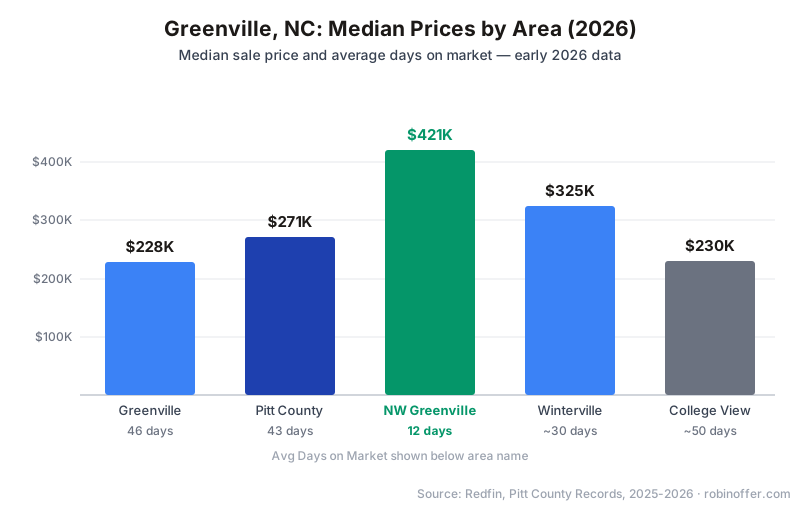
There's an important data nuance here. Redfin's December 2025 city-limits data shows a median sale price of $228,000, which is down 13.5% year-over-year. That sounds alarming until you look at the context: the city sold 82 homes in December 2025, compared to 90 the prior December. Lower volume in a slow month means fewer high-end transactions closing, which drags the median down. This is a mix-shift effect, not a market collapse. The broader Pitt County figure ($271,315, up 3.2%) tells a more representative story of what's actually happening to home values here.
| Greenville Market Metric | Current Reading (Dec 2025; inventory from March 2025) | Direction vs. Prior Year |
|---|---|---|
| Median sale price (Greenville city) | $228,000 | Down 13.5%, mix-shift effect, not value decline |
| Median sale price (Pitt County) | $271,315 | Up 3.2% year-over-year |
| Median listing price (all listings) | $269,000 (November 2025) | Stable |
| New construction median list price | $270,000 (38 active listings, 2025) | Competitive with resale |
| Average days on market (city) | 46 days | Essentially flat from 47 last year |
| Average days on market (Pitt County) | 43 days | Up significantly from 25 last year |
| Days to contract (competitive listings) | 22 days median | Fast for correctly priced homes |
| Active inventory (March 2025) | 680+ homes | Up 2.4% month-over-month |
| Estimated sale-to-list ratio | ~97–99% | Light negotiation on list price is typical |
The rising days-on-market figure for Pitt County, jumping from 25 to 43 days, is the most significant shift from 2022-era conditions. Greenville is no longer a market where anything sells in a week regardless of price or condition. Sellers who price their homes aggressively, based on what they've heard happened in 2021 or 2022, are now sitting on the market for 60-plus days before reducing. The 22-day-to-contract figure for competitive listings is real, but it only applies when the price is accurate.
| Location | Median Sale Price | Avg Days on Market | Market Character |
|---|---|---|---|
| Greenville city limits | $228,000 | 46 days | Balanced, mix of student-adjacent and owner-occupant |
| Pitt County overall | $271,315 | 43 days | Slightly more active than city average |
| North / Northwest Greenville | ~$421,000 | ~12 days | Seller's market, physician buyers, move-up families |
| Winterville (suburban) | $250,000–$400,000 | 25–35 days est. | Strong family demand, ECU Health employee buyers |
| College View / student-adjacent | $180,000–$280,000 | 40–60 days est. | Investor-heavy; price-sensitive |
Inventory is rising, which is normal for a market normalizing after pandemic-era extremes. 680 active listings gives buyers more choices than they had in 2022, which means well-positioned homes can still move fast while overpriced or condition-challenged homes accumulate days. For sellers, this is a market where preparation and pricing discipline matter significantly more than they did three years ago.
3. The Three Buyer Pools Driving Greenville Home Sales
Understanding who is actually buying in Greenville right now is the single most valuable thing you can do before setting a price or choosing a listing strategy. Most cities have one dominant buyer profile. Greenville has three, and they operate in parallel submarkets that barely overlap.
| Buyer Pool | Who They Are | Typical Budget | What They Prioritize |
|---|---|---|---|
| Medical professionals & ECU Health employees | Physicians, nurse practitioners, administrators, researchers relocating to or moving within Greenville. ECU Health is the 20th largest employer in NC. | $350,000–$600,000+ | North/northwest neighborhoods, quality construction, distance from student areas, good school zones, move-in ready |
| University faculty, staff & professional workforce | ECU faculty (tenure-track and tenured), university administrators, Thermo Fisher / Avient / Catalent professionals, government workers | $220,000–$380,000 | Cleveland Park and similar established neighborhoods, proximity to campus, walkability, character homes |
| Student-rental investors & family-landlords | Investors buying for ECU student rental income; parents buying for their ECU students; accidental landlords who originally bought as owner-occupants | $150,000–$280,000 | Proximity to campus (within walking distance or short bus/bike ride), condition is secondary to location, cash flow over appreciation |
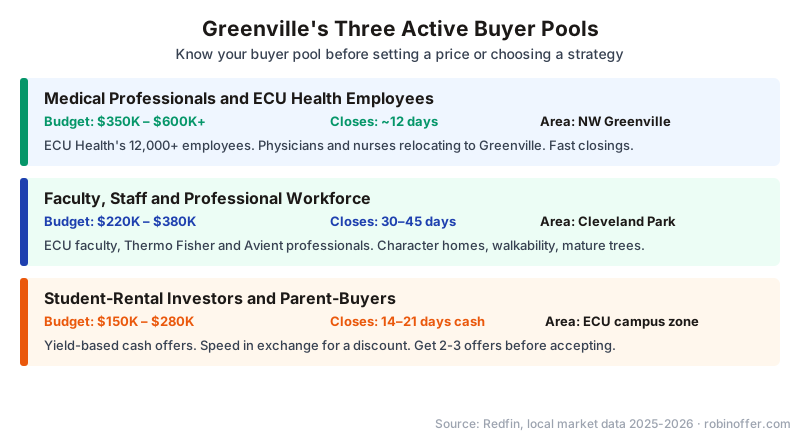
Medical professionals and ECU Health employees represent the highest-budget buyer pool and the fastest-moving segment. When a cardiologist or department chair relocates from a major health system, they're often working from a 60-to-90-day timeline, they have lender pre-approval in hand, and they know what they want. These buyers look almost exclusively in northwest and north Greenville, the neighborhoods closest to ECU Health's campus and furthest from student density. Median days on market in that corridor: around 12 as of October 2025 data. If your home is in that zone and priced correctly, you're probably not sitting for more than three weeks.
University faculty and professional workforce buyers are the most patient segment. A new faculty hire searching in Greenville typically has a few months before their start date, is familiar with the neighborhoods near ECU's main campus, and often gravitates toward established neighborhoods like Cleveland Park, Arden, or Eastwood Park. Their budgets are constrained by faculty salaries (typically $60,000 to $130,000 annually depending on rank and discipline), which puts them firmly in the $220,000 to $380,000 range. They're buying for lifestyle and commute, not investment yield. They want good bones, a mature neighborhood feel, and proximity to Evans Street or the Greenville Town Common without being surrounded by student-rental conversions.
Investor-buyers and student-housing operators dominate the sub-$280,000 price range in ECU-adjacent neighborhoods. This is the buyer pool that will show up fast if you list a College View bungalow or a student-adjacent ranch, offer cash, and close in 14 days. It feels like strong demand. It often is, but the offer will reflect a yield-based valuation that discounts what your home might fetch from a retail owner-occupant who's willing to wait 30 days and use financing. Don't mistake investor speed for investor generosity.
4. Boviet Solar, FusionWorks, and the $350M Transformation
Greenville, NC has been a college town for more than a century, and that's not changing. But something significant is being layered on top of the university-medical economy: serious advanced manufacturing and technology investment that's beginning to reshape what Greenville is and who wants to live there.
The single most important development for Greenville's long-term housing market is Boviet Solar's announcement that it will locate its first North American solar panel manufacturing facility in Greenville. The numbers are substantial: a $294 million investment and 908 new manufacturing jobs. These aren't warehouse or distribution jobs. They're advanced manufacturing positions in renewable energy, which typically pay meaningfully above the county's current household income median. When 908 households start forming or relocating to the Greenville area, they need housing. Not student housing. Not physician-level housing. Mid-market single-family and move-up inventory in the $200,000 to $350,000 range, exactly the segment where most existing Greenville homeowners are priced.
| Development Project | Announced Investment | Jobs / Scale | Expected Housing Market Impact |
|---|---|---|---|
| Boviet Solar Manufacturing Facility | $294 million | 908 new jobs | New household formation demand in $200K–$350K range; manufacturing wages support mid-market home purchases |
| The Prizery / FusionWorks AI Research Campus | $750,000 county contribution (public-private partnership) | Tech economy jobs; ECU AI hub anchor | Tech-sector buyer profile emerging; downtown/West Greenville loft and condo interest |
| Hilton Garden Inn Downtown (opened early 2025) | ~$30 million | 101 rooms, 1717 The Rooftop restaurant | Private confidence signal; supports medical tourism, ECU event demand; downtown values receive lift |
| Fifth Street BUILD Grant Corridor | $18.4 million federal | Infrastructure improvement | Improved connectivity between ECU, downtown, and ECU Health; West Greenville and Fifth Street corridor properties benefit |
| Riverfront Town Common Bulkhead & Esplanade | Public works project | 160-foot recreational dock | Downtown and Tar River-adjacent properties improve in lifestyle appeal |
The Prizery redevelopment, a 10th Street tobacco warehouse being converted into an AI research campus housing FusionWorks (ECU's industrial AI lab), Pitt County Economic Development, and the Greenville ENC Alliance, signals a different direction for Greenville's economy. AI and tech jobs attract a buyer demographic that's younger, more mobile, and looking for walkable urban amenity rather than suburban square footage. That's good news for owners in West Greenville and the downtown corridor, where the Woven mixed-use development (327 units, commercial space) is also planned nearby.
The Hilton Garden Inn opening in early 2025, with its rooftop restaurant overlooking the Tar River and ECU campus, is a confidence indicator more than a direct value driver. When a national hospitality brand opens a full-service property in a downtown, it means their investment committee believes in the trajectory. That's the kind of signal that supports the case for West Greenville revitalization being more than a city planning exercise.
For Greenville homeowners selling in 2026, the development pipeline is relevant in two specific ways: First, Boviet Solar's 908 jobs represent a demand catalyst for the mid-market that hasn't existed before. Second, the West Greenville and downtown revitalization means homes near the Fifth Street corridor that look "transitional" today are likely to look "established" in five to seven years. Whether that means you should wait is a carrying cost question we'll address in the rental section. But you should know the tailwinds are real.
5. How Far You Are from Evans Street Changes Your Price
Evans Street is Greenville's commercial spine, the road that runs through the heart of downtown, past the federal courthouse, toward ECU's main campus. Your distance from it, and which direction you're traveling, is one of the most reliable predictors of your home's price and buyer pool.
Homes immediately adjacent to ECU (College View, the streets surrounding Dowdy-Ficklen Stadium, the blocks running off East Fifth Street toward campus) attract investor-buyers looking for rental yield. These homes rent easily to ECU students and graduate students, and the buyer pool reflects that: cash investors, parent-buyers, small landlords. The prices are below the city median, and the buyer negotiations are yield-focused rather than comparable-focused.
Move two to three miles west of campus toward downtown and you're in a different micromarket. Cleveland Park homeowners sell to owner-occupants: ECU faculty, medical center professionals, long-time Greenville residents who want an established neighborhood feel with walkable proximity to the university community. These buyers are comparing against similar character homes, they're using conventional financing, and they're paying for neighborhood quality as much as square footage.
Move north and northwest of downtown, past the medical district, into the newer subdivisions along Highway 264 and beyond, and you're in physician country. The combination of ECU Health's 12,000-plus employees and the growth of Thermo Fisher, Avient, and Catalent in the area has created significant demand for executive-level housing that has no parallel elsewhere in Eastern NC. The most expensive Greenville neighborhoods have recorded median sale prices around $421,000 with a 12-day average time on market, figures that look more like a Charlotte suburb than a mid-sized Eastern NC city.
| Distance from ECU Campus | Key Neighborhoods | Typical Price Range | Dominant Buyer Type |
|---|---|---|---|
| Walking distance (under 1 mile) | College View, student-adjacent blocks near E. 5th St | $180,000–$280,000 | Investors, parent-buyers, student-rental landlords |
| Short drive / bike (1–3 miles) | Cleveland Park, Arden, Eastwood Park, downtown/Uptown lofts | $200,000–$350,000 | Faculty, university staff, young professionals, owner-occupants |
| Medical corridor and outer-ring | Northwest Greenville, newer subdivisions near medical district | $350,000–$600,000+ | Physicians, senior administrators, professional households |
| Suburban towns (6–12 miles) | Winterville, Ayden, Belvoir | $150,000–$400,000 | Families seeking schools, lower density; ECU Health commuters |
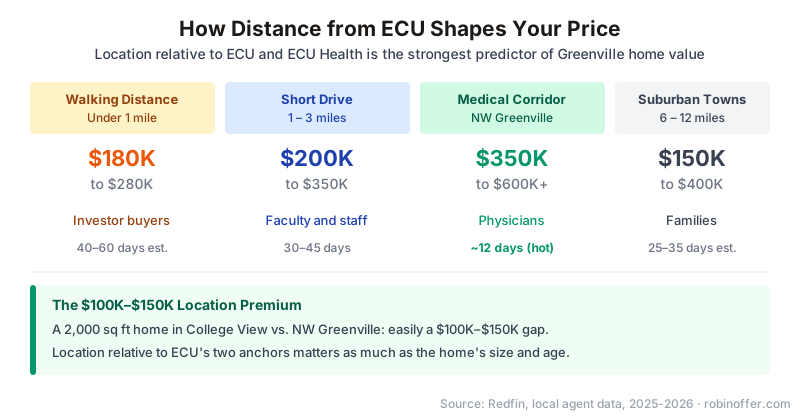
The campus proximity gradient also applies in the other direction from the medical center. ECU Health's main campus is at Stantonsburg Road and Moye Boulevard, which anchors the medical district on the west side of downtown. Neighborhoods that are convenient to the medical center without being in the student zone (the north and west residential corridors) command a significant premium over comparable homes on the south and east sides of the city.
One common mistake Greenville sellers make is assuming that their home's price is simply determined by square footage and age. In a typical Charlotte suburb, that's mostly true. In Greenville, your location relative to these two anchors, ECU and ECU Health, matters as much as the home itself. A 2,000-square-foot home in College View and the same 2,000 square feet in northwest Greenville could easily differ by $100,000 to $150,000 in market value. They're different products for different buyers.
See what your Greenville home is worth
Get a real, data-driven estimate based on your specific neighborhood and recent comps.
6. Greenville's Neighborhoods: A Seller's Breakdown
Greenville isn't one market. It's ten distinct submarkets operating simultaneously, some of which happen to share a zip code. Here's where each area stands heading into 2026 and what it means for sellers.
| Neighborhood / Area | Character | Price Range | Market Condition |
|---|---|---|---|
| Cleveland Park | Established mid-century. Brick ranch homes, mature trees, walkable to ECU. Faculty and longtime resident culture. | $250,000–$350,000 | Steady, strong owner-occupant demand, low turnover |
| West Greenville / West End | Revitalizing. Arts scene, independent coffee shops, renovated bungalows. Fifth Street corridor runs through it. | Low $200,000s to $280,000+ | Emerging, upside building; city investment validates trajectory |
| Uptown / Downtown Greenville | Urban core. New Hilton Garden Inn, Tar River waterfront, Town Common. Condos and loft-style units. | $180,000–$350,000 (condos/lofts) | Revitalizing, Hilton Garden Inn opening signals private investment confidence |
| Arden | Well-maintained suburban. Ranch and two-story homes. Family-oriented. | Mid $200,000s | Steady, medical center employee demand is consistent |
| Eastwood Park | East of downtown. Mix of older ranch and newer construction. Convenient to medical district. | $200,000–$280,000 | Steady, good value relative to location |
| College View | Adjacent to ECU campus. Mix of single-family and student rental conversions. | $180,000–$280,000 | Active investor interest, yield-driven pricing |
| Northwest Greenville (new subdivisions) | Physician-class buyers, executive-level newer construction. | $350,000–$600,000+ | Hot, 12-day median time on market; seller's market conditions |
| Winterville (6 miles south) | Family suburb. Newer subdivisions, good schools, quieter than city. Rated #1 Best Place in Pitt County by Niche. | $250,000–$400,000 | Strong, ECU Health employee demand; competitive with city for family buyers |
| Ayden (10 miles south) | Small-town character. Family-friendly, close-knit. #3 Best Place in Pitt County per Niche. | $150,000–$250,000 | Affordable, community-driven demand; slower but steady |
| Belvoir (~10 miles north) | Rural. Farmland and quiet residential. 20-minute commute to city. | $150,000–$230,000 | Niche, land-value appreciation as metro expands north |
Cleveland Park deserves its own paragraph. This is Greenville's most stable seller's territory for owner-occupants. The mid-century brick homes, the mature tree canopy, the walkable proximity to ECU's campus and Evans Street: these aren't features that go out of fashion. Faculty buyers, longtime Greenville residents moving up, and physicians who want established neighborhood character rather than a new subdivision all look here. If you're selling a well-maintained Cleveland Park home, you're in the strongest position of any mid-market Greenville seller.
Winterville warrants special attention because it's technically a separate municipality but effectively part of the Greenville market in every practical sense. ECU Health employees are the primary demand driver here. Winterville offers newer construction, larger lots, and a small-town feel within a 10-to-15-minute commute of both ECU Health and ECU's campus. Pitt County Schools serves Winterville, and the schools in that zone tend to be stronger than the city average. Family buyers with school-age children often choose Winterville over Greenville proper.
West Greenville and the Fifth Street corridor represent the guide's most interesting opportunity story. The $18.4 million federal BUILD grant improved Fifth Street connectivity between ECU, downtown, and the medical district. The Woven mixed-use development (327 apartments plus commercial) is planned in the corridor, and the Prizery AI campus on 10th Street is coming. Five years ago, West Greenville was a bet. Today it's a trend. If you're sitting on a bungalow in West Greenville and trying to decide whether to renovate and hold or sell now, that's a real question worth doing math on, and we'll address it in the rental section below.
7. Three Paths to Sell Your Greenville Home
Greenville homeowners have three realistic selling paths, each with meaningfully different trade-offs on net proceeds, timeline, and effort. Which one makes sense for your specific situation depends on your home's location, condition, your timeline, and how much of your energy you want to put into the process.
Path 1: List with a Local Agent
Listing with an experienced Greenville agent gets you on the MLS, which is where the physician-buyers, faculty-buyers, and owner-occupant families are searching. For homes in Cleveland Park, northwest Greenville, Winterville, or West Greenville, where the buyer pool is retail rather than investor, this is typically where you'll maximize net proceeds. A well-prepared listing in these neighborhoods, priced correctly, will compete with new construction for move-in-ready condition and often win on location and character.
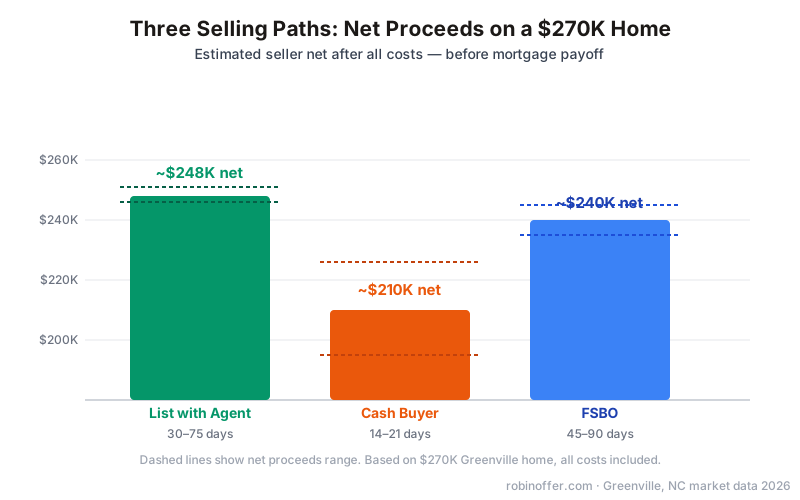
The agent commission in North Carolina currently runs 5 to 6 percent of the sale price, typically split between buyer's and seller's agents (though the NAR settlement rules mean buyer's agent compensation is increasingly negotiated separately). On a $270,000 Greenville home, that's $13,500 to $16,200 in commissions. Add closing costs (NC excise tax, attorney fees, prorated property taxes) and the total seller cost is typically 7 to 9 percent. Your net on a $270,000 sale after all costs but before mortgage payoff: roughly $246,000 to $251,000 before paying off any outstanding mortgage balance.
Timeline for a listed sale in Greenville: 30 to 75 days from listing to closing, with the longer timelines occurring for homes that need repositioning after an initial incorrect price.
Path 2: Cash Buyer
Greenville has active local cash buyers, including some who are specifically focused on Pitt County properties. Cash buyers offer speed and certainty in exchange for a price discount, typically offering 75 to 85 percent of estimated market value. On a $270,000 home, that's an offer in the $200,000 to $230,000 range. The trade-off: no agent commissions, no repairs, no contingencies, closing in 14 to 21 days.
For Greenville sellers in specific situations (facing probate timelines, dealing with a heavily distressed property, managing an inherited home from out of town, or simply needing to close fast), the cash route makes real sense. The investors buying in Greenville right now include Pitt Home Buyers (local, family-owned, based on East Arlington Boulevard), Turner Home Team / NC Cash Home Buyers (Greenville Chamber of Commerce member, also operates as a traditional real estate team), Cash House Closers (active in Greenville, purchasing 8 to 10 homes per month), Mike Buys Houses NC, and Carolina Home Cash Offer. Getting offers from two or three of these is straightforward and doesn't obligate you to anything. If you want to understand the math around cash offers in depth, our complete guide to cash offers in NC and SC walks through the calculations and red flags to watch for.
One Greenville-specific note: cash buyers who target ECU-adjacent properties are extremely active and will contact you quickly if you list as-is in College View or nearby neighborhoods. That's real demand, but their offers are investor-grade (yield-based), not retail-grade. Don't accept the first offer without getting at least two others for comparison.
Path 3: FSBO
Selling without an agent saves the seller's commission, typically 2.5 to 3 percent of the sale price, but costs you MLS exposure and negotiation expertise. On a $270,000 Greenville home, the commission savings is $6,750 to $8,100. The real question is whether the price you ultimately achieve offsets that savings. Studies consistently show FSBO homes sell for 5 to 10 percent less than agent-listed homes in comparable markets, which on a $270,000 home means potentially leaving $13,500 to $27,000 on the table, more than the commission savings. FSBO works best when you have a motivated buyer already identified, like a neighbor, family member, or known investor.
| Selling Path | Typical Offer Range | Seller-Paid Costs | Estimated Net (on $270K home) | Days to Close |
|---|---|---|---|---|
| List with Agent (full service) | Full market value (~$270,000) | 5–6% commission + ~1.5% closing costs = ~7–8% | ~$246,000–$251,000 | 30–75 days |
| Cash Buyer (local investor) | 75–85% of market value (~$200K–$230K) | Minimal, no commissions, limited closing costs | ~$195,000–$226,000 | 14–21 days |
| FSBO (no agent) | Typically 5–10% below agent-listed comps | ~2–3% closing costs (no seller commission) | ~$235,000–$245,000 | 45–90 days (longer without MLS) |
| List Agent + Accept Cash Offer at Close | Full market value; cash buyer has stronger offer | Full commission + closing costs | Same as agent listing, faster certainty | 21–30 days |
8. The Accidental Landlord's Decision: Hold vs. Sell in a College Town
Greenville has more accidental landlords per capita than almost any other city in Eastern NC. You buy a home in 2010, your career takes you to Raleigh or Charlotte, and instead of selling, you rent it to ECU students. Seven years later, you're still a landlord, the students have turned over fifteen times, and you're wondering whether to keep the income or cash out.
The hold-vs-sell calculus looks similar in Chapel Hill, where UNC enrollment and Research Triangle employers create comparable tension between student-rental income and equity capture, though Chapel Hill's higher price points and Orange County tax rates shift the math significantly. If you own property near UNC, our Chapel Hill homeowner selling options guide has Triangle-specific numbers.
This decision is more math than emotion, so let's do the math for Greenville specifically.
Average rents in Greenville in 2025 range from $958 per month (Zillow Rental Manager average) to $1,373 per month (RentCafe methodology), depending on how you count and what unit types you include. For a single-family home suitable for a small family of students or a young professional couple, the realistic expectation is somewhere in the $1,050 to $1,200 per month range. On an annual basis, that's $12,600 to $14,400 in gross rental income before expenses.
| Unit Type | Average Monthly Rent (2025) | ECU Student Demand? | Annual Gross at Full Occupancy |
|---|---|---|---|
| Studio | ~$599/month | Very high, grad students, single upperclassmen | ~$7,188 |
| 1-bedroom | ~$860/month | High, ECU students, young medical staff | ~$10,320 |
| 2-bedroom | ~$1,050/month | High, student pairs, ECU Health employees early in career | ~$12,600 |
| 3-bedroom single-family | ~$1,150–$1,300/month | Moderate, family renters, grad student households | ~$13,800–$15,600 |
| 4+ bedroom (student group) | ~$1,400–$1,800/month | Very high near campus, group rentals common | ~$16,800–$21,600 |
Now run the expense side. On a $250,000 Greenville home with a $180,000 remaining mortgage balance at 4.5 percent (refinanced a few years ago), your monthly mortgage payment is roughly $900. Property taxes in Greenville proper at the combined rate of $0.9617 per $100 assessed value add about $200 per month on a $250,000 assessed home. Insurance for a rental property in NC runs $150 to $250 per month. Maintenance reserves for a rental, especially a student rental, should be 10 to 15 percent of gross rent, so $115 to $180 per month. Add a property management fee if you're not local: typically 8 to 10 percent of gross rent, or $92 to $120 per month.
Total monthly expenses on a $250,000 student-rental Greenville home: roughly $1,457 to $1,650 per month. Gross rent: $1,050 to $1,300. If you're not local and using a property manager, you may be at or slightly below breakeven every month, while your home appreciates at a county-wide rate of about 3.2 percent per year (roughly $8,700 per year on a $271,000 home).
The hold-vs-sell math in Greenville ultimately comes down to equity position, tax basis, and whether you have the appetite for landlord duties. If you have substantial equity built up since 2010 or 2015, and you're not in this for an investment and you're in it by accident, selling now captures gains you may not need to wait for. If you're generating positive cash flow and the ECU student demand feels durable (it is, as long as ECU exists), holding has genuine merit. The Boviet Solar workforce adds a new non-student renter pool starting to form in the market.
Curious what your Greenville home would sell for?
Get a real, data-driven value estimate based on your specific neighborhood and recent comps.
9. NC Property Disclosure: What Pitt County Sellers Must Reveal
North Carolina is a "buyer beware" state with a significant caveat: sellers are required by statute to complete a Residential Property Disclosure Statement (RPDS) for most home sales. The RPDS is a standardized form covering approximately 44 items across structural components, systems, environmental hazards, and legal status. Failure to disclose known material defects, or providing intentionally false information, creates legal exposure even after closing.
The key categories you're required to address include: structural components (foundation, roof, walls, floors), mechanical systems (HVAC, plumbing, electrical), water and sewer (well condition, septic system if applicable, municipal connection), environmental issues (radon, lead paint in pre-1978 homes, underground storage tanks, asbestos, mold), flooding and drainage (whether the property is in a flood zone or has experienced flooding), homeowner association status (whether an HOA exists, what the dues are), boundary and zoning issues, and any pending or threatened litigation involving the property.
For Greenville homes specifically, a few items come up frequently. Age and condition of HVAC systems matters here because the humidity in Eastern NC is hard on HVAC equipment, and buyers expect disclosure on system age and recent service history. Older homes in Cleveland Park and the student-adjacent neighborhoods sometimes have dated electrical panels (60-amp or even Federal Pacific/Zinsco panels) that require disclosure and often trigger negotiation. Basement or crawl space moisture issues are common in the Pitt County soil conditions and must be disclosed if known.
Flood zones are a significant disclosure item specific to Greenville and Pitt County. The Tar River runs through Greenville, and portions of the city, particularly near the river, downtown, and some lower-lying neighborhoods, fall within FEMA-designated flood zones. If your property is in a Special Flood Hazard Area (Zone A or AE), you must disclose this on the RPDS, and the buyer will likely be required to carry flood insurance as a lender condition. Flood insurance through FEMA's National Flood Insurance Program runs $800 to $2,000+ annually depending on zone, elevation certificate, and coverage amounts. This is a meaningful carrying cost for buyers and affects what they're willing to offer. Buyers with lenders will run an FEMA flood zone determination as part of the loan process, and any undisclosed flood zone status will surface during underwriting. You can look up your property's flood zone at FEMA's Flood Map Service Center (msc.fema.gov). If you're in a flood zone and have an elevation certificate, find it. It can significantly lower what a buyer pays for insurance and affects offer calculations.
Selling "as-is" in North Carolina does not relieve you of disclosure obligations. As-is simply means you're not agreeing to make repairs, but you still have to disclose what you know about the property's condition. The buyer may choose to renegotiate or walk away after inspection, but your disclosure obligations are unchanged.
NC also requires disclosure of lead-based paint for homes built before 1978, which includes much of Cleveland Park and older Greenville neighborhoods. This is a federal requirement under CERCLA, and the disclosure form and timing requirements are specific. Your agent or closing attorney will walk you through this.
10. Your Greenville Closing Cost Breakdown
The combination of North Carolina's standard closing cost structure and Pitt County's property tax rate means Greenville sellers should budget approximately 7 to 9 percent of the sale price in total transaction costs. Here's what makes up that figure on a representative $250,000 Greenville sale.
North Carolina requires a licensed attorney to conduct the closing; this isn't optional or negotiable. Budget $700 to $1,200 for the closing attorney's fee. NC excise tax (deed stamps) is $1 per $500 of sale price, so on a $250,000 sale, that's $500 paid by the seller. Title search typically adds $150 to $300. A home warranty is optional (buyer often requests one during due diligence) at $400 to $600. Repair concessions are common in the current market, so budget 0 to 2 percent if your home has condition issues.
| Seller's Closing Cost | Estimated Amount (on a $250,000 Greenville sale) | Notes |
|---|---|---|
| Agent commission (if listed) | $12,500–$15,000 (5–6%) | Split buyer/seller agents; buyer agent comp now negotiated separately under NAR rules |
| NC excise tax (deed stamps) | $500 | $1 per $500 of sale price; paid by seller |
| Closing attorney fee | $700–$1,200 | Required in NC, no attorney, no closing |
| Title search | $150–$300 | Confirms clear title; standard in NC |
| Prorated property taxes | Varies based on closing date | Seller pays through closing date; Pitt County combined rate $0.9617 per $100 |
| Home warranty (optional) | $400–$600 | Buyers sometimes request during due diligence |
| Repair concessions | 0–$5,000 (0–2%) | Common in current balanced market after inspection |
The prorated property tax figure is worth a specific calculation for Greenville. If you're selling a home assessed at $250,000 in the city limits, your combined tax rate is $0.9617 per $100 assessed value, or $2,404 per year. At closing on June 30, you'd owe approximately $1,202 in prorated taxes (roughly six months of the annual bill). Pitt County and the City of Greenville operate on a fiscal year that differs from the calendar year, so your actual proration will be calculated by your closing attorney based on the specific closing date.
| Net Sheet Line | Estimated Amount ($250,000 sale) |
|---|---|
| Gross sale price | $250,000 |
| Less: agent commission (6%) | -$15,000 |
| Less: NC excise tax | -$500 |
| Less: closing attorney fee | -$900 |
| Less: title search | -$200 |
| Less: prorated property taxes (est. 6 months) | -$1,202 |
| Less: repair concessions (est.) | -$2,000 |
| Estimated net before mortgage payoff | ~$230,198 |
To get your actual number, subtract your outstanding mortgage balance and any liens from the net before mortgage payoff. Your closing attorney will prepare a precise settlement statement (the "CD" or Closing Disclosure) before the closing date. If you want a rough estimate now, run the math above with your specific figures. If Greenville's timing and tax proration have you uncertain, a local closing attorney can walk you through a preliminary net sheet at no charge.
11. Pitt County Property Taxes and Government Resources
Greenville homeowners pay property taxes to two entities, Pitt County and the City of Greenville, and the combined rate is higher than many NC cities of similar size. Understanding this is particularly important for sellers calculating carrying costs, net proceeds, and for buyers comparing Greenville against suburban alternatives.
| Tax District | Rate per $100 Assessed Value | Annual Tax on $228,000 Home | Annual Tax on $271,000 Home |
|---|---|---|---|
| Pitt County (FY 2024–2025) | $0.5663 | $1,291 | $1,535 |
| City of Greenville (FY 2025–2026) | $0.3954 | $902 | $1,072 |
| Combined (city residents) | $0.9617 | $2,193 | $2,607 |
| Winterville (county rate only if outside city limits) | $0.5663 + Winterville rate | Varies | Varies |
Note: Pitt County also collects for fire and EMS districts depending on your location within the county. City of Greenville residents pay all three layers. Residents in unincorporated Pitt County pay county plus applicable district rates only. Your specific tax bill depends on your property's assessed value (set at the last county revaluation) and your tax district location. Properties are assessed at 100% of market value in NC.
For sellers calculating carrying cost when deciding whether to wait or sell now: a $271,000 Greenville home costs approximately $217 per month in combined property taxes alone, before insurance, any mortgage interest, and maintenance. That's the real cost of waiting six months on a correctly-priced home that would otherwise sell: approximately $1,300 just in taxes. If you're also carrying a mortgage, the actual monthly holding cost is substantially higher, so factor this into any hold-vs-sell decision.
| Government Office | Contact Information | When Sellers Need This |
|---|---|---|
| Pitt County Tax Administration | 110 Evans Street, Greenville, NC 27858 | (252) 902-3400 | pittcountync.gov/465/Tax-Administration | Verify tax balance, tax payment history, request tax records for disclosure |
| Pitt County Register of Deeds | 100 E. 1st Street, Greenville, NC 27834 | (252) 902-1650 | M–F 8am–5pm | Deed records, lien searches, recording documents at closing |
| Pitt County Planning & Development | 1717 W 5th Street, Greenville, NC 27834 | (252) 902-3250 | Permits, zoning inquiries, code compliance for disclosure |
| City of Greenville City Clerk | P.O. Box 7207, Greenville, NC 27835 | greenvillenc.gov/184/City-Clerks-Office | City-specific records, business license, formal public records requests |
| Pitt County Courthouse (Clerk of Court) | nccourts.gov/locations/pitt-county | Probate filings, estate matters, court approval for certain transactions |
| Legal Aid of North Carolina (Greenville) | 301 South Evans Street, Suite 400 | (866) 219-5262 | legalaidnc.org | Free legal assistance for qualifying low-income homeowners |
NC law also requires real estate closings to be conducted by a licensed attorney, not a title company or paralegal. Budget $700 to $1,200 for closing attorney fees in Pitt County. Several established firms handle residential real estate closings in Greenville, including Horne and Horne Law (residential and commercial closings), The Jones Law Firm, P.A., Jones & Sasnett, P.A., Steven K. Bell Attorney at Law PC, Capital to Coast NC Law Group, and GNC Law Firm, PLLC. Your real estate agent can recommend a closing attorney; you are also free to choose your own.
12. If You Inherited a Greenville Home
Inheriting a home in Pitt County creates a specific set of tasks that have to be completed before you can sell, and the order matters. North Carolina probate runs through the Clerk of Superior Court, not a judge, which means most estates can move through the process without a courtroom appearance. But it does take time, and that time has costs.
If you inherited a home in Greenville and you're trying to figure out what your options are, the first question is whether the property passed through the will or through an arrangement that avoids probate (joint tenancy, a revocable living trust, or a life estate deed). If it passed outside probate, you may be able to proceed with a sale relatively quickly once title has been properly transferred. If it went through the estate, you need to work through the NC probate process first.
| Pitt County Probate Step | Typical Timeframe | Key Action Required |
|---|---|---|
| File application at Clerk of Superior Court | Day 1 | File within 90 days of death. Submit will (if any), death certificate, initial inventory application. |
| Appointment of executor/administrator | Within days of filing | Clerk issues Letters Testamentary or Letters of Administration, required to act on behalf of the estate. |
| Creditor notice and claims period | 90 days after publication | Publish notice to creditors in local paper. Creditors have 90 days to file claims against the estate. |
| Estate inventory filed | Within 90 days of qualification | List all estate assets including the Greenville real property. |
| Pay estate debts and taxes | During creditor period and after | Property taxes, any outstanding mortgage, funeral expenses, and legitimate creditor claims paid before distribution. |
| Sale of real property (if authorized) | During or after creditor period | Executor may sell if authorized by will or court. Proceeds distributed per will or NC intestate statute. |
| Estate closed | 6–24 months from filing | File final accounting; Clerk closes estate. |
Two things in Greenville-specific estate matters that come up frequently: First, ECU and ECU Health generate a steady stream of faculty and physician estates, households that arrived in Greenville for a career, bought in Cleveland Park or Arden, and now have an estate to administer from out of state. These are often the cleanest transactions, with clear title and willing heirs. Second, the student-rental neighborhoods have a higher concentration of heirs' property situations, family homes that transferred informally from generation to generation without a deed, creating tangled title. If you're in this situation, speak to an NC real estate attorney before attempting to sell. Legal Aid of North Carolina's Greenville office handles these issues for qualifying clients.
For a complete guide to the NC probate process and inherited property taxes, read our guide on selling an inherited property in North Carolina, which walks through step-by-step requirements including the stepped-up basis tax treatment that often reduces capital gains on inherited homes.
13. Financial Hardship: What to Do Before Things Get Worse
If you're behind on your Greenville mortgage, dealing with medical debt that's threatening your home, or facing another financial situation that's putting your property at risk, the most important thing is to act early. North Carolina uses a non-judicial foreclosure process, commonly called the power-of-sale method, which means your lender can foreclose without going to court. The process can move faster than homeowners expect, and options narrow significantly as time passes.
NC's process typically begins after 120 days of missed payments under federal servicing rules. From that point, your lender or servicer can file for a foreclosure hearing with the Clerk of Superior Court in Pitt County. The typical NC foreclosure timeline from first missed payment to courthouse sale runs six to twelve months, but the window for the best options (loan modification, repayment plan, or a managed sale) closes much earlier than that. Our guide to foreclosure options in North Carolina covers the full timeline and each option in detail.
For Greenville homeowners specifically, the primary free resources are:
- Greenville Housing Development Corporation (GHDC): HUD-approved housing counseling agency serving Pitt, Beaufort, Edgecombe, Greene, Lenoir, Nash, and Washington counties. (252) 329-4056 | ghanc.net. GHDC has been working with Greenville-area homeowners since 1982 and can help you understand your options before speaking with your servicer.
- NC State Home Foreclosure Prevention Project: Free counseling through NCHFA. Counselors can negotiate directly with servicers on your behalf and refer you to free legal services. Call 1-888-442-8188.
- Legal Aid of North Carolina, Greenville Office: Free legal assistance for qualifying homeowners at 301 South Evans Street, Suite 400. (866) 219-5262. Handles housing issues including foreclosure defense.
If you've fallen behind on property taxes (separate from your mortgage), the situation has a different clock. Pitt County can begin the delinquency process after one year of non-payment, and interest accumulates at 2 percent per month after January 6 of the delinquent year. Our guide on dealing with property tax delinquency in NC and SC explains the timeline and your options, including payment plans and tax lien implications for any planned sale.
Selling before foreclosure is often the best financial outcome for Greenville homeowners who have equity but can't maintain payments. If your home is worth $270,000 and you owe $190,000, selling, even to a cash buyer at a modest discount, gets you $60,000 to $70,000 that a completed foreclosure would eliminate entirely. A short sale or deed-in-lieu are options when the mortgage balance exceeds the home's value, but these require lender approval and have their own timeline requirements. The faster you engage with your options, the more of them remain available.
If you're worried about where things stand and want to see what your Greenville home might sell for in the current market, getting a free evaluation costs you nothing and gives you the information you need to make a real decision. See the last section of this guide for how to do that.
14. Your Greenville Selling Timeline: ECU Calendar Considerations
Greenville has a selling calendar that's slightly different from typical NC markets because ECU's academic year creates specific windows where the seller experience is much better, and specific windows where you should probably avoid listing if you can help it.
The spring market in Greenville generally runs February through May, with March and April being the strongest months for owner-occupant buyer activity. This aligns with national patterns, but in Greenville it's amplified by ECU faculty who are making housing decisions before the fall academic year and by ECU Health's recruiting cycle, which brings physician prospects to town in spring for campus visits. Listing in March or April puts you in front of the most motivated, highest-budget buyer pool of the year.
Avoid listing in mid-August. ECU's fall semester move-in creates massive traffic in and around the city, especially in neighborhoods near campus, and the buyer attention shifts to the student rental scramble. This is the best time to be a landlord in Greenville; it's not the best time to be a home seller. Similarly, late December is a slower month for the market generally (as the December 2025 data reflects), and Greenville's December slowdown is slightly more pronounced because ECU's winter break empties out a large portion of the city's buyer-support activity.
| Selling Stage | Estimated Duration | Key Tasks |
|---|---|---|
| Decision and preparation | 2–6 weeks | Get home evaluation, interview agents, make repairs or staging decisions, gather NC disclosure paperwork |
| Active listing (on MLS) | 22–46 days (depending on price/condition) | Showings, open houses, offer negotiations. Competitive listings go under contract in ~22 days; overpriced listings take 45+ days |
| NC due diligence period | Negotiated (typically 14–30 days) | Buyer conducts inspection; negotiates repair requests or credit. Seller evaluates response. |
| Financing contingency / appraisal | 2–3 weeks (overlaps due diligence) | Buyer's lender orders appraisal. Greenville appraisers are familiar with ECU-adjacent pricing nuances, appraisals rarely come in low on correctly-priced homes. |
| Closing preparation | 1 week before closing date | Title search, settlement statement review, confirm payoff amount, coordinate with closing attorney |
| Closing day | 1–2 hours | Sign documents at attorney's office. Funds typically wire same day or next morning. |
Total time from decision to closing in Greenville: 45 to 90 days for a well-prepared listing in the spring or fall market. Cash buyer transactions shorten this substantially: 14 to 21 days from offer acceptance to closing is standard for Greenville's active cash buyers.
One Greenville-specific wrinkle: NC's due diligence system means the buyer pays a non-refundable due diligence fee at contract execution (typically $1,000 to $5,000 in this price range, though it varies with the offer), which they forfeit if they walk away for any reason during the due diligence period. This is a stronger buyer commitment structure than most states, and it reduces the rate of deals falling apart during inspection. The earnest money deposit is separate and refundable if the buyer can't get financing after due diligence. Your agent will walk you through the mechanics when offers come in.
If you're thinking about the best time to sell relative to Boviet Solar's arrival and Greenville's development momentum: the conventional wisdom is to sell into a rising market, not after the peak. If the development pipeline plays out as expected, 2027 or 2028 might show higher Greenville prices than 2026. But there's no guarantee of timing, and every month of waiting carries holding costs. The decision to sell now versus wait is ultimately a math problem specific to your equity, your carrying costs, and your next-move plan. If you'd like help running those numbers, see below.
For homeowners thinking about whether spring is the right season to list, our guide to the best time to sell in the Carolinas covers the month-by-month data for NC specifically, including how ECU-area markets compare to the broader state patterns.
15. Get Your Free Greenville Home Evaluation
If you've read this far, you have a clearer picture of your Greenville home's position in the market than most sellers do before they list. You understand which buyer pool is most relevant to your neighborhood, what the market is actually doing right now (not what it did in 2022), and what selling costs will look like in Pitt County.
The next step is getting a specific number: what your home is worth in today's market, not a Zestimate averaged across all of Pitt County but a real valuation that accounts for your neighborhood, your home's condition, and the buyer pools actively searching in your price range right now.
We offer free home evaluations for Greenville homeowners. You tell us about your home (address, condition, any upgrades or issues) and we'll give you a realistic range based on current comps, active buyer demand, and what comparable homes have actually sold for in the last 90 days. There's no obligation and no sales pressure. If you decide not to sell, that's a valid outcome of the conversation. Our goal is to make sure you have the information you need to make the right decision for your situation.
You can also learn more about what a cash offer actually looks like in this market, including how to compare offers from local buyers like Pitt Home Buyers, Turner Home Team, and Cash House Closers, in our complete guide to cash offers in the Carolinas. And if you're dealing with a situation that has a time component (foreclosure risk, inherited property, or property tax delinquency), the sooner you have a number in hand, the more options you have.
If you're a Greenville homeowner who's read this guide and wants to talk through your specific situation with someone who knows this market, reach out. There's no wrong time to get informed, and it costs you nothing to find out where you stand.
Information in this guide reflects market conditions and data sources as of March 2026. Tax rates, market statistics, and government contact information may change. Verify current figures with Pitt County Tax Administration, your closing attorney, and your real estate agent before making financial decisions based on this content.Need a military-market comparison? See the Jacksonville NC homeowner selling options guide for a Camp Lejeune-influenced version of timing, pricing, and net strategy.
Selling in the Triangle instead? Our Apex homeowner selling guide covers the $584K median market, Veridea's impact on west-side values, and RTP-driven buyer demand, a very different dynamic from Greenville's medical-campus economy.
Want a cash offer on your Greenville home?
Tell us your address and timeline and we will get you a no-obligation cash offer.