
Clover: Selling Across a Small Town and a Rural County
A practical local guide for Clover homeowners comparing selling options, financeability, costs, and timeline tradeoffs.
1. Clover Is Two Markets Sharing One School District
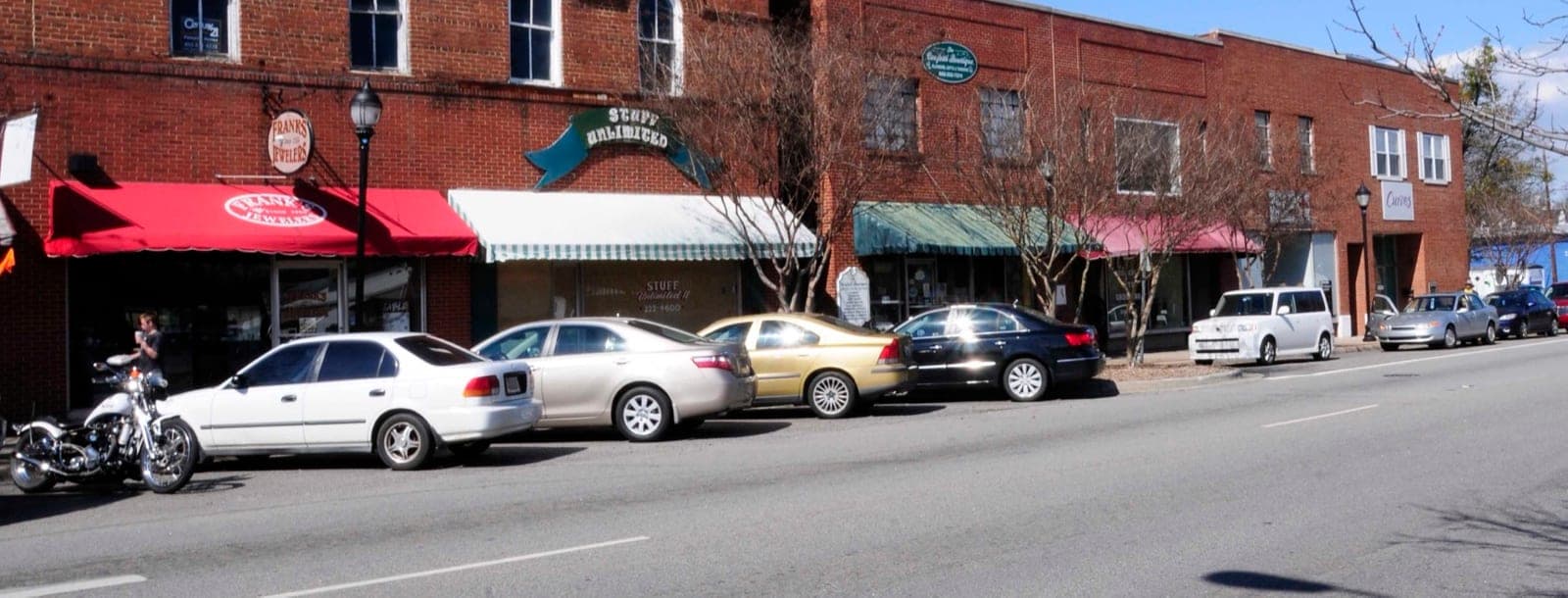
People say "the Clover market" as if it were one thing. It is not. Clover is a small town in York County, South Carolina, and the houses that carry a Clover address run from brick cottages a few blocks off the old downtown, to manufactured homes on a half acre, to farmhouses sitting on real acreage, to brand-new subdivisions filling in near the Lake Wylie shoreline. The Clover School District (York County School District 2) stretches across all of it, from the town itself out to the Lake Wylie area near the North Carolina line. If you are getting ready to sell a house in Clover, that spread is the first thing to understand, because it changes what your home is worth and how fast it moves.
Here is why it matters. A single "median price" for Clover blends a downtown cottage, a mobile home on a country lot, and a new build near the water into one number, and that number describes almost none of them well. Two houses can share the same ZIP code and the same schools and still sell to completely different buyers, on completely different timelines, for reasons that have nothing to do with square footage. Location, housing type, and whether a bank will even lend on the place matter more here than any headline figure.
This guide walks through all of it: the real market signals, the housing-type question that decides your sale before price ever enters the conversation, South Carolina closing mechanics, a plain comparison of your selling options, and honest net-proceeds math. It also covers the harder situations Clover homeowners actually face, including inherited land whose title was never sorted out, divorce timelines, payment stress, and houses that need more work than you want to fund. If one of those is you, our deeper guides on selling an inherited house in South Carolina, how probate works in South Carolina, and cash-offer structures in the Carolinas go further than we can here.
One ground rule before we start. Nothing in this guide is legal, tax, or financial advice for your specific house. South Carolina closings are attorney-supervised, York County keeps its own records and runs its own tax office, and your situation has details a web page cannot know. Use this to ask sharper questions and make a cleaner decision.
2. The Clover Market Snapshot: What the Numbers Actually Say
The short version: Clover is a small, slow market where presentation and timing carry real weight, and where a single strong month or a single odd sale can swing the averages. Demand is steady, helped by Lake Wylie access, the pull of the North Carolina line, and the commute up toward Charlotte, but this is not a market where a weak price gets rescued by a bidding war.
Over the trailing twelve months through May 2026, Redfin reports a median sale price around $320,000 in Clover, roughly 159 homes sold across that whole year, and a median of about 74 days on market. Read that middle number again: this is a market that turns over only about a dozen or so homes in a typical month. That thin volume is the single most important fact about selling here, because it means every comparable sale counts for more, and there are fewer of them to lean on.
| Signal | Recent reading (Redfin, trailing 12 mo. through May 2026) | What it means for you |
|---|---|---|
| Median sale price | Around $320,000 | An orientation point, not your valuation |
| Homes sold (trailing year) | Roughly 159, about a dozen a month | Thin volume, so each comp matters more |
| Median days on market | About 74 days | Plan on real time, and price right on day one |
| Housing spread | Downtown, manufactured, acreage, new build | Your micro-market, not the median, sets your price |
What does a 74-day median actually mean? It means half of the homes that sold took longer than that to go under contract, and that clock starts the day you list, after the cleanout, the paint, the repairs, and the photos, and it stops at the contract, not at closing. Your buyer still has a lender, an appraisal, and a closing date to clear after that. Add it up and a normal Clover sale runs several months from decision to keys. That is fine if you have the time. If a job, an estate, or a payment you can no longer make is setting your calendar, that timeline is not a plan.
Because volume is thin, treat every "median" you see online as context, not as a verdict on your house. If you are also weighing where to buy or sell next, the pace and pricing logic just up the road are genuinely different. Compare with our Lake Wylie selling guide, Rock Hill selling guide, and Fort Mill selling guide before you assume Clover behaves like its neighbors. It does not.
3. Housing Type Decides Your Sale Before Price Does
In most markets you start with price. In Clover you start with a more basic question: what kind of house do you have, and will an ordinary mortgage attach to it? The answer sorts Clover homes into a few groups, and the group you are in shapes everything that follows.
Site-built homes on town water and sewer, in good condition, behave the most like a normal market: a listing usually works, and it usually nets more than a quick sale. Homes on private well and septic add steps to a financed deal but are far from unsellable. Manufactured and mobile homes are their own category, with lender rules that are about paperwork and age, not condition. And homes on real acreage carry an appraisal problem, because there may be very few similar sales nearby to justify the price to a bank.
| Housing type | Typical buyer | Where the sale can stall |
|---|---|---|
| Site-built, town water and sewer | Financed owner-occupant | Condition items an appraiser flags |
| Site-built on well and septic | Financed buyer, extra diligence | Water test, septic report, appraiser notes |
| Manufactured or mobile home | Depends on age and title | Loan eligibility, not repairs |
| House on acreage | Cash or specialty financing | Appraisal with few comparable sales |
None of this means a hard-to-finance house cannot sell. It means the pool of buyers who can close on it is smaller, and the path is different. Knowing which group you are in, before you list, saves you from a deal that looks finished in week one and falls apart in week three when a lender says no. The next section explains exactly why a lender says no, because when it does, it is almost never about your price.
4. When a Lender Says No: The Financeability Question
A normal home sale is not really you and a buyer shaking hands. It is you, a buyer, and the buyer's bank, and the bank follows a rulebook it did not write for your house in particular. In Clover, more than in most towns nearby, that rulebook is what quietly kills deals. Here is where it bites, and every one of these is underwriting policy, not our opinion.
- A mobile home built before June 15, 1976. "Manufactured home" is the legal name for a mobile home. FHA will only insure a loan on one built on or after June 15, 1976, when federal construction and safety standards took effect. Homes built before that date are not eligible, and the major loan programs draw the same line. This is a category, not a condition. No repair and no price changes it.
- A manufactured home that is not legally real property yet. To finance a manufactured home the usual way, a lender needs it classified as real property, not titled like a vehicle, and set on a permanent foundation. If yours is still titled as a vehicle, an ordinary mortgage has nothing to attach to. A closing attorney can tell you where your title stands.
- A private well and a septic tank. Lenders finance well and septic homes every day, so do not panic. What it adds is a water test, a health-department report, separation-distance checks, and an appraiser who has to flag a failing septic system. That is more places a financed deal can slow down, not a reason your house is worth less.
- Land and acreage with little to compare it to. An appraiser justifies the price with recent sales of similar properties. Around Clover, similar acreage sales can be scarce, so an appraisal can come in low or not support the loan at all.
- Repairs a lender will not let slide. A roof at the end of its life, a foundation issue, or a major system problem becomes a repair bill the lender requires done before closing, usually on your dime, on a house you are trying to leave.
If your house sits in one of those groups, the choice may not be between two prices. It may be between a sale and no sale. That is the one place a direct cash sale stops being simply the faster option and becomes the realistic one, because a cash buyer is not getting a mortgage, so none of those lender conditions apply. The tradeoff is honest: a direct sale usually carries a lower headline price than a clean listing could fetch, in exchange for a sale that actually closes, as-is, on a date you choose.
See what your Clover home is worth
Get a real, data-driven estimate for your address using recent local sales before you decide your path.
5. Location Positioning: Downtown, the Lake Wylie Side, and the Country
Clover's spread is geographic as much as it is architectural. Roughly speaking, you are selling in one of three settings, and buyers read each one differently. Downtown and the older neighborhoods around it offer walkable, small-town character and the Clover Downtown Historic District nearby. The Lake Wylie side, out toward the water and the North Carolina line, draws buyers who want lake access, newer construction, and the commute north. And the country in between, along the US-321 corridor and the rural roads off it, is acreage, privacy, and a slower, land-driven market.
Each setting has a different buyer and a different pricing logic. Do not borrow one setting's psychology for another. A downtown cottage competes on charm, walkability, and condition confidence. A Lake Wylie-area home competes on newness, access, and proximity to the water and the state line. A rural parcel competes on land, privacy, and the reality that its buyer pool is smaller and often needs cash or specialty financing.
| Setting | What the buyer is really paying for | Common pricing mistake |
|---|---|---|
| Downtown and older neighborhoods | Character, walkability, condition | Underselling charm or overpricing dated systems |
| Lake Wylie side and newer builds | Access, newness, commute to NC | Assuming every home gets a lake premium |
| Rural and acreage along US-321 | Land, privacy, and space | Pricing land like a subdivision lot |
The honest version: there is no weak setting, only mismatched expectations. A rural home priced like a downtown cottage sits. A downtown cottage priced like a lake-access new build sits. Price to your buyer pool, describe the lifestyle honestly, and let the right buyer find their yes quickly.
6. Schools, the NC Line, and Who Your Buyer Is
Many Clover buyers are not just buying a house. They are buying a location decision that includes schools, the commute, and which side of the state line they want to live on. The Clover School District (York County School District 2) is a recurring draw, and because it spans both the town and the Lake Wylie area, it ties together housing markets that otherwise have little in common.
The North Carolina line is the other quiet force here. Clover sits close to the border, and plenty of buyers weigh living in South Carolina, with its owner-occupied assessment framework and its own tax structure, against working or shopping across the line in North Carolina. The US-321 corridor and the roads toward Lake Wylie make the cross-border commute practical, which keeps demand steadier than the town's small size alone would suggest.
For sellers, the takeaway is to market the whole location decision, not just the finishes. Buyers running the numbers on a move here are comparing total cost of ownership, school logistics, and commute time, often against options in North Carolina. If your listing answers those questions clearly, you widen your buyer pool. If it only talks about the kitchen, you narrow it.
7. Three Ways to Sell in Clover, and Who Each One Fits
You have three practical paths to sell a house in Clover: a traditional listing, a direct cash sale, or a hybrid strategy that tests the market with a hard fallback. None is automatically better. The right one depends on your house's financeability, your timeline, and how much uncertainty you can absorb.
Option A: Traditional listing
Best fit: financeable, site-built homes in good condition, especially on town water and sewer, where you can wait out a normal timeline.
A listing gives you the widest exposure and usually the highest gross price when the house is easy to finance and shows well. The tradeoffs are prep cost, showings, an open-ended timeline in a slow market, and the risk that a buyer's financing falls through. In Clover's thin market a clean, financeable house has little competition, which is exactly why listing tends to net more when the house qualifies for it.
Option B: Direct cash sale
Best fit: hard-to-finance homes, sellers on a firm deadline, and anyone who wants to skip prep and showings.
A direct sale removes the buyer's lender from the equation, which is what makes it the realistic path for a pre-1976 mobile home, an un-titled manufactured home, a failing septic, a house needing major work, or acreage an appraiser cannot support. It is also the certain path when a date is forcing your hand. The tradeoff is a lower headline price than a best-case listing might reach. Weigh it on net and certainty, not gross alone. Our Carolinas cash-offer guide covers how to vet an offer.
Option C: Hybrid strategy
Best fit: sellers who want listing upside but refuse an open-ended timeline.
The hybrid sets rules before you list: an aggressive first two-week plan, then predefined adjustments, then a direct-sale fallback if you miss your targets by a set date. It protects you from both overpricing and panic cuts.
| Path | Typical timeline | Prep burden | Price potential | Certainty |
|---|---|---|---|---|
| Traditional listing | Several months, market permitting | Medium to high | Highest when the house is financeable | Moderate |
| Direct cash sale | Often a few weeks | Low | Lower headline, higher certainty | High |
| Hybrid | Structured, with a fallback date | Medium | Balanced | Moderate to high if disciplined |
Whatever you choose, write the plan down before you list. Verbal plans dissolve under stress. Written plans, with real dates and thresholds, are how you make a good decision while calm instead of a rushed one at day 60.
Get a cash offer on your Clover house
Weighed the paths and worried a lender will balk at a mobile home, a well and septic, or acreage with no comps? A no-obligation cash offer closes with no financing to fall through, any condition, and you pick the date.
8. Net Proceeds Math: The Only Number That Should Decide
Sale price is visible and emotional, but it is not what you keep. Net proceeds are what land in your account after commissions, concessions, prep, closing and attorney costs, carrying costs during the listing window, and your mortgage payoff. Compare paths on gross price and you can pick the worse option while feeling smart about it.
Build three scenarios: an optimistic listing, a realistic listing, and a certainty-first direct sale. Then subtract the real costs of each and add the cost of waiting. In a slow market like Clover, that last piece matters, because every extra month of carrying cost quietly eats the advantage a higher price was supposed to give you. We are not going to invent price numbers for your specific house here, because we do not know it. Use your own figures. The framework below is what to plug them into.
| Monthly carrying cost component | Your amount | Note |
|---|---|---|
| Principal and interest | ____ | From your loan statement |
| Property tax equivalent | ____ | Annual tax divided by 12 |
| Insurance | ____ | Homeowner, plus any extra coverage |
| Utilities and upkeep | ____ | Conservative monthly average |
| Total monthly carrying cost | ____ | Multiply by expected months to close |
Then set the two paths side by side: listing gross minus commission, prep, concessions, and the carrying cost of a longer timeline, against a direct-sale figure minus far less friction. Sometimes the listing still wins, especially for a clean, financeable house. Sometimes the direct sale nets more once the waiting is priced honestly. The point is to run it while calm, not to guess.
9. Prep That Pays in a Small-Town, Rural Market
Not all prep earns its cost back. In Clover, the prep that pays reduces a buyer's uncertainty and shortens the inspection fight. The prep that usually does not pay is expensive personalization that buyers here may not value. The goal is not a perfect house. It is fewer reasons for a cautious buyer to hesitate in a market where cautious buyers are the norm.
| Prep category | Why it matters here | Priority |
|---|---|---|
| Roof and system service records | Confidence on big-ticket items in older stock | High |
| Well and septic documentation | Preempts a financed buyer's biggest worry | High if applicable |
| Paint, lighting, and curb cleanup | Fast visual impact for photos and drive-bys | High |
| Clearing and decluttering acreage or outbuildings | Helps buyers picture the land's use | Medium |
| Major cosmetic remodels | Often over-invested before a sale | Low |
For a rural property, spend your energy making the land legible: clear sight lines, tidy the outbuildings, and gather any survey, well, and septic paperwork you have. For a downtown home, lean into character while quietly documenting that the systems are sound. Either way, resist the endless pre-list project. A disciplined, timely launch with clean fundamentals almost always beats a six-month renovation that burns time you may not have.
See what your Clover home is worth
Get a real value estimate for your address before you weigh prep against a quicker sale.
10. South Carolina Transaction Mechanics: Attorney Closings, Records, and Timeline
South Carolina closings are attorney-supervised. A real estate attorney handles title and the payoff, and that step, not financing, sets the floor on how fast any sale here can close. York County keeps its own deed records and runs its own tax office, and understanding the sequence helps you avoid the delays that come from missing paperwork.
A few South Carolina specifics that affect a Clover seller:
- The deed recording fee is $1.85 per $500 of the sale price made up of $1.30 to the state and $0.55 to the county, and sellers typically cover it. Your closing attorney gives you the exact figure for your sale.
- The assessment ratio jumps from 4% to 6% when a home is not your legal residence. An inherited house sitting empty while an estate drags on, or a rental, is assessed at the higher ratio, which quietly raises the annual tax bill the longer the house waits. See what happens when SC property taxes go unpaid.
- Foreclosure in South Carolina is judicial. A lender cannot sell your house on its own authority. It has to file a lawsuit in state court, and in York County the case runs through the Master in Equity at the courthouse in the county seat of York. Our South Carolina foreclosure guide walks the process step by step.
| Stage | What happens | Your focus |
|---|---|---|
| Pre-list | Disclosures, prep, pricing, documents | Accuracy and readiness |
| On market | Showings and feedback | Fast response, adjustment discipline |
| Under contract | Due diligence, inspection, appraisal | Protect your net on repair requests |
| Attorney and title | Title work, payoff, compliance | Return requested documents quickly |
| Recording and funding | Deed recorded, funds disbursed | Final walkthrough and handoff |
Delay usually comes from three places: missing documentation, unrealistic repair positioning, and slow communication. You control all three. If your house has complicating elements, such as an unclear title, an un-permitted addition, or a manufactured home not yet titled as real property, get those reviewed early by a qualified professional. Early clarity is far cheaper than a late surprise.
11. Tough Situations: Inheritance, Divorce, Delinquency, and Deferred Maintenance
Not every Clover sale starts from a calm plan. Many start because life set the timing: a death in the family, a separation, income disruption, or a repair bill larger than the budget. These call for a different approach: fewer assumptions, faster documentation, and a higher value placed on certainty.
Inherited land and heirs' property
Clover has plenty of family land, and family land that passed down without a will can end up owned by many relatives at once, some hard to reach. South Carolina has a law built for exactly this, the Clementa C. Pinckney Uniform Partition of Heirs' Property Act, effective January 1, 2017, which gives co-owners a chance to buy out a share at a court-ordered appraised value and directs the court to prefer dividing the property over selling it. What it means for your family is a lawyer's question. The practical point for selling: no one can close until the title is clear, and clearing it is a probate attorney's job, not a buyer's. Start with how probate works in South Carolina and selling an inherited house in SC.
Divorce, delinquency, and deferred maintenance
| Situation | Typical constraint | First practical move |
|---|---|---|
| Divorce-related sale | Decision conflict and a timeline | Agree on process rules before debating price |
| Behind on payments or taxes | Time loss raises the risk | Contact counseling or legal resources early |
| Major deferred maintenance | Inspection renegotiation exposure | Price for condition or get direct-sale bids early |
For payment or foreclosure stress, engage help early rather than at the deadline. South Carolina homeowners can reach HUD-approved counseling through 888-995-HOPE, and South Carolina Legal Services maintains intake paths for eligible households, including an office serving the York County area. If foreclosure is part of your reality, remember it runs on a court's calendar, not the market's, so a slow local listing is a risky thing to bet against a sale date. Our guide to being behind on property taxes in the Carolinas and our selling-during-divorce guide go deeper.
12. A 90-Day Selling Blueprint for Clover Homeowners
If you want structure, here is a working model. Compress or stretch it as your situation demands, but keep the sequence.
Days 1 to 14: strategy and documentation
- Confirm your housing type and financeability, and whether a lender will lend on your house.
- Gather property records, well and septic paperwork, survey, and any major repair history.
- Run three-path net scenarios: optimistic listing, realistic listing, and direct sale.
- Set your non-negotiables: target close date, minimum acceptable net, and fallback trigger.
Days 15 to 35: prep and launch
- Complete the high-return prep only, and stop.
- Photograph the house for its true buyer pool, including the land if it matters.
- Write listing copy around location, housing type, and cost of ownership, not just finishes.
Days 36 to 60: market test with checkpoints
- Track showing volume and feedback quality, not just raw counts.
- Check whether your price is drawing the buyer pool you expected.
- If you miss your threshold, execute the adjustment you planned in advance, not a panic cut.
Days 61 to 90: contract and close
- Negotiate on certainty of net, not on ego about list-to-sale ratio.
- Return attorney and title requests the same day when you can.
- Plan move-out logistics early to keep the closing on schedule.
This framework works for confident and anxious sellers alike, because it replaces vague hope with checkpoints, and it makes the conversation with a spouse, an heir, or an advisor easier when everyone can see the plan and the fallback.
13. Local Resource Stack and Your Final Decision Framework
Before you choose a path, put your resources in one place so you are not scrambling later.
| Resource | Where to start | Use case |
|---|---|---|
| Town and permits | Town of Clover offices | Permits, local process questions |
| Schools | Clover School District (York County District 2) | Buyer school questions and district orientation |
| Property tax mechanics | York County Assessor and Auditor | Owner-occupied status, assessment ratio |
| Counseling support | HUD-approved counseling via 888-995-HOPE | Early help for payment stress |
| Legal aid | South Carolina Legal Services | Housing and legal guidance if eligible |
| Market comparison | Neighboring RobinOffer city guides | Calibrating pace and pricing nearby |
Now the framework. Answer these five in order, honestly:
- Will a normal lender lend on my house? This is the first fork in Clover, not the last.
- What net do I need, not want? Put a real number on paper.
- How much timeline uncertainty can I absorb? Be honest about carrying cost and stress.
- What condition risks could blow up a financed deal? Name them before a buyer does.
- Who needs to agree? Spouse, co-owner, heirs, or advisors.
If your house is financeable, shows well, sits on town water and sewer, and nothing is forcing your date, the honest answer is usually to list it, and you will likely net more than a quick sale would pay. If your house is hard to finance, or a date is set, a direct sale may be the realistic path, and RobinOffer buys as-is, on the day you pick, as the buyer rather than an agent. Either way, the decision should come from your own numbers, run while calm, not from the loudest anecdote in a neighborhood group.
Offer-Quality Filters That Prevent Expensive Mistakes
In a slow market, the best offer is not always the highest number on the page. A financed offer at a higher price can still net you less if repair credits, a shaky appraisal, or delay risk are likely, and in Clover, where financing itself is often the weak link, that risk is real. Score offers with a simple weighted scorecard instead of just chasing the top-line figure.
| Offer variable | Why it matters in Clover | How to weigh it |
|---|---|---|
| Purchase price | Sets gross proceeds | Important, but never in isolation |
| Financing type and lender strength | Predicts whether the deal closes | Cash or strong pre-approval scores higher, especially on hard-to-finance homes |
| Contingencies | Each one is a way the deal can reopen | Fewer and clearer contingencies score better |
| Inspection posture | Predicts repair-credit exposure | Realistic language beats an aggressive reopener |
| Close timeline | Drives your carrying cost | A shorter, reliable close often improves your net |
| Earnest money | Signals commitment | Stronger earnest terms usually reduce fallout risk |
On a Clover home that a lender may struggle with, a slightly lower cash offer that actually closes can beat a higher financed one that dies at the appraisal. Run every offer through the same filter so you are comparing certainty-adjusted outcomes, not just prices.
Negotiation Patterns in a Thin, Land-Driven Market
Because Clover buyers often compare your house against very different options, from a new subdivision near Lake Wylie to a fixer in town to acreage down a county road, negotiations here tend to hinge on comparisons you cannot fully control. You may hear "the same money buys new construction over there," or "that one already has town water." Do not fight those emotionally. Use them to clarify what your property actually offers, and where it genuinely wins.
Concessions have also become more tactical than blunt price cuts. On a financeable Clover home, a targeted closing-cost credit can help a payment-sensitive buyer without gutting your net, and it can keep an appraisal intact better than a straight reduction would. On a hard-to-finance home, the more useful lever is often certainty: a buyer who can close without a lender is worth real money even at a lower number, because the alternative may be no sale at all.
One pattern specific to rural and manufactured-home sellers: serious buyers ask sophisticated questions early, about the title, the well, the septic, the foundation, or the year built. Sellers sometimes read that as a difficult buyer. It is usually the opposite. Those are the buyers trying to de-risk the deal up front so it does not blow up later. Answer quickly and completely and you often keep your strongest buyer.
Case Studies: Four Common Clover Seller Profiles
Profile A: The financeable in-town home with a 60-day target. This seller owns a site-built house on town water and sewer, in solid condition, and needs to be moved within two months. The strongest plan is usually a hybrid: aggressive first-window pricing, a short list of high-return prep items, and a preapproved direct-sale fallback if no acceptable contract lands by a set date. Their win condition is predictable timing at an acceptable net, not squeezing out the last dollar.
Profile B: The pre-1976 mobile home. This seller assumes a listing works like it would for any house. In practice, most buyers cannot get a mortgage on a mobile home built before June 15, 1976, so the traditional path may barely exist. Here the realistic choice is often a cash sale, and the honest framing is a sale versus no sale, not two competing prices.
Profile C: The inherited farmhouse on acreage with several heirs. These sellers usually underestimate the friction: the title may be split among relatives, decision-making stalls, and acreage is hard to appraise. The right first step is governance and title, not marketing. Confirm who has authority to sell and get the title cleared with a probate attorney before listing, then choose a path. Until the title is clean, no buyer, cash or financed, can close.
Profile D: The payment-stressed homeowner. This household faces rising monthly pressure and a limited repair budget. The common error is waiting for a perfect month while carrying costs compound. Certainty usually matters more than peak price here. Early contact with counseling or legal resources, plus a parallel look at a direct sale, preserves options that vanish once the timeline gets too tight.
Common Myths That Cost Clover Sellers Money
Myth 1: "My neighbor sold high, so my number is obvious." In a thin market, one neighbor's sale is a tiny sample, and their lot, condition, timing, and concessions may look nothing like yours. Use it as one data point, not a verdict.
Myth 2: "If we start high, we can always come down." Overpricing burns your highest-attention window, and in a slow market later reductions may recover traffic but not trust. Buyers and agents notice stale days and start assuming a hidden problem.
Myth 3: "A cash offer automatically means a bad deal." Not automatically. Some direct offers are weak; some are competitive once you price the friction of a financed sale honestly. Screen for proof of funds, track record, and close reliability rather than dismissing the category.
Myth 4: "Well and septic makes my house unsellable." Untrue. Lenders finance well and septic homes routinely. It adds steps, not a wall.
Myth 5: "I should renovate everything before listing." Full renovation is often unnecessary and sometimes value-destructive. High-confidence maintenance and clean presentation usually outperform expensive personalization, especially in a market this price-sensitive.
If Your Home Does Not Sell Quickly: A Recovery Protocol
Step 1: Diagnose objectively. Was the problem traffic, conversion, or contract quality? Use showing logs and feedback themes rather than guessing.
Step 2: Rebuild the first impression. Refresh the photo order, sharpen the headline, and lead with your strongest verified value points, whether that is the land, the location, or the condition.
Step 3: Change one major variable at a time. Usually price or risk posture. Changing five things at once makes learning impossible and can read as desperation.
Step 4: Set a decision deadline. If the revised strategy misses your target by a defined date, execute your fallback. This prevents endless drift and protects your net from ongoing carrying costs.
Closing-Week Checklist for Clover Sellers
- Confirm final utility transition timing and account details.
- Gather all keys, remotes, gate or shop keys, and any well or septic access information.
- Make sure agreed repairs or credits are documented and complete.
- Verify move-out condition matches the contract.
- Coordinate the final walkthrough window with minimal schedule friction.
- Keep attorney and title requests prioritized for same-day response when you can.
Most closing-week stress comes from preventable logistics, not legal complexity. A short checklist and one shared communication thread with everyone who has to sign solves most of it.
Frequently asked questions
How long does it usually take to sell a house in Clover?
Plan on real time. Redfin's trailing-twelve-month reading through May 2026 shows a median around 74 days on market before a home goes under contract, and that is before prep and before closing. Thin volume means pricing accuracy on day one matters more here than in a busy market.
My house is a mobile or manufactured home. Can a buyer get a loan on it?
Often that depends on age and title, not condition. FHA cannot insure a loan on a manufactured home built before June 15, 1976, and the major programs also require it to be classified as real property on a permanent foundation. If your home falls on the wrong side of those rules, most buyers cannot get a mortgage on it, which is exactly the situation where a cash sale becomes the realistic path.
It is on well and septic. Does that stop a sale?
No. Lenders finance well and septic homes routinely. It adds a water test, a health-department report, separation-distance checks, and an appraiser who has to note a failing septic. That is more steps, not a reason the house is worth less.
Should I just list it?
If your house is financeable, on town water and sewer, shows well, and nothing is forcing your date, then yes, list it. In a small market a clean, financeable home has little competition, and a listing will very likely net more than a quick sale. If the house itself is hard to finance, that path may not be open, and a direct sale may be the realistic one.
What does it cost to sell a house in South Carolina?
With a direct sale to us there is no commission, no fee, and no repair spend. What you do pay is the deed recording fee of $1.85 per $500 of the price ($1.30 state, $0.55 county), which sellers usually cover, plus the closing attorney's fee. We put every line in front of you so you can compare a cash sale honestly against what a listing would net.
Want a cash offer on your Clover home?
Tell us your address and preferred close window and we will get you a no-obligation cash offer.