
Lowell, NC: Sell the Commute Advantage, Not Just the House
A practical Lowell homeowner guide for pricing against nearby city alternatives, reducing closing risk, and choosing the right selling method for your timeline.
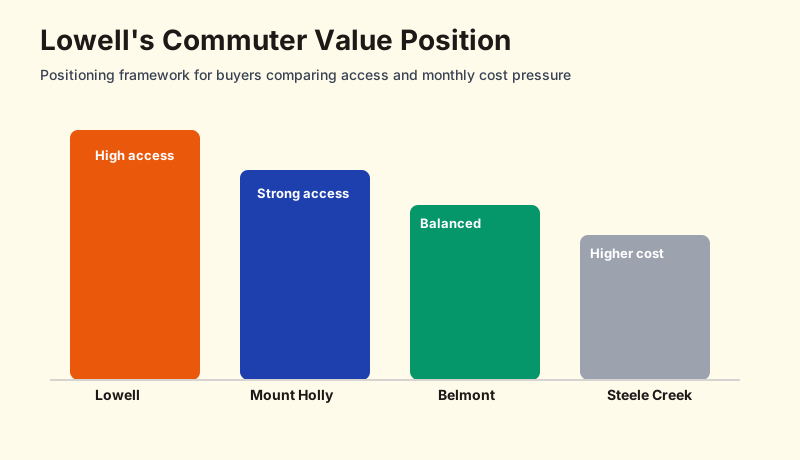
Lowell NC home selling options are strongest when you treat commute access as your lead feature, not a footnote. This guide shows how to price, position, and choose your path with real Lowell-specific tradeoffs.
If you own a home in Lowell, you already know the odd thing about this city: people who have never visited can still be interested the minute they hear where it sits on the map. You are in Gaston County, but functionally you are in the Charlotte commuting conversation. You are close to Gastonia jobs, close to Belmont and Mount Holly amenities, and close enough to Charlotte Douglas International Airport that relocation buyers often put Lowell on a short list before they even understand the local street grid.
That creates a specific seller opportunity and a specific seller risk. The opportunity is obvious: your home can look like value compared with neighborhoods east of the Catawba and many Charlotte submarkets. The risk is subtler: if your listing reads like “small town near bigger places” without clear numbers and practical convenience proof, buyers mentally discount Lowell and focus on name recognition markets instead.
This guide is built to prevent that discount. We are not doing generic “sell your house fast” advice. We are doing Lowell math: what buyers pay attention to, what causes hesitation, which pre-listing updates create return in this city, where closing costs surprise sellers, and how to compare Lowell NC home selling options without fooling yourself.
We also address something that matters in compact cities: micro-location. In Lowell, a few turns can change perceived commute friction, noise, flood concern, school preference, and buyer profile. If you treat all of Lowell as one pricing bucket, you will likely overprice some pockets and undersell others.
Use this as a homeowner decision framework. Read the sections that match your situation. If you are timeline-pressured, jump to the options comparison, distress timelines, and net-sheet sections. If you have flexibility, focus on pricing strategy, prep scope, and negotiation sequencing. Either way, the goal is the same: sell with clarity, keep more of your equity, and avoid the expensive mistakes that happen when people confuse speed with certainty.
1. Lowell NC Home Selling Options: The Commute-Value Thesis
Lowell NC home selling options work best when your strategy leads with commute convenience and payment value. Buyers pay attention when Lowell is positioned as practical access, not just a cheaper substitute.
Most homeowners instinctively market upgrades first: renovated kitchen, fenced yard, fresh paint, or a bonus room. Those details matter, but in Lowell they are secondary to commute reliability and monthly payment math. Buyers comparing multiple counties are doing two calculations before they care about backsplash tile: “How far is this from work, airport, and family?” and “What do I get here for this payment compared with Charlotte proper?”
When your listing strategy leads with these questions, you attract better-fit buyers and shorten the awkward period where traffic looks good but offers do not materialize. That awkward period is common in Lowell when the marketing package sounds like a generic suburban listing. The strongest outcomes come from framing Lowell as a practical access node with a lower entry cost, then proving the claim with route reality, neighborhood texture, and ownership-cost transparency.
Lowell's own civic story helps this positioning. The city traces its settlement history to mill development on the South Fork Catawba corridor and later rail connectivity. In plain English, Lowell has always been a place defined by movement and access. For modern buyers, the access layer now means I-85 convenience, airport proximity, and optionality between Gaston County and Mecklenburg job centers.
If you are choosing between a traditional listing and a direct cash offer, this thesis still matters. Even investors and cash buyers underwrite resale velocity and rental demand based on the same location logic. The better you understand your home's commute narrative, the better you negotiate regardless of method.
2. Market Snapshot: What Lowell Buyers Are Actually Responding To
Lowell's market is small enough that monthly stats can swing hard on low transaction volume, so sellers should avoid overreacting to one data point. Use trend bands, not single-month headlines.
At a practical level, active Lowell buyers in 2026 fall into four broad groups. First are Charlotte commuters seeking payment relief without moving too far from core employment areas. Second are local move-up buyers staying in Gaston County but trading into more space or newer construction. Third are first-time buyers using Lowell as a bridge market after getting priced out elsewhere. Fourth are investors and small landlords looking for durable rent-to-price ratios and relatively manageable property footprints.
Each group reacts differently to price and condition. Commuters tolerate cosmetic imperfections if location and payment work. First-time buyers are payment-sensitive but often emotionally influenced by turnkey presentation. Move-up buyers focus on lot utility, floorplan function, and school logistics. Investors strip emotion out and underwrite repair, rent, and exit liquidity.
That means your marketing package should do more than post photos. It should intentionally answer each buyer type's hidden objections. For example, if your home is older but mechanically solid, highlight system ages and maintenance records to calm first-time buyer anxiety. If your lot layout is unusually functional for pets, parking, or hobbies, call that out for move-up buyers choosing between subdivision uniformity and practical outdoor use.
In small-city markets, stale-listing risk grows fast once buyers sense overpricing. If the first two weeks bring saves and showings but no serious movement, that is usually a value-perception signal, not a marketing-platform failure. The fix is rarely “wait longer.” The fix is narrative + price alignment: either strengthen the value proof (commute advantage, cost transparency, improvements) or correct the ask.
Another Lowell-specific pattern: buyers compare you against nearby alternatives with stronger name recognition. Belmont and Mount Holly come up often in side-by-side search behavior. Your goal is not to argue those cities are worse. Your goal is to prove Lowell offers a cleaner value equation for a buyer's actual life. That framing keeps negotiation centered on utility, not status branding.
3. The CLT Airport Proximity Play: How to Sell the Commute Without Overselling
Lowell's airport proximity is a legitimate selling point, but it has to be communicated carefully. Overstating drive times hurts trust; proving predictable route options builds it.
Relocation buyers, flight crews, consultants, and frequent travelers hear “close to Charlotte Douglas” as a major quality-of-life benefit. They are not just thinking about vacation trips. They are thinking Monday morning departures, delayed-flight returns, and whether airport access adds hidden stress to work life. If your home can support that lifestyle, it deserves premium attention.
The way to use this in marketing is not with hype language. It is with scenario language. Example: “From this address, owners typically use I-85 corridor routes for airport trips and can avoid several inner-city choke points common in east-to-west cross-town drives.” That is both accurate and useful. It shows you understand the buyer's daily friction points.
Also include “time confidence” signals: nearby fuel options, early-hour coffee access, rideshare reliability, and parking habits. Buyers with variable schedules care about those details more than generic distance claims. You are not just selling miles; you are selling reduced unpredictability.
For remote and hybrid buyers, this matters differently. They may fly monthly rather than weekly, but proximity still influences lifestyle value because it widens social and professional mobility without forcing premium Charlotte home prices. In negotiations, this can support price resilience when buyers push broad market arguments that ignore location utility.
If airport/commute value is central to your buyer pool, staging should support “move-ready for busy schedules.” Clean entry flow, efficient drop zones, and low-maintenance finishes read better to this audience than ornate but high-upkeep design choices.
4. Micro-Locations Inside Lowell: Why Street-Level Positioning Changes Price
In compact markets like Lowell, hyper-local positioning matters. Two homes with similar square footage can perform differently because of access pattern, street feel, and perceived convenience.
Instead of relying on rigid neighborhood labels that many buyers do not fully understand, use micro-location language built around what people can verify quickly: proximity to major connectors, noise profile, lot privacy, walkability cues, and destination convenience. Buyers map their own daily routes within minutes of seeing a listing.
Homes near smoother connector access often receive stronger early interest from commuters. Homes on quieter interior streets can draw premium attention from buyers prioritizing family routines, pet space, or lower traffic stress. Homes with visible floodplain concern or complex ingress/egress require stronger upfront transparency and sharper pricing discipline.
If your location has tradeoffs, lead with mitigation facts. Example: if traffic peaks at specific times, note alternate exits. If street parking is tight, show driveway capacity and nearby overflow options. If train or industrial noise is occasionally present, discuss interior insulation upgrades and typical timing honestly. Buyers forgive constraints when sellers address them directly.
Do not assume buyers will infer your advantage from map pins. Spell it out with practical context: grocery routes, medical access, gym options, child-care commute compatibility, and weekend destination reach. Small details reduce cognitive load, and lower cognitive load improves offer confidence.
A good micro-location strategy also helps appraisal support. When your agent presents comps, they can justify price differences with specific location utility rather than generic city-wide averages. That reduces the risk that your home is undervalued by broad-brush comparables.
| Micro-Location Factor | Buyer Reaction | Seller Strategy |
|---|---|---|
| Quick connector access | Higher commuter interest | Lead with route optionality in remarks |
| Interior quieter street | Family and pet appeal | Emphasize daily comfort, safety rhythm |
| Higher visibility/traffic | Mixed reaction | Price realistically; highlight convenience |
| Potential floodplain perception | Cautious underwriting | Provide insurance and map documentation early |
5. Pricing Against Belmont, Mount Holly, and West Charlotte Comparables
Most Lowell sellers do not lose money because demand is absent. They lose money because they anchor to the wrong comparison set. You are competing in a cross-city decision, not only within city limits.
A buyer considering Lowell may also browse Belmont, Mount Holly, and selected West Charlotte neighborhoods in the same week. If your price sits too close to stronger-name alternatives without a clear utility advantage, you invite silence instead of negotiation. If you underprice out of fear, you leave equity on the table even in a modest-volume market.
The right approach is a three-layer comp set. Layer one is true Lowell near-term sales for appraisal realism. Layer two is nearby-city alternatives to understand buyer substitution behavior. Layer three is active and pending inventory that represents your direct competition this month, not last quarter.
Then assign a “certainty adjustment.” Homes with clean inspections, transparent disclosures, and obvious move-in readiness can hold a tighter negotiation spread. Homes with deferred maintenance, unclear permit history, or ambiguous flood/insurance costs need a larger adjustment to attract confident offers.
Price should also reflect timing strategy. If you need a fast close, set a compelling launch number with room for multi-offer tension. If you can wait for a best-fit buyer, you can stretch slightly higher but only if your value narrative is truly stronger than alternatives. “We can wait” is not a strategy unless your presentation supports it.
Avoid the common trap of pricing based on your emotional history in the house. Buyers pay for current utility and forecasted risk, not your renovation memories. You can honor what you built and still choose objective pricing.
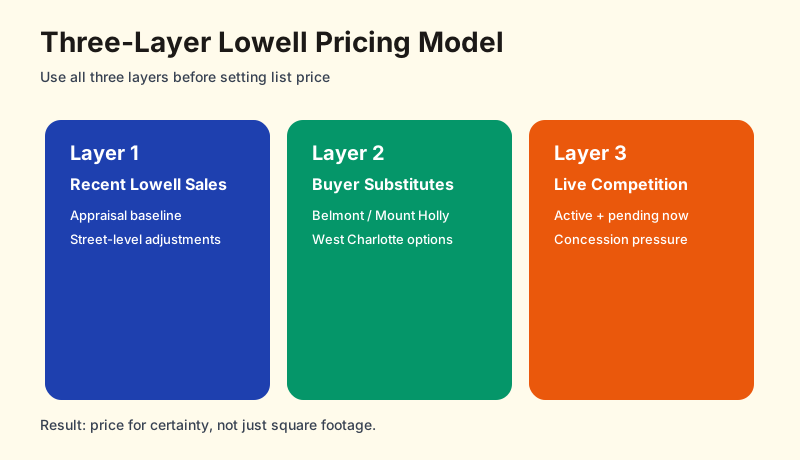
| Pricing Lens | What to Compare | Why It Matters in Lowell |
|---|---|---|
| Local closed sales | Recent Lowell comps | Appraisal and financing baseline |
| Regional substitutes | Belmont/Mount Holly/West Charlotte options | Buyer choice set and value pressure |
| Current competition | Active + pending listings | Immediate negotiation leverage |
For deeper comparison context, many homeowners also review broader regional strategy in Best Time to Sell in NC & SC and method-level net math in the Cash Offer Guide for the Carolinas.
See what your Lowell home is worth
Get a real value estimate based on your exact location and recent Gaston County sales, not a generic county average.
6. Pre-Listing Upgrades in Lowell: What Actually Pays You Back
Not every repair creates return. In Lowell's price-sensitive but practical buyer environment, the winning upgrades remove financing friction and inspection fear more than they chase design trends.
Start with mechanical confidence: HVAC service documentation, electrical safety updates, roof condition clarity, plumbing leak resolution, and water-heater age transparency. Buyers and lenders respond strongly to predictable systems. A modestly updated house with documented reliability usually outperforms a cosmetically flashy house with deferred core maintenance.
Next handle visual clarity. Fresh neutral paint, lighting consistency, deep cleaning, and simple landscaping can shift perceived value more than expensive custom finishes. Lowell buyers often prioritize function and affordability; they do not require luxury staging to make decisions, but they do need to feel the property has been respected.
Kitchens and baths deserve tactical updates, not total gut jobs, unless your price point and neighborhood support full recapture. Hardware, fixtures, mirrors, and refinished cabinets can materially improve first impression while preserving margin. Full remodels near list date often fail to return total spend in this market segment.
Exterior presentation matters because buyers connect curb condition to hidden maintenance quality. Repair visible trim issues, clean siding, refresh entry paint, and ensure drainage looks intentional. If you are near river-adjacent zones, show clear lot management and moisture-control steps to reduce buyer fear of future costs.
If budget is limited, prioritize in this order: safety/mechanical, moisture control, cleanliness, paint/light, then cosmetic upgrades. That sequence protects list velocity and negotiation strength better than expensive one-room makeovers.
7. Traditional Agent Sale: When It Wins and When It Does Not
A traditional listing often produces the highest gross price in Lowell, but highest gross does not always mean highest net or least stress. Method choice should match your timeline, property condition, and tolerance for uncertainty.
Agent-led sales typically win when the home shows well, required repairs are manageable, and you can handle a 30–60 day process with standard contingencies. You gain MLS exposure, broader buyer competition, and the chance for emotional offers from owner-occupants who pay more than investors in many cases.
Where this method struggles is when timeline pressure is non-negotiable, condition issues are significant, or title/estate complications create financing risk. In those cases, an attractive list price can collapse late and force price cuts, repair credits, or relisting fatigue.
Choose an agent who can articulate Lowell's cross-market value story. Generic county-wide scripts are not enough. Ask how they position commute value against Belmont and Charlotte substitutes, how they plan first-week launch activity, and how they handle appraisal support in small-volume comp environments.
Commission structure still matters, but execution quality matters more. A lower-fee listing with weak positioning can cost you far more than you save. Evaluate prep guidance, media quality, showing management, negotiation discipline, and problem-solving during due diligence.
Also align on contingency strategy up front. Will you prefer cleaner offers over highest headline price? Are you willing to offer concessions for rate buydowns? How will you respond to inspection asks? Pre-deciding these rules keeps emotion from hijacking negotiation.
| Scenario | Traditional Listing Fit | Risk Level |
|---|---|---|
| Move-in ready + flexible timeline | Strong fit | Low to moderate |
| Minor deferred maintenance | Good fit with prep plan | Moderate |
| Major repairs + urgent deadline | Weak fit | High |
| Complex probate/divorce title | Conditional fit | Moderate to high |
8. Cash Offer Route: Speed, Certainty, and the Real Tradeoff
Cash sales in Lowell can be the right answer when certainty is more valuable than top-market pricing. The key is understanding what you are buying with the discount: fewer variables, faster timeline, and lower execution burden.
Professional cash buyers usually price based on after-repair value, expected holding costs, resale timeline, and risk margin. That means offers commonly come below retail listing potential, especially for homes that could command owner-occupant competition after updates. The spread is not automatically bad; it is the fee for speed and certainty.
This route is often strongest for inherited properties, homes with significant repairs, landlords exiting rental headaches, and owners facing payment pressure or relocation deadlines. In those contexts, avoiding months of prep, showings, buyer financing fallthrough, and repair renegotiation can preserve both cash and sanity.
Still, not all cash offers are equal. Compare proof of funds, inspection contingencies, earnest money strength, closing flexibility, and hidden fee language. Some “cash” buyers use assignment models or private financing structures that can wobble. Ask direct questions and require clear contract terms.
You can also hybridize strategy: list traditionally while inviting vetted cash/off-market bids in the first week, then choose based on net and certainty score. This can be useful when your home sits in a middle condition band where both channels are plausible.
If you are weighing this route, pair this section with Cash Offer Guide for the Carolinas and distress-path timelines in NC Foreclosure Guide when relevant. Method clarity beats method ideology.
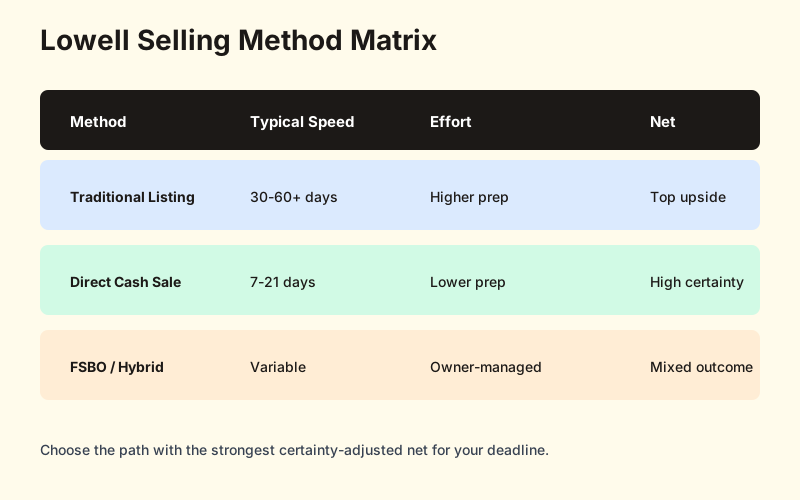
| Dimension | Traditional Sale | Cash Offer Sale |
|---|---|---|
| Timeline to close | Typically 30-60+ days | Often 7-21 days |
| Repairs/staging burden | Higher | Usually lower |
| Price potential | Higher gross potential | Lower gross, higher certainty |
| Financing fallthrough risk | Present | Lower if true cash |
9. FSBO in Lowell: Where Owners Win and Where Deals Break
For Sale By Owner can work in Lowell, but it is not “free money.” You can save commission line items, yet still lose net if pricing, buyer screening, negotiation, or disclosure handling breaks down.
Owners who succeed with FSBO usually have three strengths: realistic pricing discipline, strong availability for showings/communication, and willingness to use professional legal/closing support. Owners who struggle often overprice based on online estimates, delay responses, or underestimate paperwork complexity.
Lowell's cross-market buyer pool adds an extra FSBO challenge. Many buyers touring from outside immediate Gaston County rely heavily on agent guidance. If your listing package lacks professional photography, clear remarks, and easy access, those buyers skip you quickly and never come back.
You also need a fair-housing-safe screening process and consistent communication protocol. Casual texting with inconsistent standards can create legal risk and lost leverage. Treat your FSBO like a business process, not a side project.
At minimum, budget for attorney-reviewed contracts, title work coordination, and disclosure compliance. North Carolina transactions still require precision even when you are not using a full-service listing model. Skipping professional support to “save more” often backfires at inspection or financing stages.
A practical middle option is limited-service support: pay for MLS exposure and professional media, then self-manage showings and negotiations while keeping counsel on legal docs. This can preserve upside while reducing execution risk.
If you are uncertain, run side-by-side net sheets for agent, FSBO, and cash before deciding. Emotional confidence is not a substitute for math. The correct path is the one that optimizes your net-adjusted certainty, not the one with the most persuasive social-media narrative.
10. Closing Cost Reality in Gaston County: What Lowell Sellers Keep
Many sellers in Lowell are surprised by how quickly closing costs compound. Commissions are only one piece. Transfer taxes, attorney fees, title charges, concessions, payoff fees, and prorations all matter to your final number.
North Carolina sellers typically budget the transfer tax (often called revenue stamps) at $2 per $500 of sale price, plus negotiated commission, attorney and title-related charges, recording/wire/admin fees, and prorated property taxes depending on close date. If your loan has prepayment features or escrow adjustments, those can move your net more than expected.
The practical fix is simple: request a seller net sheet before going live, then update it for every serious offer. Do not wait until contract acceptance to discover that a “higher” offer produces lower final proceeds due to concessions and fees.
In Lowell, buyers sensitive to monthly payment may ask for rate buydown contributions or repair credits. These can still be good deals if they protect contract certainty. But you need to evaluate concessions against likely relist risk and carrying costs, not against pride.
Carrying costs are the hidden tax on indecision. Each extra month can include mortgage principal and interest, taxes, insurance, utilities, maintenance, and opportunity cost. If your house sits because of optimistic pricing, that monthly burn can erase the premium you hoped to capture.
| Cost Component | How It Is Usually Handled | Planning Note |
|---|---|---|
| NC transfer tax | Seller-paid in most transactions | Budget from list-price scenarios early |
| Commission | Negotiated listing + buyer-side | Evaluate against expected velocity and support |
| Attorney/title fees | Varies by transaction complexity | Get quotes and timing expectations upfront |
| Repair/credit concessions | Negotiated after due diligence | Cap your walkaway threshold before inspection |
| Tax proration | Adjusted at closing date | Confirm county/municipal assumptions with Tax Office |
For homeowners carrying debt stress, pair this section with Behind on Property Taxes in NC & SC and NC Property Tax Lien Timeline to avoid deadline-driven equity loss.
11. Renting Instead of Selling: Lowell Hold Strategy vs. Exit Strategy
Some Lowell owners should keep and rent. Others should sell now and redeploy equity. The right answer depends on realistic rent net, maintenance tolerance, and your life timeline, not landlord folklore.
Start with conservative rent assumptions, not peak anecdotal numbers. Then subtract management (if outsourced), vacancy allowance, maintenance reserve, property taxes, insurance, and capital expense planning. Include a stress test for one major repair year. If the projected net still supports your goals, holding may make sense.
Now compare that to selling: what equity you would unlock, what debt you would remove, and what flexibility you gain. For some households, liquidity and reduced complexity are worth more than long-term appreciation potential. For others, retaining a well-located Lowell asset near major commuter corridors is a rational wealth strategy.
Tenant quality and turnover friction are decisive variables. If you dislike property management work or cannot handle emergency repairs, your expected rental return should be discounted heavily for stress and time burden. “Passive income” is often active labor unless you pay for full-service management.
Also consider policy and insurance trajectory. Premium increases, stricter underwriting in some risk zones, and local regulatory changes can affect net performance. Hold decisions made on outdated expense assumptions can become painful quickly.
A hybrid option is delayed sale prep: hold for a defined period while completing strategic repairs, then list into a better timing window. This only works if you set hard decision checkpoints. Without checkpoints, temporary hold plans turn into indefinite drift.
If you are balancing this against relocation or divorce planning, see Selling During Divorce in NC & SC for structured decision frameworks that reduce conflict-driven financial mistakes.
See what your Lowell home is worth
Get a real, data-driven estimate for your address before you decide your path.
12. Life Events in Lowell: Probate, Divorce, and Payment Stress Scenarios
Most forced-bad sales in Lowell are not caused by market weakness. They are caused by life events colliding with unclear process. When probate, divorce, or payment stress enters the picture, the method and timeline must be intentional.
In probate cases, confirm authority to sell before marketing aggressively. Title clarity, heir coordination, and estate obligations can all impact closing certainty. If the property is vacant, factor in security and maintenance immediately; vacant homes can deteriorate faster and attract avoidable code issues.
In divorce-related sales, decision latency is the expensive enemy. Define a documented process for repairs, pricing authority, offer acceptance thresholds, and proceeds allocation before listing. Ambiguity creates deadlock, and deadlock burns equity through carrying costs.
For payment stress, timeline literacy matters. Waiting for “one more month” without a plan often shrinks your option set. Early outreach to counselors, legal aid, and servicer channels can preserve alternatives. Deadline-driven decisions usually produce weaker outcomes and lower net.
Lowell homeowners should treat these scenarios as project management challenges, not personal failures. You need clear roles, verified contacts, and a method that matches your clock. Shame delays action; action preserves equity.
Support resources matter here. Legal Aid of North Carolina's Gastonia office and HUD-linked counseling pathways can help qualified households evaluate rights and options early. Use them before urgency strips your negotiating power.
13. 30-60-90 Day Execution Plan for Lowell Sellers
A written execution timeline is one of the easiest ways to improve outcomes. Lowell sellers who follow staged milestones make better decisions under pressure and avoid costly last-minute improvisation.
Day 0-30: confirm goals, deadline, and method shortlist; gather mortgage payoff and tax details; complete pre-list inspection or repair scoping; assemble documents (permits, warranties, utility history); define pricing band and walkaway thresholds.
Day 31-60: complete high-return prep items; finalize media package; launch with synchronized showing schedule; track feedback patterns; adjust narrative and price quickly if market signal is weak; evaluate any off-market/cash alternatives against your net sheet baseline.
Day 61-90: if under contract, manage contingencies with discipline and deadline visibility; if not under contract, reset strategy decisively (reprice, repackage, or switch method). Avoid passive waiting. Markets reward responsive sellers, not stubborn ones.
Build a simple decision dashboard with five numbers: target net, minimum acceptable net, monthly carrying cost, latest acceptable close date, and contingency tolerance. Keep it visible. When emotional moments hit, your dashboard protects you from reactive choices.
Communication cadence matters too. Set weekly check-ins with your agent or transaction team, and insist on clear action items after each update. In small markets, momentum can fade quickly; your process should prevent drift.
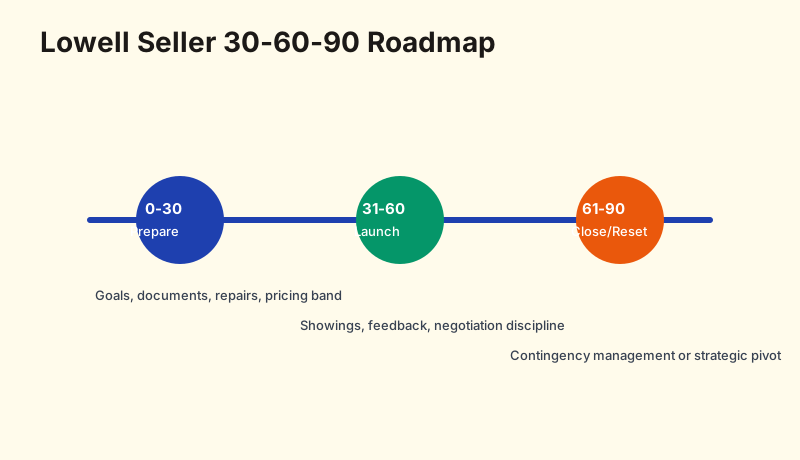
| Timeline Stage | Primary Objective | Failure to Avoid |
|---|---|---|
| 0-30 days | Prepare and de-risk | Launching without repair/document clarity |
| 31-60 days | Capture demand and convert offers | Ignoring weak signal and hoping |
| 61-90 days | Close or strategic reset | Stale listing with no decision pivot |
14. Lowell Seller Resource Directory: Verified Places to Call First
When decisions are time-sensitive, reliable contact points matter more than perfect internet research. Keep this shortlist accessible before you need it.
| Resource | What It Helps With | How to Reach |
|---|---|---|
| City of Lowell | Municipal services, planning, local contacts | lowellnc.gov |
| Lowell Planning & Zoning | Land-use/development process guidance | lowellnc.gov/departments/planning-and-zoning |
| Gaston County Tax Office | Tax records, valuation, payment questions | gastongov.com/583/Tax-Office |
| Gaston County Schools / Lowell Elementary | School district and assignment verification | gaston.k12.nc.us / lowell.gaston.k12.nc.us |
| HUD counseling locator | Housing/foreclosure counseling pathways | hud.gov and apps.hud.gov counseling search |
| City of Gastonia HUD counseling page | Local counseling program details | gastonianc.gov/community-development/hud-approved-housing-counseling-ql.html |
| Legal Aid of NC (Gastonia office) | Civil legal help for eligible residents | lawhelpnc.org organization listing |
For deeper legal and timeline education, these guides are useful companion reads: How to Avoid Foreclosure in North Carolina, NC Foreclosure Timeline, and Selling a House As-Is in North Carolina.
Attorney selection should be independent and practical. Interview real estate closing counsel based on responsiveness, clarity, and issue-management history, not just lowest quoted fee. Delayed answers can cost far more than small fee differences when closing windows are tight.
15. Lowell NC Home Selling Options Compared: Which Path Fits Best?
The right selling method is the one that matches your timeline, condition, and risk tolerance while preserving acceptable net proceeds. Here is a practical comparison framework.
| Seller Situation | Best-Starting Method | Why |
|---|---|---|
| Move-in ready, timeline flexible | Traditional listing | Maximizes market exposure and price potential |
| Moderate repairs, 45-60 day clock | Hybrid (list + cash bids) | Balances upside and certainty |
| Major repairs, inherited vacant home | Cash-first evaluation | Reduces prep burden and carrying risk |
| Payment pressure or legal deadlines | Certainty-first strategy | Protects timeline and reduces fallthrough risk |
| Owner with sales/ops skills and time | Structured FSBO | Potential fee savings if process discipline is high |
Run each path through the same filters: expected net, expected close date, probability of closing on time, stress load, and worst-case downside. Most homeowners only compare expected net and miss the downside probability. That blind spot causes regret.
If your expected net difference between methods is small, choose the path with higher certainty and lower operational burden. If the difference is large and your timeline allows it, optimize for price with disciplined contingency management. There is no universal answer; there is only fit.
Before committing, ask for written assumptions behind every estimate. If someone gives you a high number without documenting repairs, concessions, or timeline risk, treat it as marketing, not planning.
16. Your Next Step: Build a Lowell Net Sheet Before You Pick a Path
Your next move should be numbers-first, not method-first. Build one clear net sheet with three scenarios: traditional listing, cash offer, and FSBO/hybrid. Use the same baseline assumptions so each selling path is compared honestly.
Include list or offer price assumptions, concession estimates, closing cost line items, projected carrying cost to close, and a probability-of-close confidence score. When you see all three side by side, the best path usually becomes obvious.
Then decide what matters most right now: maximum upside, highest certainty, lowest stress, or fastest timeline. Rank those priorities in writing. Without that ranking, every new opinion from friends, social media, or even professionals can pull you off course.
If you want to sell with less regret, set two rules before you start: a minimum net you will accept and a latest acceptable closing date. Those two numbers protect you from emotional over-negotiation and deadline panic.
Lowell gives homeowners real optionality because of its location, relative affordability, and durable buyer interest from multiple directions. Use that optionality strategically. Do not hand it away through vague planning.
Want a cash offer on your Lowell home?
Share your address and estimated payoff and we will get you a no-obligation cash offer.
17. Negotiation Playbook: Offer Review Rules That Protect Your Net
Lowell sellers gain leverage when they define negotiation rules before the first offer arrives. Without pre-set rules, most households end up reacting emotionally to headline price while ignoring the terms that actually determine whether the deal survives to closing.
Start by ranking offer components in order of importance: net proceeds, closing timeline, contingency scope, appraisal risk, and buyer financing strength. Your ranking may differ from your neighbor's, and that is fine. The point is consistency. If you tell yourself net is most important, then accept a lower-net offer because the buyers were friendly, that is not strategy; that is drift.
For Lowell properties, appraisal dynamics deserve extra attention because buyers can source comps from multiple nearby cities and price tiers. A high offer with weak appraisal support can collapse late or trigger difficult renegotiation. Ask your agent or advisor to produce an appraisal-defense packet early: strongest nearby comparables, documented upgrades, and micro-location advantages tied to buyer utility.
Inspection negotiation is where many sellers give away value accidentally. The best approach is to separate legitimate safety/mechanical requests from preference-based asks. If a buyer requests broad cosmetic credits after seeing an accurately marketed older home, you can push back confidently. If a major system issue appears that you did not disclose, a targeted concession can preserve timeline certainty and avoid relist stigma.
Concession strategy should include hard caps. Example: maximum post-inspection credit as a percentage of price, maximum rate-buysown contribution, and minimum acceptable earnest money after due diligence. Put these thresholds in writing before offer review. That one step prevents overnight stress decisions that feel reasonable in the moment but reduce your final net significantly.
When multiple offers appear, do not auto-select highest number. Use a weighted scorecard. Assign points for price, certainty, flexibility, and downside risk. In Lowell's mixed buyer pool, the "best" offer often comes from the buyer whose terms line up with your execution reality, not the buyer with the biggest opener.
Another key tactic is communication symmetry. If you counter one buyer on closing date and concession structure, mirror similar information requests to competing buyers. Consistent process reduces legal risk and maintains fairness while preserving your leverage. Informal side deals and inconsistent disclosures can create avoidable disputes later.
If your property has known quirks (drainage history, older permits, atypical lot line context), address those early instead of hoping they stay hidden until near closing. Surprises discovered late are expensive. Transparency discovered early is negotiable. Buyers pay for confidence, and confidence is built through controlled disclosure, not silence.
Finally, time-box negotiations. Long, open-ended back-and-forth weakens seller posture and signals uncertainty. Clear response windows, clear counter terms, and clear walkaway thresholds help you close stronger in both traditional and cash pathways.
18. Data Hygiene for Lowell Listings: Documents That Reduce Buyer Fear
In 2026, buyers and their lenders punish documentation gaps faster than they did a few years ago. Interest-rate pressure and affordability constraints make people cautious, and caution means paperwork scrutiny. Lowell sellers who prepare documentation packages early often experience smoother negotiations and fewer last-minute surprises.
Your baseline packet should include: utility history (at least 12 months if possible), system ages with service records, any recent receipts for repairs or upgrades, permit records where applicable, HOA or neighborhood governance details if relevant, and a concise property timeline showing major ownership improvements. This package does not need to be fancy. It needs to be complete and readable.
Why does this matter so much in Lowell specifically? Because many buyers are comparing options across city lines and trying to normalize uncertainty. If one listing in Belmont has clean docs and one listing in Lowell has vague answers, the buyer may assume Lowell is higher risk even when the homes are objectively similar. Documentation closes that perception gap.
Insurance and hazard clarity are another major trust layer. If your home is near areas where buyers might worry about water exposure or drainage complexity, provide current insurance context, any past claim history you are required to disclose, and practical mitigation steps you implemented. Vague reassurance is weak. Documented mitigation is persuasive.
For older homes, include a simple “known conditions” section. Mention items that are functional but not new (for example, older windows or legacy materials), plus what has been maintained. This helps buyers calibrate expectation correctly and reduces the “everything must be replaced” panic that can inflate inspection requests.
If you have done owner-managed work, be honest about scope and whether permits were required. Attempting to present non-permitted structural changes as turnkey improvements can destroy trust quickly once inspectors and appraisers start asking questions. You are better off pricing with reality than pretending uncertainty does not exist.
Digital accessibility also matters. Keep docs in one shared folder with clear filenames and dates. During negotiation, every hour spent hunting paperwork increases deal fatigue and makes buyers wonder what else is unclear. A clean folder says, “This seller is organized and serious.”
For FSBO sellers, documentation discipline is even more critical because you do not have an agent smoothing communication. In that model, your packet is your credibility engine. In traditional sales, it still strengthens your agent's ability to defend your price and resist excessive concessions.
Think of data hygiene as equity protection. Every unanswered question creates a discount request. Every answered question preserves pricing power.
19. Inbound and Outbound Moves: Selling in Lowell While Buying Your Next Home
Many homeowners in Lowell are not just selling; they are selling and buying in the same season. That two-transaction reality changes risk management completely. The wrong sequencing can force rushed decisions on both sides and increase financing stress.
The first decision is whether to buy contingent on sale, sell first then buy, or use bridge-style financing or temporary housing to decouple timelines. There is no one-size-fits-all answer. The right path depends on liquidity, debt tolerance, household schedule complexity, and local inventory at your target destination.
Sell-first strategies usually protect financial safety. You know your net before committing to the next payment stack. The downside is short-term inconvenience if you need interim housing. Buy-first strategies reduce moving friction but increase exposure to carrying two properties or accepting weaker terms under pressure if your Lowell sale lags.
If you choose a contingent approach, define trigger points in writing. How long will you market before considering a price reset? What is your maximum overlap period? What monthly burn can you tolerate with two obligations? Without these guardrails, “we'll figure it out” becomes expensive quickly.
Another common mistake is over-upgrading the Lowell home because you are emotionally focused on the next house. Remember: your sale prep budget should optimize return, not create your ideal living environment for a home you are leaving. Over-improving can reduce liquidity exactly when you need flexibility for purchase negotiations.
On the buy side, lenders and underwriters look closely at debt-to-income implications when your current home is listed but not yet closed. Talk with your loan team early about documentation required to count projected sale proceeds and remove existing payment obligations. Surprises here can derail purchase approval timing.
Families with school-year constraints should also map calendar pressure explicitly. In Lowell and surrounding counties, assignment transitions, activity schedules, and commute shifts can create hidden deadlines that influence whether a delayed close is acceptable. Put those dates in your transaction plan from day one.
If your move is tied to job relocation or military transfer, include fallback options: short-term lease, rent-back request, or extended-close negotiation. Having fallback scenarios reduces panic and protects your bargaining position when counterparties test your timeline urgency.
The core principle is coordination. A decent sale and a decent purchase can still produce a bad household outcome if the timelines are misaligned. Build one integrated plan instead of managing each side in isolation.
20. Final Decision Framework: Certainty-Adjusted Net Proceeds for Lowell Owners
The cleanest way to choose your Lowell selling path is to evaluate certainty-adjusted net proceeds. Most people compare headline proceeds only, then feel confused when the “best” option creates the most stress or misses the timeline they actually needed.
Certainty-adjusted net proceeds means you estimate not just likely net, but probability of achieving that net by your required date. For example, a traditional listing might project a higher expected net, but if your deadline is tight and property condition invites heavy negotiation, the certainty score may be lower than a slightly discounted but fast cash close. The better choice depends on your constraint.
Build a simple model with three scenarios: optimistic, base, and downside. Include price, concessions, days to close, carrying cost burn, and probability weight. This sounds technical, but a basic spreadsheet is enough. The exercise forces honest assumptions and neutralizes wishful thinking.
Next, map non-financial costs explicitly: time burden, emotional load, disruption to work/family routines, and legal/administrative complexity. These are real costs. They may not appear on the settlement statement, but they affect outcomes and should influence method choice.
For each path, ask five closing questions. One: Can this path realistically close before my hard deadline? Two: What is the largest known downside if it fails? Three: How much decision energy will this require from my household? Four: How exposed am I to late-stage renegotiation? Five: If this deal collapses, how much leverage do I lose on relaunch?
Then select the path that fits your ranked priorities, not someone else's narrative. Some homeowners should optimize maximum net with disciplined patience. Some should optimize timeline certainty and reduced volatility. Both are valid if chosen deliberately.
Lowell gives you a meaningful advantage because buyer demand comes from multiple directions: local moves, commuter-value migration, and practical first-time-buyer demand. Use that demand to negotiate intentionally, not impulsively. Your job is not to win the internet argument about selling methods. Your job is to execute the right transaction for your life.
If you need a practical starting point this week, do three things in order: gather your payoff and tax data, request method-specific net sheets, and define your minimum acceptable net with latest acceptable close date. Those three steps create immediate clarity and remove most of the noise that causes homeowner regret.
21. FAQ for Lowell Homeowners Preparing to Sell
How long does a typical Lowell sale take from list date to closing? In normal conditions, many financed transactions land in a 30- to 60-day range after going active, but condition, pricing, and buyer financing strength can stretch that window. Build your plan around ranges, not promises.
Should I pre-list an inspection? Often yes, especially if your home is older or has known quirks. Pre-list inspections do not eliminate negotiations, but they reduce surprise-based concessions and let you decide repairs on your timeline instead of under buyer pressure.
Will buyers ask me to pay closing costs? It is common for buyers to request some concession support in affordability-sensitive markets. Evaluate requests against certainty and carrying-cost math, not emotion. A small concession that secures a strong, on-time buyer may outperform a no-concession offer that fails late.
Do I need to update every room before listing? No. In Lowell, high-return prep usually prioritizes systems, cleanliness, paint, and curb clarity. Full luxury remodels near list date are rarely required to sell well in most local price bands.
What if my home needs significant repairs? You still have options. You can list as-is with pricing discipline, complete targeted repairs, or compare direct cash buyers for speed. The right answer depends on timeline and tolerance for project management.
How many offers should I expect? That varies by price band, condition, and launch execution. Small-market volume means some excellent listings receive one strong offer and close smoothly; others receive multiple. Focus on quality and certainty, not offer count optics.
Can I sell if I am also buying in another city? Yes, but sequence planning is critical. Decide early whether you are selling first, buying contingent, or using bridge/fallback strategies. Two loosely coordinated transactions create avoidable stress and financial exposure.
What documents should I prepare first? Mortgage payoff details, tax records, utility summaries, repair receipts, permit documents (if applicable), and any HOA information. Organized documents reduce buyer fear and speed underwriting decisions.
Is Lowell better for first-time buyers or move-up buyers? Both buyer types are active, but they care about different things. First-time buyers are payment-sensitive and condition-conscious. Move-up buyers often focus on lot utility, daily logistics, and space function. Good listing strategy speaks to both.
How do I know if a cash buyer is credible? Request proof of funds, read contingency language carefully, and verify closing pathway. Not all cash offers have the same certainty. A slightly lower but cleaner offer can be superior to a higher but unstable one.
What is the biggest seller mistake in Lowell? Treating pricing as a one-time decision instead of an ongoing signal process. The first two weeks usually reveal whether your ask and narrative align with buyer reality. Respond quickly to weak signal.
Do city boundaries matter as much as school and commute? For many buyers, no. They shop lifestyle systems: work routes, family logistics, and monthly payment. That is why micro-location and practical narrative often matter more than broad city branding.
22. Seller Checklist: What to Do This Week in Lowell
If you are serious about selling, use this one-week checklist to create momentum. Momentum is not busywork; it is disciplined preparation that reduces uncertainty and protects your eventual net proceeds.
Day 1: Define the mission. Write your target net, minimum acceptable net, and latest acceptable close date. Decide what matters most: price, speed, or certainty. Without these anchors, every conversation becomes subjective and exhausting.
Day 2: Gather core numbers. Pull mortgage payoff info, escrow status, property tax details, insurance premium data, and monthly carrying costs. These numbers drive method choice and concession boundaries more than listing photos do.
Day 3: Do a condition walk. Walk the property like a buyer and note safety concerns, visible maintenance issues, moisture signals, and cosmetic distractions. Separate fixes into three buckets: must-fix, should-fix, and optional.
Day 4: Build your documentation folder. Add receipts, warranties, service records, permits, and utility history. Label files clearly by date and category. A clean folder improves trust and shortens back-and-forth during due diligence.
Day 5: Compare selling methods with real math. Request three scenario net sheets: traditional, cash, and FSBO/hybrid. Use consistent assumptions for each. Include timeline probability and carrying-cost burn to keep the comparison honest.
Day 6: Prepare launch narrative. Draft your home's value story using Lowell-specific points: route convenience, practical lifestyle fit, and property-specific reliability features. Avoid vague marketing language. Buyers trust concrete details.
Day 7: Set decision rules. Define how you will evaluate offers, how much concession you can absorb, and when you will reprice if demand is soft. Predefined rules prevent reaction-driven decisions under stress.
Once this week-one checklist is complete, execution gets easier. You can enter negotiations with confidence because your numbers are clear, your documents are ready, and your strategy fits your actual constraints. That is what protects equity in real life, not motivational slogans.
Keep this simple principle in front of you: a smooth, on-time close at an acceptable net is usually better than a chaotic chase for a theoretical top number. In Lowell's practical buyer market, disciplined sellers generally outperform dramatic ones.
23. Common Lowell Seller Mistakes (and How to Avoid Them)
Even strong properties underperform when sellers repeat predictable execution mistakes. Lowell is forgiving in some ways because demand comes from multiple buyer types, but the same patterns still cost people money every month. If you avoid these mistakes, you materially improve your outcome before negotiations even begin.
Mistake #1: Pricing from hope instead of evidence. Sellers sometimes anchor to a dream number pulled from broad online estimates or one exceptional comp that does not truly match their property. In Lowell's lower-volume environment, overpricing by even a modest amount can trigger a long quiet stretch that leads to bigger eventual cuts. Avoid this by using a three-layer comp approach: local closed sales, substitute-city options, and current active competition.
Mistake #2: Launching with incomplete prep. A rushed listing with mediocre photos, unresolved maintenance items, and scattered documents can burn your best traffic window. Buyers often make rapid judgments in the first days. If your first impression creates uncertainty, they move on and may not return even after improvements.
Mistake #3: Hiding known issues. Some owners fear that honesty about drainage, older systems, or past repairs will hurt demand. In reality, hidden issues discovered later hurt far more. Early transparency paired with documentation usually reduces renegotiation damage and increases close probability.
Mistake #4: Confusing activity with traction. Showings, saves, and friendly comments feel good, but only serious offer movement matters. If traffic is healthy and offers are weak or absent, your value equation likely needs adjustment. Respond with strategy changes, not wishful waiting.
Mistake #5: Ignoring carrying cost burn. Every extra month has a real price: mortgage, taxes, insurance, utilities, maintenance, and stress. Sellers sometimes hold out for a small premium while quietly losing more in monthly burn than they are trying to gain. Keep your carrying-cost number visible during every decision.
Mistake #6: Accepting unstable terms for a high headline offer. A higher price with weak financing, broad contingencies, and tiny earnest money can be riskier than a slightly lower but cleaner offer. Evaluate total deal quality, not just top-line number.
Mistake #7: Choosing a method before doing net math. Some owners decide “I am doing cash” or “I am definitely listing traditionally” based on stories from friends. Better approach: run all method scenarios first, then choose based on certainty-adjusted net and timeline fit.
Mistake #8: Failing to set walkaway rules. In the absence of predefined limits, sellers often concede too much under pressure. Set maximum concession thresholds, minimum net, and latest close date before negotiations begin. Written thresholds protect your equity and reduce stress.
Mistake #9: Underestimating legal and title complexity. Probate, divorce, inherited ownership splits, and old lien issues require early cleanup. Waiting to address them until after contract acceptance invites delays, extension requests, and buyer anxiety. Resolve as much as possible before launch.
Mistake #10: Treating the transaction like a personal referendum. Buyers are evaluating utility and risk, not your worth as an owner. When sellers take every request personally, they lose strategic discipline. Stay numbers-focused and process-focused.
None of these mistakes are fatal if corrected quickly. The core pattern behind successful Lowell sales is disciplined responsiveness: verify the signal, adjust decisively, and protect certainty. That is how ordinary listings become strong outcomes.
Disclaimer: Market conditions, tax rates, school assignments, and legal procedures can change. Verify current figures with official sources before making final decisions. This guide is educational and does not replace legal, tax, or licensed financial advice for your specific situation.